Scientists at De La Salle University in Manila and the Senckenberg Research Institute in Germany announced recently that they discovered 4 new species of freshwater crab off the Filipino island of Palawan. One of them is this bright purple specimen, Insulamon palawanense. Unlike the other 3, however, it’s endemic to only a handful of islands in the Philippines.
Category Archives: News
Quote of the Day
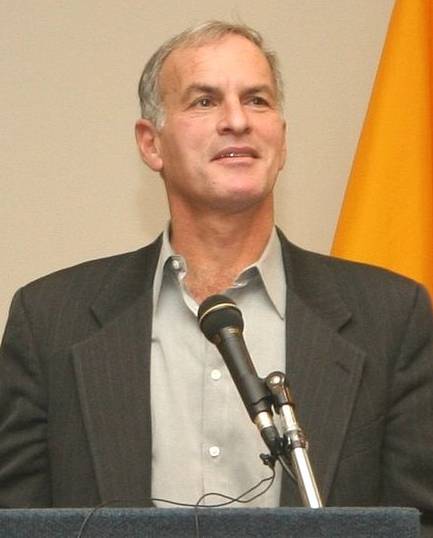
“Every single member of my family on both sides was exterminated. Both of my parents were in the Warsaw Ghetto uprising. And it is precisely and exactly because of the lessons my parents taught me and my two siblings that I will not be silent when Israel commits its crimes against the Palestinians.”
– Norman Finkelstein, American political scientist and author, whose parents are Nazi Holocaust survivors.
DOJ Files Antitrust Suit Over E-Book Pricing
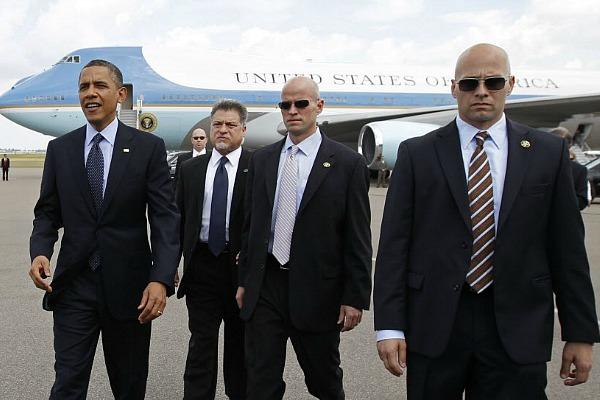
Last month the U.S. Department of Justice filed an antitrust suit against Apple and 5 major publishers – Hachette, Harper Collins, MacMillan, Penguin and Simon & Schuster – alleging collusion in e-book pricing and sales models. U.S. Attorney General Eric Holder, acting Assistant Attorney General Sharis A. Pozen and Connecticut Attorney General George Jepsen made the announcement at DOJ headquarters in Washington, D.C. It’s surprising to see that digital publishing – a truly 21st century technological phenomenon – has fallen under the glare of the nation’s top law enforcement official. But, it’s equally serious – and perhaps even warranted – as the number of publishing outfits diminishes. It appears the 5 publishers named in the suit most feared the Amazon giant.
According to the suit, filed in the Southern District of New York, the 5 publishers “feared that lower retail prices for e-books might lead eventually to lower wholesale prices for e-books, lower prices for print books, or other consequences the publishers hoped to avoid.” It also mentions “deflating hardcover prices” and charges that the “Publisher Defendants were especially concerned that Amazon was well positioned to enter the digital publishing business and thereby supplant publishers as intermediaries between authors and consumers.”
When the 5 publishers couldn’t force Amazon to stop selling e-books at such sharply discounted prices, they conspired to increase those very same e-book prices and thereby limit competition in the sale of digital books. To accomplish their goal, the publishers teamed up with Apple, which had the same desire to restrain retail price competition over e-books.”
The lawsuit further alleges that Apple wished to raise the profit margin for e-book retailers above what Amazon and its competitors had been making. The suit also claims that prior to negotiating with Apple, executives with the 5 publishers engaged in a series of meetings, telephone calls and other communications where they “agreed to act collectively to force up Amazon’s retail prices and thereafter considered and implemented various means to accomplish that goal, including moving under the guise of a joint venture.” One e-mail stated that “without a critical mass behind us Amazon won’t ‘negotiate,’ so we need to be more confident of how our fellow publishers will react…” It also charges that publishers sought to destroy evidence and conceal their communications, showing they knew their activities were illicit.
This conspiracy would make the Enron scoundrels proud. And, the 5 publishers almost sound like the “five families;” a.k.a. the mafia. It’s distressing for writers, whose first love is the written word, to see the creative world run smack into the brutality of corporate politics. There are mixed feelings. On one side, no decent writer wants to see their publishing choices limited to just a handful of conglomerates. On the other is the leeriness of government interference in the arts. But, there’s a reason it’s called show business. It’ll truly be interesting to see how far the DOJ will go with this case.
Filed under News
Quote of the Day
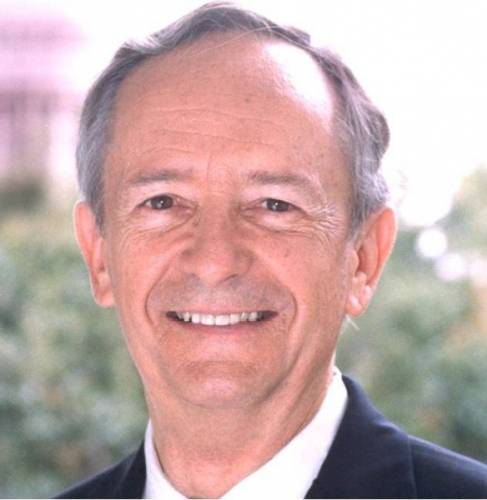
“I really feel quite hypocritical about hairy-legged males who will never be pregnant and never have that life-altering decision to make being the ones writing the rules for the opposite gender as though we had nothing to do with their condition.”
– Texas state Sen. Jeff Wentworth, R-San Antonio, not shying away from his pro-choice stance in a heated primary.
Filed under News
The 99 Cents
When is 99¢ the most appropriate price for a writer’s work? When it’s just a short story? An essay? An entire novel? I’ve noticed a number of books offered on Amazon for 99¢, usually from first-time writers trying to get their name into circulation. If you invested $1,000 to publish a novel yourself, you’d have to sell more than a 1,000 novels just to break even. This issue reminds me of a question that came up years ago, when I worked for a major bank in Dallas – how does human resources decide salaries and bonuses? What criteria do they use to determine how much someone should be paid? If you’ve kept up with the recent financial implosions on Wall Street and around the country, you’ve surely wondered how someone could justify a 7- or 8-figure salary.
So, what price do we place on a writer’s work? Should the writer set that standard? Or, should the market? And, there again, what criteria does “the market” utilize? As publishing companies struggle to survive in a rapidly changing market, so do the writers who essentially keep them in business. We all want to be paid what we think we’re worth, but that’s always subjective.
How often have you read a book or watched a movie and regretted paying for it? It went on too long; it had too much filler. People often make it through a fiction novel and think it would have been better off as just a short story. Other times they feel a non-fiction book could have fit into a magazine article. Agents and editors often will try to construct a book around a single good magazine piece. Anyone submitting a nonfiction proposal probably should have published several excerpts well in advance, as a form of vetting the work.
Writers always come up with good ideas – I have a notebook filled with great synopses – but it’s a different matter to flesh it out into a coherent story that will hold the reader’s interest. Still, you really can’t make a decent living selling your stuff for 99¢. People may buy it, but unless you’re already independently wealthy, gainfully employed, or more than willing to suffer for the sake of your art, I don’t think you’ll be too happy with how things turned out.
Bitter Reaction to No Fiction Pulitzer
A couple of weeks ago the Pulitzer Board stunned the literary world by not selecting a winner in its fiction category. For book lovers it’s like breathing – how could you not do it? This is the first time since 1977 that Pulitzer hasn’t chosen anyone to receive its literary fiction award; usually a guarantee of free publicity and increased sales for the winner and their publisher. A 3-member panel selects the fiction category, after reviewing hundreds of books and sends 3 finalists to Pulitzer’s board for a decision.
The authors who missed out this year are Denis Johnson for Train Dreams; Karen Russell for Swamplandia; and David Foster Wallace for The Pale King, which was compiled from notes he left when he died in 2008 and published last year.
“Every publisher in America would agree that it is a missed opportunity,” said Paul Bogaards, director of publicity at Alfred A. Knopf that published Swamplandia! He cited the tenfold sales boost for previous winner Jennifer Egan and her book A Visit From the Goon Squad. “It has a demonstrable effect on sales, especially in the fiction category,” he added.
But, Pulitzer administrator Sig Gissler called the lack of a fiction winner “unusual,” but noted that none of this year’s finalists received a majority of board votes. “I can say that multiple factors were involved. Beyond that, we do not discuss the deliberations, which are confidential,” he said in an email. “We realize that the lack of an award in Fiction is a disappointment to many. We regret that. But I can assure you that the Board made a considered decision.”
Chairwoman of the Pulitzer fiction panel Susan Larson told National Public Radio that the jurors had read some 300 books and were “shocked … angry … and very disappointed” that the Pulitzer board couldn’t pick a winner. “I think we all would have been happy if any of books had been selected,” she said.
Filed under News