Category Archives: Wolf Tales

Years of New Year’s

Welcoming the 1980s – from right to left, my father, my mother’s younger sister and my mother.  One of my aunt’s daughters is at far left.

Welcoming the 1980s – from right to left, my father, my mother’s younger sister and my mother. One of my aunt’s daughters is at far left.

On December 31, 2010, I decided spontaneously to go out for New Year’s Eve.  I had been laid off nearly three months earlier from an engineering company and wondered when things would improve.  I visited my favorite bar just north of downtown Dallas and was glad to encounter a few friends and acquaintances.  As I stood near the DJ booth, surveying the eclectic crowd, I suddenly recollected the very first New Year’s party my parents had decided to throw – 1973.

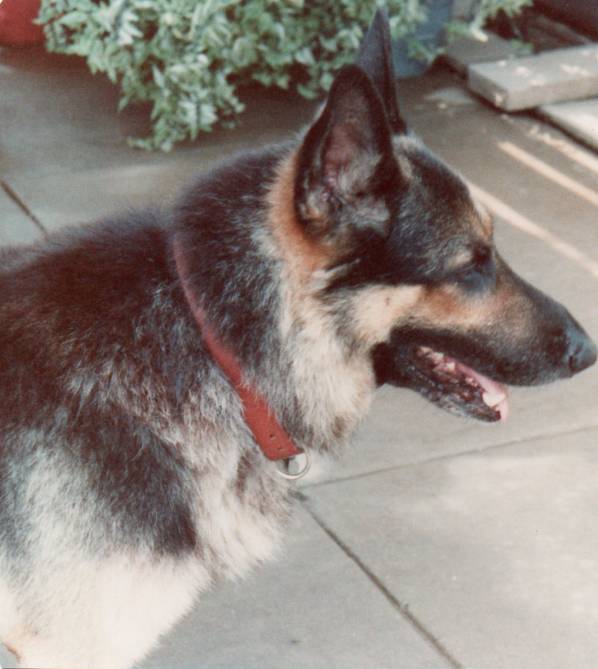
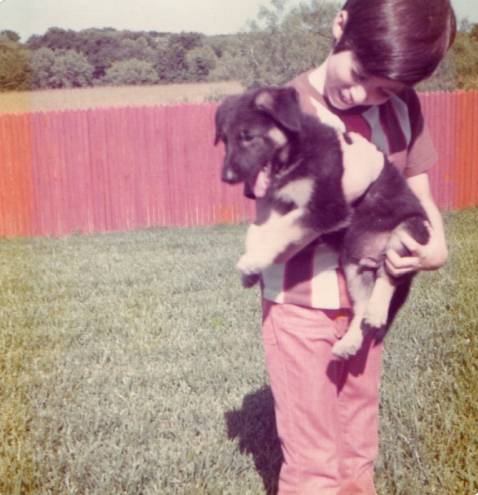
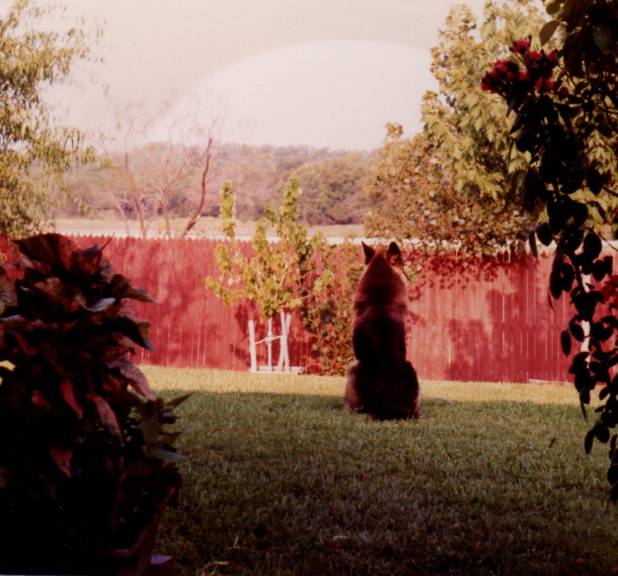
We had moved into our new house in suburban Dallas a year earlier.  My parents had already made friends with several neighbors; their ebullient personalities attracting even the most staid of individuals.  As the clock struck midnight, and we welcomed 1974, I pulled back the heavy drapes against the patio door to look for my then 7-month-old German shepherd, Joshua.  His ears already beginning to triangulate, he glanced at me and jumped up.  I went outside to pet him and wish him a happy New Year.

By the time I rang in 2011, Joshua had been dead for a quarter century, and my parents had long ceased their partying ways.  Last night, I sat with some wine coolers and watched television.  My parents and my dog, Wolfgang, all had retired for the night.  I’m so glad to see 2013 go, happier than I was three years earlier.  In fact, I haven’t been this thrilled to let go of a year since 1985 – the year we put Joshua to sleep; a year I’ve always considered the single worst of my entire life.

New Year’s is my favorite holiday.  It’s not just the feverish atmosphere surrounding a fresh start.  For me, it’s always been associated with the gathering of family and friends; people who occupy our lives and make it good.  Besides, most everyone feels giddy on New Year’s Eve.  Why not celebrate?

My parents threw a number of New Year’s parties.  Ours was the fun house on the block.  It was during those raucous indoor festivals when I learned how to spin records (on a turntable), mix drinks, and show people how good I could dance.  I can still bump and grind with the best of them, but usually the lights have to be dim.

Two of our perennial guests were among my parents’ closest friends: a young couple who lived next door and were among the first people we befriended in the neighborhood.  They were both exceptionally tall.  They got me addicted to “National Geographic” by purchasing us a gift subscription in 1976.  And, they offered my parents and me one of the best bits of advice anyone could hear: always hang around people who know more than you do.

At one particular late 1970s New Year’s gathering, a neighbor got so drunk we escorted him into my parents’ bedroom to lie down for a while.  My dad took Polaroids of many of us – including the man’s wife – encircling him on the bed.  It was a while before he returned to our house for another New Year’s party.  When he did, his wife became so intoxicated she had to spend the night in my bedroom; her husband returned home (I think) alone.  I slept on the living room couch.

Some other neighbors, a couple whose kids attended the same high school I did, were also frequent visitors.  The man would often bring his guitar and sing along with his wife.  And, they really could sing.  As newlyweds in their native New México, they once entered an amateur singing contest, but lost out because the judges said they sounded too much like professionals.  That didn’t matter to us so many years later, though, as they strummed out tunes from José Feliciano and even The Doors’ “Light My Fire.”

That was quite a different reaction from that of another neighbor, a housewife who lived up the street with her stony husband and three unruly children.  At one New Year’s party, she imbibed in too many of the margaritas I’d whipped up and haphazardly commented that she liked to sing.  Seeing a chance to humiliate a fat, drunk stay-at-home mom who sold decorative glassware on the side and considered herself a devout Christian, two other friends – a neighbor and a man my parents had known for several years – began escorting her around the house; telling certain individuals, ‘You gotta hear this!’  And, as the woman started to croon, sounding much like a Hereford cow going into labor, the two men merely stepped away.  They’d return a minute later to set her upon another unsuspecting partier.

My favorite New Year’s gathering took place at my parents’ home in 1979.  I was excited to bring in not just a new year, but a new decade.  If you’re old enough to recall the fashions and hair styles of the 1970s, surely you can identify with my elation in sending that decade into the history books.  It was a unique affair in that we invited both family and friends – and they all showed up!  We didn’t think this house could hold that many people and not incite calls to the police.  Even my grandmother was there – and, aside from midnight mass on Christmas Eve at her local Catholic church, she was almost never up past 9 P.M.  Above the fireplace I hung a large piece of blue poster board with the term “The ‘80s” on it.  I had spent days cutting up sheets of colored paper into tiny squares to make confetti.  I stuffed it all into a large brown paper sack and hurtled the pieces into the air at the stroke of midnight.  As we cleaned up later, my mother commented that “we’ll be picking up confetti for a year.”  And, sure enough, exactly one year later – after another New Year’s blowout – I found a single piece of confetti buried beneath a couch.

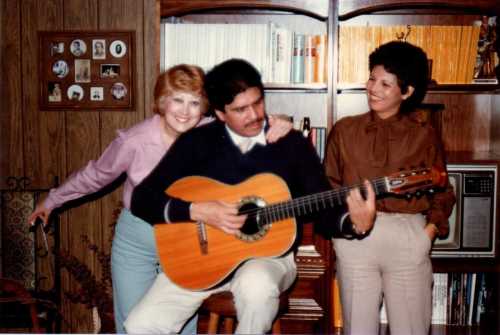
Another New Year’s party, with my mother clowning alongside the friends who often entertained us with a guitar and a song.  My mother just turned 81, but the couple left us more than three years ago.

Another New Year’s party, with my mother clowning alongside the friends who often entertained us with a guitar and a song. My mother just turned 81, but the couple left us more than three years ago.

Of course, we attended New Year’s parties at the homes of other friends and neighbors.  Whether at my parents’ house or somewhere else, I always made it a point to have a good time – and not just because alcohol and food were plentiful, although that adds to the fervor.  I just really enjoy New Year’s celebrations.  Regardless, there’s something unique about ringing in a new year with the people closest to you.

On New Year’s Eve 1988, I was at the apartment of a friend, working on a stage play.  Along with some other friends, her and I were trying to launch our own theatrical group and had scheduled a handful of gigs for the spring.  It was almost half past midnight before we realized it was 1989.  We hugged and clinked wine cooler bottles, then got back to work.  I did make it a point, though, to call my parents from there and wish them a Happy New Year.  I was surprised to find out they were already in bed.  “I was just thinking about all the New Year’s parties we used to throw,” my dad told me, sounding rather sad.

A year later a friend and I decided to usher in the 1990s at Dick’s Last Resort in Dallas’ West End.  For a $20 cover, we could have all the food we wanted and a variety of drink specials.  But, my friend was coming down with a cold and, around 10 P.M., asked me to take him back to his apartment.  So much for that $20!  But, I decided to join another friend at a warehouse party just south of downtown.  He was both surprised and glad to see me.  Standing 6’7”, he was almost a whole foot taller and considered me his adopted little brother.  His older brother had died of cancer shortly before Christmas 1978.  Even though a fight broke out between two guys – one who showed up high on something – I had more fun than I probably would have at the other place.

I spent New Year’s Eve 1990 with a friend, Daniel, who I wrote about recently.  He was sad because he’d just learned his former long-time boyfriend had died of AIDS a month earlier.  As we sat listening to a jazz version of “Auld Lang Syne” on a local radio station, his two Lhasa Apsos resting near the fireplace, we heard what we thought were firecrackers.  When I looked out the patio door of his second-story apartment, I realized the popping sounds were coming from a burning car on the opposite side of the highway.  “I hope they weren’t on their way to a New Year’s party,” I said.

I peruse the bevy of old photos from our various New Year’s gatherings and wonder about some of the people in them.  The tall couple eventually sold their house and moved to El Paso, Texas before I graduated from high school.  They promised to stay in touch, which they did – for a little while.  But, we haven’t seen or heard from them in over two decades.  The drunken neighbor moved away a few years ago – not long after his wife succumbed to cancer.  The guitar-playing couple died within two months of each other in the summer of 2010.  The would-be songstress and her husband also vacated the neighborhood long ago.  Strangely, I ran into their daughter in the summer of 1985 at the country club where we both worked.  My friend Daniel died in 1993, and I eventually lost touch with those other three friends.

My grandmother passed away in 2001, and most of my cousins have married and had kids of their own.  We’ve all gone on to lead our own lives, but I’ve managed to stay in touch with a few.  It’s still fun, though, as I recollect the good times and gaze at the scores of glossy photos that captured those moments.  Yes, that’s happening with greater frequency as I get older.  But, life isn’t worth the trouble if you can’t have fun with family and friends and then, remember it all.

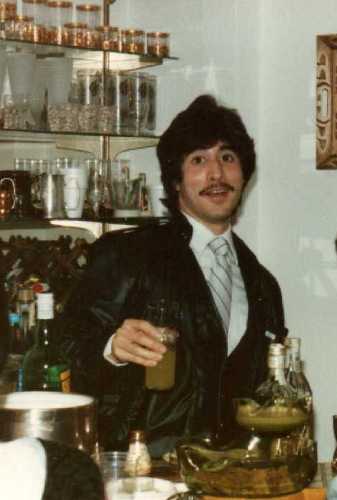
I commandeered the bar at the home of some long-time family friends on New Year’s Eve 1983.  My jacket was faux leather, but the hair was real!  When the hostess asked what speed she should set the blender to mix margaritas, ‘whip’ or ‘puree,’ I said, “Drunk.”

I commandeered the bar at the home of some long-time family friends on New Year’s Eve 1983. My jacket was faux leather, but the hair was real! When the hostess asked what speed she should set the blender to mix margaritas, ‘whip’ or ‘puree,’ I said, “Drunk.”

5 Comments

Filed under Wolf Tales

Through a Tiny Window

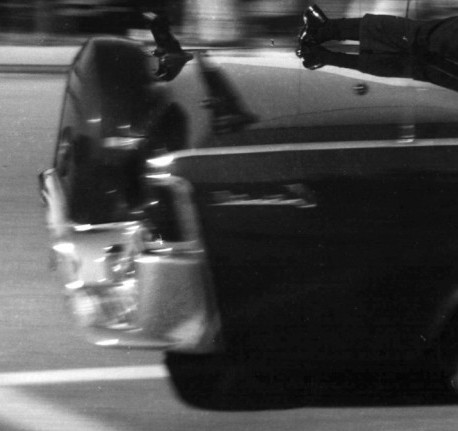
On November 22, 1963, I was just less than 3 weeks old.  At the time, my parents and I lived in an apartment above a garage owned by father’s oldest sister and her husband on the northern edge of downtown Dallas.  Through the small bathroom window, my mother caught a glimpse of President Kennedy’s motorcade, as it raced towards Parkland Hospital.  She had no idea at that moment what tragedy had just unfolded.

1122_rush-hospital-2

That siren; that God-awful siren!  It came from down the hall, and I had no idea why.  I had just turned on the TV to watch my show, “As the World Turns.”  My older sister got me hooked on it while I was on “maternity leave.”  Actually, in those days, there was no such thing.  Women just had to quit work and hope they had a job later, if they wanted it.  That’s fine, I’d told myself.  At that moment, with my new baby boy, I didn’t care about going back to a desk to argue insurance claims.

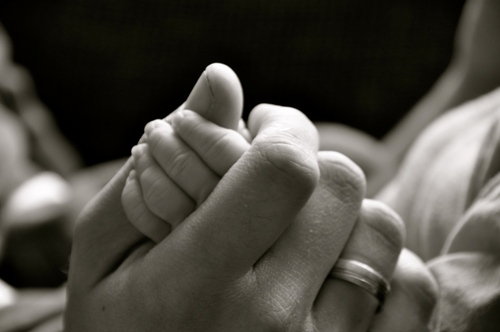
I’d almost died having him.  I wasn’t supposed to have him.  The doctors told me I just couldn’t have a baby.  But, my husband and I didn’t listen.  We turned our hopes to a higher authority.  I was almost 31, when he was born; so old to be a new mother back then.  I cuddled him close, as he quietly nursed; a diaper over his head.

It had been so hot – since summer!  Advice to future mothers: don’t get pregnant until summer passes.  Just a thought.  I had to sleep sitting up; otherwise, I’d choke to death.  We had a floor fan blowing all night to keep me cool.  My husband wore pajamas to bed that summer; the fan would make the room so cold for him.

But, why were those sirens so loud?  So many of them.  I scooted towards the bathroom window and looked to my right.  Through the trees in the back yard and the neighbors’ back yards I saw a flash of red lights and black cars.  Just a blur; a long streak of red and black.  For a second, I thought I also saw a flash of pink.  But, I think now it was just my imagination.

I knew President and Mrs. Kennedy were in town.  It would have been nice to go downtown to see them, but I couldn’t with the baby.  And, my husband had to go to work.

I went back into the front room, and the show had already started.  “Nancy” (Helen Wagner) was speaking to her father.  I don’t remember what they were talking about.  Then, without warning – in one of those moments that sears into your mind – Walter Cronkite interrupted the show.

And, said President Kennedy had been shot.

But, he was just here!

In Dallas.

The motorcade – that flash of red and black.  That’s what it was.

But, it was just there!

I’d just seen it.

I rushed back to the bathroom window.  I could see more traffic on Harry Hines.  I went back into the front room.

Walter Cronkite looked as if he was about to cry.  How do you announced something like that to millions of people and not break down?

I suddenly became terrified.  I had to call my husband.  Still cradling the baby, I dialed the phone from the bedroom.

The assistant manager – the owner’s brother-in-law – answered.

“I just saw on the news,” I told him.  “President Kennedy’s been shot!”

He was silent for a second.  “Is this a joke?”

“No!”  Why would he even ask that?  We didn’t joke about those things back then.

“Cathy, turn on the radio!” he said.

I looked at my baby, still nursing, oblivious to the world around him.  Is this the world he would inherit?  Where the president of the United States gets shot in broad daylight?

baby_hands

My husband came home early.  His boss had closed down the shop.  He was happy to see me and the baby.  But, he was as shocked as me – and angry.  “What’s wrong?”

“Some dumb son-of-a-bitch at work said he was glad Kennedy had been shot!”

Who would be happy about that?

That whole weekend – that entire, awful weekend – all we saw on TV was about Kennedy.  None of us could believe it.  My husband’s family gathered at his parents’ home to watch the funeral.  The black horse that wouldn’t cooperate; the long procession; the masses of people.  When John-John saluted his father, we all just about lost it.  This wasn’t really happening, was it?  I couldn’t say it out loud.  This couldn’t be happening – right?

Then, amidst the sadness and completely out of nowhere, one of my husband’s sisters-in-law asked, “Why are the flags only halfway up the poles?”

We all thought for a second or so and then, just looked at her.  Here she was, a hair dresser at an upscale salon, earning thousands of dollars every month when most people in those days only got by on a couple of hundred dollars, and she asks that.

My husband, sitting next to me, said, “Because they ran out of string.”

And, if I say we all felt guilty when we laughed, I’m not lying.  We literally burst out laughing.  Only my husband could say something like that and get away with it.  He then picked up a box of tissue and began offering some to everybody.

If I think about it now, it really hurts.  How could that happen?  Here!  Why did that happen?  That baby I held is now a half-century old, and the world is a much more violent place.

I close my eyes and think for a moment.

And can hear those sirens.

And see that flash of red and black.

And Nancy’s face.

And Walter Cronkite’s twisted mouth.

All from that tiny window.

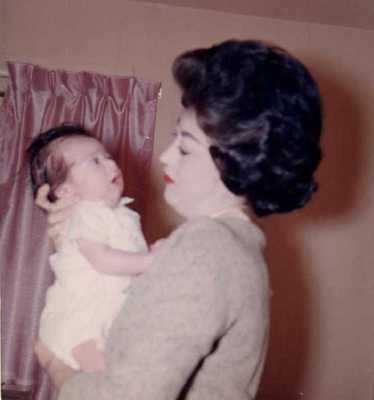
My mother and I on December 1, 1963.

My mother and I on December 1, 1963.

© 2013

1 Comment

Filed under Wolf Tales

Raymond

Man-glass-window-back-silhouette-900x1600

This is based on a true story.  In September of 1997, a close friend of mine was shot six times in an attempted robbery / carjacking – and survived.  He’s still alive, albeit with a tiny bullet fragment lodged in his body.  I’ve changed the names of everyone involved, along with a handful of other personal facts.

You know how they say you’ll always make one really stupid mistake in life that you’ll regret forever?  Well, mine had to do with my driver’s license.  I know those things are important.  But, at three in the morning?

I didn’t think twice about it after getting home from work.  I’d walked into my apartment, pulled off my work shirt and started settling in for the night, when I realized my license was missing.  I dropped my wallet onto the dresser and it fell open.  My old license was there – I could see it through the plastic sheath or thing or whatever you call it – but the new one was gone.

I looked all over the damn place for it.  I couldn’t make too much noise.  My roommate, Jake, was asleep and waking him up was like waking up a grizzly bear.  I mean, he would literally get that mad!  I kept telling him he just needed to get laid.  That sort of pissed him off even more.

But, I started to worry that I’d lost the new license.  I had just turned 35 and drove around for a month with an expired license.  It was a grocery store clerk who reminded me it was expired.

Damn!  Now, it was gone.  I stood in the middle of the front room, scratching my head.  It was almost 3:00 A.M.  Then, I thought it’s probably somewhere in my truck.  So, I made my way back down to it, making sure I locked the door behind me.  The neighborhood was starting to go to hell.  It seemed fights were breaking out every weekend.  People had been throwing shit into the bed of my truck.  I caught one guy doing that and jumped his ass.  I actually grabbed him by his little finger and walked the bitch back to my truck.  I made him crawl into the bed, pick up the soda can and toss it into a trash can that sat just a few feet away.

“My truck ain’t your fucking trash can!” I yelled at him.  “There’s this fucking trash can over here!  Are you too fucking lazy to walk over here?”

He and his two buddies walked away, making racist comments: ‘White bitch,’ ‘White boy,’ ‘honkee.’

‘Honkee?!’  I hadn’t heard that since I was in grade school!  Didn’t that word go out of style with bell bottoms?  I guess I should’ve pointed out that I’m Hispanic, but I was tired that night.  I’d argued with more than a few people in that dump and didn’t want to get into it with three teenaged assholes who were probably too stupid to read their own fucking names.

But, that’s the kind of shit we had to deal with, almost every day.  The lease was up for renewal in three months, and I’d already told Jake I needed to move.  I couldn’t stand the place anymore.  He wasn’t too happy about that, but I didn’t care.

So, there I was, sitting in the passenger side of my truck; looking through a large brown envelope for my fucking license at three in the morning.  I’d already searched the glove compartment and under both seats.  I remember stopping for a minute, wondering why the place was so quiet.  Usually there were a group of guys on the other side of the parking lot, drinking beer and staying stupid shit to every female who walked by.

But, it was quiet, really quiet that night.  And, just when I turned back to the envelope, I heard a noise.  I looked up and saw the black barrel of a gun pointing at from between the truck and the door frame.

“Don’t move, muthafucka!” said the guy.

I could tell he was Black, before I noticed another Black guy standing directly in front of the truck; that one had his hands on the hood.  And, I had just realized he didn’t have on gloves, when I bolted towards the rear of the truck.  I really didn’t think about it.  I just started running.

And, the guy with the gun started shooting.  I could hear those tiny pops.  You know how they say gunshots actually sound like firecrackers?  Well, that’s exactly what they sound like.  There was no booming sound.  Just those tiny pops – ten of them, I found out later.

Six of them found me; two in my back, one in my left leg; two in my right leg; and one in my right shoulder.

I felt them, but then again, I didn’t really feel them.  Does that make sense?  I don’t know why, but I didn’t realize I’d been shot that many times until later that day.  Or, maybe the next.

I don’t know how, but I managed to make it back to the apartment.  For some reason, I thought I’d dropped my keys and began banging on the door; shouting for Jake to let me in.

When he finally came to the door, he was – well, pissed.

But, I don’t really remember what he said to me, except something like, “Goddamnit!”

It wasn’t until I got into the apartment that I realized I had my keys in my left hand.

I think Jake asked me what happened, and I just said something like, “I’ve been shot!”

When the paramedics hauled me out of the place, I noticed lights on in almost every unit around there.  And, there was all this noise.  I guess people talking.  I heard a couple of dogs barking, too.

That’s all I remember before everything blurred.  And, I felt for a minute like everything and everyone was in black and white.  That’s how they looked; everyone in black and white.

Then, I heard a swishing sound, and everything was solid white.  That hurt my eyes.  But, it was the light coming from the hospital room window to my right.  I didn’t know what hospital.  Everything finally darkened a little, but it was blurred.  Something was stuck in my nose.  I felt like I was handcuffed – no, strapped.  My whole body hurt.  Something told me my moustache and goatee were missing.

A large object leaned over me; a big darkness – with gold, wire-rimmed glasses.  How the hell did I notice that?

“Well, you’re awake.”

I opened my mouth – at least that’s what I thought I was doing – but I felt like someone had poured sand down my throat.

“My name is Therese.”

Therese?  I don’t know any Therese.  Who the hell are you?!  Damn that fucking sand!

“Don’t try to talk.  Just rest, love.  You’ve been through a bad situation.”

She sounded funny.  Everything was already blurry.  But, it got blurrier.  And then, it darkened.

I heard that swishing sound again.  My throat still felt like it was filled with sand.  I could focus a little more.  The room was still bright, but I could make out more details.  Where was I?

Then, I heard a shuffling sound, like someone walking; someone trying to creep up on me.

“Hello.”

It was that same voice – the funny-sounding one.  Accented, really.

I rolled my head to the left.

“You feeling any better?”

I guess.  Damn sand!

“Just nod your head,” she said.  It was Therese.

How did I remember her name?

“You have a tube down your throat.”  She was a big woman; a big Black woman with gold, wire-rimmed glasses.  Jamaican?  Haitian?

I couldn’t tell.  Then, she smiled.  The prettiest smile I think I’ve ever seen.

Things got blurry again.  I think I started to cry.

“You’ve been through a lot, love.”

I felt a slight tap on my left hand – and I realized she was caressing it.

I’m not the emotional type.  I’m really not.  But, for some reason, Therese brought out the sensitive side in me.  She was from Nigeria, she told me later.  She’d been here for a few years.

Where am I?

“Parkland,” said Therese.  “You’re in ICU right now.”

I couldn’t hear myself talk.  What happened?  I felt warm and started to tremble.

“I really can’t say, love.”  Then, she seemed to disappear, and I guess I fell asleep again.

But, she came back and smiled so pretty again.  She removed the tube from my throat.  “You’ll be alright,” she said, caressing my hand.  “You’re already getting better.”  Then, she was gone again – and I really felt scared.  I didn’t pay much attention to the other nurses.  I’m sure they were nice, too.  I just don’t remember them.

I took back everything bad I’d ever said about Black people.

A doctor came in around that same time – I think – to talk to me.

But, even with that tube removed – and after several cups of water – I really couldn’t say anything.  What happened, I mouthed.

“I really can’t say,” the doctor told me.  She was a skinny, blonde who looked sexually anemic.  “I think the police will try to come by later – now that you’re awake.  But, you’ll be fine.”

Gosh, thanks.  That means a lot.  I didn’t hear or see her leave.  I just noticed after a moment – or maybe a hundred moments – that she was gone.  So was Therese.  I missed her.

The light from the window had gone away.  It was so much darker now.  Evening had settled in.

I could still tell my facial hair was gone.

“Raymond?”

“Yea.”  I looked up.

It was Jake.  He had a strange look on his face – one I’d never seen before.  He looked – scared.  This from a guy who’s mastered the bar fight and liked to drive his Harley in the triple digit speeds.

“I came by earlier,” he said.  “But, you were asleep.”  He cleared his throat.

“Okay.”  I felt warm.

“You’ll be alright, man.”

“What the fuck happened?”

“I think someone tried to steal your truck.  They shot you six fucking times, man!”

Goddamn!  I spent four years in the Army and saw a little bit of action – nothing to get me invited to the White House.  And, I get shot six times as a fucking civilian?

“But, you’ll be alright,” said Jake.

“I guess.”

“No, I mean it.  You’ll be alright.  They’ll find out who did this.”

“Yea.”

“I called your mom and told her what happened.”

“Okay.”

“She’s trying to get a flight down here.”

“She – she’s never been to Texas.”  I’d been back to Montana a few times.  But, no one in my family had been down here.

“She has my cell number and my work number.  I told her to call me when she gets in.  I’ll go pick her up at the airport.”

“Okay – yea.”  It hurt just to take one measly breath.  “She’s never been down here.”

“Well – I need to go.”

“Alright.”

He left.  Funny, though – how he looked.  Like he was really concerned.

I noticed a phone on the table to my left.  I guess I should call my own mother.  Or, maybe my brother, Alan.  Or, my sister, Amanda.  Or, James.  Or, Diana.  Or, Michael.  Or, maybe they should just stay up there in Montana and not worry about me.  It was so goddamn long before any of them called me once I moved to Texas.  Alan actually tracked me down about ten years ago.  Dad wanted to make amends, he said.

“For what?” I asked.

“For everything,” said Alan.  “Things are different now.  They’ve kind of softened up a little.”

“Define ‘softened up’.”

“Come on, man!  Don’t be such a hard ass.  Things really are different now.”

I could hear him thinking.

“We miss you man.”

That shocked me.  I mean, literally!  No one in my family had ever missed me.  Not when I joined the Army and wrote all of two times during that four-year hitch.  Not when I took off for Yellowstone after getting out and was gone for almost two weeks.  (Nothing can settle your troubled mind like Yellowstone!)  None of them seemed to miss me, when that teenage girl ran a red light and slammed into my car.  I was 17 and was in the hospital for a day, before anyone came out to see me.  That one incident is why I joined the Army on my 18th birthday.  And, no one gave a shit when I left Montana…what – fourteen years ago?  Something like that.  I guess being the youngest of six has its down side.

Dad wanted to make amends?  Okay.  I’ll bite.  Amanda sent me an airline ticket for Christmas that same year.  Okay, I’ll see how it goes.  It actually went pretty well.  But, I still didn’t feel ‘missed.’

Now, Dad was gone.

I picked up the phone – and called one of my closest buddies, Lance.

“I was running for my life,” I told him.  He later said I was breathing hard – like I was at an obscene phone caller’s convention.

“I’ll be there as soon as I can,” he said.  “Just hang tight, bro!”

I looked at the tubes.  Yea, I think I’ll just hang out here for a while.

I didn’t hear Lance come into the room.  “What day is it?”

“Saturday,” he answered.

The window was dark.

“Let me close these,” he said, walking around to the draw the drapes.  “Have you talked to your mom or anyone back home?”

“No, not yet.  Jake said he called my mother.”  It still hurt to breathe.  “She’s never been down here.  None of them have.”

Lance is one of the few really good friends I have have – a true friend; the type who comes around even when all sorts of shit lands in your face.  We’re about the same age, but from two totally different backgrounds.  He’s a native Texan and has only one sibling: an older brother.  He’s really close to his family.  And, so am I.  They’re the best people you could ever know.  I don’t know what time he left, but he vowed to be back the next day.

He kept his promise – like he always did – but, that next day is when my mother finally showed up.  I’d never called her.  She hadn’t called me.  Jake escorted her into my room.

“Oh, my God!” she hollered.  I forgot how loud she could be.  “What happened?!”

“Hell if I know,” I said.  I can tell you why the sky is blue, but I can’t tell you why some dumb fuck decided to shoot my ass!

I think I can honestly vouch for most men and say that a hospital is the last place you want your mother to see you.  But, here was mine – looking as disorganized as I felt.  I was more lucid by then, so I could counteract anything embarrassing she said about me.  But, she didn’t say anything that made me cringe – except that she wanted to return home.

I guess Jake and I thought she would just go back to the apartment with him.  But, she didn’t want that.  She was too scared.  And, the hospital wouldn’t let her stay in the room with me.  It was ICU – even if it did have a window – and they had to keep the room clear.  The head nurse – who looked like a gym teacher gone wrong – told us so.

“Just take me back to the airport,” my mother told Jake.

“Oh, Jesus,” I remember saying.  I was so warm and almost nauseous.

“That’s probably the morphine,” Lance told me.

“I don’t need this right now.”

The gym nurse told my mother that she could spend the night in the waiting room; security patrolled the area hourly.  She, Jake and Lance checked it out and returned to my room.

“I’m not staying there!” my mother announced.  “Just take me back to the airport.”

Then, Lance said something that surprised even me.  “Why don’t you come home with me?  It’s Sunday, so I can just bring you back here on my way to work in the morning.”

My mother looked at him kind of strangely; wondering, I guess, if he was sincere.  Jake looked at him funny, too.

I finally spoke up.  “I know him!  I trust him.  He has a spare bedroom; he has food; you’ll be safe there.”

“Okay,” she said.  She relented.

They all left at 9:00 P.M.

Lance brought my mother back down, as promised, the following morning and then headed on to work.  At some point, before that, though, I managed to call my boss, David.

“What the fuck?!” he said.  The ‘f’ word was one of his favorites.  What do you expect from someone who’s worked his entire life at a muffler plant?

I stayed in the hospital four more days.  My mother stayed at my apartment, sleeping in my bed.  She stayed two more days after I got out.  Jake drove us to the airport to see her off.  For the first time in I don’t know how long, I missed having her around.

“Are you alright?” Jake asked me on the way back to the apartment.

“Yea.”

It was a while before I could return to work.  Building mufflers is tougher than it sounds.  But, working around a bunch of guys who railed my ass about getting shot made up for it.  Even Lance joked – in front of mother, no less – that the gunman should’ve aimed for my head.  “That way the bullets would have just bounced off!”

hands-silhouette-behind-the-window-photography-hd-wallpaper-1920x1200-3468

I regrew my goatee right away, which I hoped – like working again – would bring some type of normalcy back to my life.  Even if I had a memento from the shooting: a tiny bullet fragment in my shoulder.

And, that’s when things started to happen very fast.  I moved out of the apartment with Jake and into the home of another buddy whose girlfriend suddenly decided she wanted to be single again.  That arrangement lasted for all of three months.

Then, I found a place closer to North Dallas, but further away from work.  When I heard a popping sound late one night, I left that joint – even when I found out the popping sound was a guy beating up his girlfriend in the parking lot.

I found another place closer to work.  That seemed okay for a couple of months – until the couple upstairs started a screaming match at five almost every morning.

“Why don’t you just move back up here?” Alan asked me one Saturday night.

I was already drunk on Coors.  “I can’t.”

“Why not?”

I couldn’t say.  “Well – I can’t afford it right now.  Not all the way up there.”

He grumbled.

I just couldn’t bring myself to say I didn’t want to be so close to them.  When I joined the Army, I vowed never to return.  I did, of course, but for all of four months.  My dad still wasn’t satisfied with me.  I could never please that man.  I don’t know why.  That youngest child thing, I guess.

But, I really couldn’t afford to pack up and move.  I was tied down to that apartment – and those screamers – for eighteen months.  When that ended, I moved yet again; this time just south of Dallas.  It was actually a nice little one-bedroom apartment.  And, the area was quiet.

It was amidst that quiet when I first gave serious thought to that tiny bullet fragment.  By the time I’d moved to Southern Dallas it had migrated down to my elbow, just above it actually.  If I pressed down on the area, I could feel it.  If I drank enough Coors, I couldn’t even tell it was there.  In fact, I forgot about it.  Then, I’d forget about the license – and the truck – and the gun – and the firecracker sounds.

It’s so nice to forget those things.  It really is.  It means everything in the world to me.  Just forgetting.

I still don’t know who shot me.  The police dusted my entire truck for fingerprints.  There was so much fucking fingerprint dust it almost looked black instead of blue.  I don’t remember talking to the police in the hospital.  But, I remember saying bye to Therese the day I left.  She had the prettiest smile.

I’ve lost touch with Jake, but I hear from Lance all the time.  Lance is one of the few friends who actually remembers what happened – but doesn’t hassle me about it.  He just has a different way of asking.

If I stand naked in front of the mirror, I’m glad all those fucking surgical scars have disappeared.  I’m not conceited.  I just didn’t like looking as if I was a rag doll patched together and sold at the Salvation Army.

So, I look at my new truck and the now ten-year-old license and try not to drink too many Coors – even if it means I’ll feel that bullet fragment.  Even if it means I’ll sit up at three in the morning and see the barrel of that gun.  Even if it means – even if it means I finally understand I’m not stupid.

It means there’s a lot more to me than just that once incident.

8 Comments

Filed under Wolf Tales

Last Wish

autumn-leaves

September 12th fell on a Sunday in 1993, and I was sick.  I lay in bed that night, listless and fatigued, when the phone rang at 10:12 P.M.  Curiously, I hadn’t turned on the answering machine, as I always did before going to bed.  But, I knew who lingered on the other end – even before I answered.  It was Linda*, the mother of one of my best friends, Daniel.

“He’s gone,” she whispered, her voice raspy and quivering.  She’d walked into his bedroom earlier that evening and found him with his eyes half-open.

We talked for quite a while, although I don’t remember all that was said.  But, I do recall telling her, “It’s over.  It’s finally over.”  Then, I went to sleep.  But, I wasn’t sad.  In fact, I was – not happy – but relieved.  Daniel had stopped suffering – and maybe so would his mother.

That night, though, I wondered why I was so sick.  Just allergies, I kept thinking; that’s all it was.  I’d realized years earlier how my allergies usually coincided with the Atlantic / Caribbean hurricane season, becoming most severe in August and September.  In reality, it’s the change from summer to autumn, when mountain cedar and ragweed blossom with impunity.  But, I have this obsession – almost a fetish – with tropical storm systems, so I make that odd comparison.  Yet, that year was different.  The infection seemed to have settled in my stomach, instead of my sinuses.

I’d felt fine the preceding weekend.  I’d visited Daniel and Linda that Monday, Labor Day.  I gave Daniel a much-needed bath and shave, trimmed his nails and put him back to bed.  I also vacuumed and mopped the kitchen floor.  I chatted with Linda for a while.  Her hands trembled, as she sat on a couch; as much from growing arthritis as dealing with Daniel.

“I don’t know how much longer I can go on,” she mumbled, staring at the floor.

“You’ll make it,” I said, trying to reassure her.  What else could I say?

I’d met Daniel at birthday party for a mutual friend four years earlier.  We were two completely different people, but had a few things in common: dogs, cars and rock n’ roll.  Like me, he also had been born and raised in the Dallas area.  He was the third of four children to parents who were mixed Irish and Cherokee Indian extraction.  He didn’t have a happy home life.  When his father wasn’t working, sometimes six days a week, he was drinking booze; occasionally, he’d burst into drunken rages, a stereotypical drunk-ass Irishman or Indian and lash out at anyone nearby.  Linda often bore the brunt of his attacks, until the night her oldest son lunged into his father.  For Linda, that was the proverbial last straw; the catalyst that prompted her to pack up the kids and leave.  By the time I met Daniel, his father had died.

As I’d planned, I took the day after Labor Day off from work.  I visited my gym to lift weights, worked on a short story and partook in a Tae Kwon Do class that evening.  The Tae Kwon Do session exhausted me, even though it wasn’t particularly intense.  I thought nothing of it until the next night, when I returned to the gym and left after less than an hour.  Fatigue settled over me like a ton of hot, wet blankets.

I awoke the next morning feeling awful; body aches and chills and a stomach that was churning like – well – like a hurricane.  My supervisor sent me home just after noon.  I sat near the building, waiting for the bus.  The late summer sun warmed me up, and I stopped shivering.  I felt well enough to stop by a fast food place on the way back to my apartment – and regurgitated the food that night.  I stayed home the next day, but returned to work on Friday.  I spent most of Saturday in bed; no energy, no strength.  Damn allergies, I kept telling myself.

On Sunday, I visited my parents for lunch as usual.  My father grilled steaks – their thick, juicy aromas wafting throughout the house, intermingling with the scent of the butter-saturated mashed potatoes my mother made.  But, I couldn’t eat.  I was still nauseous.  My dad suggested I visit their family doctor, if I didn’t feel better by the next day.  He even offered to pay, since my finances were strained at the time.

I had just purchased my truck six months earlier and was still paying off credit card bills for repairing my previous vehicle.  I had health insurance at work – with a $1,000 deductible.  I told them I’d be fine.  It was just those goddamned allergies.

I had been anticipating that call from Linda for months.  I knew somehow it would come at night.  She called me because I was one of the last friends Daniel had remaining; one who didn’t turn his back on him.  That’s just not my nature.  I didn’t have many friends back then and I still don’t.  But, the people I do consider friends mean a lot to me.

It’s amazing, though, the number of friends people lose when they fall on hard times – even when they become terminally ill.  Some time in the 1970s, my mother’s hair dresser became seriously ill and had to be hospitalized.  When my parents visited him, he mentioned they were among the few who’d made the effort.  All the people who were quick to accept his party invitations where mounds of food and alcohol would be served were curiously absent as he lay in a hospital bed hooked up to an IV.

I think Daniel had known he was HIV for at least two years, but he didn’t start getting sick until the spring of 1992.  By then, he was unemployed and uninsured; he could no longer afford his suburban Dallas apartment.  In May, I and another friend moved him back into his mother’s home in another Dallas suburb.  Daniel’s health deteriorated throughout that summer, but unexpectedly – almost miraculously – began rejuvenating by fall.  He gained weight and color returned to his face.  He actually looked pretty good when I spent Christmas Day with his family, including his two older siblings; younger sister, Andrea; sister-in-law; and a niece and nephew.  I took a photo of them as they gathered around a couch; one that Linda placed on her refrigerator, beside another picture of her beloved mother.

We all thought – if only for a moment – he would make it.  In less than six months, however, Daniel’s health began crumbling again.  And, one by one, his gallery of friends slipped into anonymity.

I took my father up on his offer.  After a cursory exam, the doctor stepped back into the room and asked, “Have you ever had hepatitis?”

“Hepatitis?  No.”

“Well, I think that’s what you have.”

Hepatitis!  If he had told me I was pregnant, I would have believed him sooner.  Hepatitis!  Wasn’t that an old world disease – like small pox or typhoid?  No one got that shit anymore.  But, that’s what I had – Hepatitis A, the contagious kind, and a particularly vicious strain of it, too.  The doctor hospitalized me – almost against my will.  I stayed there through the following Wednesday – the day they buried Daniel.

“Where’d you go?!” Linda cried that Wednesday night on the phone, a sense of betrayal coating her voice.

I told her what happened.

Her anguish shifted to empathy.  “Why didn’t you call me?!  I would’ve come visit you!”

“But, Daniel had just died, Linda.  And, I was in the hospital.”

“But, you’re my other son!”

I had helped Daniel pick out his burial suit in the spring of 1992.  He hadn’t bought a new suit in years.  He must have scoured through a hundred of them before he latched onto that one.  He zipped it up and stored it in the back of his closet, complete with a matching tie and a new white dress shirt.  He was proud of the ensemble; he wanted to be buried in style.

“You are going to be a pallbearer,” he asked me, “aren’t you?”

“Of course,” I said.  What a silly question.

Watching a loved one die and not being able to do anything about it is the most frustrating emotion anyone can ever experience.  I’d seen cancer consume my Aunt Mariana, my mother’s older sister, a few years earlier.  It just wouldn’t let her go, until one rainy Tuesday morning in June of 1989.  She’d already known tragedy.  Her first husband died in a freak car crash in 1968; practically leaving her to raise their six kids alone.  In January of 1983, one of her daughters took her own life.  Mariana had entered into a brief marriage with a man who – later on, as she fell ill – didn’t seem to understand she was in no mood for sex while undergoing chemotherapy.  What, I beseeched God, did she ever do to deserve all that?

I asked God the same of Daniel and Linda.  What did they ever do to bring this upon themselves?  God remained silent.  He / She always does.  But, it made me angry nonetheless, and I finally just blurted out, “Fuck you, God!,” into my darkened bedroom.

Daniel was especially close to Andrea who’d completed nursing school about two years before he passed away.  She had moved into an apartment complex across the street from him and became involved with a truck driver named Jimmy.  Jimmy was part Cherokee, too, and unfortunately, fed into the stereotype of the same drunk-ass Indian as Daniel’s father.  One night Jimmy returned to the apartment he shared with Andrea and attacked her.  She managed to call Daniel before Jimmy snatched the phone from her.  Daniel had been asleep, but donned a pair of exercise shorts, charged across the street and barreled into his sister’s apartment – where he beat Jimmy into a bloody, shriveling mess.  The police took both of them to jail, but released Daniel almost immediately.

Recollecting what his father did to his mother, Daniel was unrepentant about Jimmy.  “Now, he’s going to have to tell the guys in prison that an AIDS-infected fag beat his ass!”

In November of 1992, I happened upon the obituary for a guy I’d known in grade school.  He was 29 and had died after a “brief illness” – code words, a friend told me, for AIDS.  I revealed the true nature of Daniel’s death to only a select few people.  Even in the early 1990s, the affliction bore a terrifying stigma.   I told most everyone else – my parents, my colleagues – he’d succumbed to cancer.  I just didn’t want my folks to worry anymore about me than necessary.  My workplace, on the other hand, was populated with evangelical homophobes – the kind who preach forgiveness and compassion, but practice hate and bigotry.

Daniel always introduced me as a “true friend” to people he knew.  I was embarrassed, since I felt I was doing nothing extraordinary.  But, to Daniel, I was someone who gave my compassion and generosity, asking for nothing in return except trust and respect.  I promised him I would stay with him through the end.  And, I did – until the night he died.

For anyone who’s ever lost a relative or friend, there’s always something that triggers thoughts of that person; something relatively small and insignificant – a color, a sound…something that literally makes us stop and think about the better times we had together.  In 1992, a group called Snap! came out with a song entitled “Rhythm Is a Dancer.”  Both Daniel and I really liked that tune.  We’d visited a nightclub together in late 1992 where the deejay played it.  I don’t know what it is about that song, but it bridges a connection to Daniel and how good life was for me in the early 1990s.  So, I listen to it now, and all the feelings of  friendship and those carefree days flood my subconscious.  It’s just one of those things that transport me to ‘Way Back When.’

Daniel had two dogs when he returned to his mother’s home – a male named Alan and a female named Veronica, both Lhasa Apsos.  The male was fiercely protective of him.  The female was spoiled; Daniel had the habit of carrying her wherever they went, instead of letting her walk.  As Daniel’s health waned in the summer of 1993, he and his mother made the painful decision to turn them over to the local animal shelter.  Two years after Daniel died I seriously thought of purchasing a dog and just happened to peruse the ads of the local newspaper for animals, when I saw a blurb about an “adorable white Lhasa Apso named Alan.”  I almost fell off my easy chair.  Is it…no, it couldn’t be!  Surely, it’s not… I didn’t know what to think.  I realized, though, that I couldn’t afford a dog at the time.  I could only hope some good families adopted Alan and Veronica.

We measure the important events of our lives in the increments of time we know: one week, one year, five years, ten years.  Seven weeks after Daniel died I turned 30.  My colleagues at the bank bought me an ivy plant – which I still have – and treated me to lunch.  They also bought me a mechanical red crab emblazoned with the words ‘30 AND STILL CRABBY.’  You wind it up and it marches along the surface in the standard sideways crab walk.  I still have that crab, too, buried among my slew of possessions.  In seven weeks I’ll turn 50.  Life keeps moving, no matter who lives or dies.

I’ve always wondered why I never dreamed of Daniel.  I didn’t expect his ghostly apparition to appear before me one dark and stormy night – albeit something like that wouldn’t have frightened me.  But, I kept thinking he should at least visit me in a dream to tell me he’s alright.  Or, I hoped he would – just for my own peace.  Is he mad at me?  Did he think that I’d abandoned him at the last moment?  But then, I realized I’d never dreamed of my Aunt Mariana either.  And, we were family.  When I was a child, she’d sit me down at her dining room table and feed me.  Was she mad at me, too?

No – of course not.  I finally understood that I’ve never dreamed of them because they didn’t need me anymore; me or anyone else.  They’ve gone on to another and hopefully better life.  My job was done, as far as they’re concerned.

I did for Daniel what few people – friends or relatives – would do: I took care of him at the worst possible moments of his life.  I bathed him, I fed him, I took him shopping for that suit, I gave him all the undivided love and attention I could muster.  I even cared for his mother because her own body – racked with arthritis and emphysema – allowed her to do only so much.  Some people do good just to send a get-well card.

September 12th fell on a Sunday in 1993, and I was sick.  I couldn’t do anything about it then and I can’t do anything about it now.  I did what I could for my friend – the first friend I’ve ever had who died.  My last wish for him and everyone else who has gone before me is to know that they’re safe and happy.

I’ve finally convinced myself they are.

*All names have been changed.

6 Comments

Filed under Wolf Tales

97 Years and a Lifetime of Stories

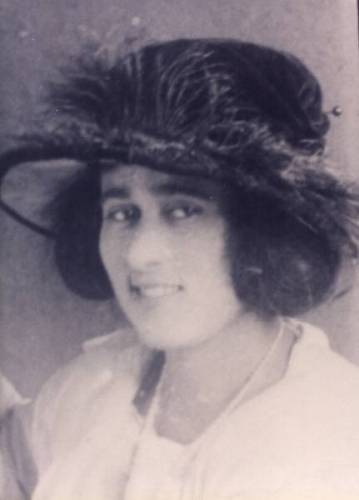
Francisca in 1923

Francisca in 1923

This is actually a re-post from last year.  Currently, I’m working with my father to compile our family history, which is more of a labor of love than anything.  But, I also want to isolate his mother’s life as a separate project.  I find it’s been rather difficult, since it requires me to be somewhat detached.  It’s easy to get so wrapped up in a love one’s story you lose focus.  You just have that natural connection that no one else can understand.

Today marks the 110th anniversary of the birth of my paternal grandmother, Francisca Riojas De La Garza.  She died in February 2001 at the age of 97.  She was the last of my grandparents.  My mother’s mother had died in México City in 1940.  My paternal grandfather died in Dallas in 1969, and my other grandfather passed away in a suburban Dallas nursing home in 1983.  I vaguely remember my father’s father and I really didn’t get to know my maternal grandfather.  But, as in most families, I know a lot about all of them.  They each led interesting lives, equally filled with joy and tragedy.  A friend of mine once said, if she knew how much fun her grandkids would be, she would have had them first.  Grandparents hold a special place in the family unit.  Really good grandparents shepherd their loved ones through life with their own tales of growing up way back when.  They keep families together.  They are the center of the clan; the matriarch or patriarch who seems to know and see everything.  When they die, it’s still unexpected.  When Francisca passed away, my father’s large family appeared to disintegrate.  No one gathered for Thanksgiving or Christmas Eve.  No more birthday or wedding celebrations.  Everybody – especially us grandkids and great grandkids – went our separate ways; creating our own families and thereby, our own lives.  I guess that happens sometimes – even in the closest of families.

Francisca was small, barely 4’11,” but she had a strong personality accompanied by an even stronger voice.  Small women always seem to have the most indomitable of spirits.  I should know – one gave birth to me.  Francisca was born in Rosales, Coahuila, México in 1903, the 4th of 11 children; the oldest daughter.  Her father, José Manuel Riojas, was a captain in the Mexican military; a tall blond, blue-eyed man who actually worked as a bounty hunter under the direction of Venustiano Carranza, a leading figure in México’s bloody revolution that began in 1910.  Her mother Concepción died in 1918 of the “Spanish flu;” the pandemic that took millions of lives across the globe at the close of World War I.  Francisca cared for her mother as any loving daughter then or now would; feeding and bathing her, changing her clothes, praying for her, holding her hand tightly as Concepción took her last breath – without concern for her own health or fear of the unknown.  She then became a surrogate mother to her younger siblings.  In 1920, as the revolution came to a close, José Manuel moved his family to Eagle Pass, Texas, a town just north of the Rio Grande.

That’s where Francisca met her future husband, Epimenio De La Garza, a local carpenter ten years her senior.  They married shortly before Christmas 1924 in another small South Texas town.  Not in the Catholic Church, as Mexican tradition would have dictated, but in civil court.  The church wouldn’t allow them to wed – they were first cousins.  It was one of those classic long-held family secrets that no one really knew about and no one really cared to discuss; certainly not around the Christmas tree while the kids opened presents.

The De La Garza family had arrived in South Texas in the 1580’s.  Texas and the rest of what is now the American Southwest were all part of Nuevo España, or New Spain.  The De La Garzas came as explorers and ranchers, not conquerors.  They considered the indigenous peoples friends and confidants, not vermin.  They established large communities, including schools and churches.

Juan Ignacio de Castilla y Rioxa arrived in Veracruz, México in 1732 with an entourage of fellow military officials and clergymen.  His goal was simple – he planned to marry a young woman with whom he’d been corresponding.  The Castilla y Rioxa family was related to Spanish royalty, descendants of the “Kingdom of Castilla.”  One of their ancestors was Queen Isabella, the monarch who funded Christopher Columbus’ voyage 200 years earlier.  Some time towards the end of the 18th century, the name Rioxa became Riojas, and in the 1860’s a Riojas married a De La Garza.

But, my grandparents weren’t concerned about family – royalty or not.  They wanted to build a life together.  They had 11 children; 4 of them – 2 boys and 2 girls – died as infants.  It’s difficult to understand how life was like a century ago, when couples had so many children and accepted the deaths of some as a cold, hard fact of their world.  No one of my grandparents’ generation feared death the way people do now.  Back then, it was the norm; another cycle of life to be respected and honored.  It wasn’t so normal, however, for a person to live as long as Francisca did.

The best part of a long, healthy life is the ability to recount your history and share it with your loved ones.  Every elderly person has some story, though, that seems almost too fantastic to be true.  But, they’re the kind of real-life experiences that could have only happened way back when; in another time and another place.

When she was about 8 or 9, Francisca was visiting an uncle’s ranch and playing with her cousins beside a stream that ran behind the main house.  The girls suddenly noticed a group of government men – federales – off in the distance.  Francisca’s cousins dared her to shout “¡Viva Carranza!” at them.  Apparently not one to back down from a challenge, my grandmother climbed atop a mound of dirt and shouted just that: “¡Viva Carranza!”  It startled the men who turned in her direction.  But, they immediately saw that it was just a small girl; a brat, they probably thought.  After a moment, however, they turned a canon towards the girls – surely just intending to teach them a lesson – and fired a shot into the stream.  Water drenched Francisca who hadn’t yet retreated.  The blast caught the attention of others nearby and propelled Concepción out of the ranch house.  Seeing that it was her own daughter soaking wet, she charged forward and grabbed my grandmother by one of her braids.  As Concepción ushered all the girls back into the house, several local men arrived at the stream with their own weapons, and a brief skirmish erupted.

Like I said, small women have the grandest of egos and they always seem to cause all sorts of commotion.

The day after my grandmother died, my father sat in a chair in the den of her house; staring out the patio door at the expansive back yard.  His father had built that large red brick house in 1957.  It had always been there, as far as I was concerned.  I knew no other home swelling with such memories of happiness and good food.

“What’s wrong?” I asked my dad, just trying to make conversation amidst all the gloom.

“Oh, just thinking about all the times we’ve spent in this house,” he replied quietly.

But, I already knew that.  Whenever a loved one dies – even if they’re very old – we feel sad; mournful not just because of their death, but our loss.  We can be selfish with those we love the most.  But, we reserve that right.

That home is gone now.  I mean, the large red brick house is physically where it’s always been on Midway Road in North Dallas.  Yet, the home is gone.

The memories are still here though – with me and my father.  Francisca’s body is gone as well – but she’s still around.  It’s just a natural part of the life cycle my parents and I don’t fear.

1 Comment

Filed under Wolf Tales

Golden Eyes

Whale-Shark-Tail-Fin-800x600

By Alejandro De La Garza

Okay, you know those stories where people start off by saying something like, ‘You’ll probably think I’m crazy,’ or ‘You’ll never believe what I’m about to tell you’?  Well, I won’t exactly say that, but …

I’m such a practical person.  I guess you’d expect that of a paralegal.  I couldn’t even imagine swimming in the ocean in February.  But, when I went to Easter Island last year – February last year – with Cindy and Jessica, that’s exactly what we did.  Swam in the ocean – in February!  It was in the middle of their summer, like August up here.  But, Houston is nowhere near as beautiful as Easter Island.  I’ve always said I wanted to get stuck on a remote island for a while – just to clear my head.  That’s why I took that one trip to Yosemite – just to be alone and think about things.

I have to admit I really didn’t want to go.  I was still so upset after breaking up with Robert right after that Labor Day mess.  I just wanted to sulk.  I mean, right in front of everybody, like we were on a talk show, Robert announces he’s done with me.  Done with me?!  Like I’m an old cell phone.  I should have seen that coming, but I just didn’t.  I wanted everything in life.  I already had the perfect career.  I just wanted someone to share it with.  Robert seemed like the perfect man for me.  He wasn’t controlling and he didn’t want to jump in bed as soon as we met.  After a year, though, I sensed something was wrong.  I thought it was because of Cindy and Jessica.

Cindy, Jessica and I have been friends for years.  We’re always hanging out, going places, flirting with men, crying on each other’s shoulders.  We’re all business professionals, but if you saw us in a social setting, you’d think we were a comedy troupe.  I think most men get scared of us.  But, we really have a lot of fun together.  In fact, I have more fun with them than I ever did with Robert.

I think Robert was kind of jealous of Cindy and Jessica.  They didn’t like him anyway; they just sort of tolerated him.  But, then again, he didn’t really care much for them either.  They all tried to be respectful of one another.  Cindy and Jessica knew how I felt about Robert, so I guess they didn’t want to interfere too much.  But, when things started to go bad between Robert and me, I had no one else to turn to, except Cindy and Jessica.  They’re two of my best friends, and we’ve always been there for one another.

It was about two weeks after the Labor Day blow-up that Jessica suggested we take a road trip out to San Antonio.  But then – literally out of nowhere – Cindy mentioned Easter Island.

For some reason, I had the impression Easter Island was some sort of giant nature reserve; off-limits to tourists.  But, I was pleased to find out it’s not.  Even before I could say anything, Cindy started making travel plans.

“Girl, I’m not in the mood to go anywhere now!” I told her.  “Not even a road trip!”

“Damn, Susana!” she said.  “You can’t be acting like this!”  She was pissed that I was still upset about Robert.

But, she was right.  I couldn’t let him ruin my life like that.  I spent most of my time sulking.  Then, it dawned on me that all three of us were single; none of us were in a relationship at the time.  That hadn’t happened in a while.  One of us had been involved with someone at some point over the past few years.

I knew planning for a trip to a place like Easter Island takes plenty of time and energy.  It’s not a just a simply plane flight away.  It’s almost halfway around the world.  And, because of my legal background, I suppose, I just don’t make spur-of-the-moment plans.  We’d always left that to Cindy.  She was the wild one of the bunch.

But, I finally just said, ‘What the hell,’ and started getting ready.

I don’t know what’s the worst part about vacations: the packing or the traveling.  I didn’t know what all to take with me.  I knew I had to take my hair and skin care stuff.  I never really bother with nail polish.  I only use clear polish.  Cindy’s nail polish always has to match her shoes.  Then, Cindy had to get a passport.  She just barely made it by the time we took off.

I can sit in a conference room for an hour discussing the minutia of legal strategy, but a 15-hour plane flight will test anyone’s patience.  So, in retrospect, I guess the actual traveling is the worst part.  But, all the while, Cindy kept saying, “Just think of those beaches!  Just think of those beaches!”

There’s absolutely nothing like being on an isolated island.  It’s a wonder humans ever made it there in the first place.  They had to have found it just by chance.  It’s such a tiny speck of land, almost in the middle of nowhere.  I just find it amazing.

On our first day, we met a middle-aged man named Atamu.  He was incredibly friendly – aren’t all island residents friendly? – and rather handsome.  He had such a pretty smile, and his eyes would literally light up; they had a gilded tint to them.  His deep auburn hair was thick and wavy.  Atamu was born and raised on the island and worked to educate people about the importance of caring for the environment.  Easter Island has a rather nasty legacy of environmental destruction.  Atamu kept insisting the world, as a whole, could learn from the mistakes his ancestors made.

I never really thought that much about the environment – not to the level of actually doing something about it.  That’s what Cindy does.  She really takes those things seriously, and I guess I should, too.  Cindy and Atamu ended up becoming fast friends.  She has that really outgoing type of personality, whereas Jessica is more moderate, and I’m more subdued.  So, if the three of us go anywhere new, Cindy is usually plays the ambassador role.

But, you’d think Cindy and Atamu had known each other for years.  They fed off each other, almost like a married couple.  It was so funny watching them.  Atamu naturally took visitors on tour guides.  Of course, we had to see the giant mo’ai; those monolithic heads lined up along the coasts.  We probably learned more than we ever needed to know about those things from Atamu.  But, it’s a fascinating piece of history.

We stayed at a resort near the town of Orongo on the far southwestern corner of the island.  It was late on that first day when we made our way to a beach.  After all, that’s why we were here.  The resort sat back in a cove-like setting, so it looked like we were surrounded by land on three sides.  But, I have to say the waters of the South Pacific are unbelievable!  I’ve never seen water that shade of turquoise.  It was truly as breathtaking as the mo’ai.

But, just being on that island, thousands of miles from home, far from anything, put me at ease like nothing had ever done before.  We did the usual touristy things, of course, aside from heading out to look at the mo’ai.  But, we always headed for that beach.

On our third day there, I trotted out to the water’s edge as usual.  I just waded in until the water was knee-high.  Then, it suddenly began to swell around me, and before I knew it, I was being sucked further out into the ocean.  It startled me at first, but at the same time, it was exciting.  There was that rush through my brain.  I felt at first I was going out too far.  Then, I managed to kick my way to the surface.  I was further away than I thought, but it didn’t bother me at all.  I had so fallen in love with this place!

I started swimming back to shore when I felt something grab at my feet.  It scared me because I instantly thought about sharks.  And then, jellyfish.  I don’t know anyone in their right mind who wants to encounter either of those things.

I kept swimming, but it grabbed me again – and I realized instantly it didn’t feel like an animal mouth.  It wasn’t a shark biting down on my ankle, or a tentacle wrapping around it.  It was literally someone gripping me – a hand.

My first thought, amidst all the confusion, was that someone had been swept out along with me and they were drowning.  I remembered something about rip tides and I thought that’s what was happening.  I’d been caught up in one of those rip tides, along with somebody else – although I didn’t recall seeing anyone near me.

But, it really startled me badly.  I mean, bad!  And, I’m used to dealing with lawyers, mind you.

So, I started thrashing around; doing an alligator death roll-type of movement to scare them away.  But then, they grabbed me again.  Whoever it was beneath me had managed to get a grip on my ankle.  Then, I realized they had both ankles.  Whoever this person was – panicking under the water – had grabbed both my ankles.  That’s when I started to lose it.

Then, they pulled me under.  This poor soul was drowning – and I was going right along with them.  Well, I thought for a second, at least I’ll die in paradise.

But, the panic set in – unlike anything I’ve ever experienced before.  I’ve been scared, but I’ve never been terrified.  And, I mean truly, absolutely, undeniably terrified!

This person kept pulling me downward.  They really had a firm grip on my ankles.  I stopped thrashing around.  I hadn’t even thought about screaming because it startled me so much.  But, under water…well, no one can hear you scream.

Whoever this person was kept putting their hands on me, as if inspecting me.  I was too scared to get offended.  Then, as I floated down, it got dark; really dark.  Dark, dark blue – indigo.  The bright turquoise color had gone, as had the sun – and the sound of the waves.

Then, I saw those golden-colored eyes.  I thought – for that first second – it was an octopus.  For some reason, that came to mind.  It wasn’t a person.  Some giant Pacific octopus had grabbed my ankles and pulled me down – and was about to kill me.

But, it wasn’t that.  It wasn’t an octopus.  It was a face.  It was someone.  It really was a person who’d been beneath me.  Rip tide, I thought again.  We’d both been caught up in a rip tide, and this person had panicked when they saw me and just lunged upward.

But, those eyes – gold-colored.  I’d dated a guy in college who had gold-colored eyes.  Then, I realized I was dying.  This was it – I really was dying, and my life was literally flashing before me.  So, that is true.  Damn!  I won’t be able to tell anyone about it.

Those eyes – those gold-colored eyes – were set into a narrow face.  It was a man; he had to be.  He had no hair on his head.  And, he kept putting his hands on me.  But, I was still too terrified to get offended.

Who was this man?  How did he get here?  How philosophical one gets in the midst of death!  I looked down – without really thinking about it – and just noticed a dark mass.  What should have been his body – it was just a mass.  But, those eyes – those yellow-gold eyes – just looking at me.  He cocked his head a little, the way dogs do when they see something new.

Who are you?

Then, I realized he’d pulled his hands off of me.  In the depths of that water, I could make out his broad shoulders and muscular arms.  But, he didn’t have his hands on me anymore.  So, I started moving away.  My hair had wrapped around my head, but I kept backing away.

I was drowning.  Oh God!  I really was drowning!  That’s such a terrifying sensation.  But, before I knew it, I was on the water’s surface; still far away from the beach.

I began swimming and finally reached the sand.  I was exhausted and shaking.

Then, as I began crawling up the shore, I felt a pair of hands grab my arms.  And, I thought, ‘Oh, God!  He’s back!’

But, it was Cindy and Jessica.

“My God,” screamed Jessica.  “What the hell happened?!  You disappeared!”

I couldn’t speak.

“Susana, are you okay?!” hollered Cindy.

Their voices sounded hollow; like we were in a wind tunnel.  Other people were around us and were talking and shouting, too.

They finally half-carried, half-dragged me to our spot on the beach; far away from the water.

“What happened?” Jessica asked again.  She sounded normal.

“I – uh – I don’t know,” I finally was able to say.  And, I didn’t know.  I really didn’t know what had just happened.

“She almost drowned,” I heard Cindy say, before realizing she was talking to someone else; a man from the resort.

After a few more minutes, I was able to gather my senses and my breath – and began to feel incredibly embarrassed.  I’m not one for drama.  That’s Cindy’s job.  But, here I was on this beach on an island in the middle of nowhere, and I’d managed to cause a scene.

That evening, we sat in the hotel’s piano lounge.  The sun was setting.  I’d never seen it set over an ocean.  I kept staring at it; just staring.

“Are you sure you’re okay?” Cindy asked – again.

“Yea,” I said, “why?”

“What do you mean why?!”  Her voice carried and caught the attention of some other guests.

“I’m fine,” I told her.  I looked at Jessica and repeated myself.  “I’m fine.”

The next day we decided to forgo the beach and head into Orongo.  I hadn’t really forgotten about the day before, though I decided not to dwell on it.  I decided to treat it like a bad case: just get over it.  But – deep down inside – I was still scared.

“Hello, my American girlfriends!”  Atamu had come out of nowhere.

We were happy to see him.  He had such a pretty smile.

“We were just walking around,” said Jessica, as if that wasn’t obvious.

“That’s good!  Very good!  Walking is good.”  He looked at me.  “Are you okay?”

“Yes, I’m fine,” I told him.  “Why?”

“I heard about that incident yesterday – out on the beach.”

“Oh, really?”

“Yes.  Are you okay?”

“Yes – I’m fine.  Thank you.”

“That happens sometime.  You go out in the water – too far sometime.  The ocean is so big and very good to us.  But, it can be scary.”

“Tell me about.”

His eyes glinted, even in the shade of a store.  “We make lives from ocean for thousands of years.  We mean no harm.”

“Oh – okay.”

“I must go.  Family stuff.  My American girlfriends, enjoy the rest of your stay!  Hope to see you before you go back!”

“Oh, you will, honey!” said Cindy.

Atamu bowed, taking off his straw hat, and disappeared into a crowd.

“He’s so nice,” said Jessica.

“Everyone’s been nice to us down here,” added Cindy.

I stood there against the building; just looking out into the crowd.  I saw Atamu’s face again.  He smiled – those gold-colored eyes smiling with him.

I was no longer scared.

© 2013

Leave a comment

Filed under Wolf Tales

One More Time

By Alejandro De La Garza

y6a-1611781

“May I help you?”  Lakesha didn’t know what to think of the young woman just standing outside the building.  She looked lost.

“I’m sorry,” the young woman finally said.  “I’m Miranda.”

“Oh!” shouted Lakesha, her head rolling back.  She let out a boisterous laugh, then quickly put her hand over her mouth.  She had the habit of laughing too loudly; a result, she always said, of growing up in a large family where everyone talked at once.  She shook Miranda’s hand.  “I’m Lakesha.”

“Glad to meet you finally.”

“Absolutely!”  Miranda had called just this morning, wanting to take a tour of the building.  Lakesha thought she could make another sale, on a Friday of all days!  Fridays had been slow, which allowed her to catch up on paperwork.  Units in the building were selling faster than expected.

It stood only five stories; an 80-year-old structure that had seen better days until developers bought it.  Actually, the entire neighborhood had seen better days.  But, gentrification efforts had peeled away the grime and revealed a unique character.  It was happening all over the city; new money breathing life into older areas.

Lakesha liked this particular building more than most others where she’d set up shop previously.  It had its own personality; its own distinct nature.  Just walking into it made her feel it was alive long before the carpenters and plumbers had rampaged through it.  Her desk in the leasing office sat directly beside a large window.  She just happened to glance up, for no reason, and spot Miranda.

She was petite; her mocha brown hair cascading gently to her shoulders; dark green eyes that reminded Lakesha of a Margaret Keane painting.

“I just wanted to take a look around the building, if that’s alright,” Miranda said, her hands clasped together; a small red leather purse mired between them.

Lakesha thought the purse looked outdated.  In fact, everything about Miranda looked outdated, from the hair with the slight bump on top (á la Jackie Onassis) to the black shoes with pointed toes and 3-inch spiked heels.  But, she wasn’t a fashion designer; she was a real estate agent and she’d learned long ago never to underestimate someone by how they dressed.  Her own brother got nasty looks when he’d walked into a luxury car dealership several years ago wearing jeans and a ball cap.  “Okay!” Lakesha beamed.  “Absolutely!” she added, using one of her favorite words.  Some of her colleagues deplored that, but she didn’t care.  Real estate, especially in this city, commanded outsized descriptions.

They stepped past the office and into the main lobby.  The old tile floors had been ripped out and replaced with terracotta.  One designer had proposed marble; saying it would give the apartment building more of an upscale feeling.  But, the developers insisted on terracotta.  Lakesha was thankful for that.  The terracotta made the building stand out from others she’d seen; a solitary attribute that simply declared, ‘I’m different.’

“It was built in the late 1920s,” Lakesha said.  “They wanted to tear it down – the city, that is.  But, the property management company talked them out of it.  Thank God, huh!”

“Yes,” Miranda replied quietly.  “That would be a shame.”

“Oh, absolutely!  I hate to see that happen.”

“Yes, me, too.”  She glanced down for a few seconds, but then, turned her eyes to the vaulted ceiling.  “I just wanted to see it one more time.”

“Oh – okay.  I only have four units left – starting at ninety thousand.”

“Wow.”

“We bought the property next door and built that parking garage.  I know that may seem a bit much for a 5-story building.  But, we want to make all our residents comfortable.”

“I see.”

“I can show you one of the units we still have – if you’d like.”

“Oh, yes, of course.  That would be nice.  I really appreciate you taking me on such short notice.”

“Oh, absolutely!  No problem!  Give me just –” She started to head back to the office, when she realized she was holding her large bundle of keys.  It surprised her for a second.  “Ah!  Let’s try this one, on the fourth floor.  The elevators are over here.  Or would you rather take the stairs?”

“No, the elevator is fine.

“You know, I just can’t keep my nails even,” Lakesha noted, as the elevator hummed.  She held out her left hand, crimson nails jutting from each finger.  “I don’t know why.”

Miranda chuckled.  “Me neither.”

“I like your shoes.”

“Oh, thank you.”

“They look like a pair my mother used to have.”

Miranda grinned.

“Oh, I’m sorry!  That was so rude of me to put it like that.”

Miranda chuckled.  “No, that’s okay.  No offense.”

The elevator stopped, and Lakesha allowed Miranda to exit first.  “Okay, this unit actually needs just a few touch-ups,” she said, proceeding down the hall.  “The kitchen still has –”  She stopped.

They were on the fifth floor.

“Wait a minute,” muttered Lakesha.

Miranda looked unperturbed.

“I’m sorry.  I pushed the wrong button.”

“That’s okay.  I just wanted to see it one last time.”

“Well – oh!”  She jangled the keys.  “There’s a unit up here I can show you anyway.  They’re all the same size.”

The unit sat at the end of the hallway.  The late afternoon sun floated in through a large set of double doors, directly across from the entrance.  The light wound its way through the branches of a gigantic oak tree just outside the building.

“Oh, how lovely,” Miranda said, as she stepped into the front room.

“Everything is lovely about this place!  It’s an old building, but it has such a unique charm.”

“I know.”

“They all have so much floor space.  Notice how the living area opens up into the dining area, without seeming crowded.  Even with furniture, you’ll still have plenty of room to move around.  And, if you’ll look over here” – she headed towards the kitchen – “you can see how –” She stopped.

Miranda had moved towards the double doors that led onto the balcony.  The sunlight swallowed her tiny frame.

“Uh – those doors are new,” Lakesha finally said.  “So, are those patios.”

“Oh – I figured.”

“Yes, they just knocked out that part of the wall and then added the balconies.”

Miranda remained silent, still facing the doors.

Lakesha felt cold for a second.  “Let me show you the bedrooms.”

Miranda wheeled around.  “Okay.”

“Great!”

The master bedroom boasted two windows, a large walk-in closet and its own bathroom; two slightly smaller bedrooms each had one window.  Another bathroom sat between the two smaller bedrooms, just off the main room.  Sunlight wafted in through each bedroom window unimposingly; almost beckoning.  And, as she entered every bedroom, Miranda ambled to the windows – and just stood there.

Lakesha crossed her arms, as they lingered in the last bedroom, wondering what drew Miranda to the windows.  The young woman with the outdated hairstyle and shoes seemed to have no interest in any other feature of the rooms.  Lakesha glanced around and felt another slight chill.

It then dawned on Lakesha that she’d never asked Miranda for her driver’s license and made her sign in at the leasing office.  Management rules required both.  “Uh – I can show you the other amenities.  We have a workout center in the basement and a mail drop.”

“That’s okay,” Miranda finally said, turning around with a smile.  “I just wanted to see it one last time.  I don’t want to take up anymore of your day.  I really appreciate you taking me on such short notice.”

“Oh, like I said, no problem!  Let’s go back to the office, shall we?”

“Sure.”

“There’s a 10% deposit security requirement,” Lakesha stated, once back at her desk.

“Oh, no.  That won’t be necessary.”

“Excuse me?”

“I just wanted to see it one last time – before I go.”

Lakesha’s brow crinkled, almost involuntarily.  “One last time?  What does that mean?”

Miranda’s eyes dropped to the floor; looking especially sad.

Lakesha suddenly felt cold again.

“Well………………………………………………………this is where I died.”

© 2013

1 Comment

Filed under Wolf Tales

Wolfgang at 10 and 70

Wolfgang, 2003.

Today, my dog, Wolfgang, turns 10.  According to canine lore, that’s 70 in human years.  So, he’s technically a senior citizen.  No one would ever guess if they saw his reaction when I return home after even a brief absence.  He can still jump rather high and behave like the puppy he once was – and in my mind, will always be.

Animal lovers such as me don’t consider out pets…well, pets.  They’re kids – our kids.  Our babies.  Our children.  We treat them like adopted offspring, calling them boys and girls; spoil them like any parent would; and think how unfair life is when they die.  I’ve always loved animals, especially dogs.  I’m somewhat allergic to cats, but they have a completely different psychological structure from their canine counterparts.  Dogs are like no other animal on Earth.  I think only horses come close in terms of intelligence and loyalty.  Dogs are just plain good.  Better than people.  I’d rather spend my life with dogs – and deal with the pain of losing one after a decade or so – than spend my life with another person.  Most people suck.  Even children grow up eventually and can be problematic.  They cost too much to educate and take forever to bathroom train.  They wreck your cars and drain your bank account.  They get married to people you don’t like and forget what you did for them as a parent.  Dogs are beautiful.  They don’t have attitudes.  They forgive everyone.  And, they never forget what you do for – or to – them.

Although I’d wanted a dog for years, I never planned for one.  My budget and my single lifestyle didn’t leave room for anyone else.  But, nine and a half years ago – when my then roommate, Tom*, and I went our separate ways – the miniature schnauzer he’d adopted the previous summer became mine.  It was a mutual agreement.  Tom couldn’t take care of the puppy; he’d have to give him up.  I shuddered at the thought.  He could end up in an abusive home, a shelter, an animal laboratory, or with a bunch of Mexicans who think accordions are just as good as pianos.  Besides, I’d already fallen in love with him – the puppy.  Tom was a pain; scatter-brained, unreliable and riddled with illness.  The puppy messed on the floor and stuck his nose into every kitchen cabinet or dresser drawer we opened.  But, he was cool.  He’s a canine.

Tom had a miniature schnauzer before named Zachary, or Zach.  I’d only known Zach for a short time.  But, I have to go back further.  I’d met Tom in the late 1990’s.  We struck up a modest friendship; we had a lot in common: rock n’ roll, cars, books and intellectual conversations.  Like me, he was biracial: Caucasian and Indian – mostly German and Cherokee in his case.  Unlike me, he acted like he was a full-blooded White boy.  In the fall of 2001, while languishing in my one-bedroom apartment, laid off unexpectedly from my job at a bank a few months earlier, I started to peruse my address book.  The September 11 terrorist attacks had made me – like most everyone else in America – introspective about our lives and the people who populated them.  I’d never had many friends, but I wanted to stay in contact with the handful I did have at the time.  When I called Tom’s cell phone, a strange greeting played back.  It was his voice; something about “experiencing some difficulties” and to reach him at his mother’s house if you knew that number.  I didn’t know his mother’s phone number.  I didn’t even know where she lived.  I could only assume she was in Texarkana, Texas, where Tom was born and raised.  But, he’d never talked much about his family.  So, I let it go and continued working on my writings and looking for a job.

In May of 2002, I decided to try Tom one more time, before obliterating him from my address book.  I was surprised when he answered his cell phone.  He was staying in a motel in Carrollton, where I grew up and not far from my far North Dallas apartment.  I drove out there the following evening and treated him to drinks at my favorite bar near downtown.  He’d had a rough time lately, he explained.  He’d been in a drunk driving accident in August 2001 (he had done the drinking and driving) and ended up losing his apartment and his job.  So, he returned to his mother’s house back in Texarkana to recuperate.  By the time we reconnected, he’d found a job as a courier and was looking for a place to live.  He’d stayed with one relative and a few friends in the Dallas area, but as he said, “that shit gets old after a while.”  He had hunkered down in the motel; a creepy looking place off I-35E that “wreaked of drugs.”  I wouldn’t know.  I’d never associated with druggies.  But, I guess Tom had.

I was working temporary jobs in those days and struggling to stay afloat financially.  But, the thought of Tom – a really nice guy from my distant standpoint – staying at that wretched motel bothered me.  I called him again and said, if he couldn’t find a place to live soon, he could stay with me for a little while.  He quickly took me up on my offer.  It was a good thing.  A couple of days after he checked out of that motel, the police raided the place.  Drug dealers had taken up residence there.

Tom and I decided to pool our resources and get a two-bedroom unit in the complex where I’d already lived for too long.  He asked if he could bring Zach down from his mother’s house.  I said sure.  Zach was 11 years old at the time, and I’d only seen him in a couple of pictures Tom emailed to me.

Tom had gotten Zach as a newborn puppy in Texarkana in March of 1991; a birthday present to himself.  Shortly afterwards, Tom’s father died.  It was a sudden event, made even more painful because they’d been estranged for a while.  Both his parents were in their 40’s when he was born.  Tom also had a younger brother.  Their oldest sister “practically raised” them.  But, no sooner had they buried his father than Tom was involved in a car accident; someone slammed into him, causing him serious injuries.  Just like he’d do a decade later, he spent time rehabilitating at his mother’s home.  That ordeal and the stress of dealing with his father’s death was more than Tom could bear at times.  His only consolation was Zach.  “I loved just sitting there with him on my lap, patting him,” he told me.  Tom would hurt “all over,” but caressing his new puppy actually made the pain go away.

He traveled everywhere with Zach.  He’d take road trips, Zach dutifully by his side.  He wouldn’t stay in hotels that weren’t pet friendly.  In that unusually mild summer of 2002, I came to know and love Zach.  A friend criticized me for taking the dog out for walks.

“That’s his job,” my friend told me, referring to Tom.

“It’s not the dog’s fault his daddy disappears for days on end,” I retorted.

Indeed, Tom often would disappear for days.  He was a free-spirit type; a bohemian wild child trapped in the body of a conservative Republican.  I fell in love with Zach.  But, I came to despise Tom.  He was more irresponsible than I’d ever suspected.  He didn’t seem to understand that rent really was due at the first of the month; not the third or fourth.  He couldn’t comprehend that electricity and phone bills were serious matters.  And, he didn’t seem to respect the fact that I didn’t appreciate him bringing a friend over to stay for a couple of days in August.  The guy was supposedly married with a kid, but he and his wife were having problems.  On that second day, Tom loaned the guy his new Ford Mustang – and the guy took off with it; literally vanished.  Police in a city just south of Dallas found it a few days later; out of gas, damaged and mired in a ditch.  That’s when Tom learned his young “friend” had a warrant out for his arrest; he’d stolen someone’s wallet a few months earlier.

Drug dealers and thieves.  Tom must be incredibly gullible, I told myself, or just liked the dangerous side of life.  Maybe he bore some kind of bizarre death wish.  Or, maybe he was one of “those people;” the dregs of society I’d always wanted to avoid.  I grew angrier.  You never really know people – I mean, really know them – until you either live with them, or have sex with them.

Then – amidst the confusion and frustration over the car and Tom’s increasingly erratic behavior – Zach got sick; horribly and putridly sick.  He threw up repeatedly in Tom’s closet one night while Tom was passed out drunk.  Zach had looked fine the previous day.  Now, his ribs were suddenly showing and his eyes were hollow.

“You’re going to be alright,” I told him one weekday afternoon, after giving him a bowl of cold, fresh water.

He peered back at me; the empty gaze from his mocha brown eyes making me tremble.

The next day Tom decided to return to Texarkana and take Zach to his old vet.  It was a Thursday, and Tom spent the better part of the day in bed with Zach cuddled up beside him.  They left the following morning.  But, it was too late.  Zach had kidney damage beyond repair.  As Tom walked into the vet’s office, the dog had a seizure.

“My little boy!” Tom cried a couple of nights later, when I finally spoke with him.  He was back at his mother’s house.  “He’s gone.”

I broke out into tears, too.  I’d only known Zach for all of 3 months, but he’d already carved a special place in my heart.  My mind flashed back 17 years earlier, when my parents and I had to put our dog, Josh, to sleep.  He was less than 2 months shy of his 12th birthday.  I sat at the foot of my bed and wondered how that would look to a casual observer: two 30-something men crying over a dead dog.  Not that I cared what someone would think.  People who don’t like animals wouldn’t understand.  People who don’t like animals need to be smacked and then neutered, so they can’t reproduce.

I had a temporary job at a small company just down the road from the apartment and came home for lunch every day.  One Friday afternoon, a week after Tom had left with Zach, I returned to the apartment as usual and was surprised to see his bedroom door open.  He was probably napping, tired from a long road trip and still in mourning over Zach’s abrupt demise.  I stepped towards the room, simply to close the door and was even more surprised to see Tom lying on his bed; a tiny ball of gray-white fur crawling around on his bare chest.  He’d bought another miniature schnauzer on his way back to Dallas and named him Docker.  I have no idea where he got that name.

It didn’t take long for Docker to settle into his new home.  He was already displaying a radically different personality from Zach, Tom told me.  Whereas Zach was quiet and reserved, even as a puppy, Docker was an extrovert.  I’d arrive home for lunch, and he’d charge at me full speed, almost plowing into my legs.  One evening, when I returned from work, I spontaneously stripped to my underwear and dropped to the floor to roll around with him.  It became a daily ritual.  His sharp nails and teeth scratched up my arms and hands, but I didn’t care.  He was just a puppy, and I found myself falling in love with him.
Wolfgang at about 3 months, when he was still “Docker.” That’s Tom in the foreground.

I found myself liking Tom even less and less.  He had too much personal crap falling onto his shoulders – aside from bad luck with some “friends” – and I always seemed to get stuck in the middle of the muck.  I knew the remainder of the year would be more unusual than most when August produced only a single 100 degree day.  People reacted as if a snow storm had hit, pigs began flying and the Texas State Legislature had struck down sodomy laws.

Over Labor Day weekend, Tom traveled back to Texarkana with Docker to party with some old friends.  He’d already forgotten to pay his share of the September rent before he left.  One night he spontaneously drove towards Shreveport, Louisiana to gamble and got stopped for speeding; a typical traffic violation in the “Bayou State,” even if you weren’t actually guilty.  But, Tom also had an open container of beer, so the cop threw him in jail and impounded his new truck.  His mother had to bail him out.  A couple of weeks later he quit his courier job and went to work as a delivery driver for a floral shop.

In October, he learned he was diabetic.  He returned to the apartment early one Saturday morning, banged around the place for a little while and then left.  I’m sure he knew Docker was with me in my room, but he didn’t bother to check on his own puppy.  Tom didn’t return that day, and I grew worried, which I hated to do; considering the aggravation he’d already caused me.  Around 8 A.M. the next day, Sunday, he called me from a local hospital.  He’d driven down to a fast food restaurant and passed out in his truck; he’d gone into his first diabetic coma.  I picked him up a couple of hours later, Docker in my truck with me.  The city had towed his truck to an impound lot.  Tom didn’t have the money to get it out, so I loaned it to him.  In November, the floral shop fired him; he’d taken too many days off because of migraine headaches, which were growing in frequency and severity.  He’d even called in sick on his first day of work.  On the morning of my 39th birthday, Tom staggered out of his room, stark naked and hungry.  He made some toast and dropped into my easy chair to eat it.  As I headed out, I suddenly noticed a flame by the stove.  At some point, Tom had turned on a burner and dropped a dish cloth nearby; it caught fire.

“Jesus Christ, Tom!”  I told him to call me on my cell phone, if he needed to get anything else to eat.  I didn’t want him trying to cook in that confused state of mind.  I didn’t want Docker and my vast collection of books and National Geographic magazines to burn.

In December, he found out what was causing those headaches: a brain tumor behind his left ear.  His doctor back in Texarkana had finally referred him to a neurologist who’d diagnosed the problem – and given him less than a year to live.  The tumor was inoperable.

“Are you serious?” I asked him that morning he told me.  He’d returned at 5 A.M., and I was already awake, getting ready for work.

“Of course, I’m serious,” he replied rather calmly.

Of course, why would he make up something like that?

A bright moment popped up shortly before Thanksgiving, when I found a full-time job with an engineering company.  Although the office was based in suburban Plano, I worked on a contract the company had with a government agency downtown.  It felt so odd returning to work in downtown Dallas.  During my eleven years with the bank, I’d grown accustomed to riding a bus and going to happy hours on Fridays.  In the brief time I had that temporary job, though, I got used to driving home for lunch and not fending off homeless people while waiting for the bus.  But, the adjustment was a small price to pay for landing a good-paying job with great benefits in a sluggish economy.

In January of 2003, Tom couldn’t pay his share of the rent – again.  I’d already paid for the entire month of December, but he was drained financially.  His oldest sister – the one who’d raised him – said she could help him pay off his remaining bills, but he’d have to move back to Texarkana and try to get his life in order.  He hadn’t told anyone in his family about the tumor.  On a Friday afternoon, he packed up what he could and returned to his mother’s house.  I came home from work, and Docker tumbled out of Tom’s room, charging, as always, so fast that his little ears pressed back against his head.  Tom left his bed, dresser, weight bench and a $700 debt.  But, I got the dog!

“You’re name is Wolfgang,” I informed him during a midnight rechristening ceremony.  “Wolf – gang!”  He cocked his head, staring at me with an impish gaze.

Whenever people hear that name – Wolfgang – they chuckle.  “It fits,” I tell them.  “Believe me.”  It was difficult at first, getting used to a dog that was truly my own.  Josh had belonged to my parents and me.  Zach had belonged to Tom.  But, Wolfgang was all mine.  I really wasn’t prepared for him.  I got mad at him one day in February when he messed on the carpet near the kitchen.  “Goddamnit!” I screamed into his little face, before shoving him across the kitchen floor.

He remained in a seated position, pirouetting along the linoleum, before slamming into his water bowl.  I angrily clean up the mess and threw the dirty towels in the washer.  Wolfgang didn’t look at me.  He was terrified.  And, I was mortified with myself.  I approached him quietly, and he lifted one paw; begging forgiveness.  He’s just a puppy, I had to remind myself.  He can’t control some things.  I looked at the carpet – the ugly gray stupid carpet that wasn’t worth the aggravation.  I took Wolfgang back outside – and all was forgiven.  I vowed never to get so angry with him again.  I didn’t want to become the type of person I loathed: an animal abuser.  People who don’t like animals should be smacked.  People who abuse animals should be skinned, quartered and then shot dead.

It had iced over that February of 2003, and the wimpy government agency shut down for 3 consecutive business days heading into a weekend.  Afraid of a little ice and snow, are we?  My tax dollars at work.  When I worked for the bank, ice and snow wasn’t enough to close an entire operation.

I guess cabin fever had set in, but I was still getting acclimated to the job.  It was a strange operation in a strange environment with some strange little people.  There had been no real training period, so I had to extract information from my colleagues the way terrorists try to get it from Navy SEALs.  Our project manager, David*, wasn’t too sociable; he was like “Dilbert,” but not as flamboyant.   And – in something that I thought only happened in the worst daytime dramas – his wife, Carla*, also worked for the company.  They had met a few years earlier in the San Antonio office where he was a supervisor and she was a temp.  He was married at the time, but got divorced and apparently pursued Carla.  She followed him to Dallas when the company won the government contract in 2000, and they wed the following year.  Now, Carla was pregnant with the first of their 3 children and having the usual hormonal mood swings.  A month before I unwittingly joined the circus, Carla had a verbal altercation with another woman, Sarah*.  As Sarah revealed to me later, she had tolerated too much of Carla’s special privilege status because she was the boss’ pregnant wife and cursed her out after a snippy email exchange.  Sarah then marched down to David’s office and announced, “I just had an argument with your pregnant wife and made her cry – and I feel so much better about it.”

“What kind of company is this that allows the boss’ pregnant wife to work in the same office?” my mother asked somewhat rhetorically.

“If I knew the answer to that,” I replied, “I wouldn’t have taken the job in the first place.”  But, in a sadomasochistic kind of way, I’m glad I did.  As a writer, I saw the glorious potential in converting such a mess into a great TV series!  ‘That stuff really happened?’  ‘Oh yea!’  ‘No, it didn’t.’  ‘Yes, it did.’  ‘No, it didn’t.’  ‘Whatever.’

It gets better – or freakier, depending on how you want to look at it.  One of David’s college buddies also worked for the company; he was the tech support guy.  Mike* – whose fetish for ketchup made him stand out in a crowd – was even more subdued than David.  Moreover, Mike lived near David and Carla and carpooled with them.  One morning everyone arrived to find a central database in the grips of epileptic seizures.  Mike was the only one in our group (other contracting firms shared the same floor space) who knew how to work that program.  He was late because David had to take his wife to the doctor, but forgot to tell Mike.  It was almost noon before that one system began functioning again – about an hour after Mike dragged his narcoleptic form into the office.  Sarah and some other women seethed with estrogenic anger.

Just when you think things couldn’t get stranger… Sarah’s younger sister worked for one of those other contractors.  So, did a young woman who had a unique bond with Sarah.  The other gal was married to Sarah’s ex-husband.  Sarah, her sister and that other woman all had worked for a subcontractor firm owned and operated by…Sarah’s former mother-in-law.  I thought, this isn’t a bad daytime drama; it’s a long-lost episode of ‘Hee Haw.’

But, wait!  There’s more.  I shared an office with my immediate supervisor, Robert*, which was a first for me.  It wasn’t just odd; it was downright inconvenient.  I mean, how did they expect me to take a nap in the middle of the day, when my boss sat right next to me?  He and David had interviewed me the previous August.  Like me, Robert was Hispanic and a native Dallasite.  Unlike me – very much unlike me – he was a tennis aficionado.

“I didn’t know Mexicans even played tennis,” I told him.  “Soccer, pool, boxing, tequila shots – but not tennis.”

Carla and I reported to Robert.  She could only stay downtown if she wasn’t supervised by her own husband.  That rule was established after she got pregnant; before then, Carla was under David’s supervision.

My mother almost had a stroke when I told her that.

Thus, the company created a separate group within the overall group and made Robert the supervisor, so Carla could report to him and not give the impression of gross nepotism.  Lord!  Can’t have that!

On top of everything, Robert’s wife and I had graduated from the same high school 20 years earlier.  I vaguely remembered her.  Damn!  Just when I thought I didn’t have any direct connection to these people!  Robert’s wife had interviewed for the supervisory job Robert had now; thinking, as a licensed paralegal, it was a law office type position.  When she found out otherwise, she didn’t accept their offer; so Robert interviewed for and got the job.

Stay with me now.  If someone had told me a year earlier that I’d work for an engineering company where the project manager’s pregnant wife sat in an office next to the one I shared with my supervisor who played tennis and whose own wife with whom I attended high school had interviewed for the same position thinking it was a paralegal type thing; where the tech support guy was best buddies with the aforementioned project manager because they’d gone to college together and now lived in the same neighborhood; all on a contract with a government agency that shut down when a couple of snow flakes fell, I would have cracked a rib laughing.  There was one rainbow in this clouded drama: both David and Robert were liberal Democrats, so they had some measure of humanity.  Ultimately, I got along well with both – and everyone else.  Carla went on maternity leave in April and decided not to return to work.  The dark clouds started clearing away.

What does this mess have to do with Wolfgang?  Well, it seemed everyone in that office owned at least one dog.  But, in March, while Robert was out of town on business, Carla sent an email to our executive manager, Sam*, in Plano, accusing me of having an “attitude.”  When Robert called me, he asked if everything was alright between me and Carla.

“As far as I know,” I answered, not liking where this was headed.

Robert informed me about the email, although he hadn’t seen it.  Sam had called him and told him “to handle it.”

“Handle what?” I asked.

“Whatever was in the email – about you and Carla having problems.”

“I don’t have problems with Carla – none that I know.”  But, this odd feeling came out of nowhere telling me there was a problem.

“Listen, I don’t have time for this,” Robert snapped at me.  “I’m too busy out here.”

“Don’t have time for what?”  I felt like hanging up on him, grabbing my stuff and cursing out Carla, before heading out the door and back to the temp agency.  “I’ve been talking to you for 10 minutes and I still don’t know what you’re trying to tell me.”

“Whatever that email said.”

“What exactly was in that email?”  Did he not understand what I was asking?

“I don’t know.  I haven’t seen it.  Carla sent it to Sam, not me.”

What we had here was a failure to communicate.  As I suspected, though, Robert thought this might have something to do with Carla’s pregnancy.  When he mentioned that the second time, I almost lost it.  “Well, don’t blame me for that!” I virtually shouted back at him.  “That’s David’s fault!”

Robert advised me to make the best of it.

Yes, of course.  What else could I do?  Only 4 months in and I already hated the joint.  I feared I would lose my job over something I didn’t even know had occurred with this pregnant chick who thought she was above the ethics rules that applied to everyone else.  Ironically, the company boasted a strict code of conduct and stressed ethical behavior, in light of all the lucrative government contracts it earned.  I analyzed the operatic quandary into which I’d been thrown and tried to imagine what ethical behaviors applied.  If I lost that job, though, I might have trouble caring for Wolfgang.  He had become my primary concern.  I’d depleted my meager savings throughout 2002 and had nothing – and no one – to support me.  Or, Wolfgang.  I looked at him closely each day when I got home from work and told him I’d keep my promise.  He’d never end up in a shelter or a laboratory.  As he gnawed gently on my hands, I think he sensed that.  He had to – he was the only one around me who was sane.

Like all dogs, Wolfgang developed his own unique personality.  He has a fetish for towels and doesn’t like anyone messing with his paws.  The broom and the ironing board send him into cacophonous fits, but he virtually ignores the vacuum cleaner.  The very tip of his right ear almost always remains flaccid; unless he leans his head back a little.  I didn’t have them clipped to give him that standard schnauzer look because that’s a stupid thing to do to a dog.  His long black eyelashes surround large chocolate brown eyes, collectively giving him a cute Hallmark pretense – until you try to pick him up, or grab those paws.  He’s not one of those cuddly little lap dogs.  His bark matches the ones Josh used to deliver in decibel strength.  His ferociousness has gotten him banned from two Petco stores; the groomers obviously pushed to the point of tears.  When I grab the wire brush to comb his fur, he scuttles about in an alligator death roll.  With short hair, he looks like an Italian greyhound, or a mutant Chihuahua.  I have to wonder if the breeder deceived Tom and actually sold him a rare dwarf Rottweiler.  He’s 20 pounds of raw canine angst – and I love every ounce of it!

I spoke with Tom a few times over the next couple of months, even sending him a birthday card in March.  I kept him updated on Wolfgang’s progress.  He liked that name.  He hadn’t told his mother yet about the tumor.  He wanted to wait until after her 80th birthday in April, when his siblings planned a huge birthday luncheon for her.  I mailed her a birthday card, and she called to thank me.  I waited for her to call again as the year progressed.  I had told Tom to tell his mother I’d be at his funeral; to give me a call when the inevitable happened.  But, I never heard from her again.

That year, 2003, turned out to be a hectic one for me.  That summer I began traveling to San Angelo, about 230 miles west of Dallas, for a special work project.  My parents had wanted me to hand Wolfgang over to the veterinarian’s office – the same one where we’d taken Josh – for safekeeping while I traveled.

“Are you kidding me?” I told my mother.  “I can’t do that!”

“We’ll pay for it,” she said, fearing I’d lose my new job if the company found out I had to travel with my dog.

“They already know,” I said.  “They don’t care.”

In July I finally moved out of that complex and into a better place up the road.  I’d lived so long in the previous one I could have owned stock.  Not that I wanted to – it had turned into a dump; rife with people who tossed trash everywhere and got into fights all the time.  I feared for Wolfgang’s safety.

I marked 10 years with my Chevy S-10 in March and wondered how much longer it would last.  The air compressor had gone out the previous year – if you’ve ever driven around in a vehicle with no air conditioning during a Texas summer, you’ll know what life is like on death row – and the front end started wobbling.  By the start of summer, I’d made a crucial decision: I wanted to return to school and earn my college degree.  I was 39 and finally realized my parents had been telling the truth for over a decade; it wasn’t too late to finish what I’d started.

In September, my father had his left knee replaced.  That turned into a bigger nightmare for my mother and I than we’d expected.  There’s nothing like dealing with a stubborn 70-year-old man who let his knee deteriorate over several years and then expects to heal overnight.  That same month the father of one of my best friends died of cancer.  They buried him on the same day my father was released from the hospital.  In November, I turned 40 and, in December, I came down with the flu for the first time in all my years.  My mother was right; life really does begin at 40.  Life being your body trying to divorce itself from your sorry ass and hoping to break out on its own.

As I struggled through all the rancor, I’d come home from work, strip to my underwear and drop to the floor.  Wolfgang would pounce, like…well, like a wolf going in for the kill.  These became my Friday happy hours.  I have a little boy to take care of now, I reminded myself.  It was no big sacrifice.  The dog was better than any string of potential dates or rounds of Bacardi and Cokes.  It was nice to know there was another living being in the apartment besides my two plants.  I rolled around on the floor with him almost every day after work.  I picked him up and placed him on the bed with me when I woke up on Saturdays, laundry days.  Caressing him and massaging his neck and back isn’t just comforting for him; it’s soothing for me, too.  His throat muscles undulate, generating a cooing sound.

Although 2004 started out well, it took an odd turn in April when I severely sprained my left ankle.  I took Wolfgang out on a Sunday night, before getting ready for bed.  He crawled up to a tree on a slight incline, and when I stepped back – POP!  My ankle rotated as far as it could without breaking.  I dropped the leash and landed on my back in the middle of a walkway.  Wolfgang scampered around me, whimpering and sniffing at my left ankle.  I managed to haul myself up, walked him around a little more and then hobble back into my ground-level apartment.  I awoke in excruciating pain early the next morning, and Wolfgang kept trying to get up on the bed.  An emergency room doctor placed me on crutches and told me to keep it elevated and iced; adding that it would have been best if it was broken.  That was reassuring.  I made it into work that following week, but felt vulnerable navigating the hectic streets of downtown Dallas on crutches.  I took a brief leave of absence from work and stayed with my parents, so I wouldn’t have to put Wolfgang on a leash.  In the short time we hunkered down at their house, my folks came to love Wolfgang.  His every movement and dollish appearance charmed them like nothing else.

Tragedy struck my father’s family twice that year.  In May, his older sister, Teresa, died after a two-year battle with cancer.  In October, his older brother, Jesus (or Jesse), died after spending nearly a year in hospital care.  My father was angry at his two respective in-laws; feeling they’d always mistreated his siblings.  I had lunch with my parents every Sunday and brought Wolfgang with me.  On each Sunday immediately following the funerals, my father plopped into his easy chair after lunch and sat quietly and mournfully; groaning that his siblings still had some good years left in them – if only their spouses had cared for them the way my parents care for one another.  Each time Wolfgang sauntered to a spot beside the chair and sat down, gazing at my dad.  “What’s going on?” my father would ask with a smile, when he finally noticed him.

In January of 2007, I finally returned to college; an online program designed exclusively for working adults, retirees, disabled individuals and others for whom a brick and mortar institution would be impractical, if not impossible.  My primary goal was to finish my higher education by earning a B.A. in English and become technical writer, like I’d always dreamed.  But, I also wanted to make a good life for Wolfgang and me.  Even though I’d most likely outlive him, I still wanted to ensure his years would be stable and happy.  At the same time I started school, I enrolled him in a pet insurance program.  I contemplated getting him a social security number and trying to pass him off as a human baby, so I could get a tax credit, but realized someone would figure it out after a while.

I never realized how much Wolfgang cared for me – how protective he could be – until I had foot surgery in October 2007.  I had decided to give up my nice two-bedroom apartment – against what I thought was my better judgment at the time – and move in with my parents.  I didn’t plan to stay for long; maybe 6 months I told a friend who helped me move.  But, just when you think you have your future planned out perfectly, something happens either to screw it all up, or make you realize how fortunate you are.  The bunion on my left big toe was grotesque, when I first saw the x-rays.  It “wasn’t just one of the worst” the podiatrist had ever seen in his 20 plus years of practice; it was definitely “The Worst” he’d ever seen.  He was going to use it as a reference case.  If I never get a book published, at least I’ll leave some kind of legacy in this world – the patient known only as “Triangle Toe.”

I placed Wolfgang in another room that drizzly cool Wednesday morning, behind a dog gate.  He still had the tendency to charge at me full-speed.  Hobbling in on crutches, I knew I’d be too vulnerable.  I acknowledged him when we finally made it back home, as I maneuvered my anesthesia-encrusted body into my bedroom.  Wolfgang was shaking, my father told me later.  Once I got situated in bed, I told my parents to remove the dog gate.  I wanted my boy in the room with me.  He barreled towards the bed and slammed his front paws into the side of it with such force I could actually feel a tsunamic-type vibration ripple through the mattress.  He then dropped back onto the floor, turned to my father and unleashed a furious series of barks and growls at him.  They weren’t the usual defensive outbursts; these were horrendously vicious.  Through the glow of the night lamp I could see every one of Wolfgang’s teeth.  His voice bounced around the room like a lead volleyball in a garage.  He was angrier than I’d ever seen – or heard – him before.  It was actually terrifying.

My dad reached towards him.  “It’s okay, Wolfgang,” he murmured.

“Dad, don’t touch him!” I managed to blurt out.

Wolfgang lunged at him, almost snagging a fingertip.  He then rushed towards my mother, almost making her drop his bowl of water.

“Just leave us alone,” I ordered my parents.  “He’s angry, and I’m tired.”  Once they departed, Wolfgang tried to get up on the bed again.  He was still trembling with anger.

It took a couple of days for him to settle down.  It took both of us much longer to get used to living with my parents.  Damn!  Here I was 43 years old, staying with mom and dad, in my old bedroom, the bulk of my belongings in storage.  I couldn’t run around in my underwear or even shirtless (mainly out of respect for my mother) and I couldn’t serenade myself into Sunday mornings with my music and my wine.  I missed my lava lamp – which had shattered during the move.

It took 5 weeks for my foot to heal enough where I could walk on it; until then, I was practically disabled.  I returned to work the Monday after Thanksgiving.  I hated to leave Wolfgang in an otherwise quiet house.  At the apartment, I’d set up a CD to play continuously throughout the day for him; Native American, Celtic, or space age music.  But, my stereo was in storage.  I couldn’t return home and strip to my underwear to play with him.

At the start of 2008, my father’s health abruptly collapsed.  What we thought was a case of severe indigestion turned out to be a hiatal hernia from the depths of Hell.  Part of his abdomen jutted into his chest cavity, and his esophagus was detached.  Where the food would go once it entered his body was a mystery; but that explained his years of heartburn and indigestion.  He spent two weeks in the hospital, the first half in ICU.  My mother spent three consecutive days and nights in the hospital with him, before she almost crumpled into a nervous mess.  I took a couple of days off from work.  This was worse than the knee replacement fiasco.  It took longer for him to recover.

In September, as we worried that ongoing plumbing problems were the result of a broken pipe beneath the kitchen, my father developed shingles on his face; one of the worst places on the body to have them.  He has a prosthetic left eye, and the shingles threatened his good eye.  They damaged the nerves in his right eyelid; he could have gone blind.  As he sat in his easy chair, watching the Dallas Mavericks or the Dallas Cowboys, Wolfgang would approach quietly and sit.  Once he saw him, my father positioned Wolfgang between his feet and caressed his little head.  The vicious canine that had almost bitten off his hand a year ago now looked like a precious stuffed toy.  After only a few moments of rolling his fingers through Wolfgang’s fur, my father’s anger and frustration over so many sudden health problems evaporated.  “This is my therapy,” he’d say.

Wolfgang’s presence became good for all of us.  There’s nothing more upsetting than watching my parents struggle with the usual aches and pains of aging.  But, seeing them interact with their “grandchild” is more soothing than any amount of wine.  My mother’s chronic headaches began to vanish almost instantly, when Wolfgang gave her a semblance of a kiss; his wet black nose pointed up towards her puckered lips.  The cooing sound that floats out from behind those needle-like teeth gently plants itself into our frazzled minds – and the bad stuff just goes away.  When I got laid off from the engineering company in October 2010, I knew I had a place to live and two means of consolation: my writings and Wolfgang.

Like any pet owner, I could regale – or bore – you with stories of Wolfgang various activities.  Those little things that make us stop and realize there’s an actual complex intellectual persona behind that furry face.  The unique incidents that cause us to ask, how did he know to do that?  How did he figure that out?  You animal lovers know what I’m talking about.  Pets, especially dogs, just seem to understand their human handlers.  Through their eyes and their actions, they’re always tuned into us – right there just when you need someone filled with love.

About a year ago I was looking through some old pictures of Wolfgang, when I suddenly thought of Tom.  He hadn’t hopped into my mind for a while.  When did he die?  Where was he buried?  How did his mother deal with a child passing away before her?  Or, did she?  I kept her phone number and address in that same address book where Tom’s cell phone number used to reside.  I almost called her one afternoon from a pay phone in the building where I worked.  ‘Is Tom there?’  But, I didn’t.  I just had too many other things to do.

But on a hunch, I decided to look him up on Facebook.  I typed in his name – and there he was.  Still alive, looking as good as he did 9 years ago, and living near Texarkana.  I thought of leaving a note on his digital wall; something like, ‘Well, the dead has arisen!’  Or, ‘You bastard!  You lied to me!’  Maybe, ‘Damn, bitch!  I thought your ass had keeled over years ago.’  But, no.  I didn’t care if he’d miraculously healed and I didn’t care if his mother was still alive, too.  He’s not worth the trouble; people never are.  He left me $700 in debt.  But, I got the dog!  Before I exited his profile, I happened to look down the screen a little ways – and saw a picture of a little gray ball of fur; a miniature schnauzer puppy.
Wolfgang enjoying a special meal for his 10th birthday earlier today.

For his 10th birthday, I gave Wolfgang two things only a dog could love and appreciate: a can of “Mighty Dog” and a brand new rawhide bone.  He has no concept, though, of today’s significance.  Dogs never do – maybe.

When I let him outside this morning, he hopped over the threshold and stumbled a little; his left hind leg almost buckled.  Well, I told myself, he’s getting old.  I have him on arthritis medicine.  And, as I watched him amble onto the grass, my mind flashed back to the spring of 1985 and how Josh’s hind legs had begun to collapse.  He’d developed hip dysplasia, which was incurable.  We had to put him down not long after that; he was almost 12.  Then, I thought of Zach and the vacant stare that came from his eyes when I tried to reassure him that he’d be fine.  He was 11 and a half.  Wolfgang is 10.  Oh God!  Let me keep him for a while longer.

It’s amazing how our society tries to save totally worthless human beings like murderers and child molesters – death penalty opponents really piss me off with their self-righteous indignation – but we let animals suffer.  ‘We’ as in society as a whole – because if it was left up to me, every drug dealer and child molester would be tossed into the ocean for the sharks and whales.  It’s why I cried when I saw animals stranded in New Orleans after Hurricane Katrina struck, but I didn’t feel too sorry for the adults who were too stupid or too lazy to get out of town.  It’s why I’d rather see a thousand sexually irresponsible people die of AIDS – prostitutes, crackheads and anyone (gay, straight, or whatever) who fuck like rabbits on Viagra – than see one animal suffer abuse or mistreatment.  God save the animals and the children!  Screw the adult humans!

I know – just as with Josh and Zach – that one day I’ll have to let Wolfgang go.  It wouldn’t be fair to let him suffer.  I’m a selfish bastard and I reserve the right to be greedy with my child.  He’s worth the trouble.  He doesn’t know how much he means to me.  And, that’s okay.  He’s just a dog – and that’s the best part of him.

*Names have been changed to protect myself.

Guarding the house – and his birthday bone; June 14, 2012.

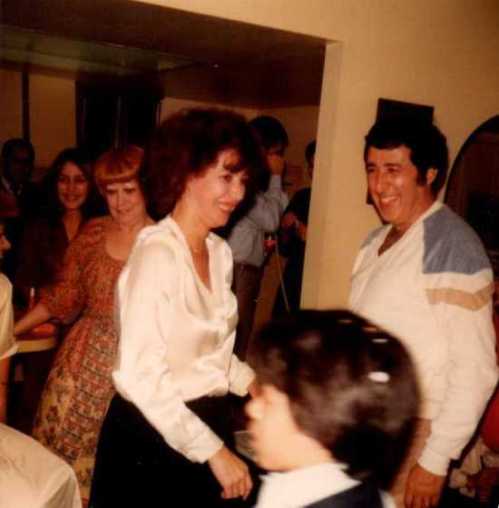
3 Comments

Filed under Wolf Tales

97 Years and a Lifetime of Stories

Francisca in 1923

Yesterday, June 2, marked the 109th anniversary of the birth of my paternal grandmother, Francisca Riojas De La Garza.  She died in February 2001 at the age of 97.  She was the last of my grandparents.  My mother’s mother had died in México City in 1940.  My paternal grandfather died in Dallas in 1969, and my other grandfather passed away in a suburban Dallas nursing home in 1983.  I have a smattering of distinct memories of my paternal father; unfortunately, I really didn’t get to know my mother’s father.  But, as in most families, I know a lot about all of them.  They each led interesting lives, equally filled with joy and tragedy.  A friend of mine once said, if she knew how much fun her grandkids would be, she would have had them first.  Grandparents hold a special place in the family unit.  Really good grandparents shepherd their loved ones through life with their own tales of growing up way back when.  They keep families together.  They are the center of the clan; the matriarch or patriarch who seems to know and see everything.  When they die, it’s still unexpected.  When Francisca passed away, my father’s large family appeared to disintegrate.  No one gathered for Thanksgiving or Christmas Eve.  No more birthday or wedding celebrations.  Everybody – especially us grandkids and great grandkids – went our separate ways; creating our own families and thereby, our own lives.  I guess that happens sometimes – even in the closest of families.

Francisca was small, barely 4’11,” but she had a strong personality accompanied by an even stronger voice.  Small women always seem to have the most indomitable of spirits.  I should know – one gave birth to me.  Francisca was born in Rosales, Coahuila, México in 1903, the 4th of 11 children; the oldest daughter.  Her father, José Manuel Riojas, was a captain in the Mexican military; a tall blond, blue-eyed man who actually worked as a bounty hunter under the direction of Venustiano Carranza, a leading figure in México’s bloody revolution that began in 1910.  Her mother Concepción died in 1918 of the “Spanish flu;” the pandemic that took millions of lives across the globe at the close of World War I.  Francisca cared for her mother as any loving daughter then or now would; feeding and bathing her, changing her clothes, praying for her, holding her hand tightly as Concepción took her last breath – without concern for her own health or fear of the unknown.  She then became a surrogate mother to her younger siblings.  In 1920, as the revolution came to a close, José Manuel moved his family to Eagle Pass, Texas, a town just north of the Rio Grande.

That’s where Francisca met her future husband, Epigmenio De La Garza, a local carpenter ten years her senior.  They married shortly before Christmas 1924 in another small South Texas town.  Not in the Catholic Church, as Mexican tradition would have dictated, but in civil court.  The church wouldn’t allow them to wed – they were first cousins.  It was one of those classic long-held family secrets that no one really knew about and no one really cared to discuss; certainly not around the Christmas tree while the kids opened presents.

The De La Garza family had arrived in South Texas in the 1580’s.  Texas and the rest of what is now the American Southwest were all part of Nuevo España, or New Spain.  The De La Garzas came as explorers and ranchers, not conquerors.  They considered the indigenous peoples friends and confidants, not vermin.  They established large communities, including schools and churches.

Juan Ignacio de Castilla y Rioxa arrived in Veracruz, México in 1732 with an entourage of fellow military officials and clergymen.  His goal was simple – he planned to marry a young woman with whom he’d been corresponding.  The Castilla y Rioxa family was related to Spanish royalty, descendants of the “Kingdom of Castilla.”  One of their ancestors was Queen Isabella, the monarch who funded Christopher Columbus’ voyage 240 years earlier.  Some time towards the end of the 18th century, the name Rioxa metamorphosed into Riojas, and in the 1860’s a Riojas married a De La Garza.

But, my grandparents weren’t concerned about family – royalty or not.  They wanted to build a life together.  They had 11 children; 4 of them – 2 boys and 2 girls – died as infants.  It’s difficult to understand how life was like a century ago, when couples had so many children and accepted the deaths of some as a cold, hard fact of their world.  No one of my grandparents’ generation feared death the way people do now.  Back then, it was the norm; another cycle of life to be respected and honored.  It wasn’t so normal, however, for a person to live as long as Francisca did.

The best part of a long, healthy life is the ability to recount your history and share it with your loved ones.  Every elderly person has some story, though, that seems almost too fantastic to be true.  But, they’re the kind of real-life experiences that could have only happened way back when; in another time and another place.

When she was about 8 or 9, Francisca was visiting an uncle’s ranch and playing with her cousins beside a stream that ran behind the main house.  The girls suddenly noticed a group of government men – federales – off in the distance.  Francisca’s cousins dared her to shout “¡Viva Carranza!” at them.  Apparently not one to back down from a challenge, my grandmother climbed atop a mound of dirt and shouted just that: “¡Viva Carranza!”  It startled the men who turned in her direction.  But, they immediately saw that it was just a small girl; a brat, they probably thought.  After a moment, however, they turned a canon towards the girls – surely just intending to teach them a lesson – and fired a shot into the stream.  Water drenched Francisca who hadn’t yet retreated.  The blast caught the attention of others nearby and propelled Concepción out of the ranch house.  Seeing that it was her own daughter soaking wet, she charged forward and grabbed my grandmother by one of her braids.  As Concepción ushered all the girls back into the house, several local men arrived at the stream with their own weapons, and a brief skirmish erupted.

Like I said, small women have the grandest of egos and they always seem to cause all sorts of commotion.

The day after my grandmother died, my father sat in a chair in the den of her house; staring out the patio door at the expansive back yard.  His father had built that large red brick house in 1957.  It had always been there, as far as I was concerned.  I knew no other home swelling with such memories of happiness and good food.

“What’s wrong?” I asked my dad, just trying to make conversation amidst all the gloom.

“Oh, just thinking about all the times we’ve spent in this house,” he replied quietly.

But, I already knew that.  Whenever a loved one dies – even if they’re very old – we feel sad; mournful not just because of their death, but our loss.  We can be selfish with those we love the most.  But, we reserve that right.

That home is gone now.  I mean, the large red brick house is physically where it’s always been on Midway Road in North Dallas.  Yet, the home is gone.

The memories are still here though – with me and my father.  Francisca’s body is gone as well – but she’s still around.  It’s just a natural part of the life cycle my parents and I don’t fear.

7 Comments

Filed under Wolf Tales

Josh Still Lives Here

I felt ten feet tall at age 9 that Saturday I walked into my parents’ house, holding the new puppy, a German shepherd named Joshua, or Josh.  I had picked his name out of a book of names my folks had for years.  I had selected him from a litter of German shepherd puppies weeks earlier.  He was the first-born and therefore, the biggest.  My parents had promised me a dog when we moved to suburban Dallas in December 1972.  The house had a huge back yard, and a fence had just been erected when we brought Josh home that day in June 1973.  Today would have been his 39th birthday.  If only dogs could normally live that long.

It’s funny how people become so attached to animals, especially domesticated ones.  It’s surely an affection that goes back millennia.  We give them names and imbue them with human-like qualities.  People who don’t like animals simply can’t relate.  They’re own lack of humanity prevents them.  But, people like me never consider our four-legged creatures as pets – they’re always like adopted children.  That’s why we refer to them as “boys” or “girls” and never men or women.  They’re kids we pick up at an orphanage and bring into our home.  They wrap our hearts around them, make us fall in love with them – and then they go off and die.  Damn animals!  Why do they do that?

My mother was one of those who didn’t like animals, especially dogs.  Around the age of 6, she’d seen a man attacked by a Doberman pinscher in her native México City and developed an overwhelming fear of large canines.  But, she and my father had promised to get me a dog the summer after we moved to the new house with the big yard.  So she swallowed her phobia and, when she saw me strut onto the patio from the garage, she smiled with joy.

His paws were so big they draped over my arms.  It was one sign of just how large he’d grow.  Another was his appetite.  But, his eyes told us something much more important.  They were uniquely tri-colored; alternating between yellow-gold, green and dark blue.  We didn’t fully comprehend his massive size until we brought him into the house.  He seemingly dwarfed the furniture.  Even in the great expanse of the back yard, he looked huge.  Majestic is the word my dad always uses to describe Josh.

Like most dogs, he had a habit for returning our unbridled affection.  But, a kiss from Josh wasn’t an ordinary mammalian peck.  His foot-long tongue would unfurl from his titanic jaws and practically wrap around your face.  When you realize how many times a dog licks its genitals, then have to question the extent of your affection.  Once summer day my mother was home sick from work.  I had brought Josh into the house, as we often did during the scorching Texas summers.  At some point, he wandered in through my parents’ bedroom and given my sleeping mother one of his warm wet kisses.  I heard her scream my name and was perplexed to see Josh ambling back out of the room with a ‘Did I do something wrong?’ expression.  My mother’s face had been close enough to the edge of the bed, and he’d seen a prime opportunity to give her some loving.  She almost hit the ceiling.  Josh was terrified of her.  She’d order him to sit or lay down, and he’d drop.  “Boy, I’m tough,” she’d say.  “If he only knew that all he has to do his growl,” she told us later, “and I’d faint.”

Other kids in the neighborhood were afraid of Josh.  He had a deep vociferous bark and horrendous growl – just what you’d expect from a German shepherd.  But, his voice was powerful and would echo throughout the neighborhood.  A neighbor told us she always knew when someone was in the alley behind our house; she could hear Josh barking from where she lived – three houses up the street, on the other side.  On one occasion, that woman’s husband was speaking with my dad, both standing in the alley behind our home.  He was a tall man and gestured at one point with his left hand, his arm clearing the six-foot fence.  Suddenly Josh’s set of massive jaws flew upwards and came within inches of grabbing that stray hand.  “Goddamn, George!” he cried like a frightened child.  “That dog almost bit my hand off!  I could sue you for that!”

“No, you can’t,” my dad said calmly and matter-of-factly.  “You were invading his territory.”

Josh, of course, was a carnivore, but he developed a taste for other stuff – like iced tea and ice cream.  We’d sit in the back yard on warm lazy evenings with glasses of sun-brewed ice tea.  My mother once stuck her glass in Josh’s face, thinking he’d turn up his big black nose at it.  Instead, that gigantic tongue swept downward into the large tumbler glass and lapped up the contents.  On another occasion, we’d gotten some ice cream after dining at a restaurant.  My mother couldn’t finish hers, so she showed it to Josh.  He sniffed at for a few seconds, then began licking at the confection.  He consumed every bit of it; reaching his tongue into the depths of the cone – and then eating the cone itself.

I could relay a number of stories of the curious and remarkable things that dog would do – as does anyone with their pets.  We supposedly attribute human-like behavior to these animals.  But, I have to wonder if that behavior isn’t already there.  Or, maybe they’re so intelligent they only have to watch us, before mimicking our own actions.  They even understand our language.  How much of their language do we comprehend?

In his later years, Josh developed arthritis.  Winters would still get bitterly cold in Northeast Texas back then, and as Josh aged, we’d often bring his shivering body inside the house.  He’d plop down in front of the fireplace with logs burning and sigh comfortably.  His ears would rotate like radar shields as he took in the noises of our regular activities.  He’d watch us carefully and protectively.

In early 1985, Josh developed hip dysplasia, a common ailment among large canines.  He’d also developed spurs beneath some of his vertebrae.  The veterinarian told us he could give Josh medicine to dissolve the spurs – but could do nothing about his hips.  So on one Saturday morning we made the decision to let him go.  We doped him up with tranquilizers and carried him into the vet’s office – literally.  My dad and I picked up his hulking 100-pound form from the back floorboard of my father’s car and toted him into the building.  I notice a man standing on the other side of the parking lot, holding a pet carrying case with a cat inside; a little girl about 5 or 6 who I assumed was his daughter stood beside him.  They froze when they saw us carrying Josh.  I’ve always wondered if that girl became terrified at the awful sight of it; 2 men hauling a huge dog like that.    Josh had done his job – helping my parents raise me and providing love for everyone.  He just couldn’t come home with us that Saturday.

Shortly afterwards, my father bought a gold-colored statue of St. Francis, the patron saint of animals in Roman Catholicism.  He set it in a corner of the patio beside the chimney where Josh often sat.  About two year after that, my parents had the lattice patio enclosed and converted into a sun room where they keep a variety of potted plants.  That statue of St. Francis remains in that spot by the chimney.

Nine years ago I adopted my miniature schnauzer, Wolfgang, from my ex-roommate.  He couldn’t take care of the puppy, as we uncomfortably parted ways, and told me he’d have to give him up.  I couldn’t stand the thought of that little dog ending up in a shelter or an abusive home.  So, fully unprepared to accept the responsibility that comes with owning a pet, I took him with me.  When I first brought Wolfgang to my parents’ house, we entered the sun room, and he stopped to check out that statue of St. Francis; its gold paint starting to blacken.  He sniffed at it and turned to me, a forlorn look in his eyes.  A human quality, I told myself, that I applied to him.

Damn animals!  If only they didn’t die so soon.  Happy Birthday, Josh.  We know you’re still here.

1 Comment

Filed under Wolf Tales