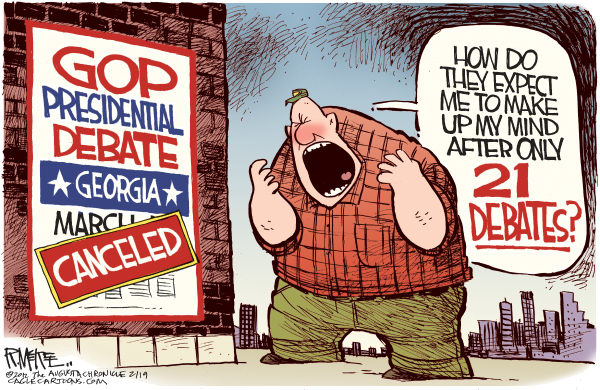
I wish the “liberal media” would get this right!
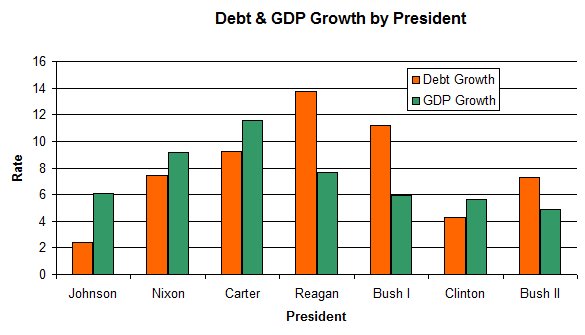

When your friends cannot explain why they voted for Democrats, ask them to choose from this list.
1. I voted Democrat because I believe oil companies’ profits of 4% on a gallon of gas are obscene, but the government taxing the same gallon of gas at 15% isn’t.
2. I voted Democrat because I believe the government will do a better job of spending the money I earn than I would.
3. I voted Democrat because Freedom of Speech is fine as long as nobody is offended by it.
4. I voted Democrat because I’m way too irresponsible to own a gun, and I know that my local police are all I need to protect me from murderers and thieves.
5. I voted Democrat because I believe that people who can’t tell us if it will rain on Friday can tell us that the polar ice caps will melt away in ten years if I don’t start driving a Prius.
6. I voted Democrat because I’m not concerned about millions of babies being aborted so long as we keep all death row inmates alive.
7. I voted Democrat because I think illegal aliens have a right to free health care, education and Social Security benefits.
8. I voted Democrat because I believe that business should not be allowed to make profits for themselves. They need to break even and give the rest away to the government for redistribution as the Democrats see fit.
9. I voted Democrat because I believe liberal judges need to rewrite the Constitution every few days to suit some fringe kooks who would never get their agendas past the voters.
10. I voted Democrat because I think that it’s better to pay billions to people who hate us for their oil, but not drill our own because it might upset some endangered beetle or gopher.
11. I voted Democrat because, while we live in the greatest, most wonderful country in the world, I was promised “HOPE AND CHANGE.”
12. I voted Democrat because my head is so firmly planted up my ass, it’s unlikely that I’ll ever have another point of view.
On that note, God bless America!
Filed under Curiosities
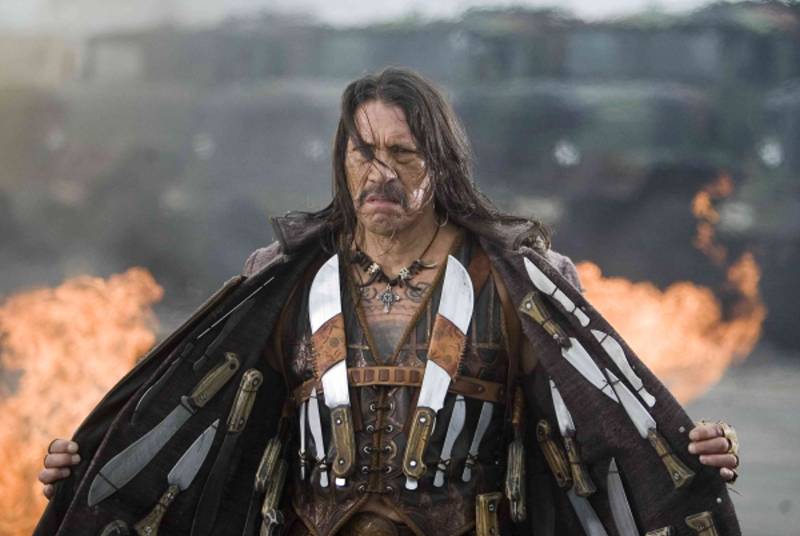
Survivalist Tip: Along with your collection of knives that I recommended in an earlier post, you’ll probably need a machete. These are large cleaver-like cutting tools used for slicing through thick vegetation. The ancient Mayans cleared the jungles of southern México and Central America with flint versions of machetes and built their massive city-states. Present-day Mayans just use chainsaws, tractors and sometimes goats. If you live in or near a forested area and have to flee your home for whatever reason – flooding, tick infestation, unwelcome in-laws – a machete will be useful to chop through thick under- and overgrowth. You can also use it to slice through protein-rich food sources like blueberries and grub worms. Once the chaos subsides and you’ve eliminated some unnecessary vegetation, you can then build a new settlement – complete with a blueberry garden and goat herd.
Filed under Mayan Calendar Countdown
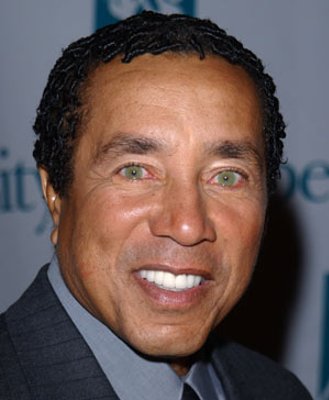
Singer Smokey Robinson (The Miracles) is 72.
Guitarist Tony Iommi (Black Sabbath) is 64.

Guitarist Francis Buchholz (Scorpions) is 58.
Actor Jeff Daniels (Ragtime, Terms of Endearment, Dumb and Dumber) is 57.
Britain’s Prince Andrew (Duke of York) is 52.
Actress Justine Bateman (Family Ties) is 46.

Filed under Birthdays
1473 – Astronomer Nicolaus Copernicus was born in Poland.

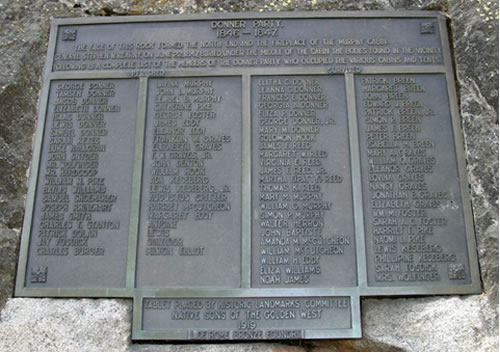
1847 – Rescuers reached surviving members of the Donner Party, a group of California-bound emigrants stranded by snow in the Sierra Nevada Mountains.
1856 – The tintype photographic process was patented by Professor Hamilton L. Smith of Gambier, OH.
1878 – Thomas Alva Edison patented a music player (later known as the phonograph) at his laboratory in Menlo Park, NJ.

1985 – William Schroeder became the first artificial-heart patient to leave the confines of the hospital (where the historic operation was performed). He spent 15 minutes outside the Humana Hospital in Louisville, KY.
1985 – The Coca-Cola Company introduced Cherry Coke in New York City.

1987 – A controversial anti-smoking ad, featuring actor Yul Brynner, aired for the first time on television. It was a public service announcement recorded shortly before his death from lung cancer in October 1985.

1997 – Deng Xiaoping, the last of China’s major Communist revolutionaries who had ruled China from 1978 until he retired in 1990, died at age 93.
Filed under History
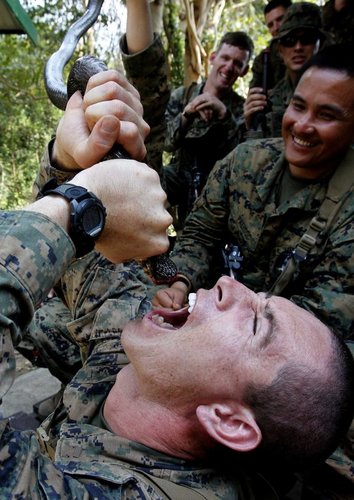
A U.S. Marine drinks cobra blood during a jungle survival exercise with the Thai Navy as part of the “Cobra Gold 2011” joint military exercise, at a military base in Chon Buri Province, February 13, 2011. More than 13,000 armed forces personnel representing Malaysia, South Korea, Thailand, Singapore, Indonesia and United States are taking part in the exercises, which occur every year in Thailand. © Sukree Sukplang (Reuters)
Thank you, but I’ll stick with Bacardi and Coke for now.
Filed under News
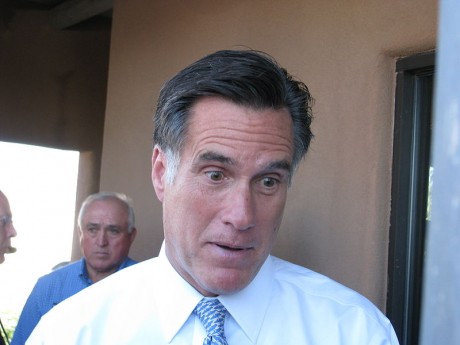
“I was a severely conservative governor.”
– Mitt Romney responding to criticism of his health care plan while governor of the severely blue state of Massachusetts
You can always grab people’s attention by using the word “severe” in a sentence. It shows you really, really, really mean it!
Filed under News
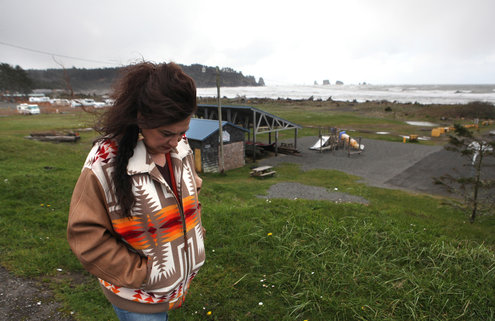
Former tribal chairwoman Bonita Cleveland is a leader in the Quileute Tribe. | Tony Overman/The Olympian/MCT
Congress has signed off on a plan that will transfer 785 acres of federal parkland along the coast of the Pacific Ocean in Washington state to the tiny Quileute Indian tribe, a move aimed at protecting the tribe’s safety in case a tsunami strikes.
The tribe is perhaps best known for its role in Stephenie Meyer’s “Twilight” novels, which resulted in subsequent films. According to the tribe’s legend, a wandering transformer changed the Quileutes from wolves. The story inspired Meyer’s writings and one of her characters, Jacob Black, and draws many “Twilight” fans to visit the reservation.
Filed under News
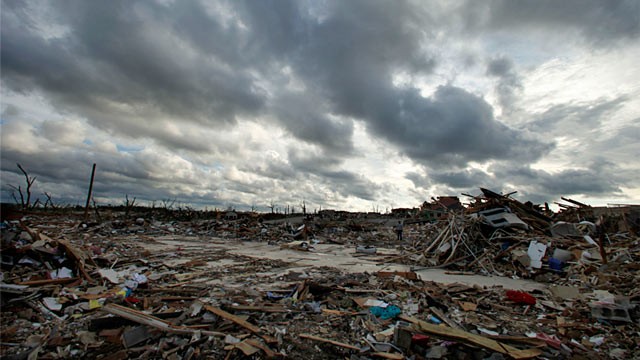
Damage from the May 22 Joplin tornado
An unprecedented number of tornadoes, fires, storms, hurricanes and floods contributed to a record 14 weather and climate disasters in 2011, making it a year with the most number of natural calamities exceeding $1 billion: 14. The previous record had been 9 in 2008. The costliest year on record is 2005, which incurred $160 billion. Most of that was due to Hurricane Katrina with $143.9 billion. Actual dollar estimates of some 2011 disasters are still being tabulated, so the numbers could change. But so far, total damage estimates put the figure at $55 billion. According to the National Oceanic and Atmospheric Administration, half of the year’s billion-dollar events were tornadoes; 6 of those at the EF5 level, the highest on the Enhanced Fujita scale. The tornado that struck Joplin, Missouri on May 22, for example, cost $2.8 billion and killed 161 people. It was the deadliest single tornado strike in the U.S. since modern record-keeping began. But, that was just 1 of more than 850 confirmed tornadoes in 2011 with a total cost of $28.7 billion and 551 fatalities.
Texas, Arizona and New México saw the worst wildfires in 2011, with 3 million+; 500,000 and 150,000 acres burned, respectively. The year ended with 84% of the Southern plains in some stage of drought.
The U.S. escaped the wrath of several tropical storms and hurricanes (usually the deadliest and most expensive disasters) that formed in the Atlantic. But, Hurricane Irene pounded the Northeast with heavy rains; while Tropical Storm Lee did the same to the Gulf Coast, from Louisiana to the Florida panhandle.
Last year may have just been a fluke from a climatological standpoint, so scientists can’t be certain if this is a new trend. Instruments used to track weather systems have become more refined in recent years. Regardless, it’s still fascinating – and frightening – not knowing what to expect in years to come.
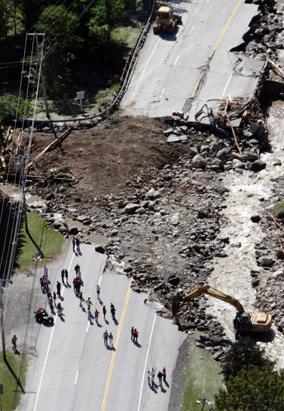
Damage from Hurricane Irene on Route 100 in Killington, VT.
Filed under News