Tag Archives: Roman Catholic Church

Francis Is in the House

Pope-Francis-waving-crowd

Now that the Roman Catholic Church has crowned Cardinal Jorge Mario Bergoglio as their new leader, followers from across the globe hope he can usher in significant and much-needed changes in an institution that has become as corrupt as it is antiquitous.  Bergoglio has taken the name Francis, after St. Francis of Assisi, a medieval cleric known for his work with the poor.  He’s also considered the Catholic patron saint of animals, which probably endears him to a greater number of people.  St. Francis founded the Franciscan Order in the early 13th century; a mission dedicated to helping the impoverished.  It’s obvious economic disparities have existed throughout humanity.  So, either the world’s political structures haven’t functioned properly for thousands of years, or religious entities aren’t doing something right.  If you realize the massive wealth the Roman Catholic Church possesses – how else can you explain their ability to pay out millions in sex abuse settlements? – then it may be a mixture of both.

Many Roman Catholics are excited about Frances, especially here in the Western Hemisphere.  But, while some people see change on the horizon, I see just another geriatric virgin (or maybe not) swaddled in silk and velvet; ensconced in a cloistered society, far removed from the real world in which most Catholics (and people of other faiths) reside.

Francis is the first pope outside of Europe.  He’s also considered the first Hispanic pope, since he’s from Argentina.  But, he’s an Argentinian of Italian ancestry.  Thus, in effect, the Church has just put another Italian in the pontiff’s chair; not much different than before Pope John Paul II.  Francis is 76, only two years younger than Pope Benedict XVI was when he ascended to the papacy in 2005.

Allegedly, as votes were being counted last week during the papal conclave, Bergoglio told a fellow cardinal, “Remember the poor.”  This is an interesting proclamation, noting that the Roman Catholic Church is one of the wealthiest institutions on Earth.  No one can put an exact figure on it, primarily because the Church isn’t beholden to tax burdens.  But, it’s estimated net wealth is between $400 billion and $750 billion.  This includes its vast collection of artwork and other treasures (often made of gold or silver) that sit in its tightly-guarded environs.  It costs a great deal of money to maintain the buildings that comprise Vatican City alone, as well as the heavily-armed security guards that surround the pope.

With such massive wealth comes power.  The Roman Catholic Church ruled much of Europe for centuries; often dictating who would be crowned king or queen.  But, the advent of political democracy – first here in the U.S. and then in Europe – weakened much of that authority.  In modern times, the Church has often confronted military and political dictatorships.  That’s what makes the selection of Francis a rather curious development.  He was around during Argentina’s notorious “dirty war,” when thousands of people either were killed by the country’s military dictatorship, or mysteriously disappeared.  Criticism about his activities in those years ambushed him almost as soon as he greeted the crowd in St. Peter’s Square.  I suspect it’s something that will haunt him for the rest of his life.  Yet, when Francis spoke openly about the poor, I was reminded of Oscar Romero, the late Archbishop of El Salvador, who once said, “When I feed the poor, you call me a saint.  When I ask why they are poor, you call me a communist.”  For his outspoken views, Romero was assassinated while conducting Easter mass in 1980.

I left the Roman Catholic Church years ago, mainly because of its disrespectful attitude towards women who make up more than half of its 1.2 billion adherents.  After two millennia of existence, why hasn’t the Church agreed to let women into the priesthood?  It’s clearly a patriarchal entity.  But, ignoring more than half the human population is an abomination.  It’s also just plain rude.  I mean, women can do more than have kids, mop floors and cook meals for the menfolk.  Any single mom will tell you that!  Besides, women would look better in those flowing velvet gowns.

The pedophile priest scandal that has swept across the U.S. these past several years only solidified, in my mind, ineptness and utter irrelevance of the Catholic Church.  I know the great majority of priests would never harm a child.  But, I just never could understand why the Church shuffled the perverted ones from one diocese to another.  I suspect it was a matter of self- preservation – one that backfired.

There is no other institution on Earth quite like the Roman Catholic Church.  Lutherans and Methodists, for example, don’t have a supreme leader in quite the same mold.  The Greek and Russian Orthodox Churches come close.  Baptists and Pentecostals here in the U.S. certainly have no central commander, which may explain why they hate Catholics so much are always pissed off.  Neither Judaism (Christianity’s cantankerous mother) nor Islam (its ugly offspring) have leaders similar to the pope.

Some observers hope that Francis will be a reformer along the same lines as Pope John XXIII who convened the Second Vatican Council in 1962 to update Church doctrines in accordance with various scientific discoveries and advancements.  But, Francis has already shown displeasure with contemporary issues, such as birth control and homosexuality, which is to be expected.  So, unless Francis accepts that some people use birth control, while others are queer, how is he going to be a reformer?

It would have been great if the Church had elected a truly unconventional and imperfect figure to the papacy; say, a 50-something man who perhaps had been married, maybe even has a juvenile criminal record, prefers vodka to wine, loves ultimate fighting and likes to tell bathroom jokes.  Somebody who – albeit multi-lingual and well-versed in religious scholarship – could still identify more clearly with the average person.  How could anyone who has spent most of their years enmeshed in prayer and meditation understand the complexities of daily life?

I don’t know what the future of the Roman Catholic Church holds under Francis’ leadership and I almost don’t care.  I know that too many people adhere to every word that spills from the gilded lips of the Church’s hierarchy, which of course, is their right.  But, it’s also their greatest fault.  I would only visit Vatican City for one reason: to check out the artwork.  Art serves a purpose; blind faith does not.
Leave a comment

Filed under Essays

Halloween Isn’t Evil

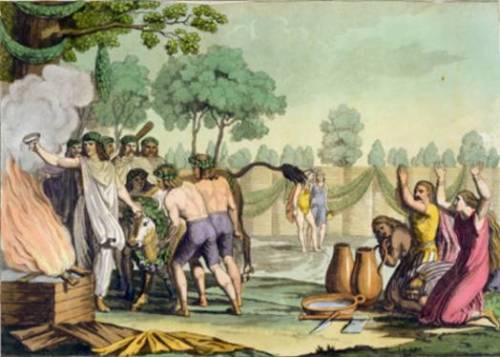
“Ancient Celts or Gauls Sacrificing a Cow,” by Vittorio Raineri, circa 1800.

Halloween is perhaps the most understood day of the year next to Valentine’s Day.  It’s riddled with misconceptions and folklore.  But, unlike Valentine’s Day, Halloween has its roots in ancient religious practices.  As you might suspect, the Roman Catholic Church has much to do with the mythology surrounding October 31; that is, the advent of Christianity.  But, Halloween also owes much of its mystery to ancient Celtic beliefs.

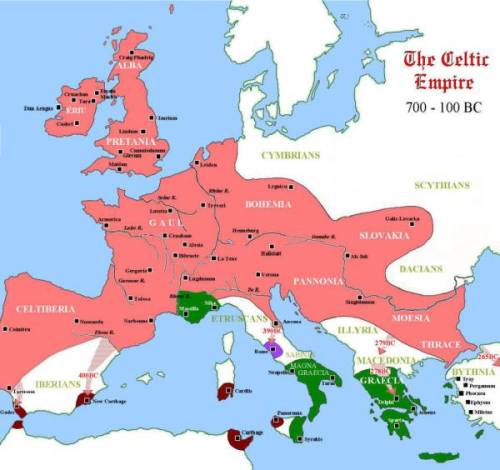
The Celts were a diverse group of tribal societies who populated most of Europe for thousands of years.  The Greeks encountered the Celts around the sixth century B.C. and called them Keltoi.  When Julius Caesar encountered the Gauls (the early peoples of present-day France) around 58 B.C., he said they called themselves Celts.  The word may have derived from the Indo-European ‘kel,’ which means ‘hidden.’  But, the term ‘Celt’ applies to any of the European peoples who spoke a Celtic language.  Greeks and Romans depicted the Celts as barbarians, but archeology has proven they were a socially and technologically advanced people.  They built complex settlements with sustainable farming practices and made significant breakthroughs in metalworking.  They essentially created the Europe that exists today.

Like every society in the ancient world, the Celts lived in accordance with the weather and the seasons.  Their calendar began on what now corresponds to November 1, which marked the start of winter.  They had to move their cattle and sheep to closer pastures and secure all animals for the cold months ahead.  They also harvested and stored their crops, again before winter’s arrival.  The Celts divided the year into four major holidays, and on what now roughly corresponds to October 31, they celebrated a festival called “Samhain,” pronounced ‘sah-ween.’  Since October 31 was technically their New Year’s Eve, the Celts believed the spirits of the dead would mingle with the living as part of the overall life cycle.  During Samhain, the Celts celebrated that the souls of all those who had died throughout the year would pass into the next world.  They feasted upon meats, fruits and vegetables and lit bonfires to help the deceased on their journeys.  Some Celts wore masks to ward off any evil spirits that tried to disrupt the celebrations or stop dead loved ones from moving onward.

Image.

Then, as Christianity began to spread across Europe, Celtic traditions came under attack.  Early Christian leaders denounced holidays like Samhain as pagan and even demonic.  While they succeeded in altering the ideological landscape of Europe, Christians didn’t completely eliminate Celtic rituals; the latter just changed their practices.  In 601 A.D., Pope Gregory I issued an edict to his missionaries concerning the beliefs and customs of the Celts.  Rather than try to obliterate Celtic rituals, Gregory instructed his missionaries to incorporate them.  If the residents of a town or village worshipped a tree, for example, the missionaries wouldn’t cut it down; instead, they would consecrate it to Christ and allow its continued worship.

But, as the Roman Catholic Church increased its power, all non-Christian beliefs and practices were declared malevolent.  The Celtic spirit world became associated with the Christian “Hell.”  Any remaining practitioners of Celtic ideology were forced into hiding and were branded as witches.

Sometime in the 4th century A.D., the Catholic Church designated November 1 as “All Saints Day.”  It honored every Christian saint, especially those who did not have a special day devoted to them.  It was meant to substitute for Samhain, to draw the devotion of the Celtic peoples, and ultimately to replace it.  That did not happen, of course, but the traditional Celtic deities diminished in status, becoming fairies or leprechauns of more recent traditions.  Once again, though, Christianity didn’t triumph completely as its esteemed leaders had hoped.

In the 9th century, the Church designated November 2 as “All Souls Day,” when the living prayed for the souls of the dead.  Christians also referred to All Souls Day as “All Hallows” – hallow means sanctified or holy.  The evening prior to the day was the time of the most intense activity, both human and supernatural.  As the centuries progressed, people continued celebrating All Hallows Eve as a time of the wandering dead, but they gradually came to associate supernatural beings with evil.  Any soul that hadn’t moved into Heaven was deemed unholy – and so was any celebration of those souls.

Celtic traditions are now most closely associated with the British Isles.  That’s mainly because the peoples of those islands – separate from the European mainland – were the last holdouts against Christianity.  Even after the time of St. Patrick, many Irish refused to convert to Catholicism, which is ironic considering that Ireland is now predominantly and staunchly Roman Catholic.

Most contemporary Halloween traditions can be traced to Samhain.  The wearing of costumes, for instance, and roaming from door to door demanding treats correlates to the Celtic belief that the souls of the dead wandered around, along with more malevolent spirits.  The Celts made offerings of food and beverages to placate all of them.  As Christianity became more entrenched in European society, people began dressing up like witches and demons and performing antics in exchange for food and beverages.  This practice is called “mumming,” from which trick-or-treating evolved.  The term ‘mumming’ is derived from either the German word ‘mumme,’ which means mask or masking, or the Greek word ‘mommo,’ which basically means a frightening mask.  Even now, in many small towns in England and Ireland, people stage ‘mumming plays.’

There is no evil in celebrations honoring the dead.  Christianity is what made that connection.  Every society across the globe honors its deceased loved ones.  It’s done out of respect and admiration.  Most Indigenous Americans, for example, conducted similar rituals, which – as early Christians tried to do with the Celts – Catholic missionaries worked to eliminate.  But, as with the Celts, some Indians merely incorporated Roman Catholic practices into their religion as a means of survival.  There were some holdouts, though, who refused to convert and often suffered the bloody consequences.  Even now, México celebrates “El Dio de los Muertos,” or “Day of the Dead,” which is a modernized version of indigenous Indian rituals that literally go back thousands of years.  People build temporary alters to honor their deceased relatives and friends, which includes offerings of food and beverages.

That’s not evil – that’s love.

BLESS, O GOD, THE DWELLING

Bless, O God, the dwelling,

And each who rests herein this night;

Bless, O God, my dear ones,

In every place wherein they sleep;

In the night that is tonight,

And every single night;

In the day that is today,

And every single day.

Celtic prayer

Leave a comment

Filed under Essays

Kateri Tekakwitha – First Native American Catholic Saint

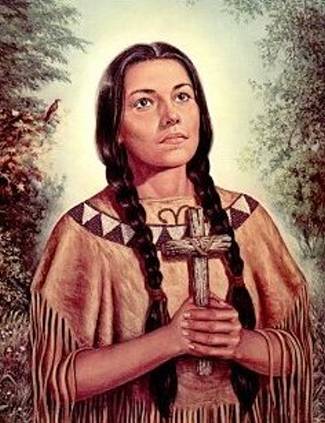
In a historic move, Pope Benedict XVI canonized the first Indigenous American into sainthood on Saturday, October 20.  Kateri Tekakwitha was born in 1656 to an Algonquin mother and a Mohawk father in what is now central New York State.  She was baptized into the Roman Catholic Church at age 20.  After being rejected by her family, she moved to a Jesuit mission near Montreal, Canada, where she taught children until her death four years later.

American Indians have been appealing for Kateri to be canonized for more than a century.  She was given the special status of venerable in 1942, the first step towards sainthood, and was beatified in 1980.

A person must be deceased for at least 5 years, even before he or she can be considered for sainthood in the Roman Catholic Church.  Afterwards, there are 4 steps in the process.

  1. When the subject arises that a person should be considered for Sainthood, a Bishop is placed in charge of the initial investigation of that person’s life.  If it is determined that the candidate is deemed worthy of further consideration, the Vatican grants a “Nihil Obstat,” a Latin phrase meaning “nothing hinders.”  Henceforth, the candidate is called a “Servant of God.”
  2. The Church Official, a Postulator, who coordinates the process and serves as an advocate, must prove that the candidate lived heroic virtues.  This is achieved through the collection of documents and testimonies that are collected and presented to the Congregation for the Causes of Saints in Rome.  When a candidate is approved, he/she earns the title of “Venerable.”
  3. To be beatified and recognized as a “Blessed,” one miracle acquired through the candidate’s intercession is required in addition to recognition of heroic virtue (or martyrdom in the case of a martyr).
  4. Canonization requires a second miracle after beatification, though a Pope may waive these requirements.  (A miracle is not required prior to a martyr’s beatification, but one is required before his/her canonization.)  Once this second miracle has been received through the candidate’s intercession, the Pope declares the person a “Saint.”

More than 700 Native Americans, many in full regalia, took part in the ceremony in St. Peter’s Square honoring the woman known as the “Lily of the Mohawks.”  A choir singing an Indian hymn was among the participants.  At a Mass on Monday, the 22nd, inside St. Peter’s Basilica, Native Americans will conduct a “smudge” ceremony by burning sage, according to an American church official.

Among those in attendance was a delegation from the Archdiocese of Seattle that included Jake Finkbonner, a 12-year-old boy whose recovery six years ago from necrotizing fasciitis, a rare flesh-eating disease, was accorded the status of a miracle by the church.

His survival was anything but certain when his parish and Native Americans around the U.S. and Canada began praying to Kateri.  His recovery was the key in the decision to canonize Kateri, said the Rev. Wayne Paysse, executive director of the bureau of Catholic Indian Missions.

Finkbonner’s family, who are members of the Lummi tribe, live in Bellingham, Washington.

Anyone who knows me personally, or follows this blog, is fully aware of my harsh views of the Roman Catholic Church.  The Church’s relationship with the Western Hemisphere’s native peoples is written in blood.  It’s the longest and most widespread chronicle of genocide in world history.  Of course, that’s pretty much the case with any branch of Christianity.  Early Spanish conquerors viewed Indigenous Americans with contempt and tried to destroy them.  Spain’s Queen Isabella I put a stop to the bloodshed, however, demanding that her representatives in what are now México and the United States baptize the Indians into Roman Catholicism.  Many Indians conceded; more I think as a matter of survival than acceptance of the strange, new religion.  Nothing can ever compensate for such brutality.  But, the canonization of Kateri is still a measure of goodwill.

1 Comment

Filed under News

Quote of the Day

“For the first time we can remember, a bureau of the federal government seems to be radically intruding on what the term of a church is.”

Roman Catholic Cardinal Timothy Dolan of New York, explaining lawsuits by Catholic bishops and universities against new federal rules requiring them to furnish birth control coverage.

Is he kidding?  This is the same Roman Catholic Church that feels it has the right to tell grown people what to do in their own bedrooms.  And, this bastard is pissed off that the U.S. government is now telling them how to treat people?!

Leave a comment

Filed under News