Tag Archives: Smithsonian Institution

Decode This!

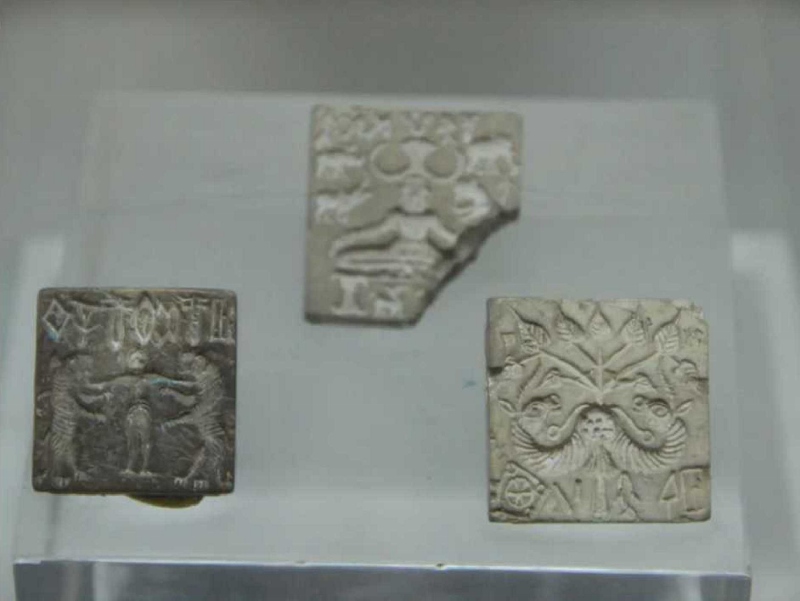
If you have no major projects scheduled in the near future, consider taking on this challenge from the Smithsonian Institution.  They’re offering USD 1 million to anyone who can figure out what this ancient manuscript says.  For more than a century, no one has been able to decipher the various symbols carved into these tablets from the Indus Valley civilization.  The Bronze Age society flourished in the northwestern regions of Southern Asia from roughly 3300 BCE to 1300 BCE.  As one of the world’s first large-scale urban cultures, they developed grid-based layouts, standardized weights and measures and elaborate drainage and even sewer systems; domesticated animals; and of course, created a logosyllabic writing system.

The prize announcement actually comes from M.K. Stalin, an official with the Indian state of Tamil Nadu.  Recent archeological examinations noted similarities between the Indus script and early writing from Tamil Nadu, despite the considerable geographic distance.

Researchers at Tamil Nadu’s Pondicherry University digitized 15,000 graffiti-marked pot shards from 140 archaeological sites in Tamil Nadu and compared them against 4,000 examples of the Indus Valley script.  They found that nearly 60 percent of the signs matched and 90 percent shared “parallels”.  Despite the intensive scrutiny, the Indus markings remain enigmatic.

Hence, the reward!

Personally, I’d take on the challenge, since I love a great mystery and harbor a fascination with ancient cultures.  But sometimes I even have trouble figuring out my own dreams!  See what you can do!
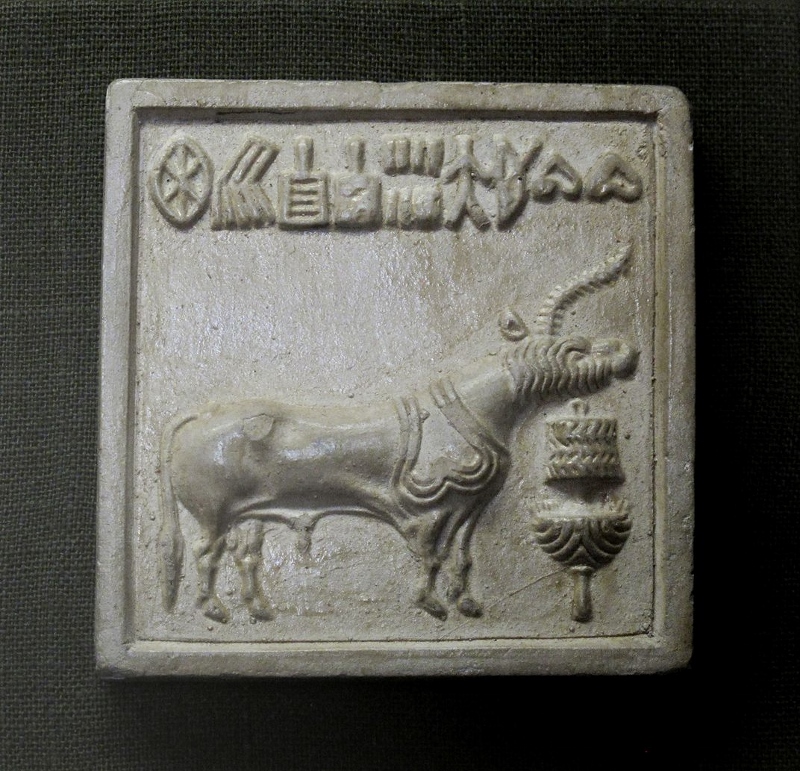
Images: Wikimedia Commons
Leave a comment

Filed under History

First Known Photographs of Jerusalem

Jerusalem is one of the oldest and most continually-occupied cities in the world. It has a rich history, and it’s disgraceful that it has remain mired in the ongoing battle between religious and political factions that occupy the region. Still, it holds a special place in the collective hearts of the faithful.

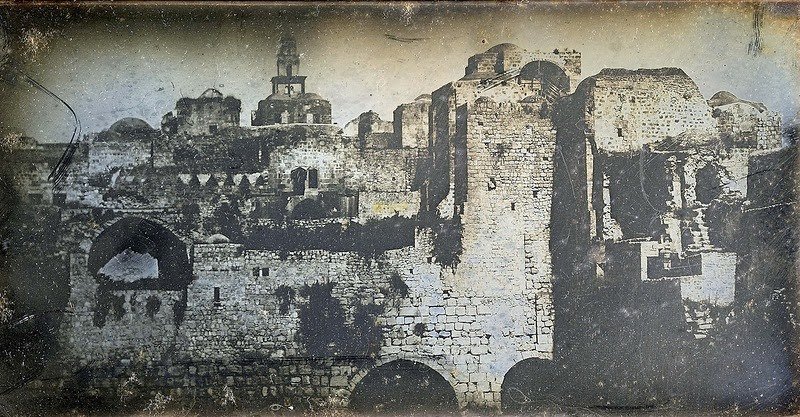
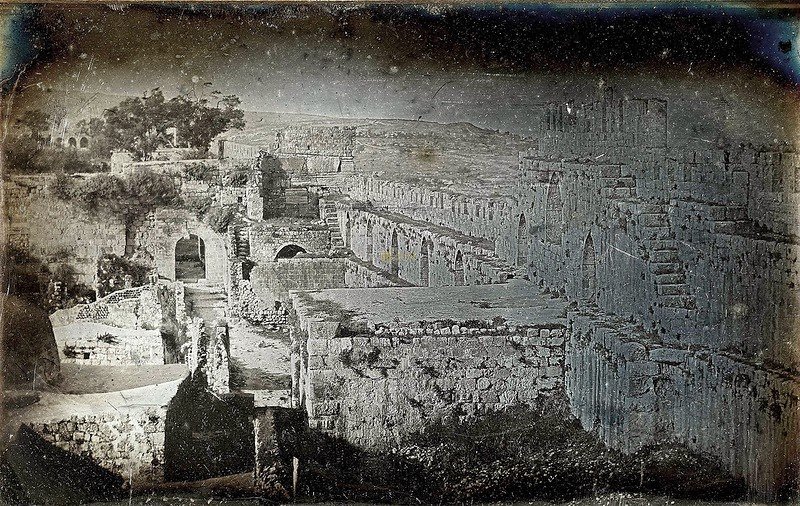
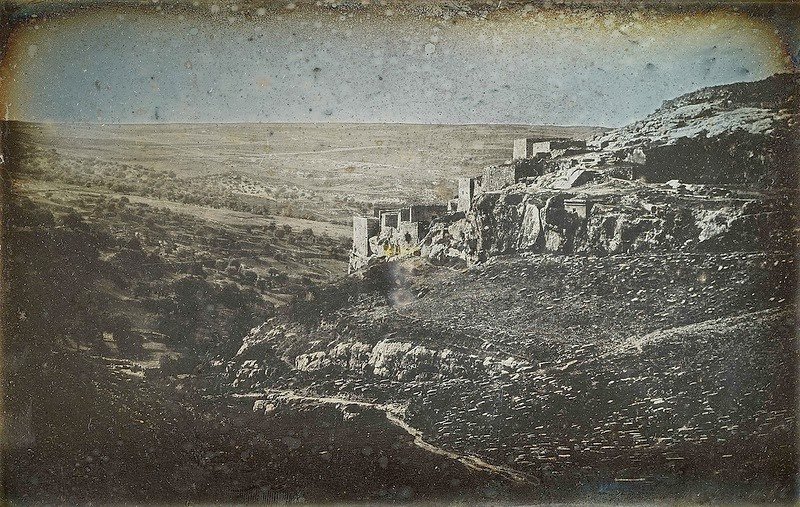
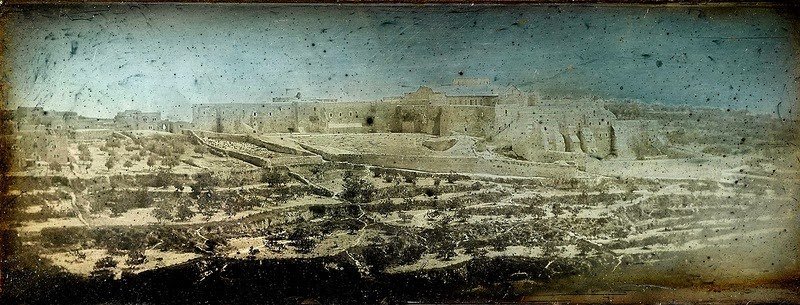
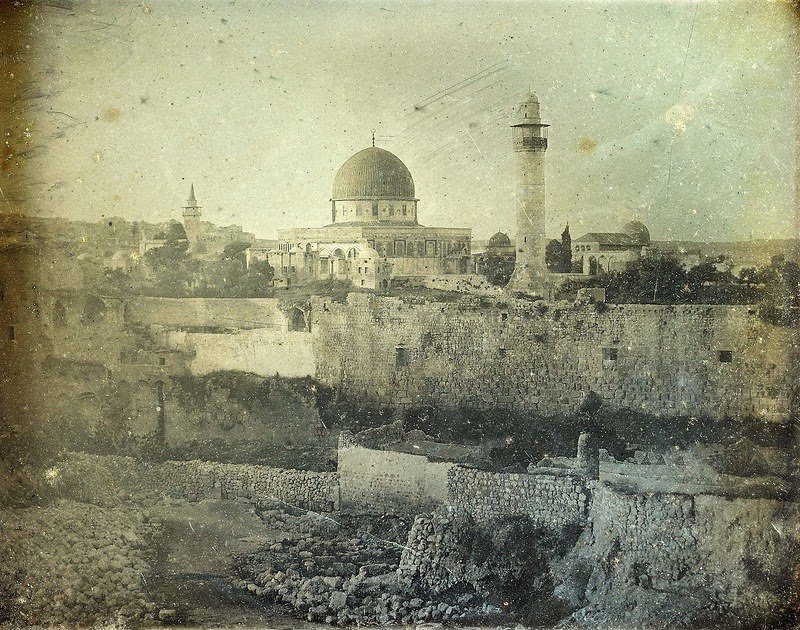
Earlier this year the Smithsonian Institution released what are believed to be the first photographs ever taken of the city. They date to 1844 and were taken by French photographer Joseph Girault de Prangney. De Prangney was a pioneer in the field of daguerreotypes, but he’s not well known among aficionados of art and photography. He studied painting at the École des Beaux-Arts in Paris and learned about daguerreotypes in 1841, the same year inventor Louis-Jacques-Mandé Daguerre publicly demonstrated the process. It’s unclear if de Prangney studied daguerreotypes directly under Daguerre or one of the latter’s associates. But, he developed a fascination with the new art form and meshed it with his interest in the Middle East. In 1842, he embarked on a three-year tour of Italy Greece, Egypt, Turkey, Syria and Palestine. He carried hundreds of pounds of photography equipment and produced more than 800 daguerreotypes. If you understand how cumbersome photography equipment of the day was and how long it took to make just one daguerreotype, then you’ll truly appreciate his dedication.

19.jpg__1072x720_q85_crop

25.jpg.800x0_q85_crop

34.jpg.800x0_q85_crop

43.jpg.800x0_q85_crop

54.jpg.800x0_q85_crop

72.jpg.800x0_q85_crop

1 Comment

Filed under Classics

Hearing Bell

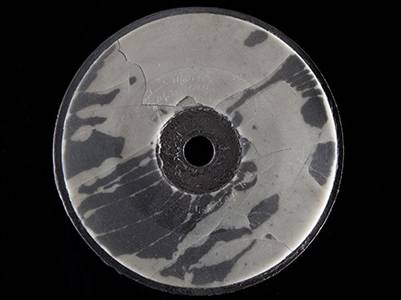
This wax-and-cardboard disc from 1885 contains a recording of Bell’s voice.  Photo courtesy of Richard Strauss, Smithsonian Institution.

This wax-and-cardboard disc from 1885 contains a recording of Bell’s voice. Photo courtesy of Richard Strauss, Smithsonian Institution.

It’s a tribute to science and ingenuity when ambitions technicians use new technologies to connect to older ones and thereby bridge the present with the past.  That’s exactly what happened when physicist Carl Haber of Lawrence Berkeley National Laboratory in Berkeley, California; fellow physicist Earl Cornell; and Peter Alyea, a digital conversion specialist at the Library of Congress, succeeded in extracting the sound of Alexander Graham Bell’s voice from a wax and cardboard disc that he’d received from the Smithsonian Institution.  Bell, a native of Scotland, is best remembered for inventing the prototype to the telephone in 1876.  He had spent years trying to devise a way to transmit the human voice over telegraph wires.  Even afterwards, Bell continued experimenting with recordings he made on various cylinders and discs.  Between the 1880s and his death in 1922, Bell donated his extensive collection to the Smithsonian.  Aside from wax, Bell and his assistants utilized metal, glass, paper, foil and cardboard to record sounds.  But, whatever methods they used to play back those recordings remains lost to history.

Two years ago Haber, Cornell and Alyea began analyzing Bell’s materials; determined to retrieve the sounds locked into those discs and drums.  Towards the end of 2011, Patrick Feaster, a sound media historian at Indiana University, joined the team by compiling a comprehensive inventory of notations made on those discs and drums.  One of the discs, dated April 15, 1885, contained a recording of Bell speaking:

“In witness whereof – hear my voice, Alexander Graham Bell.”

Technicians are still analyzing Bell’s materials, and it’s possible they’ll locate other samples of the inventor’s voice.  Bell was certainly steadfast in his goal to record the human voice for all to hear.  His inspiration may have come from his wife, Mabel, who was deaf.  Sometimes, the personal elements of our lives can lead to the most incredible of accomplishments.

You can listen to the recording here:

1 Comment

Filed under Classics

Picture of the Day

Sunset Clamming

Photographed January 2009, Xiapu, Fujian, China, by Jia Han Dong of Parsippany, NJ.  Courtesy Smithsonian Institution.

Leave a comment

Filed under News