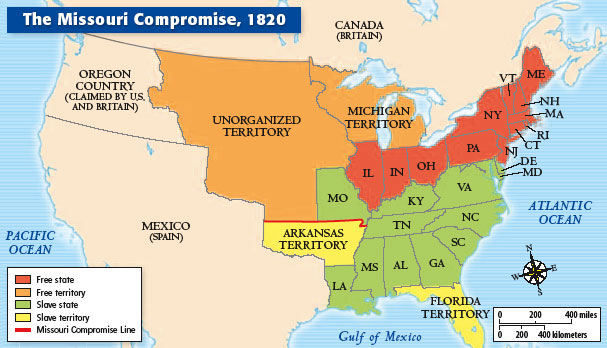
1820 – Congress passed the Missouri Compromise, a bill that temporarily resolved political clashes between pro- and antislavery interests by granting statehood to Missouri and forbidding slavery north of the 36th parallel.
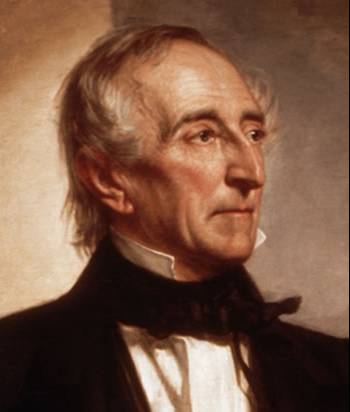
1845 – Congress overrode a presidential veto for the first time. President John Tyler had vetoed a Congressional bill that would have denied him the power to appropriate federal funds to build revenue-cutter ships without Congress’ approval. With the override, Congress insisted that the executive branch get the legislature’s approval before commissioning any new military craft.
1845 – Florida became the 27th state.
1863 – Congress passed a conscription act that produced the first wartime draft of U.S. citizens; all males aged 20 – 45 had to register by April 1 that year.
1873 – Congress passed the Comstock Act, making it illegal to send any “obscene, lewd, or lascivious” material through the mail.
1875 – The first indoor game of ice hockey was played in Montréal, Québec.
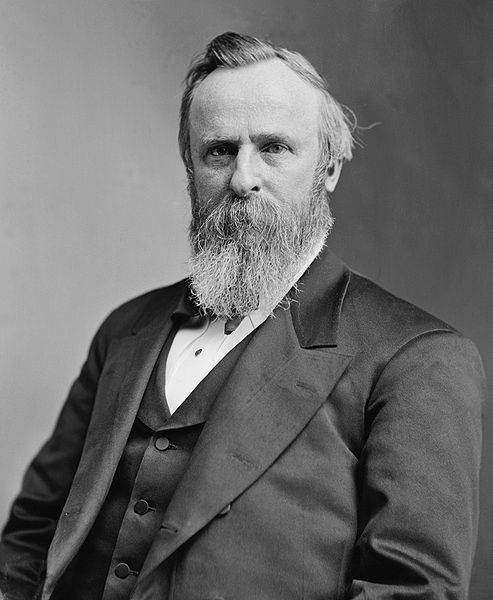
1877 – Rutherford B. Hayes is sworn in as the nation’s 19th president in a private White House ceremony.
1879 – Congress created the U.S. Geological Survey, an organization that played a significant role in the exploration of the West.
1915 – Director D.W. Griffith’s controversial Civil War epic The Birth of a Nation debuted in New York City. At 2 hours and 40 minutes, it was unusually long for its time and utilized then-revolutionary filmmaking techniques, such as editing, multiple camera angles and close-ups.

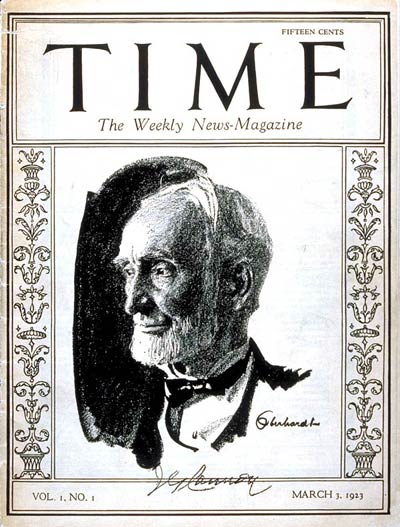
1923 – The first issue of Time magazine appeared on newsstands.
1931 – The Star-Spangled Banner, written by Francis Scott Key, officially became the national anthem of the United States.
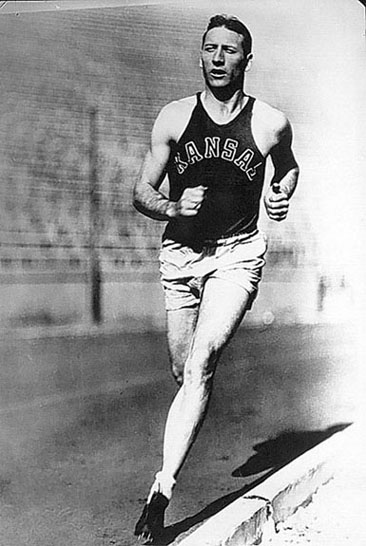
1938 – A world record for the indoor mile run was set at Dartmouth College in Hanover, NH. Glenn Cunningham made the distance in 4 minutes, 4.4 seconds.