
A weather system dumped up to 4 feet of hail in Northwest Texas, mainly the Amarillo area, the other day. This was an odd event, even for Amarillo, which experiences heavy snowfall every winter.






A weather system dumped up to 4 feet of hail in Northwest Texas, mainly the Amarillo area, the other day. This was an odd event, even for Amarillo, which experiences heavy snowfall every winter.
Filed under News

“I have very little tolerance for people who tell me that they graduate with $200,000 of debt or even $80,000 of debt because there’s no reason for that. We live in an opportunity society and people are forgetting that. I remind folks all the time that the Declaration of Independence says “life, liberty, and the pursuit of happiness.” You don’t have it dumped in your lap.”
– Rep. Virginia Foxx (R-NC), who chairs the House Subcommittee on Higher Education & Workforce Training, on G. Gordon Liddy’s radio show. In Foxx’s 2010 financial disclosure statement, she owned two individual mortgage notes worth up to $250,000 each, from which she earned as much as $20,000 in payments.
Filed under News

Author Scott Turow apparently has a distaste for the Amazon giant and feels it’s dangerous for the world of literature. As society develops an increasing fascination with e-books and more writers undertake self-publishing, Amazon finds itself in a prime position as a global entity. Last month, however, the U.S. Justice Department warned Apple and 5 of the nation’s largest publishers that it planned to sue them for price fixing. At issue is the agency model, a method of selling e-books via wholesale in which the publisher sets the retail price and the retailer takes a 30% cut. Most print and many e-books are sold under the traditional wholesale model, in which publishers sell books at a discounted price, and the retailer can resell them for whatever price it likes.
On March 12, Scott Turow – the bestselling author of many legal thrillers and current president of the Authors Guild – posted a letter to members on the Guild’s web site. He denounced the Justice Department’s actions as bad news for authors, “grim news for everyone who cherishes a rich literary culture,” and ominous for book consumers.
Laura Miller, a writer for Salon, interviewed Turow shortly after his letter appeared.
Miller: What are some of the Guild’s problems with Amazon?
Turow: First of all, so that I don’t get dismissed as an ingrate, I should say that Amazon has been a boon for bestselling authors. Authors get paid on the basis of the cover price for a hardcover book. By discounting, which is something that chain stores started and Amazon continued, they have lowered the barriers to book buying in ways that have been personally extremely beneficial to me.
Because you get paid the same amount regardless of how much the retailer charges for the book, and the discounting encourages more people to buy the book?
Exactly. These are not personal complaints. There are lots of things about Amazon for which they deserve credit. They’re innovative. There are lots of very, very happy Amazon customers. I’m not here to dispute that Amazon has been personally good for me or to say that they haven’t been, so far, good to their customers.
So what’s the problem?
The concern is that they are getting so large and they compete so ruthlessly that there’s a lot of fear for what the world with Amazon in charge is going to look like.
The Guild’s beefs with Amazon became pronounced over the issue of the resale of new titles some years ago. This was something that Amazon pioneered. They would sell you a [just-released] book on Day One, buy it back from you on Day Two, and then resell it to another customer on Day Three. This was legal, but certainly not what anybody ever intended.
Traditionally, in hardcover, that’s been basically a split of the proceeds between the author and publisher. (An aside: That’s something we’re fighting with publishers about in the digital world.) So Amazon decides to go into competition with the publishers by reselling the book they just bought. The publisher gets paid nothing, and neither does the author. It’s a pure profit for Amazon.
Now, the reason you don’t see used bookstores within new bookstores is that the used books compete with the new books and the publishers supplying the new books would object. Either you’re doing business with me or you’re competing with me. I’m not going to sell you books so you can take some percentage of sales.
The problem of course was the Amazon had gotten so big that publishers were afraid to resist that. It’s not the mere fact that they’re competing [with their own suppliers]. I can certainly understand that it’s good for consumers to be able to buy a book two days later at a lower price. It’s the fact that the publishers were afraid to dismiss Amazon.
Which is what they would do with a regular retailer who was doing the same thing but had viable competitors?
Right, and of course, Amazon was undercutting authors in the process. We tried to persuade them to just window this [delay making used copies of brand-new books available for a period of time, the way the release of the DVD of a movie is delayed until after it has played in theaters]. That didn’t work. It was a muscle-flexing exhibition by Amazon, saying, “We’ve got so much market power, you guys can’t do what you’ve traditionally done and take your goods elsewhere. We represent at least 30 percent of the book market.”
I don’t like losing sales, but the real problem is at the margins. Midlist authors have been struggling to survive for decades now. If you start eating into the publishers’ returns, then at the bottom of the food chain, those books are just not going to get published. We have seen that happen.
Are there other examples of Amazon using its predominance?
They now control the print-on-demand market. That’s when you buy a book and only then does a service print a copy — literally on demand. [This is a method used by academic and small presses, as well as by authors with otherwise out-of-print books.] Amazon bought a POD service called BookSurge. Then they informed their customers — university presses and some other publishers who the Guild had organized to do POD for Authors Guild members — that they would not list their books on Amazon’s site unless they paid BookSurge more for their services.
I don’t know how they defend themselves on this one. That’s another very ominous sign to the book industry and authors.
What about their history with e-books?
They deserve a lot of credit for the Kindle, for yoking e-ink with this nationwide wireless network. It’s a great innovation. And they said to the publishers, “It’s really important to us in introducing this platform that e-books appear at the same time as the hardcover edition.” Publishers said, “Oh, we’ve seen your tricks before, Amazon! Why would we ever do that?”
So Amazon says, “We’ll pay you the same amount we pay you on a hardcover.” So publishers think that sounds fine, how can they complain about that? They agree and are then stunned when Amazon announces that they’re going to sell every e-book at a loss, for $9.99. That’s an average loss of $4 to $5 a book.
Why would Amazon do that?
I suppose they could argue they were doing it to sell devices and that may well have been one of their intentions. It had the additional benefit of making it much harder for any of their competitors to enter the market.
For example: A lot of people have the habit of going into a physical store, looking at books and then turning around and buying the e-book wirelessly from Amazon. Had it not been the case that you had to sell an e-book at a $5 loss, bookstores would have been able to say, “Sure, bring your device with you and we’ll sell you the e-book right here.”
Bookstores are pretty hard-pressed by book discounting as it is, and the idea of selling e-books at a loss made it impossible for them to enter the marketplace in competition with Amazon.
What about the proprietary format of Kindle? Didn’t that also make it hard for competing e-readers to enter the market?
You couldn’t read all those books you bought from Amazon on a competitor’s device – you can now, if you have an iPad, but you couldn’t then.
The nook is widely regarded as the better e-reader device, but if you’ve accumulated a library of Kindle titles, you can’t take them with you if you decide to switch. [Technically, you can, but most users would find this quite challenging.]
Barnes and Noble developed the nook because they really had no choice but to compete with Amazon. They were struggling at that point, and I personally don’t think they’d have been able to survive while losing $5 on every book. There simply were not a lot of people jumping into that market to compete, not with the prospect of losing $5 on every book sale. From the outside, it looks like the pricing was not just a loss leader on the devices, but a way to discourage competition.
How did Amazon’s e-book pricing affect authors?
One way that 25 percent of net became the standard royalty for e-books was because publishers said, “We all know they can’t go on selling e-books at a loss forever and sooner or later this pricing structure has got to change.” They told authors they couldn’t agree to a different royalty because everyone knew that Amazon wouldn’t be paying them $14 to $15 per title indefinitely.
You’re implying that Amazon planned eventually to use the consumer’s habituation to $9.99 books to force publishers to charge Amazon lower wholesale prices for books. They’ve tried to do that recently with some small presses, removing their titles from Amazon unless the presses agree to sell their books at rock-bottom wholesale prices. And publishers would have no choice but to agree because every other competitor would also have been driven out of the market by Amazon’s predatory pricing?
Certainly, that’s what publishers assumed. The other thing Amazon could have done once they had the market to themselves – and this is virtually inevitable – is that they would have raised prices to consumers.
That’s part of the less-known history behind anti-trust laws. Once a large company has spent its capital to fund predatory pricing and drive its competitors out of business, there’s no reason to keep selling for cheap. The low prices don’t last.
Right. Look, if what they’re into is maximizing profits, then if they were to have a monopoly there’d be no rationale not to use the monopoly power to increase prices to consumers. Now, if I were on the other side, working for Amazon, I’d say “Show me where I’ve done that.”
Presumably, they haven’t done it yet because they haven’t achieved the monopoly yet. Historically, that’s what monopolies always do.
Correct. That is historically what monopolies do. There is plenty of precedent for that. It’s only rational to fear what they’re going to do with this accumulation of power.
Again, the concern from the author’s perspective is that e-books are putting a tremendous downward pressure on the price of books in general. That’s putting tremendous pressure on publishers to survive. And I think a world in which online book selling is driving bookstores out of existence is a pity.
How did Amazon respond to the entrance of Apple and the agency pricing system?
Apple offered to sell books on the iPad using the agency model – which is what they use for iTunes – and the publishers one by one agreed to that. Then they told Amazon they were going to follow this new model, and that they were going to produce the e-books themselves rather than Amazon doing so.
When the first publisher, John Sargent [of Macmillan], told them that, Amazon responded by removing the buy buttons not just from all of Macmillan Publishing’s e-books – about which you can say, yeah, there’s a legitimate dispute – but from their print books, too. Paper, physical books! It was another demonstration of their ability to abuse their market power. They used their market power over an item where pricing was not in dispute to punish a publisher for taking what Amazon regards as an unfavorable position in a different market.
Why should where their books are bought make a difference to authors?
New authors traditionally are nurtured by bookstore personnel, especially in independent bookstores. These people literally hand sell books to their customers, by saying, “I’ve read this. I think you’re going to love it.” Not to mention the fact that a bookstore is a small cultural center in a community. That’s definitely a loss.
Again, my concern is for the sake of literary diversity. If the rewards to authors go down, simple economics says there will be fewer authors. It’s not that people won’t burn with the passion to write. The number of people wanting to be novelists is probably not going to decline – but certainly the number of people who are going to be able to make a living as authors is going to dramatically decrease.
When that decreases, the diversity of the literary culture decreases. The store of new ideas and the richness of the discussion all decreases.
Filed under News
Fantasmagorie is a 1908 French animated film by Émile Cohl. It is one of the earliest examples of traditional, hand-drawn animation, and considered by film historians to be the first animated cartoon.
Filed under Classics

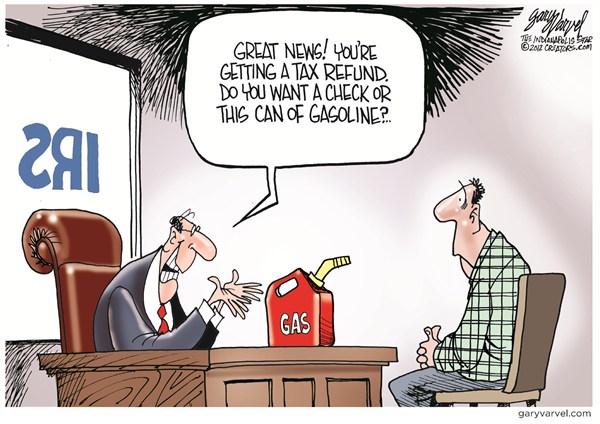
Survivalist Tip: If you have a home and a vehicle, you should have at least 1 gas can readily available, in the event you have to evacuate. There’s a likelihood power will be out when the axes shift, so gas stations may not be functioning completely. You can take a chance and try to suck some gasoline out of a fuel hose. But, not only is that uncouth, it’s a good way to catch germs and viruses, such as flu, Ebola and gingivitis. Gas cans are relatively inexpensive and can be purchased at any retail outlet. Here’s a basic checklist:
Gasoline is highly flammable and therefore, very dangerous. Responsible gas users know how to deal with the liquid, even under the worst of circumstances. Proper gasoline use will prove to the Mayan deities that you care about the environment. Amidst the chaos, the last thing you want is a reputation for spreading your gas all over the place!
Filed under Mayan Calendar Countdown
If your birthday is today, “Happy Birthday!”
Auto racer Dan Gurney (Indianapolis Speedway Hall of Famer; 1st driver to win all 4 major categories: Formula One, Indy Cars, NASCAR stock and sports cars) is 81.
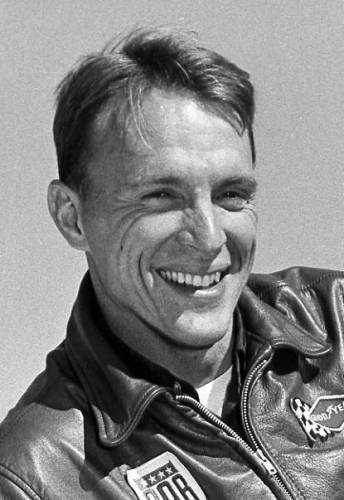
Actor Lyle Waggoner (The Carol Burnett Show, The Jimmie Rodgers Show, Wonder Woman) is 77.
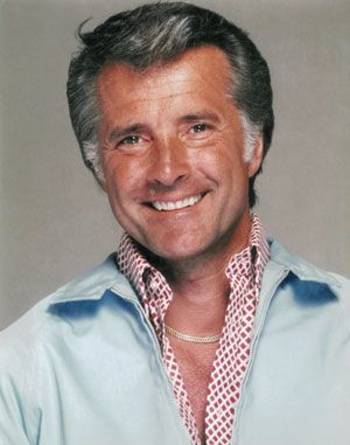
Actor Edward Fox (Gulliver’s Travels, The Dresser, Gandhi) is 75.

Actor Paul Sorvino (Law and Order, Reds, The Day of the Dolphin, Goodfellas) is 73.
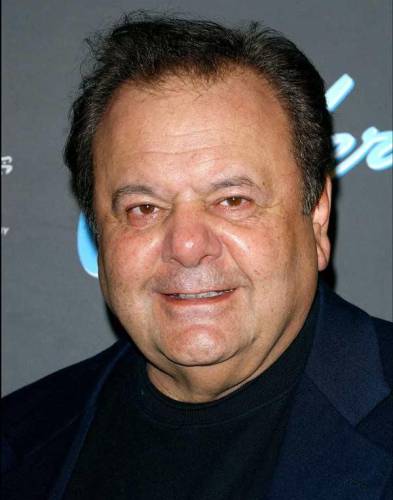
Singer – harmonica player Lester Chambers (The Chambers Brothers) is 72.

Composer Bill Conti (The Right Stuff , Dynasty, Falcon Crest, Inside Edition) is 70.
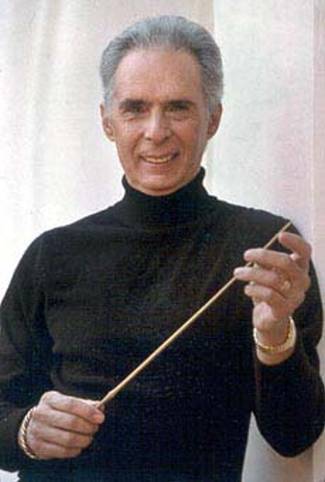
Bass guitarist Jack Casady (KBC Band, Hot Tuna, Jefferson Airplane) is 68.
Actor Tony Dow (Leave It to Beaver, Back to the Beach, High School U.S.A.) is 67.
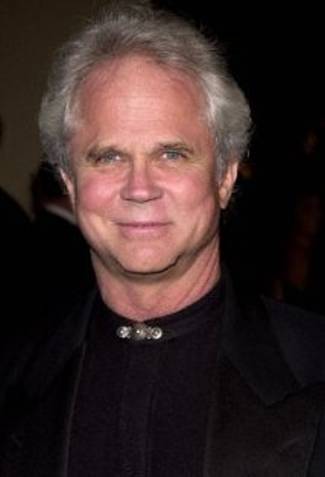
Singer – songwriter Al Green (Tired of Being Alone, Let’s Stay Together, You Ought to be with Me) is 66.
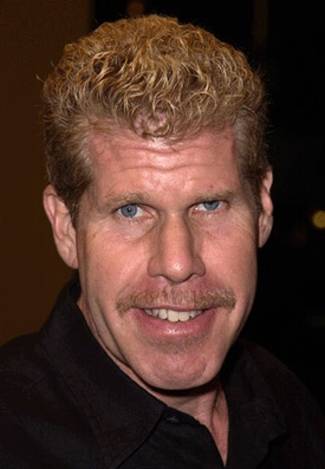
Actor Ron Perlman (Fluke, Double Exposure, Beauty and the Beast series) is 62.
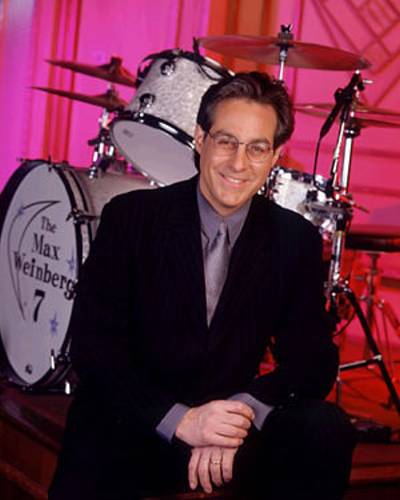
Drummer Max Weinberg (E Street Band; bandleader: The Max Weinberg 7) is 61.
Singer Peabo Bryson (Tonight I Celebrate My Love, I Can Make It Better, Just Another Day) is 61.
Organist Jimmy Destri (Blondie) is 58.
Actress Saundra Santiago (Miami Vice, Beat Street) is 55.

World Chess Champion Garry Kasparov is 49.
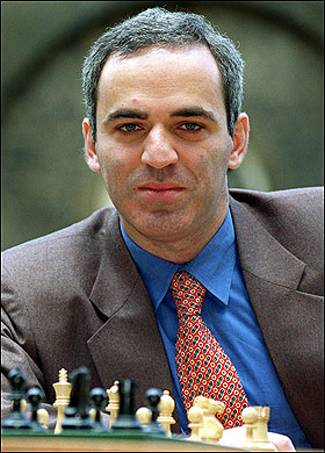
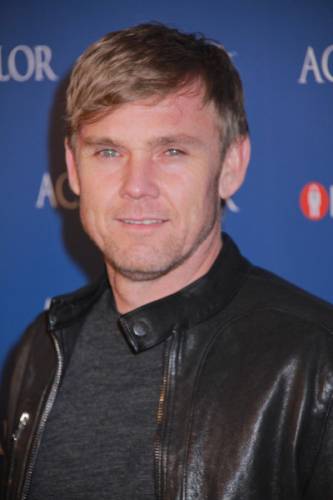
Actor Rick Schroder (NYPD Blue, Crimson Tide, Texas, Lonesome Dove) is 42.
Filed under Birthdays
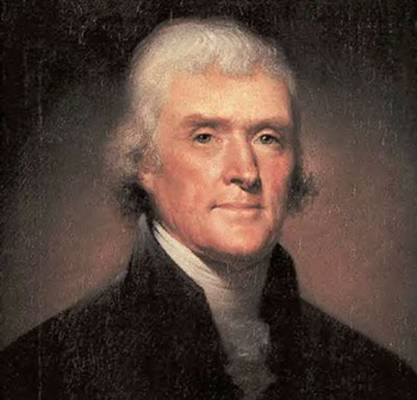
1743 – Thomas Jefferson was born in Alexandria County, Virginia.
1906 – Author Samuel Beckett was born in Dublin, Ireland.

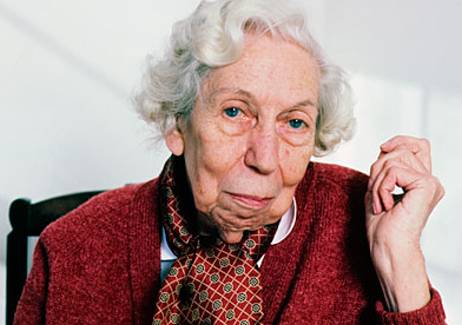
1909 – Poet Eudora Welty was born in Jackson, MS.
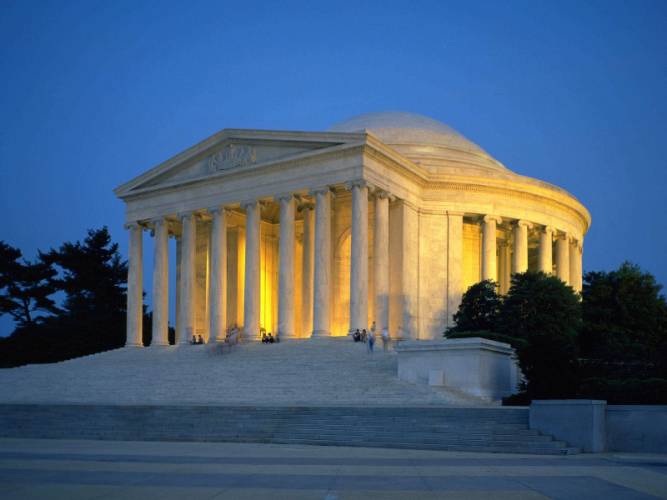
1943 – The Thomas Jefferson Memorial was dedicated in Washington, D.C.
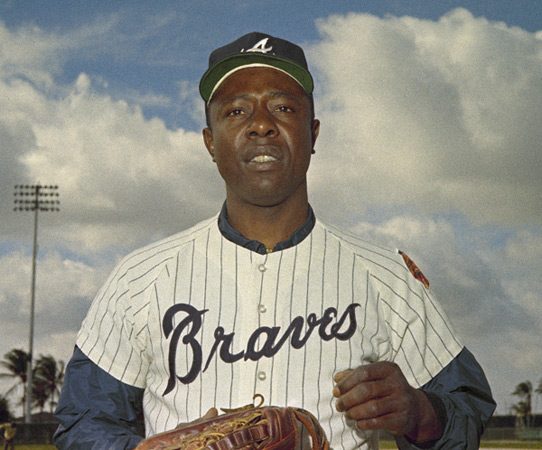
1954 – Hank Aaron debuted for the Milwaukee Braves.
1954 – Ian Fleming’s first novel about James Bond, Casino Royale, went on sale in the United Kingdom.

1958 – Van Cliburn of Kilgore, TX earned 1st prize in the Soviet Union’s Tchaikovsky International Piano Contest in Moscow.
1964 – At the 36th Annual Academy Awards ceremony, Sidney Poitier became the first African-American to win a lead acting Oscar when he was named Best Actor for Lilies of the Field.

Filed under History

A jungle-shrouded pyramid in Tikal, an ancient Mayan city in Guatemala, languishes quietly against a violet sky. Along with Chichén Itzá in México, Caracol in Belize, and Copán in Honduras, Tikal attracts visitors and inspires imaginations from across the globe. These magnificent city-states have survived centuries of drought, earthquakes, hurricanes and human degradation. The Mayan people, however, never disappeared into outer space, as some claim. Millions of Maya people and their culture remain alive and well, mostly in Guatemala’s Western Highlands. Photograph by Diego Lezama Orezzoli, Getty Images.
Filed under News
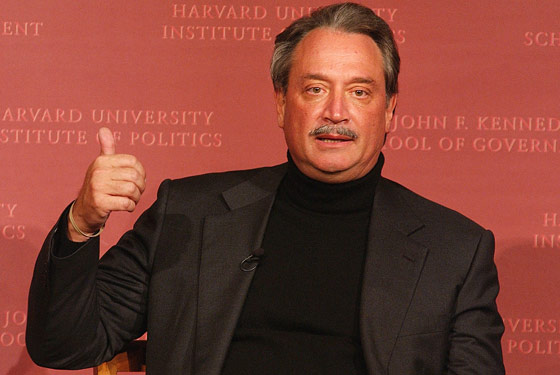
“The worst thing Mitt could do now is turn inward and worry about consolidating evangelicals and the party. He needs to be a general, face forward toward the enemy and lead the troops into battle against the president of European-style government, Barack Obama. That will get the army marching in step.”
— Alex Castellanos, a Republican strategist, warning Mitt Romney’s campaign team to ignore religious-right leaders’ advice.
Filed under News
 Chief Writing Wolf