Monthly Archives: May 2012

Rare White Buffalo Killed on Texas Ranch

Lightning Medicine Cloud, a rare white buffalo born on the Lakota Buffalo Ranch in Greenville, Texas, in May 2011 was found slain and skinned a few days ago.  The next day its mother was also found dead.  Weeks earlier its father apparently had been fatally struck by lightning.  Hunt County police officials are investigating, along with the Texas Rangers and other state agencies.  White buffalo are sacred to the Lakota Sioux people who believe the birth of such an animal is a spiritual call for peace and unity.  They also are very rare; only about 1 out of a million buffalo are albino.

Lightning Medicine Cloud’s arrival was met with much fanfare last year.  The Lakota Buffalo Ranch named the male calf in recognition of its birth during a powerful thunderstorm.  Ranch owner Arby Little Soldier hasn’t yet provided any specifics about the animal’s death, but is offering a $5,000 reward leading to the arrest of the person or persons responsible for the deaths of Lightning Medicine Cloud and his mother.  The ranch intends to proceed with a ceremony May 11 – 12 that would have honored the calf’s first birthday.  Instead, it will be a memorial service.

Anyone with information is asked to call the Hunt County Sheriff’s Department at (903) 453-6800 and ask for either Sheriff Randy Meeks or Lt. Tommy Grandfield.

Leave a comment

Filed under News

Museum of Simply Important Things

Recently, Nobel Prize-winning Turkish author Orhan Pamuk established a “Museum of Innocence” in his native Istanbul.  Although it’s not “spectacular or monumental,” the “museum” is ingenious in its simplicity.  It houses relics of every day Turkish life in the second half of the 20th century.

“Our daily lives are honorable, and their objects should be preserved,” said Pamuk.  “It’s not all about the glories of the past.  It’s the people and their objects that count.”

He adapted the idea for the collection from his book, The Museum of Innocence, which follows the travails of a young man named Kemal who is engaged to Sibel.  Both are from prominent families that adhere to strict cultural rules about marriage and chastity.  Things get complicated, however, when Kemal becomes infatuated with Füsun, an attractive young woman who also happens to be a distant relation.  As he pursues Füsun over an 8-year period, beginning in 1975, Kemal amasses a collection of objects that chronicle his life and passions.  His obsession consumes him so much that he ignores the social and political upheavals occurring in Turkey at the same time.

The real museum contains items Pamuk collected from various resources.  There are China figurines, old shaving kits, a film projector and toothbrushes.  He’d conceived of the idea over a decade ago, along with the book.  The space occupied by the museum was originally meant to open with the novel’s publication, but was beset with delays.  Working closely with a team of architects, artists and product designers, it took Pamuk another 4 years to complete the project.

The Museum of Innocence” was Pamuk’s first novel after winning the 2006 Nobel Prize in Literature, the first Nobel to be awarded to a Turkish citizen.  Pamuk has sold over 11 million books in 60 languages, making him Turkey’s best-selling writer.  His outspokenness has also made him perhaps its most controversial.  In 2005, he was charged with “insulting Turkishness” over his sharp remarks about the World War I massacre of Armenians.  He was eventually acquitted, but the ordeal only intensified Pamuk’s concerns about free speech issues.  It also caught the world’s attention and led some to question Turkey’s admission into the European Union.

Pamuk remains undeterred.  “When I look back on my life up to the age of 54, I see a person who has worked long hours at a desk, in both happiness and in misery,” he declares in an autobiographical statement. “I have written my books with care, patience, and good intentions, believing in each and every one.”

That is the true spirit of a writer; a philosophy all aspiring scribes should adopt.

Leave a comment

Filed under News

May 3, 2012 – 231 days Until Baktun 12

Survivalist Tip: I know I’m late in getting this out, but just deal with it.  Earlier, while snacking on some crackers, I realized they are the perfect fast food.  I prefer crackers with embedded salt.  Unsalted crackers are like cardboard to me, and who the hell would want that?  Most crackers are made with unbleached flour, yeast and soybean oil and are usually fortified with iron, niacin and Vitamin B.  All of these ingredients provide can provide you with energy and stamina to protect yourself against intruders or a cantankerous spouse.  As you’re hunkered down in your home, tent, cave, or armored tank, you’ll need some viable sustenance, and crackers can provide just that.  Stockpile as many boxes of crackers as you can shortly before December 21.  They keep for a relatively long time.  Even if they start to go stale, they’re still edible.  Regrettably, they don’t go too well with chocolate, but they’re a perfect supplement to the variety of fruit you should have on hand.

Leave a comment

Filed under Mayan Calendar Countdown

Today’s Notable Birthdays

If May 3 was your birthday, “Happy Birthday!” and sorry I’m late.

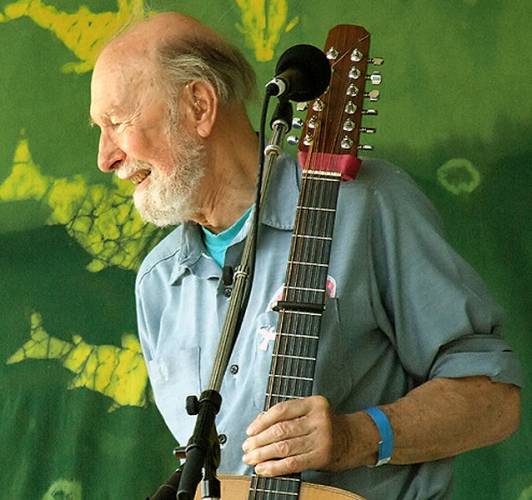
Folk singer – songwriter Pete Seeger is 93.

Singer Frankie Valli (The Four Seasons) is 75.

Bass guitarist Pete Staples (The Troggs) is 68.

Sports announcer Greg Gumbel is 66.

Folk singer Mary Hopkin (Those Were the Days, Goodbye, Temma Harbour) is 62.

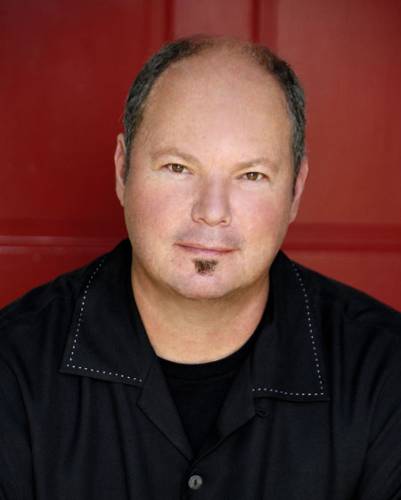
Singer – songwriter Christopher Cross (Arthur’s Theme (Best that You can Do), Sailing, Ride like the Wind) is 61.

Bass guitarist Bruce Hall (REO Speedwagon) is 59.

Leave a comment

Filed under Birthdays

On May 3…

1469 – Philosopher and writer Niccolo Machiavelli was born in Florence, Italy.


1802 – Washington, D.C., was incorporated as a city.


1933 – Nellie Ross became the first female director of the U.S. Mint.

1944 – Dr. Robert Woodward and Dr. William Doering produced the first synthetic quinine at Harvard University.

1952 – Lte. Col. Joseph O. Fletcher and Lte. Col. William P. Benedict landed the first airplane at the North Pole.

1979 – Margaret Thatcher became Britain’s first female Prime Minister.

Leave a comment

Filed under History

Pictures of the Day

Tulip farms in Holland

Leave a comment

Filed under News

Quote of the Day

“We felt the smell was wrong, but in the end, we decided he knew more about the law than we did.”

– Andrew Young, former campaign aide to John Edwards, talking about pressure to funnel campaign donations to Edwards’ mistress.

Leave a comment

Filed under News

Do You Really Need That Publisher?

In the brave new world of digital and self-publishing, Lisa Buchan, CEO of Sparkabook, poses a question that few dare to ask – do writers need a publisher?  It’s most certainly a query that traditional book agents and publishing houses loathe.  But, as authors take greater control over their work, it’s an inevitable discussion that needs to be had.

Previously, creative types labored in the name of their art.  If they encountered someone who had enough money and power to commission them to complete further works, then they were truly blessed – and ultimately so was the rest of society.  The first publishers actually were benefactors – people who sponsored a writer they liked.  And, the books these writers cranked out would go almost immediately into the patron’s personal library.  In other words, all the sculptors, painters and writers were at the mercy of these affluent individuals.  The patrons weren’t making an “investment,” since they didn’t need to generate income for themselves.  Art was done purely for art’s sake.

Contemporary publishing isn’t quite so paternalistic, but it’s close.  When a publisher accepts a manuscript, they truly are making an investment in the author – in both time and money.  They work with the author to polish the final product; have someone design the book jacket and any illustrations inside the text; and engage in marketing and advertising.  Consequently, for their efforts, the publisher lops off a certain percentage from the profits.  Book agents do basically the same, except the actual printing.  If the writer is foolish enough to relinquish all rights, then that means the publishing house can sell movie or TV rights to the book, and the only benefit the writer will see is his or her name in small print beneath the term, “Based on the book by…”

As with any investment, it’s always a risk.  An agent or editor may fall in love with a particular book, but – even with heavy marketing – that’s no guarantee it will sell.  Every publishing house wants to discover the next Stephen King or Anne Rice.  But, they won’t know if they don’t take a chance with the writer.  King, for example, couldn’t get any of his horror short stories published when he began his writing career.  So, porn magazine purveyor Larry Flynt, of all people, published them.  Ernest Hemingway endured almost a hundred rejections before he got his first story published.  If a publisher doesn’t accept someone like John Grisham – only to see him go with another company and start making millions – then obviously that first publisher starts kicking themselves.  Therefore, publishing is filled with more regrets than glory.

But, as self-publishing gains more respectability and becomes the norm, agents, editors and publishers are squirming.  They’re akin to the British Empire seeing power slip from its grasp, as millions of people in India refuse to bow to their authoritarian rule.  It’s frightening to them, but exciting to the rest of us.

Read the rest of Buchan’s editorial here.

1 Comment

Filed under News

May 2, 2012 – 232 days Until Baktun 12

Survivalist Tip: In keeping with my combating allergies theme, I suggest adding lemons to your stockpile of food stuffs.  People often mix lemon juice with honey and tea to help fight a colds, flues and nasal and chest congestion.  But, even by themselves, lemons are a healthy food item.  They contain unique flavonoid compounds that have antioxidants and anti-cancer properties.  The main element is flavonol glycoside, which has been shown to stop cell division in many cancer cell lines.  These same flavonoids help boost the immune system.  Lemons are also a good source of Vitamin C, which (as I’ve discussed before) is one of the most important antioxidants in nature.  Although it has a rather strong taste and is bad for teeth enamel, lemon juice (when mixed with water) helps to cleanse the body of dangerous free radicals (which can damage the body’s cell structure) and reduce fevers (which can ruin a really good day).

Lemon juice is also effective against malaria, cholera, diphtheria, typhoid and the heartbreak of psoriasis when it’s mixed with water.  With so many people likely to be mobile at the start of the new Baktun – either scrambling to safety, or trying to find abandoned chocolate bars – these ailments could be all around you.  On top of all that, a well-aimed lemon half can take out the eyes of an intruder or an unruly child.

1 Comment

Filed under Mayan Calendar Countdown

Today’s Notable Birthdays

If today is your birthday, “Happy Birthday!”


Singer Engelbert Humperdinck (After the Lovin’, Release Me, There Goes My Everything, The Last Waltz) is 76.


Organist Goldy McJohn (Steppenwolf) is 67.


Singer Lesley Gore (It’s My Party, Judy’s Turn to Cry, She’s a Fool) is 66.

Singer Larry Gatlin (Gatlin Brothers) is 64.


Singer Lou Gramm (Black Sheep, Foreigner) is 62.


Leave a comment

Filed under Birthdays