
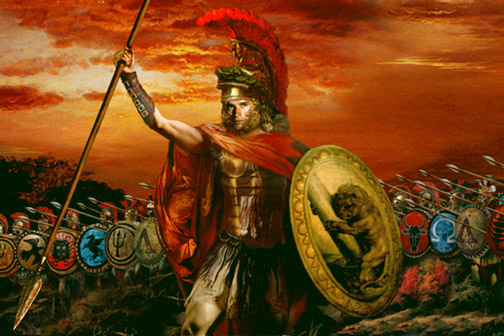
323 B.C. – Alexander the Great died in Babylon in present-day Iraq at age 33.
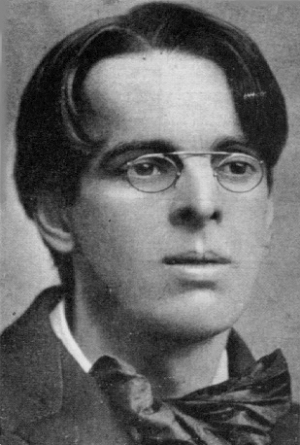
1865 – Poet William Butler Yates was born in Dublin.
1893 – Mystery writer Dorothy Sayers (Whose Body?, Murder Must Advertise) was born in Oxford, England.

1895 – The first documented automobile race occurred in France, a 732-mile course, from Paris to Bordeaux. Emile Levassor and René Panhard won in a car Panhard had designed with a 2-cylinder, 750-rpm, and 4-horsepower Daimler Phoenix engine. Traveling at a speed of about 15 miles per hour, they completed the race in just under 49 hours.

Panhard (L) and Levassor in their race car.
1944 – Marvin Camras patented the wire recorder, precursor of magnetic tape recorders.

Camras’ device, the “wirek.”
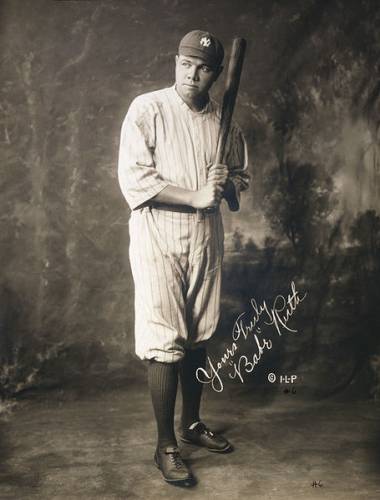
1948 – In a farewell ceremony at Yankee Stadium, Babe Ruth’s uniform was retired. Ruth died 2 months later.
1966 – In a 5-4 ruling, the U.S. Supreme Court handed down its decision in Miranda vs. Arizona.
1967 – President Lyndon Johnson appointed U.S. Court of Appeals Judge Thurgood Marshall to the U.S. Supreme Court.

1971 – The New York Times published the first portion of the 47-volume “Pentagon Papers,” an analysis of U.S. military policy in Southeast Asia. Daniel Ellsberg, a former defense department analyst, had stolen the documents, officially called The History of the U.S. Decision Making Process on Vietnam.

Ellsberg before the Senate in 1972.
1983 – Eleven years after it was launched, Pioneer 10, the world’s first outer-planetary probe, left the solar system. Headed in the direction of the Taurus constellation, Pioneer 10 should pass within three light years of another star – Ross 246 – in A.D. 34,600. Bolted to the probe’s exterior wall is a gold-anodized 6” x 9” plaque that displays a drawing of a human man and woman, a star map marked with the location of the sun, and another map showing the flight path of Pioneer 10.

 Chief Writing Wolf