
Watching the debate between President Obama and Mitt Romney the other night invoked a number of emotions in me; mainly nausea. Obama looked half-asleep, while Romney displayed yet another side of his plastic persona. Romney contradicted himself more times than someone with schizophrenia, and Obama simply didn’t show any backbone. Considering that Romney announced he would take down “Sesame Street” and Obama expressed joy last week that the National Football League’s referee strike had ended peacefully, I haven’t been this disillusioned about politics since January 20, 2001, when George W. Bush first took office.
It’s come to this? PBS and football referees are that utterly important in the overall scheme of America’s ongoing economic crisis? Well, at least PBS serves a purpose. But, even before the Obama – Romney debate, I pondered why America has let itself stoop to such lowly aspirations. This is a country that built the world’s first transcontinental railroad system in the mid-1800’s and, less than a century later, constructed the world’s largest highway system. Following World War II, this same nation created the strongest middle class the world has ever seen. We were the first to take flight into the air and the first to place men on the moon. We helped to develop automobiles, telephones, radio, televisions and computers. Now, we’re talking about creationism in schools and gay marriage. Are we serious? How did the national dialogue become so pathetic?
A half century ago, President John F. Kennedy issued a challenge to the nation; he wanted us “to go to the moon in this decade and do the other things; not because they are easy, but because they are hard.” And, we did just that! Less than seven years later, Neil Armstrong became the first human to set foot on the lunar surface.
I’m somewhat of a dreamer. In fact, I’m a big dreamer. My quiet, sometimes introverted personality conjures up the most fantastic of stories. But, it also envisions the seemingly impossible of events. Thus, while some people worry what Vice President Joe Biden might say in his debate with Congressman Paul Ryan next week and others sit on the edge of their seats, wondering who will take first place on “Dancing with the Stars,” I propose the following challenges to my fellow Americans.
Energy Independent – Every American president since Richard Nixon has called for the U.S. to be completely and totally energy independent. The oil embargoes of the 1970’s first made us realize how badly our nation is beholden to the Saudi royal family who – just a few decades earlier – were still living a nomadic lifestyle. Our technology helped them move into the 20th century almost overnight. Currently, though, the U.S. obtains most of its oil from Latin America, mainly Venezuela. We actually buy more oil from Canada than from OPEC nations. But, we’re still reliant upon foreign nations for a good chunk of our fuel. And, we’re still too dependent upon coal and natural gas. The fact is that those resources are finite. They’re also dirty and dangerous to extract from the Earth. I’d like to see the U.S. develop cleaner and safer means of energy by 2030. Yes, that’s less than 20 years from now, but I know we can do it. And, we need to do it. We can’t continue to pollute our environment and put our citizens at risk just to keep the lights on in the house.
Subterranean Power and Telecommunication Lines – In August of 1992, Hurricane Andrew plowed into Florida as a borderline category 5 storm, before marching across the Gulf of México and slamming into Louisiana. It was the most expensive natural disaster in U.S. history at the time; costing an estimated $26 billion. For weeks afterward, residents in the impact zones lived without power. Andrew had knocked down and / or destroyed thousands of yards of power and telecommunication lines. In the richest, most powerful country on Earth, people found themselves struggling from day to day in a third world-style environment in the heat of summer. Twenty years later Hurricane Isaac gently rolled over southeastern Louisiana and did virtually the same thing to all those power and telecommunication lines. Tropical storm systems aren’t the only harbinger of disaster. Almost every winter, people in the northeastern U.S. brace for mighty arctic hurricanes that send them back into those third world type living conditions. The same happens after floods, tornadoes, wildfires and earthquakes. We can never control what the planet’s natural elements will do. Every time humans have tried to fight nature, they almost always get smacked back into reality. But, we can mitigate the impact of these calamities by burying as many of our power and telecommunication lines underground as possible. This is not a new idea. Many people – from energy analysts to, yes, politicians – have pushed for this to be done on a massive scale. But, there have been plenty of detractors. While we already have a large number of subterranean power and telecommunication lines, opponents claim they’re not necessarily more reliable than overhead lines. While overhead lines experience more outages and are more vulnerable to every piece of aerial debris from disoriented birds to tree branches, subterranean lines are generally more difficult to access and repair when problems with them do arise. Another obstacle, of course, is money. There are greater costs associated with the installation of subterranean lines, and – as you might have guessed – those costs must be passed onto consumers, either in the form of higher utility rates or increased taxes. But, I think it’s well worth the financial burden. Ultimately, it costs people more to go without power; food is spoiled and lives can be endangered in extreme heat or cold. The expenses incurred with the initial installations and ongoing maintenance will more than pay for themselves in the ensuing years.
Humans on Mars – For eons, our ancestors wondered what it was like on the surface of the moon. When the U.S. finally made it there in July of 1969, our fanciful images of otherworldly beings gave way to the bland reality of rocks and dust. But, we made it! We’d successfully landed humans on the surface of another celestial body and brought them back to Earth. Almost immediately, people began contemplating a trip to Mars. The U.S. has come close; first with the Viking I and II voyages, and most recently, with the Curiosity mission. These have been unstaffed journeys, but they’re important. The U.S. space program of the 1960’s helped to advance technological developments; mainly with telecommunications, such as facsimile machines and cordless phones, but also with engineering and robotics. As with any grand adventure, however, there are detractors who look primarily (or only) at the money factor. The Viking missions alone cost $1 billion – in 1970’s-era figures – and, as of now, the Curiosity budget has exceeded $2.5 billion. But so far, the U.S. has spent nearly $807 trillion in Iraq and almost $572 trillion in Afghanistan. If we can afford that kind of cash to kill people and destroy entire towns and villages, we definitely can expend a fraction of that money on a staffed trip to Mars. I don’t believe we’re alone in this universe. And, it’s in our nature as humans to explore and discover. I feel we should make a concerted effort to send a craft with humans to Mars by 2030.
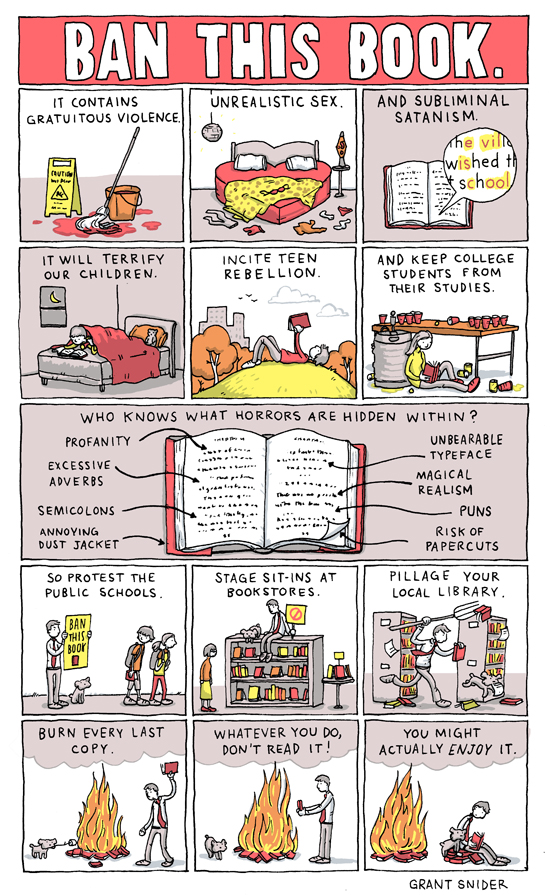
100% Literacy Rate – This is the most ambitious of my goals. Literacy and education are paramount to the success of any society. But, they’re also the most personal and the most difficult. As of 2012, the U.S. literacy rate stands at roughly 80%. While this means that more than three-quarters of the U.S. population can read and write to some degree, we’re still far behind such countries as Denmark, Japan and Norway where literacy rates hover close to 100%. Why is the U.S. at a dismal 80%? I think much of it has to do with our elected officials and their reluctance to consider education as equally important as military prowess and individual financial wealth. Moreover, the United States boasts the largest rate of incarceration than any other nation; some 1.8 million people are imprisoned here, or about 1 of every 100 adults. Of those individuals, roughly 70% are illiterate. While rates vary among states, it costs roughly $23,000 per year to house one person in a prison. However, it costs about $1,000 to educate a child each year at the elementary level and about $3,000 per year at the high school level. College educations also vary widely among states and differ between private and public universities. But, the average cost per year is about $15,000. Once someone graduates from college, or even a vocational training program, however, they can enter the work force and start paying back those costs in earnings and taxes, as well as consumer spending. Somehow, though, our political elite thinks it’s more feasible to imprison someone than to educate them. Every year across this nation, states balance their school budgets on the backs of its most vulnerable citizens: elderly, disabled and children. Just like with the costs of the Afghanistan and Iraq conflicts, it’s beyond me to understand why this nation always has enough money for war, but never enough for education. I feel it’s the conservative mindset working against us. Earlier this year former senator and Republican presidential candidate Rick Santorum denounced President Obama as a “snob” for wanting everyone in the U.S. to have a college education. Ignoring such stupidity, though, I think it’s plausible for the U.S. to have a 100% literacy rate by 2050, if not sooner. It’s well worth the expense, as we’ll see our prison rates decrease, while consumer spending rates increase. Educated people generally make better decisions and think first before they act. It’s easier to give a child and book and deal with their barrage of questions once they finish reading it than to let a kid drop out of school and deal with their bad attitude once they’re in jail.
I know naysayers will read this and scoff at my lofty ambitions; perhaps accusing me of arrogance in imposing such goals upon others. I’m not forcing anyone to believe as I do. But, the wealthiest nation on Earth should have much greater objectives than ensuring tax cuts for the wealthiest 1% of its citizens or constructing a wall along the southern border. Our grand ethnic and cultural diversity will allow for it. Our future depends on it. It’s in our nature as humans to wonder and explore – and to dream big.





 Chief Writing Wolf