Category Archives: Classics

Gustave Le Gray’s “Seascape”

“Seascape”, Normandy, France, by Gustave le Gray_1856

Every technological innovation boasts its gallery of pioneers; people who view the new item with wonder and see its potential.  It’s difficult to imagine now, but less than 200 years ago, photography was one such invention.  Like television sets and personal computers in the 20th century, photography in the 19th century was a medium that had few proponents and even fewer fans.  But, Gustave Le Gray was among the handful of practitioners who put photography to good use.

Born near Paris, France in 1820, Le Gray became known for his photographs of landscapes and the sky.  In 1856, he made this picture of the seashore at Normandy, France and simply called it “Seascape.”  I emphasize “made” because no one really took photographs back then.  The process was slow and arduous; the camera’s aperture had to attract enough light to burnish an image onto a glass plate.  It took several minutes, which explains why the subjects of early portraits never smiled.

Le Gray, however, often used two negatives to capture the expanse of the scenery.  He placed the negative directly on top of the photographic paper and printed in sunlight.  The prints were then toned in a solution of gold chloride in hydrochloric acid.  This resulted in a violet-purple color, with helped to stabilize the images and prevent them from fading over time.  The two-negative combination allowed Le Gray to achieve a tonal balance between the sea and the sky when the picture was printed.  The sunlight’s shimmer on the water made viewers initially think they were looking at a moonlit shoreline.  For many people the result was breathtaking and almost spiritual.

Upon seeing one of Le Gray’s seascape photographs in 1857, a critic for the “Journal of the Photographic Society” wrote:

“From the midst of this ‘pother’ of dimness falls a gush of liquid light, full and flush on the sea, where it leaves a glow of glory…It is as when Jacob’s ladder of angels was just withdrawn, and the radiance above and below, where it rested on earth and sky, had not yet melted out.”

Le Gray seemed to comprehend the practical applications of photography, when he wrote in 1856, “Since its first discovery, photography has made rapid progress, especially as regards the instruments employed in its practice.  It now remains for the artist to raise it to its proper position among the fine arts.”

Le Gray composed a set of photographs of the Normandy coast in the summer of 1856 and another set along the Mediterranean the following spring.  They were exhibited first in London and then in Paris shortly afterwards.  Le Gray quickly became a sensation.  Unfortunately, his success didn’t last long, and he was bankrupt by 1860.  He died in Egypt 1882.
1 Comment

Filed under Classics

1912 Pocket Telephone

Pocket-620x443

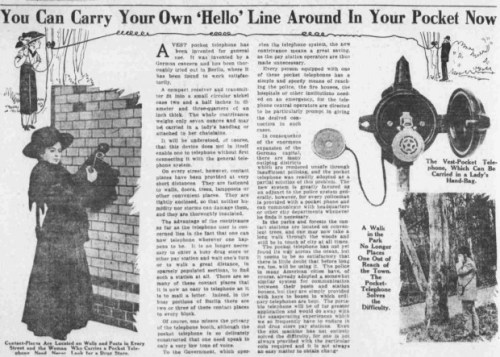
Anyone who thinks cell phones are as new as reality TV shows underestimates the genius of our forebears.  In 1912, German technicians invented the “Pocket Telephone,” a device meant to communicate primarily with police.  An announcement from Berlin read, in part:

“In consequence of the enormous expansion of the German capital, there are many outlying districts which are rendered unsafe through insufficient policing, and the pocket telephone was readily adopted as a partial solution of this problem.  The new system is greatly favored as an adjunct to the police system generally, however, for every policeman is provided with a pocket telephone and can communicate with headquarters or other city departments whenever he finds it necessary.”

The item was actually a microphone that the individual would attach to a “contact device,” which would then connect with authorities.  Of course, the user didn’t have the cherished privacy of a telephone booth.  But, the technology was advanced enough to pick up even soft tones.  The entire thing was about three-quarters of an inch thick and weighed approximately 7 ounces.

As creative and forward-thinking as they were, though, I don’t think the phone’s inventors could have foreseen texting and picture-taking phones.  That took a real leap of perverted thinking.

8 Comments

Filed under Classics

Roosevelt – As He Was

All presidents – like all people – have secrets.  It’s a simple fact of human nature.  Most of us like to keep ours.  In the current 24-hour news cycle, though, that’s become increasingly difficult, if not impossible, for public figures.  But, for Franklin D. Roosevelt, keeping his disability secret wasn’t just a matter of vanity; it was a matter of national importance.  Roosevelt had contracted polio in 1921; a condition diagnosed while he was vacationing in Canada.  Although he tried a number of treatments, he never fully regained the use of his legs.  He continued on with his political ambitions and eventually served an unprecedented 12 years as the nation’s 32nd president.  And, hardly anyone outside his close circle of family, friends and White House confidants knew he was almost completely wheelchair-bound.  It’s tough to imagine such a secret now, but in Roosevelt’s time, people could maintain that level of secrecy – and respect.

Recently, Ray Begovich, a professor of journalism at Franklin College in Indiana, uncovered a rare piece of film footage showing Roosevelt in his wheelchair.  It’s just an eight-second bit that he accidentally discovered while conducting unrelated research at the National Archives in Maryland.

“This raw film clip may be the first motion picture images of the president in his wheelchair, and it was never meant to be shown to the world,” Begovich said.

The film was taken during Roosevelt’s visit to the U.S.S. Baltimore at Pearl Harbor in July of 1944.  Roosevelt exits a doorway and proceeds down a ramp behind a row of sailors who block the view of the wheelchair.  While Roosevelt’s disability was a closely-guarded secret during his presidency, it later served as inspiration to disability advocates who succeeded in getting a statue of the president in his wheelchair added to the Roosevelt Museum in Washington.

Yes, it was a different world in the 1940s.  Now, we know that physical limitations don’t equate to mental aptitude.

1 Comment

Filed under Classics

Of Cocaine, Sugar and Medicine – When Cures Were So Much More Fun

549901_10151325436856236_1202948798_n

Since the beginning of time, humans have sought various medicinal treatments for everything from headaches to sore butt syndrome; something I’m suffering from right now, as I pursue my writing career.  With all the regulations here in the U.S. imposed by our omnipresent Food and Drug Administration and the ongoing (and almost fruitless) ‘War on Drugs,’ it’s tough to believe some medicines contained narcotics that would now land you in prison for life.

Consider, for example, that the Lloyd Manufacturing Company of Albany, New York, once produced “cocaine toothache drops.”  Billed as an “instantaneous cure” and sold for 15¢, Lloyd sold this oral miracle from 1885 until cocaine was outlawed in 1914.

In 1849, Charlotte M. Winslow of Maine got tired (like so many mothers did then and now) of dealing with a baby afflicted with coughing spasms.  Since necessity is always the mother of invention (in this case, literally!), Winslow created “Mrs. Winslow’s Soothing Syrup” – a cough elixir that included 65 mg of morphine.  Even the most colicky of babies would settle down after a single dose, so mother could get her rest and do whatever women liked to do when they had the time; like read, knit, or drink whiskey.  But, in 1911, the American Medical Association deemed the syrup a “baby killer,” thus prompting the government to ban it.  However, it remained on sale in the U.K. until 1930.

Mothers everywhere could sleep better knowing their kids were on morphine.

Mothers everywhere could sleep better knowing their kids were on morphine.

Another 19th century cough and cold remedy, “Dr. John Collis Brown’s Chlorodyne,” contained laudanum, which is a mixture of opium, cannabis and chloroform.  The medicine was also marketed as a cure for asthma, migraines, bronchitis and even cholera.  Hell, with those three ingredients, what ailment wouldn’t go away?

In the early 1800s, Scottish botanist James Edward Smith developed “Tilden’s Extract,” a cannabis extract manufactured and sold by the Tilden Company of New York as a cure for “hysteria, chorea, gout, neuralgia, acute and sub-acute rheumatism, tetanus, hydrophobia and the like.”  American author and journalist Fitz Hugh Ludlow became such a fan of the extract he wrote an entire book in 1857 entitled “The Hadeesh Eater” extolling its benefits.  Ludlow described the marijuana user as someone who’s searching for “the soul’s capacity for a broader being, deeper insight, grander views of Beauty, Truth and Good than she now gains through the chinks of her cell.”  Would anyone disagree, even now?

In 1863, French chemist Angelo Mariani developed his own wine, “Vin Mariani,” a Bordeaux wine treated with coco leaves.  Apparently, through natural chemical infusion, the ethanol in the wine extracted the cocaine from the coca leaves, leaving it with 7.2 mg of cocaine per ounce.  Contemporary ads claimed the wine would restore “health, strength, energy, and vitality.”  The beverage acquired some famous fans, including Queen Victoria, Pope Leo XIII and Thomas Edison who claimed it allowed him to stay awake for longer, which subsequently assisted his inventing prowess.  Even U.S. President Ulysses S. Grant allegedly partook of the concoction.  There’s nothing like having friends in high places.

Pope Leo XIII liked Vin Mariana so much he gave it a medal.

Pope Leo XIII liked Vin Mariana so much he gave it a medal.

“Vin Mariani” spawned many imitators, including “Pemberton’s French Wine Coca.”  John Pemberton came up with the idea after being severely wounded in April of 1865 during the Battle of Columbus.  He became addicted to morphine as a result of his injuries and used his chemistry background to develop an alternative – a cocaine-infused elixir that was patented by the Eagle Drug and Chemical Company of Columbus, Georgia.  When “Temperance Legislation” was enacted in 1885 to curb the growing dilemma of alcoholism in America (this was a precursor to “Prohibition”), Pemberton began experimenting with a non-alcoholic version of his “wine.”  He created a syrup made of cane sugar, coca leave extract and cola nuts.  He then diluted the syrup with water and added ice to keep it cool.  Thus, was born one of the most legendary beverages of all time: Coca Cola!  This new formula contained 8.46 mg of cocaine and was advertised as “a cure for morphine and opium addictions.”  The drink was first sold to the public at Jacob’s Pharmacy in Atlanta.

By the time Pemberton died in 1888, three versions of Coca-Cola were being sold in the U.S. by three different businesses: Asa Candler, Margaret Dozier and Woolfolk Walker.  Candler sold his version under the names “Yum Yum” and “Koke,” before purchasing exclusive rights to the formula from Pemberton’s estate.  In 1892, he incorporated the Coca-Cola Company and two years later, sold the beverage in bottles for the first time.  Because of revised drug laws in 1914, cocaine was removed from Coca-Cola, but the name remained.

So, next time you reach for that Benadryl or can of Coke, just think – things weren’t always this dull.

Who needs a nurse when you a Coke?

Who needs a nurse when you have a Coke?

2 Comments

Filed under Classics

Dead Bugs and Other Classics of Early Stop-Motion Animation

Bugs cavort in Wladyslaw Starewicz’s “The Cameraman’s Revenge.”

Bugs cavort in Wladyslaw Starewicz’s “The Cameraman’s Revenge.”

As a film buff and former film student, I have a natural affinity for silent movies.  They’re a mark of cultural history, even though in those early days, many considered the medium little more than a passing fad.  But, almost from the start, film captured some historical events; such as the 1896 coronation of Nicholas II, the last tsar of Russia, and the moments before Archduke Franz Ferdinand of Austria – Hungary and his wife, Sofia, were assassinated in 1914 – an event considered the trigger for World War I.

But, many early filmmakers also saw the potential in cinema.  Among them was Wladyslaw Starewicz, a Russian-born artist now considered one of the pioneers of film animation.  In 1912, he produced “The Cameraman’s Revenge,” which combined his fascination with insects and the then-revolutionary stop-motion method.  The result is amazing, even by today’s standards.

The earliest stop-motion animated movie, “The Humpty Dumpty Circus” from 1898, has been lost.  But, a 1902 piece, “Fun in a Bakery Shop,” made by Edwin S. Porter and produced by Thomas Edison, has stop-motion animation elements.  Porter is best known for “The Great Train Robbery,” which came out in 1903, and has a scene where a character fires a gun directly at the camera lens; a stunt that terrified audiences and made them duck.

Also in 1903, Edison produced the first example of claymation with “Dream of a Rarebit Friend.”

In 1905, Spanish filmmaker Segundo de Chomón released “El Hotel Electrico,” which features bags flying around.

In 1906, Edison presented “Humorous Phases of Funny Faces,” which features the first example of direct digital manipulation: an image is moved, changed, or erased in each frame.

All of this proves you don’t need fancy graphics or design to make good animation – just a great story and a wild imagination.

Leave a comment

Filed under Classics

Hearing Bell

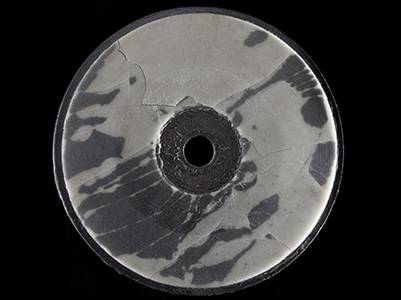
This wax-and-cardboard disc from 1885 contains a recording of Bell’s voice.  Photo courtesy of Richard Strauss, Smithsonian Institution.

This wax-and-cardboard disc from 1885 contains a recording of Bell’s voice. Photo courtesy of Richard Strauss, Smithsonian Institution.

It’s a tribute to science and ingenuity when ambitions technicians use new technologies to connect to older ones and thereby bridge the present with the past.  That’s exactly what happened when physicist Carl Haber of Lawrence Berkeley National Laboratory in Berkeley, California; fellow physicist Earl Cornell; and Peter Alyea, a digital conversion specialist at the Library of Congress, succeeded in extracting the sound of Alexander Graham Bell’s voice from a wax and cardboard disc that he’d received from the Smithsonian Institution.  Bell, a native of Scotland, is best remembered for inventing the prototype to the telephone in 1876.  He had spent years trying to devise a way to transmit the human voice over telegraph wires.  Even afterwards, Bell continued experimenting with recordings he made on various cylinders and discs.  Between the 1880s and his death in 1922, Bell donated his extensive collection to the Smithsonian.  Aside from wax, Bell and his assistants utilized metal, glass, paper, foil and cardboard to record sounds.  But, whatever methods they used to play back those recordings remains lost to history.

Two years ago Haber, Cornell and Alyea began analyzing Bell’s materials; determined to retrieve the sounds locked into those discs and drums.  Towards the end of 2011, Patrick Feaster, a sound media historian at Indiana University, joined the team by compiling a comprehensive inventory of notations made on those discs and drums.  One of the discs, dated April 15, 1885, contained a recording of Bell speaking:

“In witness whereof – hear my voice, Alexander Graham Bell.”

Technicians are still analyzing Bell’s materials, and it’s possible they’ll locate other samples of the inventor’s voice.  Bell was certainly steadfast in his goal to record the human voice for all to hear.  His inspiration may have come from his wife, Mabel, who was deaf.  Sometimes, the personal elements of our lives can lead to the most incredible of accomplishments.

You can listen to the recording here:

1 Comment

Filed under Classics

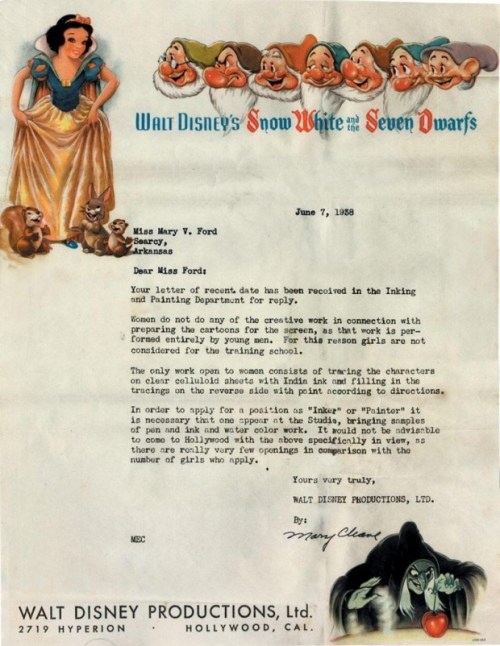
Drawing Wrong Conclusions

Disney-Rejection-Letter-1-620x802

Image.

4 Comments

Filed under Classics

Boston from the Air

04_03_2013_boston-air-e1365010217802

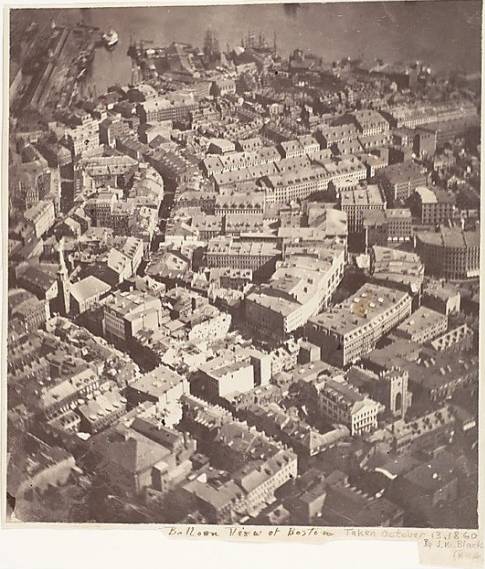
Boston, Massachusetts has been in the news a great deal recently; unfortunately because of the marathon bombings one week ago.  But, Boston – one of America’s greatest cities, and the birth place of the American Revolution – has the distinction of being the first metropolitan area known to have been photographed from the air.

The first flight of an untethered balloon took place over Paris in 1783, and the first known photograph was taken in 1826 by Joseph Nicéphore Niépce.  In 1858, another Frenchman, Gaspard Felix Tournachon, merged the two technologies to take a picture of Paris from aloft.  Unfortunately, that photograph has been lost.

But, in 1860, photographer James Black managed to capture a shot of Boston from about 2,000 feet above the city.  This was a major achievement, considering photography was still very much in its infancy and subjects had to remain steady while their images were embedded in the glass plates.  Oliver Wendell Holmes, a poet and professor of medicine at Harvard at the time, gave the photo its title, “Boston, as the Eagle and the Wild Goose See It,” in a July 1863 article in the Atlantic Monthly.

“Boston, as the eagle and wild goose see it, is a very different object from the same place as the solid citizen looks up at its eaves and chimneys. The Old South [Church] and Trinity Church [left center and lower right] are two landmarks not to be mistaken. Washington Street [bottom] slants across the picture as a narrow cleft.  Milk Street [left center] winds as if the old cowpath which gave it a name had been followed by the builders of its commercial palaces.  Windows, chimneys, and skylights attract the eye in the central parts of the view, exquisitely defined, bewildering in numbers…. As a first attempt [at aerial photography] it is on the whole a remarkable success; but its greatest interest is in showing what we may hope to see accomplished in the same direction.”
The photograph is now in the possession of New York’s Metropolitan Museum of Art.

3 Comments

Filed under Classics

Leo Belgicus: Art of the Lion

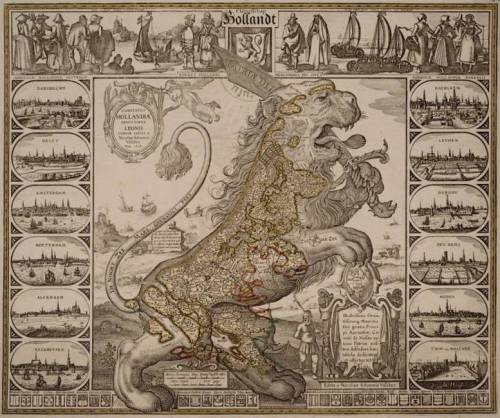
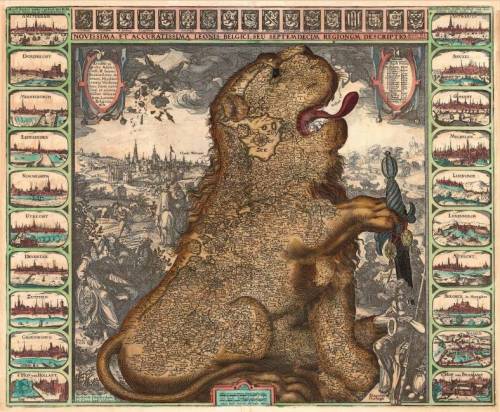
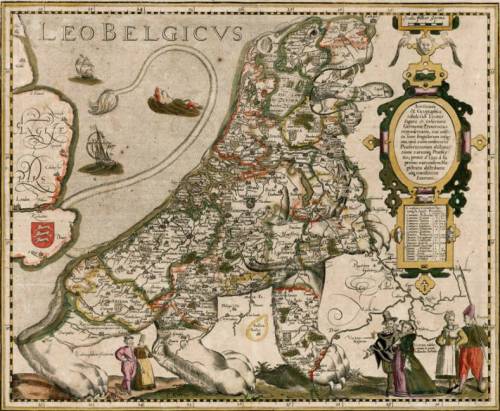
These aren’t your typical Rand McNally maps.  “Leo Belgicus” is Latin for “Dutch Maps;” unique characterizations of the Low Countries: Belgium, Luxembourg and the Netherlands.  Depicting Europe’s northwestern coastal regions as a lion was first introduced in 1583 by Michael Eitzinger (also Aitzinger or van Aitzing), a cartographer and historian in the services of Emperors Ferdinand II and Maximilian II.  Eitzinger is also known for his novel De Leone Belgico, a history of the Eighty Years’ War, when the Netherlands fought for independence from Spain.  He may have developed the Leo Belgicus concept from the lion figure that adorned many of the coats of arms of Dutch nobility.  How a lion came to represent the Low Countries is a mystery; considering the animals aren’t exactly indigenous to Europe.  I can only surmise it’s because of the power and regal nature that lions exude.  Regardless of Eitzinger’s intent, these are fascinating works of medieval art.

mario-neve07

Belgian-Lion-3

Comitatus Hollandiæ denuo forma Leonis

Belgian-Lion-5

Belgian-Lion-6

Belgian-Lion-7

Belgian-Lion-8-

Belgian-Lion-9

Leave a comment

Filed under Classics

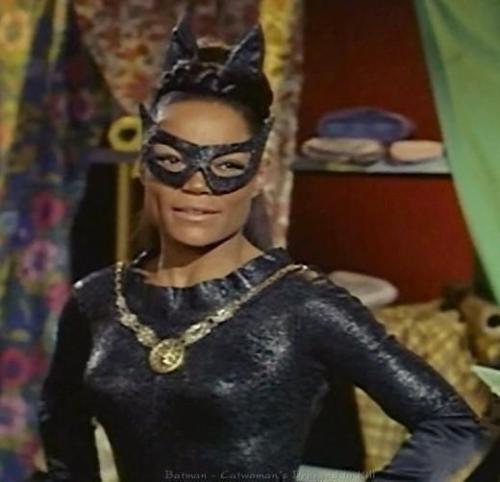
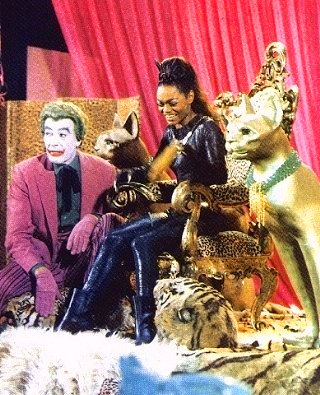
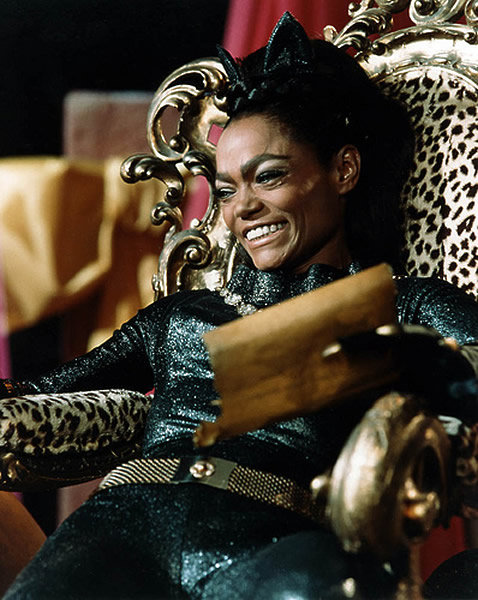
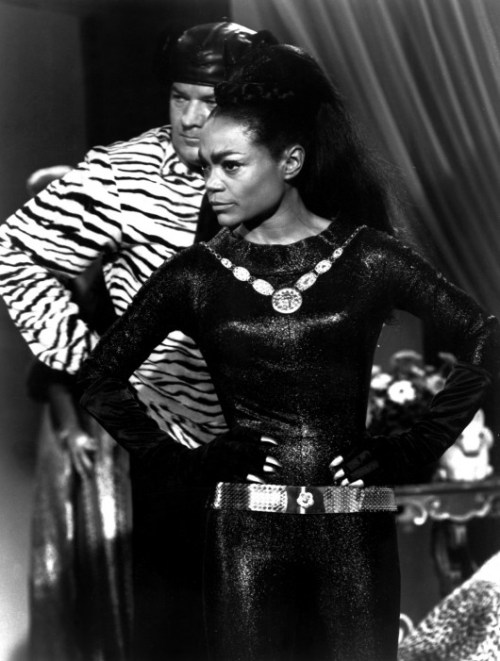
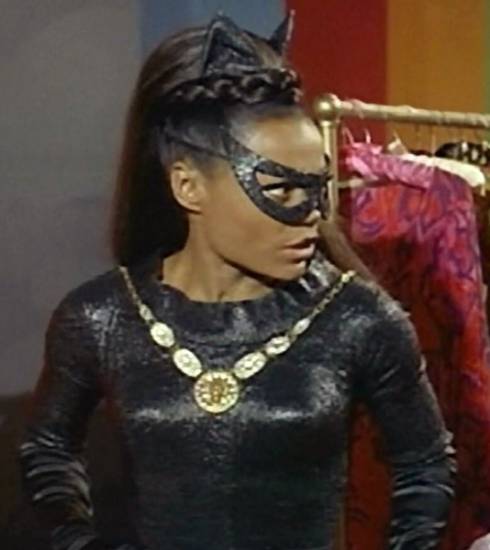
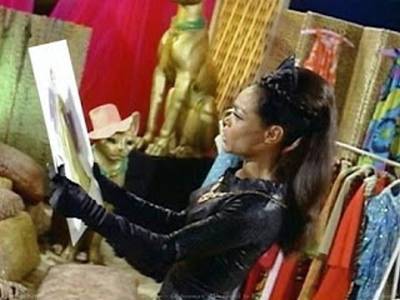
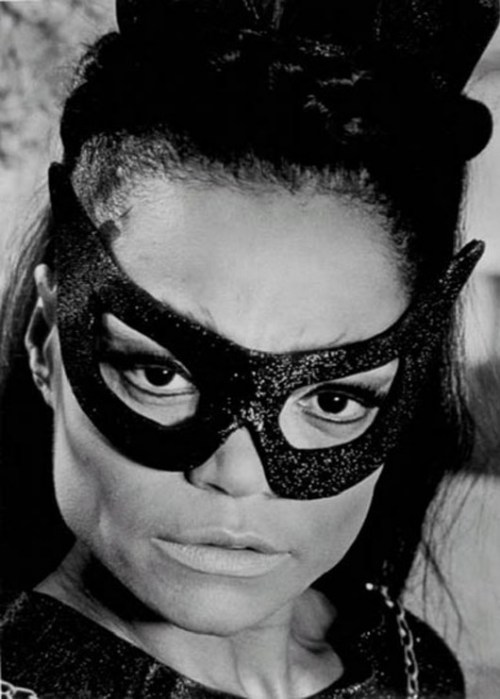
Eartha Kitt as “Catwoman”

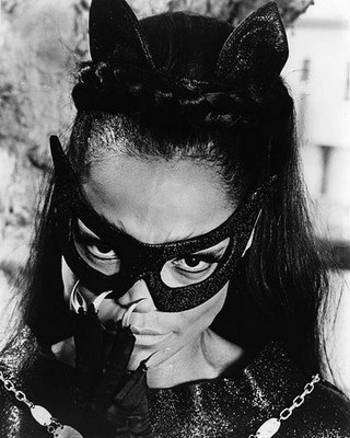
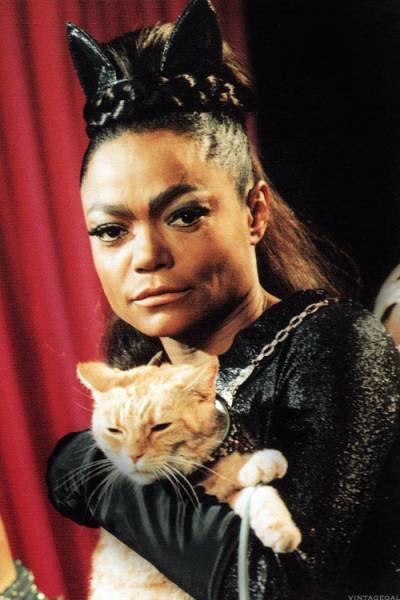
I’ve always had a fascination with Eartha Kitt.  The late actress – singer was an international star of the grandest proportions.  Even her name insinuates mystery, elegance and glamour.  Not bad for a girl born out of wedlock in the cotton fields of South Carolina.  I first saw Eartha in reruns of the original “Batman” TV series where she portrayed the fiendish “Catwoman.”  Considering the scope of her career, that role seems almost beneath her.  But, Eartha never took herself seriously.  “My recipe for life is not being afraid of myself,” she once said, “afraid of what I think or of my opinions.”

Eartha Kitt 1966 Catwoman 2

tumblr_mgh6ruulEG1qa70eyo1_500

EarthaKitt-CatWoman

With César Romero as the “Joker.”

With César Romero as the “Joker.”

27882475-27888990-large

325-530x701

catwoman2

Eartha Kitt as Cat Woman

516-530x741

1 Comment

Filed under Classics