Category Archives: History

Hold That Call!

wabc_040313_MotorolaDynaTAC

Today marks the 40th anniversary of the first cell phone call.  Martin Cooper, an engineer with Motorola, made the call from 54th Street in Manhattan with a 9” tall, 2.5 pound monstrosity he called a DynaTAC (DYNamic Adaptive Total Area Coverage).  The device looked much like a walkie-talkie; originally a military invention which served as inspiration for Cooper and fellow engineer Rudy Krolopp.  Calls could only last for 35 minutes, and the phone took 10 hours to recharge.  It also cost roughly $4,000; an astronomical price even by today’s standards.

Perhaps the phone’s cost and cumbersome nature prevented it from getting into the hands of anyone outside the most affluent homes.  Cell phone usage in the U.S. didn’t reach 1 million until 1990.  It wasn’t until after the start of the 21st century that cell phones became more commonplace.  I got my first cell phone in October 2001.

For younger folks, it’s difficult to imagine life without cell phones.  Then again, it’s difficult for me to imagine life without air conditioning.  Cell phones have to rank as one of the greatest modern inventions.  They’ve saved countless lives and allowed people to communicate more rapidly than any time in human history.  They’ve also proved to be one of the greatest annoyances – especially if you get cut off by someone driving and talking on their cell phone at the same time!  Ah – the price for convenience.

2 Comments

Filed under History

Dreaming into Reality

Today marks the 45th anniversary of Rev. Martin Luther King’s seminal “I Have Been to the Mountaintop” speech, which he gave in Memphis, Tennessee.  It is one of the most significant orations of the 20th century; an impromptu talk King gave at the last minute.  He had just arrived in Memphis to lend spiritual support to Black garbage collectors who had gone on strike.  He was tired and simply wanted to retire for the evening.  But, a crowd had gathered at the Mason Temple in Memphis, eagerly anticipating his arrival.  King’s associates finally convinced him to speak to them.  He would be dead less than twenty-four hours later.

I grew up reading about King, but never thought much of him until long after his birth was memorialized into a federal holiday.  He, of course, didn’t live to see goals of a truly integrated society come to fruition.  But, his spirit lives and thrives well in the hearts of anyone who has ever fought for social justice.

Leave a comment

Filed under History

In Remembrance – Space Shuttle Columbia

February 1, 2003

“You’ve gotta dance like there’s nobody watching,
Love like you’ll never be hurt,
Sing like there’s nobody listening,
And live like it’s heaven on earth.”

– William W. Purkey

Bottom row (L to R): astronauts Kalpana Chawla, mission specialist; Rick D. Husband, mission commander; Laurel B. Clark, mission specialist; and Ilan Ramon, payload specialist.Top row (L to R): astronauts David M. Brown, mission specialist; William C. McCool, pilot; and Michael P. Anderson, payload commander.

Bottom row (L to R): astronauts Kalpana Chawla, mission specialist; Rick D. Husband, mission commander; Laurel B. Clark, mission specialist; and Ilan Ramon, payload specialist.
Top row (L to R): astronauts David M. Brown, mission specialist; William C. McCool, pilot; and Michael P. Anderson, payload commander.

Space Shuttle Columbia

Leave a comment

Filed under History

In Remembrance – Martin Luther King, Jr.

dr-martin-luther-king-jr-w-james-taylor

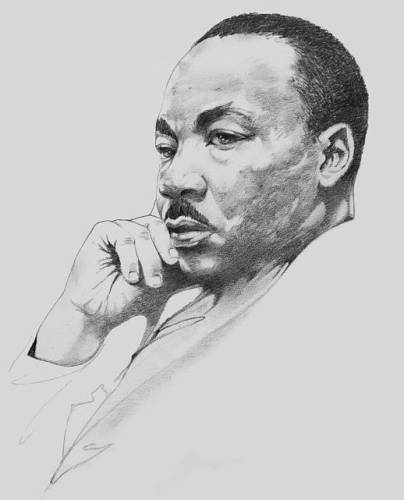
Today marks the 83rd anniversary of the birth of Martin Luther King, Jr., one of the most important political and social figures of the 20th century.  King was born Michael Luther King, Jr., in Atlanta, Georgia.  He later changed his name to Martin and started a successful career as a pastor with Ebenezer Baptist Church in Atlanta.

King is most closely associated with the modern civil rights movement, but that was a task with no easy beginning and a blatantly violent end.  In 1957, as Southern Negroes began to clamor for more freedom and equality, King was elected president of the Southern Christian Leadership Conference, an organization formed primarily to provide leadership for fledgling civil rights activities.  King adapted Christian ideals to the structure of the SCLC and followed the mantra of India’s Mahatma Gandhi who preached non-violent and peaceful resistance to achieve equality.

Before King could convince White Americans that entrenched racism was morally and constitutionally wrong, however, he had to convince Black Americans – especially Black Southerners – to brave uncharted territory.  It seems almost ludicrous now, but King had to rally Black Americans to rise up and protest against the institutional bigotry that ruled their lives.  They had maintained a tremulous existence for decades; one they obviously didn’t like, but a life they generally felt powerless to do anything about.  There were no anti-discrimination laws to protect someone against the White male aristocracy that ruled America with an iron fist.  Women and non-White men had to be prompted to risk everything to demand the nation hold true to its constitutional values of freedom and justice.

From 1957 until his death, King traveled over 6 million miles and spoke over 2,500 times against social injustices towards Black Americans.  Other groups, such as Hispanics and Native Americans, took their queues for action from King.  His 1963 “I Have a Dream” speech was seminal to the Black civil rights movement.  It won him the Nobel Peace Prize; making him the youngest man ever to be awarded that honor.

I guess it was destiny that he would not live to see much of his dreams come to fruition.  He was gunned down on the balcony of a motel in Memphis, Tennessee on April 4, 1968, while doing what he did best – speaking out against discrimination and oppression.

His memory still lives, though – vibrant and strong.  The battle for justice and human dignity continues.

Image courtesy W. James Taylor.

Leave a comment

Filed under History

Still Free

Henry Louis Stephens, untitled watercolor (c. 1863) of a man reading a newspaper with headline “Presidential Proclamation / Slavery.”

Henry Louis Stephens, untitled watercolor (c. 1863) of a man reading a newspaper with headline “Presidential Proclamation / Slavery.”

On January 1, 1863, President Abraham Lincoln took a break from greeting guests as part of a New Year’s tradition, and slipped into his office to sign a controversial document that ultimately would become a cornerstone in America’s continuing battle for democracy: the Emancipation Proclamation.  In the midst of the bloody Civil War, where southern states fought hard to protect their right to enslave the Negro people, this lengthy item declared “that all persons held as slaves” within the rebellious states “are, and henceforward shall be free.”

It had its limitations.  It applied only to states that had seceded from the Union, but it exempted border states and any part of the Confederacy that had fallen into northern control.  More importantly, it depended upon a Union victory.

The document didn’t actually end slavery in the United States.  No piece of paper – even one signed by the President – can obliterate decades or centuries of cultural tradition.  That only happens over time and through education.  People change and so do the societies in which they live.

But, on the sesquicentennial of this significant declaration, it’s equally critical to remember that human life is valuable.  It can’t be sold and it can’t be bought.  No country really needs a document telling them that.  But sometimes, people have to be reminded how important we all are.

3 Comments

Filed under History

Ghost Dancing – The Wounded Knee Massacre

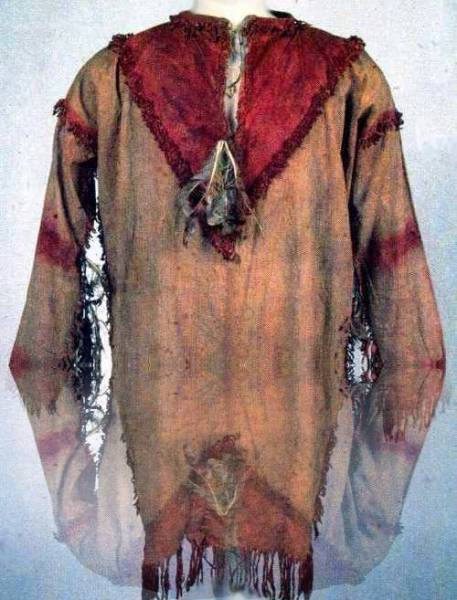
GhostDanceShirt

On December 29, 1890, the nation endured a horrific event: the massacre of some 150 people at Wounded Knee in South Dakota.  It was one of the last great battles between Native and White Americans; a significant turning point in one of the bloodiest and longest-lasting holocausts in human history.

Like many Indigenous American communities, the Lakota Sioux had seen their way of life come under siege by White Christian encroachers; people who viewed them as a menace, no different from the vermin that occupied the same land.  The Lakota Sioux had fought as hard as they could, but by 1890, they’d been relegated to reservations where they were forced into dependency upon the American state.  Like his fellow warrior, Chief Sitting Bull, Sioux Chief Big Foot had led a cavalry of resistance.  But, government forces had managed to corner and kill Sitting Bull at the Standing Rock Reservation on December 15.  They then set their sights on Big Foot.

When he heard of Sitting Bull’s death, Big Foot led his people southwards towards the Pine Ridge Reservation.  The U.S. Army intercepted them on December 28 and brought them to the edge of the Wounded Knee to camp.  The next morning the chief, already sickened with pneumonia, sat among his warriors and consulted with army officers. Then, the Army, under the command of Colonel James Forsyth and numbering 500 strong, descended upon the camp, guns blazing.  As several young Sioux men retrieved their own firearms, others ran for safety.  Some scampered into a ravine next to the camp only to be assaulted with bullets.  Many of them were children.

Several Sioux were willing to surrender, but others – notably a medicine man named Yellow Bird – would accept nothing less than total resistance.  Yellow Bird and others believed that mystical “Ghost Shirts” would protect the group from harm.  But, nothing could protect them from the unabashed hate of the U.S. government.  In less than an hour, the U.S. Army had killed at least 150 Sioux and wounded another 50.  The Army suffered 25 fatalities and 39 injuries.  In a fake attempt at humanity, the government charged Forsyth with war crimes for killing innocent, unarmed Sioux, but later exonerated him.

The 1890 Wounded Knee massacre became a symbol of the U.S. government’s intrinsic disrespect for Native Americans.  It subsequently instilled a lack of trust in the government among Native Americans who ultimately became dependent on that same entity for survival as they entered the 20th century.  Even now, Native American reservations are among the most impoverished in this country.  The tensions over the 1890 Wounded Knee calamity would surface again in February 1973, when the Lakota nation made another stand against the U.S. government with the help of the American Indian Movement.  That fiasco wasn’t nearly as deadly, but it was longer – 71 days – and it further cemented that distrust and animosity.

The tension is still present and unrelenting – not just in South Dakota, but among all Native American communities.  In remembrance, this is for the souls lost on December 29, 1890.

Leave a comment

Filed under History

The Legend of Saint Nicholas

nikolaus1-wmaster

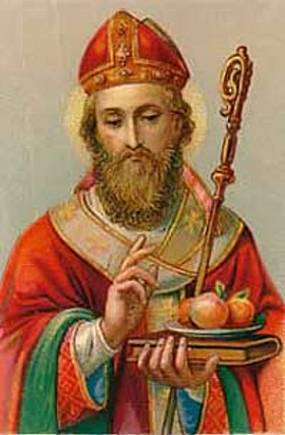
With all the revelry and commercialization surrounding the Christmas holiday, some people forget – or don’t realize – that one of the central figures, Santa Claus, is based on an actual person, St. Nicholas.  Nicholas was born during the third century A.D. in the village of Patara in what is now Turkey.  At the time, though, the area was still part of Greece.  His parents were affluent, but raised him to be a devout Christian, when the ideology was still very much in its infancy and starting to replace the paganism inherent in the Roman Empire.  Nicholas’ parents died when he was very young, however, and he used his inheritance to help those in need.  He dedicated his life to serving God and eventually became the Bishop of Myrna.

But, the Roman Empire still had a firm grip on most of southern Europe, and despite his attention to the poor, Bishop Nicholas fell under the glare of Emperor Diocletian.  Like most of his contemporaries, Diocletian made it a point to persecute Christians.  He tossed Bishop Nicholas into prison, along with many other Christian leaders.  Nicholas was released in A.D. 325 and – under the threat of further persecution and imprisonment – continued his work helping the poor.  He died on December 6, A.D. 343.  He was buried in his church where a unique relic called manna formed in his grave.  Manna was the food that supposedly fell from the sky and onto the Israelites during their 40-year journey the desert.  It became a life-saving sustenance.  It is generally thought to be a cake or bread-like substance that has to be consumed rapidly.  The formation of manna in the grave of Bishop Nicholas fostered a growth of devotion to him.  The anniversary of his death, December 6 (or December 19 in the Julian calendar) became St. Nicholas Day, a day of celebration.

As with many highly-regarded figures of the early Christian era, a number of stories and legends evolved out of the life of Nicholas.  One involves a poor man with three daughters.  At the time, a young woman’s father had to offer prospective husbands something of value – a dowry.  The larger the dowry, the better chance the young woman would have of finding a good husband.  Without a dowry, though, a woman was unlikely to marry.  This particular poor man’s daughters had no dowries to offer and were destined to be sold into slavery.  But then, on three different occasions, bags of gold appeared in the home of this man and his daughters, thus providing the much-needed dowries.  The bags of gold supposedly were tossed through an open window and landed in stockings or shoes left before a fire to dry.  This led to the custom of children hanging stockings or putting out shoes, eagerly awaiting gifts from Saint Nicholas.  Sometimes the story is told with gold balls instead of bags of gold.  That is why three gold balls, sometimes represented as oranges, are one of the symbols for St. Nicholas.

Another story involves the townspeople of Myra who were celebrating Nicholas on the eve of his feast day when a band of Arab pirates from nearby Crete arrived.  They purloined treasures from the Church of Saint Nicholas and, as they were leaving, also snatched a young boy, Basilios, to turn into a slave.  The emir, or ruler, selected Basilios to be his personal cupbearer.  For the next year Basilios waited on the king, bringing his wine in a beautiful golden cup.  Basilios’ parents were devastated by the loss of their only child.  As the next St. Nicholas’ feast day approached, Basilios’ mother decided not to join in the festivities, as it was now a day of tragedy.  However, she was persuaded to have a simple observance at home – with quiet prayers for Basilios’ safekeeping.  Meanwhile, as Basilios was fulfilling his tasks serving the emir, he was suddenly taken away by a mysterious figure who turned out to be St. Nicholas.  Nicholas blessed the terrified boy and set him down at his home back in Myra.  Thus was born the legend of St. Nicholas as a protectorate of children.

Sailors eventually adopted Nicholas as their patron saint because of a story that he appeared during a storm to rescue a ship that was sinking.  Mariners began praying to Nicholas for guidance at the outset of their voyages.  In the 6th century A.D., Emperor Justinian I built a church honoring Nicholas in Constantinople.
saint-nicholas

By the 12th century A.D., Saint Nicholas’ popularity began to spread throughout Europe, just as Christianity began to rise in prominence.  Churches across the region adopted his name.  He became especially well-regarded in Russia.  Viking explorers dedicated their church on Greenland to him.  When Christopher Columbus arrived in what is now Haiti on December 6, 1492, he named a port for Nicholas.  Later, in Florida, early Spanish settlers named a settlement for St. Nicholas; it’s now Jacksonville.

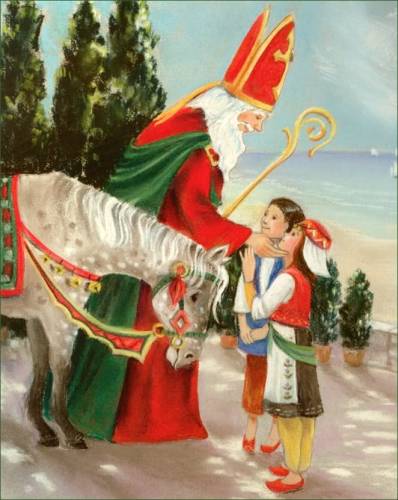
That’s why Santa Claus is often called “St. Nick.”  But, how did the Santa Claus character develop?  One theory is that the transformation first occurred in the Netherlands where the story of a saint who rescued three poor girls from a life of prostitution by just giving them bags of gold proved appealing.  This somehow became a man, Sinterklaas, who gave gifts without reservation, while attired in a green coat.  But, the growing enigma of Sinterklaas also coincided with the Nordic god Odin who traversed the skies on a horse.  Dutch immigrants took the Sinterklaas character with them to the Americas. In 1773, some New Yorkers formed the Sons of St. Nicholas, primarily as a non-British symbol to counter the English St. George societies, rather than to honor St. Nicholas.

After the American Revolution, New Yorkers began honoring their colony’s Dutch roots.  John Pintard, the influential patriot who founded the New York Historical Society in 1804, promoted St. Nicholas as patron saint of both society and city.  In January 1809, Washington Irving joined the society and on St. Nicholas Day that same year, he published the satirical fiction, Knickerbocker’s History of New York, with numerous references to St. Nicholas whom he portrayed as a chubby Dutchman with a clay pipe.

The New York Historical Society held its first St. Nicholas anniversary dinner on December 6, 1810.  Pintard commissioned artist Alexander Anderson to create the first American image of Nicholas for the occasion.  Anderson depicted Nicholas as a man bearing gifts with children’s treats in stockings hanging above a fireplace.  The accompanying poem ends, “Saint Nicholas, my dear good friend!  To serve you ever was my end, If you will, now, me something give, I’ll serve you ever while I live.”

More changes occurred.  Sinterklaas’ green coat became red, and in 1821, the first lithographed book in the U.S., Children’s Friend, featured “Sante Claus” arriving from the north in a sleigh pulled by flying reindeer.  The poem and illustrations (whose author is unknown) re-shaped the Santa Claus image from a saint into a happy old man who rewarded children for their good behavior.

Ironically, while Nicholas was considered a saint long before the Roman Catholic Church began formal canonizations beginning around A.D. 1100, the Church never officially canonized Nicholas.  But, in 1969, when the Roman Catholic Church removed several saints from its roster, it left Nicholas alone.  The Feast of St. Nicholas, December 6, became optional, not obligatory, under Roman Catholic law.

Whether or not you adhere to Christian ideology, one critical message can be learned from Nicholas: good behavior is always rewarded and bad behavior is punished.  More importantly, though, it’s essential to care for those in need, which is why the Christmas season in the Western World is often viewed as a time of good will and hopes for peace.  That may not happen in our convoluted and busy world, with war on every continent and holiday
shopping deals in every city.  But, it’s still a pleasant and worthwhile practice and must be given more consideration and respect.

santa_claus_3

Leave a comment

Filed under History

On August 14…

1848 – The U.S. Congress created the Oregon Territory, made up of today’s Oregon, Washington, Idaho and parts of Montana and Wyoming.

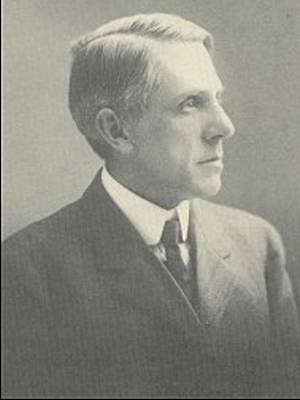
1863 – Author Ernest Thayer (Casey at the Bat) was born in Lawrence, Massachusetts.

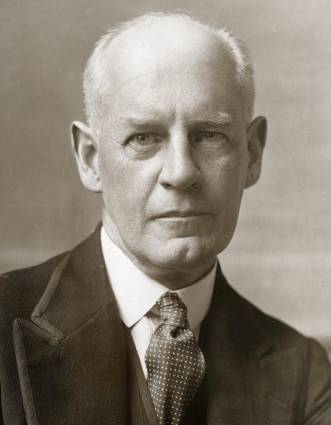
1867 – Author John Galsworthy (The Forsyte Saga) was born in Surrey, England.

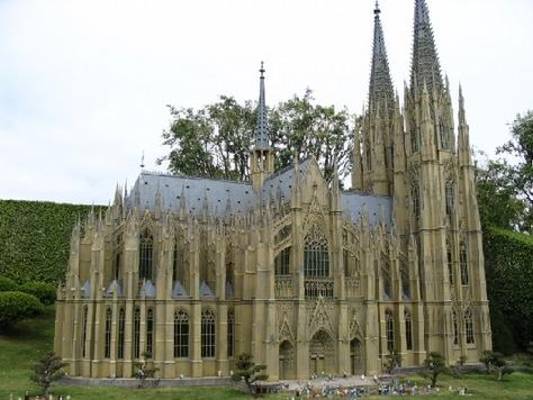
1880 – Exactly 632 years after rebuilding began, the Cologne Cathedral in Cologne, Germany, was completed.  The largest Gothic style cathedral in Northern Europe was first built on the same site in 873 A.D., but was destroyed by fire in 1248.  Rebuilding began on August 14, 1248.

1888 – Oliver B. Shallenberger of Rochester, Pennsylvania, received a patent for the electric meter.

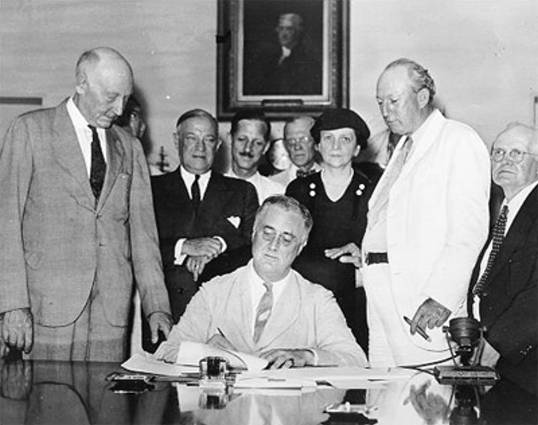
1935 – President Franklin D. Roosevelt signed the Social Security Act into law.

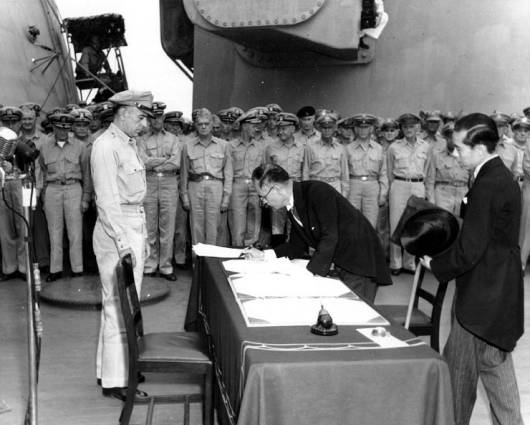
1945 – President Harry S. Truman announced that Japan had surrendered, finally bringing World War II to a close.

1994 – French intelligence agents captured Illich Ramirez Sanchez, the terrorist known as “Carlos the Jackal,” in Khartoum, Sudan.

Leave a comment

Filed under History

On August 13…

1521 – After a 3-month siege, the Aztec capital of Tenochtitlan fell to Spanish forces.

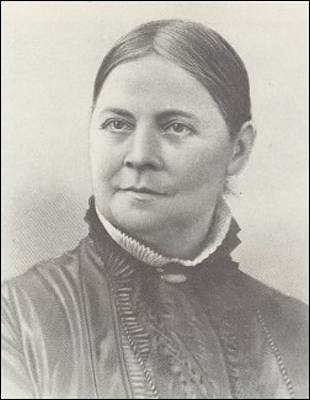
1818 – Women’s rights activist Lucy Stone (founder of American Suffrage Association) was born in West Brookfield, Massachusetts.

1889 – William Gray of Hartford, Connecticut, patented the coin-operated telephone.

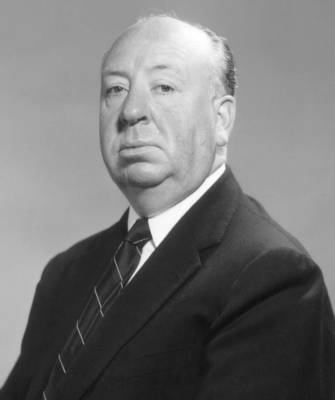
1899 – Film director – producer Alfred Hitchcock was born in London.

1961 – The German city of Berlin was divided by a barbed wire fence.

Leave a comment

Filed under History

On August 12…

1849 – Artist Abbott Thayer (created camouflage pattern for military) was born in Boston, Massachusetts.

1851 – Isaac Singer of New York City patented the double-treadle sewing machine.

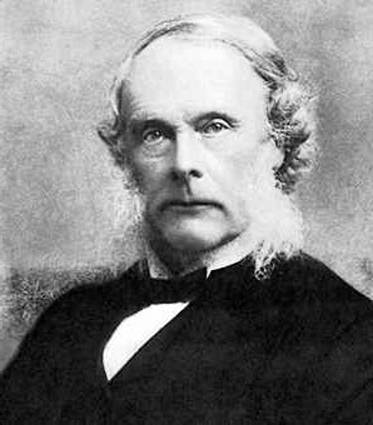
1865 – Joseph Lister became the first doctor to use disinfectant during surgery.

1881 – Film director – producer Cecil B. DeMille (The Crusades, The Sign of the Cross, King of Kings, Cleopatra, The Plainsman, Reap the Wild Wind, The Buccaneer, The Greatest Show on Earth) was born in Ashfield, Massachusetts.

1981 – IBM (International Business Machines) introduced the Model 5150 personal computer.  It ran on the Intel 8088 microprocessor at 4.77 mHz with one or two 160K floppy disk drives and boasted 16 kilobytes of memory, expandable to 256k, five 8-bit ISA slots, and a 65-watt power supply.  It had no built-in clock, serial or parallel ports, or video capability; color monitor was optional.

1992 – The United States, Mexico and Canada agreed to form a free-trade zone that would remove most barriers to trade and investment and create the world’s largest trading bloc: the North American Free Trade Agreement (NAFTA).

1998 – Swiss banks agreed to pay $1.25 billion to settle lawsuits filed by Holocaust survivors and their heirs.  The banks had kept millions of dollars deposited by Holocaust victims and their relatives before and during World War II.

Leave a comment

Filed under History