Category Archives: News

Statesmanship in Action

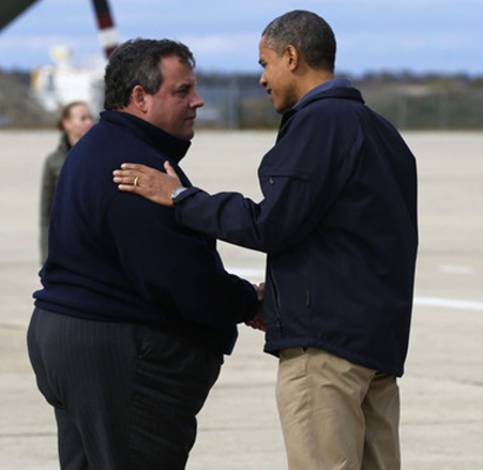
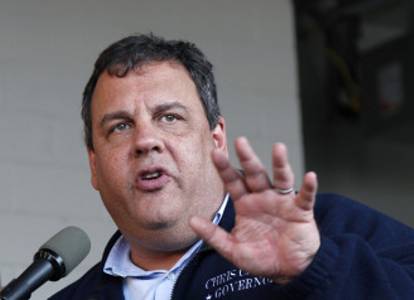
“The president has been all over this, and he deserves great credit.  He gave me his number at the White House and told me to call him if I needed anything, and he absolutely means it.  It’s been very good working with the president and his administration.  It’s been wonderful.”

– New Jersey Governor Chris Christie, praising President Obama’s response to Hurricane Sandy Tuesday morning.

Abrasive and controversial, Christie doesn’t offer quaint platitudes, which makes him a favorite of the Republican Party.  But, during times of crisis, politics has no place.

Leave a comment

Filed under News

Hurricane Sandy Aftermath

After Hurricane Sandy’s long trek up the eastern seaboard of the United States, the New England area is just beginning to assess and clean up the extensive damage.  The Category 1 storm made landfall in southern New Jersey late Monday, the 29th, and quickly collapsed into a sub-tropical cyclone.  Categories aside, this is already proving to be several times worst than last year’s Irene.  Sandy collided with an arctic hurricane that swept down from the north to create something of a super-system, or what some called a “Frankenstorm,” an obvious reference to Halloween.  But, some 8 million people are without power from West Virginia to New York.  Thus far, authorities have recorded 43 fatalities directly related to the storm.  New York’s financial district is scheduled to reopen tomorrow morning after being closed these past two days.  Now, cold weather is moving into the region and could hamper recovery.  As always, please think of the victims and their families.
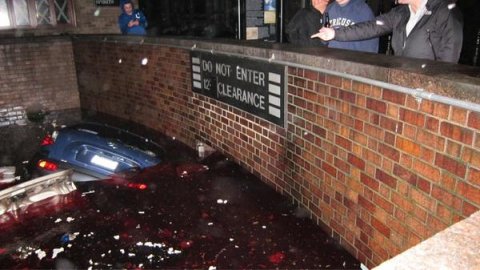
Stone Street in Lower Manhattan.

 

Water inundating a PATH station in Hoboken, NJ.
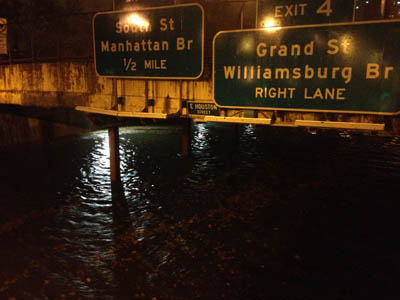
 

F.D.R. Drive in New York City by Houston Street.

 

A building in New York City on 8th Avenue between 14th and 15th Streets with the entire front blown off.
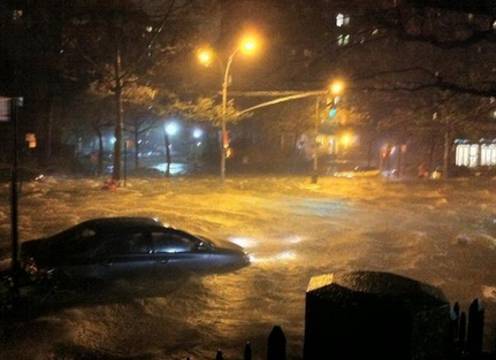
 

Lower Manhattan.

 

Greenwich Village in Manhattan.
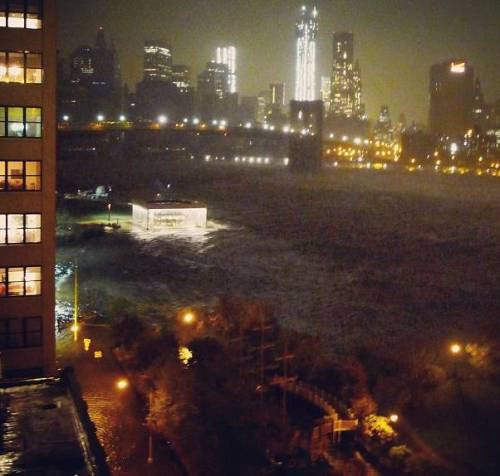
 

Plymouth Street in Brooklyn.
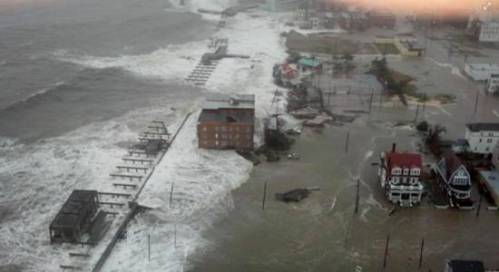
 

Atlantic City, NJ.

 

People stood in line for gasoline along Route 35 in New Jersey.
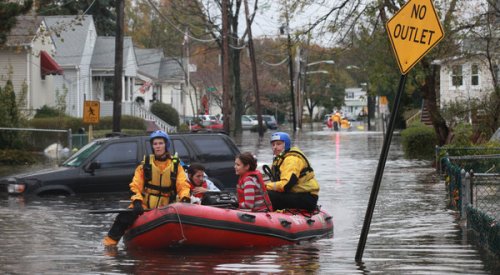
 

Residents were evacuated from their homes in Little Ferry, NJ.

 

Workers pumped water from the subway in Lower Manhattan.
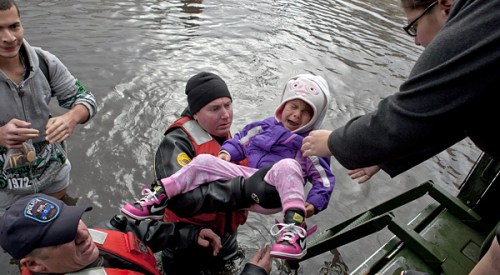
 

A child was rescued from flooding on Staten Island.
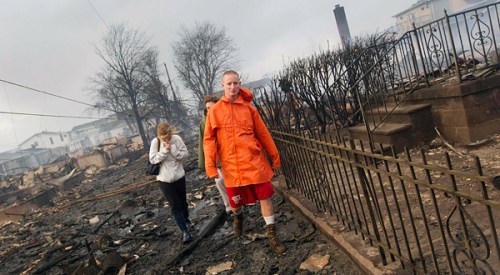
 

Residents survey fire damage in Breezy Point, Queens.
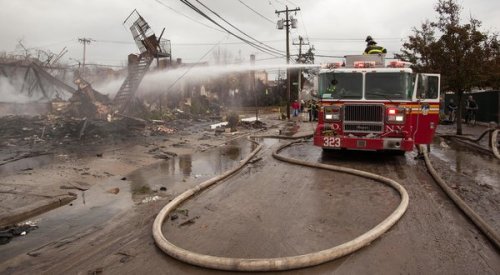
 

Firefighters put out a fire in Rockaway Park, Queens.
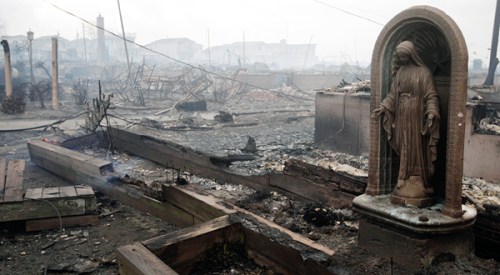
 

In Breezy Point, more than 80 homes were reduced to ash.
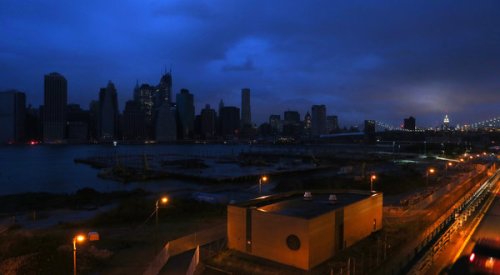
 

Downtown Manhattan on Tuesday.

 

Manhattan streets lit mainly by headlights.
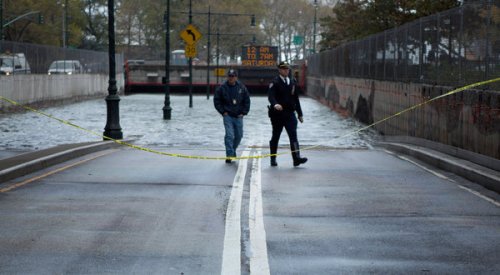
 

A flooded tunnel leading to F.D.R. Drive in New York City.
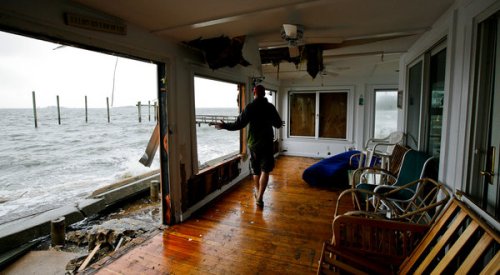
 

In Connecticut, 3 people are confirmed dead and 615,000 are without power.
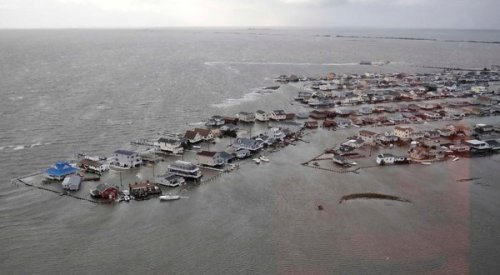
 

Tuckerton, N.J.
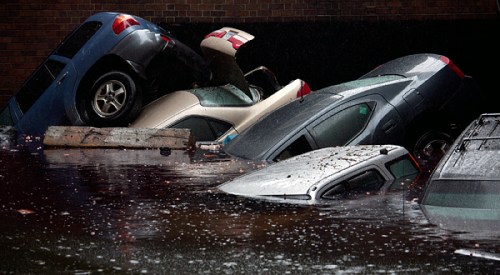
 

Cars piled up in floodwaters at a garage near Wall Street.


A fallen tree in the Battery Park neighborhood of Manhattan.


Leave a comment

Filed under News

Vandals Assault Lubbock Democrat

Last Tuesday, October 23, a group of men defaced political campaign signs for President Obama and then, physically attacked a local man, Leo Flores, who is running for office in Lubbock, Texas.  Flores captured most of the action with his cell phone camera.  Once the attacks came to light, Lubbock Republican Party Chair Carl Tepper dismissed it all by saying, “I have a weird suspicion that the Democrats might have damaged their own signs.  It’s an outlandish story.”

Lubbock, which isn’t exactly a mecca for academic and scientific intellectuals, is already deep in Republican territory.  Of course, there are a lot of places in Texas that can make that claim.  It doesn’t surprise me that the local Republican Party Chairman negates the severity of the vandals’ actions.  These are the same bunch of clowns who helped put George W. Bush into the governor’s mansion twice and the White House twice and have helped Rick Perry hold onto the current governorship like the papacy.  Yes, it’s getting increasingly dangerous to be even a moderate Democrat here in Texas.  But, free speech isn’t a privilege – it’s a right.

Leave a comment

Filed under News

Denial in Motion

Leave a comment

October 25, 2012 · 12:00 AM

Redneck 102

“I struggled with it myself for a long time, but I came to realize life is that gift from God.  And, I think even when life begins in that horrible situation of rape, that it is something that God intended to happen.”

– Indiana Senate Republican candidate Richard Mourdock, expressing his pro-life stance.

The Bible’s Genesis chapter according to the GOP: ‘And the Lord said, go forward young man and fuck as many females as you can to spread the seed of your father’s glory.  Then, get them to make you pancakes in the morning.’

Leave a comment

Filed under News

Redneck 101

“Why the lies?  Why the cover up?  Why the dissembling about the cause of the murder of our ambassador on the anniversary of the worst terrorist attacks on American soil?  We deserve answers to this.  President Obama’s shuck and jive shtick with these Benghazi lies must end.”

– Sarah Palin, in a Facebook rant criticizing Obama’s response to the bombing of the U.S. embassy in Benghazi, Libya on September 11, 2012, and providing yet another reason why we must jumpstart the eugenics movement in the United States.

Leave a comment

Filed under News

Best Lines from the Final Presidential Debate

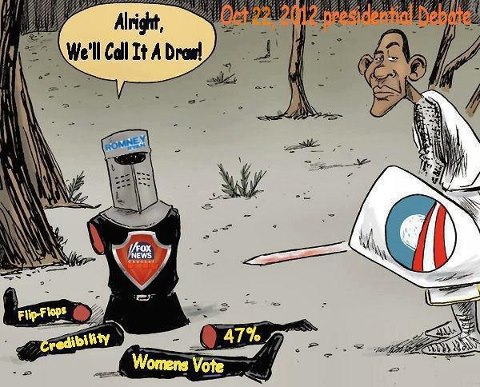
Watching the three debates between President Obama and Mitt Romney made me feel trapped between 2001: A Space Odyssey and Gone with the Wind.  While Obama insists on moving our country forward into the 21st century, Romney wants to take us back to the old days – when Negroes and Indians knew their “place” in society and grown men could screw as many little girls as they want and call it God’s righteousness.  Romney’s campaign slogan could be called, ‘The Audacity of Retrohope.’

As you all know, I’m no fan of politicians, but I fully support Obama in his battle against the bigots and moneyed elite that comprise the Republican Party.  Still, the last debate on Monday, the 22nd, provided some delectable oral treasures for the history books.

“I congratulate him on taking out Osama bin Laden and going after the leadership in Al Qaeda, but we can’t kill our way out of this mess.” – Romney

“Gov. Romney, I’m glad that you agreed that we have been successful in going after Al Qaeda, but I have to tell you that your strategy previously has been one that has been all over the map and is not designed to keep Americans safe or to build on the opportunities that exist in the Middle East.” – Obama

“Mr. President, the reason I call it an apology tour is because you went to the Middle East, and you flew to Egypt and to Saudi Arabia and to Turkey and Iraq.  And by the way, you skipped Israel, our closest friend in the region.  And by the way, they noticed that you skipped Israel.” – Romney

“When I went to Israel as a candidate, I didn’t take donors.  I didn’t attend fundraisers.  I went to Yad Vashem, the Holocaust museum there to remind myself of the nature of evil and why our bond with Israel would be unbreakable.” – Obama

“We don’t want another Iraq.  We don’t want another Afghanistan.  That’s not the right course for us.” – Romney

“You say that you’re not interested in duplicating what happened in Iraq, but just a few weeks ago you said you think we should have more troops in Iraq right now.  You’ve said that first we should not have a timeline in Afghanistan then you said we should.  Now you say maybe or depends, which means not only were you wrong, but you were also confusing and sending mixed messages both to our troops and our allies.” – Obama

“I have clear eyes on this. I’m not going to wear rose-colored glasses when it comes to Russia or Mr. Putin and I’m certainly not going to say to him, ‘I’ll give you more flexibility after the election.’  After the election, he’ll get more backbone.” – Romney

“Gov. Romney, I’m glad that you recognize that Al Qaeda is a threat because a few months ago when you asked what’s the biggest geopolitical threat facing America, you said Russia – not Al Qaeda – you said Russia.  The 1980s are now calling and asking for their foreign policy back.” – Obama

“I want a great relationship with China.  China can be our partner, but that doesn’t mean that they can just roll all over us and steal are jobs on an unfair basis.” – Romney

“Well Gov. Romney is right, you are familiar with jobs being shipped overseas because you invested in companies that were shipping jobs overseas.” – Obama

“Our Navy is smaller now than any time since 1917.  The Navy said they needed 313 ships to carry out their mission.  We’re now down to 285.  We’re headed down to the low 200s if we go through a sequestration.  That’s unacceptable to me.  I want to make sure that we have the ships that are required by our Navy.  Our Air Force is older and smaller than any time since it was found in 1947.” – Romney

“You mentioned the Navy, for example, and that we have fewer ships than we did in 1916.  Well, governor, we also have fewer horses and bayonets, because the nature of our military’s changed.  We have these things called aircraft carriers, where planes land on them.  We have ships going underwater, nuclear submarines.  And so the question is not a game of battleship where we’re counting ships but what our capabilities are.” – Obama

“The president mentioned the auto industry and that somehow I would be favor of jobs being elsewhere. Nothing could be further from the truth.  I am a son of Detroit.  I was born in Detroit.  My dad was head of a car company.  I like American cars.  And I would do nothing to hurt the U.S. auto industry.” – Romney

“If we had taken your advice, Governor Romney, about our auto industry, we’d be buying cars from China instead of selling cars to China.” – Obama

“As I always do at the end of these debates, I leave you with the words of my mom, who said, ‘Go vote; it’ll make you feel big and strong.’” – Bob Schieffer, debate moderator.

Leave a comment

Filed under News

In Memoriam – Russell Means, 1939 – 2012

Russell Means, a long-time activist for Native American rights, died this morning, October 22, at his ranch in Porcupine, South Dakota.  He was 72.  Means was born on the Pine Ridge Indian Reservation in South Dakota on November 10, 1939.  In 1942, his family moved to the San Francisco area.

Means is best known for his life-long efforts to bring attention to the plight of Indigenous Americans.  In 1970, he became the first national director of the American Indian Movement (AIM), a civil rights group founded in Minneapolis in 1968.  The United States had been mostly oblivious to the dire circumstances in which most Native Americans lived.  Even now, for example, Pine Ridge remains one of the most impoverished communities in the country.

Perhaps Means’ most controversial act was a 71-day standoff against federal agents at Wounded Knee on Pine Ridge.  Wounded Knee is the site of one of the worst massacres in Native American history: the slaughter of some 350 Sioux Indians on December 29, 1890.  As a protest against the deplorable living conditions of Pine Ridge’s residents, Means led a contingent of more than 200 fellow Indians to overthrow the reservation’s leadership.  The incident, which began on February 27, 1973, drew in the U.S. Marshals Service, the FBI and thousands of law enforcements officials.  Both sides were heavily armed and fired upon one another; killing 2 of the protestors and paralyzing one of the law enforcement agents.  After 71 days, Means and the other protestors surrendered.  The government charged them with assault and conspiracy, but dropped the indictments the following year.

Means continued his activism, marching on Washington, D.C., in 1978 to protest anti-Indian legislation, including the forced sterilization of Indian women.  Called the “Longest Walk,” Means led hundreds of people from San Francisco to Washington, the largest protest at the time.  Immediately afterwards, the House of Representatives passed a resolution stating that national policy was to protect the rights of Indians; to believe, express and exercise their traditional religions, including but not limited to access to sites; use and possession of sacred objects; and the freedom to worship through ceremonials and traditional rites.

Means highlighted the negativity associated with many sports team Indian mascots.  He joined a $9 million lawsuit against the Cleveland Indians baseball team for its “Chief Wahoo” mascot, calling it racist and derogatory.  In 1983, Cleveland settled out of court for a mere $35,000.  Means sought the Libertarian Party’s nomination for president in the 1988 presidential campaign, but lost to Rep. Ron Paul.  Means retired from AIM in 1988 and, four years later, began a new career as an actor when he was cast in “The Last of the Mohicans.”  He also appeared in “Natural Born Killers,” as the “Old Indian,” starred as “Sitting Bull” in the CBS mini-series “Buffalo Girls,” and provided voice talent for Disney’s animated film “Pocahontas.”

Means never gave up his mission to emphasize the struggles of Native Americans and even point out disparities in traditional American history.  In 1992, he stopped a scheduled Columbus Day parade in Denver, which had been meant to celebrate Columbus’ “discovery of America.”  Means and his constituents demanded the holiday be renamed “Indigenous Peoples Day.”

Like most people who lead a public life, Means became introspective in his later years.  “No one except Hollywood stars and very rich Texans wore Indian jewelry,” Means said about AIM.  And there were dozens, if not hundreds, of athletic teams “that in essence were insulting us, from grade schools to college.  That’s all changed.”  In his autobiography, “Where White Men Fear to Tread,” he admitted his fragilities – especially his battles with alcoholism, a common scourge among Native Americans – but also accentuated his successes.

In August 2011, Means announced that he had inoperable throat cancer and told the Associated Press that he would forgo standard medical treatment in favor of traditional Indian remedies.  Oglala Sioux spokeswoman Donna Saloman said wake services for Means will be held Wednesday on Pine Ridge and that his ashes will be spread in the Black Hills on Thursday.

4 Comments

Filed under News

In Memoriam – George McGovern, 1922 – 2012

George McGovern, a former U.S. senator from South Dakota and 1972 Democratic presidential candidate, died Sunday morning, October 21.  He had just been admitted to hospice care in Sioux Falls, South Dakota, which is where he passed away.  He was 90.

McGovern was born on July 19, 1922, in Avon, S.D.  He had just married Eleanor Stegeberg on October 21, 1943, when he left to fly a B-24 in World War II.  He flew 35 missions and earned the Distinguished Flying Cross.

In 1956, he ran for Congress and became the first Democrat from South Dakota to be elected to the House of Representatives in 22 years.  After two terms, he ran for the Senate in 1960, but lost.
In 1961, President John F. Kennedy asked McGovern to open an agency to send surplus food abroad.  By year’s end, McGovern had Kennedy’s “Food for Peace” program operating in a dozen countries.  The following year, he became the first Democrat elected to the Senate from South Dakota in 26 years.  His chief interest was world peace.  He challenged the United States’ “Castro fixation,” denounced America’s capacity for nuclear “overkill” and proposed a $4-billion reduction in the U.S. defense budget.  He also supported Medicare, school lunches and the war on poverty.

In 1963, McGovern became one of the first politicians to warn against the war in Vietnam, eventually opposing increased military involvement and ultimately deeming the conflagration a “moral debacle.”

He launched an unsuccessful bid for the presidency in 1968, losing the Democratic Party’s nomination to Hubert Humphrey.  But, although he earned the party’s nomination four years later, his campaign was troubled from the start.  He initially chose Sen. Thomas Eagleton of Missouri to be his running mate.  When Eagleton admitted that he’d had shock therapy to treat his depression, he bowed out of the race.  This was a time when no one discussed mental health issues openly, especially men.  McGovern selected Sargent Shriver of Maryland to replace Eagleton, but the public relations damage was too great to overcome.  McGovern lost in a landslide to incumbent President Richard Nixon.  Ironically, it was McGovern’s campaign that led to the notorious Watergate fiasco.

McGovern was an icon of liberalism in America.  He condemned the Iraq War and proposed impeachment for both President George W. Bush and Vice-President Dick Cheney.

In 1998, President Bill Clinton sent McGovern to Rome as the U.S. ambassador to the United Nations Food and Agriculture Organization.  In 2000, Clinton awarded him the Presidential Medal of Freedom, the nation’s highest civilian honor.  A year later, the U.N. made him its first global ambassador to ease hunger.  In 2008, McGovern and his former Senate colleague Bob Dole shared the World Food Prize, often called the Nobel Prize for combating hunger.

Eleanor McGovern died in 2007.  Their son, Steven, died this past July.  McGovern is survived by his daughters, Ann, Susan and Mary, 10 grandchildren and 8 great-grandchildren.

Leave a comment

Filed under News

Kateri Tekakwitha – First Native American Catholic Saint

In a historic move, Pope Benedict XVI canonized the first Indigenous American into sainthood on Saturday, October 20.  Kateri Tekakwitha was born in 1656 to an Algonquin mother and a Mohawk father in what is now central New York State.  She was baptized into the Roman Catholic Church at age 20.  After being rejected by her family, she moved to a Jesuit mission near Montreal, Canada, where she taught children until her death four years later.

American Indians have been appealing for Kateri to be canonized for more than a century.  She was given the special status of venerable in 1942, the first step towards sainthood, and was beatified in 1980.

A person must be deceased for at least 5 years, even before he or she can be considered for sainthood in the Roman Catholic Church.  Afterwards, there are 4 steps in the process.

  1. When the subject arises that a person should be considered for Sainthood, a Bishop is placed in charge of the initial investigation of that person’s life.  If it is determined that the candidate is deemed worthy of further consideration, the Vatican grants a “Nihil Obstat,” a Latin phrase meaning “nothing hinders.”  Henceforth, the candidate is called a “Servant of God.”
  2. The Church Official, a Postulator, who coordinates the process and serves as an advocate, must prove that the candidate lived heroic virtues.  This is achieved through the collection of documents and testimonies that are collected and presented to the Congregation for the Causes of Saints in Rome.  When a candidate is approved, he/she earns the title of “Venerable.”
  3. To be beatified and recognized as a “Blessed,” one miracle acquired through the candidate’s intercession is required in addition to recognition of heroic virtue (or martyrdom in the case of a martyr).
  4. Canonization requires a second miracle after beatification, though a Pope may waive these requirements.  (A miracle is not required prior to a martyr’s beatification, but one is required before his/her canonization.)  Once this second miracle has been received through the candidate’s intercession, the Pope declares the person a “Saint.”

More than 700 Native Americans, many in full regalia, took part in the ceremony in St. Peter’s Square honoring the woman known as the “Lily of the Mohawks.”  A choir singing an Indian hymn was among the participants.  At a Mass on Monday, the 22nd, inside St. Peter’s Basilica, Native Americans will conduct a “smudge” ceremony by burning sage, according to an American church official.

Among those in attendance was a delegation from the Archdiocese of Seattle that included Jake Finkbonner, a 12-year-old boy whose recovery six years ago from necrotizing fasciitis, a rare flesh-eating disease, was accorded the status of a miracle by the church.

His survival was anything but certain when his parish and Native Americans around the U.S. and Canada began praying to Kateri.  His recovery was the key in the decision to canonize Kateri, said the Rev. Wayne Paysse, executive director of the bureau of Catholic Indian Missions.

Finkbonner’s family, who are members of the Lummi tribe, live in Bellingham, Washington.

Anyone who knows me personally, or follows this blog, is fully aware of my harsh views of the Roman Catholic Church.  The Church’s relationship with the Western Hemisphere’s native peoples is written in blood.  It’s the longest and most widespread chronicle of genocide in world history.  Of course, that’s pretty much the case with any branch of Christianity.  Early Spanish conquerors viewed Indigenous Americans with contempt and tried to destroy them.  Spain’s Queen Isabella I put a stop to the bloodshed, however, demanding that her representatives in what are now México and the United States baptize the Indians into Roman Catholicism.  Many Indians conceded; more I think as a matter of survival than acceptance of the strange, new religion.  Nothing can ever compensate for such brutality.  But, the canonization of Kateri is still a measure of goodwill.

1 Comment

Filed under News