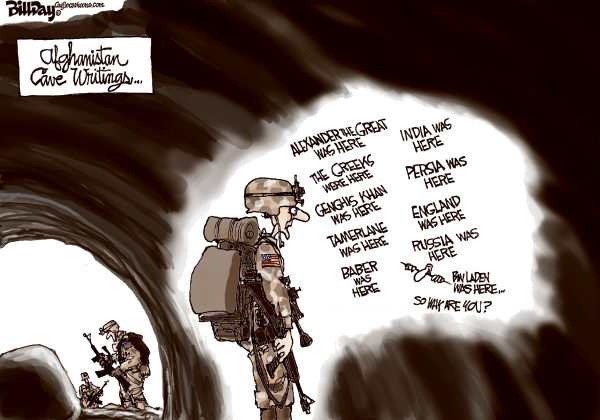
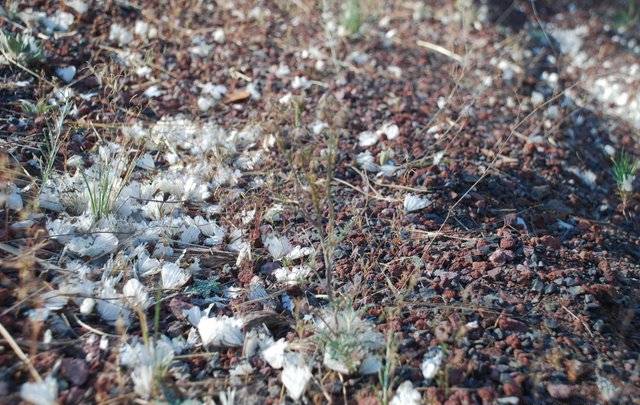
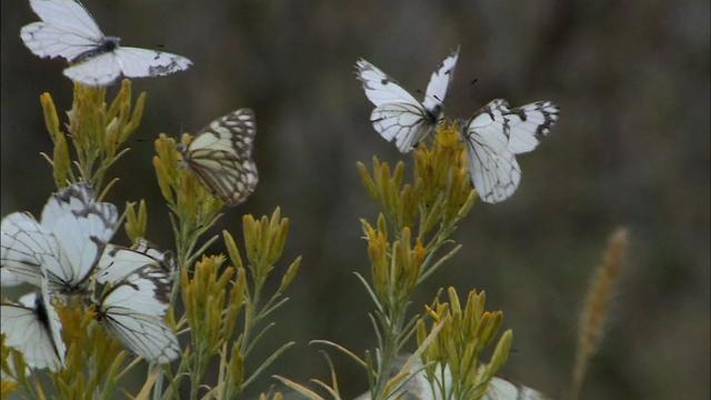
Every 30 or 40 years, the population of pine or white pine butterflies explodes in the Pacific Northwest, creating a unique kind of “snow” storm effect in the region’s ponderosa forests. The insects are native to the ponderosa forests of the West, but scientists still don’t know what causes such an increase in their numbers.




Filed under News
“I don’t care what the liberals say, I don’t care what the naysayers say, this nation was founded as a Christian nation, the God of Abraham, the God of Isaac, and the God of Jacob – there’s only one God, there’s only one God, and his name is Jesus. I’m tired of people telling me that I can’t say those words. I’m tired of people telling us as Christians that we can’t voice our beliefs or we can no longer pray in public. Listen to me, if you don’t love America, and you don’t like the way we do things, I got one thing to say: Get out! We don’t worship Buddha, we don’t worship Mohammed, we don’t worship Allah, we worship God, we worship God’s son Jesus Christ.”
– Dennis Terry, pastor of Greenwell Springs Baptist Church in Baton Rouge, LA, in a sermon this week in which Rick Santorum was in attendance.
Goddamn, he sounds mad!
Filed under News
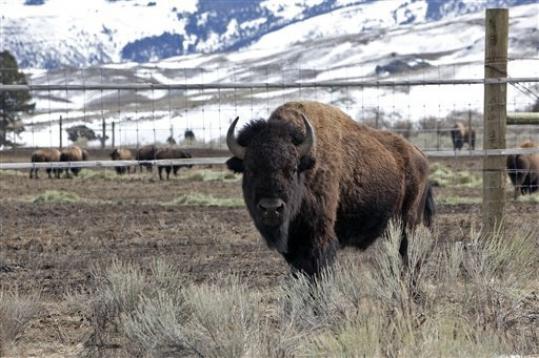
In this March 17, 2011, file photo, a free bison roams around the outside of a pen enclosing bison in Gardiner, MT, in Yellowstone National Park. AP Photo/Janie Osborne, File.
Sixty-three bison from Yellowstone National Park were shipped almost 500 miles northeast to Montana’s Fort Peck Indian Reservation; part of a long-planned relocation initiative meant to repopulate parts of the West with the iconic animals. A crowd of elated tribal members greeted the bison, as they arrived Monday night. There had been 64 animals, but a yearling died during the trip, which had been anticipated for months, but came without any formal announcement. State and tribal officials wanted to avoid a courtroom battle with opponents worried that the bison will compete with cattle for grazing space.
Helena attorney Cory Swanson, who represents several landowners and farmers, said the unannounced Monday night move was a “sneak attack.” Swanson said he would return to court with a request that the animals be ordered back to Yellowstone.
But, Fort Peck Chairman Floyd Azure says the state of Montana no longer has jurisdiction over the animals, since they’re now on federally-protected tribal land. “Now that they’re here, they’re here to stay,” he emphasized.
The Assiniboine and Sioux tribes of Fort Peck declare that the relocation offers a chance for them to revive their ancient connection to an animal that once numbered in the millions in North America and provided food and clothing for indigenous peoples.
Bison often are confused with buffalo. They have similar appearances and share some genetic traits. But, bison are native only to North America, while buffalo are primarily indigenous to Africa and Asia. There’s a small population of buffalo in Eastern Europe. Bison once roamed almost all of North America, numbering anywhere from 20 – 30 million at the time of Europeans’ arrival. By 1900, they’d been driven nearly to extinction. But, conservation efforts throughout the 20th century saw their numbers increase dramatically.
Surely some people have wondered why Indigenous Americans used bison only for food and not as draft animals. Don’t think some didn’t try over the centuries! Bison are notoriously ferocious and, despite poor eyesight, somewhat aggressive and very stubborn. Saddling one up and attaching it to a cart isn’t just impractical; it’s impossible. Because of the bison’s majestic appearance and tenacious nature, most Indigenous American communities revered it as sacred. Yes, they used its flesh for food and hide for clothing, but in that process, it was a circle of life. Unlike their European counterparts, Native Americans didn’t hunt for sport.
The relocation issue, however, isn’t over quite yet. Some Montana lawmakers and local landowners have vowed to fight it.
“They just seem to think they are above the law,” said State Sen. Rick Ripley, a Wolf Creek Republican, about Fort Peck. “They’re going to have a lot of problems with damage to private property that they could have addressed prior to translocation.”
But, Fort Peck residents remain steadfast. “This has deep spiritual meaning for us,” said Leland Spotted Bird, a Dakota tribal elder and spiritual leader. “They are the sole survivors from our ancestors.”
Filed under News

U.S. Attorney General Eric Holder and White House Senior Advisor Valerie Jarrett flank my friend, Rafael McDonnell, communications and advocacy manager at the Resource Center of Dallas, at last night’s conference.
In a gathering that’s certain to aggravate some social and religious conservatives, U.S. Attorney General Eric Holder and White House Senior Advisor Valerie Jarrett gave keynote speeches at an anti-bullying conference held at the University of Texas – Arlington yesterday evening. It was the third in a series of eight conferences the White House and the U.S. Justice Department has scheduled since February to address the issue of bullying in schools. The first two conferences took place in Philadelphia and Detroit.
I say last night’s event will aggravate some conservatives because the conferences dare to include gay and lesbian youth in their discussions. Texas saw a rash of homophobic hate crimes in the 1990’s, some of which made national news. The James Byrd Hate Crimes Act had a tough time passing the Republican-controlled Texas State Legislature, in part because it included queer folks in its verbiage. Governor Rick Perry reluctantly signed it into law in May of 2001. While the act resulted from the 1998 dragging death of James Byrd, a Black man, by 3 White supremacists in Jasper, Texas, it was written to encompass all forms of expressed hate, including gender, religion and sexuality. It also would be used to address bullying in schools.
No one normally would have a problem with providing a safe environment for all schoolchildren, but such groups as the Texas Eagle Forum and Concerned Women for America got upset with that sexuality thing. It seems they and others would rather see kids bullied to death than to include protection for a handful who might be gay or lesbian. As a victim of bullying throughout my school years, I understand the implications of being targeted and the fear it causes. Even in this enlightened 21st century society, just being labeled gay in school – especially for males – can be a psychological death sentence.
The conferences, which were announced in February, will continue through June.
Filed under News
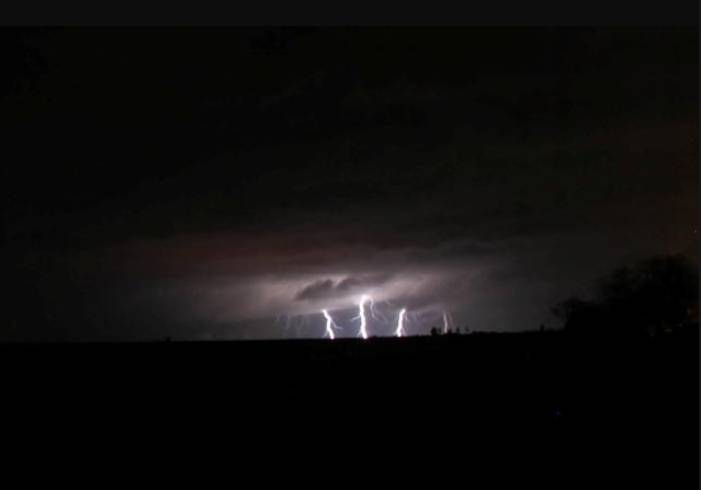
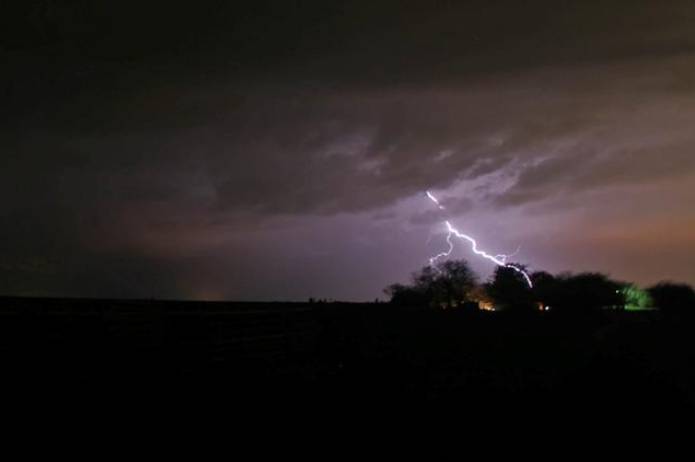
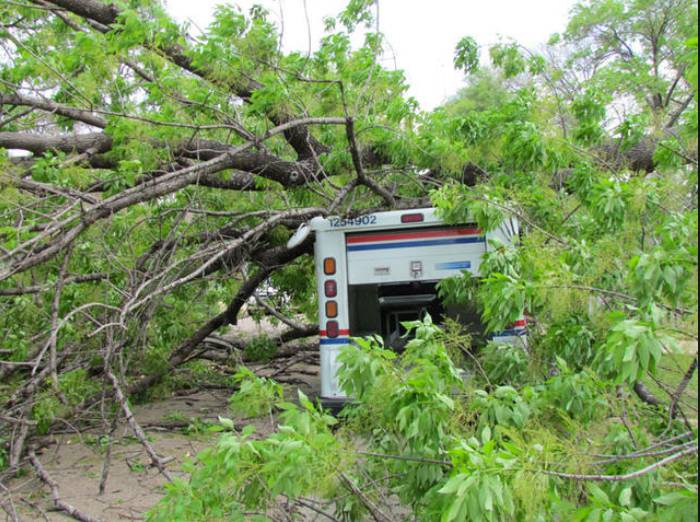
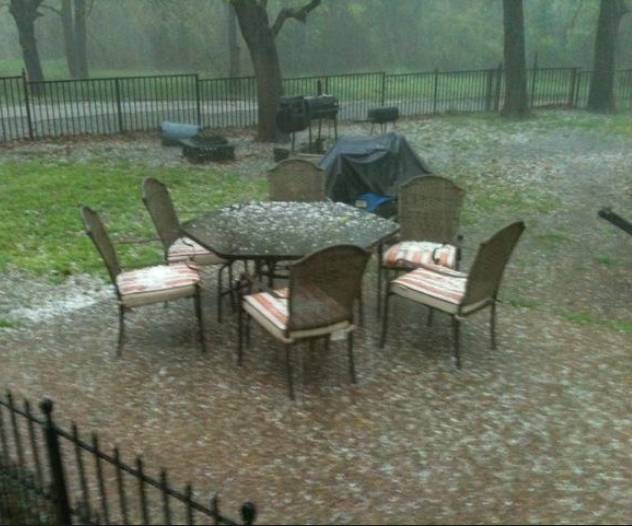
A massive storm system that originated off the Pacific Northwest coast several days ago finally made its way to Texas late Monday afternoon. Heavy rains fell all night Monday into Tuesday morning; strong winds caused extensive damage in some locations. Some people are terrified of such weather, but I find it fascinating. It just puts humanity into its place. Here are some photos taken in the Dallas / Fort Worth metropolitan area of the storm and its aftermath.





Filed under News
“Trampling the rights of women in an effort to grandstand against the federal government is simply wrong and I cannot be a part of it.”
– Allison Catalano, in her resignation letter to state Rep. Myra Crownover, R-Denton.
Catalano, 26, started working as an unpaid intern for Crownover in August 2011, shortly after graduating from the University of North Texas; she then became a paid staffer. Her letter has caused a stir in Texas politics, but Crownover (pictured below) describes Catalano as a “fine employee.”


When a former supervisor of mine and his wife adopted a baby boy from Guatemala, I bought them a gift certificate to Babies-R-Us and a huge book of nursery rhymes. The latter, from my perspective, was especially important. I began reading at the age of 2, mainly because my parents knew early on that education is paramount. In fact, I still have many of those childhood books, which are slightly tattered and probably collector’s items. But, my folks didn’t have many of the same educational opportunities I did; they grew up in an environment where few people attended college. My father recalls being steered from a drafting class in high school into a trade course where he learned the art of operating a printing press. Nothing wrong with that, of course, but it’s the line the old woman who signed him up attached to it: “Most Spanish boys go into trade school.” Naïve as he was, he didn’t know any better, but the implications are obvious now; only White people need apply.
As a writer, I’m naturally an avid reader. I have about 5 different types of books on my reading agenda right now. I just alternate between them. But, I think even the average person understands the importance of literacy. A literate population is less likely, for example, to engage in conflict and instead, to seek compromise or more peaceful resolutions. Women who are literate are less likely to have children and more likely to become active members of their communities; that is, they suddenly realize they can do more with their lives than be wives and mothers. That may be one reason why governments and religious institutions in the past would rather keep the masses illiterate and ignorant; an educated populace can be dangerous in the eyes of some. Look at what happened in Afghanistan when the Taliban took over in the 1990’s. The male-dominated hierarchy shoved women and girls out of schools and enforced a strict Islamic doctrine as the only necessary education. The rest is tragic history.
Writer and educator Walter Dean Myers knows a few things about literacy. He’s the author of more than 80 books, ranging from picture books to realistic young adult fiction, and the recipient of numerous literary awards: 2 Newbury Honors, a Virginia Hamilton Award for Lifetime Achievement and the 1994 American Library Association’s Margaret A. Edward Award. Most people, at 74, would prefer to slow down after a similar lifetime of hard work and accolades. But, to Myers, children’s literacy is too important an issue for him to rest on his own laurels. Besides, he has a new title – National Ambassador for Young People’s Literature. And, the matter of teaching kids to read and write is much more complicated than just getting them to sit still. As Myers reveals
in this interview, it all begins with adults willing to take the time to read to those same kids. After all, our nation’s future and viability in a constantly-changing global market depend on it.
Filed under News