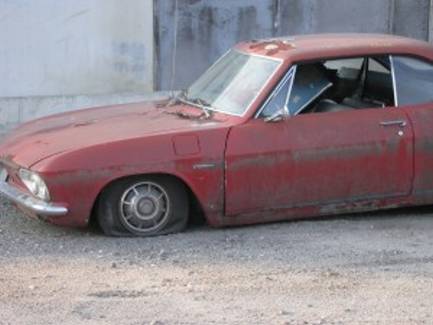
A few years ago a friend and then-colleague of mine arrived at work bemoaning the sudden loss of his car – a 1980’s-era Oldsmobile Cutlass with sagging interior roof, no handles for the rear windows and skull caps atop the locks. The city of Dallas had confiscated it from the spot in front of the townhome he shared with his fiancée, he said; blaming the local homeowners association. He made it sound as if some unfriendly curmudgeon in the neighborhood had called the city, and the dilapidated jalopy was gone the next day. It wasn’t that simple, though, and after much prodding, I finally got the entire story out of him. He was returning home from work one afternoon, when – as he made a left turn just blocks from home – the steering column suddenly came loose. Not just the steering wheel – the entire steering column! It literally popped out and fell into his lap. He managed to slow the vehicle and arrive safely against a curb, before pushing it all the way to the spot in front of the townhome where he normally parked it – and leaving it there. A few days later the city placed a glaring bright orange sticker on the driver’s window warning that the car needed to be moved, or risk being towed – the kind of sticker a vehicle owner shouldn’t miss, both because of its vibrant color and its proximity to where you enter the car. A few days after that, it vanished. He decided not to pay a fine to pick it up from the city impound lot; instead driving way the hell out to South Dallas to retrieve the items in the car’s trunk, which he said collectively were more valuable than the vehicle itself. But, he kept blaming the homeowners association. Now, I agree that HOA’s are one of those most evil entities humanity has ever created, right up there with the IRS and Congress. But, in this case – as much as it may have hurt my hard-headed good friend – I had to agree with the HOA. That car needed to go. The dirt and the skull-shaped lock tops were the only things holding it together.
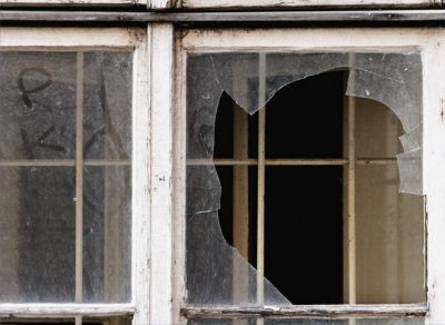
On March 2, 2012, James Q. Wilson, a well-respected Harvard social scientist, passed away at age 80. Wilson is best known for his “broken windows” theory about crime and the communities in which it festers. In his seminal 1985 essay, “The Rediscovery of Character: Private Virtue and Public Policy,” Wilson proposed that broken windows in any given neighborhood – if left unrepaired – are an indicator of that area’s social ills and portend its subsequent collapse into economic despair and criminal behavior. In other words, if no one cares that homes and buildings have broken windows, then who cares if trash clogs the streets? Who cares if cars lie abandoned on front lawns? Who then would be left to care if drugs are being sold on the corner? Who would stop prostitutes roaming the streets and parks? Who would care if someone gets robbed in broad daylight? It’s a domino-type of ideology; seemingly simplistic with its catchy moniker – broken windows – but much more complex than most people, regardless of political or social ideology, can imagine. And, even more difficult to solve.

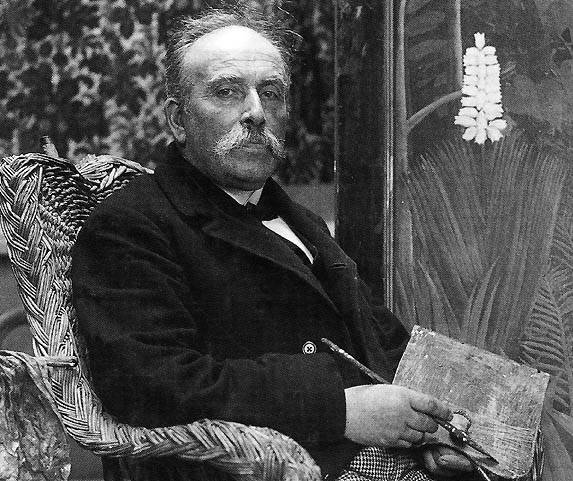
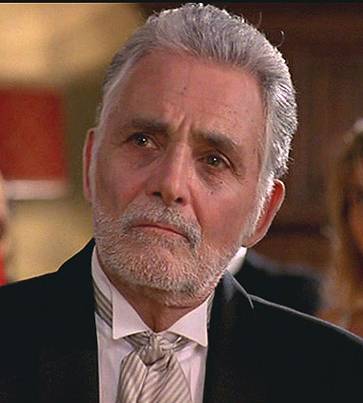
James Q. Wilson
Wilson didn’t pretend to have neatly-crafted hypotheses for all of society’s troubles. The “broken windows” theory wasn’t a panacea for whatever quandaries plague a particular neighborhood. But, I find it perfectly logical, since I’ve experienced it firsthand. In the early 1990’s, I moved into a relatively small, but comfortable apartment complex in far North Dallas. It was nice, quiet and nondescript. People were pleasant, and not much out of the ordinary happened. But, by the end of the decade, I’d noticed the quality of life had begun to decline. People were getting into more arguments on the property’s grounds. More cars were getting towed. Empty beer bottles and other trash were being tossed into the bed of my truck. By 2003, when I finally moved, things had gotten worst.
It actually seemed to begin late one Sunday evening in January 1999, when a man in a neighboring apartment started terrorizing two women and a young girl. The shouting and screaming continued for hours into the following Monday morning. The man got one of the women onto the icy ground of the parking lot just outside my bedroom window. What I thought at first were gun shots were actually the sound of his hand hitting her face and head. I called 911. The police arrived quickly and arrested the man; something I hadn’t seen yet at the complex. The event terrified me and other residents. But, I didn’t know then that it was a symptom of a much bigger problem.
During Memorial Day weekend 2002, people crowded around the pool for a mass cookout; lots of people – loud and boisterous – with music, footballs, dogs, plenty of food and plenty of alcohol. When I strolled by the area the following Tuesday evening, I was stunned by the sight of the debris. Beer cans, wine cooler bottles and other refuse lay strewn about the grass; jutting out from the bushes and floating in the pool, which looked like a septic tank on a bad day. On another occasion, I saw an auburn wig on the same area. The next day it had been dragged closer to the pool. I told people at work I’d figured out it wasn’t a long-lost set of dreadlocks; it was a rare red squid trying to find its way back to the ocean. During one week that following August, police were on scene every single night. I mean, EVERY SINGLE NIGHT of the week; something I definitely hadn’t seen before. By then, I had a roommate to help me with living expenses; we resided in a 2-bedroom unit. A young couple lived above us and, almost every morning – in the pre-dawn hours – they’d suddenly and inexplicably explode into a vociferous series of arguments. When I heard a baby crying on one occasion, I called 911. The operator had the audacity to ask if I’d tried to find out what was happening.
“Are you kidding me?!” I retorted. “Never mind! I’ll just go up there with a two-by-four and crack it over the head of the first person who answer the door.” I hung up – and waited. She called back a few seconds later and said she’d dispatch an officer to the scene. When police finally did arrive, the couple was still arguing so loudly it was a while before they opened their front door.
I relayed the story months later to my supervisor, and he chastised me for calling the police over such a “trivial issue.” He added, “You can’t call the police for that. They don’t have time for that.”
I reminded him there was a baby in the apartment and – with the couple screaming at each other so badly – that child could have been in danger. He conceded I was right. Besides, I emphasized, domestic violence is a serious offense, and if someone doesn’t make an effort to get involved and stop it, then somebody could end up hurt or worst, dead. There’s a fine line between minding your own business and not getting involved simply because you don’t want to be labeled a snitch or a troublemaker. I lived in that complex and had come to hate it solely because of the low-class people who apparently had taken it over.
But, while I still lived there, though, I felt an obligation to keep it as orderly as possible. I didn’t let my roommate’s puppy crap wherever he wanted and just walk away; telling myself someone else would pick it up – like the trash by the pool or that set of dreadlocks. I cleaned up a broken mirror in the middle of the parking lot one afternoon. I noticed blood stains outside another apartment and informed the manager. Very early one morning a young man hurtled a curio cabinet from his third floor balcony onto the sidewalk below. The wood scraping against the balcony surface woke me up, before the sound of it slamming into the pavement sent me and my roommate’s puppy into the ceiling of my bedroom. I looked out my window at the mess and lay back down. No, I thought, I can’t just do that; someone could be hurt in that apartment; there could be more trouble. So, I dialed 911. The police knocked on that apartment door, but got no response. I called the management office the next morning to report it. The assistant manager told me several people had already called her, but no one had reacted like me – contacted the police. No one else seemed to care. No one else wanted to get involved. I kept thinking I’d just overreacted; that it was probably a lovers’ quarrel. She had walked out on him, saying she’d return for her things later. And, he decided to get back at her after a night of drinking; taking it out on inanimate objects. He could have taken it out on her, and I guess that’s what I’d thought might have happened. Why did I care so much? Why didn’t I just mind my own business and not worry about it? It wasn’t my stuff he was tossing off the balcony.
Wilson understood that a person’s innate character reveals how they will function within their given society. “At root,” Wilson wrote in 1985 in The Public Interest, “in almost every area of important concern, we are seeking to induce persons to act virtuously, whether as schoolchildren, applicants for public assistance, would-be lawbreakers or voters and public officials.”
Wilson wasn’t a self-righteous academic elitist; judgmental and prejudicial towards entire groups of people. He was speaking about the core of human decency – character. And, while he formulated his “broken windows” theory during the 1970’s (the “Me Decade”), he noted that character is formed in groups. In his 1993 masterpiece, “The Moral Sense,” he wrote, “Order exists because a system of beliefs and sentiments held by members of a society sets limits to what those members can do.”
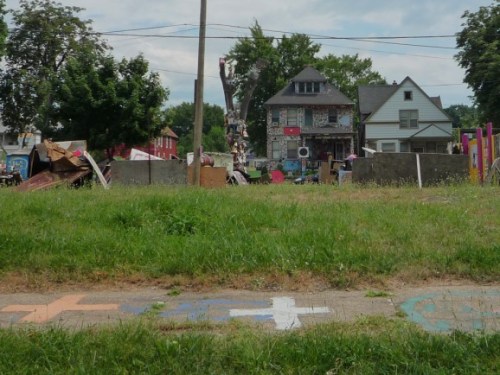
While Washington focuses on such failed states as Somalia, we Americans only have to look at a handful of cities here at home to see how order has crumbled and given way to treacherous lifestyles. Take Detroit. Eminem may love it, but many of its former residents felt the opposite and took flight. At one point, Detroit was the 4th largest city in the United States with a peak population close to 5 million by the 1960’s. It was the hub of the automotive industry and a vibrant economic metropolis. But, by the end of the 20th century, it had fallen into almost complete disarray. Buildings and homes sit empty – with broken windows and junked cars. A Time photo essay reveals the true sadness in a way only pictures can. City officials were so concerned about the Census Bureau’s 2010 revelation that Detroit’s population had declined to 714,000 that they brazenly questioned the authenticity of the government’s research methods. It’s perhaps a predictable response from a city hall that’s lost control of its environs; a classic case of denial. But, that sense of disconnect is what made many Detroit natives show their disgust by voting with their feet. If the city council didn’t care, why should they?
New Orleans is another example of a city in a seemingly perpetual state of crisis. Many people blame Hurricane Katrina with delivering a near-fatal death blow to the “Crescent City.” Others, however, actually credit the massive storm with exposing the poverty, racism and political corruption that had long infected New Orleans. This latter view is closer to reality, as one of America’s most beloved cities had been in a downward spiral long before Katrina even formed in the Atlantic. Like Detroit, New Orleans once was a gleaming metropolitan area; a major shipping port with an ethnically diverse citizenry that enjoyed a prosperous lifestyle. Its population had peaked at roughly 900,000 by 1960 and began to see a gradual decrease in the ensuing decades. By the time Katrina struck in August of 2005, New Orleans was home to a little more than 400,000 residents; about three-fourths of whom lived on some type of government assistance. Much of the petroleum industry that had made New Orleans into a thriving industrial center had shifted westward; outside of the city and sometimes, outside of Louisiana. Thus, went the lucrative jobs that oil and petroleum corporations provide, and New Orleans began to rely more and more on its myriad tourist attractions to generate revenue. Many of its residents subsisted on various temporary jobs that frequently paid in cash; often moving about via mass transportation, or on foot. Thus, when Katrina arrived, a number of them just didn’t have the money to buy a plane or bus ticket or to rent a car. They had literally become trapped in a city that had already trapped them economically.
As with any place on the verge of moral and financial collapse, the problem doesn’t just lie with a discombobulated city hall. It includes local law enforcement. And, the New Orleans police department had one of the worst reputations for corruption in the United States; harboring a shameful record for police brutality. Throughout the 1990’s, the NOPD’s Internal Affairs Division received numerous complaints of officers roughing up citizens, often without sufficient cause. Many of those complaints were never addressed, much less resolved. The corruption was systemic. It permeated nearly every phase of operations and encompassed officers at all levels – from rookie patrolmen to high-ranking deputy superintendents. Between 1992 and 1995, for example, roughly 60 NOPD officers were charged in a wide variety of crimes. Part of the problem lay with salaries: New Orleans’ police officers at that time were woefully underpaid. In the 1990’s, starting salaries for patrolmen were only slightly above $15,000 a year at a time when the annual salary for the average American was about $35,000. Even veteran officers were barely making above $25,000 annually. Most New Orleans cops had to moonlight at second jobs known as “details” to keep up with living expenses. At one point, an estimated 75 to 80 percent of the NOPD force had second jobs. The temptation to delve into illegal and more lucrative enterprises was too good for some to pass up. The “Big Easy” had warped into the “Big Sleazy.”
For years scientists had warned that New Orleans was in danger of serious flooding from a major hurricane. Surrounded by water on three sides, it’s the only city in North America with the bulk of its geographical area at or below sea level. It’s also one of the fastest sinking cities in the world, dropping about a quarter of an inch per year. In 2004, the Federal Emergency Management Agency (FEMA) conducted a disaster simulation in which a fictional hurricane named “Pam” struck New Orleans with 120 mph winds and 20 inches of rain. The final report questioned whether the multitude of levees around the city would hold, but estimated that up to a million residents in and around the New Orleans area could be safely evacuated. FEMA established guidelines for moving even the most vulnerable of residents out of harm’s way and setting up shelters where people could remain for up to 4 months. The city itself even created a plan to move out citizens using school buses. Everything, of course, always looks good on paper.
Many blame the federal government’s lackluster response to Katrina, but local municipalities aren’t above reproach. Then New Orleans Mayor Ray Nagin didn’t issue a mandatory evacuation until Sunday, August 28 – the day before Katrina made landfall. City officials told residents they could seek shelter at either the Superdome or convention center, if they chose to remain close to home. Both Texas and Arkansas stationed National Guard troops at their respective borders with Louisiana, waiting for a call from Governor Kathleen Babineaux Blanco. But, Blanco didn’t place those calls until nearly a week after the storm. By then, New Orleans and almost all of Southeastern Louisiana had descended into unmanageable chaos. When stranded residents finally were evacuated, they didn’t just disappear, of course; they moved to other cities, like Baton Rouge, Houston and Dallas. And, many brought with them the same disenfranchised attitudes they had in New Orleans. Hurricane evacuees, for example, were still living in the Houston Astrodome 6 months after Katrina hit.
This points back to the character issue – or lack of it – that Wilson lamented in his “broken windows” theory. There is a danger, however, that blaming the people for not caring about their community can transmute into blaming the poor for their circumstances. It’s one thing a lot of social conservatives do; if people have no incentive to work because of public assistance, they say, those individuals become riddled with sloth and don’t contribute to society. They expect someone else to work and pick up after them; clean up their trash, sweep up their discarded wigs, tow away their broken down cars. Wilson didn’t condemn people for being born into and growing up in abject poverty. But, he understood that – while you can’t speak for those conditions – you are ultimately responsible for yourself. You can only play the victim so much before people get tired of it and develop compassion fatigue. America grew weary of hearing about Detroit’s woes and they got sick of hearing about the devastation Katrina wrought. Enough already! Don’t just complain. Do something about it.
Wilson emphasized education as one avenue to equalize the economic playing fields and thereby prevent societal decay. “Nothing better illustrates the changes in how we think about policy than the problem of finding ways to improve educational attainment and student conduct in schools,” Wilson stated in “The Rediscovery of Character.” The U.S. spends roughly $800 billion annually on education, or about 4% of its budget. Even with all the money spent in the past decade on the wars in Afghanistan and Iraq, taxpayer investment in education exceeds that for national defense. Still, the U.S. lags behind other developed nations in reading, math and science; 48th out of 133 countries, according to the World Economic Forum.
In 2009, more than half of patents awarded here went to companies outside the United States. In American graduate schools, nearly half of the students are foreigners who often choose to return to their homelands after completing their education. While academics push for i funding, you only have to consider former presidential candidate Rick Santorum’s “snob” comment about President Obama and the current debate in Congress on mitigating student loan debt to understand how politics can disrupts the educational process in this country.
No one may lament James Q. Wilson’s death the way they did, say Michael Jackson’s, or someone else with a more colorful personality. Our society doesn’t seem to mind losing intellectuals, just the celebrities who entertain us and cause trouble doing it. That’s a shame. We need more folks like Wilson. We need more people with character. We need more people who care.