A boy named Ahmed mourned last Thursday for his father, Abdulaziz Abu Ahmed Khrer, who was killed by an army sniper in Syria.
As always in war, the children suffer the most – but the self-appointed leaders never can bring themselves to care about such trivialities.
Filed under News

I think it’s been the worst campaign I’ve ever seen in my life. …I hate that people think compromise is a dirty word. It’s not a dirty word.”
– Former First Lady Barbara Bush during a symposium on the first ladies at Southern Methodist University last week.
My senses must have gone astray, since I actually agree with Mrs. Bush on this one. I lost respect for her after she dismissed the severity of the Iraq War in 2003 by saying, in effect, she didn’t want to be bothered by the sight on TV of dead and injured troops returning home. I really came to loathe her after she commented that things were “working very well” for Hurricane Katrina evacuees from New Orleans, as they landed in the Houston Astrodome – already having lost most everything they ever owned and being forsaken by the government. But, for once, the old broad gets it right this time! Indeed, compromise is not a dirty word. Tell that to John Boehner and New Gingrich!
Filed under News

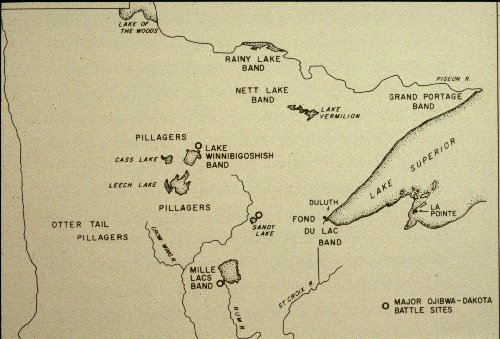
In yet another case of better late than never, the federal government is closer to repaying the 6 Chippewa nations of Minnesota for land and timber deals made more than a century ago – deals that were never honored. It’s a familiar story. The U.S. owes millions of dollars to the Fond du Lac, Bois Forte, Grand Portage, Leech Lake, Mille Lacs and White Earth communities, which comprise the Chippewa tribe. Congress, however, has taken up the matter once more and is debating a $28 million payment to the 6 Chippewa bands. More than 40,000 Chippewa members could receive $300 each. The remaining $16 million would be split among the governments of the 6 bands.
Karen Diver, chairwoman of the Fond du Lac Band of Lake Superior Chippewa, said her band plans to divide its share of the money – more than $2.5 million – among its members so that each will get an additional $700, for a total of $1,000. “It will bring some level of closure,” she said, adding that mismanagement of Indian land decades ago cost her reservation dearly.
Of the 100,000 acres within the Fond du Lac reservation’s borders, 80% fell into non-Indian hands. The band has since bought back some of it and now owns about 33% of the land within its perimeters, Diver noted.
Not all Indigenous American communities have been so fortunate. The land seizure included a phenomenon some northern Minnesota Chippewa called “The Wandering 40,” said Jim Northrup, a Fond du Lac Band member and author who lives near Cloquet. “A timber company would buy the stumpage rights on an Indian’s allotted 40 or 80 acres, but then they’d get in there cutting and just keep wandering,” he explained.
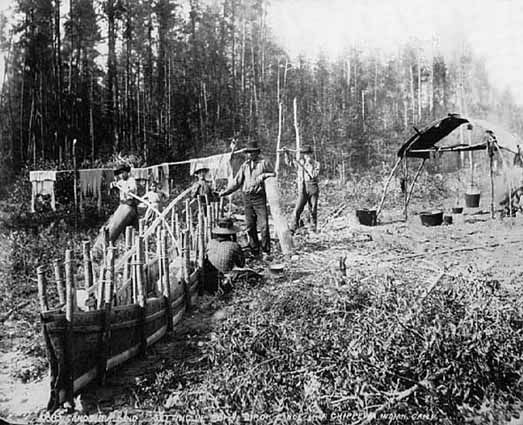
The settlement stems from the federal government’s management of the 1889 Nelson Allotment Act, under which some reservation land was allotted to individual Indians, but other plots were ceded to the United States and sold to non-Indians. Proceeds from the sales were supposed to go into a trust fund for the Chippewa.
In many cases, that didn’t happen. The federal Bureau of Indian Affairs dipped into the trust fund for maintaining its vehicles and other daily expenses. In 1999, a federal court found that the deal shortchanged the tribes, also known as the Ojibwe, and awarded the multimillion-dollar settlement.
The land comprises 650,000 acres across the six reservations, from White Earth in western Minnesota to Grand Portage at the tip of Minnesota’s Arrowhead country.
Stripping and selling the land deprived the tribe of development opportunities, said Mark Anderson, a Bois Forte Band member and Minneapolis-based attorney for the Minnesota Chippewa Tribe.
In 1948 and 1951, the Minnesota Chippewa Tribe brought those allegations in complaints to the Indian Claims Commission. The claims eventually formed the basis for the federal government’s agreement to pay the Chippewa $20 million. More than six decades later the government still hasn’t honored those agreements.
It’s not likely the current Congress will approve a lump sum of $28 million. In this tempestuous election year, with unemployment still high and gas prices on the rise, the economy remains like a rock hanging around the Obama Administration’s neck. I’m sure the GOP presidential candidates and other Republicans would twist any deal to reimburse the Chippewa into an example of Obama’s poor handling of financial matters. While they may claim fiduciary restraint, it’s actually code for blatant racism. The Caucasian elite that dominates the federal government always hoped the Indians would just go away, or accept their “place” in society; e.g. sub-human status. Here in North America, Europeans tried to wipe out the indigenous peoples through violence – and, of course, failed. So, their descendants resorted to such machinations as those that befell the Chippewa. When Native Americans – who already had been beaten down by violence and disease – had the audacity to demand reimbursement for all those contracts and agreements, the term “Indian giver” was born.
Many individual Chippewa, including Northrup, don’t find much comfort in what they see as pathetically deficient compensation for what their ancestors lost. “A thousand dollars is (nothing more than) a good night at bingo,” he said. “It should be $28 billion, not $28 million. They’re just trying to make legitimate the theft of Indian land.”
No amount of money or land could repay any Native American community for all the bigotry and exploitation they endured; just like no amount of Social Security can reimburse someone for a lifetime of hard work and putting up with bully bosses, coworkers with bad attitudes and paltry raises. But, as Karen Diver stated, it’s a start toward some degree of justice.


Survivalist Tip: Yesterday I discussed how to cook a fish on a rock. This, of course, would require that you start a fire in a pit. But, I need to explain exactly how to build a fire from scratch. (I know this is going backwards, but since I was a breach baby, there’s a method to my madness.) Whether you plan to stay at home, or hike into the hinterlands when the apocalypse hits, building a fire literally from the ground up is an essential skill. Outdoor enthusiasts will know what I’m talking about. But, even if you’re at home, there’s a good chance the power will go out, as the Earth’s axes start shifting; something utility companies aren’t equipped to handle, despite all the extra fees they tack onto your monthly bill.
If you’re at home, make sure you have a healthy supply of firewood. A number of other items, however, make good kindling: shrubbery, grass, hay, telephone books, newspapers, old clothes, pictures of your ex and tax forms. Bibles, Torahs and Qurans are also great fuel, and since the Mayan gods will have no use for them, neither should you. Second, make certain you also have a good supply of matches, lighters and / or a magnifying glass. Keep these latter items in a safe dry place.
If the power does go out in your house, or you’re in the outdoors anyway, you’ll have to resort to the campfire technique. Dig a large hole or depression into the ground. Then, pile all that material into the pit. Aside from the matches and lighters, here are other options for creating a fire:
Use a magnifying glass. Hold the glass over the ignitable material and in front of the sun, so that a small bright dot will appear on it. This takes a while, but be patient. You won’t be cooking cheese fries anyway.
If the sky is cloudy, you can start a fire with sticks. Just be sure the kindling is dry.
First, make a bow, using slightly bendable wood. You’ll be putting a lot of pressure on the bow, and dead wood is more likely to break than similarly sized green wood. Use as thin a piece of wood as you can so the bow will be as light as possible. A lighter bow is easier to control and takes less strength to push back and forth. However, it has to be stiff enough to not bend when you’re using it. The bow doesn’t actually have to have much of a curve to it. Use a shoelace, drawstring, small rope or whatever cordage you can find. Leave a little slack in the cord so that you can twist the drill into the bow. Once the drill is in the bow, the tension should be nice and firm.
Make a fireboard. The fireboard and the drill both need to be made from light, dry, non-resinous wood. The best wood for this won’t have any sap and will be light and soft enough to easily dent with your thumbnail without gouging. Shape whatever wood you choose into a piece about an inch thick, 2-3 inches across and at least 12 inches long. Set it aside for now.
Make a drill. Your drill should be made of harder wood than the fireboard. Poplar and maple are good woods for this. Try to find the straightest piece of wood possible. (If you’re a homosexual male, this should be easy. If you’re of the lesbitarian faith, this may be the worst day of your life, but deal with it!)
Find or make a socket. A socket can be made of bone, wood, or rock. Look for a rock with a smooth dimple in it. The ideal rock is fist-sized with a deep dimple and smooth sides. If you can’t find a rock, the easiest socket to make is of wood. Either the rock or the piece of wood should be small enough for you to hold in your hand, but not too small. If you can’t find either a suitable rock or a piece of wood, use the head of the most uncooperative member of your posse. Put the fireboard on the ground.
Put your left foot on the fireboard. The arch of your foot (not the ball or the heel) should be over the fireboard.
Drop to your right knee – as if you’re going to make a sacrifice to the Mayan gods.
Hold the bow in your right hand and the drill in your left.
Put the drill on top of the string with the pencil-sharp end pointing right, and twist it into the bow.
Put the blunt end of the drill on the crater and put the socket on the drill.
Grab as close to the end of the bow as you can. Put some downward pressure on the socket and start to pull back and forth on the bow. It’s a delicate balance between putting too much and not enough pressure on the drill and having the bow string too tight and not tight enough.
Saw back and forth with the bow faster and faster, and put more pressure on the socket. Eventually, some black powder and smoke will form around the bottom of the drill. (Former Catholics will recognize this scene from Easter services. Recovering Jews will recognize it from circumcisions, and former Muslims will recognize it from the times they burned the American flag.) Either way, stop and pick up the fireboard.
Begin blowing softly through the bundle, while gently squeezing the tinder around the coal. And then, you will have fire!
This will definitely keep you warm, if you’re outside. But, fire will also ward off any unsavory characters who managed to survive the upheaval, such as celebrities or politicians. Besides, it’s a great way to make hot chocolate and cook that fish.
Filed under Mayan Calendar Countdown
Playwright David Rabe (Casualties of War, I’m Dancing as Fast as I Can) is 72.
Singer Dean Torrence (Jan & Dean) is 72.
Actor and karate champion Chuck Norris (Lone Wolf McQuade, Walker Texas Ranger) is 72.

Minnesota Vikings quarterback Bob Berry (Super Bowls VIII, IX, XI) is 70.
Actress Katharine Houghton (Guess Who’s Coming to Dinner, Billy Bathgate) is 67.

Musician – singer – songwriter Tom Scholz (Boston) is 65.
Actress Sharon Stone (Basic Instinct, Total Recall) is 54.

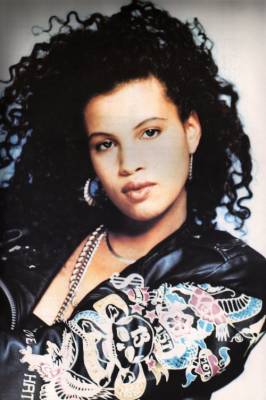
Singer – songwriter Neneh Cherry (Rip Rig + Panic, The Slits) is 48.
Prince Edward (Edward Antony Richard Louis; youngest child of Great Britain’s Queen Elizabeth II) is 48.

Actress Jasmine Guy (Harlem Nights, School Daze) is 48.

Filed under Birthdays
1791 – John Stone patented the pile driver on this day.
1849 – Abraham Lincoln of Springfield, IL applied for a patent for a device to lift vessels over shoals by means of inflated cylinders. He received the patent in May, 1849.
1876 – Alexander Graham Bell sent the first clear telephone message – into a nearby room – to his assistant, Mr. Watson. “Mr. Watson, come here, I want you,” were the first words spoken into the invention that Bell had created.
1903 – Harry C. Gammeter of Cleveland, OH patented the multigraph duplicating machine.
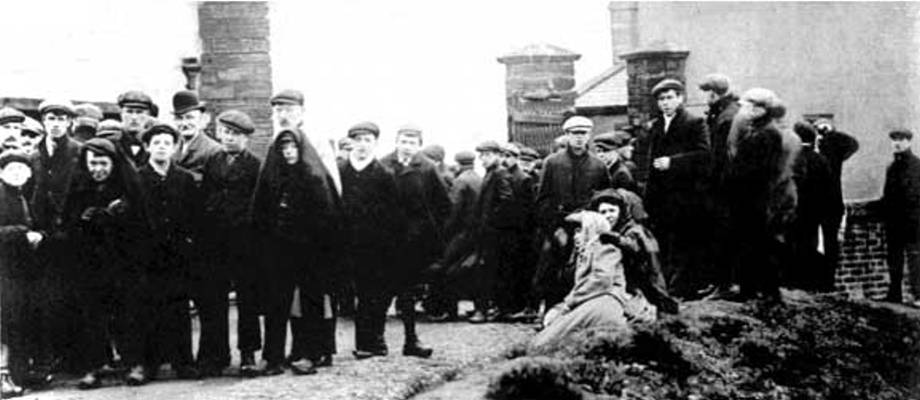
1906 – A mine explosion in Courrieres, France killed 1,060 workers.
1941 – The Brooklyn Dodgers announced that their players would wear batting helmets during the 1941 baseball season. General Manager Larry MacPhail (he started the Dodger dynasty in the 1930’s) predicted that all baseball players would soon be wearing the new devices.
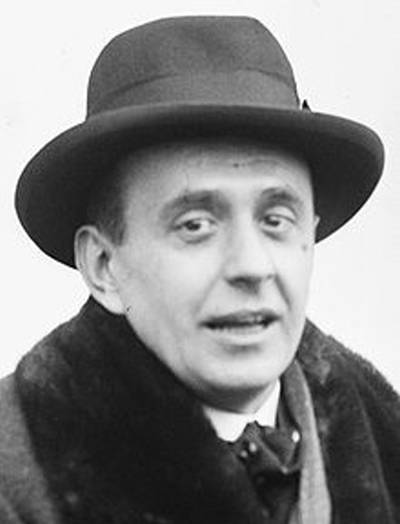
1948 – The communist-controlled government of Czechoslovakia reported that Foreign Minister Jan Masaryk, a non-communist, has committed suicide, an announcement greeted with suspicion in the West.
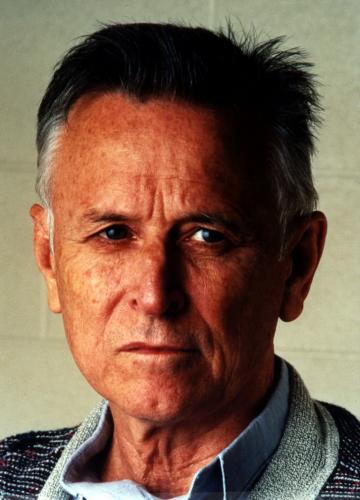
1969 – James Earl Ray pleaded guilty to the assassination of Martin Luther King, Jr., the year before and was sentenced to 99 years in prison.
1985 – Dick Motta of the Dallas Mavericks became the fourth coach in the National Basketball Association to win 700 games in a career as the Mavs defeated the New Jersey Nets 126-113.
1998 – The U.S. General Accounting Office (GAO) announced that food stamps were issued to nearly 26,000 dead people in 1995 – 1996; food stamps valued at $8.5 million were issued to 25,881 deceased people during that period.
Filed under History

Cherry blossom trees at the Dallas Arboretum. This weekend they’re hosting a Hanami, or cherry blossom viewing, by the Japanese-American Society to honor the victims of last year’s earthquake and tsunami in Japan.
Filed under News

“I believe that freedom of speech and freedom of religion go hand-in-hand in America. I should be able to express moral views on social issues – especially those that have been the underpinning of Western civilization for 2,000 years – without being slandered, accused of hate speech and told from those who preach ‘tolerance’ that I need to either bend my beliefs to their moral standards or be silent when I’m in the public square. In any society that is governed by the rule of law, some form of morality is always imposed. It’s inescapable.”
– Kirk Cameron, quoted by World Net Daily
Meanwhile, the menopausal debutantes on The View discuss Cameron after he made a similar statement on Piers Morgan Tonight. I say just give all of them some a box of chocolates and a pitcher of frozen margaritas!
Filed under News