Tag Archives: drug abuse

Empty

Recently the U.S. Department of Health and Human Services released a report on a surprising, yet intriguing subject: loneliness.  According to various studies and surveys, isolation and a lack of social connectivity has become epidemic.  The COVID-19 pandemic may have exacerbated what was already problematic for millions of Americans.

“Our epidemic of loneliness and isolation has been an underappreciated public health crisis that has harmed individual and societal health,” declared U.S. Surgeon General Dr. Vivek Murthy.  “Our relationships are a source of healing and well-being hiding in plain sight – one that can help us live healthier, more fulfilled, and more productive lives.  Given the significant health consequences of loneliness and isolation, we must prioritize building social connection the same way we have prioritized other critical public health issues such as tobacco, obesity, and substance use disorders.  Together, we can build a country that’s healthier, more resilient, less lonely, and more connected.”

The physical health consequences of poor or insufficient connections are dire.  They include a 29% increased risk of heart disease; a 32% increased risk of stroke; and a 50% increased risk of developing dementia for older adults.  Lack of social connections is estimated to increase the risk of premature death by more than 60%.

In addition to our physical health, loneliness and isolation contribute substantially to mental health challenges.  In adults, the risk of developing depression among people who report feeling lonely often is more than double that of people who rarely or never feel lonely.  Loneliness and social isolation in childhood increase the risk of depression and anxiety both immediately and well into the future.  And with an estimated one in five adults living with a mental illness in the U.S., addressing loneliness and isolation has become critical in fully addressing the mental health crisis in America.

For better or worse, the COVID-19 pandemic exposed the loneliness dilemma.  It also seems to have amplified it.  As businesses either switched to remote work or shut down altogether, people found themselves isolated in the name of good health.  I think much of this was foretold by the obsession with social media in the preceding two decades; where people would establish cyber relationships and call each other “friends”.

As an only child and a confirmed introvert, I’ve dealt with loneliness my entire life.  Sometimes I really do get lonely; other times I’m just alone.  I’ve always been a loner – something my parents never seemed to understand – and I’ve rarely done well in groups.  I get bored easily and quickly grow tired of dealing with people’s attitudes and personality quirks.  I put up with a lot of people’s disrespectful behavior towards me most of my life, which is the primary reason I don’t consider myself a people person.

But I have to admit I do get lonely sometimes.  I’m glad my parents had each other and me (and even my dog, Wolfgang to some extent) as they aged.  One of my uncles lives alone in a dingy apartment with a cat.  (An older cat died a few months ago, which devastated him.)  He can’t drive anymore, so he either takes a bus or has someone transport him somewhere.  I’ve taken him to a variety of doctor appointments over the past few years and grocery shopping almost every weekend for months now.  His stepdaughter lives closer, but she has her own health problems.

I have an aunt who also lives alone.  Her son, like me, is an only child, but he’s married and resides several miles from his mother.  She’s fortunate, though, in that a neighbor has access to her house and keeps an eye on her.  My aunt frightened me a few years ago, when she recounted how she fell in the bathroom one night and had to drag herself into her bedroom.  It took her hours just to get there.  But she was able to call her neighbor who contacted the fire department.  I stay in touch with my uncle and aunt, as well as other relatives and friends – even if it’s just via text message.

I only know a few of my neighbors and have little contact with most relatives.  I’ve never been married and I never had children, so I don’t know how life will be for me if I grow much older.  Loneliness will be just one factor in my later life.

Some years ago a friend expressed concern that I was becoming a hermit.  “Why should I go out?” I responded.  I lived with my parents, so I certainly couldn’t bring anyone home.  Then again, I hadn’t brought anyone home who I didn’t know since before the turn of the century.

A close friend keeps urging me to get a dog, as he did a couple of years ago.  Aside from two household plants that languish nondescriptly on a kitchen counter, I’m the only living being in this house.  (That doesn’t include the occasional insect that invades my quiet abode.)  I’d love to get a dog, but I’m just not in the right situation now to get one.

Dr. Murthy has established a six-point plan to help the U.S. deal with its loneliness epidemic:

  1. Strengthen Social Infrastructure: Connections are not just influenced by individual interactions, but by the physical elements of a community (parks, libraries, playgrounds) and the programs and policies in place. To strengthen social infrastructure, communities must design environments that promote connection, establish and scale community connection programs, and invest in institutions that bring people together.
  2. Enact Pro-Connection Public Policies: National, state, local, and tribal governments play a role in establishing policies like accessible public transportation or paid family leave that can support and enable more connection among a community or a family.
  3. Mobilize the Health Sector: Because loneliness and isolation are risk factors for several major health conditions (including heart disease, dementia, depression) as well as for premature death, health care providers are well-positioned to assess patients for risk of loneliness and intervene.
  4. Reform Digital Environments: We must critically evaluate our relationship with technology and ensure that how we interact digitally does not detract from meaningful and healing connection with others.
  5. Deepen Our Knowledge: A more robust research agenda, beyond the evidence outlined in the advisory, must be established to further our understanding of the causes and consequences of social disconnection, populations at risk, and the effectiveness of efforts to boost connection.
  6. Cultivate a Culture of Connection: The informal practices of everyday life (the norms and culture of how we engage one another) significantly influence the relationships we have in our lives. We cannot be successful in the other pillars without a culture of connection.

All of this is easier said than done, and every plan looks good on paper.  But I know something has to be done, if the nation’s overall health is to improve.  I only have a small collection of friends, but that’s all I personally need.  As with most everything else, it’s quality, not quantity, that matters.  And quality of life is always important.

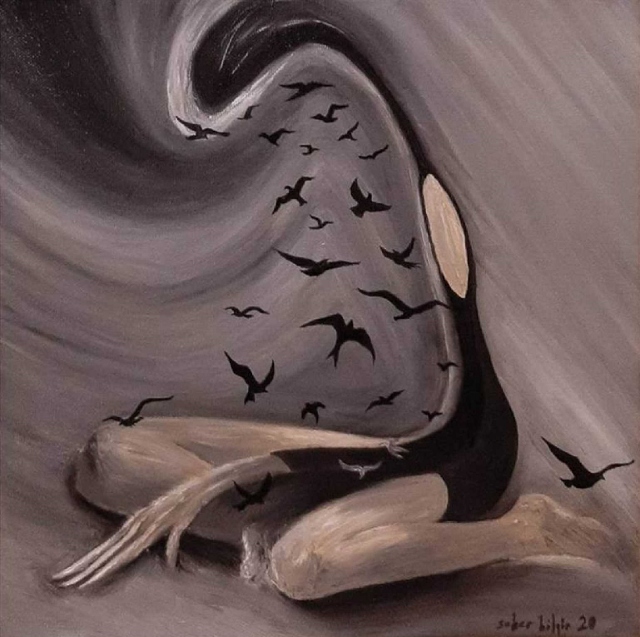
Image: Seher Bilgin

6 Comments

Filed under Essays

No Tears

images

Last month actor Cory Monteith died of a drug overdose in a hotel room in Vancouver, British Columbia.  He was 31.  Monteith, a star of the popular musical TV series “Glee,” apparently had struggled with drug addiction for some time.  I had never heard of him until his death; due mainly to the fact I’ve never watched “Glee.”  Something about cheery high school kids breaking out into song in the midst of their teenage angst is just too saccharine for me.  But, while I didn’t know Monteith even existed until after he died, I’ve heard of his sad dilemma too many times.  His circumstances are all too common: celebrity – drug addiction – rehab – dead in a hotel room.  Think Janis Joplin; think Whitney Houston.  Drug addiction and celebrity-hood are almost symbiotic.  It’s truly heartbreaking when someone becomes hooked on drugs or alcohol to the point that it rules and ultimately destroys their lives.  But, despite the tragedy, I simply can’t bring myself to cry for them.  I have the same reaction to someone who smokes for 40 years and comes down with lung cancer, or who fucks almost everybody they meet and contracts HIV.  Yes, it’s sad, but what did you think would happen?

I also find hypocrisy in the mix.  Trayvon Martin, for example, only had a trace of THC in his system when he was killed by an overzealous neighborhood watchman last year, but he was branded a thug.  Monteith had been in and out of drug treatment for most of his young life, but he’s considered troubled.  The glaze of celebrity seems to upgrade one’s station in life, and thuggish behavior transmutes into personal issues.

Drug addiction costs the U.S. roughly $160 billion annually; second only to alcohol abuse, which costs us about $185 billion every year.  Those are just hard dollar figures related to various tangible things like hospitalizations and property damage.  There’s no way to put a price on the emotional toll substance abuse takes on people.  There’s no real means to assess the heartbreak parents feel as they look at their dead child in a coffin, or the fear residents of a neighborhood racked by drug violence experience every night.

I don’t feel too sorry for people like Monteith because they pretty much bring the damage upon themselves.  They’re essentially responsible for the incessant carnage along the U.S. – México border.  Since 2006, when then-Mexican president Felipe Calderón launched a massive crackdown on drug trafficking, some 40,000 people have been killed.  Thousands more have disappeared.  And, not all of them are tied to the drug cartels.  Not every victim is a drug mule, or a hit man for a powerful drug lord.  Many of them are innocent people caught in the crossfire of spontaneously brutal narcotics battles.  Others victims are people who dared to refuse to bow to the cartels’ extortion tactics.  The U.S. has supplied the funding, which only makes sense, since the problem lies here.  Mexican officials like to point out that, for every Mexican who uses illegal drugs, there are up 10 Americans who do.  The other half of the problem, of course, is the gross incompetence and glaring corruption of the Mexican political system, as well as the governing bodies of other Latin American countries.  But, if people didn’t have an insatiable appetite for narcotics, the border region wouldn’t be in the vise grip of bloodshed.

Drug laws in the United States have always had a racial component.  The first – anti-opium laws passed in the 1870s – were aimed at Chinese immigrants.  The first cocaine laws, passed in the early 1900s, were designed to prevent Black men from raping White women, even though White women at the time were much more likely to use cocaine.  It’s hard to imagine now, but cocaine was once perfectly legal.  It was a common substance in many cold medicines.  And – in case you didn’t know – it was the principal element in Coca Cola.  Contemporary narcotics laws – most stemming from Richard Nixon’s self-proclaimed “War on Drugs” – have put more people in jail in the past four decades than at any time in U.S. history.

But, think how Cory Monteith obtained his drugs.  He had to go out and get it; he had to know where to get it.  Or, he had to pay someone to go out and get it.  Or, know someone who could bring it to him.  The stuff didn’t just magically appear in his hands.  No one accidentally dropped it into his luggage – a ruse some celebrities have tried before.

I can’t relate to the anguish of drug addiction, but I understand alcoholism.  I had known for a long time I had a problem.  But, it all came into focus for me back in the mid-1990s, when a young man named Byron* arrived to work in the same bank as I did.  Not much taller than me, Byron was affable and intelligent; his wire-rimmed glasses making him look especially distinguished.  And, he walked with a pronounced limp – one result of a catastrophic drunk driving wreck a few years earlier.  He was returning home from his job as a waiter, around 1:00 one weekday, a college student trying to balance school and work; when he noticed the car ahead of him suddenly veer off to the right.  Then, he saw a pair of headlights bearing down on him.  That’s the last thing he recalled before waking up in the hospital some two weeks later.  In a strange twist to the usual drunk-driving tragedies, he had survived, and the intoxicated driver had died.  But, Byron wasn’t much better.  His body was damaged as badly as his sense of security.  He spent months in recovery, which included a partial hip replacement and a prosthetic lower leg.  But, aside from being alive, he found something good amidst the tragedy: that’s how he met his wife; she was a nurse in the hospital.

Hearing his story made me reflect on one weekend night in 1988.  I attended a party at a coworker’s place where I consumed plenty of wine and even smoked some marijuana.  I have to concede marijuana never did anything to me, except dry out my throat.  But, as I headed home, I spotted a set of headlights far off in the distance.  They were coming right at me.  I managed to steer right and return to the proper side of the road.  But, that fleeting second scared me enough to stay sober – for a while.  I can’t remember the number of times I’ve driven intoxicated.  Occasionally, I was smart enough to lie down on the front seat of my vehicle for a while; other times, I pulled off the road; on some nights, I was fortunate to have a friend drive.  I ruined entire weekends because I let Friday happy hours get out of control.  A few times I had to take a day off work because I’d imbibed too much on a week night.  I recall one Friday several years ago where a long happy hour inexplicably metamorphosed into suicidal mania.  I arrived home suddenly feeling lethargic and viciously depressed.  I don’t know what came over me or why, but I managed to calm myself down after a while.  I haven’t had any such events in years.  I’ve long since learned to control myself.  Some people never get that proverbial grip on themselves.  And, the outcomes are filled with sadness.

America’s drug policy obviously hasn’t worked out as well as its designers intended.  We saw what happened with alcohol prohibition early in the last century.  People still consumed it, and its banishment led to a long series of crime waves.  Once prohibition was repealed, alcohol was regulated and taxed.  That didn’t exactly solve the problem of alcoholism.  But, anti-drunk driving campaigns that began in the 1980s raised awareness of that particular crisis, and people take alcoholism much more seriously now.  Personally, I think the U.S. at least could legalize marijuana.  But, legalization of any narcotic is a much more complex matter.

If we could somehow track that one last drug hit Cory Monteith consumed, I doubt if he’d turn out to be the only casualty.  God only knows how many people died just so he could get a fix.  Yes, it’s tragic.  It’s never a good thing when someone that young dies, much less under those circumstances.  But, my heart doesn’t ache too much for them.  I just can’t bring myself to shed too many tears.

*Name changed.

Image courtesy Pomegranates & Pearls.

1 Comment

Filed under Essays