Monthly Archives: March 2012

Reservation Residents Block Pipeline

Members of the Pine Ridge Indian Reservation in South Dakota blocked two Canadian trucks from driving through the community on March 5, leading to a 6-hour standoff and 5 arrests.   The Rapid City Journal reported that “several dozens” of American Indians were part of the blockade.  But, a community journalist confirmed that only those 5 individuals had been arrested.  Pine Ridge is home to the Lakota and is one of the poorest communities in the U.S.

The trucks apparently were on their way to Texas as part of the Keystone XL Pipeline project.  KILI, a Pine Ridge radio station, posted an alert about the trucks’ arrival and asked for citizens to engage in a blockade.  Lakota police and state troopers had already stopped the trucks and ordered them to return to Canada.  But, the drivers refused.

“We formed a blockade to stop tar sands oil mine equipment from passing our lands,” said Deborah White Plume, one of the residents arrested.  “The truckers told us the corporation office from Calgary, Alberta, Canada and the State of South Dakota made a deal to save the truckers $50,000 per truck.  There were two trucks, from having to pay $100,000.”

TransCanada, a Canadian oil and gas company, still hopes to build an oil pipeline that would stretch from Alberta, Canada to Texas, roughly 2,000 miles.  If constructed, it will carry one of the dirtiest fuels: tar sands oil, which is oil mixed in with sandy soil, rather than oil that is pooled beneath the surface.  Tar sands oil extraction is a highly complex and intensive process.  Along its route, the pipeline could devastate ecosystems and pollute water sources, which in turn, could jeopardize public health.  Before it can begin construction, however, TransCanada will need a presidential permit from the Obama Administration.  Thus far, President Obama and his Democratic colleagues have refused to grant the permit.  The pipeline has become an election year issue with Republicans, including Texas Governor Rick Perry, saying that it could boost the economy.

“The tribal police had to let the trucks get off the rez,” said Plume.  “They escorted them to the reservation line.  We oppose the tar sands oil mine in solidarity with Mother Earth and our First Nation allies.”
 

6 Comments

Filed under News

Cathay Williams – One Black Woman’s Tale in 19th Century America

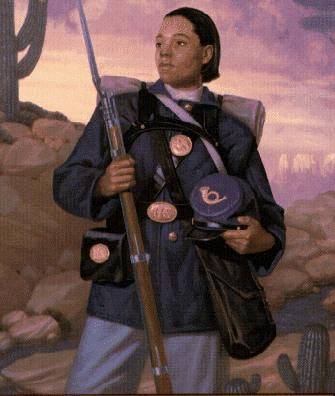
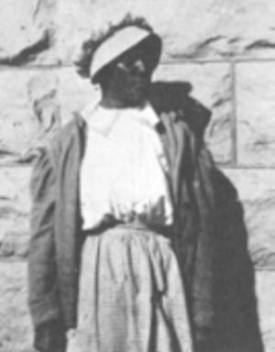
This has to be one of the most intriguing stories I’ve come across.  Cathay Williams was a Black woman born into slavery who served in the U.S. Army immediately after the end of the Civil War.  She disguised herself as a man and used the name William Cathay.  There isn’t a great deal of information about her, but apparently Williams was born in Independence, Missouri in September 1842.  Her father was a “free man of color,” but her mother was a slave; thus, Williams also was considered a slave.  “Free people of color” was a term used to describe individuals who were of African or Negro descent in the Old South, but did not live as slaves.  Many of them were actually mixed Negro and Caucasian, known as “mulattoes.”  “Free people of color” was used primarily in New Orleans and the Louisiana Territory where a number of mulattoes lived.

During the Civil War, the Union military often forced slaves to work as cooks, launderers, or nurses.  But, when Williams was about 17, the 8th Indiana Volunteer Infantry Regiment pressed her into service.  For the next few years, Williams traveled with the infantry, accompanying soldiers on marches.  At one point, she was transferred to Little Rock, Arkansas, where she undoubtedly saw Negro men serving as soldiers; a site that may have inspired her desire for a military career.  When the Civil War finally ended, Williams was working at Jefferson Barracks near St. Louis, Missouri.

Despite the prohibition against women serving in the military, Williams enlisted in the U.S. Regular Army in November of 1866, passing herself off as a man.  Shortly afterwards, she contracted small pox.  Once she recovered, she rejoined her unit and was shipped to the New México Territory.  Whether because of the lingering effects of the small pox, or the heat, Williams frequently fell ill.  Finally, the post surgeon discovered she was a woman and informed the post commander.  Her commander discharged her in October 1868.

Williams remained in New México, however, working as a cook at Fort Union.  She later moved to Colorado where she entered into a short-lived marriage.  Here her life story becomes murky; she may have also worked as a seamstress and even possibly owned a boarding house.  Around this time, her story became public.  A reporter from St. Louis heard unsubstantiated reports about a slave woman who had served in the U.S. Army.  Surely questioning the veracity of such a claim, he inquired further and – certainly to his surprise – found out about Williams.  He traveled to Colorado to interview her at length.  In January 1876, details about her life, including her stint in the Army, appeared in The St. Louis Daily Times.

Williams’ life didn’t get any easier.  Around 1889, she entered a local hospital.  Why is unknown, but she remained there for a long time.  In June of 1891, she applied for a disability pension based on her military service.  There was precedent for it.  Two women, Deborah Sampson and Mary Hayes McCauley, had been granted pensions for disguising themselves as men to serve in the American Revolutionary War.  In September 1891, a doctor examined Williams and determined she didn’t meet the criteria for a pension.  By then, she already suffered from diabetes and had had all her toes amputated.  But, her application was rejected.  What happened to Williams afterwards is another one of the many unknowns that clouds her life, as is the exact date of her death and where she’s buried.  She’s believed to have died around 1892.

Why Williams would want to disguise herself as a man and join the U.S. Army is as perplexing as it is anomalous.  Perhaps, like many women of her day, she saw the degree of independence a man experienced when he was a soldier and the level of respect he incurred.  Outside of marriage and motherhood, women had few choices in 19th century America.  As a non-Caucasian woman, Williams was a double minority – then as now.  Still, this is a fascinating and yet uniquely American tale.  Whatever motivations Cathay Williams may have had, her accomplishments should not go unnoticed.  Women helped build this country, too, and many of them – especially Negro, Hispanic, Native American and Asian women – have had their life’s achievements relegated to the dusty corners of our national history.  It’s way past time for these stories to be brought to light and given the respect they deserve.

Thanks to the Le Artiste Boots blog for bringing this to my attention.


1 Comment

Filed under News

March 9, 2012 – 286 days Until Baktun 12

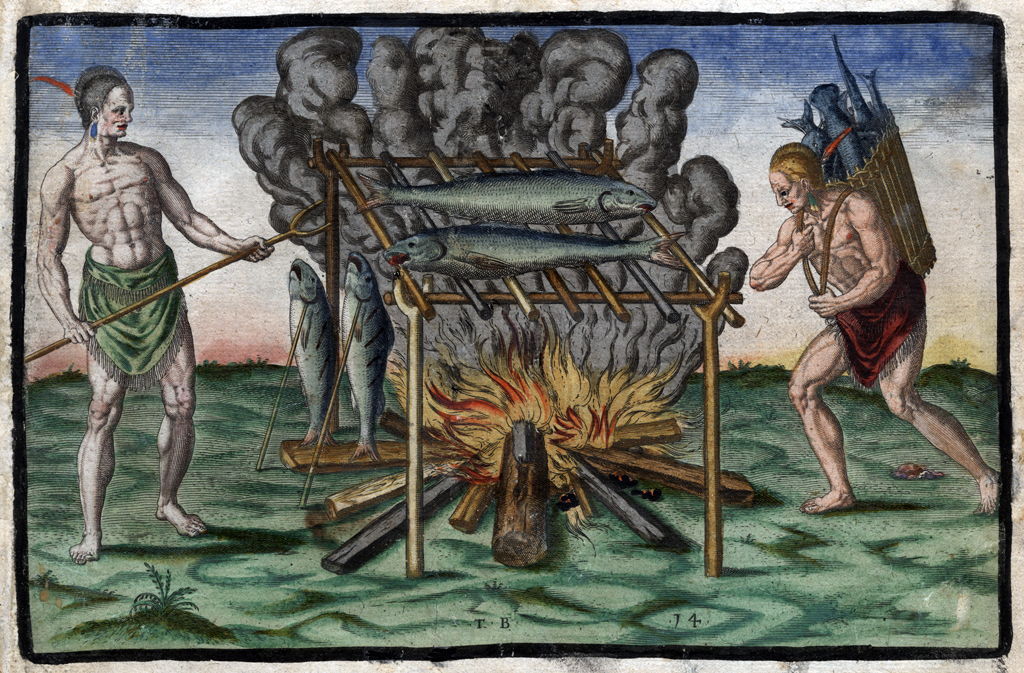
Learn how to fry a fish on a rock.  Don’t roll your eyes!  You’ll not only go blind, you’ll incite the wrath of the Mayan gods.  Fish has been a staple of humanity ever since the first Neanderthal fell into a lake and…well, floundered about.  Fish was an essential part of the diet of all Indigenous Americans.  Most had to live near rivers and / or lakes; they didn’t have horses or mules until the Europeans arrived, so travel via foot traffic was the only means of land transportation.  Many communities staged festivals around a massive fish fry.  The native peoples of the Caribbean even invented the barbecue.  If you plan to hike yourself to safety when the apocalypse hits, you’ll have to find a source of nourishment.  Although squirrel soup and raccoon shish kabobs may seem ideal, they don’t go well with chocolate and Xanax; besides, those critters are more likely to carry rabies than bass or goldfish.  First, find a relatively smooth, flat rock.  Second, start a fire in a pit with some wood, shrubbery branches, grass and / or straw.  Place the rock in the center of the pit, in the midst of the fire and let it get hot – obviously!  Finally, place the fish on the rock and cook for about 5 – 7 minutes.  Don’t worry about not having any seasoning like salt – the dirt and ash will provide enough flavoring.


Leave a comment

Filed under Mayan Calendar Countdown

Dutch Cheese Dethrones Swiss

Bill Schlingsog, left, of Middleton, WI passes off the championship trophy to Peter Piersma, a judge and Dutch representative, at the 2012 World Champion Cheese Contest Wednesday, March 7, 2012, in Madison, WI. The top winning Gouda was made by Freisland Campina Company in Wolvega, Netherlands. AP Photo/Andy Manis.

I wish I would have found out about this sooner.  A cheese festival!  Hundreds of cultured spectators nibbled on cheese and crackers (as if they had anything else) and waited patiently for an hour before dozens of judges named a Dutch Vermeer the world’s best cheese Wednesday night.

Once a nondescript industry affair with only by a handful of spectators and reporters, World Champion Cheese Contest is now a must-have ticket for Gouda connoisseurs.  The event sold out all of the 400 tickets in the first year they were offered.

Held every two years in Madison, the contest typically draws more than 2,000 entries from nearly two-dozen nations.  Usually only the judges taste the cheese, but this year’s ticketholders sampled 15 of the top entries, while mingling with Wisconsin cheesemakers and the international panel of judges.

The spectators witnessed a mild upset in the judging.  Swiss cheesemakers had won the past three contests and comprised two of the top three finalists this year.  But, it was a low-fat Gouda named Vermeer from Friesland Campina, a company based in Wolvega, Netherlands, that took top honors.  Who could have imagined there’d be drama at a cheese contest?  And, between the Dutch and the Swiss at that?

Friesland Campina didn’t have any representatives in Wisconsin, but will receive its formal award at a banquet in Madison next month.  Dutch judge Peter Piersma woke up the cheesemaker’s plant manager, Piet Nederhoed, with a phone call.  It was about 1 a.m. Holland time.  I know I would have been awake all night waiting for that call!  Seriously!  I’m as much a cheese lover as I am a rum and chicken fried steak aficionado!  I guess I’ll have to wait until next year’s festival.

Leave a comment

Filed under News

Today’s Birthdays

Actress Joyce Van Patten (Monkey Shines, The Goodbye Guys) is 78.


Singer Mickey Gilley (Don’t the Girls Get Prettier at Closing Time, Bring It on Home); owner of Mickey Gilley’s Theatre, Branson MO, is 76.


Actor Marty Ingels (If It’s Tuesday This Must be Belgium, A Guide for the Married Man) is 76.


Golfer and ESPN commentator Jim Colbert (eight-time PGA Tour winner) is 71.

Singer – songwriter – saxophonist Mark Lindsay (Paul Revere & The Raiders) is 70.


Former TV news host Charles Gibson is 69.

Actress Trish Van Devere (The Day of the Dolphin, Deadly Currents) is 69.

Guitarist Trevor Burton (The Move) is 68.


Guitarist Robin Trower (Procol Harum) is 67.

Guitarist Jim Cregan (Family) is 66.

Singer – musician Jimmie Fadden (Nitty Gritty Dirt Band) is 64.

Drummer – singer – songwriter Jeffrey Osborne (L.T.D.) is 64.


Singer Martin Fry (ABC) is 54.


Actress Linda Fiorentino (Unforgettable, Bodily Harm) is 52.


Actor Emmanuel Lewis (Webster) is 41.


Leave a comment

Filed under Birthdays

On March 9…

1454 – Amerigo Vespucci – for whom the Americas were named – was born in Florence, Italy.


1799 – Congress contracted with Simeon North of Berlin, CT for 500 horse pistols, large firearms carried by horsemen.  They would cost the government $6.50 each.


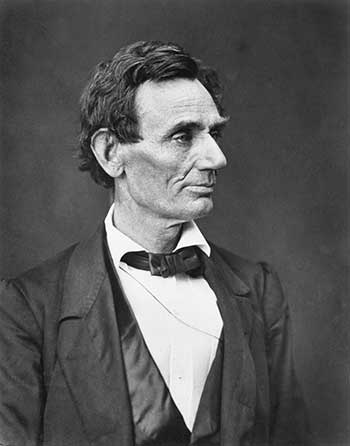
1832 – Abraham Lincoln of New Salem, IL announced that he would run for political office for the first time.  He unsuccessfully sought a seat in the Illinois state legislature.


1841 – The U.S. Supreme Court ruled 8 – 1 that the African slaves who seized control of the Amistad slave ship had been illegally forced into slavery and are thus free under American law.

1858 – Albert Potts of Philadelphia, PA received a patent for the letter box.

1859 – The National Association of Baseball Players adopted a rule that limited the size of bats to no more than 2-1/2 inches in diameter.

1913 – Virginia Woolf delivered the manuscript for her first novel, The Voyage Out, to her publisher.


1916 – Pancho Villa attacked the border town of Columbus, New México, in retaliation to American support of his rivals for control of México.


1916 – Germany declares war on Portugal, which had honored its alliance with Great Britain earlier that year by seizing German ships anchored in Lisbon’s harbor.

1929 – Eric Krenz of Palo Alto, CA became the first athlete to toss the discus over 160 feet.  He bettered the old mark by 8-3/4 inches.

1949 – The first all-electric dining car was placed in service on the Illinois Central Railroad.  Passengers enjoyed all-electric cooking between Chicago and St. Louis.

1954 – Edward R. Murrow presented his report on the controversial Wisconsin Senator, Joseph R. McCarthy.


1954 – WNBT-TV (now WNBC-TV), New York, broadcast the first local color television commercials for Castro Decorators of New York City.

1959 – The first Barbie doll went on display at the American Toy Fair in new York City.


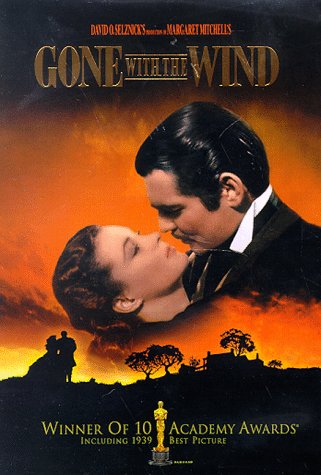
1985 – Gone With The Wind went on sale in video stores across the U.S. for the first time.  The tape cost buyers $89.95.


Leave a comment

Filed under History

Cartoon of the Day


Leave a comment

Filed under News

Picture of the Day

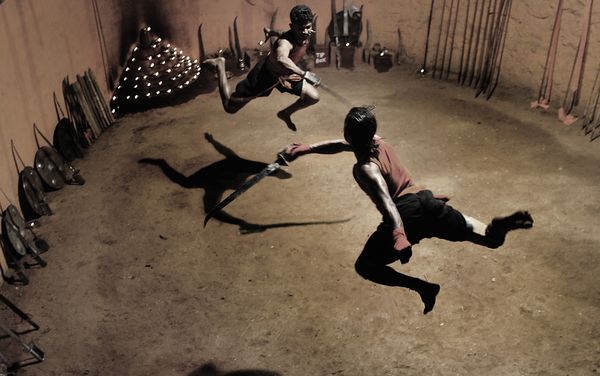
Kalaripayattu fighters become airborne, as they engage in swordplay during a show in Kerala, India.  The South Indian martial art is thought to be among the oldest in the world, tracing its roots back 3,000 years.  Photograph by Armand Poblete for National Geographic.


Leave a comment

Filed under News

Quote of the Day

“I really believe we should treat marijuana the way we treat beverage alcohol.  I’ve never used marijuana and I don’t intend to, but it’s just one of those things that I think: this war on drugs just hasn’t succeeded.” 

– televangelist Pat Robertson, The New York Times, March 7 

There is a God!  And, He / She helped Robertson find something intelligent to say.  Someone catch me!  I’m about to pass out!


Leave a comment

Filed under News

March 8, 2012 – 287 days Until Baktun 12

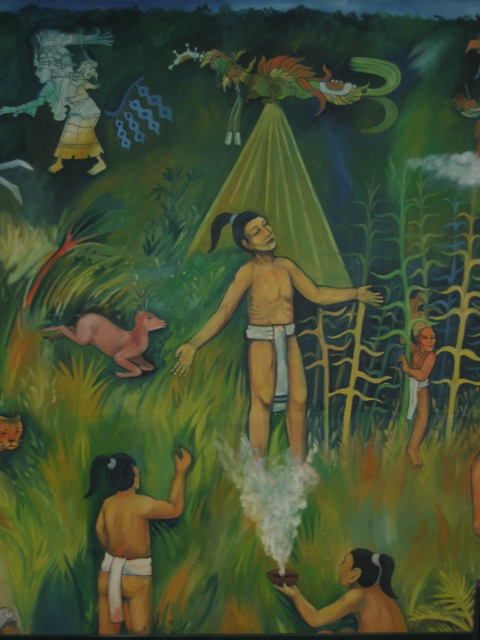
Survivalist Tip:  As I’ve discussed previously, whether you plan to stay at home during the apocalypse, or head out somewhere, you have to stockpile plenty of food stuffs.  Corn is one of those foods you should have.  Corn is indigenous to the Western Hemisphere, and every good Indian – Maya, Navajo, Cherokee, West Dallas – maintains a steady diet filled with corn.  If they don’t, they’ve either been drinking too much malt liquor, or they’ve converted to Roman Catholicism.  People cultivated corn from its wild ancestor, teosinte, thousands of years ago.  But, the Maya held corn in the same regard as chocolate, although there’s no evidence they used it for enemas or epidurals.  The Mayan corn deity, Yum K’aax, was depicted as a young man with long, silky tresses – symbolizing the long filaments or ‘hair’ on the cobs – and a beautiful face with classic Maya profile; he wore a headdress made of a corn stalk surrounded by leaves.  In the Mayan hieroglyphic writings, the head of Yum K’aax was depicted by the number “8.”  The sign which indicates his name, Kan, is also the eighth day, or corn day.  Corn has some protein, but it’s rich in carbohydrates, which is a great source of energy.  This will be important, as you try to survive in the immediate aftermath of the upheaval.  If you are on a carbohydrate-restrictive diet, stop it now, or you will die at the onset of the next Baktun!  The Mayan gods will not look kindly upon someone who disrespects corn by not wanting to eat it.  But, corn is also rich in calcium, which is essential for strong bones and teeth – again, something you’ll need to make it through the chaos.  So, as December 21 approaches, just make certain you have plenty of corn on hand.  Besides, it goes great with chocolate and tequila!


Leave a comment

Filed under Mayan Calendar Countdown