Monthly Archives: April 2012

On April 16…

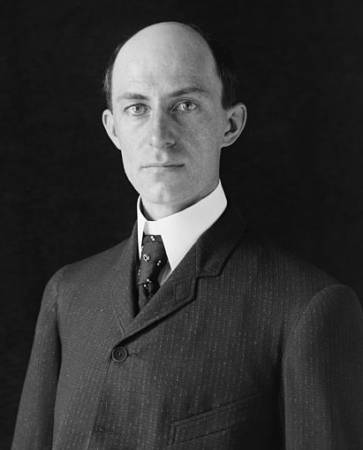
1867 – Aviator Wilbur Wright was born in Millville, IN.


1889 – Charlie Chaplin was born in London.


1900 – The first book of U.S. postage stamps was issued.  The two-cent stamps were available in books of 12, 24 and 48 stamps.

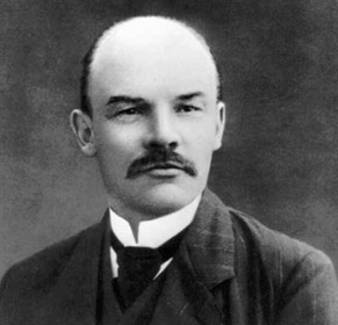
1917 – Vladimir Lenin returned to Petrograd after a decade of exile to lead the Russian Revolution.


1943 – Albert Hoffman, a Swiss chemist, discovered the hallucinogenic effects of lysergic acid diethylamide (LSD) when he accidentally consumed a synthetic version, LSD-25, he’d created in his laboratory.


1947 – In the port of Texas City, TX, a fire aboard the French freighter Grandcamp ignited ammonium nitrate and other explosive materials in the ship’s hold, causing a massive blast that destroyed much of the city, killed nearly 600 people and injured more than 3,000.  It remains the most devastating industrial accident in U.S. history.


1947 – NBC-TV in New York City demonstrated the first optically compensated zoom lens called a Zoomar lens, designed by Frank Back.


2007 – Seung Hui Cho, a student at Virginia Polytechnic Institute, gunned down 32 students and staff in one of the deadliest shooting rampages in U.S. history.


Leave a comment

Filed under History

Indigenous Peoples at Forefront of Climate Change

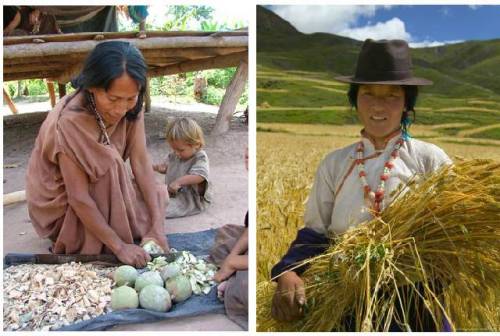
The practices of Yanesha, left, and Tibetan farmers offer new insights into climate change and agricultural diversity.

Humans have always been subject to changes in their environment.  They’ve struggled to adapt to a variety of extremes.  The “Little Ice Age” in the 16th and 17th centuries killed livestock and crops, particularly in Europe.  Prolonged droughts in what is now the Southwestern United States, beginning in the 11th century A.D., forced many of the region’s inhabitants to abandon their city-states.  Only in recent years, however, have scientists begun to realize that humans also can have a negative impact on their environment.  Unsanitary living conditions in medieval Europe allowed the spread of the bubonic plague in the 14th century.  Overpopulation on tiny Easter Island led to almost complete deforestation.

Yet, there are examples of people whose cultural beliefs imbue them with a sense of personal responsibility towards their surroundings.  The Yanesha of the upper Peruvian Amazon and the Tibetans of the Himalayas are among them.  Over the last 40 years, Dr. Jan Salick, senior curator and ethnobotanist with the William L. Brown Center of the Missouri Botanical Garden has worked with both cultures.  She explains how their traditional knowledge and practices hold the key to conserving and managing biodiversity in a paper entitled, “Biodiversity in Agriculture: Domestication, Evolution, and Sustainability,” published by Cambridge University Press.

The Yanesha and Tibetans are two different groups living in radically dissimilar environments, but both cultures utilize and value plant biodiversity for their food, shelters, clothing and medicines.

“Both cultures use traditional knowledge to create, manage and conserve this biodiversity, and both are learning to adapt to and mitigate the effects of climate change,” said Salick.  “They have much to teach and to offer the world if we can successfully learn to integrate science and traditional knowledge.”

The Yanesha live a few hundred meters above sea level at the headwaters of the Amazon basin in central Peru.  They possess traditional knowledge about one of the most diverse tropical rainforests in the world.  Salick studied the cocona, a nutritionally important fruit native to the upper Amazon.  She found the Yanesha have increased the genetic diversity of the species over time through preferential selection of oddly sized and shaped fruits.

The Yanesha also rely on species richness and diversity in indigenous agriculture and forestry management.  They plant more than 75 species of crops in home gardens and more than 125 species in swidden fields (an ecological and sustainable system of traditional agriculture) to protect against potential crop destruction from pests, disease or weather.  This biodiversity includes species rarely grown outside of indigenous agriculture.  Studies have concluded that the species diversity in indigenous agriculture is unparalleled in modern agriculture and forestry, which often reduces natural diversity rather than enhancing it.

In contrast, the Tibetans dwell on the slopes of sacred Mt. Khawa Karpo and the upper Mekong River.  Tibetan traditional knowledge, like that of the Yanesha of the Amazon, has long emphasized adaptation and biodiversity, and is now challenged by climate change.

Tibetans depend on biodiversity and entire landscapes for their livelihoods.  Salick’s team measured the biodiversity on Mt. Khawa Karpo by sampling vegetation along vertical transects up the mountain.  They found tremendously high variation of plant species at different elevations.  These diverse alpine mountain ranges are also among those most likely to suffer critical species losses as the result of global climate change.  Contemporary photos of the Himalayas show exceptional glacial retreat and tree line and shrub advance, more so than other alpine areas around the globe.  Some of the most threatened, slow-growing plants such as the endemic snow lotus, used to treat blood pressure and hemorrhaging, could become extinct while more common “weedy” species take over and lessen the region’s biodiversity.  But, Tibetans are adapting.  They now grow grapes, which previously could never survive the severity of Himalayan winters, to make wine – ice wine is their specialty.  They are mitigating climate change by incorporating large quantities of organic matter into soil, conserving forests that are expanding (afforestation) and preserving sacred areas with high biodiversity and old-growth forests.

As the U.S. and other developed nations debate the merits of climate change and other controversial subjects, I feel it’s important we pay attention to so-called primitive culture like the Yanesha and the Tibetans.  They’ve apparently been doing something right.  Otherwise, they wouldn’t have been able to survive all these centuries.

Leave a comment

Filed under News

“We have to do something to stop this train…”

In this speech, Ben Nuvasma, former Tribal Chairman of the Hopi Nation, discusses the repercussions of Senate Bill 2109, proposed in February by Sens. John McCain and Jon Kyl, both Republicans representing Arizona.  It’s amazing that, in the 21st century, the native peoples of the Americas are still dealing with this kind of blatant bigotry under the guise of state’s rights.  Thanks to fellow blogger Matthew Sakiestewa Gilbert for this.


Leave a comment

Filed under News

Cartoon of the Day

Leave a comment

Filed under News

Picture of the Day

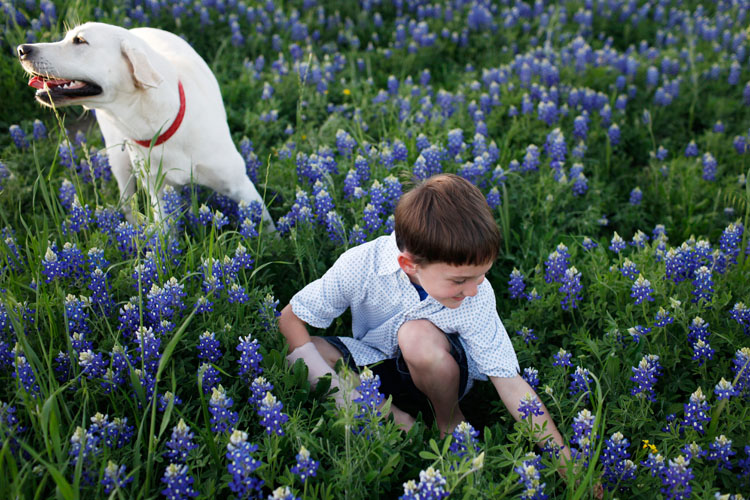
Ryder Okon of Dallas plays with his dog Trigger among bluebonnets beside a highway in the Mountain Creek area, southwest of Dallas.  Photo courtesy Eve Edelheit.

Leave a comment

Filed under News

Quote of the Day

“They ask me if I’m going to quit.  I thought we were just getting started.  We have a revolution to fight, a country to change.” 

– GOP presidential candidate Ron Paul to supporters in Fort Worth, TX.


Leave a comment

Filed under News

Writing Grammar

In grade school, I had an English teacher who said that poet E.E. Cummings understood the basic rules of grammar, but chose to break them later in his own writings.  In college, I had a film instructor who emphasized that students need to understand the essential elements of photography before they venture into cinematography, which is far more complex.  In other words, you need to learn to walk before you can run. 

But, Loretta Gray, co-author of Hodges Harbrace Handbook, asks how rigid grammar standards must be.  Are they like beauty – merely subjective?  Or, are they like the laws of physics – unbreakable and unyielding?  Literary scribes often take liberty with the written language.  Even Hodges Harbrace Handbook “takes a nuanced view of proper grammar.”  This probably will bother some writers who consider grammar a proverbial blind faith: it’s to be followed exactly and not questioned.  But, Hodges essentially asks, what is appropriate in a given situation? 

The issue can be tricky.  Some writers, for example, insist 2 spaces after a sentence is necessary before beginning the next sentence in the same paragraph.  Others say only 1 space is needed.  Is a semi-colon a period in disguise, or just a break between clauses?  Do you say ‘fewer books’ or ‘less books’? 

If grammar is like math, then the rules truly are inflexible.  But, languages evolve, both in written and spoken form.  A decade ago “Google” was strictly the name of a web site.  Now, it’s also a verb.  Perhaps, notes Gray, people eventually will realize they actually have a choice when they think of grammar.


Leave a comment

Filed under News

April 15, 2012 – 249 days Until Baktun 12


Survivalist Tip:  Since today is the 100th anniversary of the sinking of the Titanic, I need to emphasize that you should know how to swim.  I know that seems macabre, but we’re talking survival techniques here.  There’s a good chance, however, that you learned how to swim as a child.  If you didn’t, I don’t feel it’s too late.  Otherwise, you could pretty much resign yourself to a watery fate.  When the apocalypse hits, the Earth’s axes might shift, which could cause massive tsunamis to sweep far inland.  It also could cause dams to rupture.  Either way, you need to be prepared should you suddenly find yourself inundated by water. 

First, don’t try to outrun a tsunamic wave.  Anyone who hasn’t gotten out of its way by the time it hits the coastline, is either drunk or an idiot.  In both cases, the “New Universe” is better off without them.  Regardless, just wait until second before the wave reaches you and jump into the air.  When you come down, the water will catch you. 

Second, don’t panic.  More people drown because they panic than because they can’t swim.  One key to surviving in a post-apocalyptic world is to keep your senses about you.  This is how the ancient Mayans and their contemporaries around the globe survived in a hostile world without rescue swimmers, 911, or the Internet to tell them how to do basic stuff. 

Third, learn how to tread water and float on your back in water.  This is essential should you be adrift for a while. 

Finally, swimming can be great exercise as it’s good for your cardiovascular system.  Lounging in a hot tub with a beer doesn’t count as swimming.  Neither does water volleyball with a piña colada in one hand. 

Knowing how to swim is a basic, essential skill every survivalist must have.  The ancient Mayans often plunged into sacred freshwater cenotes and swam underwater for hours.  This is one way they connected with the deities.  Remember, water is the most critical element for all life on Earth.  You should learn how to respect and appreciate it.  If you haven’t by now, just have a piña colada and say to hell with it.  You won’t make it anyway.


Leave a comment

Filed under Mayan Calendar Countdown

Today’s Notable Birthdays

If your birthday is today, “Happy Birthday!”


Guitarist – banjo player Roy Clark (Tips of My Fingers, Through the Eyes of a Fool, Somewhere Between Love and Tomorrow) is 79.


Actress Claudia Cardinale (The Pink Panther, Once Upon a Time in the West, Jesus of Nazareth) is 74.


Actress Amy Wright (The Deer Hunter, Final Verdict, Crossing Delancey, The Accidental Tourist) is 62.

Track and field athlete Evelyn Ashford, 4-time Olympic gold medalist, is 55.

Actress – screenwriter Emma Thompson (Howard’s End, Sense and Sensibility, The Remains of the Day, In the Name of the Father) is 53.


Singer Samantha Fox (Naughty Girls [Need Love Too], Touch Me) is 46.

Leave a comment

Filed under Birthdays

On April 15…

1452 – Leonardo da Vinci was born in Vinci, Italy.


1794 – Courrier Francais became the first French daily newspaper to be published in the U.S. 

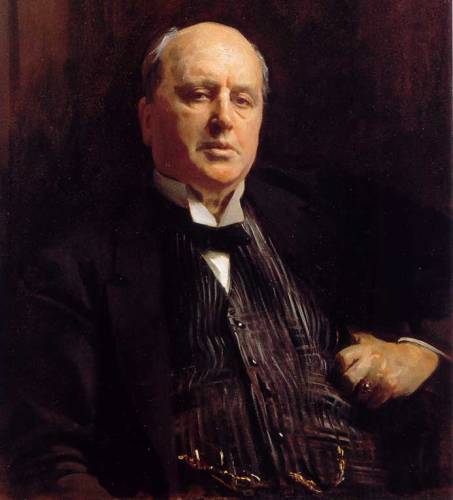
1843 – Author Henry James (The Turn of the Screw, The Wings of the Dove, The Portrait of a Lady) was born in New York City.


1865 – Abraham Lincoln, 16th President of the United States of America, died at 7:22 A.M.  He’d been shot in the back of the head the previous evening at Ford’s Theatre in Washington, D.C. by John Wilkes Booth.


1894 – Singer Bessie Smith (St. Louis Blues, My Man’s Blues, Dixie Flyer Blues, I Ain’t Got Nobody, A Good Man is Hard to Find) was born in Chattanooga, TN.


1912 – At 2:20 A.M., the R.M.S. Titanic sank in the North Atlantic, about 400 miles south of Newfoundland, killing 1,517 people.

1923 – Insulin, first discovered in 1922, became available for general use.

1955 – Ray Kroc opened the first McDonald’s in Des Plaines, IL.


1956 – The worlds’ first all-color TV station, WNBQ-TV, was dedicated in Chicago, IL.  It’s now WMAQ-TV.

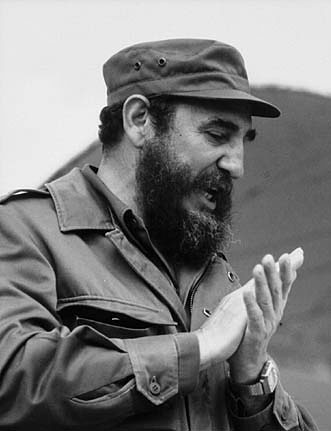
1959 – Four months after leading a successful rebellion in Cuba, Fidel Castro visited the U.S.


1971 – George C. Scott refused the Best Actor Oscar for Patton at the 43rd Annual Academy Awards ceremony.


1973 – Mickey Wright won the $25,000 first prize in the Colgate-Dinah Shore Golf Classic in Palm Springs, CA, then the richest women’s golf tournament.


Leave a comment

Filed under History