Monthly Archives: May 2012

May 11 Notable Birthdays

If today is your birthday, “Happy Birthday!”


Comedian – actor Mort Sahl is 85.


Guitarist Dick Garcia (A Message from Garcia, Four Most Guitars) is 81.


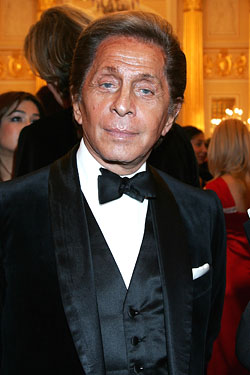
Fashion designer Valentino Garavani is 80.


Physician Robert Jarvik, inventor of the Jarvik 7 artificial heart implanted into Barney Clark in 1982, which kept Clark alive 112 days, is 66.

Leave a comment

Filed under Birthdays

On May 11…

1858 – Minnesota entered the United States as the 32nd state.


1888 – Composer Irving Berlin was born in Mogilyov, Russia.


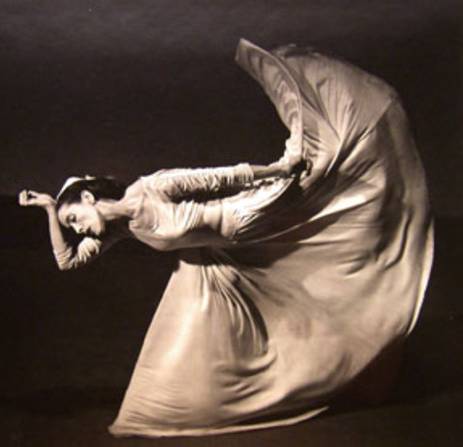
1894 – Choreographer Martha Graham was born in Allegheny County, PA.


1896 – Writer Mari Sandoz was born in Sheridan County, NE.


1904 – Surreal artist Salvador Dalí was born in Figueras, Spain.


1910 – Glacier National Park in Montana was created by an act of Congress.


1927 – The Academy of Motion Picture Arts and Sciences was founded in Los Angeles.

1928 – WGY-TV in Schenectady, NY, began the first schedule of regular TV programs, offering programming to its upstate New York audience three times a week using the mechanical scanning method.

1947 – B.F. Goodrich announced the development of the tubeless tire.

1997 – IBM’s super computer Deep Blue made history by defeating Gary Kasparov at chess.

Leave a comment

Filed under History

Quote of the Day

“Confederate apologists have spent almost 150 years trying to change the Civil War into something that it was not.  Here’s what it was: an insurrection against the United States government with the main goal of maintaining the institution of African slavery.”

– A group of 12 Texas lawmakers, in a letter opposing a proposed marker on the Texas Capitol campus recognizing the Confederacy.

Leave a comment

Filed under News

HMH Restructuring Debt

Houghton Mifflin Harcourt, one of the oldest and largest book publishers in the U.S., is once again looking to rework its debt.  HMH is still struggling with heavy debt despite an earlier restructuring.  In an announcement May 11, the company said it had reached an agreement with the majority of its lenders that will eliminate $3.1 billion of debt and reduce its annual interest payments by about $250 million.  As part of the restructuring, HMH will file for prepackaged Chapter 11 bankruptcy in the United States Bankruptcy Court, Southern District of New York within 10 days.  It hopes to be out of bankruptcy by the end of June.

In a letter to employees, CEO Linda Zecher said there are no plans for layoffs and that vendors and suppliers will be paid in full.  “This process will have no impact on our day-to-day operations.  We will continue normal business operations, now and throughout the process.  We expect there will be no disruption to our relationships with our employees, customers, business partners, suppliers or vendors,” Zecher wrote.

Although more detailed financial information isn’t available, Zecher said HMH has sufficient cash and liquidity to continue normal operations with more than $135 million of cash on hand and a commitment for $500 million in financing from Citigroup Global Markets Inc. to be used during the bankruptcy process.  The company had total sales in 2011 of $1.3 billion.

Under terms of the restructuring plan, HMH will convert its existing bank and bond debt into 100% of the equity in the reorganized company.  The restructuring plan is subject to court approval.

Zecher tried to remain upbeat about HMH’s future.  “I am excited about our future and my goal is to transform HMH into a company dedicated to fostering passionate, curious learners by combining the best media and technology with HMH’s publishing heritage.  We have made good progress in realigning our business and operations around this goal and many of you have been – and continue to be – terrific contributors in this effort.  We have outstanding people and products, and a bright future ahead of us.  I look forward to reporting to you on our progress in the coming weeks.”

Leave a comment

Filed under News

Mayan Mural Reflects Calendar Beyond 2012


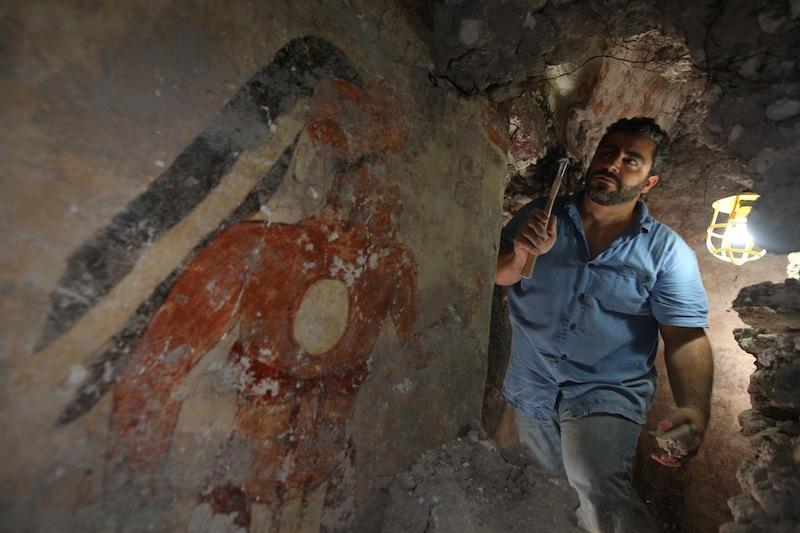
“Younger Brother Obsidian,” as labeled on the north wall of the Maya city’s house by an unknown hand, was painted in the 9th century A.D. Archaeologist William Saturno of Boston University excavates the house in the ruins of the Maya city of Xultún.

Just when we thought the ancient Mayans had everything written (or drawn) down for us lowly mortals to follow, here comes this revelation.  A vast Mayan city discovered nearly a century ago in Guatemala’s Petén region is beginning to yield its secrets and in the process, expanding our comprehension of ancient Mayan society.

Excavating for the first time in the sprawling complex of Xultún in Guatemala’s Petén region, archaeologists have uncovered a structure that contains what appears to be a work space for the town’s record keeper; its walls adorned with unique paintings – one depicting a lineup of men in black uniforms – and hundreds of scrawled numbers.  Many are calculations relating to the Maya calendar.

One wall of the structure, thought to be a house, is covered with tiny, millimeter-thick, red and black glyphs unlike any seen before at other Maya sites.  Some appear to represent the various calendrical cycles charted by the Maya – the 260-day ceremonial calendar, the 365-day solar calendar, the 584-day cycle of the planet Venus and the 780-day cycle of Mars, reports archaeologist William Saturno of Boston University, who led the exploration and excavation.

“For the first time we get to see what may be actual records kept by a scribe, whose job was to be official record keeper of a Maya community,” Saturno said.

Xultún, a 12-square-mile site where tens of thousands once lived, was first discovered about 100 years ago by a Guatemalan worker and roughly mapped in the 1920’s by Sylvanus Morley, who named the site “Xultún” – “end stone.”  Scientists from Harvard University mapped more of the site in the 1970’s.  The house discovered by Saturno’s team was numbered 54 of 56 structures counted and mapped at that time.  Thousands at Xultún remain uncounted.

The team’s excavations reveal that monumental construction at Xultún began in the first centuries B.C.  The site thrived until the end of the Classic Maya period; the site’s last carved monument dates to around 890 A.D.  Xultún stood only about five miles from San Bartolo, where in 2001 Saturno found rare, extensive murals painted on the walls of a ritual structure by the ancient Maya.

The house contains 3 intact walls, each telling its own story and each posing its own mysteries.

The north wall lies straight ahead as one enters the room.  An off-center niche in the wall features a painting of a seated king, wearing blue feathers.  A long rod made of bone mounted on the wall allowed a curtain to be pulled across the king’s portrait, hiding it and revealing a well-preserved painting of a man whose image is wrapped around the wall; he is depicted in vibrant orange and holds a pen.  Maya glyphs near his face call him “Younger Brother Obsidian,” a curious title seldom seen in Maya text.  Based on other Maya sites, Saturno theorizes he could be the son or younger brother of the king and possibly the artist-scribe who lived in the house.  “The portrait of the king implies a relationship between whoever lived in this space and the royal family,” Saturno said.

Four long numbers on the wall representing one-third of a million to 2.5 million days likely bring together all of the astronomical cycles – such as those of Mars, Venus and the lunar eclipses – the Maya thought important, dates that stretch some 7,000 years into the future.  This is the first place Maya archaeologists have found that seems to tabulate all of these cycles in this way.  Another number scratched into the plaster surface likely records the date – 813 A.D., a time when Mayan society began to collapse.

Three male figures loom on west wall, all of them seated and painted in black, wearing only white loincloths, medallions around their necks and identical single-feathered, miter-style head dresses.  One of the figures is particularly burly and is labeled “Older Brother Obsidian.”  Another figure is labeled as a youth.

The east wall is badly eroded, but another black-painted human figure and remnants of others are still discernible.  This wall is dominated by numerical figures, including columns of numbers representing counting and calendrical calculations.  Some of the numbers track the phases of the moon; others try to reconcile lunar periods with the solar calendar.  One well-preserved section contains numerical notes painted in red that appear to be corrections to more formal calculations appearing alongside them.

“The most exciting point is that we now see that the Maya were making such computations hundreds of years – and in places other than books – before they recorded them in the Codices,” said Anthony Aveni, professor of astronomy and anthropology at Colgate University, a coauthor of the Science paper.

The scientists say all of these symbols reflect a certain world view the ancient Mayans possessed.  They “predicted the world would continue, that 7,000 years from now, things would be exactly like this,” Saturno noted.  “We keep looking for endings.  The Maya were looking for a guarantee that nothing would change.  It’s an entirely different mindset.”

The discovery is reported in the June issue of National Geographic magazine and in the May 11 issue of the journal Science.


Leave a comment

Filed under News

May 10, 2012 – 224 Days Until Baktun 12

Survivalist Tip: I want to get back to relatively normal foods now by mentioning potatoes and suggest you should include them in your cache of culinary supplies.  Potatoes are indigenous to the Americas.  There are about 5,000 varieties of potato worldwide; some 3,000 found in the Andes region alone.  Europeans didn’t know what to think when they first saw them; considering the edible portion is what grows underground.  But, they found them especially attractive when they began starving.  Potatoes are the number one food crop in the world and are one of the most versatile, as they can be cooked almost any way.

They are also among the most nutritious.  One potato has about 173 grams of nutrients, such as Vitamin B6, Vitamin C and potassium.  They are high in fiber and low in calories.  Unfortunately, most people in the U.S. consume potatoes in the form of greasy fries or potato chips; even baked potatoes are usually loaded down with a variety of dairy products.  Because of their high-carbohydrate and white starch content, potatoes often are removed from the diets of weight-conscious people.  But, as you struggle to survive at the onset of the apocalypse, you’ll find more important things to think about than your weight.  Potatoes also keep for a long time, so you won’t have to worry about spoilage.  And, since they come from the dirt of Mother Earth, consuming them without many additives will show the Mayan deities you’re worth saving.

Leave a comment

Filed under Mayan Calendar Countdown

May 10 Notable Birthdays

If today is your birthday, “Happy Birthday!”


Pat Summerall, TV sportscaster and former football player (New York Giants kicker), is 82.


Playwright Arthur L. Kopit (Hands of a Stranger, The Phantom of the Opera, Roswell: The U.F.O. Cover-up) is 75.

Writer – director Jim Abrahams (Hot Shots! series, Big Business, Top Secret!, Police Squad) is 68.

Singer – songwriter – guitarist Dave Mason (Traffic, Jimi Hendrix) is 66.

Jazz guitarist Jimmy Ponder (Smokin’, Mama Roots, Infant Eyes) is 66.

Actress Meg Foster (Undercover, Lady in Waiting, To Catch a Killer, They Live, The Emerald Forest, Carny) is 64.


Singer Bono (U2; real name: Paul Hewson) is 52.


Actor Jason Brooks (Days of Our Lives, Baywatch) is 46.

Leave a comment

Filed under Birthdays

On May 10…

1869 – The Union Pacific and Central Pacific railroads joined in Promontory, UT, making transcontinental railroad travel possible in the United States for the first time.


1872 – Victoria Claflin Woodhull became the first woman nominated to be President of the United States, when she was chosen for the ballot by the National Woman Suffrage Association in New York City.


1877 – President Rutherford B. Hayes had the White House’s first telephone installed in the mansion’s telegraph room.

1924 – J. Edgar Hoover began his 48-year career with the FBI.


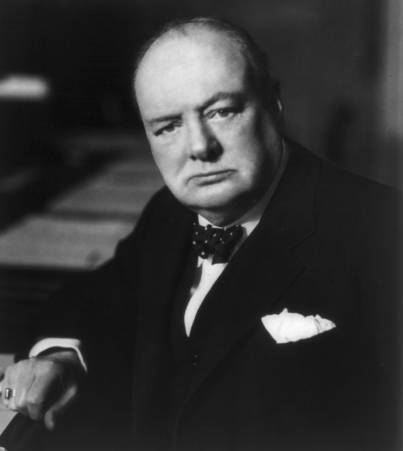
1940 – Winston Churchill became Prime Minister of Great Britain.


1960 – The U.S.S. Triton submarine became the first submerged vessel to circumnavigate the globe, as it arrived in Groton, CT.


1969 – The National and American Football Leagues announced plans to merge for the 1970 – 71 season.  Two conferences of 13 teams each were formed.

1986 – Navy Lt. Commander Donnie Cochran became the first Black pilot to fly with the celebrated Blue Angels precision aerial demonstration team.


1994 – Nelson Mandela was sworn in as the first Black president of South Africa.

Leave a comment

Filed under History

Million Dollar Scream

If Edvard Munch’s “The Scream” isn’t enough to create the anxiety within you that it was intended to invoke, then its $119,922,500 price tag should do it.  The iconic work Munch produced in 1895 is supposed to be a reflection of an anxious society on the verge of a new century.  I guess that’s why it continues to entrance people.  Last week “The Scream” broke a world record, becoming the most expensive artwork sold at an auction conducted by Sotheby’s.  The figure in the drawing – which is actually a pastel on board and not classified as a painting – is said to be man holding his head and hollering beneath a blood-red sky.  I’ve always thought it looks like an androgynous cretin drawn by an angry kindergartener.  But, if people in 1890’s Europe were angst-ridden, then I’d hate to see their reaction in early 21st century America.

Munch described his inspiration for the drawing:

“I was walking along a path with two friends – the sun was setting – suddenly the sky turned blood red – I paused, feeling exhausted, and leaned on the fence – there was blood and tongues of fire above the blue-black fjord and the city.  My friends walked on, and I stood there trembling with anxiety – and I sensed an infinite scream passing through nature.”

And, of course, being the good artist he was, Munch let his dreams move his hand.  Who says artists aren’t human?

Leave a comment

Filed under Art Working

SURVEY: Top Reason Authors Should Go with Traditional Publishers?

Last week Lisa Buchan of Sparkabook offered a writers’ survey through the Publishing Perspectives site asking this question: What is the most important service publishers provide for authors?  Click here for the original survey and results.  I find it interesting that some authors still want to hold onto the traditional publishing methods, as digital and self-publishing gain greater acceptance in the literary world.

Leave a comment

Filed under News