Category Archives: Classics

Skull Rosary

hb_17_190_306

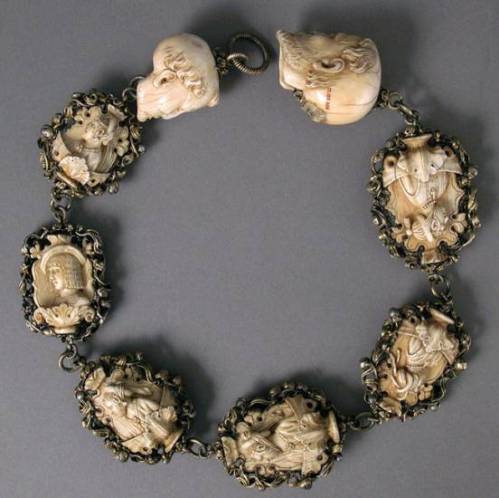
Well, it’s not really made of skulls, but this German rosary from the early 16th century certainly has a macabre air about it.  Made of ivory and set into silver, each of the eight beads represents the bust of a burgher or maiden on one side and a skeleton on the other.  Albeit lurid, the beads may hint that life is fleeting and virtuousness in the Christian faith is the only true path to salvation.  Raised Roman Catholic, I’ve seen plenty of rosaries, but none quite as compelling as this.  Leave it to my Teutonic ancestors to create shock value, even in modern times!

Courtesy of Metropolitan Museum of Art.

1 Comment

Filed under Classics

Hoover This!

What a great way for a man to tell the woman of his dreams he loved her, c. 1963!  Give her an appliance!

Give-her-a-hoover-2-598x810

2 Comments

Filed under Classics

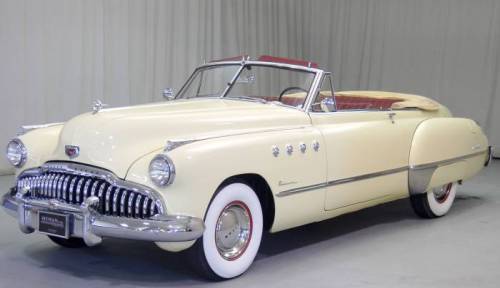
1949 Buick Roadmaster

1949_buick_roadmaster

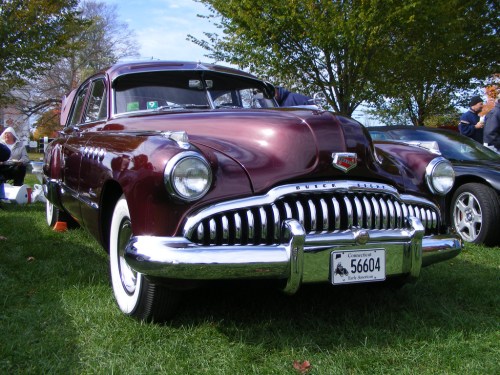
The 1949 Buick Roadmaster was the fifth generation in the Roadmaster group.  The car was the first of the “four-hole” Buicks of its era, with the brand’s trademark “ventiports” placed prominently on the front fenders.  Initially, they actually provided some ventilation for the engine compartment, but in later models, the ports were purely emblematic.

The Roadmaster carried Buick’s legendary smooth-running, V8, overhead-valve engine, with 152 hp.  Roadmasters came with a 2-speed Dynaflow automatic transmission as standard equipment, compared to the 3-speed manual transmission offered on lesser models.  The Roadmaster also offered an upgraded interior as part of the “Deluxe” option.  Among the features of a Deluxe Roadmaster were hydraulic power windows and seats – true novelties at the time.  Available Buick Roadmaster body styles included a four-door sedan and two-door sedanette, a two-door hardtop coupe, a four-door station wagon and a convertible.  Options included a toolkit, outside mirrors, hubcaps, a spotlight, a tissue dispenser, upholstery cushion toppers, a parking brake warning light, a sun visor vanity mirror and a polishing kit.

2595_3643

Leave a comment

Filed under Classics

Jeepers!

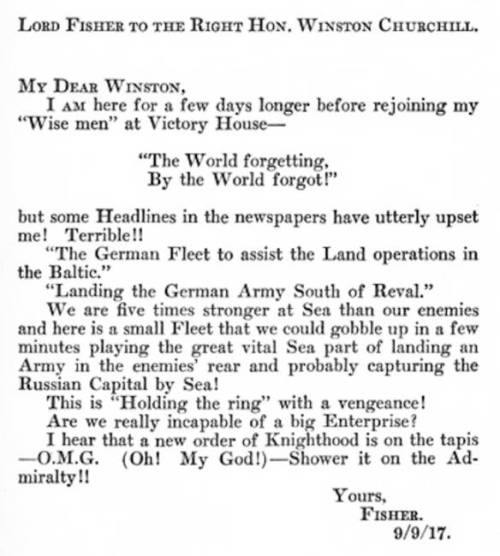
Just when you thought we twenty-first century types had invented everything, comes an announcement that one particular item is not so new.  In 1917, British Admiral Lord John “Jackie” Fisher sent a letter to Minister of Munitions Winston Churchill describing the German navy and ending it with the term “OMG.”  Yes!  That ubiquitous little trifecta of letters – which makes its rounds across emails, text messages, instant message and occasionally into verbal speech because some people are too damn lazy to talk right – is not as fresh off the keyboard as we’ve led ourselves to believe.  Damn!  Next thing we know we’ll find out someone had the idea for flying before the Wright Brothers!

Leave a comment

Filed under Classics

La Jamais Contente – the First Hot Rod


Introduced in 1899, La Jamais Contente (“The Never Satisfied”) was the first vehicle to exceed 100 kilometers per hour, or 62 mph.  Designed by Camille Jenatzy and manufactured by Compagnie Internationale des transports automobiles électriques, it was an electric vehicle with a light alloy body.  The aerodynamics of its unique torpedo shape was compromised by the positioning of the driver and the vehicle’s chassis.  When you consider that electric vehicle are just now making a comeback and the speed limit in most parts of the U.S. is 55 mph, La Jamais Contente was essentially a space vehicle, far ahead of its time.

Leave a comment

Filed under Classics

Lincoln X-100 – The Kennedy Presidential Limousine

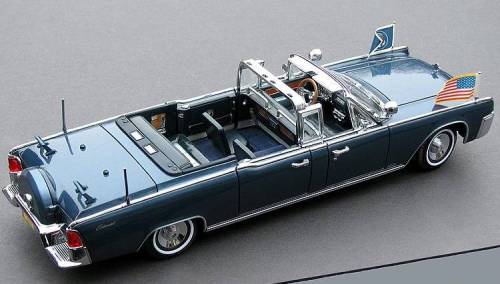
On the day he died, President John F. Kennedy was riding in a 1961 Lincoln Continental X-100.  It was actually a 4-door convertible, and X-100 was its Secret Service code name.  Ford Motor Company assembled the car at its Lincoln plant in Wixom, Michigan in January 1961.  Hess & Eisenhardt of Cincinnati, Ohio customized the vehicle to function as a presidential parade limousine; literally cutting it in half, reinforcing it, extending it 3½ feet in length and making numerous other modifications.  Ford Motor Company and Hess & Eisenhardt collaborated on engineering and styling.  It debuted at the White House in June 1961.  The car remained the property of the Ford Motor Company, which leased it to the Secret Service for $500 per year.

The car, as equipped at the Lincoln plant, would have retailed for $7,347.  Custom built, it cost nearly $200,000, according to Randy Mason in The Saga of the ‘X-100’.

Special features on the limousine included:

  • Removable steel and transparent plastic roof panels
  • Hydraulic rear seat that could be raised 10½ ” to elevate the president
  • Massive heating and air conditioning system with auxiliary blowers and 2 control panels
  • Dark blue broadcloth lap robes with gray plush lining and hand-embroidered presidential seals in special door pockets
  • Four retractable steps for Secret Service agents
  • Two steps on rear bumper for additional agents
  • Flashing red lights, siren
  • Blue Mouton rug in rear
  • Indicator lights when door was ajar or steps out
  • Two flagstaffs, two spotlights
  • Auxiliary jump seats for extra passengers
  • Two radio telephones
  • Interior floodlights

I have a replica of this car by Yat Ming, which is part of its “Presidential Limousines” collection.  I know that may sound macabre, but the vehicle is an indelible, albeit tragic, part of our nation’s history.

Leave a comment

Filed under Classics

The “Long Island Express” of 1938

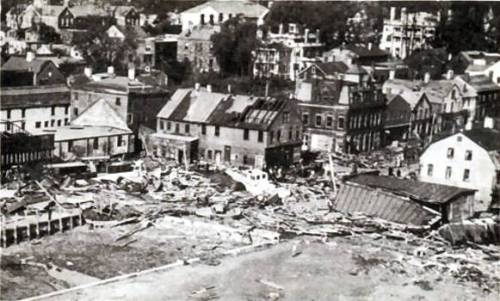
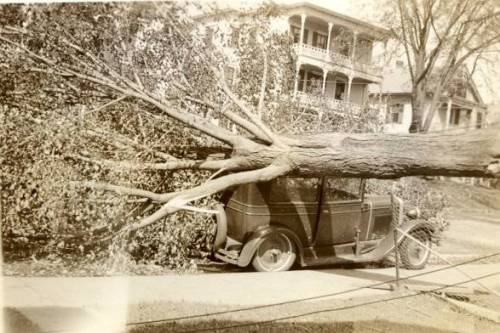
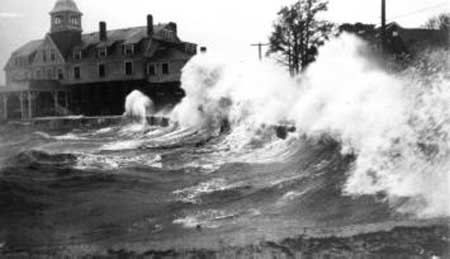
Hurricane Sandy’s assault upon New England has drawn comparisons to an infamous hurricane that took pretty much the same course 74 years ago.  Known colloquially as the “Long Island Express,” the Category 4 tempest struck on September 21, 1938, killing nearly 700 people and leaving more than 63,000 others homeless.

More than two weeks earlier, a French meteorologist took note of a powerful dust storm that swept westward across the Sahara desert.  Initially, the hurricane took aim for Puerto Rico, before turning abruptly northward and setting its sights on Florida.  South Florida residents were already leery of such storms; it had been just three years since the notorious “Labor Day Hurricane,” a Category 5 behemoth that killed more than 400 people.  But, the September 1938 hurricane veered eastward at the last minute and spared the Floridian peninsula.  It then crept up the east coast and at first appeared to head out into the Atlantic, before suddenly shifting back westward and slamming first into the tiny fishing village of Montauk, Long Island.  It literally caught New England residents off guard.  The U.S. Weather Bureau (now the National Hurricane Center) ultimately denied any responsibility.  The Jacksonville, Florida office would track storms as far north as the Carolinas’ Outer Banks; when they reached Cape Hatteras, the Washington, D.C., office would take over.  However, a junior weatherman, Charles Pierce, in Washington predicted the hurricane’s path with astonishing accuracy.  But, the Bureau reaffirmed their initial belief that the storm looked like it would head out into the North Atlantic and then claimed residents of the northeast were not “hurricane-minded.”  Alas, the storm and its devastation didn’t receive the national attention it would today.  Back then the country’s focus was on the lingering Great Depression and the Nazis’ growing power in Europe.

PBS’ American Experience series features an excellent documentary, “The Hurricane of ’38,” that provides firsthand accounts of the storm from survivors.  R.A. Scotti’s book, “Sudden Sea: The Great Hurricane of 1938,” also provides detailed insights into the catastrophe.

Here are some of the many pictures of that storm’s aftermath.
Atwood Machine Company – Willimantic, Connecticut
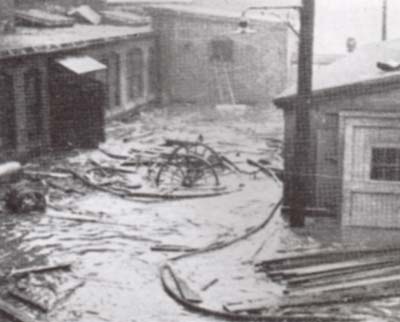
East Hartford, Connecticut
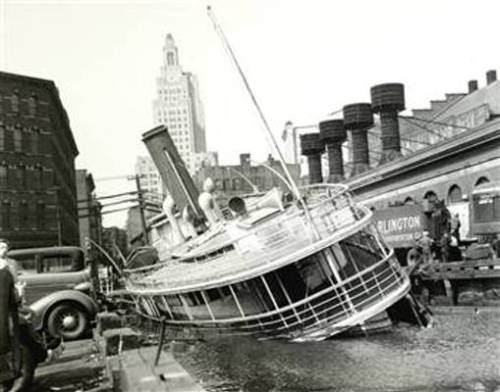
Providence, Rhode Island
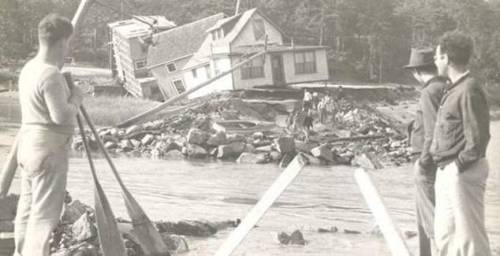
Napatree Point, Rhode Island

Actress Katharine Hepburn beside the remains of her family’s Connecticut home
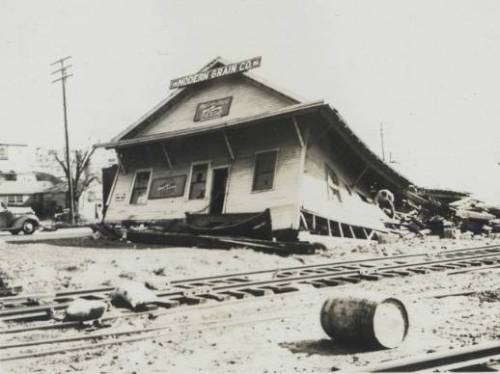
Rhode Island

New York City

Providence, Rhode Island
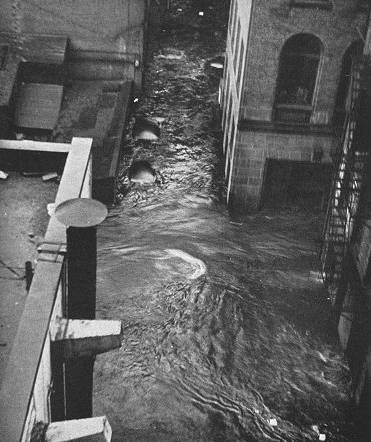
Providence, Rhode Island

Long Island
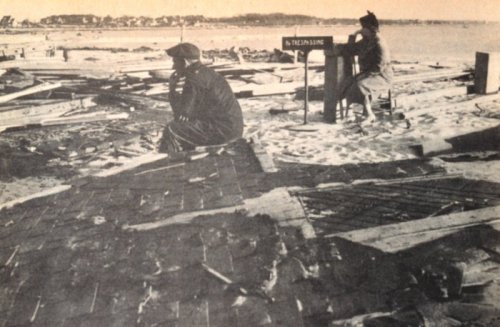
Long Island
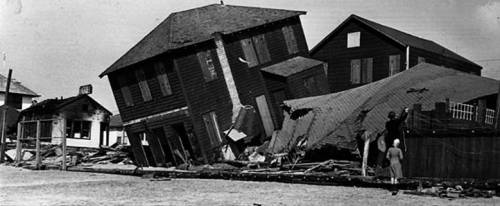
Long Beach, Long Island

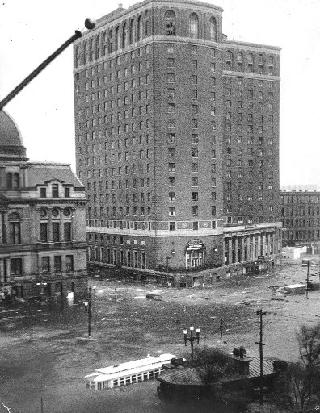
Worcester, Massachusetts
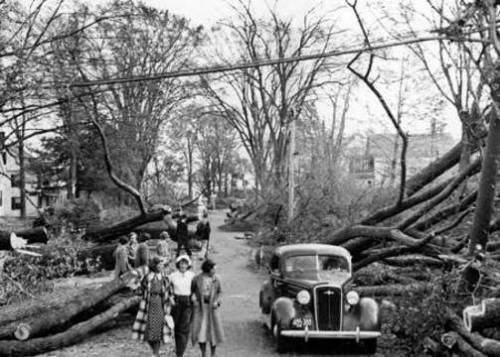
Belchertown, Massachusetts
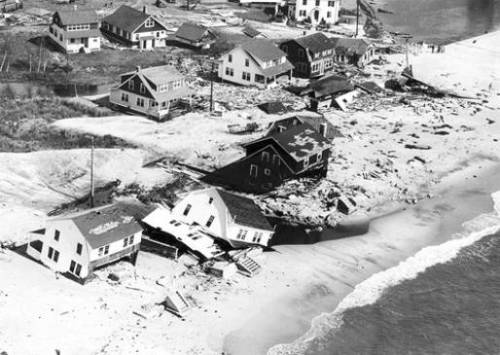
Cranston, Rhode Island
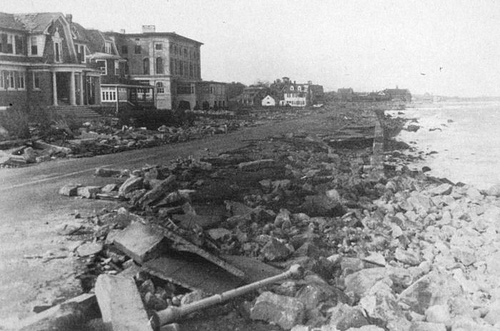
Narragansett, Rhode Island
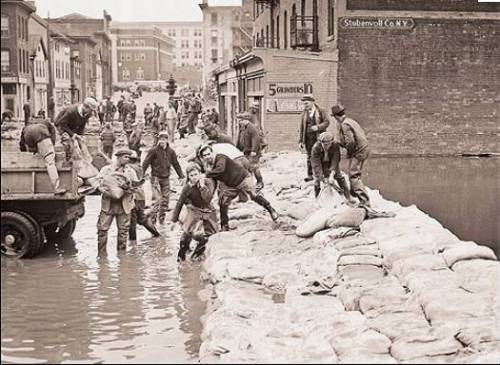
Boston, Massachusetts

Long Island
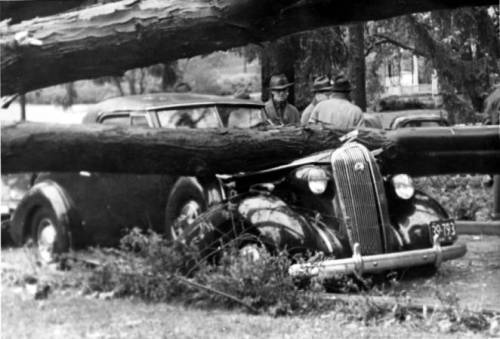
Amherst, New Jersey
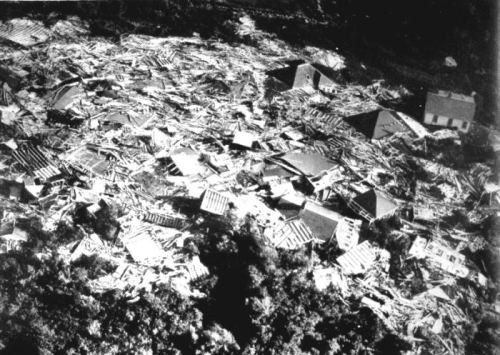
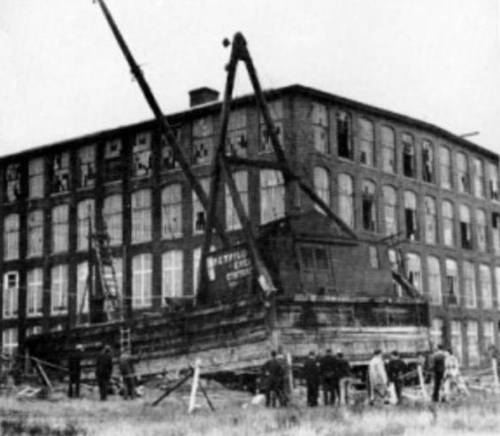
New Bedford, Massachusetts
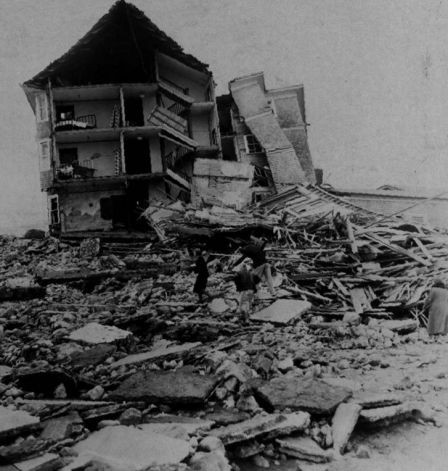
Southbridge, Massachusetts

Thompson, Connecticut

1 Comment

Filed under Classics

Kennedy and the Cuban Missile Crisis

It was on October 22, 1962, that President John F. Kennedy announced to the nation that the U.S. government had photographic evidence of missiles on Cuba pointed towards South Florida.  An American U-2 spy plane had flown over Cuba earlier that month and, utilizing state of the art technology, snapped several black and white pictures of the missiles.  At the time, the U.S. was involved in the “Cold War” with the Soviet Union, and the Kennedy Administration believed the Soviets had installed the missiles on Cuba.  He had already met several times with his advisors before addressing the nation.  It led to a 13-day standoff between the two nations, after which the Soviets agreed to pull the missiles, and the U.S. agreed not to invade Cuba.  This is the complete 18-minute speech.

Leave a comment

Filed under Classics

1967 Dodge Charger

The 1967 Dodge Charger is the epitome of American muscle cars.  It introduced the 440 Magnum engine, which became a standard feature in many high-performance cars produced in the U.S.  Aimed at sports car enthusiasts, the 1967 Dodge Charger even made its way onto NASCAR race tracks.  The top engine option was still the 426 Hemi, which had 425hp.  But, the full engine line-up included the base 318 with 230hp, the 383 with 325hp and the 440 with 375hp.  The 1967 Charger is also much rarer than the 1966 model, since only 15,788 were built.

Leave a comment

Filed under Classics

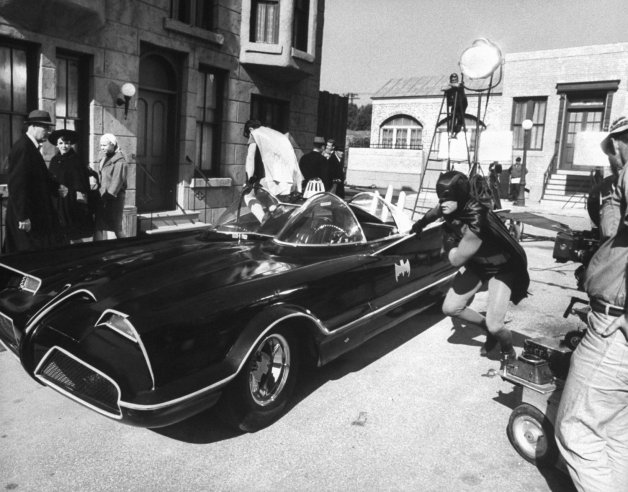
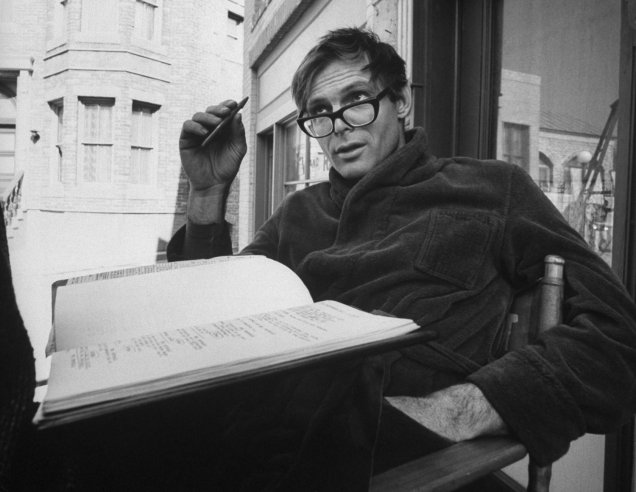
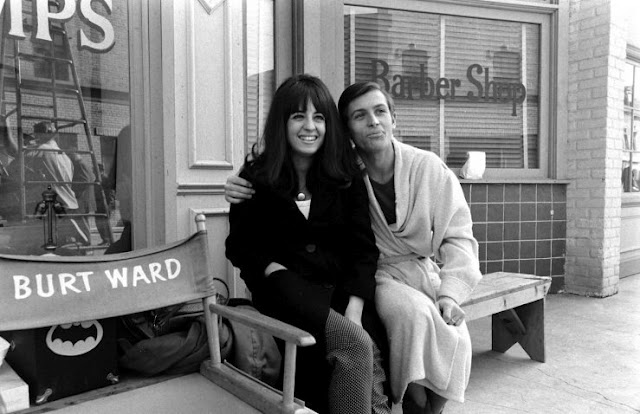
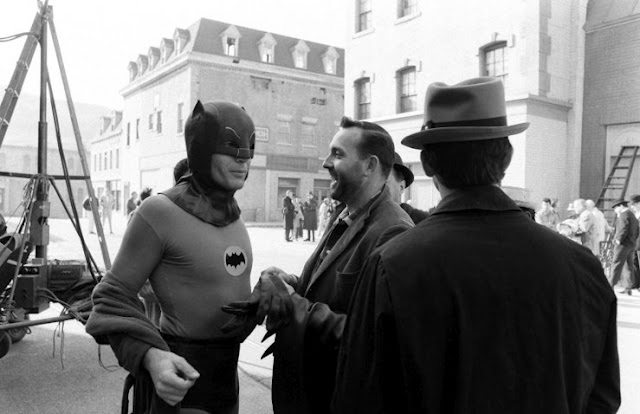
Behind the Scenes of “Batman”

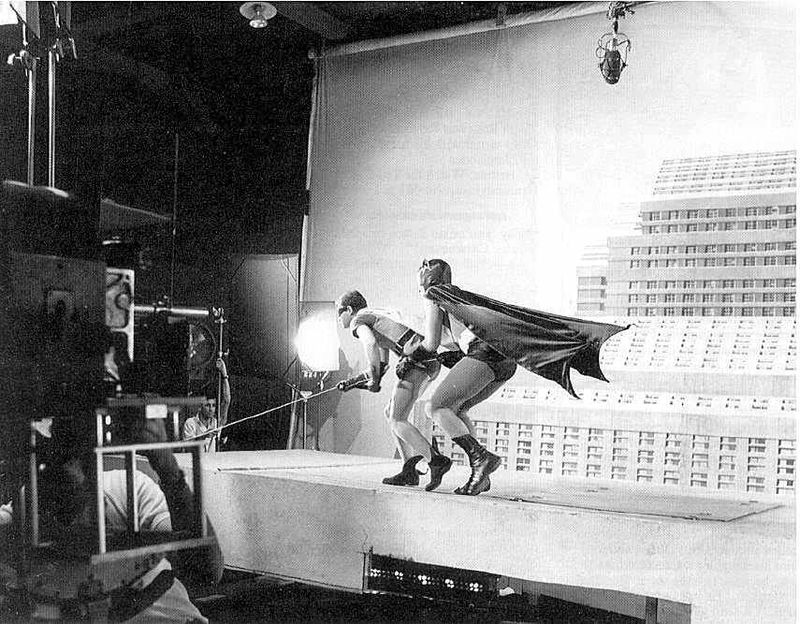
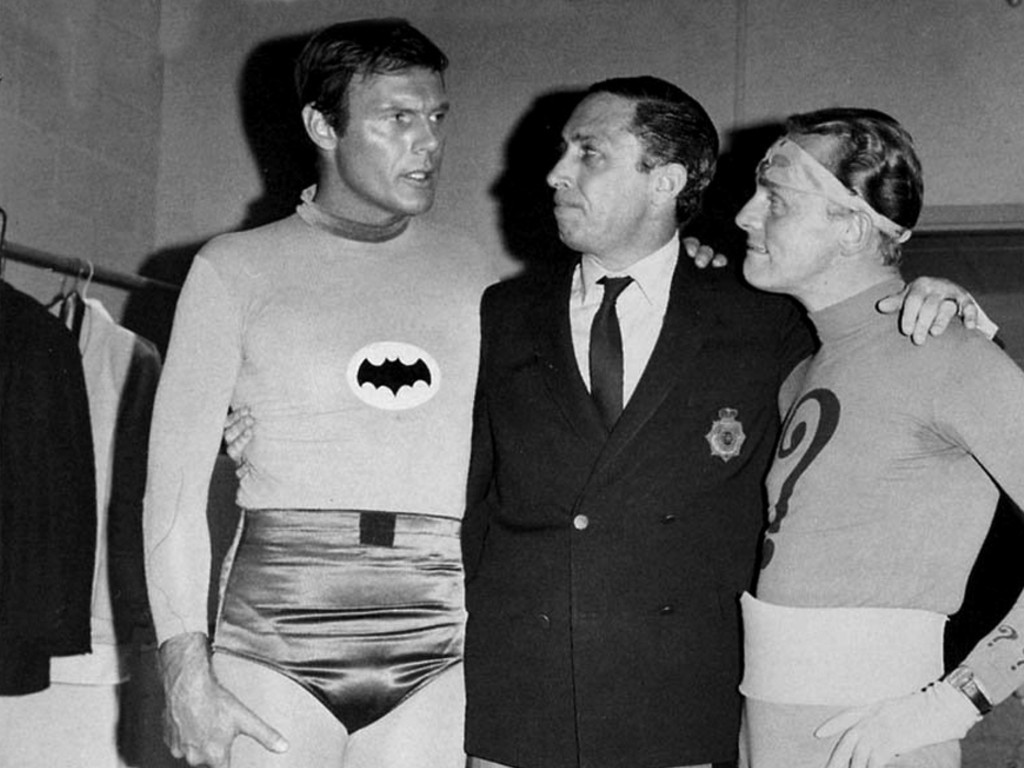
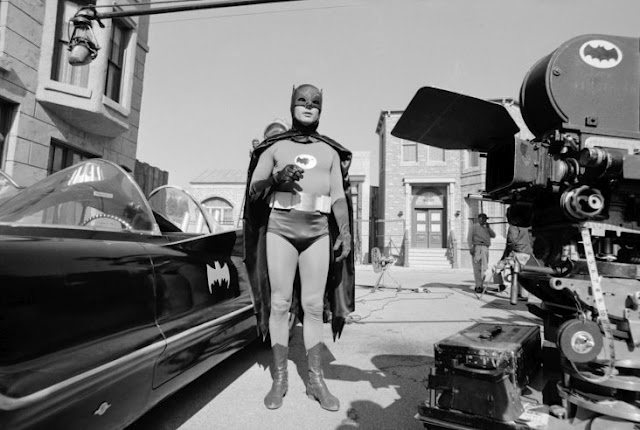
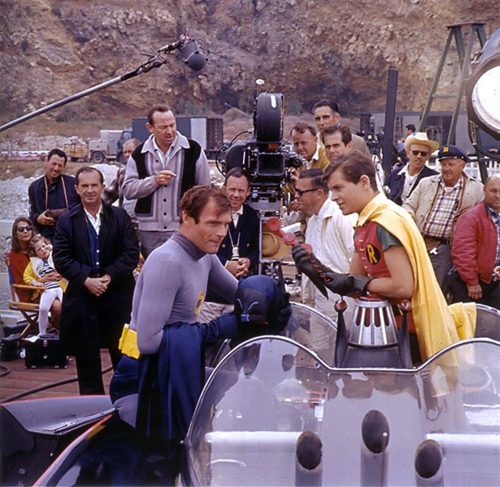
The character of “Batman” is unique in the gallery of super heroes.  He first appeared in a DC Comics in November 1939, but the 1960’s television series inspired a cult-like following.  The show only ran from 1966 to 1968, yet it remains popular.  I still have a toy replica of the original “Batmobile,” which was made by “Hot Wheels” and might be considered a collectible.  Here are some behind the scenes photos taken during the show’s first season.

1 Comment

Filed under Classics