Category Archives: Essays

Good Night, Margaret Thatcher

Margaret_Thatcher_cropped2

The death of Margaret Thatcher – England’s first female Prime Minister and the first female chief executive of any European nation – has invoked a gallery of responses about both her political career and her personal attributes.  That’s to be expected from the passing of any world leader.  History will judge her time in office; contemporary observers and future historians will always have a personal opinion about her.

Thatcher came to power in 1979 as a member of Britain’s Conservative Party.  At the time, the United Kingdom – and England, in particular – was mired in social and economic crises.  Both unemployment and inflation hovered around 20%.  Worker strikes, mainly among coal miners, had stretched the nation’s emotional and fiscal resources.  Oil embargoes that had such a negative impact on the U.S. economy also inflicted heavy damage on England.  Amidst the economic carnage, the Irish Republican Army had grown more militant in the 1970s; demanding with even greater ferocity that the U.K. relinquish control of Northern Ireland.  Just like union worker strikes had increasingly turned into riots, IRA protests had metamorphosed more and more into bombings.

England had been in a seemingly perpetual downward spiral since the end of World War II.  The British had successfully fought off the Nazis, but they paid a heavy financial and psychological toll.  England reluctantly accepted rescue from the United States in the form of the Marshall Plan; an ambitious and mostly triumphant effort to help all of Western Europe recover from the global conflict.  But, amidst the reconstruction, England became a nearly-total socialist welfare state.  It didn’t help that the English empire was slowly being dismantled, another after-effect of the war.  Its weakened state allowed for many of its imperial colonies to break free from the British Crown.  First, India gained independence in 1947; followed by the U.K.’s various outposts in Africa.

By the 1970s taxes were high; labor unions had gained extraordinary amounts of power and most industries were government-owned, and the English government appeared utterly paralyzed and helpless.  Fellow Europeans denounced England as “the dead man of Europe,” a label that angered its proud citizenry, but one that was rather appropriate given the conditions.

Into this mess stepped Margaret Thatcher.

It’s ironic that even Thatcher would rise to become Britain’s Prime Minster.  In a 1973 television interview, she stated, “I don’t think there will be a woman prime minister in my lifetime.”  More importantly, though, Thatcher was born into a humble family; the second of two daughters of a grocer who had his own political ambitions.  Despite England’s current position as one of the staunchest bearers of democracy, it once existed pretty much under a caste system; a society where an elite few held the reins of government.  It was rare – almost impossible – for someone outside of the bourgeois class to attain any position of power.  Most of England’s national leaders had essentially been aristocrats.  It’s a legacy of British royalty’s vice grip on English society.  Even though the Magna Carta technically removed power from the British royal family, it wasn’t until enactment of the Reform Bill of 1832 that a formal Parliament (the House of Commons) was established.  That elevated the voting powers of the Parliament above the king and traditional ruling families.  But, not until the start of the 20th century did Parliament gain almost complete power.  Regardless, it remained a tough climb from Britain’s working classes to a seat in the nation’s Parliament.  And, when Thatcher won her first term, it shocked the staid patriarchal “boys’ club,” while pleasing the masses.

Thatcher introduced a tougher, more stringent agenda; tackling the heavy taxes and obstinate union bosses.  I suppose – given the circumstances – she had no choice.  She had to be loud and blunt; otherwise, the men in the Parliament chamber wouldn’t take her seriously.

Thatcher’s stubbornness and determination compelled her to privatize many of the nation’s industries, such as oil and electricity.  She believed a capitalist free market was best for any society; the only true means to economic prosperity.  She lowered taxes and almost completely extinguished the country’s long-entrenched welfare system, along with tackling workers’ unions, mainly the coal miners.

She also had no qualms about confronting the IRA.  Even after she narrowly survived the 1984 “Brighton Bombing” that killed 5 people and injured 31 others, Thatcher remained undeterred.  “That is the scale of the outrage in which we have all shared,” she announced the day after the assassination attempt, “and the fact that we are gathered here now – shocked, but composed and determined – is a sign not only that this attack has failed, but that all attempts to destroy democracy by terrorism will fail.”

One of the worst crises of Thatcher’s first term in office came in 1982, when Argentina invaded the Falkland Islands; a long-held British territory Argentina called Las Malvinas.  The 74-day conflict resulted in more than 1,200 casualties; the vast majority of whom were Argentine military personnel.  Even when Argentina realized it was no match for the U.K., Thatcher authorized the bombing of the ARA General Belgrano, an Argentine light cruiser, even though it was actually sailing away from the Falklands.

The term “Iron Lady” has become synonymous with Thatcher, but it’s one that was bestowed upon her even before she announced her candidacy for Prime Minister.  In a 1976 speech, Thatcher declared that “the Russians are bent on world dominance,” prompting the “Iron Lady” comment from Soviet leadership.  It was a moniker she actually adored.  Others had more colorful names for her.

Thatcher developed a close political and personal relationship with Ronald Reagan, her ideological soul mate.  Like Thatcher, Reagan originated from a working class background, but – just like Thatcher – seemed to loathe working people.  He, too, believed fervently in a free market society and thought labor unions were a pox on economic stability.  With Thatcher it was coal miners; with Reagan it was air traffic controllers.  When they went on strike in 1981, Reagan fired 11,000 of those who refused his executive order to return to work.  Reagan sided with Thatcher during the Falklands War, but refused to get involved.  He also joined her in repeatedly and loudly announcing the death throes of the Soviet Union.

Reagan had run his campaigns on the typical conservative mantra of limited taxation and smaller government.  But, whereas Thatcher actually lowered English taxes, Reagan ultimately increased them in the U.S.  In analyzing their respective leaderships, I can only note Thatcher didn’t just delegate responsibilities to her cabinet members and then take naps; plus, she always seemed to remember what she had said and done.  Thatcher had spent a lifetime in politics, while Reagan entered the game as his acting career fizzled.  Personally, I have only slightly more respect for Thatcher than Reagan, but I didn’t like either of them.

I supposed Thatcher was simply a product of her time.  The circumstances were dire when she first walked into 10 Downing Street.  Her presence was a welcome respite from the dismal state in which England found itself.  Sadly, more people fell into poverty during her three terms in office; a direct result of her anti-union stance and intense deregulation of industries.  That’s something else she has in common with Reagan.

Like most hardcore fiscal conservatives, however, Thatcher never seemed to understand that workers’ rights are basically human rights.  I think she felt that, since she rose to such prominence, everyone else could do the same.  But, not everybody has the wherewithal to accomplish what she did; not everyone has the same ambitions; and not everyone is so fortunate to be at the right place at the right time to make such dramatic changes on society.  Somebody has to work a cash register; somebody has to wait on tables; somebody has to dredge the coal mines.  Not everyone can be president or prime minister, a doctor or a lawyer; it just can’t happen.  Average workers form the spine of a nation, and they should be appreciated and respected.

I don’t know exactly how Margaret Thatcher’s legacy will be inscribed.  As with any national figure, it will depend on the reviewer.

There is one other odd parallel between Thatcher and Reagan.  In 1971, while still Secretary of Education, Thatcher became known as the “Milk Snatcher,” a name not nearly as familiar as “Iron Lady,” but one that’s more befitting of her capitalist agenda.  During World War II, milk (among other staples) was subjected to extreme rationing in England, as it was just about everywhere else.  Afterwards, the 1946 Free Milk Act ensured free milk to everyone under the age of 18.  But, as the British government looked for ways to trim its budget in the tumultuous 1970s, Thatcher saw free milk subsidies as a drain on the economy and subsequently pushed through measures to stifle them.  Edward Short, then education spokesman for the Labor Party said scrapping milk was “the meanest and most unworthy thing” he had seen in his then 20 years in office.  Thatcher, of course, was unfazed.

Around the same time, Reagan – then beginning his second term as governor of California – toyed with the idea of having ketchup declared a vegetable, since it’s tomato-based.  That, he claimed, would count towards the nutritional needs of the state’s schoolchildren.  Fortunately, it never got past his desk.  But, he pulled the same stunt a decade later as the nation’s newly-elected president and demanded that the U.S. Department of Agriculture do its part to stabilize the economy by devising new ways to trim its budget.  Thankfully, nothing came of it.  Reagan never became known as the “Vegetable Snatcher,” but these incidents display the arrogance of the fiscally conservative mindset.

Milk, bombings, distant islands – for better or worse, Margaret Thatcher made an impact on English society.  Her story is still not complete.

Leave a comment

Filed under Essays

Aging Well

_57178456_57178455

“It’s hell getting old!”

I’ve heard that a lot in recent years from both my parents.  I’ve watched them closely, as they’ve aged.  My father used authentic railroad ties to make borders for flower beds; just months after we moved into this suburban Dallas home in December of 1972.  Now, he has trouble putting on his socks.  My mother could remember the birth dates and phone numbers of everyone on both sides of my family.  Now, she often forgets what she did just five minutes ago.

As I fast approach 50, unmarried and childless, I wonder more and more what will become of me in 30 years – if I’m so fortunate.  “I think I’m going to die in this house,” I told one of my closest friends a few years ago, “alone.”

“What’s wrong with that?” he replied.

“Nothing!”  But, he apparently didn’t hear the “alone” part.

I’m a loner by nature.  I always have been.  Unlike my parents, I’ve always had trouble making friends.  They couldn’t understand.  It was simply beyond their comprehension why I didn’t have friends (especially female friends) calling me all the time during my teen years.

We writers are generally solitary creatures.  It’s how our minds are able to create such vivid settings and outlandish characterizations.  Having grown up so shy and timid, I found refuge in books and my own writings.  I’m not at all shy or timid now.  Years of being bullied and disrespected for being too nice and polite beat that out of me.  But, I am definitely still a loner.  I prefer the company of my dog to that of any person.  I’m certain I’ll continue to bringing dogs into my life.  I don’t fear death.  My only concern is that a canine will become trapped here in the house with me.  I hate people who abuse animals.  Thus, it would be a tragic irony if I collapse alone in this house, and my four-legged companion suffers a miserable demise because of it.

Life expectancy in the U.S. now stands at nearly 80.  It would probably be closer to 90 if obesity wasn’t such a pandemic.  It’s obviously a good thing that people are living longer.  Yes, it’s better to die at 90 than at 19.  But, what good is it to live so long and end up struggling just to get to the bathroom?

As with anything, though, quality of life is more important than quantity.  My idea of a good life is to be well-read and emotionally stable.  I’ve finally learned not to worry what other people think of me.  Their rules no longer apply to me.  I can write well into the pre-dawn hours; play with my dog; listen to my favorite music; have a mixed drink or a glass of wine – and not feel the need to have another person beside me.  I’ve had only a handful of relationships – all of which ended unhappily.  I supposed it’s because I’m too independent.  Relationships take a lot of time and effort.  And, if one cuts into my writing time, or efforts to go to the gym, then a problem arises.  Thus, my prediction I will die alone in this house.

I will have company in that regard, albeit vicariously.  The Administration on Aging, a division of the U.S. Department of Health and Human Services, found that, as of 2010, there were about 40 million people age 65 and over living alone.  That number could increase to 55 million by the end of this decade.  In 1950, only about 10% of Americans age 65 or older lived alone.  Of course, life expectancy at the time stood at just about 65.  But, the rates of solitary seniors have also been increasing sharply since the 1990s because of the large number of “Baby Boomers” entering their golden years.

People look at you strangely when you begin talking about aging and death.  But, I’ve always been the type to think as far ahead as possible.  Often, I haven’t planned too well in advance, but it’s always the thought that counts.  My parents feel they are fortunate to have me around; even though it’s stressful trying to care for them, while working to get my freelance writing career out of the airport hangar.  (It’s inching closer to the tarmac every day, but it’s not quite there yet.)  And, I’m back on that same quandary: who’s going to take care of me when I’m old?  A dog makes a great companion.  But, while they may warn you that a stranger is approaching the house, they can’t run to the grocery store – not in the real world.  My father is 80 and still drives, even with one eye and a prosthetic knee.  I dread the day I have to confiscate the car keys.  That would be a proverbial death knell for him.  But, at least I’m here for him.

I’ll just deal with that when it comes time.  I’m trying to stay as healthy as possible and genuinely hope to live a long time.  But, on the day I drop dead, I wish for 2 things: I’m freshly showered and there are no dogs left to wander about the house, moaning in agony.  Yes, it’s hell getting old.  But, it’s hell not to live a full life.  I’ll take the old part, along with the full life.

4 Comments

Filed under Essays

Why I Believe in Jesus – But Not Christianity

easter

Anyone who knows me personally, or through my writings, is often surprised when I say I revere Jesus Christ as my Lord and Savior.  They’re surprised because I usually keep that quiet.  My faith in Jesus is a private matter – as I think all such convictions should be.  The glaring opulence of the Roman Catholic Church, for example, sours me almost as bad as their overt disrespect for women.  The overt arrogance and verbosity of people like Pat Robertson, Robert Schuller and their ilk literally makes me nauseous.

I know I sound like a Tim Tebow acolyte.  But, I have about as much reverence for sports and entertainment figures as I do politicians and televangelists.  In fact, devoutly religious people usually chew up most of my nerves.  They have the tendency to shove their ideology in my face and think they know what’s best for me.  For as long as I can remember, the faithful have asked me to accompany them to (their) church.  Yes, I appreciate their concern for my well-being, but I don’t need it that badly.  Baptists and Pentecostals are among the most aggressive, but Catholics are not that much better.

In February of 1998, my father’s oldest sister, Amparo, died after an extended illness.  She’d been hospitalized for a month, before her frail body finally gave out.  Her death hit our family hard.  She was one of the strongest people any of us had ever known.  She helped care for me when I was a boy.  In fact, Amparo cared for most everyone else in our family; taking her older brother to cancer treatments in the mid-1980s, for example, because no one else – not even his own wife and adult children – could find the time.  Her burial instructions were straightforward: just throw her in a box, toss it into the ground, say a prayer or two and go on with our lives.  And, that’s just what we did.  There was no long, drawn-out rosary preceding an equally long, drawn-out funeral.  We had a brief service at the mausoleum, a quick internment, and then, we were gone.

When I told one of my closest friends, he was surprised to learn there had been no rosary, as Hispanic Catholics are prone to do.  “Oh, oh,” he moaned ominously.  “I hate to tell you this, but your aunt’s chances of getting into Heaven are slim.”

I became instantly enraged.  “How do you know?!” I screamed at him.  Amparo’s commitment to her family far outweighed the pious proclamations of my friend; someone who actually practiced voodoo for a short time in the 1980s, before reverting back to Catholicism.  That one statement almost ended our long friendship.

But, it’s that sort of self-righteousness – the sense of ‘I-know-what-God-wants-better-than-you’ – that sends me into epileptic fits.  I once worked with a woman who often wore a gold ‘Jesus Loves Me’ pin – while strutting about the office talking behind people’s backs and speaking in a condescending tone to others.  I’m just not one to proselytize.  Thus, it’s a stretch for me to express my personal beliefs about Jesus even in this forum.

There’s really no concrete proof that Jesus was little more than an influential philosopher from what is now Israel.  But, I feel that He was a real person; someone who lived a short life, yet has had a grand impact on the world.  I also believe Jesus has manifested Himself in other forms and in other faiths to a variety of people.  But, they’re just that – beliefs.  I never profess to know for certain who Jesus was or what He plans to do.

Some folks have this vision of Jesus arriving on a gilded chariot, amidst a cacophony of trumpets, and sweeping them up into His arms for eternal safekeeping.  They’re certain they know what Jesus will do – and that they’ll be right there with Him.  These are the same people who’ll be horrified when science discovers the center of the universe – and they’re not it!

Here’s something else I believe: the “Second Coming” means Christ will return to Earth, look around at the mess created by many of His devoted followers, and say, “You know, I had a really good idea about love and harmony 2,000 years ago, and you people just fucked it all up.  BAM!”  And, that’s how the world as we know it will end.

If Jesus should return to Earth anytime soon, I’m certain He won’t make his way to visit Pope Francis.  We won’t see Him having dinner with Mitt Romney or tea with Queen Elizabeth.  No, I’m almost positive – if we do catch a glimpse of Him – he’d be on the streets of places like South Dallas, trying to convince prostitutes life has more to offer than streetwalking.  We’d see Him in the slums of Rio de Janeiro, telling kids not to sniff glue; or in the deserts of the Middle East, ordering angry young men to put down their rocket launchers.  He might even show up at an atheists’ convention – if they have such things.  Wherever He’ll be, He won’t be cavorting with the faithful – the so-called “Chosen Ones.”  No, He’d be with the lost souls; the “Forgotten Ones”; the folks the rest of allegedly civilized society declares unworthy and unsaved.

On this Easter Sunday, I only wish for a few simple things – like a few more years with my parents and my dog; to get my novel published; to live as long and healthy of a life as I can.  Yes, I wish for peace on Earth and for the blind to see.  But, those are such grand aspirations.  I can’t save the world alone.  Neither can any one person.  Yes, it may seem strange to many, but I don’t care.  I have little respect for a religion called Christianity, or most other religions for that matter.  But, I still have faith in someone named Jesus.

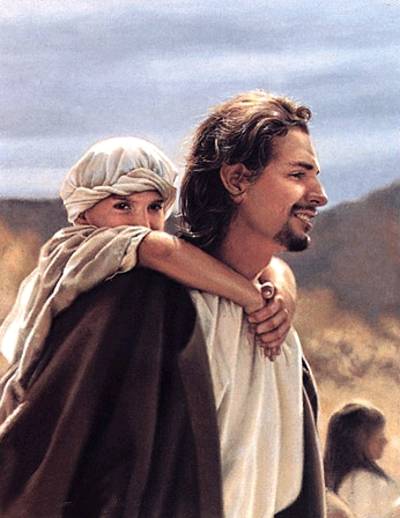
Jesus_098

1 Comment

Filed under Essays

Hello! Earth to Mars!

Mars-Rising-Documentary-film

I’ve signed up to be a candidate for a Martian colony.  Okay, I’m actually just on an email list, but I’m seriously considering this.  Mars One is a non-profit organization with a goal to establish a human settlement on the “Big Red Planet” by 2023.  So far, they have a goal and a web site – and not much else.  But hey, why not dream big?!  That’s what prompted our ancestors to move north out of Africa and sail across the vast oceans of this planet.  This falls in line with an essay I wrote last year, where I included the prospect of sending people to Mars.  With the current budget deficits and political wrangling here in the U.S., that won’t happen anytime soon.

Thus enters Mars One, a Dutch-based entity that has joined with the for-profit Interplanetary Media Group to raise money for the mission.  They don’t just want to launch a spacecraft to Mars for a brief visit; they actually establish a permanent settlement.  As of January, Mars One has secured funding from Trifork BV, another Dutch company that “is a leading full service supplier of high-quality custom-built applications for organizations primarily in” education, research and government non-profit.  That’s amazing.  A country known for its tulips and marijuana cafes actually has the temerity to create companies with such grand visions.

But, the first stage for Mars One is conceptual design.  They have to convene a gallery of talented engineers and architects to visualize what Martian structures would look like and how they would function.  They have to consider air, heating, cooling and insomnia.  Next is an astronaut selection program.  That will be the most challenging aspect of the project; finding people willing to give up so much of their lives for something so incredibly unknown.  They hope to start taking applications from prospective astronauts soon.  As with anything so extraordinary, hope is the first and most significant investment.  Yet, Mars One seems undeterred.

Their literature indicates that residency on the colony will be permanent.  I don’t know how that will work out for some people.  Personally, I’m a creature of habit and enjoy certain comforts here on Earth.  I believe, though, that Mars One will have to reconsider that aspect of the project, since plenty of people may get homesick; while others will be so incorrigible they need to be sent back to Earth.  Unless they can meet an untimely death and their bodies be used for fertilizer.

I still have to give this a lot of thought.  I’ll be 59 in a decade, but I already take better care of myself than most people.  Hell, I take better care of my dog than most people do themselves!  I figure the colony will need a technical / fiction writer anyway.  I could regale the group with frightening tales of being a Democrat in a state gone wildly Republican.  That surely would keep them on Mars!

But, I have plenty of questions.

  • Will I be able to have a dog or two with me?  I can’t imagine living the rest of my life without a canine at my side.  I don’t need another person in my life.  Most people are assholes, and dogs seem to understand me better anyway.
  • Will I be able to bring my gigantic collection of books and National Geographics?  Or, will every piece of literature have to be digital?  As a writer, I’m a natural bibliophile, so books are as much a part of my life as dogs and rum.
  • Speaking of rum, will I be able to imbibe in such spirits while on this colony?  Things may not be as stressful on Mars as here on Earth, which is probably the whole point of establishing a settlement.  But, knowing how quirky most people are – especially engineers and scientists – I’d need to have a drink or two after a day of installing air filters.
  • Will I be able to masturbate in seclusion?  I’m an introvert by nature, so teaming up with others in such a remote environment will be a real challenge.  Ultimately, though, I seek out others for basic human interaction.  But, I’d still need some hand time.
  • Will I be able to have steak and meat tacos?  Or, will everything be freeze-dried and MRE style foods?  I’ve lived off peanut butter sandwiches, canned meat and blueberry muffins before.  I’ve even had a full-fledged MRE.  They’re different now than from the spam-based crap my father ate when he served in the Korean War.  But, unless there’s a chance they improve dramatically in the next ten years, I can’t see living off them for a lifetime.  I mean, I already suffer from dry mouth syndrome.

A great deal of thought and planning has to go into establishing a colony on another celestial body.  Just the logistics of getting material to the place to build will be difficult enough, unless structures can be put together here on Earth and then shipped.  I don’t think FedEx goes that far.  There’s insufficient oxygen on Mars, so no one can take a walk around the terrain without dressing up like a beekeeper.  There probably won’t be much room to move around, which means the colonizers will have to live in close proximity to one another.  That alone could take a psychological and emotional toll.  The intrepid astronauts will have to get along with each other and learn to cooperate even under the most jaded of circumstances.  That would be difficult, considering you just wouldn’t be able to get in your car and go home.  I got pissed off at some people during a play party once many years ago, so I just packed up the wine coolers and sex toys.  They tried to stop me, but I wouldn’t relent.  On Mars, I wouldn’t be able to just grab the remaining MRE’s and canisters of air and head back to Dallas on a moment’s notice.  Knowing how easily people annoy me, I really have to think about this whole Martian colony enterprise.

Still, I feel it’s a worthwhile endeavor.  Humans are naturally curious.  Think about getting into a boat and sailing into an ocean without knowing how far away the next island or land mass is.  Imagine just getting up from a grassy plain and starting to walk – to anywhere.  That’s what our ancestors did.  Americans made it to the moon, as part of the “Cold Warspace race.  I’m certain we, as a global society, can make it to Mars within a generation.  In the meantime, I’ll imbibe in a Bacardi and Coke and begin stockpiling stories for those lonely Martian nights.

1 Comment

Filed under Essays

In Memoriam – The Iraq War

g-cvr-090217-dover-coffins-3a.grid-6x2

Today marks the 10th anniversary of the U.S. invasion of Iraq.  It’s tough to believe an entire decade has actually passed.  Any war is a sad, catastrophic affair.  But, this conflict is made even worst when we realize it was not only completely unnecessary; it was based on a pack of lies.

The nexus of the invasion was that former Iraqi dictator Saddam Hussein had “weapons of mass destruction,” or yellow-cake uranium from Nigeria, or something that could wreak havoc on our world.  I knew almost from the moment that President George W. Bush stood before the United Nations in September 2002 that he was lying about Hussein’s nuclear weapons capabilities.

It’s equally sad that the U.S. media followed suit with the Bush Administration’s lies, and – to make matters worse – so did much of the American public.

The Iraq War did have one clear winner: the American oil conglomerate.  Before the invasion, Iraqi oil reserves were closed to Western oil companies.  Now, it is largely privatized and almost completely dominated by foreign entities.

“Of course it’s about oil; we can’t really deny that,” said Gen. John Abizaid, former head of U.S. Central Command and Military Operations in Iraq, in 2007.

Then Senator and now Defense Secretary Chuck Hagel pretty much agreed, when he said also in 2007, “People say we’re not fighting for oil.  Of course we are.”

The Iraq War was a long time in the making.  You only have to look back to 1998, when Kenneth Derr, then CEO of Chevron said, “Iraq possesses huge reserves of oil and gas-reserves I’d love Chevron to have access to.”  Derr later became CEO of Halliburton – the same company Vice-President Dick Cheney lead until May of 2000, when he abruptly resigned and moved from Texas back to his native Wyoming.

In 2000, Chevron, Exxon, BP and Shell dumped millions into the Bush presidential campaign; more than any other presidential race.  Their efforts seem to have paid off.  Less than two weeks after Bush took office, Cheney chaired the newly-formed National Energy Policy Development Group whose entire purpose was to lay out the course for America’s energy future.  In March 2001, the group outlined Iraq’s oil production capacity and produced a final report two months later.

In 2004, Bush’s first Treasury secretary, Paul O’Neill, said, “Already by February (2001), the talk was mostly about logistics.  Not the why (to invade Iraq), but the how and how quickly.”

They found a way: the September 11, 2011 attacks on New York and Washington.  Dancing on the graves of the nearly 3,000 people killed in those attacks, the Bush Administration shifted attention to Iraq; accusing it of complicity in the calamity.  But, even before our troops landed in Baghdad, Cheney’s group was already making plans for Iraq’s postwar oil and energy industries.  Now, Chevron, Halliburton and several others have full access to Iraqi oil.  They must be happy – and proud.

It’s easy for draft dodgers like Bush and Cheney to wrap themselves in the American flag and cry freedom, before sending others into battle.  Like most wars, this one was commandeered by old men lounging safely ensconced in their leather chairs and fought by young people who often had no other opportunities in life, except to join the military.

Here’s what we have to show for the Iraq War:

Social conservatives always seem to find money for war – but never enough for education or health care.  Aside from the tangible costs, there are the emotional and psychological effects endured by military personnel and their families.  Nothing can replace the loss of a loved one – even if that person willingly joined the military, knowing they may never return alive.  The level of arrogance in the Bush Administration extended to the display of flag-draped coffins returning to the U.S.  In an effort to hide the true impact of war, photos of these coffins were banned from publication by the White House; a move you’d expect from the military dictatorships of Myanmar or Uganda.

Making matters worse, President Bush’s own mother, Barbara Bush, appeared on “Good Morning America” just a day before the Iraq invasion and said, “But why should we hear about body bags and deaths, and how many, what day it’s gonna happen, and how many this or that or what do you suppose?  Or, I mean, it’s not relevant.  So, why should I waste my beautiful mind on something like that, and watch him (her husband, former president George H. W. Bush) suffer?”

God forbid if Barbara Bush’s quaint little tea parties should be disrupted by the sight of body bags on television!  I mean, that would be wrong, wouldn’t it?  I remember Bush, Jr., saying that he still listened to his mother.  Now, we know why he’s such an arrogant bastard.

A few years ago my local ABC News affiliate showed a young man returning to his home in a small East Texas town on Mother’s Day weekend and surprising his mother who worked at a Dairy Queen.  Only his father knew he was coming back, but kept it a secret, so the kid could surprise his mother.  I thought, ‘That’s who’s fighting this war: kids from small towns whose mothers work at Dairy Queen.’  Not Ivy League lawyers and Harvard graduates; not the sons and daughters of hedge fund CEOs – kids with few options in life.  Many of them are dead now; their promising futures squashed so cowards like George W. Bush and Dick Cheney can look good in the eyes of their blind supporters and large oil companies can earn extraordinary profits.

I know that the Great Creator will damn the likes of Bush, Cheney, Donald Rumsfeld and Condoleezza Rice for fabricating this mess and trying to sugar-coat it with layers of patriotic fervor.  Until then, I pray for the welfare of those who actually did the dirty work of fighting this war.

A family tries to leave the besieged Iraqi city of Basra March 31, 2003 in the back of a truck near a British manned bridge that had become a demarcation line. Photo by Spencer Platt/Getty Images.

A family tries to leave the besieged Iraqi city of Basra March 31, 2003 in the back of a truck near a British manned bridge that had become a demarcation line. Photo by Spencer Platt/Getty Images.

3 Comments

Filed under Essays

Francis Is in the House

Pope-Francis-waving-crowd

Now that the Roman Catholic Church has crowned Cardinal Jorge Mario Bergoglio as their new leader, followers from across the globe hope he can usher in significant and much-needed changes in an institution that has become as corrupt as it is antiquitous.  Bergoglio has taken the name Francis, after St. Francis of Assisi, a medieval cleric known for his work with the poor.  He’s also considered the Catholic patron saint of animals, which probably endears him to a greater number of people.  St. Francis founded the Franciscan Order in the early 13th century; a mission dedicated to helping the impoverished.  It’s obvious economic disparities have existed throughout humanity.  So, either the world’s political structures haven’t functioned properly for thousands of years, or religious entities aren’t doing something right.  If you realize the massive wealth the Roman Catholic Church possesses – how else can you explain their ability to pay out millions in sex abuse settlements? – then it may be a mixture of both.

Many Roman Catholics are excited about Frances, especially here in the Western Hemisphere.  But, while some people see change on the horizon, I see just another geriatric virgin (or maybe not) swaddled in silk and velvet; ensconced in a cloistered society, far removed from the real world in which most Catholics (and people of other faiths) reside.

Francis is the first pope outside of Europe.  He’s also considered the first Hispanic pope, since he’s from Argentina.  But, he’s an Argentinian of Italian ancestry.  Thus, in effect, the Church has just put another Italian in the pontiff’s chair; not much different than before Pope John Paul II.  Francis is 76, only two years younger than Pope Benedict XVI was when he ascended to the papacy in 2005.

Allegedly, as votes were being counted last week during the papal conclave, Bergoglio told a fellow cardinal, “Remember the poor.”  This is an interesting proclamation, noting that the Roman Catholic Church is one of the wealthiest institutions on Earth.  No one can put an exact figure on it, primarily because the Church isn’t beholden to tax burdens.  But, it’s estimated net wealth is between $400 billion and $750 billion.  This includes its vast collection of artwork and other treasures (often made of gold or silver) that sit in its tightly-guarded environs.  It costs a great deal of money to maintain the buildings that comprise Vatican City alone, as well as the heavily-armed security guards that surround the pope.

With such massive wealth comes power.  The Roman Catholic Church ruled much of Europe for centuries; often dictating who would be crowned king or queen.  But, the advent of political democracy – first here in the U.S. and then in Europe – weakened much of that authority.  In modern times, the Church has often confronted military and political dictatorships.  That’s what makes the selection of Francis a rather curious development.  He was around during Argentina’s notorious “dirty war,” when thousands of people either were killed by the country’s military dictatorship, or mysteriously disappeared.  Criticism about his activities in those years ambushed him almost as soon as he greeted the crowd in St. Peter’s Square.  I suspect it’s something that will haunt him for the rest of his life.  Yet, when Francis spoke openly about the poor, I was reminded of Oscar Romero, the late Archbishop of El Salvador, who once said, “When I feed the poor, you call me a saint.  When I ask why they are poor, you call me a communist.”  For his outspoken views, Romero was assassinated while conducting Easter mass in 1980.

I left the Roman Catholic Church years ago, mainly because of its disrespectful attitude towards women who make up more than half of its 1.2 billion adherents.  After two millennia of existence, why hasn’t the Church agreed to let women into the priesthood?  It’s clearly a patriarchal entity.  But, ignoring more than half the human population is an abomination.  It’s also just plain rude.  I mean, women can do more than have kids, mop floors and cook meals for the menfolk.  Any single mom will tell you that!  Besides, women would look better in those flowing velvet gowns.

The pedophile priest scandal that has swept across the U.S. these past several years only solidified, in my mind, ineptness and utter irrelevance of the Catholic Church.  I know the great majority of priests would never harm a child.  But, I just never could understand why the Church shuffled the perverted ones from one diocese to another.  I suspect it was a matter of self- preservation – one that backfired.

There is no other institution on Earth quite like the Roman Catholic Church.  Lutherans and Methodists, for example, don’t have a supreme leader in quite the same mold.  The Greek and Russian Orthodox Churches come close.  Baptists and Pentecostals here in the U.S. certainly have no central commander, which may explain why they hate Catholics so much are always pissed off.  Neither Judaism (Christianity’s cantankerous mother) nor Islam (its ugly offspring) have leaders similar to the pope.

Some observers hope that Francis will be a reformer along the same lines as Pope John XXIII who convened the Second Vatican Council in 1962 to update Church doctrines in accordance with various scientific discoveries and advancements.  But, Francis has already shown displeasure with contemporary issues, such as birth control and homosexuality, which is to be expected.  So, unless Francis accepts that some people use birth control, while others are queer, how is he going to be a reformer?

It would have been great if the Church had elected a truly unconventional and imperfect figure to the papacy; say, a 50-something man who perhaps had been married, maybe even has a juvenile criminal record, prefers vodka to wine, loves ultimate fighting and likes to tell bathroom jokes.  Somebody who – albeit multi-lingual and well-versed in religious scholarship – could still identify more clearly with the average person.  How could anyone who has spent most of their years enmeshed in prayer and meditation understand the complexities of daily life?

I don’t know what the future of the Roman Catholic Church holds under Francis’ leadership and I almost don’t care.  I know that too many people adhere to every word that spills from the gilded lips of the Church’s hierarchy, which of course, is their right.  But, it’s also their greatest fault.  I would only visit Vatican City for one reason: to check out the artwork.  Art serves a purpose; blind faith does not.

Leave a comment

Filed under Essays

Trashed

tumblr_laerv5dTKD1qa63vho1_500

I have to admit I’m somewhat of a pack rat.  I save most everything I’ve ever collected or gathered: books, records, National Geographic magazines, bank statements, vibrators, etc.  I mean almost every damn thing my calloused hands have touched!  I’m loathe to throw stuff away.  No, I don’t need an intervention!  My alternate personalities usually keep me in check.  Fortunately, I went paperless with my bank statements and cell phone bills years ago.  But, back in September 2007, I launched into a destructive frenzy.  I yanked out mounds of paper from my office closet and ran it all through the shredder.  The poor little device screamed for mercy and almost reported me to the police after a week.  My spine nearly did the same, sore from being hunched over the trash can.

Perusing through some boxes last month, though, I was surprised to find more ancient paper, including packs of ATM receipts.  Oh yea, I keep those, too.  But now, I destroy them after a year.  Thus, I immediately jumped into another round of paper shredding.  Amidst the refuse, however, I encountered something I really didn’t want to see again: my high school annuals.

I’m one of those people who bear absolutely no fond memories of high school.  I came to hate it so bad that I made no effort to attend my prom and almost skipped graduation.  In the second semester of my senior year, I had earned enough credits to attend only half a day.  When I realized my senior class ring didn’t fit, I didn’t bother to have it resized, despite the company’s please that they’d take care of it.  I just demanded a refund.  I may have been the only kid from my senior class who didn’t graduate with a ring.

“Enjoy those four years because they’ll go by quickly,” Eddie, one of my parents’ long-time friends, told me as I neared completion of grade school.  I was excited back then.  I was finally leaving the rigor of a Catholic parochial school and a mandatory daily uniform for a three-year-old suburban Dallas high school.  My freshman year was the first year the school had a senior class.  The building felt as new as it looked; it was bright and colorful.  The people were different.  No one knew me, which was as frightening at the time as it was exhilarating.  A brand new world.  But, by the time I started that second semester of my senior year, I could hardly wait to leave the damn building.  It had grown so old.

So, thirty-one years later, I sat here in my home office and scowled when I saw all that crap from high school.  For some reason, I guess I thought that stuff was like a moth; once it gets trapped somewhere it dies and disintegrates back into the Earth.  Thus, I ripped out every single page with my name and picture in each of the four annuals – all 12 or so sheets of it – and dropped them into the shredder.  Seeing the blades grind up those glossy pages almost gave me an orgasm.  It was one more thing from my past that I just had to let go.

I never blamed Eddie for his misguided optimism; he was just trying to be a good mentor and help out a shy boy.  When details of the 1999 Columbine massacre came out, I realized I felt more in tune with the killers than the victims.  I know what it’s like to be bullied throughout the school years.  I know what it’s like to feel left out.  I know what it’s like to hate yourself so much you wish you were dead – and wish everyone who tormented you could die with you.

Around the end of 2001, a man called me from some organization that was handling plans for my high school graduating class’s upcoming 20th anniversary reunion.  And, you know how some things just trigger a strong reaction in your mind, almost involuntarily?  Like a cough, or a sneeze – it just hits, and you have no control over your response.  That’s how I felt the second I heard the name of that school.  Everything flooded back into my brain; every pathetic, aggravating moment from those four pathetic, aggravating years.  I wanted to yell at the man.  Instead, I cordially told him to remove my name from his list.  I think the dismal tone of my voice revealed how I felt about it.  He simply didn’t ask any questions or say much more, other than ‘thank you.’

Then, I found those books.  And, it all came back again.  Damn!  I’m fucking 49-years-old!  I stopped reliving those nightmares a long time ago.  Yes, I also collect memories – good and bad – like I collect books.  But, just like you can’t change your birth date, you can’t change your past life experiences.  They’re ingrained in your soul forever.  The key is not to allow them to become a scar on your future.  I could teach classes on that and probably make a fortune.  Hm…I think I just found a new path to early retirement!

Oh, and as for the rest of those annuals?  I chunked them into the recycle bin, hoping the paper can be turned into something more useful – like an inspirational guidebook on how not to take high school too seriously.  Or, National Geographics.

Image courtesy Fuck Yea, Book Arts!

Leave a comment

Filed under Essays

Epimenio

Epigmenio, c. 1924

Epimenio, c. 1924

Today marks the 120th anniversary of the birth of my paternal grandfather, Epimenio De La Garza.  That’s a name you don’t hear too often, if not at all.  But, his moniker is as rare as the man was himself.  I was a little more than five years old when he died in February 1969, but I can still remember him rather clearly.  He had a sharply angular face with blazing green eyes and a booming voice.  He’s been gone for more than four decades now, but his memory lingers strongly and proudly in my father’s family.

Epimenio was born in Eagle Pass, Texas (formerly El Paso de Águila); a city on the Mexican border.  He was a descendant of some of the first Spanish settlers who arrived in the 1580s.  The region was then known as Coahuila y Tejas, Nueva España, or New Spain.  By the time of Epimenio’s birth, the De La Garza clan had carved a unique place in the state’s history.  Unique, albeit separate from the traditional or accepted version of the grand saga of Texas.

The third of nine children, Epimenio left school after the second grade – only because he had the audacity to correct a math teacher in front of the class.  He was a carpenter by trade, so exacting in his craft he could draw a straight line on a sheet of paper without a ruler.  After he and my grandmother, Francisca, wed in 1924, they immediately started a family, and Epimenio developed his construction and carpentry business.  Like most men of his generation, emotional strength and personal pride were uncompromising attributes.  In the late 1920s, my grandparents and their two oldest children moved to Dallas where Epimenio quickly established a solid reputation as an extraordinary carpenter.  One day, while my grandfather and his crew built concession booths at the State Fair of Texas, an Anglo man commented on Epimenio’s heavy Spanish accent.  My grandfather – as fair-colored as the Anglo man – said he had been hired to work there and, picking up a sledgehammer, added, “What are you going to do about it, goddmanit?”

He and his crew built many of warehouses on the southern edge of downtown Dallas, an area now known as Deep Ellum; hoisting massive steel beams onto their shoulders.  Today, many of those warehouses still stand; converted to chic loft and studio apartments for the city’s artistic crowd.  He often did work on the stately mansions of Dallas’ Highland Park and Swiss Avenue neighborhoods; wealthy enclaves where Hispanics and Negroes could labor, but not live.  Shortly after World War II, Epimenio attempted to purchase a large home in Highland Park, but was denied simply because he and his family were “Mexicans.”  But, they definitely liked his carpentry skills.  In the mid-1950s, he purchased a large swath of land in North Dallas and designed and built a home for his family; a large red-brick structure where he lived out his final years.

Epimenio’s tendency towards practicality had no limits.  In the 1930s, he and another man were patching up the roof of St. Ann’s Catholic school on the edge of downtown Dallas, when the local bishop arrived.  The other man set down his hammer and knelt onto the sharply-slanted roof; bowing in blind reverence to the bishop’s presence.  Epimenio scolded him for his seeming idolatry.  “You’re going to roll off that roof and splatter onto the ground,” he said.  My grandfather also refused to kiss the hand of any Catholic official, as was the tradition back then; a response that always upset my devoutly religious grandmother.  But, Epigmenio remained undeterred.  “I’ll kiss the hand of Jesus, but I kiss the hand of no man.”

My paternal grandparents, 1941

My paternal grandparents, 1941

Epimenio began smoking as a boy, a common practice among his generation.  By his late 50s, however, he’d developed lung cancer.  Back then, such a diagnosis was a virtual death sentence.  But, he immediately quit smoking and, in 1952, he opted to have that lung removed.  At the same time, England’s King George VI had a similar surgery at the same time.  In a curious twist of fate, the doctors who operated on my grandfather in Dallas had attended medical school with the doctors who operated on King George.  George died, but Epimenio survived – and lived for another 17 years.

The day before my grandfather’s funeral, I asked my father to take me to the local grocery store.  I wanted to get something for my grandfather.  Not knowing what else to do, my father acceded and led me to the store; whereupon I led him up and down the cookie aisle, searching for a particular brand.  Finally, I found it – whatever it was – as neither my father nor I recall the product.  But, he told me later he had never seen it before – and has not seen it since.  When we visited the funeral home, I placed the package of cookies in my grandfather’s coffin and told him to enjoy them “because they don’t have these in Heaven.”

After we arrived back home, my father rushed into his bedroom and closed the door, while I remained in the front room with my mother.  She went into the bedroom after a few moments, and I could hear my parents talking.  My father had been crying; something I didn’t think, at the time, fathers did.  I still don’t know what the significance is surrounding those cookies, but I suppose it was just the mere innocence of a child coping with something new and thoroughly unknown.

I often wonder – amidst my daily struggles of dealing with personal finances and aging parents – if lessons from my grandfather’s life could impose any meaning on me.  Am I the kind of man that my grandfather was?  It’s one of those eternal questions; contemplating if your ancestors would be proud of you.

One Sunday night in April 2004, I severely sprained my left ankle while walking my dog; rotating it as far it could go without breaking it.  I lay on the cool sidewalk for a minute, excruciating pain swamping my body, before I forced myself back up.  The dog – just a puppy, really – still had to do his business.  I finally visited a local hospital early the next morning, both my ankle and foot swollen.  Then, I hobbled into work – and recalled another incident my father had told me about years earlier.

In one of those only-in-the-old-days situations, Epimenio was working on a house across the street from the family doctor’s house, when he severely sprained an ankle.  The old doctor had witnessed the accident and told my grandfather to come into his home, which doubled as his office.  My grandfather declined the offer and ordered his men to dig a hole in the dirt roughly the size of his foot.  He then planted the injured extremity into the hole and literally wrenched it back into place.  “See!” he called out to the doctor after a few minutes.  “Saved myself three dollars!”

Three dollars is what it cost me to park in downtown Dallas nine years ago.  But, like my grandfather, I had to get to work.  And, I knew – like my grandfather, I suppose – that life must continue.

9 Comments

Filed under Essays

Hellacious Hooligans

drunk-people-04

I don’t watch much reality TV, as in the “American Idol” or “Survivor” type of program.  I still think “Survivor” is one of the stupidest shows American television has ever produced.  Like “The Simpsons,” I have absolutely no idea why it’s so popular.  I generally prefer real reality TV, such as “The First 48” or “A Haunting.”  I love the former because it shows the good side of police work; when our tax dollars pay off, and law enforcement catches real criminals instead of those with expired inspection stickers.  But, I enjoy the latter series because I know now my strange visions aren’t the result of brain cells dying off after a lifetime of rum consumption.

Occasionally, though, I find myself stepping into the ‘Dark Side,’ which for me, is that part of our universe where intelligentsia has the same prevalence as a unicorn.  That’s when I catch a glimpse of such gems as “Jersey Shore,” “Mob Wives,” or “Basketball Wives.”  Watching these programs makes me feel like a Nobel laureate in economics, but it also makes me sad.  American television has come to this?  It’s been like that for a while.

I remember when MTV came out with their “Real World” series in 1992.  Of course, I can remember when the ‘M’ in MTV still meant music and not morons.  But, that show was deemed ‘reality’ and became an instant pop culture phenomenon.  It didn’t seem to matter that the network just cobbled together a batch of 20-somethings with no real aim in life and threw them into a faux household to see how quickly they didn’t get along.  If I wanted to see that, I’d just go to work.  I didn’t watch that show much either.  But, it was always for the same reason: my mind was tired and I needed something that – while entertaining – still didn’t require much energy.

A few years ago I tolerated one entire episode of “Jersey Shore,” just to see what all the hype was about; the same way I did with “Survivor” in the fall of 2000.  I came away with the same question: why?  Why is this show so popular?  Is it because most people are like me in that they need something just to make them laugh?  I hope so because, if people watch this show out of envy, I’m more eager to see that colony built on Mars than ever before.  After that one stint of “Jersey Shore,” I still didn’t know what the hell was going on.  Aside from the language barrier (I don’t speak Jersey trash), I only knew these people were pissed off at one another for some minuscule reason and had to get drunk to help them cope – which only made them madder and louder.

On a recent episode of “Mob Wives,” the title characters gathered for a Botox party.  Tupperware, I can understand.  But, Botox?  You know people have too much time and money on their hands when they get together to stick needles into one another while holding glasses of champagne.  As the pack of heifers assembled, I felt they looked like rejects from the ‘Miss (Gay) America’ pageant.  I thought at first, is this really “Mob Wives,” or ‘Home for Retired Porn Queens’?  As usual – as in “Survivor” and “Jersey Shore” – one of the fools in the crowd got pissed off at someone else, and soon everyone was arguing.  And, as usual, they were imbibing in alcohol.

I’m certain “Jersey Shore” and “Mob Wives” make most Italian-Americans think, ‘Forty years after “The Godfather” and we’re still dealing with this crap?!’  I have the same reaction when I see Geraldo Rivera discussing immigration reform as if it’s the only thing Hispanics have to worry about.  I’m just waiting for VH1 to come out with something like, ‘Latinos of East Dallas’ where the cast muddles through Tex-Mex linguistics while arguing if they should shop at Wal-Mart or splurge and head to Target.

Black women must feel the same about “Basketball Wives.”  In one episode, the cluster of perfectly-coiffed mavens met at a chic lounge to discuss – something.  I have no idea what because – as expected – they started screaming at one another.  And then, cocktail glasses and acrylic nails went airborne.  And then, big burly male security guards who surely got a good laugh (and maybe a quick orgasm) out of the feline fiasco swept in to scoop up the girls and dump their scrawny asses onto the street outside.  Their designer attire and spike heels with 6-figure price tags prove what my grandfather used to say: you can dress a donkey up as a thoroughbred horse, but it’s still a jackass.

If you’ll notice, these shows all have at least two things in common: shouting and alcohol.  Bad attitudes and prescription drugs also figure prominently into the mix, but screaming and booze are the central elements.  I guess these shows wouldn’t be popular if their subject matters weren’t intoxicated and wrapped up in a perpetual state of anger.  Maybe Americans like it so much because such antics mirror their own lives.  Hm…maybe that’s why I kind of like them, too.

Damnit!  Why don’t I realize these things before I starting writing?  Oh, well.  Time to sit down with a glass of wine and a “National Geographic.”  Hey!  At least I read!

Leave a comment

Filed under Essays

An Ensler Prayer

broken-heart

As part of her “One Billion Rising” movement – which brings much-needed global attention to the issue of domestic violence – feminist activist, author and film documentarian Eve Ensler wants everyone to think about Valentine’s Day more in terms of vicious behavior than love and romanticism.  In fact, she apparently feels Valentine’s Day should focus exclusively on domestic violence, a serious and ongoing dilemma that affects countless numbers of people.  Notice I said ‘people.’  Ensler says ‘women.’  Like most liberal extremists, Ensler perpetuates the myth that domestic violence impacts only those of the female persuasion and – more importantly – declares that, by mere virtue of our gender, males are inclined to inflict it upon those females; as if it’s some instinctive behavior that must be removed like tonsils.  I’ve heard that claim for years, and it still pisses me off.

Ensler is perhaps best known for her play “The Vagina Monologues,” which she first presented in 1996 in an off-Broadway theatre.  The plot is simple: women openly and unabashedly discuss their genitalia.  Everything from childbirth to rape is mentioned, as the characters hope to remove the stigma surrounding the female physique.  It was bold and innovative and it won her a slew of awards, including an Obie.

The success and popularity of “The Vagina Monologues” led Ensler to create “V Day,” a global activist movement to halt violence against women and girls that Ensler launched on Valentine’s Day 1998.  It addresses such matters as honor killings, female circumcision and sex slavery; issues that some small-brained people wish would just go away.

I understand the severity and complexity of domestic violence.  I know millions of women every year, around the world, suffer through it.  Ensler tries to give a voice to them.  But, domestic violence isn’t so clear-cut; it doesn’t follow conveniently prescribed lines – racial, cultural, religious and not even gender.  As shocking – and politically incorrect – as it may be, men are victims of domestic violence.  So, are infants and children.  But, there are really no special laws to protect those of us who aren’t adult females.  Now, Ensler is trying to hijack Valentine’s Day and morph it into a fashionable avenue towards violent relationships.  Again, the focus is on women as victims.

As part of V Day 2013, Ensler – the daughter of a Jewish father and a Christian mother – has composed a “Man’s Prayer,” in which she invites men “whose confidence comes from the depth of my giving/who understands that vulnerability is my greatest strength/who creates space rather than dominates it/who appreciates listening more than knowing/who seeks kindness over control/who cries when the grief is too much/who refuses the slap, the gun, the choke, the insult, the punch.”  It concludes, “May I cherish, respect, and love my mother.  May the resonance of that love translate into loving all women and all living things.”

‘All living things’?

I guess that means infants, children and maybe even us men.  For the record, I’m not a ‘thing.’  Yes, I have a penis, but I’m still not a ‘thing.’  Neither is anyone else.

I’ve known more than a few victims of domestic violence.  I have a cousin on my mother’s side whose first husband broke both sides of her jaw with a heavy-duty flashlight, while she held their baby in her arms.  On my father’s side, another cousin only survived her violent first husband when her father and brother beat the crap out of him and shoved a gun in his mouth.  One of my father’s sisters-in-law used to beat her three kids with whatever instrument in the house was available – until her husband (my father’s oldest brother) stopped her.  Ah!  But, would this latter incident constitute domestic violence?  Or, just child abuse?  Who makes these definitions?

Just after one in the morning on a cold Monday in January 1999, I heard a man yelling at some females in a neighboring unit of my North Dallas apartment complex.  I could tell a young girl was among them.  Moments later, the entire group was in the parking lot just outside my bedroom window.  Initially, I mistook a popping sound for gunshots.  But, when I peered through the blinds, I realized the man had one of the women on the ground, smacking her hard.  My call to 911 wouldn’t go through.  Shirtless and barefoot, I tore out of my apartment in a pair of sweat pants and kicked the man in the face.  I think my actions startled him more than they hurt him.  I looked at the woman, as she lay contorted on the cold, wet asphalt; her face swollen and blood-smeared.  I grabbed her and forced her to her feet.  Another woman had stood just outside my door with the young girl who could have been no more than 10.  I caught a glimpse of that girl’s face; the look of absolute terror burned into my mind.  The other woman rushed forward and grabbed the first one; both stumbling back beneath the breezeway.  The man looked as if he was about to kill me.  But, just as the sound of sirens whirled in the distance, another young man arrived beside me, a pistol in his hand, pointed squarely at the thug.  But, my thoughts were about that little girl and the horrified look on her face.  Was that brute her father?  What was going through her mind?  I never saw her or the others again.  But, I wanted to tell the girl that we’re not all like the guy who bloodied that woman’s face.  Most of us men aren’t anywhere near like that.  I wanted to tell her that so badly, but I never got the chance.

Domestic violence against adult males is another one of those dirty little family secrets.  Yet, if the subject is broached, it’s met with scorn; almost mockery.  People seem to think if men are victims of violence at the hands of their female partners, then they must have done something to deserve it – the way violence against women used to be viewed.

Ensler’s sense of what’s appropriate and inappropriate bears a hypocritical twist.  An original version of “The Vagina Monologues” included a section entitled “The Little Coochie Snorcher that Could” where a 24-year-old woman imbues a 13-year-old girl with alcohol and then has sex with her.  At the section’s conclusion, the girl – now an adult – reminisces, “If it was rape, it was good rape.”  ‘Good rape’?  You’d think Ensler was a Republican.  Protests forced Ensler to remove that particular passage.

My concern is to stop violence altogether – against everyone, not just adult females.  Whenever I’ve mentioned this, people give me that ‘what-the-fuck’ dazed and confused look; as if I’d just said, ‘I’m flying to Mars next week; want to come with me?’  In other words, it’s apparently not possible – or practical – to stop all violence.  Therefore, if we must have violence, it should be against males.  For example, Ensler rants about so-called female circumcision in remote parts of the uncivilized world, but of course, ignores the reality of male circumcision in the U.S. and other developed nations.  It doesn’t seem to matter that every year in this country, between 100 and 200 infant and toddler boys die from the effects of circumcision, or from botched procedures.  It also doesn’t seem to matter that, of the estimated 3 million – 4 million children physically abused in this country every year, approximately 65% are boys.  No, such details are of no concern to Ensler; she only wants to end that violence which affects the females of the species.  So, does much of the rest of the ‘enlightened’ world.  Since I advocate stopping all forms of violence against humanity, I guess Ensler and her minions would consider me a Neanderthal.  I’ve been called worst.

Here’s another cold fact: domestic violence will never be eradicated.  Humans are imperfect and someone somewhere will feel the ungodly need to beat the person they supposedly love.  We can, however, stop hiding it like a secret lover; we can prosecute perpetrators and make victims realize it’s not their fault.  We can also stop making rash accusations against entire groups of people and – more importantly – stop categorizing violence by saying ‘x’ is worst than ‘y’ because ‘z’ is the end result.

Valentine’s Day is one thing, and domestic violence is another.  They’re not interchangeable elements.  People who inflict physical or emotional harm on others aren’t filled with romanticism or love.  They’re filled with hate – and perhaps insecurity.  Personally, I won’t be celebrating Valentine’s Day because I have no romantic interest.  But, I know plenty of men who do – married and unmarried.  And, they don’t need a self-righteous playwright to tell them violence is wrong.  Contrary to feminist theology, we men just sort of know that – instinctively.

Leave a comment

Filed under Essays