Category Archives: Essays

Fight Like a Girl

Two Greek female gladiators, Amazonia and Achillea.

Two Greek female gladiators, Amazonia and Achillea.

For centuries, tales of female warriors known in Greek mythology as “Amazons” invoked lurid images of voluptuous, scantily-clad women parading into battle aloft white horses.  Such stories always made for more than a few good sexual fantasies and even some tawdry jokes.  Then, in 1997, archaeologists excavating in Pokrovka, Russia, near the Kazakhstan border, discovered 50 ancient burial mounds containing female skeletons – and weapons.  Among the paraphernalia, were iron swords, daggers and bronze arrowheads.  One of the skeletons in Pokrovka was that of a young girl, perhaps 13 or 14; proving that, in a world where life spans were short and sometimes fragile, people trained early to defend themselves.  As often happens in human history, legends contain some measure of truth.  And, in the region once known as Mesopotamia, female warriors weren’t mythical figures, like mermaids or fairies.  They were genuine members of their respective societies; committed, battle-hardened individuals who fought for their own freedom and that of their communities.

As controversy swirls around the new U.S. Defense Department policy to allow women into combat, I have to wonder if female warriors of the past are laughing; perhaps saying, ‘It’s about time!’  Predictably, social conservatives have reacted with horror.  Already upset that gays and lesbians are allowed to serve openly in the U.S. military, they’re now howling in greater protest at the thought of women squatting in the proverbial trenches alongside the men.  Heather MacDonald of the National Review surmised that the Pentagon has bowed to “feminism’s insatiable and narcissistic drive for absolute official equality between the sexes.”

Bryan Fischer of Renew America stated, rather chivalrously, “we want to live in a nation where we expect men to use their strength to protect the women in their world, not the other way round.”  He then added, “God simply did not design women to have the same size, upper body strength, or stamina as men.  It’s just plain stupid to ignore this biological fact of nature.”

Ryan Smith, a former Marine who now practices law, also views the matter from a physiological perspective.  “Many Marines developed dysentery from the complete lack of sanitary conditions,” he wrote in the Wall Street Journal, describing his experiences about the 2003 invasion of Iraq.  “When an uncontrollable urge hit a Marine, he would be forced to stand, as best he could, hold an MRE bag up to his rear, and defecate inches from his seated comrade’s face.”

Montana State Representative Ryan Zinke, a former Navy SEAL, told “Newsmax,” “This is not a Hollywood movie.  This has real consequences that are going to affect our sons and daughters whose lives are on the line.”  Zinke concedes that, during his lengthy military tenure, he encountered “women operatives who were very, very good.”

Elaine Donnelly, president and founder of the Center for Military Readiness, apparently speaks for all military women.  In a CNN interview she declared, “It’s the kind of a position that military women, in the majority, don’t want to have.  They don’t want to be treated exactly like men.”  In almost the same breath, however, Donnelly admits that, after more than a decade of war, “we’ve seen women do remarkable things.”

For these folks, the world as they have known it has come to an end.  They must be sad.  But, they must also be ignorant of world history, and the role women have played in national conflicts.  Many people, however, seem to view the concept of female warriors as a late 20th century anomaly; that, if women have served in a truly military fashion, it’s only been by chance or accident, or in times of absolute necessity, such as World War II.  Conservatives begrudge the overall presence of women in the military as the result of aggressive liberal ideology, social experimentation gone awry, and feminism run wild; they see it as an omen, a portent to an unstable American society; total collapse, they say, looms on the horizon.  Liberals, on the other hand, regard it as the culmination of decades of hard work and aggressive civil action; women, they declare, have finally arrived at the gates of freedom and opportunity within the military-industrial complex.

They’re all wrong.  To say that women have never held prominent positions in military history is tantamount to saying that men have never helped to raise children.  Human history isn’t so clear-cut.  People are looking at it from the prism of their contemporary opinions.

The United States alone has a long history of women in the military, starting with the American Revolutionary War.  Women, of course, served in the traditional roles of cooks and nurses, but there were a handful who jumped into the fray of battle; either by chance or disguising themselves as men.  On that front, many social conservatives are correct.  But, one has to go further back, before the U.S. came into existence, and understand the truth about “Amazonian” women.

While the “Helen of Troy” story is filled with glorious fantastical imagery, the Amazon warrior isn’t mythical.  In ancient Greece, women often trained alongside men.  They became skilled with horses, various weapons and even hand-to-hand combat.  They weren’t scantily-clad vixens on horseback; they were bruised and battered combatants who could eviscerate their enemies with a sword or an axe.

In “Warrior Queens Among the Classic Maya,” Kathryn Reese-Taylor notes that the “importance of women in Maya society is no longer in question.”  As part of one of the most scientifically and technology-advanced societies of ancient America, Mayan women held leadership positions, often ruling kingdoms of their own.  That certainly required some military knowledge and expertise, writes Reese-Taylor, and not just from a purely objective standpoint.  Archaeological evidence from the Late Classic Period (A.D. 600 – 800) proves women were prominent figures in the culture’s military.  Analyses of Mayan stone inscriptions revealed that both women and men carried the moniker of “kaloomte,” a high-ranking title in Mayan society that denoted accomplishments in political and military circles.

Mayan “Lady Snake Lord.”

Mayan “Lady Snake Lord.”

The Mayans’ counterparts, the Aztecs, also viewed women as equal to men.  In fact, as a whole, Aztec culture considered all citizens equally valuable to society; everyone, from the elite to the commoners, had to work to sustain and protect their communities.  It was, after all, a warrior culture, which ultimately led to its collapse when Europeans arrived (as the Aztecs had created so many enemies among surrounding tribes).  The Aztecs even considered childbirth to be a form of military combat, and pregnant women were viewed with the same high regard as male warriors.  Dying in childbirth was akin to dying in battle.

As Europeans began to traverse the Western Hemisphere, they were surprised – almost amused – to see that Native American women weren’t subservient to their male counterparts.  From the Iroquois in the Northeast to the Zuni Pueblo in the Southwest, women in most Native American communities held equal sway in politics and trade; they farmed and hunted with the men; and naturally, they served as warriors.  For most Native Americans, their history has been written by the Europeans; any famous Native Americans, therefore, were often closely associated with a person of European extraction.  Moreover, Europeans viewed war as a man’s duty, and any female Native American fighter became invisible.  Consequently, the identities of many American Indian women on the battlefront have been lost.  But, there are a handful of exceptions, such as Fallen Leaf, a member of the Crow Nation; Running Eagle, a Blackfoot; and Tashenamani (“Moving Robe”), a Lakota warrior who fought George Armstrong Custer in Montana in the 1876 “Battle of the Greasy Grass.”

Europeans were equally surprised at the high status of women in West Africa, especially their military prowess.  Queen Amina of Hausaland is among the most legendary.  As in Greek lore, there are some assertions Amina’s accomplishments are mere folklore.  But, there are reliable sources that substantiate her existence.  Amina’s mother, Bakwa Turunku, was another powerful queen and fierce warrior who reigned in the Hausa state of Zazzau during the late 15th century.  Bakwa Turunku is credited for establishing a new capital for Zazzau when the water supply in the former capital of Turunku was nearly depleted.  The new capital was named Zaria after her second daughter.  By the time Amina assumed power, the entire state of Zazzau had adopted the name Zaria.  Amina came to power around 1536 and helped to expand her kingdom by conquering surrounding states.

Another prominent African female ruler, Yaa Asantewaa, was the queen mother in the Edweso tribe of the Asante, or Ashanti.  As part of their continuing efforts to keep indigenous Africans under control, the British Empire removed the Ashanti king, Prempeh I, in 1896.  They installed their own ruler, a Briton, whom the Ashanti refused to recognize.  Yaa Asantewaa almost immediately began developing plans for a coup to overthrow the British.  In March of 1900, the Ashanti attacked the British fort at Kumasi; the ensuing conflict lasted over three months.  The British succeeded in regaining control and capturing Yaa Asantewaa.  They exiled her to the Seychelles where she died in 1924.  Unrepentant, she reportedly spat in the faces of the British military officials as they took her prisoner.

Yaa Asantewaa in an undated photograph wearing “batakarikese,” or ceremonial war dress.

Yaa Asantewaa in an undated photograph wearing “batakarikese,” or ceremonial war dress.

Asian history is also replete with female warriors.  Among them is Tomoe Gozen who lived in Japan in the 12th century A.D. and fought during the Genpei War.  Skilled in horse-riding, archery and with swords, she is known to have killed more than a few opponents.  Japanese women could attain the coveted role of samurai, the legendary warriors of feudal Japan.

In China, Fu Hao was the wife of Emperor Wu Ding of the Shang Dynasty; they lived around the 13th century B.C.  Hao’s battlefield exploits are inscribed on about 200 of the approximately 17,000 turtle shells unearthed in 1976 in Henan Province.  She also has the distinction of resting in her own tomb, instead of beside her husband, as was the cultural tradition in feudal China.

Xun Guan was only 13 years old when she joined her father, Xun Song, the governor of Xiangyang in Western China, in a battle to protect the state from an internal revolt led by one of Xun Song’s own officials.  Xun Guan led a group of warriors out of the city at night and successfully attacked the enemy.  Her father eventually joined the group to fortify the defense and saved the city.

Princess Pingyang is the only woman in China’s feudal history to have a military funeral.  She lived at the end of the Tang Dynasty where life had become unbearable for many local citizens.  In A.D. 617, Pingyang joined her father, Li Yuan, when he decided to overthrow the ruling government.  Officials learned of his plans and ordered Li Yuan and his family to be arrested.  He managed to escape capture, as did Pingyang and her husband, Chai Shao.  Pingyang returned to Huxian County and sold some land she owned to raised money for the planned siege.  She also recruited and trained hundreds of volunteers, finally leading her troops – known as the “Army of Lady Li” – to victory in a number of battles.  Pingyang’s forces were a major factor in crushing the remaining Sui Dynasty military.

Other Asian women such as India’s Queen Vishpala and China’s Hua Mulan, bear the same mythological aura as the Greek Amazons.  But, while those particular individuals may just be purely legendary, it’s more likely they’re composites of actual women who lived and died the warrior lifestyle.

Princess Pingyang of China’s Tang Dynasty.

Princess Pingyang of China’s Tang Dynasty.

European history has its own gallery of exceptional female warriors.  Queen Boudicca ruled the Iceni tribe of Britain during the 1st century A.D.  The Iceni had managed to retain their territory near present-day Norfolk after the Romans invaded in A.D. 55.  Following the death of her husband, King Prasutagus, died in A.D. 60, Boudicca assumed leadership of the Iceni.  But, the Roman government didn’t honor female rulers and attempted to confiscate the family’s wealth and property.  When Boudicca resisted, she was captured and flogged in public.  Her two daughters also were captured and subsequently raped.  Boudicca and her daughters recuperated and the Queen plotted retaliation.  She rallied her fellow Iceni into battle and attacked Roman officials in the new settlement of Londinium (later London).  Initially, the Romans retreated, but gathered their troops and fought back.  The battle culminated in the deaths of some 80,000 Iceni.  Although defeated, Boudicca and daughters remained defiant against the Romans and poisoned themselves rather than face subjugation.

Queen Boudicca of Celtic Britain.

Queen Boudicca of Celtic Britain.

Perhaps the most famous of all medieval female combatants, Joan of Arc, was a 17-year-old peasant girl when she joined France’s Prince Charles to battle England’s King Henry VI over control of the French crown.  English troops had invaded northern France where they found an ally in John, the Duke of Burgundy.  By 1422, Charles still hadn’t been crowned king, but he wouldn’t capitulate to British rule.  In 1428, Joan – claiming she had received visions from Roman Catholic saints ordering her to lead the French overthrowing England – traveled to Vaucouleurs to ask French military leadership for permission to support Charles’ efforts.  Military officials dismissed her, and Joan returned home.  But, she remained undeterred, insisting she could help the French achieve victory.  Apparently seeing few other options, the military finally accepted Joan into their ranks.  At the time, French royalty held a more guarded, conciliatory theory in dealing with enemies, which may have led to England’s presence in France.  Joan, however, rejected that approach, opting instead for more aggressive tactics.  She had to train French conscripts not just in tactical maneuvers but to rethink their views.  In May of 1429, Joan led her troops to attack a British fortress in Saint Loup, before marching on to another in Saint Jean le Blanc.  At yet another British stronghold at Les Tourelles in Orleans, Joan was shot through the neck, but survived and rejoined her comrades.  Her resilience inspired them to continue fighting, until the British surrendered.  With England in defense mode, Charles traveled to Reims where he was crowned King Charles VII in July 1429.

Allowing women into combat here in the U.S. invariably leads to another pertinent issue: Selective Service.  Can and should women be forced into military service via the Military Selective Service Act.  Passed by Congress in 1980, the Act requires all males in the U.S. to register for military conscription within 30 days of their 18th birthday.  If they don’t, they could be fined $10,000 and imprisoned for up to 5 years.  They also will be denied federal financial aid, such Pell Grants and Stafford Loans; federal job training; and federal employment.  Men who are only sons or only children are required to register.  Even men who are mildly physically disabled (meaning they can still leave their homes under their own power) must register for the draft.  It’s the most blatant form of sexism in the U.S. this side of the death penalty.  Feminists usually scoff at the notion that women should be required to register for Selective Service; stating that women should never be forced to do anything like that.  God forbid!  Whenever I’ve brought up the subject, some women have disparagingly responded that men should have children first; that is, get pregnant.  That, of course, is not the issue, since individual women aren’t required by law to bear children.  Men, on the other hand, have no choice but to register for Selective Service, lest they be dubbed criminals.

Women in Israel are already required to serve in the military along with men.  Israeli citizens don’t have a choice.  Surrounded by cultural and political enemies, everyone in Israel is obligated to protect their nation’s sovereignty.  I feel the U.S. should adopt a similar policy; it’s perhaps the only way to even out much of the social disparities in this nation and make our leaders think twice before jumping into war, as they did in Iraq.  But, I won’t hold my breath on that one.

Social conservatives deplore the idea of women returning home in wheelchairs or body bags, as if though we’ve made our peace with men in similar circumstances.  But, if anyone doesn’t like the idea of women being killed in battle, they shouldn’t feel comfortable with the concept of men dying like that.

I don’t know what’s going to happen next, but this issue clearly won’t be settled easily.  While conservatives scorn a nation that deliberately sends its women into war, liberals rejoice at the concept of equality.  Regardless, both sides need to understand that women have held a place in the world’s military history long before the United States and most other nations were even born.  It’s simply indisputable.  And, anyone who fights for their freedom should never be disrespected or forgotten.

F-15 Eagle American pilots at the Joint Base Elmendorf-Richardson.

F-15 Eagle American pilots at the Joint Base Elmendorf-Richardson.

3 Comments

Filed under Essays

How Do You Miss This?

sexy_girl_297567b

By now, you’ve surely heard the story about Manti Te’o, the Notre Dame football player who claims a girl he met on Facebook a while back never existed.  If you’ve been in a coma lately, don’t worry.  You’re not missing anything important.  But, this bizarre tale is rife with the tawdriness that only the reality TV / Internet generation could spawn.  Te’o says that he formed a relationship with a girl named “Lennay Kekua;” a union born in the pantheon of cloudy cyberspace and the hormonally-riddled loins of a lonely college boy.  Oh, Lord!  The humanity of it is already making me light-headed.

The drama unfolded in true Facebook fashion when “Lennay” supposedly endured a horrific car wreck late last summer only to learn she had inoperable leukemia.  Things allegedly took a turn for the worst when she died in September.  But, that wasn’t the only tragedy to strike the Te’o family.  The next day, Te’o’s beloved grandmother also died.  Despite the dual afflictions, Te’o managed to continue playing football successfully through the rest of the season; well enough to end up as a Heisman Trophy finalist.

But, as with most lies and fantasies, the truth eventually emerges – or at least when the drugs wear off.  I don’t know what it was in Te’o’s case, but things in his glass-domed universe began to crumble after the first of the year.  “Lennay Kekua” was a whole lot of nothingness.

Here are two things we now know for certain: first, Te’o’s grandmother did pass away last September; second, Te’o is an idiot.  The latter is based upon the sudden revelation that “Lennay” was the figment of some other clown’s twisted imagination.  There was no girl named “Lennay Kekua” and there was no car wreck, followed by an abrupt onset of leukemia.  This is particularly revolting considering that thousands of people die in this country – and across the globe – every year from both car wrecks and leukemia.  That’s not a lie, and people don’t incur cheap sexual fantasies about either dilemma.  Or, they shouldn’t.

But, this entire convoluted fiasco makes me ask two questions.

  1. How could you be in a relationship with someone you’ve never met?
  2. Who amongst us gives a damn?

A third question: why is the national media harping on this like it’s in an extension of the Benghazi massacre?

This mess would be newsworthy and plausible, for example, if “Lennay Kekua” had been a fan of Manti Te’o and if her family and friends had set up a trust fund for her leukemia-related expenses.  This has happened before.  People have faked illnesses or injuries well enough to have accounts set up; their ruses earning thousands of dollars, scores of gifts and mounds of sympathy.  Then, as always occurs, their lies unravel, and the world crashes down upon their greedy, stupid faces.

But, that’s not the case with Manti Te’o.  I still don’t understand how he didn’t know he was in a “relationship” with a girl he’d never actually met.  Maybe he did meet her – through someone else; through his dreams; through a drunken haze.  Perhaps – as only happens on Facebook – he “friended” her and came to believe he was in some kind of loving bond.  They shared photos and daily motivational greetings, and he thought they something going.

As a child, I often had invisible playmates; but then, so have millions of other people – especially those of us who grew up shy and introverted.  An only child, I even imagined I had a twin brother.  As an adult, I’ve had my share of my fantasy lovers.  I’ve enjoyed thousands of lurid sexual encounters; then I either woke up, or finally had an orgasm.  For the record, I still do partake in such hookups, but they’re more meaningful now.  I’ll write about that later.

I must concede I’ve become enmeshed in the Facebook frenzy.  I have “friends” I’ve never met; people who’ve connected with me for various and sundry reasons.  I actually value my Linked In connections more; that site serves a real purpose.  But, I’d like to find where some of these Facebook “friends” live, so I can test their trustworthiness and show up at their home at one or two in the morning saying my truck broke down.  You know you have really good friends when they give you gas money or help you bury the bodies of former supervisors without too many questions.  But, a romance?

I shouldn’t be surprised.  I started meeting people online almost as soon as I got my first personal computer in 2000.  It helped that I posted nude pictures of myself on the web and said I was a virgin, but again, I’ll tell you all about that later.  Still, I tested the value and honesty of these people by revealing bits of myself with each email exchange or instant chat.  I know a couple in Delaware who even sent me glossy photos of themselves.  I have another long-time acquaintance in Milwaukee.  But, I haven’t just traded emails with these guys; we’ve sent each other birthday and Christmas cards; we’ve talked on the phone.  I’ve haven’t met any of them, but I know they’re real people.  I have another long-time acquaintance in Oakland whom I’ve never met; nor have I talked with him on the phone.  But, I’ve looked him up through “White Pages,” and we have a mutual friend here in Dallas who’s met him.  So, I know he exists.

But, I still don’t understand what’s going on with Manti Te’o.  Notre Dame is investigating the matter – as if it’s a sexual assault case.  Now, Te’o has spoken with Katie Couric (who’s still desperately trying to stay relevant since leaving the Today Show) and conceded lying about “Lennay Kekua.”  Ooooo!  It’s getting deep!  Perhaps we’ll finally get to the bottom of this mystery and learn the sordid truth – as nasty and painful as it may be.  Then, we can move onto less pressing issues, like the ongoing economic crisis and global warming.  I mean, first things first, right?

In the meantime, I have another date with a steamy redheaded chick.  I think her name is Candace, but I’ll figure that out when I reach for the bottle of lube.  And, of course, I’ll tell you all about it.

Leave a comment

Filed under Essays

Father Wolf Turns 80

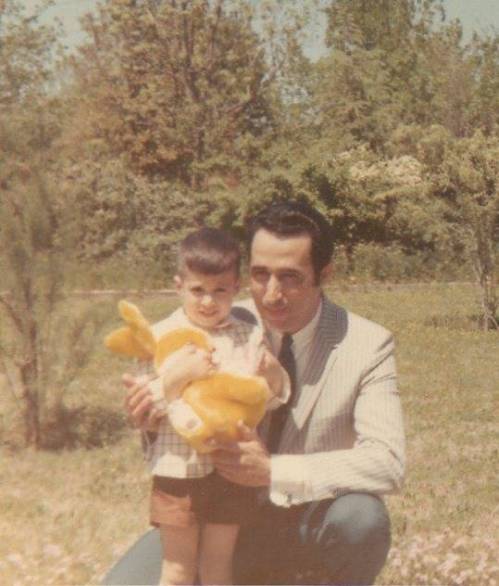
My father and I, Easter Sunday 1967.

My father and I, Easter Sunday 1967.

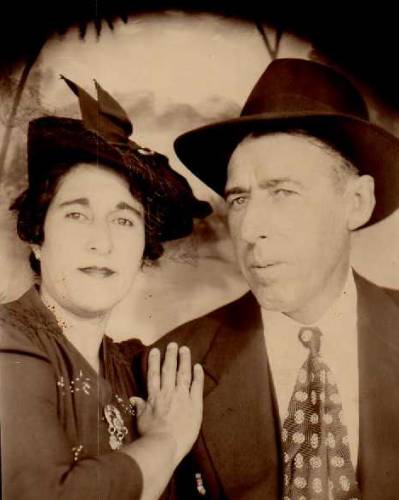
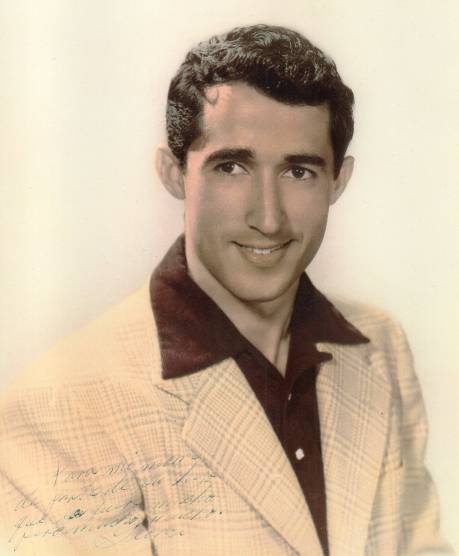
Today my father, George, marks his 80th birthday.  As I stated last month when my mother turned 80, that’s still a remarkable accomplishment.  My father was born and raised in Dallas; the middle of seven children.  On his father’s side, our ancestry dates back to late 16th century Texas; something we’d known about for years, but which he’s confirmed through his extensive genealogical research.

As you might expect, my father is kind of old school.  He comes from an era when family was sacred and hard work was revered.  People took care of themselves and their loved ones in his day, and they didn’t play the victim when things didn’t work out just right.  He worked hard – too hard – all his life and, along with my mother, built a comfortable middle class lifestyle.  He also a typical dad; doing things that only a father would do.  When I was about three months old, my parents ran out of baby formula just as a major ice storm hit Northeast Texas.  My father simply got dressed and walked a couple of blocks to a nearby convenience store.  He thought nothing of it; what else was he supposed to do?  He also thought nothing of standing on his feet several hours a day, slaving over hot printing presses in a dingy shop in downtown Dallas for more than 40 years.  He’s paid for it with bad knees and gnarled toes.  But, that’s what men of his generation did.  They worked hard and took care of their own without question.  Society doesn’t seem to produce men like my father anymore – at least not in great numbers.

Like most Hispanics growing up in old East Dallas, he had it tough.  Classified as “other,” he was occasionally complimented with comments about his fair skin and good looks, as if that made him different, or better.  He told me he once actually got into a fight with a dog in the neighborhood – and won; returning home with a tiny piece of the dog’s ear hanging from the corner of his mouth.  I didn’t know whether or not to believe him – as if I had any reason to doubt him, knowing how mean he could be – until his mother and oldest sister confirmed the story several years ago.  That’s one of those ‘only-my-dad’ type of stories.

So, here’s to my father!  Happy Birthday!  You mean old Mexican!

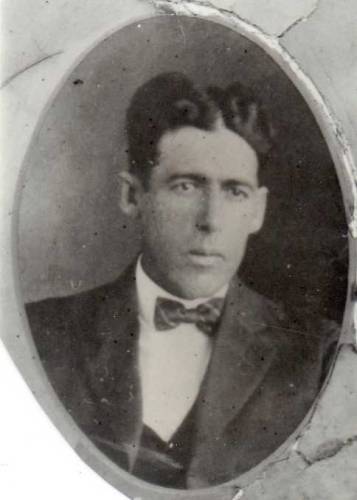
My father on his 16th birthday, in a picture he gave to his mother.

My father on his 16th birthday, in a picture he gave to his mother.


5 Comments

Filed under Essays

England Didn’t Get the Memo – the Sun Set on Your Empire Years Ago!

mapofthefalklandislands2

Tensions have risen again between Argentina and the United Kingdom over the Falkland Islands, a tiny cluster of barely-habitable rocks in the far Southwestern Atlantic, about 300 miles east of the South American mainland.  Those of us who are old enough to remember the ill-fated 1982 battle between the nations over these islands probably also remember it was the first time we’d ever heard of them.  At the time I was surprised to realize that England still had a colonial outpost that far away; some 8,000 miles from London and therefore, closer to Antarctica than Buckingham Palace is to 10 Downing Street.  I knew the U.K. still held Northern Ireland in its grasp, but the Falklands?  And, it’s not like they’re “across the pond,” as the British are fond of saying about the U.S. in their infinitely arrogant demeanor.  The Falklands are clear over on the other side of the globe!  In another hemisphere!

The Falklands are comprised of two large islands (West and East) and more than 700 hundred islets.  They are to the Southern Atlantic what the ABC Islands (Aruba, Bonaire and Curacao) are to the Caribbean: clumps of rock jutting above the water.  If you sit on an Aruban beach, staring into the sunset, you could be blasted with sandy pebbles carried by powerful breezes.  It’s probably why people often visit the ABC Islands to scuba dive and get drunk.  If you sit on a Falkland beach (taking for granted that you can actually find a spot there that qualifies as a beach), you could have a similar experience, except the winds are much colder.  While tropical storms don’t terrorize the Falklands, arctic ones pose a similar threat, as they creep up from the south and assault the archipelago with frigid gusts and heavy precipitation.  They’re not exactly the Galapagos or the Seychelles.  Penguins and seals have populated them for thousands of years, but humans have only been there for the better part of the past four centuries.

Gentoo penguins on the Falklands.

Gentoo penguins on the Falklands.

Argentina refers to the Falklands as Las Islas Malvinas (The Malvinas) and has laid claim to them for the last two hundred years.  I think it’s just a matter of pride and proximity – and animosity towards Great Britain.  What else could it be?

English navigator John Davis may have been the first European to sight the islands, while cruising through the area in 1592.  But, Dutchman Sebald de Weerdt made the first definite and recorded sighting in 1600.  Another Englishman, John Strong, made the first recorded landing, however, in 1690.  He named the sound between the two main islands after Viscount Falkland, a British naval officer.  In 1764, French navigator Louis Antoine de Bougainville established the islands’ first settlement, on East Falkland, and named the islands Les Malovines.  A year later the British established a settlement on what is now West Falkland.  In 1767, the Spanish bought the French settlement and, in 1770, drove out the British.

The British returned to West Falkland a year later, but left again, for economic reasons, in 1774.  Although the British never renounced their claim to the rocky outcroppings, Spain maintained their settlement on East Falkland until 1811.

In 1816, Argentina declared its independence from Spain and, in 1820, proclaimed sovereignty over the Malvinas and began occupying them.  But, in 1833, Britain returned and forcibly expelled the handful of Argentine military officers who remained.  By the end of the 19th century, the Malvinas had a self-supporting colony of Britons who swore allegiance to the British crown.  They ignored frequent Argentine protests over U.K.’s occupation of the islands.

In 1965, the United Nations approved a resolution inviting Argentina and Great Britain to discuss a peaceful resolution to the dispute.  Argentina simply wanted the islands turned back over to them.  Great Britain simply balked.  The relentless head-butting culminated in Argentina’s surprise invasion of the Falklands on April 2, 1982.  Within a few weeks, 10,000 Argentine troops occupied the islands.  Falkland residents couldn’t do much to resist.  But, Argentina was in no position to attack England.  Aside from an inferior military, they were just coming out of their infamous “Dirty War;” a frightening period during which the military dictatorship engaged in a brutal campaign against suspected left-wing political opponents.  People accused of treason disappeared; others turned up dead.  Many of those who vanished remain missing to this day.  The Falkland invasion was really just a political move to unite the Argentine people behind a government whose human rights abuses and financial mismanagement were gaining international attention.

The British response to the invasion was swift and deadly.  They launched a cavalry of battle ships, one commandeered by Prince Andrew.  The conflict was brutal, resulting in the loss of more than 900 lives.  After 74 days, Argentina surrendered and admitted defeat.  It was a serious blow to the morale of the Argentine people and their dubious government.  But, it was bound to happen.  And, more importantly, it still doesn’t mean Great Britain is right.

Long before the Falklands debacle, though, England’s empire had begun to disintegrate.  After the United States broke away from the British crown, England then lost such large territories as Canada and Australia.  The 20th century saw Great Britain experience the greatest number of colonial losses, due mainly to fighting two world wars within a generation.  In 1947, a fatigued and embattled U.K. watched as India gain independence.  Then, England’s colonies in Africa began to clamor for their own freedom.  Both Afghanistan and China had managed to thwart British imperialism in the 1800s.  And, in 1997, another British colonial jewel, Hong Kong, fell under Chinese control.

So, I have to wonder why England insists on retaining the Falklands.  Don’t they realize they’re no longer an imperialist superpower?  Other European nations – mainly Spain and France – conceded losing their own overseas territories.  But, Great Britain won’t let go.  I suppose it’s a Napoleonic complex.  Barely the size of the U.S. state of Alabama, England has to assert itself loudly and – sometimes – viciously.

Argentina is no better suited militarily to take on the British now than they were in 1982.  But, they have become democratized and revamped their financial infrastructure.  Its latest move seems to be isolationism.  Argentina President Cristina Fernandez de Kirchner has politely asked for the Falklands’ return, but British Prime Minister David Cameron scoffed at the likelihood and said he would “fight militarily” to keep the islands.  Such is the air of British self-righteousness: take what’s not theirs and kill anyone who tries to resist.  Their predecessors did that to the native peoples of North America; a sentiment that persists today in their dismissive behavior and attitude.

Falkland residents are scheduled to vote this March whether or not they want to remain as part of the United Kingdom.  I suspect they will choose to stay with Britain.  I also feel that – whatever occurs – the U.S. should stay out of it.  Regardless, England is starting to learn that the world is no longer its open treasure chest.

Leave a comment

Filed under Essays

Resolving

734744_4960778584660_579733978_n

I really don’t make New Year’s resolutions anymore.  I figure you should resolve to do something good and positive all year.  It’s like Thanksgiving and Christmas.  Why wait until then to hope for ‘peach on Earth,’ when you should expect it every day?  Of course, that’s a lost cause, especially in the Middle East and parts of South Dallas, but it’s always the thought that counts.  Regardless of the time of year, I always resolve to do such things as exercise and write more, eat better, consume less alcohol and masturbate no more than once a week.  (I really need to stop molesting myself so much.  At my age, the hand cramps are starting to get to me.)  But, I always try to make each day better.

My biggest regret for last year is that I didn’t get my novel published.  I’m too much of a perfectionist – and, to some extent, a procrastinator.  Just like I should have started my freelance writing career instead of spending so much time looking for a standard job, I should have devoted more time to my book and gotten the damn thing into print by now.  I’m almost embarrassed to say I’ve worked on it for the better part of a decade; although, in my defense, I made three concerted efforts to get it published prior to 2012.

Whatever your particular resolutions are for this year – even if you have some held over from last year, like I do – let’s live each day and each year as best as we can!

Image courtesy “Calvin and Hobbes.”

4 Comments

Filed under Essays

Impeach Them All!

RANT0002-color13mb

Our elected officials have led the American people to the cliff’s edge – and have pushed.  We’re headed into the abyss of recession, and the pathetic bastards don’t care.  Their salaries and health care are assured.  The rest of us get reamed.  Now, don’t get me wrong!  I like being screwed like most anyone else – if I’m enjoying it.  But, I’m not enjoying this!  Neither is most every other American.

This has been going on since…oh, I’d say January 20, 2009, when President Obama took office.  The Republican Party made it a point from the moment that half-blooded Negro won the 2008 election that they’d do everything in their power to undermine his presidency.  Not help to hemorrhage the country’s increasing unemployment; not stop the wars in Iraq and Afghanistan; not start rebuilding the nation’s aging infrastructure; not find out who all was responsible for the banking and housing crises that led to the economic downturn in the first place.  No, their goal was simple: destroy Obama.  For their part, the Democrats replied in their usual conciliatory tone; bowing to the GOP over expiration of the Bush-era tax cuts.  They and Obama relented, lest unemployment insurance lapse in 2011.  Obama collectively – and rightfully – deemed the rest of us a “hostage.”  I dubbed him a wimp for caving to John Boehner and Mitch McConnell.

Now, angry that Obama won last month, the GOP is even more determined to destroy him – and take the rest of the country down, too.  If we look at this entire imbroglio in the same context as a business, Congress would be in bankruptcy.  Wherever I’ve worked anyone who didn’t cooperate with their constituents and strive to achieve the common goals set forth by management ended up contacting the unemployment office.  In other words, they got fired!  They were told to pack up and head out.  I’ve never known a place that allowed people to squabble and not accomplish anything.

Until now.

Congress is the exception.  They’ve always made themselves the exception.  Its members, of course, don’t have to worry about their respective financial futures.  They haven’t had to exhaust their 401K’s and empty their savings like I have in the two years since I got laid off from an engineering firm.  Their health care is secured.  They don’t have to worry about a proverbial “donut hole” like my parents and scrounge through their medications.  They have their own bank where they’re allowed to overdraw their checking accounts and not pay any fees.  Congress lives in its own glass bubble; separate from the rest of us – the people who elected them – and devoid of reality.

But, therein lies the key – we elected them.  We are their employers.  And, since they refuse to do as we instructed, I therefore propose we terminate them.  Every single one of them.  Just fire the whole lot of them and hire some new employees.  From President Obama whose backbone never seemed to have much lead all the way down to every “Tea Party” candidate who give trailer park residents a bad name.  Get rid of them!  They’re not doing the job we told them to do.  They have failed on every level.  I’ve voted Democrat most of my life – including twice for Obama – but, I’m not prejudiced.  Everyone there in Washington needs to go.  If Enron and Bear Stearns could lay off thousands of employees because the companies screwed up, we can certainly terminate every member of Congress for flat out refusing to do their jobs.  I mean, who the hell wants to keep employees like that anyway?  No business can succeed with that kind of staff!

So, as we fly off that “cliff” and head into the New Year, who’s with me on this mass impeachment?  We can work together on this!

Image courtesy I-Clipart.

3 Comments

Filed under Essays

Old Christmas Photos

christmas-tree

I don’t get too much into the Christmas thing; never really have.  But, I do wish most folks a ‘Merry Christmas.’  It’s just a tradition for most of us born and raised in Christian-based societies.  There is one tradition, though, that I think about often.  My father’s family used to gather every Christmas Eve at his mother’s house.  It’s a common Hispanic ritual.  They gather late on Christmas Eve, eat tamales and other conventional Mexican foods, and then go to midnight mass at a local Catholic church.  Most of us in the family, however, didn’t partake of midnight mass.  We’d usually eaten and drank too much by then.

My father’s family last converged on my grandmother’s house on Christmas Eve 2000; she died the following February at age 97.  And, that was it.  No one got together anymore.  Not for Thanksgiving, not for Christmas, not for Easter.  In fact, the few times we gathered were for funerals.  Two of my father’s older siblings passed away in 2004.  But, by then, things had started to descend into disharmony.

More than a year after my grandmother died, I invited a friend to move in with me.  He needed a place to live, and I was working temporary jobs.  Both our bills had been mounting, and we decided to split expenses.  Ultimately, the only good thing that came out of that deal was my dog.  It had been Tom’s*, but when we parted ways in January 2003, he decided to leave the new puppy with me.  Tom also left me with a warning: be prepared for my dad’s family to quarrel over my grandmother’s estate.  He knew from first-hand experience.  When his paternal grandfather died in the late 1970’s, his father’s family became embroiled in a bitter feud over property near their East Texas homes; property that had been in the clan for generations.  Some wanted to sell, while others wanted to hold onto it.  To the latter group, it was too valuable; they couldn’t see putting a price on it.  It was like a family heirloom.

My parents had always advised me against loaning money to friends and relatives; saying it was the quickest way to lose both.  But, I don’t think even they anticipated the battle that would brew over my grandmother’s estate.  When my maternal grandfather died in 1983, his will was settled peacefully; my mother and her three siblings each got something from what was left of the estate, and that was it.  No fighting, no hatefulness.  They carried on and maintained their loving relationships.

The September 11, 2001 terrorist attacks practically killed off what was left of the economic boon of the late 1990s.  The housing market wasn’t spared.  Home values dropped precipitously, and my Aunt Andrea* – who was executrix of my grandmother’s estate – couldn’t find a buyer for the house.  It was an oddly-designed home with no attached garage.  The land on which it sat in North Dallas, one and a half acres, should have been more valuable than the actual structure.  Two realtors tried and failed to sell it.  I think they overpriced it.  A close friend who owns and operates a real estate firm confirmed that to me, when he compared similar-sized houses in the same neighborhood.

But then, Andrea made an egregious move; one that would send the entire family into turmoil.  She decided to lease it to a cousin of mine, Jaime*, and his wife, Linda*.  They were on the verge of losing their own $400,000 suburban Dallas home at the start of 2002 and faced possible homelessness.  I guess they didn’t think that two small children, a pair of luxury SUVs and a country club membership would have a negative impact on their financial well-being.  Without consulting with the family, Andrea let Jaime and Linda move into my grandmother’s house in the spring of 2002.

She said she had to find a way to offset the property taxes.  “Who else is going to pay for that?” she asked my father.  He couldn’t answer, but this didn’t feel right to him.  He was close to Jaime, his nephew; he had helped raised him and his older brother.  They were his brother’s sons; it was a bond that couldn’t be broken.  Blood and family are so strong, my father had always said.  He didn’t realize how badly greed could destroy that.

Andrea didn’t seem to keep good financial records; odd for a woman who had successfully maintained her own beauty salon for years.  The contract or lease she signed with Jaime and Linda was for them to pay $900 a month for a year.  I thought, “Nine hundred dollars a month buys a three-bedroom apartment in my neighborhood!”  No one ever saw this “lease.”  But, before then, Andrea had revealed something personal – and curious – to my mother: “I can’t let go of the house.”

My mother reminded Andrea that the house didn’t belong to her alone; it belonged to the family.  But, my mother decided to stay out of it; she was an in-law and didn’t feel she should get too involved, even though she and Andrea were close friends.  I wish Linda had taken that same attitude.

At some point, that one-year lease metamorphosed into two years.  When my father’s older sister died in May 2004, Jaime and Linda were expecting their third child.  Supposedly, it was an unplanned event; an “accident,” Andrea told my dad.

“Pinché accident!” my dad grumbled.  It was no accident Jaime’s thing fell out of his pants and into his wife.

When Jaime’s father died in October 2004, the family dynamics had become strained.  It had been more than two years since Jaime and Linda had moved into my grandmother’s house.  Linda wasn’t working, but they’d redecorated managed to find the money to redecorate the place.  More importantly, there was no accounting of the “lease” payments they were supposed to be making.

My mother – who had retired the year before – even offered to help Andrea get her papers in order.  “I have more time now,” my mother told her.  Andrea initially accepted, but said nothing about it afterwards.  Soon, though, Andrea would be forced to get that paperwork together.

The proverbial battle lines Tom had warned me about started to materialize in the fall of 2004.  My father’s younger brother, Robert*, had had enough.  Jaime and Linda weren’t renters; they were squatters.  At some point that same year, they actually sought to buy the house, but their credit wouldn’t permit a loan.  Then, they came up with the audacious idea of splitting the property, and they’d purchase that portion of the land on which the house sat.

“Can’t do that,” my real estate friend said.  I suspected as much.

Robert and his son decided to sue Andrea to have her removed as executrix.  Robert wasn’t trying to take over the estate; he just wanted the property sold, and the proceeds divided evenly among the appropriate survivors.  Then, we learned that Andrea had included a clause in my grandmother’s will forbidding anyone in the family from filing suit against her.

“Can’t do that,” another friend told me.  I knew that, too!

Things were getting stranger.  One of the witnesses to the original will was a young woman Andrea had hired to help care for my grandmother; a woman who was an illegal Mexican immigrant and who we suspect had stolen some jewelry from my grandmother.  She was long gone by the time my grandmother died.  The attorney who had drafted the original will, an old family friend, knew that girl was an illegal.  Robert, my mother told me, had never really liked that attorney friend; despite that the friend and my father had known each other since grade school.  They were long-time friends from the old East Dallas neighborhood where they all grew up, when Hispanics had to stick together to survive.  The crisis over the will had started to batter that history.

One afternoon my dad spoke with Andrea on the phone; trying to serve as ambassador between her and Robert.  “Just sell the house and give your brothers and sisters a dollar!” my dad heard Andrea’s son blurt out in the background.  Andrea didn’t think my father had heard that.  The battle lines were now walls.

Finally, in February 2005, we went to court.  Robert, Jr.*, flew back to Dallas for the hearing.  He was there with his sister and a realtor friend of hers who had been the first to try to sell the house.  As I walked into the courthouse, I saw Andrea sitting on a bench, alongside another cousin.  I said hi to both.

“Robert’s over there,” Andrea said, waving a hand ahead of her, as if swatting a gnat.  That cousin, who I’d once considered a sister – as kids, people sometimes thought we were twins – practically scowled at me.

“Alright,” I merely said.

“There’s been a new development,” Robert, Jr., told me.  Andrea had resigned her position as executrix the night before.  The court now would appoint an interim executor and give Jaime and Linda enough time to look for a new house before moving out.

The estate was finally settled in 2006.  The court-appointed executor had sold the house (appropriately enough) to a Mexican family for well under the expected price.  When my father got his copy of the attorney’s expenses, he noticed there were a number of charges for conference calls with Linda.  She had contacted the attorney almost weekly; perhaps, I thought, asking where was the money.  Money that would go to her mother-in-law; not to Jaime, certainly not to Linda.  But, Jaime’s mother had decided to split her share of the money between him and his two siblings.  She didn’t need it, she later told my dad; she had enough of her own.  Moreover, Linda told Andrea the money wasn’t enough.

“That’s none of her goddamned business!” my father replied, when Andrea revealed that tidbit to him one day.  “And, you can tell her I said that, too!”  Linda was invited to call my dad, if she felt compelled to discuss the matter, he told Andrea.  She never did.

Worse, as far as my father was concerned, was a statement Jaime had made in the legal documentation; something that had jumped out at him like a bad dream.  Jaime and Linda claimed they had to spend money to make the house “livable;” from their perspective, it had been in deplorable condition, and the money that should have been used to pay off the taxes instead went to the redecorating.  It was an insult; a slap against my paternal grandfather who had built the house in the late 1950s.

On the Saturday after my grandmother died, my father sat in a chair near the patio door in the den of that house.

“What’s wrong?” I asked rhetorically.

“Oh, nothing.”  We men always say that, even if there is something wrong.  “Just thinking,” he finally said.  “All the birthdays, all the Christmases…”  His voice trailed off, as his gaze remained on the patio area; clear on that bright cool February day.

Years ago, way back when, my cousins and I were always laughing during those holiday gatherings.  Even when we matured and went to work, when some married and had kids of their own, everyone gravitated back to my grandmother’s house where food exploded onto the dining room table in a gastronomical symphony, where everybody had a story and a camera, and a heavily-decorated Christmas tree stood unimposing against the large window in the living room overlooking a major thoroughfare.  I always wondered if people passing by slowed to peer through that window, with the drapes pulled back, and wished they could join us.  Now, with everyone either older and leading their own lives or deceased, I occasionally peruse those old pictures and find myself wanting to jump back through that window.  Way back when.

*Alias.

1 Comment

Filed under Essays

Update: Third Time’s A…Whatever!

Statue_of_the_Tired_Man

Sometimes I think the umbilical cord got tied around my neck when I was born and I ended up deprived of oxygen for the first few seconds of life; not enough to kill me, but enough to kill off a handful of brain cells.  Brain cells that never had a chance to grow into fully functioning emblems of life.  The job I thought I had turned out to be a bust.  I hate to sound like a victim, but the health care company where I was supposed to go to work needs a thorough proctological exam.  Its corporate head is jammed up its corporate ass.  Then again, what company doesn’t suffer from that affliction?  Especially the health care ones!

I was really surprised to get that job in the first place.  My interview was set for a Friday at 8 A.M., and I was late because I got lost.  MapQuest didn’t lead me in the right direction.  Didn’t they have problems with the Grand Canyon being put somewhere like Detroit or something a while back?  Either way, it just proves you can’t rely on technology too much.  In the old days – circa 1990 when I first went to work at the bank – you had to call the place and get actual cross street names and stuff.  Either way, I arrived 20 minutes late and made the best of it.  I looked at the lady in the eye and asked plenty of questions about the company itself.  I’d done my research on it; even finding out their latest stock price from the day before.  That kind of detail usually impresses people, or terrifies them if you’re with the Secret Service and trying to nab someone selling faux Cabbage Patch dolls.  But, I forgot about it after I left; thinking that the 20 minutes late thing killed it for me.  I returned home and went to bed.  I was still sleepy.  Thank God my truck knows its way back to the house.

Then, the recruiter with the health care staffing agency who had contacted me almost a month earlier called me late Monday afternoon.  The company offered me the position!  I couldn’t believe it.  I’d been late to an interview two previous times and didn’t get the job.  So, I was surprised.  Not enough to have an orgasm, but enough to have a drink that evening.  I had to complete the requisite paper work and submit to a drug screening and criminal background check.  I hate drug screening tests!  Can’t they just draw blood these days, instead of requiring you to urinate into a tiny plastic cup and then hand it back to them, like you’re a bartender at a dive joint?  I guess blood makes some people too squeamish.  The criminal background check is always intriguing.  I never know if they see my Spanish surname and feel compelled to contact the Border Patrol.  Damn those illegals!  But apparently, a weekend of drinking only water and shredding important documents paid off.  I was scheduled to start this past Monday, the 17th.  What could go wrong now?

A lot.

I had asked the recruiter (who’s in Florida) to whom was I supposed to report at the company.  She didn’t have a name; just go to the receptionist’s desk, and someone will lead me to orientation.  Okay, good.  Orientation was set for 9 A.M., and I arrived at 8:35.  I signed in at the receptionist’s desk log book and waited.  And waited.  And waited.  And waited.  For about 10 minutes.  A couple of people came and went.  No one stopped to ask if they could help me; offer me a bottle of water; compliment me on my suit.  They just strolled past as if I was another cheap Christmas ornament.

Finally, the receptionist glided into the office in her 5-inch spike heels.  I told her who I was and why I was there.  She initially looked at me as if I was from the sewer plant; then she told me to head back down to the lobby and “wait on one of those black couches.”

“Any particular couch?”

“No, just pick one.  And, I’ll call someone to come get you.”

Okay, good.

So, I loped back down to the first level of the spacious glass-lined lobby and waited on one of the black couches.  And waited.  And waited.  And waited.  Until I needed to find a men’s room.  After I stalked the halls of the first level, looking for the men’s room – hoping a ninja security official wouldn’t zap me with a taser for looking suspicious in my black suit and black brief case – I returned to that same black-ass couch.  And waited.  And waited.

Then, I noticed a sign on an easel opposite from me, beside a set of glass double doors.  In faint, italic type it said: Orientation.  Ah-hah!  I found it!  I grabbed the door handles.  They wouldn’t open; it was a secured access area.  Like Fort Knox.  That ninja security was surely headed my way now.  I’d better retreat to the black couch on the other side of room.  Another side embedded in the wall next to the doors advised visitors to head to the receptionist desk on the second level.  I’m not a visitor!  I’m a new employee!

I called the recruiter.  She muttered a ‘hm.’  Not one of those, ‘that’s an interesting question,’ or a, ‘I’ve never thought of that,’ kind of ‘hm.’  It was one of those, ‘Oh, shit!  I don’t know what the hell to do,’ kind of hm.

“I’ll call you back,” she told me.

Please do.  When you get a chance.  I was starting to like hanging around that lobby, examining all the cheap artwork, and hoped I could savor it a little while longer.  “I’ll go back up to the receptionist desk,” I told her.  Perhaps, when I was in search of the men’s room, some tired human resources drone lumbered out of her cocoon looking for me and only found my butt print on that black couch.  I think he was here!  He had to have been right here!

The receptionists gave me that, ‘Oh, you again,’ look.  Her feet are still recovering from walking around in those 5-inch spike heels, I thought.  She started calling people; five different people.  I counted.  I hoped one of them wouldn’t be a ninja security official.  She went off on the last person: “Why didn’t I know about this?  Why doesn’t this trickle down?”

“I’m going to call my recruiter again,” I told her.  I wanted to tell Trickle-down she looked cute, even though she didn’t.  But, I decided it’s not worth the energy to kiss up to people anymore.  I retreated back to that one black couch where my butt print had faded.  I hoped I wouldn’t inadvertently make it reappear.  I decided to stand, chic black cell phone in hand, looking like I was waiting for a client.  I can do that very well.  I waited.  And waited.  And waited.

I’d heard the receptionist utter the name of someone; a lady in human resources I suspected.  Perhaps a life line into Fort Knox.  If I could find her, I’d be free from the glass lobby.  So I stopped a young woman exiting Fort Knox and asked if she knew this person.

“No,” she squeaked, before ambling away in her 4-inch spike heels.  What’s with these damn spike heels?!  I thought they’d gone the way of dial phones.

I asked another young woman exiting Fort Knox if she knew that particular woman.

“No,” she replied, before shuffling away in her painted-on jeans.  I thought painted-on jeans had also gone the way of spike heels.  They look so…so 70s-ish anyway.  Especially on a fat chick.

I stopped another woman leaving Fort Knox and asked if she could let me into the area.  I was prepared to tell her she looked cute, even though she didn’t.

“You have to check in at the receptionist desk,” she said.

“Okay,” I said with a gritty smile, “thank you.”  Translation: I’ve already done that you dumb bitch!  Let me into fucking Fort Knox!

I returned to the couch, cell phone in hand, keeping an eye out for that ninja security official.  I could see my big black truck from that vantage point.  It seemed to be calling for me.  ‘I’ll take you home now!  Just say the word and we’re gone.’

Then, that dreaded ninja security official arrived.  By my truck.  She stepped out of her little car with the yellow light on top and began examining my truck.  My truck can take care of itself; it’s a Dodge after all.  It scares Smart Cars stupid.  But, I decided I needed to help it out anyway.  The security official had whipped out her little note pad and was scribbling down my license plate number.  Didn’t note pads go the way of painted-on jeans?  I looked at her; this poor pathetic 50-something soul.  She was either a virgin or a lesbian; a girl whose role as a parking lot security official or a gym teacher was set at birth.

“I’m a new associate,” I told her.  Translation: I’m supposed to be here, so get the fuck away from my truck!

She squinted at me through her sunglasses.

“Apparently, there’s been a miscommunication,” I told her.

“Okay,” she said politely.  She had a nice smile – for a lesbian / virgin.

I arrived back home, much to my dog’s delight, and immediately emailed my recruiter to explain the situation.  ‘There’s been some kind of misunderstanding,’ I gleefully typed.  Translation: somebody fucked up big time!  I don’t know who it was; you or the company.  But, one of you two – maybe both of you – doesn’t have your shit together!

I breathed deep.

She called me and uttered that nefarious ‘hm.’  “Let me find out what’s going and call you back.”

Okay, good.  That would help to know what’s going on.  Problems get solved that way.

She called me back a few minutes later and told me to return to the company for the second half of orientation.  She even gave me the name and phone number of someone.  Perfect!

As I headed back, my phone rang.  It was a young woman I’ll call Andrea; she was with the company’s HR.  “I’m sorry,” she sang.  “There’s been some kind of mix-up.”

“Oh, I understand.  Those things happen.”  Translation: you have to be kidding me?!

She told me to wait for her in the lobby of that same building.

So, I arrived and perched myself in front of that same black couch; attired this time in a burgundy shirt and black slacks.  I still had my chic black cell phone and black brief case; still trying to look like a traditional well-seasoned businessman waiting for a client.  I waited.  And waited.  And waited.  And waited.  I finally decided to call that number the recruiter gave me.  It was the receptionist; the nothing-trickles-down-to-me gal whose feet hurt from walking around in those 5-inch spike heels.  She didn’t know why I was calling her, but said she’d call someone in HR to come get me.  Okay, good.  Don’t rush though.  I’m really enjoying this art work.

A moment later a young woman wandered into the lobby.  Andrea.  “I’m sorry,” she sang.  She was my saving grace; she knew who I was and why I was there – even if she resided in another building across the street.  She immediately began calling people from her hot pink cell phone.  She called three.  I counted.  No one knew what she did – that I’m a technical writer who was supposed to start that day.  For some reason, though, she couldn’t let me into Fort Knox.  “Let’s go upstairs!” she said cheerfully.

Oh sure!  Want to hang out near those cool fake Christmas trees and see Trickle-down again.

Trickle-down was not happy to see us.  She also didn’t know Singing Andrea.  They began calling more people.  They got one woman in there who tried to help.  I mean, she really tried.  But, she didn’t know where I was supposed to go.  I couldn’t go to hell.  I was already there!  They lulled another woman out from the back.  She must have rushed to the front; her bangs were astray.  She didn’t know where I was supposed to go.  They tricked a young man to the receptionist desk.  He didn’t know where I was supposed to go.  The first woman had disappeared briefly, then reappeared – with the names of two authority figures!  If one couldn’t help, the other surely could.

I followed Singing Andrea across the hall into another Fort Knox-type area in search of this mysterious person.  She wasn’t at her desk.  Singing Andrea asked someone about the second woman.  I followed her to that second woman’s office.  She didn’t know who was or where I was supposed to go.

I followed Singing Andrea back into the lobby.  “I’m sorry,” she hummed.

“Should I just wait?” I asked, clinging onto hope like a third-class Titanic passenger would hang onto a deck chair.

“No, because I don’t know what’s going on.”

Oh, God!  You’re kidding me!

“I’ll just call my recruiter,” I responded with a gritty smile and sauntered back to my truck.

‘I told you,’ it said.

My dog was even more surprised to see me.  I emailed the recruiter.  ‘Things still didn’t work out,’ I wrote.  Translation: they still don’t know what the fuck they’re doing!

I was exhausted.  But, at least I got to watch another episode of “People’s Court.”  I love Judge Marilyn Milian!

The recruiter called at 6:45 A.M. the next morning.  “There appears to have been some kind of misunderstanding.”

Deep breath – no!

This time she had a name; someone I’ll call Donna.  “They’ll conduct a special orientation for you,” the recruiter told me.

I’ve always known I was special – in a ‘Children of a Lesser God’ kind of way – so I started to feel warm and loved.

“It’s at 9; be there by 8:30.”

I wouldn’t miss this for the world.  Besides, my truck is multi-talented; it can run on water, too.  I arrived at 8:35.

Trickle-down gave me her best constipation-from-hell face.

Damn, girl!  Are your feet still sore?  “I have a name.”

Her eyes lit up.

“Donna,” and then, Donna’s last name.

She didn’t recognize the name – and didn’t have a phone number for her.

I started to get constipated.

“But, she has an email address, so let me try to get hold of her that way.”

Oh, thank God!  I mean, who in a company wouldn’t have an email address these days?

I called the recruiter’s supervisor who was also in Florida.  “They don’t have a number for Donna.  Do you?”

“Hm,” said recruit-supervisor.  (Shit!)  “Let me call you back.”

Okay, good.  I want to check out that art work again.

I waited.  And waited.  And waited.  And waited.

Trickle-down said she hadn’t heard from Donna yet.

“I’ve let my recruiter know,” I smiled grittily.

Recruit- supervisor told me to ask the receptionist at the lobby desk to let me into Fort Knox.  I could see the lobby desk from my second level view; it was barren.  No receptionist; no lesbian / virgin security official; not even a phone or a wax plant.  “Just go down to the first level and wait for someone.”

I hoped ‘someone’ would have a name.  So, I waited.  And waited.  And waited.  And waited.  I’d noticed some people gathering in a nearby conference room.  I finally decided to approach and ask somebody – anybody! – if they knew this mysterious Donna.

A young woman with coal black hair said she knew Donna and immediately tried to call her; she couldn’t reach her.

Constipation started creeping back into my gut.

Coal-black finally asked another woman who entered the conference room if she could help me out.  This second woman, a smiling middle-aged lady, uttered what I’d suspected for the past 24 hours; the company often had a failure to communicate.  Trickle-down wasn’t alone!  “I’ll find someone,” said Smiling-middle-aged and disappeared upstairs.

I waited.  And waited.  And waited.  And waited.

A third woman in a purple sweater approached me.  “Let me find out what’s going on,” she said merrily.

“Okay, good.”

Purple-sweater disappeared upstairs.

I waited.  And waited.  And waited.  And waited.

Recruit- supervisor finally called back.  “They’ve decided to pull the position.”

“Excuse me?”

As fate would have it, the position had evaporated sometime between the time I pissed in a cup and the day I arrived with my black brief case.  It’s just that no one below upper management knew it.  Until five minutes ago.  Texas time.

My truck and my dog were both glad to see me.  It was mutual.

This has been one of the strangest odysseys I’ve ever encountered.  But, it proves what I say in my ‘About’ page: I’m just not one for the corporate environment.  I’m too independent-minded.  I’m a true outsider.  Always have been; always will be.  I’m a writer; therefore, I’m a strange little creature.  I just don’t fit into anyone’s box.  Other people’s rules don’t apply.

So, this it.  I’m done with corporate America.  I’m starting my own freelance writing business.  Writing is all I’ve ever wanted to do anyway.  I’ve been writing since before most people started reading.  I was reading before most people were walking.  It’s part of my genetic makeup.  Thus, I see all this as some sort of sign; a twisted, back-breaking sign.  But, a sign nonetheless.  You dumb ass it said!  You don’t belong behind some else’s desk!  Alas, I’ve come to realize it.

Now, the Chief really begins a new chapter in his life.  Besides, my dog and my truck will be grateful.  And, I can watch more Judge Marilyn Milian!

Leave a comment

Filed under Essays

Gun ≠ Manhood

2012-12-17-Screenshot20121217at4_33_36PM

Recently Bushmaster, the gun manufacturer, released an advertisement aimed directly at its male patrons; challenging them to reclaim their “man card.”  The online ad linked to a “test” where questions would help determine if a man is a real man.  Some are silly: ‘Do you eat tofu?’  Others are practical: ‘Can you change a tire?’  For the record, my answers are ‘no’ and ‘yes,’ respectively.  The test apparently has been removed, but this debate is coming up again in light of the Connecticut school shootings last Friday.

The connection between Bushmaster and the massacre of 28 people in that grade school is more than just a little unsettling.  Adam Lanza, the 20-year-old shooter, used a .223 assault rifle – the same kind displayed in Bushmaster’s advertisement.  In this gun-loving society, some men – and women – still equate firearms with masculinity.  A gun or rifle, after all, has a strangely-phallic shape (which may or may not be by design) and bullets could easily be mistaken for testicles or even sperm cells.

This whole thing is similar to the ongoing myth that a boy becomes a man when he has sex with a woman.  Apparently, the hyper-macho crowd didn’t that out too well, since it assumes that adult females are the harbingers of masculinity; that the secret ingredient to true male adulthood is somehow ensconced within a woman’s vaginal walls.  But, as the proud owner of a penis, I never felt a woman held the ‘Holy Grail’ to my manhood.  And, neither does Bushmaster.  Despite its phallic resemblance, a firearm just can’t substitute for a penis, or more importantly, a man’s true sense of self worth.

I’ve known plenty of real men in my life, including my father and uncles.  They, along with several male friends, know how to shoot a firearm; a few own actually a gun or two.  That’s fine.  People have that constitutional right, just like they have the right to free speech, which I feel is more important.  But, none of those men I know has the overwhelming need to shoot a gun and kill people to prove their masculinity.  Boys become men when they learn to accept personal responsibility for their actions; when they learn to take care of themselves; when they show respect for others, while maintaining their dignity; when they care for their families and their communities; when they stand up for those who truly can’t stand up for themselves.  These are real men I know: fathers and husbands; hard workers; tax-payers – men who have built good lives for their families.  A real man knows how to set the table and do laundry, as well as change a flat tire.  A real man spends time playing tea party with his young daughter, or coaching his son’s little league soccer team, not out shooting deer and moose.

These men don’t need a gun manufacturer to issue them a “man card.”  They earned their “man cards” themselves – not from some stupid test asking about tofu and staring down fifth-graders.  They’re the silent majority.  They’re the real men of this world.

Leave a comment

Filed under Essays

Third Time’s A…Whatever!

FormatCube6inLLF8

Today, the Chief begins the next phase of his increasingly curious life – another job.  It’s a contract technical writing position – the third one in the past year.  The last two were pulled out from beneath me without much warning.  So, we’ll see how this one goes.  I’m trying to temper my enthusiasm.  A close friend of mine told me not to be so pessimistic; that people can sense a negative attitude and eventually steer away from it.  I almost told him to go to hell, but he’s such a good friend, and I don’t have too many friends.  Such is the plight of the writer.  We observe and write about human nature, but just don’t like to get too close to those human types.  Admittedly, it’s tough to be optimistic after enduring unemployment for the better part of the past two years.  Getting laid off from that engineering company was a mixed blessing.  The stress throughout that last year had become almost unbearable.

So, why would I put myself back into that maelstrom?  Well, there are these minor inconveniences called bills.  They’re like zits to a teenager.  You eliminate one, and another pops up.  They just don’t go away.  My student loan zits have become especially annoying.  They really just won’t go away!  They impact another little inconvenience called credit reports.  I suppose I could pack up and move far away to some isolated coastal community like a lot of writers and concoct a new identity to eschew those little pests.  But, I’m too tied to this community.

Thus, I reenter the corporate world once again; pushing my creative writing career just a tad further back.  But, I need and want this technical writing experience.  I love it almost as much as I do fiction writing.  I trained for it anyway; my English degree specializes in professional writing.  I have to make that pay off.  Besides, I reflect on my years in the standard business world and found all the crap I’ve seen and done makes for some great stories!  That’s the writer in me: always finding a way to humiliate the people around me without them realizing it.

1 Comment

Filed under Essays