Category Archives: News

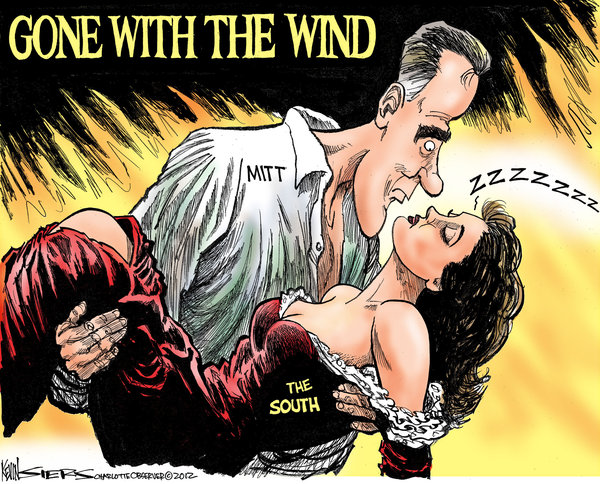
Cartoon of the Day


Leave a comment

Filed under News

Picture of the Day

A boy named Ahmed mourned last Thursday for his father, Abdulaziz Abu Ahmed Khrer, who was killed by an army sniper in Syria. 

As always in war, the children suffer the most – but the self-appointed leaders never can bring themselves to care about such trivialities.


Leave a comment

Filed under News

Quote of the Day

I think it’s been the worst campaign I’ve ever seen in my life. …I hate that people think compromise is a dirty word.  It’s not a dirty word.” 

– Former First Lady Barbara Bush during a symposium on the first ladies at Southern Methodist University last week.


My senses must have gone astray, since I actually agree with Mrs. Bush on this one.  I lost respect for her after she dismissed the severity of the Iraq War in 2003 by saying, in effect, she didn’t want to be bothered by the sight on TV of dead and injured troops returning home.  I really came to loathe her after she commented that things were “working very well” for Hurricane Katrina evacuees from New Orleans, as they landed in the Houston Astrodome – already having lost most everything they ever owned and being forsaken by the government.  But, for once, the old broad gets it right this time!  Indeed, compromise is not a dirty word.  Tell that to John Boehner and New Gingrich!


Leave a comment

Filed under News

Chippewa Might Get Repaid

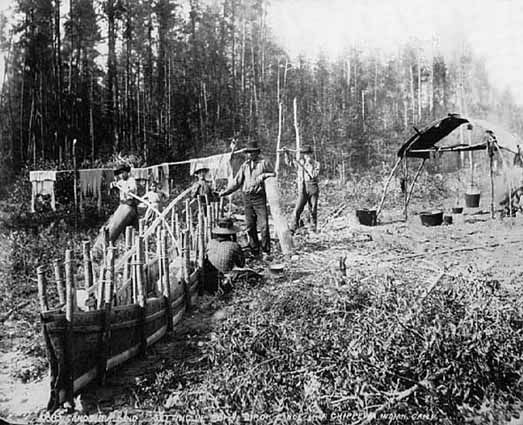
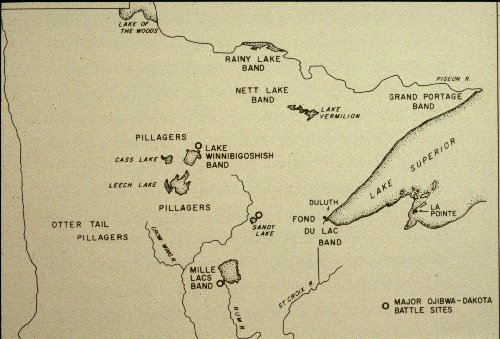
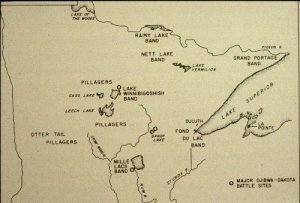
In yet another case of better late than never, the federal government is closer to repaying the 6 Chippewa nations of Minnesota for land and timber deals made more than a century ago – deals that were never honored.  It’s a familiar story.  The U.S. owes millions of dollars to the Fond du Lac, Bois Forte, Grand Portage, Leech Lake, Mille Lacs and White Earth communities, which comprise the Chippewa tribe.  Congress, however, has taken up the matter once more and is debating a $28 million payment to the 6 Chippewa bands.  More than 40,000 Chippewa members could receive $300 each.  The remaining $16 million would be split among the governments of the 6 bands.

Karen Diver, chairwoman of the Fond du Lac Band of Lake Superior Chippewa, said her band plans to divide its share of the money – more than $2.5 million – among its members so that each will get an additional $700, for a total of $1,000.  “It will bring some level of closure,” she said, adding that mismanagement of Indian land decades ago cost her reservation dearly.

Of the 100,000 acres within the Fond du Lac reservation’s borders, 80% fell into non-Indian hands.  The band has since bought back some of it and now owns about 33% of the land within its perimeters, Diver noted.

Not all Indigenous American communities have been so fortunate.  The land seizure included a phenomenon some northern Minnesota Chippewa called “The Wandering 40,” said Jim Northrup, a Fond du Lac Band member and author who lives near Cloquet.  “A timber company would buy the stumpage rights on an Indian’s allotted 40 or 80 acres, but then they’d get in there cutting and just keep wandering,” he explained.
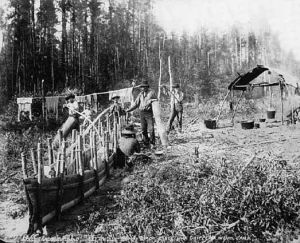
 

The settlement stems from the federal government’s management of the 1889 Nelson Allotment Act, under which some reservation land was allotted to individual Indians, but other plots were ceded to the United States and sold to non-Indians.  Proceeds from the sales were supposed to go into a trust fund for the Chippewa.

In many cases, that didn’t happen.  The federal Bureau of Indian Affairs dipped into the trust fund for maintaining its vehicles and other daily expenses.  In 1999, a federal court found that the deal shortchanged the tribes, also known as the Ojibwe, and awarded the multimillion-dollar settlement.

The land comprises 650,000 acres across the six reservations, from White Earth in western Minnesota to Grand Portage at the tip of Minnesota’s Arrowhead country.

Stripping and selling the land deprived the tribe of development opportunities, said Mark Anderson, a Bois Forte Band member and Minneapolis-based attorney for the Minnesota Chippewa Tribe.
 

In 1948 and 1951, the Minnesota Chippewa Tribe brought those allegations in complaints to the Indian Claims Commission.  The claims eventually formed the basis for the federal government’s agreement to pay the Chippewa $20 million.  More than six decades later the government still hasn’t honored those agreements.

It’s not likely the current Congress will approve a lump sum of $28 million.  In this tempestuous election year, with unemployment still high and gas prices on the rise, the economy remains like a rock hanging around the Obama Administration’s neck.  I’m sure the GOP presidential candidates and other Republicans would twist any deal to reimburse the Chippewa into an example of Obama’s poor handling of financial matters.  While they may claim fiduciary restraint, it’s actually code for blatant racism.  The Caucasian elite that dominates the federal government always hoped the Indians would just go away, or accept their “place” in society; e.g. sub-human status.  Here in North America, Europeans tried to wipe out the indigenous peoples through violence – and, of course, failed.  So, their descendants resorted to such machinations as those that befell the Chippewa.  When Native Americans – who already had been beaten down by violence and disease – had the audacity to demand reimbursement for all those contracts and agreements, the term “Indian giver” was born.

Many individual Chippewa, including Northrup, don’t find much comfort in what they see as pathetically deficient compensation for what their ancestors lost.  “A thousand dollars is (nothing more than) a good night at bingo,” he said.  “It should be $28 billion, not $28 million.  They’re just trying to make legitimate the theft of Indian land.”

No amount of money or land could repay any Native American community for all the bigotry and exploitation they endured; just like no amount of Social Security can reimburse someone for a lifetime of hard work and putting up with bully bosses, coworkers with bad attitudes and paltry raises.  But, as Karen Diver stated, it’s a start toward some degree of justice.

 

1 Comment

Filed under News

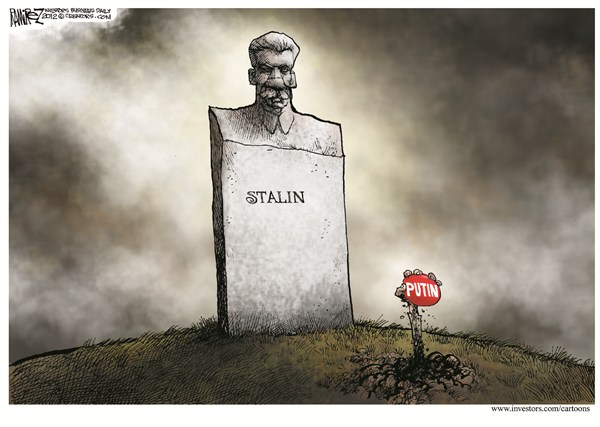
Cartoon of the Day

Some things never die!


Leave a comment

Filed under News

Picture of the Day

Cherry blossom trees at the Dallas Arboretum.  This weekend they’re hosting a Hanami, or cherry blossom viewing, by the Japanese-American Society to honor the victims of last year’s earthquake and tsunami in Japan.

Leave a comment

Filed under News

Quote of the Day

“I believe that freedom of speech and freedom of religion go hand-in-hand in America.  I should be able to express moral views on social issues – especially those that have been the underpinning of Western civilization for 2,000 years – without being slandered, accused of hate speech and told from those who preach ‘tolerance’ that I need to either bend my beliefs to their moral standards or be silent when I’m in the public square.  In any society that is governed by the rule of law, some form of morality is always imposed.  It’s inescapable.” 

– Kirk Cameron, quoted by World Net Daily 

Meanwhile, the menopausal debutantes on The View discuss Cameron after he made a similar statement on Piers Morgan Tonight.  I say just give all of them some a box of chocolates and a pitcher of frozen margaritas!


Leave a comment

Filed under News

Reservation Residents Block Pipeline

Members of the Pine Ridge Indian Reservation in South Dakota blocked two Canadian trucks from driving through the community on March 5, leading to a 6-hour standoff and 5 arrests.   The Rapid City Journal reported that “several dozens” of American Indians were part of the blockade.  But, a community journalist confirmed that only those 5 individuals had been arrested.  Pine Ridge is home to the Lakota and is one of the poorest communities in the U.S.

The trucks apparently were on their way to Texas as part of the Keystone XL Pipeline project.  KILI, a Pine Ridge radio station, posted an alert about the trucks’ arrival and asked for citizens to engage in a blockade.  Lakota police and state troopers had already stopped the trucks and ordered them to return to Canada.  But, the drivers refused.

“We formed a blockade to stop tar sands oil mine equipment from passing our lands,” said Deborah White Plume, one of the residents arrested.  “The truckers told us the corporation office from Calgary, Alberta, Canada and the State of South Dakota made a deal to save the truckers $50,000 per truck.  There were two trucks, from having to pay $100,000.”

TransCanada, a Canadian oil and gas company, still hopes to build an oil pipeline that would stretch from Alberta, Canada to Texas, roughly 2,000 miles.  If constructed, it will carry one of the dirtiest fuels: tar sands oil, which is oil mixed in with sandy soil, rather than oil that is pooled beneath the surface.  Tar sands oil extraction is a highly complex and intensive process.  Along its route, the pipeline could devastate ecosystems and pollute water sources, which in turn, could jeopardize public health.  Before it can begin construction, however, TransCanada will need a presidential permit from the Obama Administration.  Thus far, President Obama and his Democratic colleagues have refused to grant the permit.  The pipeline has become an election year issue with Republicans, including Texas Governor Rick Perry, saying that it could boost the economy.

“The tribal police had to let the trucks get off the rez,” said Plume.  “They escorted them to the reservation line.  We oppose the tar sands oil mine in solidarity with Mother Earth and our First Nation allies.”


6 Comments

Filed under News

Cathay Williams – One Black Woman’s Tale in 19th Century America

This has to be one of the most intriguing stories I’ve come across.  Cathay Williams was a Black woman born into slavery who served in the U.S. Army immediately after the end of the Civil War.  She disguised herself as a man and used the name William Cathay.  There isn’t a great deal of information about her, but apparently Williams was born in Independence, Missouri in September 1842.  Her father was a “free man of color,” but her mother was a slave; thus, Williams also was considered a slave.  “Free people of color” was a term used to describe individuals who were of African or Negro descent in the Old South, but did not live as slaves.  Many of them were actually mixed Negro and Caucasian, known as “mulattoes.”  “Free people of color” was used primarily in New Orleans and the Louisiana Territory where a number of mulattoes lived.

During the Civil War, the Union military often forced slaves to work as cooks, launderers, or nurses.  But, when Williams was about 17, the 8th Indiana Volunteer Infantry Regiment pressed her into service.  For the next few years, Williams traveled with the infantry, accompanying soldiers on marches.  At one point, she was transferred to Little Rock, Arkansas, where she undoubtedly saw Negro men serving as soldiers; a site that may have inspired her desire for a military career.  When the Civil War finally ended, Williams was working at Jefferson Barracks near St. Louis, Missouri.

Despite the prohibition against women serving in the military, Williams enlisted in the U.S. Regular Army in November of 1866, passing herself off as a man.  Shortly afterwards, she contracted small pox.  Once she recovered, she rejoined her unit and was shipped to the New México Territory.  Whether because of the lingering effects of the small pox, or the heat, Williams frequently fell ill.  Finally, the post surgeon discovered she was a woman and informed the post commander.  Her commander discharged her in October 1868.

Williams remained in New México, however, working as a cook at Fort Union.  She later moved to Colorado where she entered into a short-lived marriage.  Here her life story becomes murky; she may have also worked as a seamstress and even possibly owned a boarding house.  Around this time, her story became public.  A reporter from St. Louis heard unsubstantiated reports about a slave woman who had served in the U.S. Army.  Surely questioning the veracity of such a claim, he inquired further and – certainly to his surprise – found out about Williams.  He traveled to Colorado to interview her at length.  In January 1876, details about her life, including her stint in the Army, appeared in The St. Louis Daily Times.

Williams’ life didn’t get any easier.  Around 1889, she entered a local hospital.  Why is unknown, but she remained there for a long time.  In June of 1891, she applied for a disability pension based on her military service.  There was precedent for it.  Two women, Deborah Sampson and Mary Hayes McCauley, had been granted pensions for disguising themselves as men to serve in the American Revolutionary War.  In September 1891, a doctor examined Williams and determined she didn’t meet the criteria for a pension.  By then, she already suffered from diabetes and had had all her toes amputated.  But, her application was rejected.  What happened to Williams afterwards is another one of the many unknowns that clouds her life, as is the exact date of her death and where she’s buried.  She’s believed to have died around 1892.

Why Williams would want to disguise herself as a man and join the U.S. Army is as perplexing as it is anomalous.  Perhaps, like many women of her day, she saw the degree of independence a man experienced when he was a soldier and the level of respect he incurred.  Outside of marriage and motherhood, women had few choices in 19th century America.  As a non-Caucasian woman, Williams was a double minority – then as now.  Still, this is a fascinating and yet uniquely American tale.  Whatever motivations Cathay Williams may have had, her accomplishments should not go unnoticed.  Women helped build this country, too, and many of them – especially Negro, Hispanic, Native American and Asian women – have had their life’s achievements relegated to the dusty corners of our national history.  It’s way past time for these stories to be brought to light and given the respect they deserve.

Thanks to the Le Artiste Boots blog for bringing this to my attention.


1 Comment

Filed under News

Dutch Cheese Dethrones Swiss

Bill Schlingsog, left, of Middleton, WI passes off the championship trophy to Peter Piersma, a judge and Dutch representative, at the 2012 World Champion Cheese Contest Wednesday, March 7, 2012, in Madison, WI. The top winning Gouda was made by Freisland Campina Company in Wolvega, Netherlands. AP Photo/Andy Manis.

I wish I would have found out about this sooner.  A cheese festival!  Hundreds of cultured spectators nibbled on cheese and crackers (as if they had anything else) and waited patiently for an hour before dozens of judges named a Dutch Vermeer the world’s best cheese Wednesday night.

Once a nondescript industry affair with only by a handful of spectators and reporters, World Champion Cheese Contest is now a must-have ticket for Gouda connoisseurs.  The event sold out all of the 400 tickets in the first year they were offered.

Held every two years in Madison, the contest typically draws more than 2,000 entries from nearly two-dozen nations.  Usually only the judges taste the cheese, but this year’s ticketholders sampled 15 of the top entries, while mingling with Wisconsin cheesemakers and the international panel of judges.

The spectators witnessed a mild upset in the judging.  Swiss cheesemakers had won the past three contests and comprised two of the top three finalists this year.  But, it was a low-fat Gouda named Vermeer from Friesland Campina, a company based in Wolvega, Netherlands, that took top honors.  Who could have imagined there’d be drama at a cheese contest?  And, between the Dutch and the Swiss at that?

Friesland Campina didn’t have any representatives in Wisconsin, but will receive its formal award at a banquet in Madison next month.  Dutch judge Peter Piersma woke up the cheesemaker’s plant manager, Piet Nederhoed, with a phone call.  It was about 1 a.m. Holland time.  I know I would have been awake all night waiting for that call!  Seriously!  I’m as much a cheese lover as I am a rum and chicken fried steak aficionado!  I guess I’ll have to wait until next year’s festival.

Leave a comment

Filed under News