
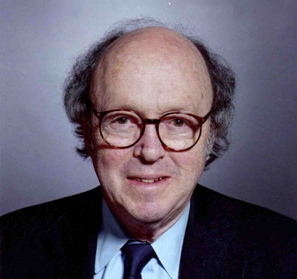
I should have mentioned this earlier, but author and journalist Anthony Lewis died this past Monday, March 25. He was just two days shy of his 86th birthday. Lewis is best known – and perhaps most admired – for his book Gideon’s Trumpet, but he was also a noted liberal academic; a purveyor of free speech and civil rights. Gideon’s Trumpet recounts the U.S. Supreme Court case of Gideon v. Wainwright, in which Clarence Earl Gideon, a petty thief in Florida, fought for legal representation. The battle resulted in one of the most important and extraordinary litigious decisions of the 20th century.
It was that kind of commitment to personal freedom, no matter what one’s status in life might be, that drove Lewis’ passion. Gideon’s victory, Lewis wrote, “shows that even the poorest and least powerful of men – a convict with not even a friend to visit him in prison – can take his cause to the highest court in the land and bring about a fundamental change in the law.”
Lewis’ tenacious work produced two Pulitzer Prize awards. He won his first in 1955 at the age of 28 for articles he published in the Washington Daily about the U.S. Navy’s relentless charges of communist activity against a civilian employee, Abraham Chasanow. An unnamed informant had accused Chasanow of being a radical communist sympathizer; a charge that, in post-World War II America, was a veritable death sentence for many people. Lewis’ articles culminated in an apology to Chasanow by the Navy and his reinstatement to his previous job. Lewis won his second Pulitzer in 1963 for reporting on the Supreme Court.
“A final argument for broad freedom of expression is its effect on the character of individuals in a society,” Lewis wrote in his 2007 book Freedom for the Thought that We Hate: A Biography of the First Amendment. “Citizens in a free society must have courage – the courage to hear not only unwelcome political speech but novel and shocking ideas in science and the arts.”
In 2001, he received the Presidential Citizens Medal from President Bill Clinton. The citation read, in part, that Lewis “has set the highest standard of journalistic ethics and excellence” and called him a “staunch defender of freedom of speech, individual rights, and the rule of law.”
I think it’s rather curious he received that honor just days before George W. Bush took office as President. Bush’s administration would become the modern epitome of corruption, secrecy and irresponsibility. As a writer, I understand and appreciate the value of free speech. From that extends every other basic human right that allows people to live a full life in a truly democratic society. Lewis left a strong legacy of commitment to the world as a whole, and it’s the duty of us in the literary and blogging worlds to uphold it.
Lewis leaves his wife, Margaret H. Marshall, former chief justice of the Massachusetts Supreme Judicial Court and three children by a first marriage. The funeral will be private.



 Chief Writing Wolf
Worst Quote of the Week
“I’m not going to engage in the back and forth and the attacks. Several Democrats have demonstrated a willingness to attack me by name. I’m not going to engage in that argument. I’m going to stay focused on what I think Texans want me to stay focused on, which is the substance of the job.”
– Sen. Ted Cruz, in response to a question from Dallas Morning News reporter Todd Gillman on whether or not he admired the late Sen. Joe McCarthy.
A simple ‘yes’ or ‘no’ couldn’t suffice?
Leave a comment
Filed under News
Tagged as communism, Joe McCarthy, Sen. Ted Cruz, stupid comments