Carol Creighton Burnett was born in San Antonio, Texas on April 26, 1933. She’s had a long and prosperous career, mostly as a comic and parody specialist. But, she’s also proven herself to be a good dramatic actress. Last year she finally received the coveted Mark Twain Prize for American Humor.
Jerusalem is one of the oldest and most continually-occupied cities in the world. It has a rich history, and it’s disgraceful that it has remain mired in the ongoing battle between religious and political factions that occupy the region. Still, it holds a special place in the collective hearts of the faithful.
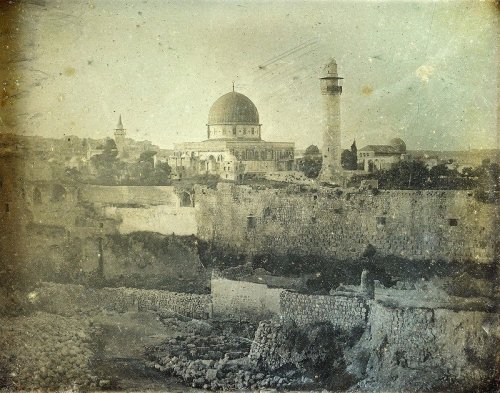
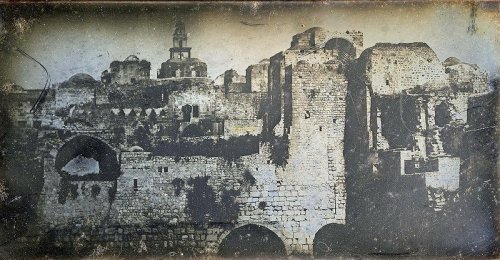
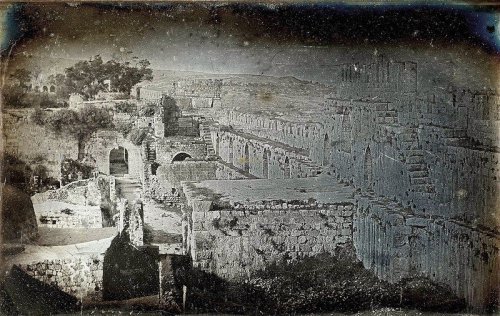
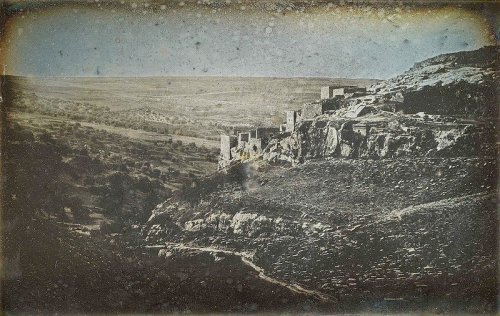
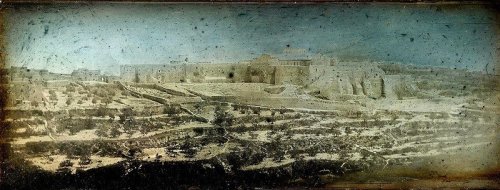
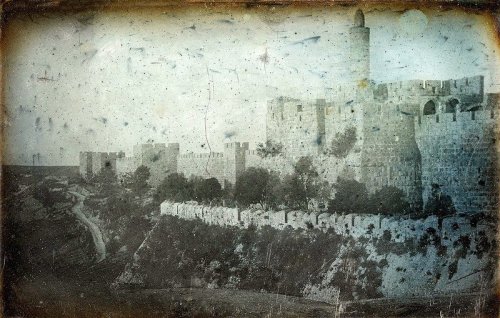
Earlier this year the Smithsonian Institution released what are believed to be the first photographs ever taken of the city. They date to 1844 and were taken by French photographer Joseph Girault de Prangney. De Prangney was a pioneer in the field of daguerreotypes, but he’s not well known among aficionados of art and photography. He studied painting at the École des Beaux-Arts in Paris and learned about daguerreotypes in 1841, the same year inventor Louis-Jacques-Mandé Daguerre publicly demonstrated the process. It’s unclear if de Prangney studied daguerreotypes directly under Daguerre or one of the latter’s associates. But, he developed a fascination with the new art form and meshed it with his interest in the Middle East. In 1842, he embarked on a three-year tour of Italy Greece, Egypt, Turkey, Syria and Palestine. He carried hundreds of pounds of photography equipment and produced more than 800 daguerreotypes. If you understand how cumbersome photography equipment of the day was and how long it took to make just one daguerreotype, then you’ll truly appreciate his dedication.
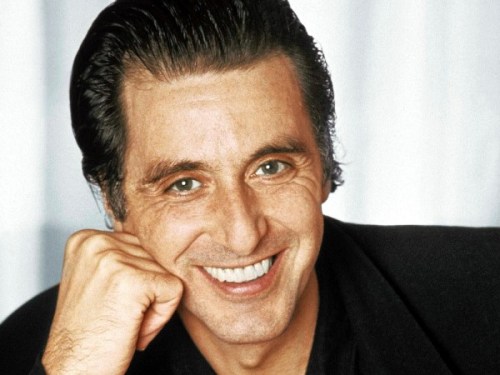
Born Alfred James Pacino in New York City in 1940, he is another one of my most favored performers. When I was in my teens and 20s, people often said I resembled him, which I considered a stretch. He actually inspired me to contemplate an acting career. But, I ended up focusing on my writing ambitions. Still, a movie with Al Pacino is never dull.
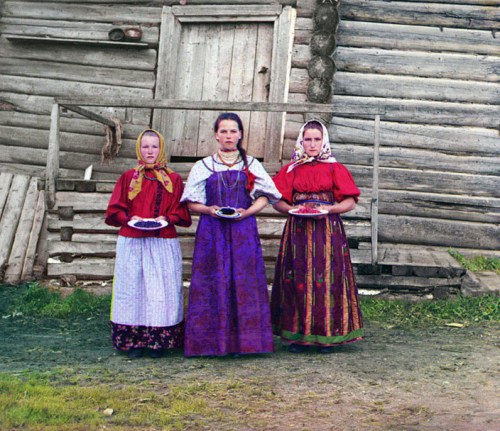
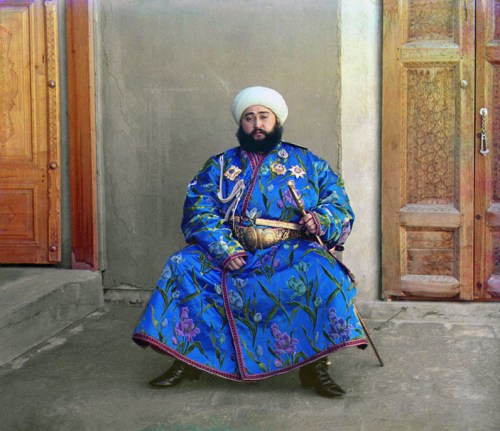
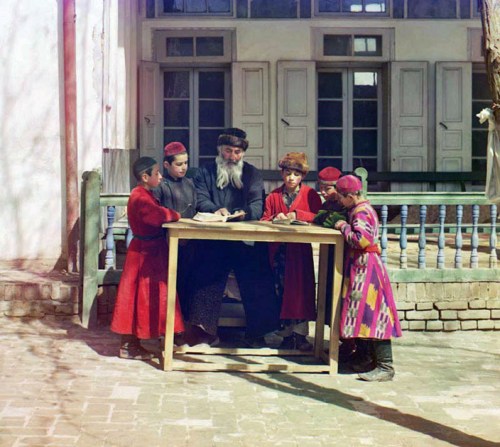
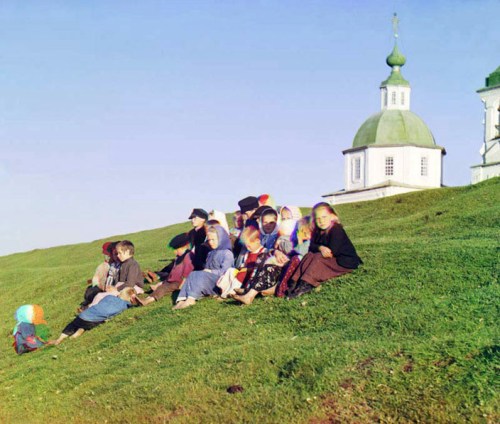
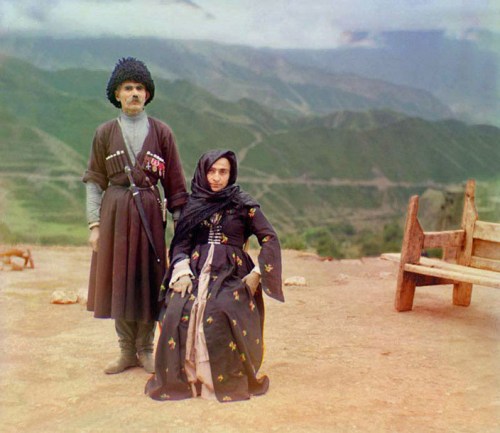
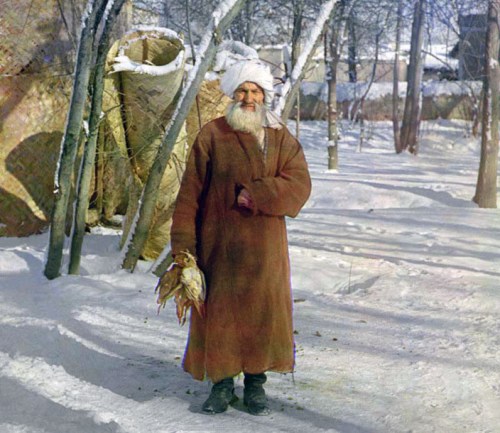
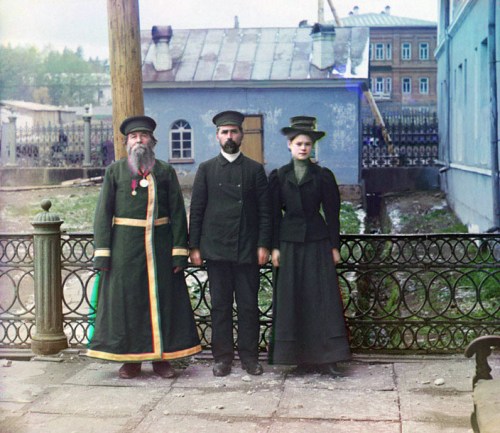
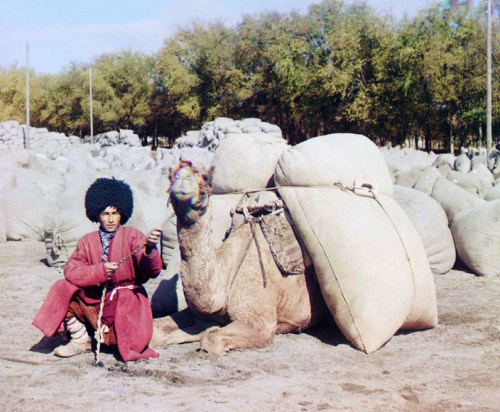
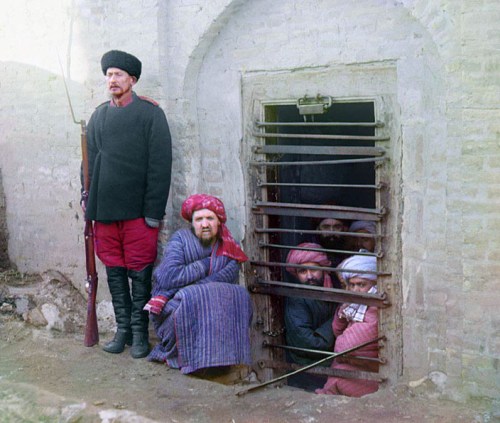
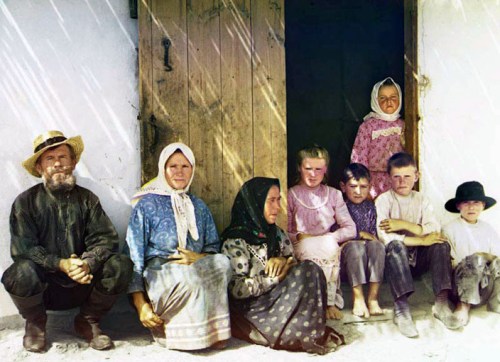
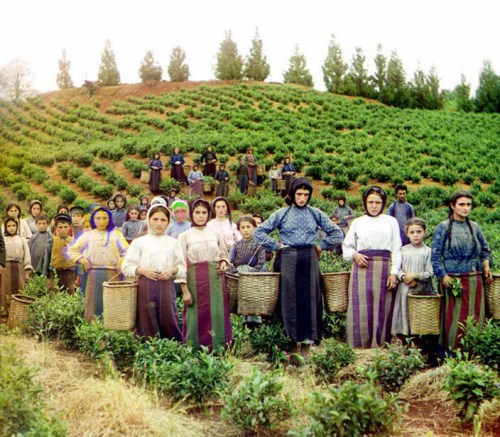
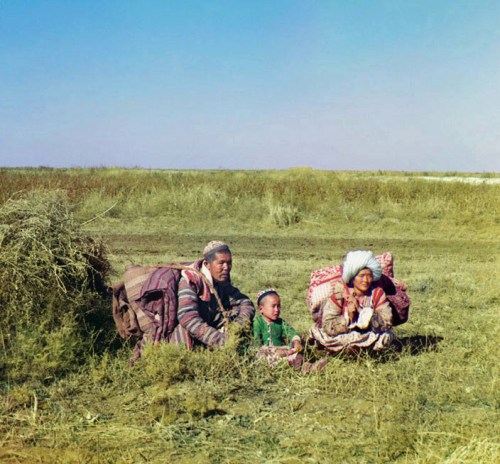
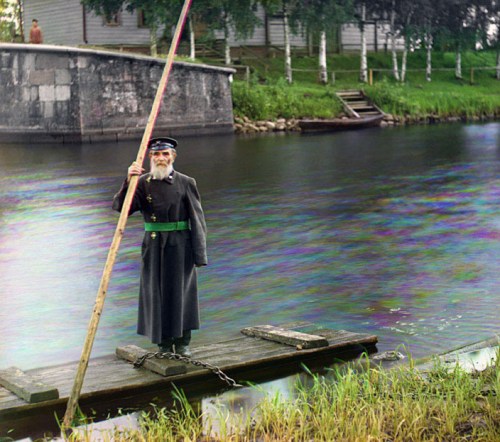
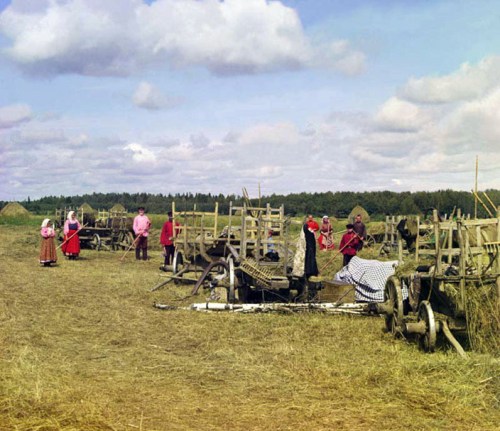
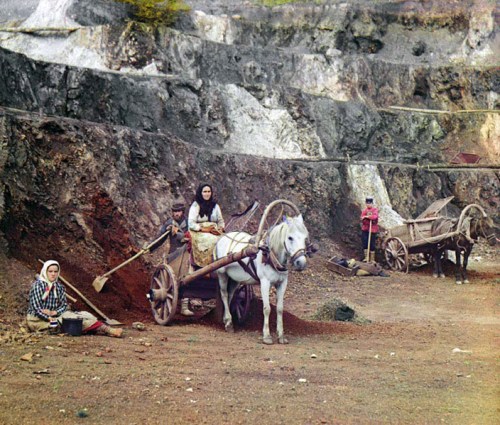
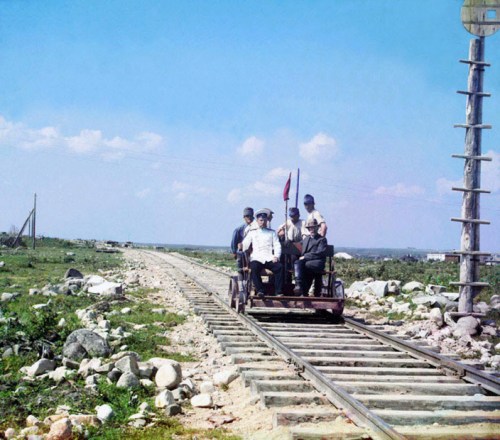
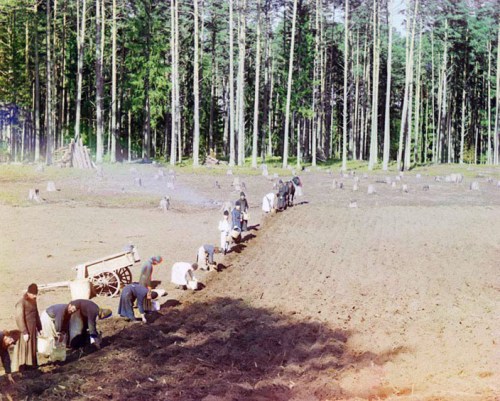
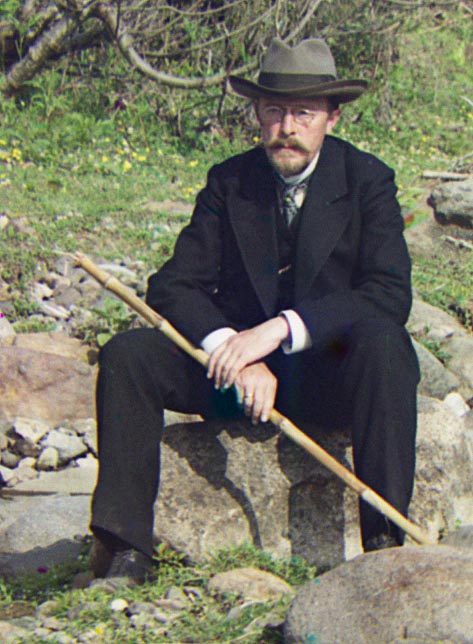
Sergei Mikhailovich Prokudin-Gorskii was a Russian chemist who also dabbled in photography. He captured some extraordinary pictures of average Russian citizens in the years immediately preceding World War I. They’re even more fascinating because they’re in color. By the start of the 20th century, photography had become a regular part of life for many people. But, color photography, in particular, was still a luxury. With limited materials and equipment, its practitioners had a small window of opportunity for snagging the natural color elements of their subjects. It’s one reason why early color photographs often look more like chalk drawings.
Prokudin-Gorskii studied the works of James Clerk Maxwell, a Scottish physicist who, in 1861, took the first known color photograph. Photographs were taken in standard black and white and then “colorized” with filters of the three primary colors: red, blue and green. The photos would be put through filters of the same three primary colors and then, projected onto a screen. People could view the final product by peering through an optical device called a chromoscope or a photochromoscope. The actual process is known as additive color, which involves the combination of two or more colors to create the perception of yet another color.
Here are just a handful of the many photographs Prokudin-Gorskii took during his travels across imperial Russia, including one of the legendary Leo Tolstoy and a self-portrait.
Peasant girls, 1909.
The Emir of Bukhara, 1911.
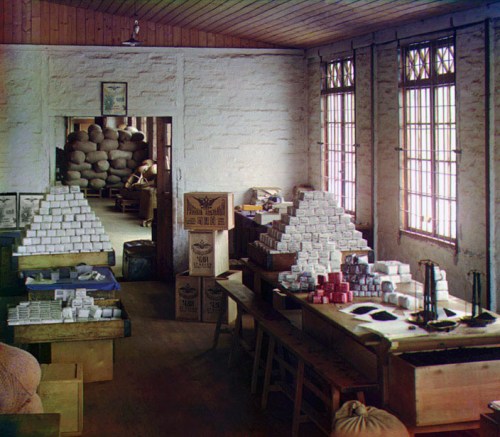
Lau-Dzhen-Dzhau, foreman of a tea factory in Chakva, ca. 1907-1915.
Melon vendor, 1911.
Group of Jewish children with a teacher, 1911.
Group of children, 1909.
Uzbek woman, ca. 1907-1915.
Dagestan couple, ca. 1907-1915.
A Sart (Turkestani) man, 1911.
“Three Generations”, 1910.
Turkmenistan man with camel, ca. 1907-1915.
A Zindan (prison), ca. 1907-1915.
Migrant family, ca. 1907-1915.
Workers harvesting tea, ca. 1907-1915.
Nomadic Kirghiz, 1911.
Pinkhus Karlinskii – Supervisor of Chernigov Floodgate, 1909.
Hay gathering, 1909.
Work at the Bakalskii Mine Pit, 1910.
Outside Petrozavodsk on the Murmansk Railway, 1915.
Monks at work, 1910.
Weighing section, ca. 1907-1915.
Hay storage, 1910.
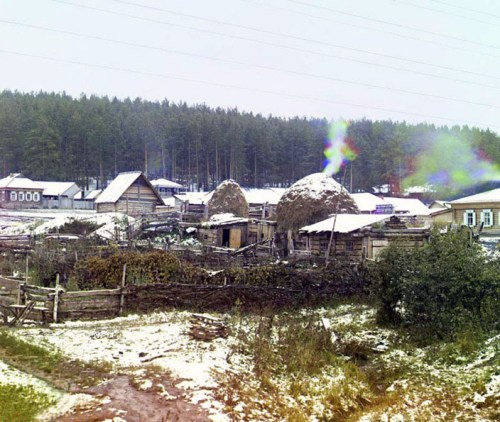
Village of Kolchedan, 1912.
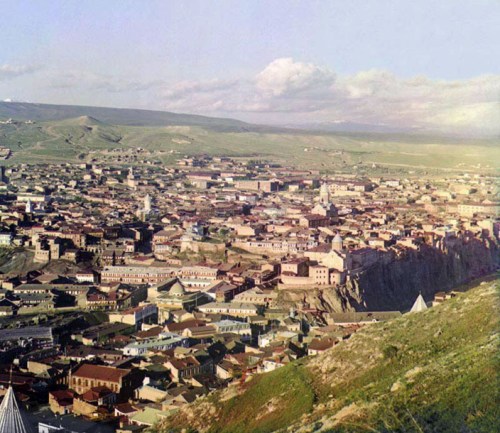
A view of Tiflis from the grounds of Saint David Church, ca. 1907-1915.
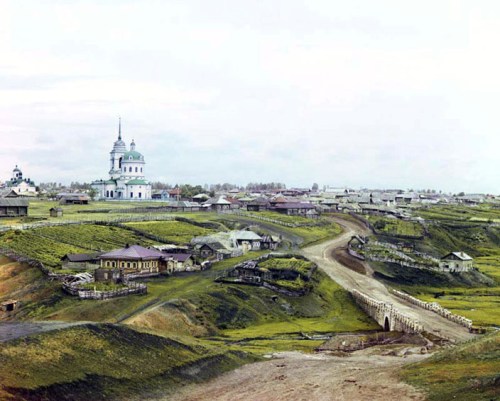
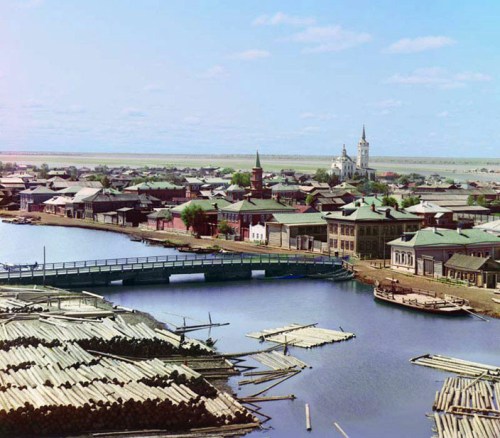
City of Tobol’sk from the Bell Tower of the Church of the Transfiguration, 1912.
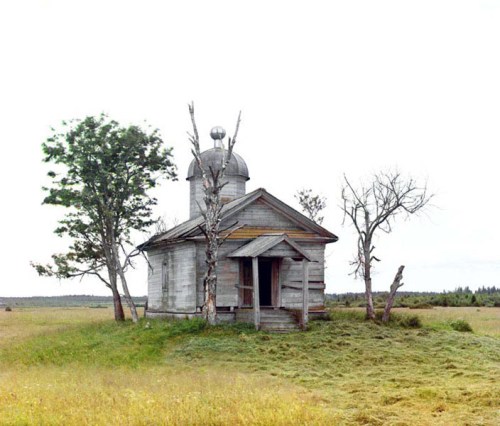
Abandoned chapel near the city of Belozersk, 1909.
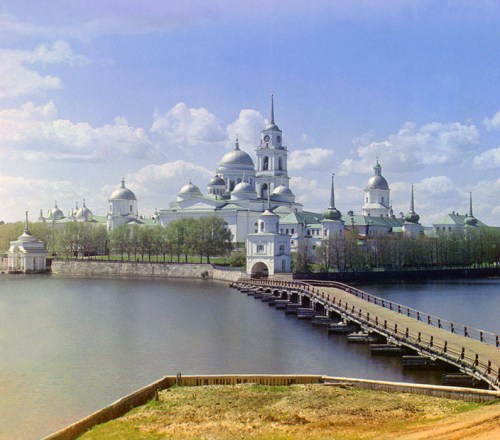
View of a monastery from the Solarium, 1910.
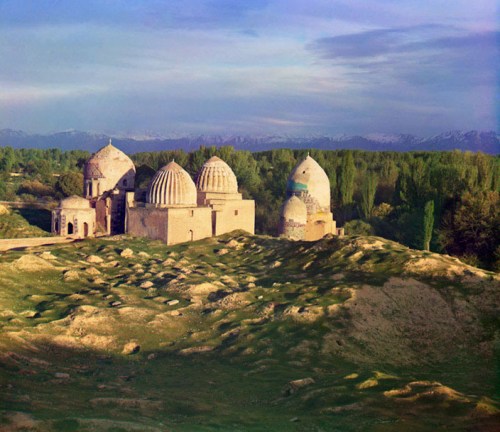
Shakh-i Zinde Mosque, 1911.
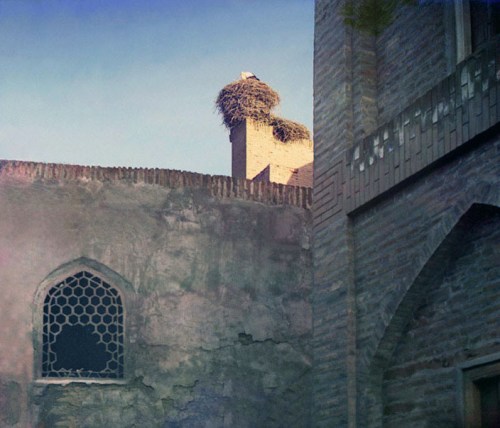
A stork in Bukhara, Uzbekistan, 1911.
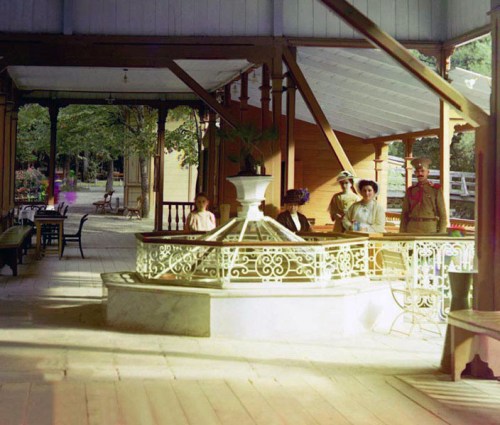
Ekaterinin Spring, ca. 1907-1915.
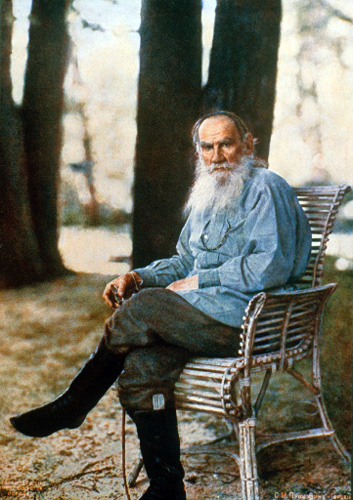
Leo Tolstoy in Yasnaya Polyana, 1908.
Sergey Prokudin-Gorsky self-portrait at the Korolistskali River, 1912.
I knew when I turned 50 last November that I automatically qualified for membership in the AARP. But, it wasn’t until last week when I received a “Senior Information Update” mailer from some previously-unknown insurance firm that I realized I’m actually more than half past my life expectancy. The offer isn’t just for insurance. It’s for death insurance! I looked at the little rectangular piece of paper and responded the only way someone who doesn’t plan to die anytime soon would: “What the fuck?!”
As a teenager, I was a pretty good kid in that I respected my parents and other adults. But, I was a normal kid in that I often joked with my parents about their age. Then, one Christmas Eve at my grandmother’s house, I was talking with a second-cousin who was about 9 or 10. He was telling me about his new collection of video games. He then looked at me and said frankly, “Oh, I guess they didn’t have those in your day.”
No, they didn’t, I muttered quietly. And, go to hell, you little fucker!
I still thought it was funny and told both my mother and my second-cousin’s paternal grandmother (my father’s sister-in-law). My mother reacted as you might expect: “Ah-hah! Now, you know how age jokes feel!”
Okay, but kids say the strangest things. I looked at the mailer again and contemplated so many things about my life. Why did I end up an only child? Why wasn’t I born with purple eyes? Why did I develop allergies to ragweed, instead of alcohol? You know – the average, every day questions that only a Spanish / Mexican Indian / German bi-guy who likes dogs more than people and writes freaky stories about humanity’s irrelevance would ask.
But, death insurance? I haven’t even had health insurance since I got laid off from the engineering firm in October 2010! Now, I’m supposed to start planning for my death. Well, I suppose everyone should. The issue takes on slightly more significance once you reach age 40.
The father of one of my best friends died somewhat unexpectedly 10 years ago. He’d been sick for weeks, and my friend, James*, finally convinced him to make a doctor’s appointment. His father (like my father) was from that generation of macho men who didn’t go to the doctor until some body part was falling off. On the day his father was scheduled to visit the doctor, the old man decided not to go. James had taken off from work to drive him over there – and, at the last minute, his father said to hell with it. Whereupon he stepped into the front room – and collapsed. By the time paramedics got him to the hospital, he was dead. I later told James that his father probably sensed he was going to die anyway. Why waste a morning at the doctor’s office when you can drop dead in the comfort of your own home?
Neither of James’ parents had made funeral arrangements. He’d had a rough time just convincing them to compose wills. Again, they were from that generation where people just didn’t do that. But, amidst the grief of seeing their father convulsing on the floor and carried away in an ambulance, James and his family had to cobble together funeral arrangements within a matter of days. Under such circumstances, Dallas County doesn’t give families much time for planning and coordinating burials. They need that freezer space in the morgue for all the drug overdose and gunshot victims. After his father’s funeral, James managed to convince his mother to make her own funeral arrangements.
My parents took care of theirs years ago. They have their plots established at a local cemetery. But, me? I only have a will that gives everything to them, or – if they’re deceased – to be sold off with the proceeds going to the Texas SPCA. As I said, I like dogs more than people. If I could, I’d like to be buried in my white dinner jacket and entombed in my truck. But, I think I’d also like to be cremated and have my ashes embedded into a new kind of electronic device I’ll call the “I-Bod.” The “I-Bod” will be a mini-computer / Kindle-type device to be sold only to smart people who like to read and conduct actual academic-style research to help them learn and understand their world better. That means it’ll be a limited edition piece.
Here’s another thing people do more frequently when they get to that “Certain Age:” they read the obituaries. I’ve taken to glancing at them daily. A decade ago I just skipped that section, never giving it another thought. I’d only learn of someone’s death through a relative or a friend. But, that’s the way it is. For most people, our behavior changes as we age. I’ve grown more aggressive and less shy. In other words, I’ve turned into a mean old bastard! But, I still love dogs.
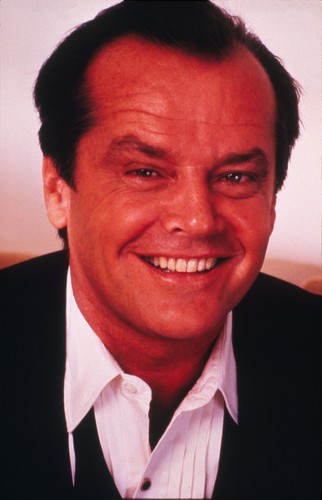
Born John Joseph Nicholson in 1937 in Neptune, New Jersey, he’s one of a handful of people to win 3 or more acting Oscars. He’s definitely one of my favorite acting personas. There’s no one quite like Jack Nicholson!
“Look again at that dot. That’s here. That’s home. That’s us. On it everyone you love, everyone you know, everyone you ever heard of, every human being who ever was, lived out their lives. The aggregate of our joy and suffering, thousands of confident religions, ideologies, and economic doctrines, every hunter and forager, every hero and coward, every creator and destroyer of civilization, every king and peasant, every young couple in love, every mother and father, hopeful child, inventor and explorer, every teacher of morals, every corrupt politician, every “superstar,” every “supreme leader,” every saint and sinner in the history of our species lived there-on a mote of dust suspended in a sunbeam.”
– Carl Sagan, “Pale Blue Dot: A Vision of the Human Future in Space.”
As this Easter weekend comes to an end, I wanted to highlight one of my favorite paintings of Jesus, the Christ: Salvador Dalí’s “Christ of Saint John of the Cross.” Produced in 1951, it is a perfect example of surrealism. But, it also presents Jesus at perhaps his most vulnerable. The viewer sees him from God’s vantage point; making the Savior look as humble and helpless as the average person.
Dalí based his delineation on a drawing by a 16th century Spanish friar, John of the Cross. As befitting his eccentric personality, Dalí had a perfect explanation for his inspiration. “In the first place, in 1950, I had a ‘cosmic dream,’ in which I saw this image in color and which in my dream represented the ‘nucleus of the atom.’ This nucleus later took on a metaphysical sense. I considered it ‘the very unity of the universe,’ the Christ!”
To create the unique angle and obtain a true sense of how the human male form would look, Dalí enlisted Hollywood stuntman Russell Saunders to be suspended from an overhead galley. The painting first appeared in public at the Kelvingrove Art Gallery and Museum in Glasgow, Scotland on June 23, 1952 – and became an instant source of controversy. Many considered it blasphemous, even though a traditional crucifix can be turned over and produce the same view. Others saw it as just plain tacky.
Dalí, who died in 1989, had a simple understanding of his own art. “Surrealism is destructive. But, it destroys only what it considers to be shackles limiting our vision.”
The crucifixion sketch by St. John of the Cross – the inspiration for Dalí’s drawing.
Remains of the West Fertilizer Plant are at the upper right.
Last Thursday, the 17th, marked a horrific first anniversary for the tiny Texas community of West, just south of Dallas / Fort Worth. On April 17, 2013, the town experienced a cataclysmic event that almost destroyed it. A fire at a fertilizer plant late in the day exploded, killing 15 people (mostly volunteer firefighters) and injuring more than 200 others. The physical impact was unbelievable. The blast registered as a 2.1-magnitude earthquake on seismographs in the region and could be felt up to 50 miles away. It carved a 10-foot crater in the ground beneath it. Windows up to 7 miles away were blown out. It obliterated two of its three schools and its one apartment complex. Several other structures were damaged so badly they had to be torn down.
As with any disaster, the psychological and emotional repercussions are immeasurable – and often irreparable. Small towns are usually like large families; yes, everybody seems to know your name and know your business. That sense of closeness frightens some people, yet it makes the town loveable.
But, amidst the trauma of recovery, West has entered into the lexicon of environmental protectionism and has become an unnecessary pawn in the battle between federal oversight and state independence. What happened in West last year is a perfect example of extreme business deregulation. It’s the result of corporate malfeasance and an entrenched conservative mindset that only companies understand what’s best for them and their communities and therefore, should be permitted to do whatever they please.
The West Fertilizer Company had supplied fertilizer and other chemicals to area farmers since its founding in 1962. Last year, just weeks before the explosion, Adair Grain bought the facility. The plant had last been inspected in 1985, when the Occupational Safety and Health Administration (OSHA) cited the plant for improper storage of anhydrous ammonia and fined it $30. In 2006, the Texas Commission on Environmental Quality (TCEQ) – the equivalent of a guard rabbit in a wolf pack – investigated complaints of ammonia smells originating from the plant and cited the owners for not having obtained proper permits for its two storage tanks containing that ubiquitous anhydrous ammonia. That same year the U.S. Environmental Protection Agency fined West Fertilizer $2,300 for a variety of problems, including failure to file a risk management plan. Just ten months before the explosion, the Pipeline and Hazardous Materials Safety Administration, an affiliate of the U.S. Department of Transportation, fined the company $5,250 for violations regarding storage of – you guessed it – anhydrous ammonia.
Since the EPA and the DOT are government agencies, they have few friends in Texas’ business world or in the state legislature. Texas’ pro-business stance is firmly carved into its culture. The state weathered the recent economic downturn better than most others and has produced more jobs and opened more businesses within the past year alone than any other state. In the months preceding the West explosion, Governor Rick Perry – still recovering from his pathetic 2012 presidential bid – dared to storm into the state of California and promote the “Lone Star State” as a more ideal place for business.
“Building a business is tough, but I hear building a business in California is next to impossible,” Perry said in a 30-second radio ad that ran in key California markets. “This is Texas Governor Rick Perry, and I have a message for California businesses. Come check out Texas. There are plenty of reasons Texas has been named the best state for doing business for eight years running. Visit texaswideopenforbusiness.com and see why our low taxes, sensible regulations and fair legal system are just the thing to get your business moving to Texas.”
He’s right to an extent. California, like Texas, is one of the world’s largest economies. Both states could probably secede (something Perry himself actually propositioned) and survive comfortably. But, California would have a tougher time. From a business perspective, it is the opposite of Texas: highly regulated and highly taxed. A close friend of mine tried to make California his home after leaving the U.S. Navy in the early 1990s, but had to leave, he told me, before he “ended up out on the streets.” A long-time acquaintance in Oakland once asked about the cost of living in Texas. Several years ago a cousin once told her mother (my aunt) that she wouldn’t mind moving to Texas if it wasn’t for the intense heat we experience during summer. She lived in upstate New York at the time and had tired of the heavy state income tax.
Perry’s efforts started paying off almost immediately. Texas commerce officials began receiving calls from California business owners, including some large companies, about details of relocating. California Lt. Gov. Gavin Newsom told a local radio station that Perry is “getting in our heads.” It’s certainly not just Perry’s charming accent; that lure of low taxes and limited regulations is too much to resist.
Then, came West.
An aerial view of the smoke plume on April 17, 2013.
Chemicals are dangerous things. There’s a reason a traditional skull-and-crossbones emblem is placed on containers holding them. After the 1995 bombing of the Oklahoma City federal building, the U.S. federal government tried to impose strict regulations on the sale and purchase of large quantities of ammonium nitrate – the key substance in the catastrophe. But, the efforts have been stymied – again by strong business interests that blame misuse and not the chemical itself. It’s similar to arguments by the National Rifle Association that further gun regulation won’t stop violent, gun-related crimes. In other words, guns don’t kill; people do. True, indeed. But, regulation addresses individuals who use said products. Again, regulation is a vile word in the business community. Among conservatives – the same ones who want to tell same-sex couples they can’t get married – regulation is tantamount to a deadly sin.
Intense deregulation has created some of the worst financial crises in U.S. history. After World War I (then called the “Great War”), a Republican-controlled U.S. Congress forced through legislation that allowed the financial industry to engage in bold new practices, such as “over-speculation.” President Woodrow Wilson seemed unable to stop it, especially after suffering a debilitating stroke in September of 1919 (a fact that remained hidden until long after his death five years later). But, while the irreverent behavior made the 1920s explosively lucrative for the nation, it ultimately led to the 1929 stock market crash and subsequently, the Great Depression.
The 1982 Garn-St. Germain Act allowed for almost complete deregulation of the savings and loans sector; they were allowed to partake in risky business practices, such as issuing credit cards and investing credit cards and investment in non-residential real estate loans. Many economic experts conclude the Act culminated in the savings and loans collapse that spilled into the early 1990s. Millions of dollars and millions of jobs were lost. At the turn of this last century, further deregulation of banking commerce, along with housing, incited the worst recessionary period since the Great Depression.
Extreme deregulation, however, can also be deadly. Beginning in the 1700s, the Industrial Revolution pushed many nations into a state of modernity they never expected. Steam engines, railroads and motorized vehicles slowly worked their way into both urban and rural areas. Such developments made life simpler for many people – and produced incredible fortunes for a handful of individuals and their families. But, it also created a cavernous divide among those at the very top who frolicked in their wealth and those who slaved (sometimes died) to create it for them. By the 1890s, the Anarchist Movement had arisen in Europe and, by 1900, had arrived in the U.S. When average workers called for better wages and safer conditions, the titans of industry literally scoffed at them.
Before then, however, his Vice-President, Garret Hobart, died in November of 1899. During his 1900 campaign, McKinley selected a curious and intriguing character as his running mate: Theodore Roosevelt. A rising star in the Republican Party at the time, Roosevelt is best remembered for his passion for land and nature conservation. But, much to the chagrin of his fellow politicians, Roosevelt also supported worker rights and safety standards in the workplace. Ironically, he got his chance to push that agenda after McKinley was assassinated in 1901 by León Czolgosz, a U.S. citizen born of Polish-Russian immigrants. Czolgosz was also an anarchist and had lost his job at a wire mill; where (according to various claims) he suffered a mental breakdown due to the horrific working conditions.
Anti-trust laws had come into place by the time Roosevelt took office. But, he brought it to new levels; thus earning him a reputation as a “trust buster.” It didn’t faze him. Long before he attained the presidency, Roosevelt had criticized the affluent in America. The continued exploitation of the public could result in violent uprisings that would, in effect, destroy the economy. He also condemned the arrogance of industry heads – the Vanderbilts, the Rockefellers, etc. – who apparently believed they were above the government. Some things don’t change, do they?
But, while American workers continued to get hurt and die on the job, the public as a whole didn’t realize how bad things were until the 1911 Triangle Shirtwaist Factory fire in New York City. In less than 20 minutes, a fire engulfed three of the building’s floors and killed 146 people – mostly immigrant women and girls. The sight of dead bodies both inside the factory and on the sidewalks outside (where several had jumped as a desperate attempt to escape the flames) was too much to bear. Cries for workplace safety reforms quickly rose up, and – just as quickly – the city and the state of New York responded with strict regulations. For the first time in U.S. history, fire codes were enacted, including requirements for designated exits and forbidding locked doors during working hours. (Locked doors were one of the primary reasons so many people died in the Triangle fire.) As usual, corporate executives complained; denouncing the new regulations as anti-business and detrimental to the country’s economic welfare. They dismissed the injuries and deaths as another cost of doing business.
The struggles for workers didn’t end there. Companies continued to find creative ways to ignore safety compliance demands. Brutal working conditions and low pay in California’s crop fields were what compelled César Chávez to lead the United Farm Workers strike in 1965; a strike that lasted five years and almost bankrupted California’s agricultural sector. The accidental deaths of two sanitation workers in a trash compactor are what led Martin Luther King, Jr., to Memphis in 1968.
Mining has always been a chief target for workplace safety regulations. In 1977, the U.S. Congress passed the Federal Mine Safety and Health Act. Admittedly, mining is an inherently dangerous profession; there are only a finite number of safety precautions that can be taken to ensure all the workers return home. But, beginning in the 1990s, mine owners pushed for relaxation of those standards; using the old conservative mantra that they stifle productivity. Under the administration of George W. Bush, they achieved much of what they demanded. Safety procedures that had been in place for years were either overturned or greatly reduced. For example, in 2001, the Bush Administration killed a proposal to test the viability of constructing conveyor belts of fire-resistant materials. Mining accidents and fatalities began to climb almost immediately, starting with the 2002 Quecreek Mine in Pennsylvania. No one died, but 9 men were trapped in the mine for 3 days.
Most recently, in 2010, 29 miners perished at the Upper Big Branch mine in West Virginia; the deadliest mining disaster in the U.S. in nearly 40 years. Some had survived the initial explosion, but suffocated to death when they became trapped. The mine’s owner, Massey Energy, had deliberately thwarted any attempts to enforce existing safety regulations, or impose new ones. In 2009, the government fined Massey $382,000 for “serious” violations of the 1977 Mine Act. Between then and the Upper Big Branch calamity, Massey received 57 additional safety infractions. None of that seemed to upset then-Massey CEO Don Blankenship. He sold his Massey stock for $21.24 million shortly afterwards and retired from Massey in December 2010. The following year he established another coal mining operation, McCoy Coal Group, in Kentucky. His arrogance and self-righteous demeanor shined brightly when he supported Mitt Romney’s 2012 presidential bid and threatened his employees that, if President Obama won another term, they’d all lose their jobs. He actually ordered them to vote for Romney, a direct violation of the 1965 Voting Rights Act.
Just two weeks after the Upper Big Branch calamity, the Deepwater Horizon oil rig in the Gulf of México exploded, killing 11 men and injuring 17 others. In the darkness, several workers were forced to hurtle themselves into the water several feet below. The rig burned for 36 hours before collapsing into the Gulf; subsequently pouring more than 200 million gallons of crude oil for nearly three months before it was capped. It was the worst oil spill in U.S. history. The sight of such a massive structure wrapped in flames was bad enough. But, flippant statements by Tony Hayward, then-CEO of BP (formerly British Petroleum), which operated the rig, once again proved the disconnected nature of corporate executives. Hayward initially deemed the spill “relatively tiny” in comparison to the “very big ocean.” Later, he bemoaned the extent of the crisis by saying he wanted “my life back.” He resigned in July of 2010, just as the spill was sealed off.
BP incurred $40 billion in fines and cleanup costs associated with the spill. But, it wasn’t the first. Just four years earlier, a BP facility had been the catalyst for a catastrophic oil spill in Alaska’s Prudhoe Bay. Some 212,000 gallons of crude oil had spilled from company pipelines on the North Slope. In May of 2011, BP paid out $25 million to settle the various claims against them.
In each case, the spills shouldn’t have come as an absolute surprise. Workers in Prudhoe Bay and on Deepwater had complained about various leaks and faulty equipment for weeks before the respective incidents. In each location, no one in authority paid much attention. But, just after some of the Deepwater employees made it to dry land, company officials started shoving papers in front of them to sign; documents that would absolve both BP and Transocean (the rig’s owner) of any liability. Fortunately, none of them fell for the trap.
In a way, I’ve seen the effects of irresponsible industrial business up close. For most of the summer of 2003, I traveled weekly to a small community in West Texas (not to be confused with the town of West) where I processed documentation for a defunct electrical firm. (Although it’s now a matter of public record, I still won’t mention any company names.) The business had built and installed electrical transformers for decades. No one ever thought much about the large trash-can-looking contraptions, until scientists realized the polychlorinated biphenyl-saturated oil used to insulate them was extremely dangerous. PCB has been linked to a host of ailments; its odorless and tasteless qualities making it virtually undetectable in the water and soil around the town where it had leaked. It was one reason why the local water bore a salty taste; a discomforting fact I learned quickly. I was even concerned about taking a shower and resorted to giving my then-year-old puppy cold bottled water I bought from a hotel vending machine. One woman with the local TCEQ office told me in confidence that her superiors in Austin had the toughest time reaching the community’s state and U.S. congressional representatives, both Republicans. “They just won’t return their calls,” she whispered.
I had to visit the site a number of times to procure documents and started to wonder if my life was in danger from just walking to and from the facility. The transformers sat untouched and rusting in a large, fenced-in area; where the sharp West Texas winds could pick up their PCB coatings and hurtle them anywhere.
A seismograph reading from Hockley, Texas, 142 miles (228 km) south-east of West, charts the temblor caused by the plant explosion.
Meanwhile, West continues recovering with the help of both state and federal money, as well as through the incredible outpouring of support from average citizens across the country; people who understand the frailties of human existence. Last year OSHA fined Adair Grain a paltry $118,300. The company had only $1 million in insurance and has not rebuilt. Two days after the disaster, Donald Adair, the company’s president, issued a formal statement of condolence. The town of West is now suing Adair.
But, even now, a year later, state officials are reticent to establish more regulations for the storage of dangerous chemicals. Texas is among a handful of states that doesn’t have a uniform fire safety code. It only requires counties with a population of at least 250,000 (and those bordering one) to have such codes. Still, a number of facilities across the state keep their highly volatile supplies of fertilizer and other chemicals housed within unstable structures, such as wooden barns and tool sheds. Adair didn’t have an automatic sprinkler in its fertilizer housing unit, but the company had installed security cameras to deter would-be methamphetamine dealers from stealing their product. The cause of the fire is still unknown, although officials believe a faulty golf cart may have sparked it. People will continue working in these places because many have no other means of support. They have only two choices: work in unsafe conditions, or go hungry and become homeless. What would you do?
A cell phone video captured the terror of the West explosion.
“A man who was completely innocent, offered himself as a sacrifice for the good of others, including his enemies, and became the ransom of the world. It was a perfect act.”