Good Night, Margaret Thatcher

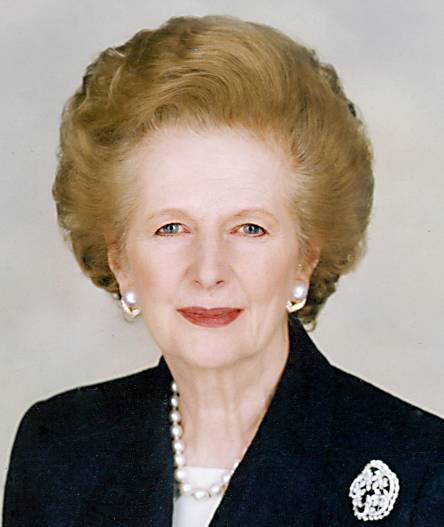
Margaret_Thatcher_cropped2

The death of Margaret Thatcher – England’s first female Prime Minister and the first female chief executive of any European nation – has invoked a gallery of responses about both her political career and her personal attributes.  That’s to be expected from the passing of any world leader.  History will judge her time in office; contemporary observers and future historians will always have a personal opinion about her.

Thatcher came to power in 1979 as a member of Britain’s Conservative Party.  At the time, the United Kingdom – and England, in particular – was mired in social and economic crises.  Both unemployment and inflation hovered around 20%.  Worker strikes, mainly among coal miners, had stretched the nation’s emotional and fiscal resources.  Oil embargoes that had such a negative impact on the U.S. economy also inflicted heavy damage on England.  Amidst the economic carnage, the Irish Republican Army had grown more militant in the 1970s; demanding with even greater ferocity that the U.K. relinquish control of Northern Ireland.  Just like union worker strikes had increasingly turned into riots, IRA protests had metamorphosed more and more into bombings.

England had been in a seemingly perpetual downward spiral since the end of World War II.  The British had successfully fought off the Nazis, but they paid a heavy financial and psychological toll.  England reluctantly accepted rescue from the United States in the form of the Marshall Plan; an ambitious and mostly triumphant effort to help all of Western Europe recover from the global conflict.  But, amidst the reconstruction, England became a nearly-total socialist welfare state.  It didn’t help that the English empire was slowly being dismantled, another after-effect of the war.  Its weakened state allowed for many of its imperial colonies to break free from the British Crown.  First, India gained independence in 1947; followed by the U.K.’s various outposts in Africa.

By the 1970s taxes were high; labor unions had gained extraordinary amounts of power and most industries were government-owned, and the English government appeared utterly paralyzed and helpless.  Fellow Europeans denounced England as “the dead man of Europe,” a label that angered its proud citizenry, but one that was rather appropriate given the conditions.

Into this mess stepped Margaret Thatcher.

It’s ironic that even Thatcher would rise to become Britain’s Prime Minster.  In a 1973 television interview, she stated, “I don’t think there will be a woman prime minister in my lifetime.”  More importantly, though, Thatcher was born into a humble family; the second of two daughters of a grocer who had his own political ambitions.  Despite England’s current position as one of the staunchest bearers of democracy, it once existed pretty much under a caste system; a society where an elite few held the reins of government.  It was rare – almost impossible – for someone outside of the bourgeois class to attain any position of power.  Most of England’s national leaders had essentially been aristocrats.  It’s a legacy of British royalty’s vice grip on English society.  Even though the Magna Carta technically removed power from the British royal family, it wasn’t until enactment of the Reform Bill of 1832 that a formal Parliament (the House of Commons) was established.  That elevated the voting powers of the Parliament above the king and traditional ruling families.  But, not until the start of the 20th century did Parliament gain almost complete power.  Regardless, it remained a tough climb from Britain’s working classes to a seat in the nation’s Parliament.  And, when Thatcher won her first term, it shocked the staid patriarchal “boys’ club,” while pleasing the masses.

Thatcher introduced a tougher, more stringent agenda; tackling the heavy taxes and obstinate union bosses.  I suppose – given the circumstances – she had no choice.  She had to be loud and blunt; otherwise, the men in the Parliament chamber wouldn’t take her seriously.

Thatcher’s stubbornness and determination compelled her to privatize many of the nation’s industries, such as oil and electricity.  She believed a capitalist free market was best for any society; the only true means to economic prosperity.  She lowered taxes and almost completely extinguished the country’s long-entrenched welfare system, along with tackling workers’ unions, mainly the coal miners.

She also had no qualms about confronting the IRA.  Even after she narrowly survived the 1984 “Brighton Bombing” that killed 5 people and injured 31 others, Thatcher remained undeterred.  “That is the scale of the outrage in which we have all shared,” she announced the day after the assassination attempt, “and the fact that we are gathered here now – shocked, but composed and determined – is a sign not only that this attack has failed, but that all attempts to destroy democracy by terrorism will fail.”

One of the worst crises of Thatcher’s first term in office came in 1982, when Argentina invaded the Falkland Islands; a long-held British territory Argentina called Las Malvinas.  The 74-day conflict resulted in more than 1,200 casualties; the vast majority of whom were Argentine military personnel.  Even when Argentina realized it was no match for the U.K., Thatcher authorized the bombing of the ARA General Belgrano, an Argentine light cruiser, even though it was actually sailing away from the Falklands.

The term “Iron Lady” has become synonymous with Thatcher, but it’s one that was bestowed upon her even before she announced her candidacy for Prime Minister.  In a 1976 speech, Thatcher declared that “the Russians are bent on world dominance,” prompting the “Iron Lady” comment from Soviet leadership.  It was a moniker she actually adored.  Others had more colorful names for her.

Thatcher developed a close political and personal relationship with Ronald Reagan, her ideological soul mate.  Like Thatcher, Reagan originated from a working class background, but – just like Thatcher – seemed to loathe working people.  He, too, believed fervently in a free market society and thought labor unions were a pox on economic stability.  With Thatcher it was coal miners; with Reagan it was air traffic controllers.  When they went on strike in 1981, Reagan fired 11,000 of those who refused his executive order to return to work.  Reagan sided with Thatcher during the Falklands War, but refused to get involved.  He also joined her in repeatedly and loudly announcing the death throes of the Soviet Union.

Reagan had run his campaigns on the typical conservative mantra of limited taxation and smaller government.  But, whereas Thatcher actually lowered English taxes, Reagan ultimately increased them in the U.S.  In analyzing their respective leaderships, I can only note Thatcher didn’t just delegate responsibilities to her cabinet members and then take naps; plus, she always seemed to remember what she had said and done.  Thatcher had spent a lifetime in politics, while Reagan entered the game as his acting career fizzled.  Personally, I have only slightly more respect for Thatcher than Reagan, but I didn’t like either of them.

I supposed Thatcher was simply a product of her time.  The circumstances were dire when she first walked into 10 Downing Street.  Her presence was a welcome respite from the dismal state in which England found itself.  Sadly, more people fell into poverty during her three terms in office; a direct result of her anti-union stance and intense deregulation of industries.  That’s something else she has in common with Reagan.

Like most hardcore fiscal conservatives, however, Thatcher never seemed to understand that workers’ rights are basically human rights.  I think she felt that, since she rose to such prominence, everyone else could do the same.  But, not everybody has the wherewithal to accomplish what she did; not everyone has the same ambitions; and not everyone is so fortunate to be at the right place at the right time to make such dramatic changes on society.  Somebody has to work a cash register; somebody has to wait on tables; somebody has to dredge the coal mines.  Not everyone can be president or prime minister, a doctor or a lawyer; it just can’t happen.  Average workers form the spine of a nation, and they should be appreciated and respected.

I don’t know exactly how Margaret Thatcher’s legacy will be inscribed.  As with any national figure, it will depend on the reviewer.

There is one other odd parallel between Thatcher and Reagan.  In 1971, while still Secretary of Education, Thatcher became known as the “Milk Snatcher,” a name not nearly as familiar as “Iron Lady,” but one that’s more befitting of her capitalist agenda.  During World War II, milk (among other staples) was subjected to extreme rationing in England, as it was just about everywhere else.  Afterwards, the 1946 Free Milk Act ensured free milk to everyone under the age of 18.  But, as the British government looked for ways to trim its budget in the tumultuous 1970s, Thatcher saw free milk subsidies as a drain on the economy and subsequently pushed through measures to stifle them.  Edward Short, then education spokesman for the Labor Party said scrapping milk was “the meanest and most unworthy thing” he had seen in his then 20 years in office.  Thatcher, of course, was unfazed.

Around the same time, Reagan – then beginning his second term as governor of California – toyed with the idea of having ketchup declared a vegetable, since it’s tomato-based.  That, he claimed, would count towards the nutritional needs of the state’s schoolchildren.  Fortunately, it never got past his desk.  But, he pulled the same stunt a decade later as the nation’s newly-elected president and demanded that the U.S. Department of Agriculture do its part to stabilize the economy by devising new ways to trim its budget.  Thankfully, nothing came of it.  Reagan never became known as the “Vegetable Snatcher,” but these incidents display the arrogance of the fiscally conservative mindset.

Milk, bombings, distant islands – for better or worse, Margaret Thatcher made an impact on English society.  Her story is still not complete.

Leave a comment

Filed under Essays

In Memoriam – Jonathan Winters – 1925 – 2013

jonathan-winters

Legendary actor and comedian Jonathan Winters died Thursday, April 11, at his home in Montecito, California.  He was 87.  There aren’t enough superlatives to describe what an extraordinary comic figure he was.  His somber-looking face and corpulent figure hid a genius for rapid-fire wit and improvisational fortitude.  In a career that spanned six decades, he performed regular stand-up and appeared in scores of movies and TV programs.  His gallery of characters included Maude Frickert, a grandmother with a sharp tongue and wandering eye, and Elwood P. Suggins, a Midwestern farmer who thought “eggs 24 hours a day.”

His impromptu performances had no equal.  Some of the best came while donning a variety of hats, or picking up an object; each prop serving as a conduit to a slew of other personas.  He could go on forever with such antics, complete with verbal sound effects, and no one got tired.  I know I could watch him for hours, if I had the opportunity.

His comedic genius inspired such people as Robin Williams and Jim Carrey.  There was no one quite like Jonathan Winters.

Leave a comment

Filed under News

In Memoriam – Roger Ebert, 1942 – 2013

rogerebert-736078

Roger Ebert, veteran journalist and movie critic, died today, April 4, in Chicago.  He was 70.  A native of Urbana, Illinois, Ebert began his career with the “Chicago Sun-Times” in 1966 and eventually became its film critic.  In 1975, he became the first person to win a Pulitzer Prize for film criticism.  That same year Ebert joined with fellow film critic Gene Siskel to host “Siskel & Ebert at the Movies,” a weekly TV show in which the duo previewed and rated the newest films.  While their personalities often clashed, their blunt critiques of a film – couple with the infamous thumbs-up or thumbs-down routine – made them household names.  It also drew scorn from many in journalism and cinema who said Siskel and Ebert trivialized film criticism.  In a 1991 interview with “Playboy” magazine, Ebert conceded that his television program was “not a high-level, in-depth film-criticism show.”  But, he declared that viewers can judge a film on its own merits and that “it’s O.K. to have an opinion.”

Ebert spoke out against the Motion Picture Association of America’s rating system, stating that its unevenness called it into question.  He also criticized the American film community for relying too much on special effects and for not supporting documentary films.  Even after Siskel died in 1999, Ebert continued his TV show, usually joined by various other film critics.

No specific cause of death was given, but Ebert had suffered from cancer since 2002.  The disease robbed him of his voice and radically altered his physical appearance.  But, it didn’t steal his dry wit and passion for movies.

Ebert is survived by his wife, Chaz Hammelsmith.

1 Comment

Filed under News

In Memoriam – Milo O’Shea, 1926 – 2013

????????????????????

Veteran stage and screen actor Milo O’Shea died Tuesday, April 2, in Manhattan.  He was 86.  A native of Ireland, O’Shea made his screen debut in 1967 in “Ulysses,” based on the James Joyce novel.  He debuted on Broadway in 1968’s “Staircase,” a role that earned him a Tony nomination.  That same year he appeared in two films that showed his unique and quirky acting range: as Friar Laurence in Franco Zeffirelli’s adaptation of Shakespeare’s “Romeo and Juliet,” and as mad scientist Durand Durand in Roger Vadim’s sexually provocative “Barbarella.”

Born in Dublin to father who was a professional singer and a mother who was a harpist and ballet dancer, his parents encouraged him to pursue his acting dreams.  At age 10, he starred in a radio adaptation of “Oliver Twist” and by 17, he was employed full-time in an acting company.  After touring with some of Ireland’s major acting troupes, O’Shea moved to the United States where he found work in regional theatre.  Financial difficulties forced him to take a job as an elevator operator in New York’s Waldorf Astoria Hotel.

His bushy eyebrows and impish smile became his physical trademarks, but he never let himself be defined by it.  That he took a campy role in “Barbarella” – which is where I first saw and which remains one of my favorite films – proves that he never took himself too seriously.  You can’t in the acting business.

Leave a comment

Filed under News

In Remembrance – Martin Luther King, Jr., 1929 – 1968

Martin-Luther-King-Jr-9365086-2-402

“Hatred paralyzes life; love releases it.

Hatred confuses life; love harmonizes it.

Hatred darkens life; love illuminates it.”

Martin Luther King, Jr.

Leave a comment

Filed under News

Aging Well

_57178456_57178455

“It’s hell getting old!”

I’ve heard that a lot in recent years from both my parents.  I’ve watched them closely, as they’ve aged.  My father used authentic railroad ties to make borders for flower beds; just months after we moved into this suburban Dallas home in December of 1972.  Now, he has trouble putting on his socks.  My mother could remember the birth dates and phone numbers of everyone on both sides of my family.  Now, she often forgets what she did just five minutes ago.

As I fast approach 50, unmarried and childless, I wonder more and more what will become of me in 30 years – if I’m so fortunate.  “I think I’m going to die in this house,” I told one of my closest friends a few years ago, “alone.”

“What’s wrong with that?” he replied.

“Nothing!”  But, he apparently didn’t hear the “alone” part.

I’m a loner by nature.  I always have been.  Unlike my parents, I’ve always had trouble making friends.  They couldn’t understand.  It was simply beyond their comprehension why I didn’t have friends (especially female friends) calling me all the time during my teen years.

We writers are generally solitary creatures.  It’s how our minds are able to create such vivid settings and outlandish characterizations.  Having grown up so shy and timid, I found refuge in books and my own writings.  I’m not at all shy or timid now.  Years of being bullied and disrespected for being too nice and polite beat that out of me.  But, I am definitely still a loner.  I prefer the company of my dog to that of any person.  I’m certain I’ll continue to bringing dogs into my life.  I don’t fear death.  My only concern is that a canine will become trapped here in the house with me.  I hate people who abuse animals.  Thus, it would be a tragic irony if I collapse alone in this house, and my four-legged companion suffers a miserable demise because of it.

Life expectancy in the U.S. now stands at nearly 80.  It would probably be closer to 90 if obesity wasn’t such a pandemic.  It’s obviously a good thing that people are living longer.  Yes, it’s better to die at 90 than at 19.  But, what good is it to live so long and end up struggling just to get to the bathroom?

As with anything, though, quality of life is more important than quantity.  My idea of a good life is to be well-read and emotionally stable.  I’ve finally learned not to worry what other people think of me.  Their rules no longer apply to me.  I can write well into the pre-dawn hours; play with my dog; listen to my favorite music; have a mixed drink or a glass of wine – and not feel the need to have another person beside me.  I’ve had only a handful of relationships – all of which ended unhappily.  I supposed it’s because I’m too independent.  Relationships take a lot of time and effort.  And, if one cuts into my writing time, or efforts to go to the gym, then a problem arises.  Thus, my prediction I will die alone in this house.

I will have company in that regard, albeit vicariously.  The Administration on Aging, a division of the U.S. Department of Health and Human Services, found that, as of 2010, there were about 40 million people age 65 and over living alone.  That number could increase to 55 million by the end of this decade.  In 1950, only about 10% of Americans age 65 or older lived alone.  Of course, life expectancy at the time stood at just about 65.  But, the rates of solitary seniors have also been increasing sharply since the 1990s because of the large number of “Baby Boomers” entering their golden years.

People look at you strangely when you begin talking about aging and death.  But, I’ve always been the type to think as far ahead as possible.  Often, I haven’t planned too well in advance, but it’s always the thought that counts.  My parents feel they are fortunate to have me around; even though it’s stressful trying to care for them, while working to get my freelance writing career out of the airport hangar.  (It’s inching closer to the tarmac every day, but it’s not quite there yet.)  And, I’m back on that same quandary: who’s going to take care of me when I’m old?  A dog makes a great companion.  But, while they may warn you that a stranger is approaching the house, they can’t run to the grocery store – not in the real world.  My father is 80 and still drives, even with one eye and a prosthetic knee.  I dread the day I have to confiscate the car keys.  That would be a proverbial death knell for him.  But, at least I’m here for him.

I’ll just deal with that when it comes time.  I’m trying to stay as healthy as possible and genuinely hope to live a long time.  But, on the day I drop dead, I wish for 2 things: I’m freshly showered and there are no dogs left to wander about the house, moaning in agony.  Yes, it’s hell getting old.  But, it’s hell not to live a full life.  I’ll take the old part, along with the full life.

4 Comments

Filed under Essays

Hold That Call!

wabc_040313_MotorolaDynaTAC

Today marks the 40th anniversary of the first cell phone call.  Martin Cooper, an engineer with Motorola, made the call from 54th Street in Manhattan with a 9” tall, 2.5 pound monstrosity he called a DynaTAC (DYNamic Adaptive Total Area Coverage).  The device looked much like a walkie-talkie; originally a military invention which served as inspiration for Cooper and fellow engineer Rudy Krolopp.  Calls could only last for 35 minutes, and the phone took 10 hours to recharge.  It also cost roughly $4,000; an astronomical price even by today’s standards.

Perhaps the phone’s cost and cumbersome nature prevented it from getting into the hands of anyone outside the most affluent homes.  Cell phone usage in the U.S. didn’t reach 1 million until 1990.  It wasn’t until after the start of the 21st century that cell phones became more commonplace.  I got my first cell phone in October 2001.

For younger folks, it’s difficult to imagine life without cell phones.  Then again, it’s difficult for me to imagine life without air conditioning.  Cell phones have to rank as one of the greatest modern inventions.  They’ve saved countless lives and allowed people to communicate more rapidly than any time in human history.  They’ve also proved to be one of the greatest annoyances – especially if you get cut off by someone driving and talking on their cell phone at the same time!  Ah – the price for convenience.

2 Comments

Filed under History

Dreaming into Reality

Today marks the 45th anniversary of Rev. Martin Luther King’s seminal “I Have Been to the Mountaintop” speech, which he gave in Memphis, Tennessee.  It is one of the most significant orations of the 20th century; an impromptu talk King gave at the last minute.  He had just arrived in Memphis to lend spiritual support to Black garbage collectors who had gone on strike.  He was tired and simply wanted to retire for the evening.  But, a crowd had gathered at the Mason Temple in Memphis, eagerly anticipating his arrival.  King’s associates finally convinced him to speak to them.  He would be dead less than twenty-four hours later.

I grew up reading about King, but never thought much of him until long after his birth was memorialized into a federal holiday.  He, of course, didn’t live to see goals of a truly integrated society come to fruition.  But, his spirit lives and thrives well in the hearts of anyone who has ever fought for social justice.

Leave a comment

Filed under History

Easterholics

3571_506263522742290_816252388_n

Some people go to church on Easter Sunday; others go into a sugar rush.  Whatever it takes to get you to say, “God, help me!”

Image courtesy All Nurses.

1 Comment

Filed under News

Why I Believe in Jesus – But Not Christianity

easter

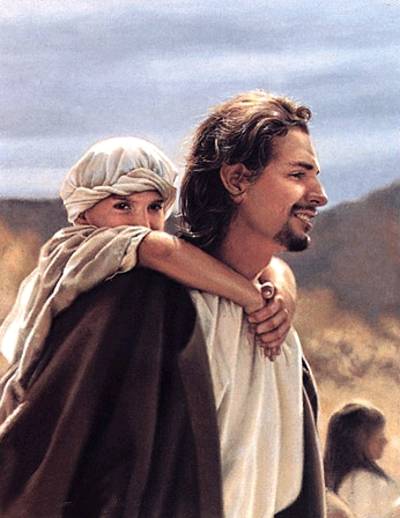
Anyone who knows me personally, or through my writings, is often surprised when I say I revere Jesus Christ as my Lord and Savior.  They’re surprised because I usually keep that quiet.  My faith in Jesus is a private matter – as I think all such convictions should be.  The glaring opulence of the Roman Catholic Church, for example, sours me almost as bad as their overt disrespect for women.  The overt arrogance and verbosity of people like Pat Robertson, Robert Schuller and their ilk literally makes me nauseous.

I know I sound like a Tim Tebow acolyte.  But, I have about as much reverence for sports and entertainment figures as I do politicians and televangelists.  In fact, devoutly religious people usually chew up most of my nerves.  They have the tendency to shove their ideology in my face and think they know what’s best for me.  For as long as I can remember, the faithful have asked me to accompany them to (their) church.  Yes, I appreciate their concern for my well-being, but I don’t need it that badly.  Baptists and Pentecostals are among the most aggressive, but Catholics are not that much better.

In February of 1998, my father’s oldest sister, Amparo, died after an extended illness.  She’d been hospitalized for a month, before her frail body finally gave out.  Her death hit our family hard.  She was one of the strongest people any of us had ever known.  She helped care for me when I was a boy.  In fact, Amparo cared for most everyone else in our family; taking her older brother to cancer treatments in the mid-1980s, for example, because no one else – not even his own wife and adult children – could find the time.  Her burial instructions were straightforward: just throw her in a box, toss it into the ground, say a prayer or two and go on with our lives.  And, that’s just what we did.  There was no long, drawn-out rosary preceding an equally long, drawn-out funeral.  We had a brief service at the mausoleum, a quick internment, and then, we were gone.

When I told one of my closest friends, he was surprised to learn there had been no rosary, as Hispanic Catholics are prone to do.  “Oh, oh,” he moaned ominously.  “I hate to tell you this, but your aunt’s chances of getting into Heaven are slim.”

I became instantly enraged.  “How do you know?!” I screamed at him.  Amparo’s commitment to her family far outweighed the pious proclamations of my friend; someone who actually practiced voodoo for a short time in the 1980s, before reverting back to Catholicism.  That one statement almost ended our long friendship.

But, it’s that sort of self-righteousness – the sense of ‘I-know-what-God-wants-better-than-you’ – that sends me into epileptic fits.  I once worked with a woman who often wore a gold ‘Jesus Loves Me’ pin – while strutting about the office talking behind people’s backs and speaking in a condescending tone to others.  I’m just not one to proselytize.  Thus, it’s a stretch for me to express my personal beliefs about Jesus even in this forum.

There’s really no concrete proof that Jesus was little more than an influential philosopher from what is now Israel.  But, I feel that He was a real person; someone who lived a short life, yet has had a grand impact on the world.  I also believe Jesus has manifested Himself in other forms and in other faiths to a variety of people.  But, they’re just that – beliefs.  I never profess to know for certain who Jesus was or what He plans to do.

Some folks have this vision of Jesus arriving on a gilded chariot, amidst a cacophony of trumpets, and sweeping them up into His arms for eternal safekeeping.  They’re certain they know what Jesus will do – and that they’ll be right there with Him.  These are the same people who’ll be horrified when science discovers the center of the universe – and they’re not it!

Here’s something else I believe: the “Second Coming” means Christ will return to Earth, look around at the mess created by many of His devoted followers, and say, “You know, I had a really good idea about love and harmony 2,000 years ago, and you people just fucked it all up.  BAM!”  And, that’s how the world as we know it will end.

If Jesus should return to Earth anytime soon, I’m certain He won’t make his way to visit Pope Francis.  We won’t see Him having dinner with Mitt Romney or tea with Queen Elizabeth.  No, I’m almost positive – if we do catch a glimpse of Him – he’d be on the streets of places like South Dallas, trying to convince prostitutes life has more to offer than streetwalking.  We’d see Him in the slums of Rio de Janeiro, telling kids not to sniff glue; or in the deserts of the Middle East, ordering angry young men to put down their rocket launchers.  He might even show up at an atheists’ convention – if they have such things.  Wherever He’ll be, He won’t be cavorting with the faithful – the so-called “Chosen Ones.”  No, He’d be with the lost souls; the “Forgotten Ones”; the folks the rest of allegedly civilized society declares unworthy and unsaved.

On this Easter Sunday, I only wish for a few simple things – like a few more years with my parents and my dog; to get my novel published; to live as long and healthy of a life as I can.  Yes, I wish for peace on Earth and for the blind to see.  But, those are such grand aspirations.  I can’t save the world alone.  Neither can any one person.  Yes, it may seem strange to many, but I don’t care.  I have little respect for a religion called Christianity, or most other religions for that matter.  But, I still have faith in someone named Jesus.

Jesus_098

1 Comment

Filed under Essays