Past – Future

One key aspect about celebrating “Earth Day” is a call for people to reduce their carbon footprint.  That includes recycling and either utilizing as few natural resources as possible, or wisely using what we have.  People are encouraged, for example, to “think green and keep it on the screen;” that is, not wasting paper to print something.  The “Earth Day” movement began in California, so it was interesting to see The Los Angeles Times’ 17th Annual Book Festival, held at the University of Southern California on April 22, practically celebrate the printed book.  The festival took an interesting approach to the future of publishing with its panel, “Future Books: Media in the Digital Age.”  It looked to the past to help gauge the practicality of what many see as the growing acceptance of e-books.

Moderator Holly Willis, Director of Academic Programs at the USC’s Institute for Multimedia Literacy; Anne Balsamo, professor at USC’s Annenberg & School of Cinematic Arts and Director of Learning, Annenberg Innovation Lab; Steve Anderson, Assistant Professor of Interactive Media at USC’s School of Cinema-Television and Associate Editor of the journal Vectors; and Catherine Quinlan, Dean of USC Libraries, collectively offered dialogue on the dual excitement and anxiety surrounding the future of reading.  But, they centered mostly on the past.

Balsamo showcased examples from her experience developing the interactive museum exhibit “XFR: Experiments in the Future of Reading” created by the group RED (Research on Experimental Documents) at Xerox PARC in the late 1990’s.  Accessible through the Designing Culture website, many of these provided a dose of retrospective humor, like the future-from-the-past vision of Terry Gilliam’s 1985 movie Brazil: XFR’s Tilting Tables, for example, or the Reading Eye Dog, which “translated” the printed page, and as Balsamo mentioned, was designed as a dog since interacting with a canine seemed markedly superior to interacting with a humanoid robot.  (Sometimes, people seem to be able to relate better to dogs than other humans.)

Anderson scanned some of the new media from his book and website Technologies of History, in particular in his project “Technologies of History Interactive,” a composite of experimental film, television, video games and digital media that explores how we relate to the historical events of our lives.

Quinlan closed the panel with a discussion of the library’s challenge in storing, preserving and ensuring access to digital media, such as Anderson’s project.  As she mentioned, “the more recent the medium, the more quickly it rots.”

This may seem like typical California tree-hugging experimentation, but I can see the greater purpose.  You can’t fully grasp your future unless you thoroughly understand your past.  New technologies are great, but only within the context of the people who use them.  People loathed, even feared computers a generation ago and scoffed at Bill Gates’ outrageous idea to make them personal and intimate by putting one in every home.  Even in the early 1990’s, few could have imagined how Microsoft and the Internet would change the American landscape.  Today, few people have e-readers, including me.  But, just a decade ago the concept of reading a book from a computer screen on your lap sounded as ridiculous as the personal computer did 20 years earlier.  We’ll see where all that ambition takes us in the ensuing decade.

Leave a comment

Filed under News

April 24, 2012 – 240 days Until Baktun 12

Survivalist Tip:  Along with your healthy supply of fruits and vegetables, I recommend adding carrots to the mix.  Carrots are not indigenous to the Americas.  Europeans brought them over, which like horses, makes up for the typhoid they also brought.  First cultivated in Afghanistan, carrots were originally purple, white and yellow, but not orange.  Dutch growers developed the orange carrot in the 16th century.  Carrots are rich in carotenoids, an antioxidant that helps to combat cell damage.  They’re about 87% water and a single cup of raw carrots contains 52 calories.  Carrots keep for a long time, so you can stock up on them without much worry.  Don’t bother with baby carrots.  That’s like a baby bar of chocolate.  Are you kidding me?!  Carrots may not be good alongside chocolate, but they taste great either raw or cooked.  Besides, a well-aimed carrot can take out the eye of an intruder.  Just wash it thoroughly afterwards.

Leave a comment

Filed under Mayan Calendar Countdown

Today’s Notable Birthdays

If your birthday is today, “Happy Birthday!”


Actress Shirley MacLaine (Terms of Endearment, Irma La Douce, The Turning Point) is 78.


Barbra Streisand, singer (People, The Way We Were, You Don’t Bring Me Flowers); actress (Funny Girl, Hello Dolly, The Way We Were, Yentl) is 70.


Singer Richard Sterban (The Oak Ridge Boys) is 69.

Drummer Doug Clifford (Creedence Clearwater Revival) is 67.

Actor Eric Bogosian (Witch Hunt, The Caine Mutiny Court Martial, Special Effects) is 59.


Vince Ferragamo, former Los Angeles Rams quarterback, is 58.


Actor Michael O’Keefe (The Great Santini, Caddyshack, Gray Lady Down, Mass Appeal) is 57.


Bass guitarist Billy Gould (Faith No More) is 49.

Leave a comment

Filed under Birthdays

On April 24…

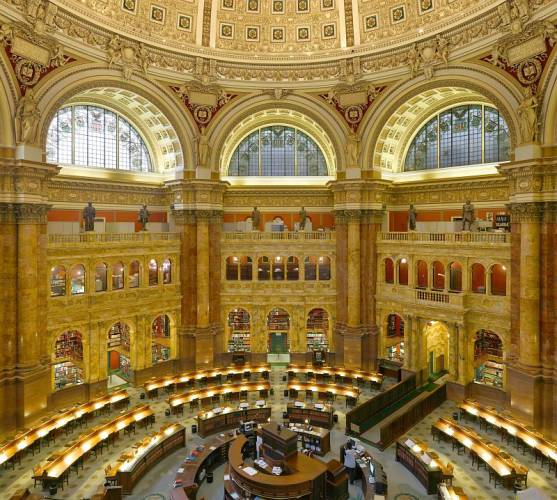
1800 – President John Adams approved legislation to establish the Library of Congress.


1898 – Spain declared war on the United States.  The U.S. responded in kind the next day.


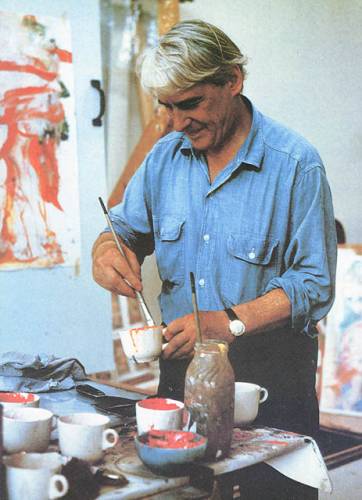
1904 – Painter Willem de Koonig was born in Rotterdam, Holland.


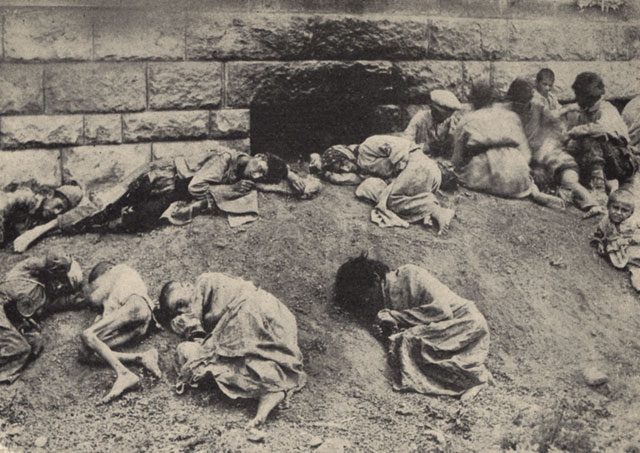
1915 – What’s regarded as the start of the Armenian genocide began as the Ottoman Empire rounded up Armenian political and cultural leaders in Constantinople.  It’s estimated between 1 million and 2 million ultimately died in the conflict that ended 8 years later.


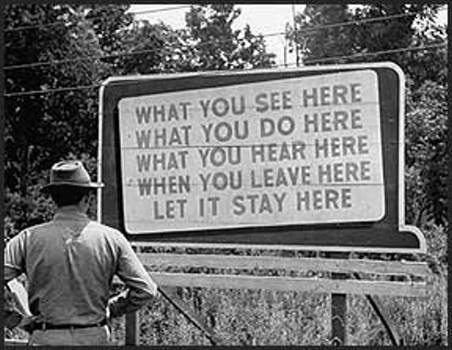
1945 – Less than 2 weeks after ascending to the presidency, Harry S. Truman learned the full details of the Manhattan Project, a scientific effort to create the world’s first atomic bomb.


1962 – The Massachusetts Institute of Technology achieved the first satellite relay of a television signal, using NASA’s Echo 1 balloon satellite to bounce a video image of the letters “M.I.T.” transmitted from Camp Parks, CA, to Westford, MA.

Leave a comment

Filed under History

Creative Destruction

Martin Levin spent four decades in the publishing industry, before retiring and – at the age of 61 – immediately decided to attend law school.  He graduated from the New York School of Law 4 years later and found a new career with Cowan, Liebowitz & Latman in New York City.  But, he’s obviously more than a little qualified to voice an opinion on the state of publishing in America today.  In this piece, he expresses his concerns for publishing in the face of such growing enterprises as Amazon, Facebook and Microsoft.  He dubs the new wave in technology “creative destruction,” a process that has enabled “larger, well established, well financed, entrepreneurial publishers to acquire independent publishers.”  In a manner similar to how the top 1% of the wealthiest Americans controls the bulk of the nation’s financial assets, 20 publishers now control some 80% of publishing revenue in the United States.

Levin is channeling the late Joseph Schumpeter, an Austrian-born economist and political scientist who introduced the world to his theory of “creative destruction” in his 1942 book Capitalism, Socialism and Democracy.  Unlike stereotypical anti-capitalists who believed capitalism would be destroyed by its enemies, Schumpeter believed that it would be undermined by its own successes; that it would create a class of elitists who make their living by attacking the same system of private property and freedom necessary for the very survival of those elitists.

Levin applies Schumpeter’s theory to recent events in the publishing industry.

Last year Harper Collins, already the owner of a major religious publisher, Zondervan, acquired its significant competitor, Thomas Nelson, for $200 million.  Ironically in 2006, Intermedia had paid $473 million for Nelson.

Around the same time, Barnes & Noble decided to put its Sterling Publishing Company on the market for $115 million, so it could concentrate on its e-book reader, the Nook.  Sterling had a backlist of more than 5,000 titles and revenues close to $100 million.  But, no one was interested.  Sterling lost its CEO and 3 other executives.  B&N still owns it, perhaps realizing only now that what had been a truly valuable asset is now a liability.

Just this past March, John Wiley and Sons, original publishers of Moby Dick, announced it would explore the sale of its print and digital assets that if felt were no longer in line with the company’s long term strategies.  Wiley had carefully procured the targeted assets, many of which had been freestanding companies.  They included CliffsNotes and Webster’s New World Dictionary.  At the same time, Wiley had acquired a workplace learning solutions company, Inscape Holdings, for $85 million.  They then bought another digital publisher, Structure, making it clear that they see their future in technology.

Also last year, Bloomberg, a global business and financial news corporation, bought BNA, the 19th largest publisher in the U.S.  BNA specializes in publishing for business, legal and government professionals.  Thus, the union creates a new monolithic entity, apparent in the $990 million cash payment Bloomberg made to shareholder employees.  That’s roughly $600,000 for each shareholder.

In 2008, Zagat, publisher of a survey directory for diners, placed itself on the market for $200 million, then withdrew its offer when no takers arose.  Three years later Zagat finally found the appropriate buyer – Google, which paid $161 million.  Zagat’s directory will now join Google’s other online programs, such as Google Maps.

With such mega-mergers in mind, Levin asks, “is it within reason that the future buyers of publishers will be a non-conventional buyer?  And if so, is it hard to speculate about list of potential buyers who may be interested in acquiring book publishing companies?”

Mergers and acquisitions was a popular trend in the financial services industry throughout most of the 1990’s.  It came on the heels of the disastrous savings and loan collapse.  Banks grew bigger, with tentacles reaching across the country and across the globe; an endeavor some saw as ultimately beneficial to the consumer.  But, with the recent housing market catastrophe, which was tied directly to the banking industry, the entire concept of a company growing larger just for the sake of it is questionable.

As for Amazon, Levin points out the obvious: it led the way in the e-book market with its Kindle device and it is now a full-fledged publisher, as well as a top book distributor.  Microsoft is close behind, and Facebook is now maturing along with its founder, Mark Zuckerberg.

Everyone in the publishing industry is asking what the future look like.  It’s the million- (or billion) dollar question.  Some smile at the prospects, seeing nothing but a bright, infinite horizon.  Others squirm at the thought of a handful of publishing titans deciding what writers should be published and therefore, what consumers should read.  It could mean that a small number of powerful people will decide what information is released and when.  I have to admit I have my own qualms at such a future.  If the banking and housing industry crises are any indication, it doesn’t look that bright.  I’m not clairvoyant and I’m not among the monied elite, so I’ll just wait – and keep writing like the rest of us.

Leave a comment

Filed under News

Beard Semantics

As a man who’s grown a beard many times in the past (usually in winter), I find this web site devoted to the facially hirsute man both intriguing and amusing.  A few years ago I shaved off my moustache and goatee.  I’d had the moustache for at least 10 years at that point and was almost afraid to see what my upper lip looked beneath the hair.  One woman at my office told me I looked younger, which didn’t surprise me.  I noted that it’s one reason why very young men often grow facial hair – to look more mature.  She’d never realized it.  Thousands, even hundreds of years ago, most men simply couldn’t help but grow beards.  They had no real means to shave.  I think it’s interesting – and somewhat telling of American society – that the last U.S. president with a full beard was Benjamin Harrison who served 1889 – 1893.  The last one with a moustache was William Howard Taft who served 1909 – 1913.  It seems facial hair practically became obsolete in the 1980’s, except for porn stars and gay men.  Full beards were relegated to the dreary environs of mountain men and loggers.  Now, it appears men have the audacity to allow hair to grow on their faces, albeit more kempt and clean than what you think the average mountain man has.  But, it looks like some folks still have an unfavorable view of the bearded man, as the accompanying display insinuates.  That’s okay.  I don’t trust a man who wants to keep his face baby-butt smooth all the time.

Leave a comment

Filed under Curiosities

April 23, 2012 – 241 days Until Baktun 12

Survivalist Tip:  Yesterday’s “Earth Day” celebrations reminded me of the need to recycle and compost certain materials.  But, equally important is what to do with trash you can’t recycle or compost, such as used napkins, 8-track tape players or politicians.  Dealing with trash is as old humanity itself.  Eons ago, of course, when the Earth wasn’t so crowded, people just tossed their trash aside.  Now, because religious practices demand people procreate like rabbits on Viagra (and those same people don’t realize how stupid that is), there are millions upon millions of us on Earth.  More advanced ancient societies, like the Mayans and the Romans, dealt with their refuse in practical, constructive ways.  Both had complex sewer systems, for example, made with and covered by stones.

Whether you plan to stay at home or head out on foot when the apocalypse hits, you need to be conscious of the trash you generate and leave behind.  Here are just some examples.

  1. Hopefully, you won’t have any leftover food, since that would be wasteful, and the Mayan deities will frown upon you.  If by chance you do, try to use it as compost or fertilizer.  Orange rinds and apple cores are particularly suited for this type of disposal.
  2. Baby wipe containers can be used to store and organize things like pens, knives and .45 bullets.
  3. Plastic bags can be used to pick up dog waste; toss whatever food you don’t eat into one and stuff it in the freezer; wrap one around the head of the most uncooperative member of your crew.
  4. Glass bottles and jars can be used to store water or other beverages for emergencies, or as defense weapons.
  5. Metal cans could be used in pretty much the same way as glass bottles and jars.  But, they can also be used to scoop up water from a creek, or as a substitute for a shovel if you have to kill a bitchy in-law.
  6. Plastic milk jugs can also be used for holding water and other beverages, but also to keep Xanax and chocolate pieces.
  7. Cardboard like that from cereal or cracker boxes can be used as kindling, or for a last will and testament.
  8. Fabric softener sheets can be used as air fresheners in your clothes drawers, or as last resort toilet paper.
  9. Foil can be reused in baking, or to blind vultures circling above your camp site.
  10. Newspapers can be used as fire kindling, or to wrap up whatever items you can’t recycle before burying deep underground.  (Note: this won’t work with relatives.)

Everyone has to be conscious of the trash they create.  Do what you can to preserve the Earth in the “New Universe.”  Otherwise, the Mayan gods will see to it you get buried with those bitchy in-laws.

Leave a comment

Filed under Mayan Calendar Countdown

Today’s Notable Birthdays

If your birthday is today, “Happy Birthday!”


Shirley Temple Black, child actress and U.S. delegate to the United Nations, is 84.


Actor Alan Oppenheimer (Murphy Brown, The Six Million Dollar Man, The Legend of Prince Valiant) is 82.


Actor David Birney (St. Elsewhere, Bridget Loves Bernie) is 73.


Actor Lee Majors (The Six Million Dollar Man, Big Valley) is 73.


Actress Joyce DeWitt (Three’s Company) is 63.


Drummer – singer – record producer Narada Michael Walden is 60.


Actress Jan Hooks (Designing Women, Saturday Night Live, The Martin Short Show) is 55.


Actress Valerie Bertinelli (One Day at a Time, Silent Witness, Ordinary Heroes) is 52.

Leave a comment

Filed under Birthdays

On April 23…

1564 – Poet and playwright William Shakespeare was born in Stratford-upon-Avon, England.  He allegedly died on the same day 52 years later.


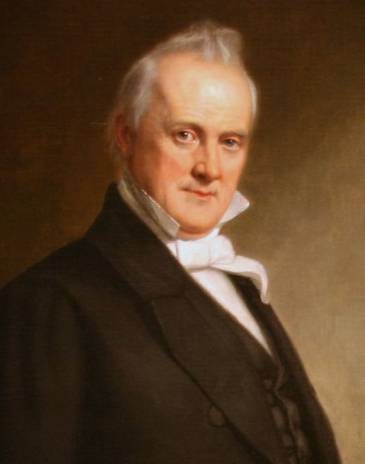
1791 – James Buchanan, 15th President of the United States, was born in Franklin County, PA.


1872 – Charlotte E. Ray became the first black woman lawyer in ceremonies held in Washington, D.C.

1891 – Pianist – composer Sergei Prokofiev (Peter and the Wolf, The Love for Three Oranges, The Fiery Angel, War and Peace) was born in Krasne, Ukraine.


1969 – Sirhan Sirhan was sentenced to death for assassinating Sen. Robert F. Kennedy the year before.

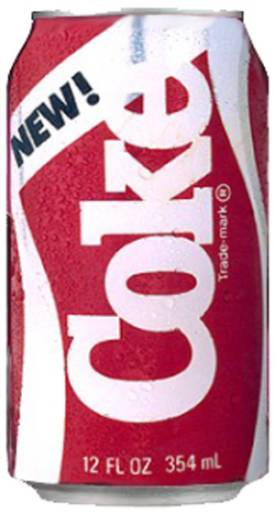
1985 – Coca-Cola announced it was changing its 99-year-old secret formula.  “New Coke” was called “the most significant soft drink development” in the company’s history.  But, original Coke fans weren’t enthusiastic and just didn’t buy the new Coke.  It turned out to be one of the biggest corporate flops ever.

Leave a comment

Filed under History

Cartoon of the Day

Leave a comment

Filed under News