Rare Titanic Film Footage

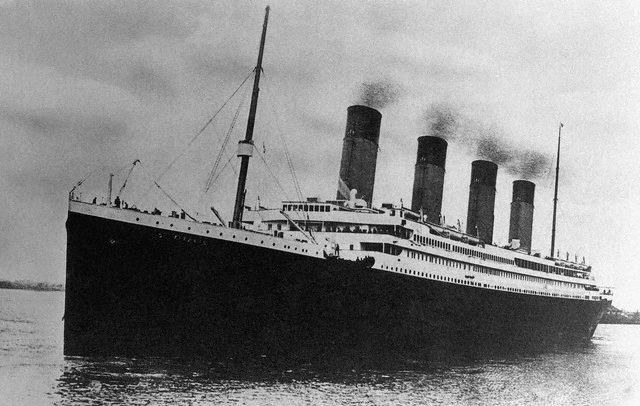
This is genuine film footage of the R.M.S. Titanic leaving Belfast, Ireland for Southampton, England.  It is the only genuine extant footage of the ship.  The film continues with shots of the R.M.S. Carpathia, which plucked Titanic survivors from lifeboats, and that ship’s arrival in New York.


Leave a comment

Filed under Classics

Photographs of Titanic by Father Francis Browne

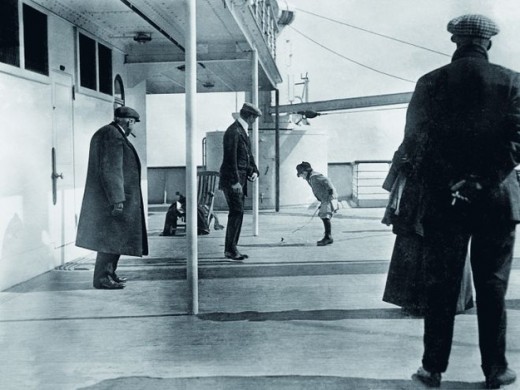
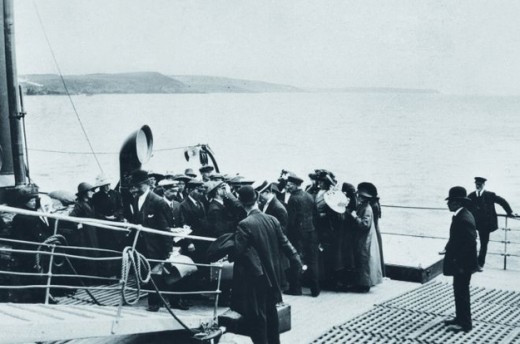
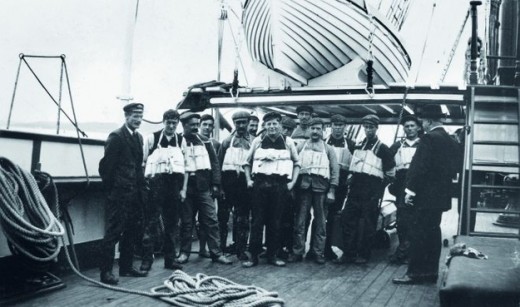
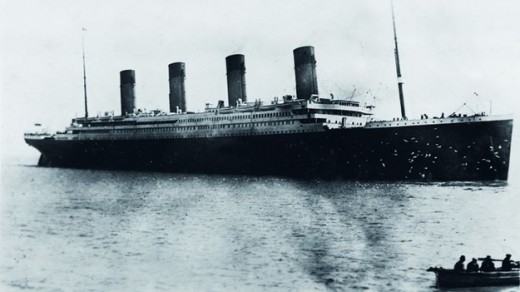
Father Francis Browne was an Irish Roman Catholic priest who traveled to Cobh, Ireland in April of 1912 to photograph the R.M.S. Titanic as it made a brief stop; its last port of call before proceeding on its voyage.  Although the ship was registered in England, Ireland holds a special fondness for Titanic: it was built in Belfast, and many of its passengers were Irish immigrants on their way to what they hoped would be a better life in the U.S.  Father Browne died in 1960, his photographs stored in a large black metal trunk in the basement of Irish Jesuit Provincial’s House.  In 1985, the same year the Titanic wreck was discovered, Father Edward O’Donnell came across Father Browne’s metal trunk, which also contained a number of other photographs and negatives.  But, his Titanic photographs captured everyone’s attention.  Father Browne’s photographs have been published and exhibited around the world and he is now recognized not only as the greatest photographer in Ireland of the first half of the 20th century but an outstanding photographer of world stature.  Here are some of his pictures of life aboard Titanic.

A boy plays aboard the deck of the Titanic

A Queenstown vendor sells Irish lace aboard the Titanic

A U.S. doctor inspects passenger’s eyes

Major Frank Brown

Members of the Titanic crew pose with lifejackets

Passengers from steerage settle on deck aboard the Titanic

The bedroom in the Browne suite aboard the Titanic

The gymnasium

Men waiting for jobs possibly transferring mail

The last photo of the Titanic taken by Father Francis Browne

Father Francis Browne


Leave a comment

Filed under Classics

Archaeology of Titanic

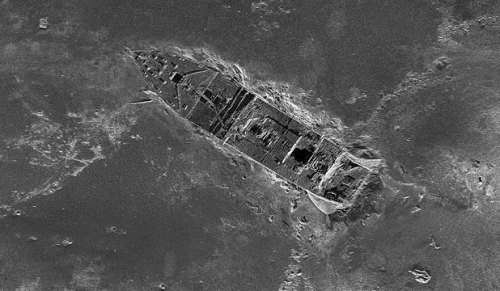
This composite image, made from sonar and more than 100,000 photos taken in 2010 from by unmanned, underwater robots, shows a small portion of the Titanic debris field.

The May / June 2012 issue of Archaeology Today, a publication of the Archaeological Institute of America, marks the centennial anniversary of the Titanic’s sinking by focusing on “what it was always meant to be: an archaeological site.”  When scientists finally discovered the wreck in 1985, using an unmanned deep-sea vessel called Argo, they certainly didn’t expect to find the Titanic in pristine condition.  But, they also didn’t expect to learn that it had become a haven for marine life. 

Two miles down, with water pressurized to 6,000 pounds per square inch, the remnants of the Titanic metamorphosed into a “series of reefs in what had once been a deep-sea desert.”  Plunging to such depths had been the stuff of ambitious dreams and adventurous souls.  But, even by the 1980’s, when technology allowed those dreams to become reality, no one really knew what to expect.  Humans first visited the site in 1986, peering out the peep holes of another deep-sea submersible, Alvin.  The year after that, another vessel, Nautile, glided over the site.  Scientists were stunned to find bottles of wine, dishes, clothing, wallets and other items scattered along the ocean bottom near the wreck, where oxygen doesn’t reach.  With its robotic arm, Nautile picked up the first of 1,800 artifacts it would recover during that expedition. 

In 2010 two robotic vehicles crisscrossed the seabed, using high-resolution sonar and camera systems to create the first comprehensive map of the Titanic site.  Another robot, at the end of a fiber-optic cable, sent to the surface live, full-color, 3-D images, allowing scientists to virtually walk the decks of the ship.  This latest effort is perhaps the most significant advance since underwater archaeology began just 50 years ago.  For the first time, Titanic can be treated and explored like any other underwater site; extreme depths are no longer an obstacle. 

The first steps in expanding underwater archaeology to the depths were propelled by the Titanic disaster itself, as the first sonar systems were developed and tested after the sinking to locate and avoid icebergs.  This technology improved throughout the 20th century, moving into deeper waters, until Titanic’s discovery.  But even in 1985, the idea that Titanic could be explored, photographed and mapped like an archaeological site seemed like science fiction. 

The artifacts salvaged since 1987 represent less than 1% of what might be available.  The furor over the recovery of artifacts from Titanic has been long and arduous.  The greater concerns for archaeology are how and why the artifacts were removed, and what would become of them.  Were they being appropriately conserved, cataloged, and researched?  Would they ultimately go to auction? 

The U.S. District Court in Norfolk, Virginia has overseen the salvage company’s activities under admiralty law for two decades and has answered a number of these questions.  Rulings by the court have limited recovery to artifacts scattered outside the intact bow and stern sections.  At one stage, RMS Titanic Inc. unsuccessfully sued the U.S. Departments of State and Commerce to stop publication of the International Agreement on Titanic guidelines.  Most recently the court awarded RMS Titanic Inc. title to the 5,000 artifacts, with the stipulation that the company follow international standards for conservation, treatment and display of the collection.  Furthermore, any sale of the artifacts would be subject to review by the court, and allowed only if the collection stays together and is maintained for public display and study. 

Debate surely will continue over Titanic’s remnants, but one thing is certain: it is one of the most horrific maritime disasters in recent memory.  People have an almost macabre fascination with it.  Yet, we can’t forget the human aspect of that tragedy.  The hopes and dreams of many people aboard the vessel vanished into the cold dark waters of the North Atlantic.  The ship is their collective graveyard.  We can dredge up cutlery and even paper documents from the muddy depths.  But, we can’t bring the more than 1,500 souls who perished along with them.  They were important, too, and they should be respected.


Leave a comment

Filed under News

In Memoriam – R.M.S. Titanic

April 15, 1912 – Rest In Peace


Leave a comment

Filed under News

April 14, 2012 – 250 days Until Baktun 12


Survivalist Tip:  One thing you have to check in your vehicle is the motor oil.  No vehicle can function without it.  It’s the single most essential lubricant for the engine.  If you’re starting to get sexually excited, stop and get hold of yourself.  On second thought, get hold of something else – like the wall – and start concentrating.  This is serious!  Motor oil has 3 primary functions: 

  1. It prevents all the metal surfaces in your engine from grinding together and tearing themselves apart due to friction.  If you hear a nasty grinding sound coming from the engine, chances are your motor oil level is low.  Either that, or you were speeding through a school zone. 
  2. It suspends all the nasty by-products of engine combustion, such as acid and insect refuse. 
  3. It minimizes exposure to oxygen, which at high temperatures, can damage the engine.

Motor oil comes in 2 types: mineral and synthetic.  Mineral oil is a natural substance that comes from the Earth.  Do not confuse it with the type you use for cooking.  Synthetic – as the name implies – is concocted in a lab.  Since I place scientific labs in the same category as government agencies and utility companies, I don’t trust them and therefore, recommend you use mineral-based motor oil, specifically 10W-40.  You’ll have to change it more often, but it’s best for you and your vehicle. 

As December 21 approaches, you need to change the motor oil in your vehicle.  Regular oil changes prevent something called “Black Death.”  Usually when people think of “Black Death,” they conjure up images of medieval, rat-infested Europe.  But, in this case “Black Death” simply means sludge.  This is not the chocolate sludge delight you get at a chocolate festival.  This is the gunk that builds up in your engine when you don’t maintain it properly.  Similar gunk builds up in your intestines and refrigerator, but I don’t have time for that.  If your vehicle’s engine has developed sludge, you just need to have it flushed out completely.  Consider this an enema for the engine.  I know that sounds nasty, but I’m trying to emphasize the importance of engine maintenance. 

You don’t know how long it’ll take for things to settle down after the apocalypse.  But, if you have to travel a long distance, you can be assured your vehicle will help you reach safety.  Then, you can enjoy all the chocolate sludge in the “New Universe!”


Leave a comment

Filed under Mayan Calendar Countdown

Today’s Notable Birthdays

If your birthday is today, “Happy Birthday!”


Actress Gloria Jean (Copacabana, The Ladies Man) is 85.

Actor Bradford Dillman (Compulsion, The Bridge at Remagen, Falcon Crest) is 82.


Actor Jay Robinson (Sinatra, My Man Godfrey, The Virgin Queen, The Robe) is 82.

Actress Joan Darling (The President’s Analyst, The Two Worlds of Jenny Logan) is 77.

Singer – songwriter Loretta Lynn (Coal Miner’s Daughter, I’m a Honky-Tonk Girl, One’s on the Way, The Pill; 1st woman to earn the Country Music Association’s Entertainer of the Year award) is 77.

Actress Julie Christie (Dr. Zhivago, Petulia, Shampoo, McCabe & Mrs. Miller) is 71.


Guitarist Ritchie Blackmore (Deep Purple, Rainbow, Blackmore’s Night) is 67.

Actor John Shea (Baby M, WIOU, Backstreet Justice) is 63.


Actor Anthony Michael Hall (The Breakfast Club, Sixteen Candles, Edward Scissorhands) is 44.


Leave a comment

Filed under Birthdays

On April 14…

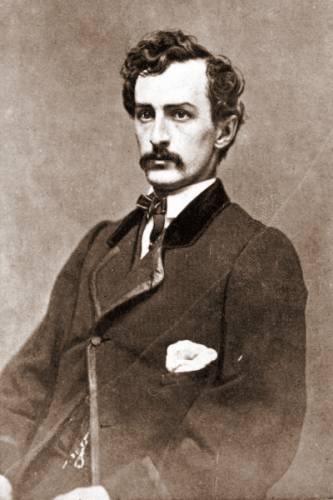
1865 – John Wilkes Booth, an actor and Confederate sympathizer, fatally shot President Abraham Lincoln at Ford’s Theatre in Washington, D.C.  Lincoln died at 7:22 A.M. the next day.


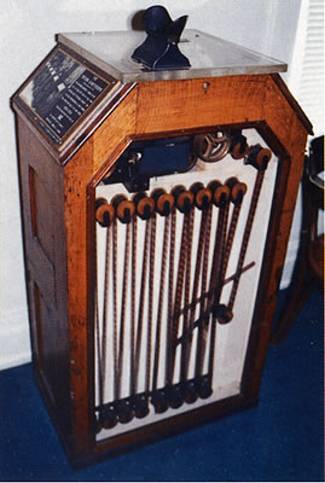
1894 – Thomas Alva Edison demonstrated the kinetoscope in New York City.  A viewer that held 50 feet of film – about 13 seconds worth – showed images of Annie Oakley and Buffalo Bill.  The demonstration was actually called the first peep show, as one had to peep into the device to see what was on the film.  Movies were not projected on a screen at that time.

1902 – James Cash Penney opened his first store, dry goods and clothing store named Golden Rule, in Kemmerer, WY.

1912 – The R.M.S. Titanic of the White Star Line struck an iceberg at approximately 11:40 P.M.  The great ship, on its maiden voyage, sank just under three hours later, taking 1,517 people with it.


1912 – Stunt man Frederick Rodman Law became the first man to intentionally jump from the Brooklyn Bridge in New York without intending to take his own life.  He survived the leap.


1939 – John Steinbeck published The Grapes of Wrath.


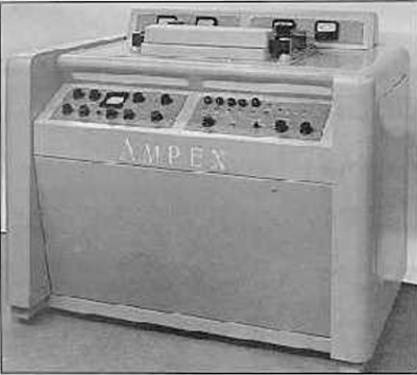
1956 – Ampex Corporation of Redwood City, CA demonstrated the first commercial magnetic tape recorder for sound and picture.  The videotape machine had a price tag of $75,000.


Leave a comment

Filed under History

Cartoon of the Day


Leave a comment

Filed under News

Pictures of the Day

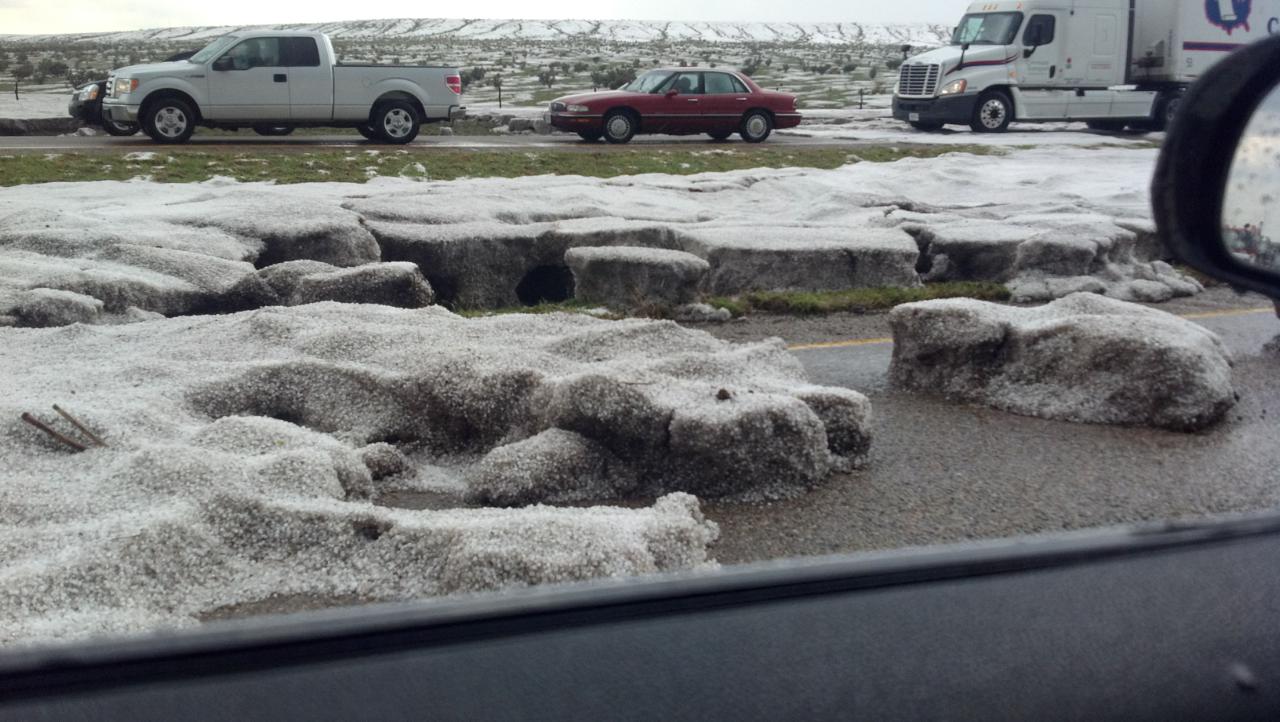
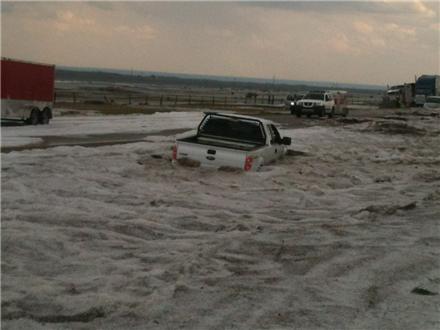
A weather system dumped up to 4 feet of hail in Northwest Texas, mainly the Amarillo area, the other day.  This was an odd event, even for Amarillo, which experiences heavy snowfall every winter.


Leave a comment

Filed under News

Quote of the Day

“I have very little tolerance for people who tell me that they graduate with $200,000 of debt or even $80,000 of debt because there’s no reason for that.  We live in an opportunity society and people are forgetting that.  I remind folks all the time that the Declaration of Independence says “life, liberty, and the pursuit of happiness.”  You don’t have it dumped in your lap.”

– Rep. Virginia Foxx (R-NC), who chairs the House Subcommittee on Higher Education & Workforce Training, on G. Gordon Liddy’s radio show.  In Foxx’s 2010 financial disclosure statement, she owned two individual mortgage notes worth up to $250,000 each, from which she earned as much as $20,000 in payments.


Leave a comment

Filed under News