
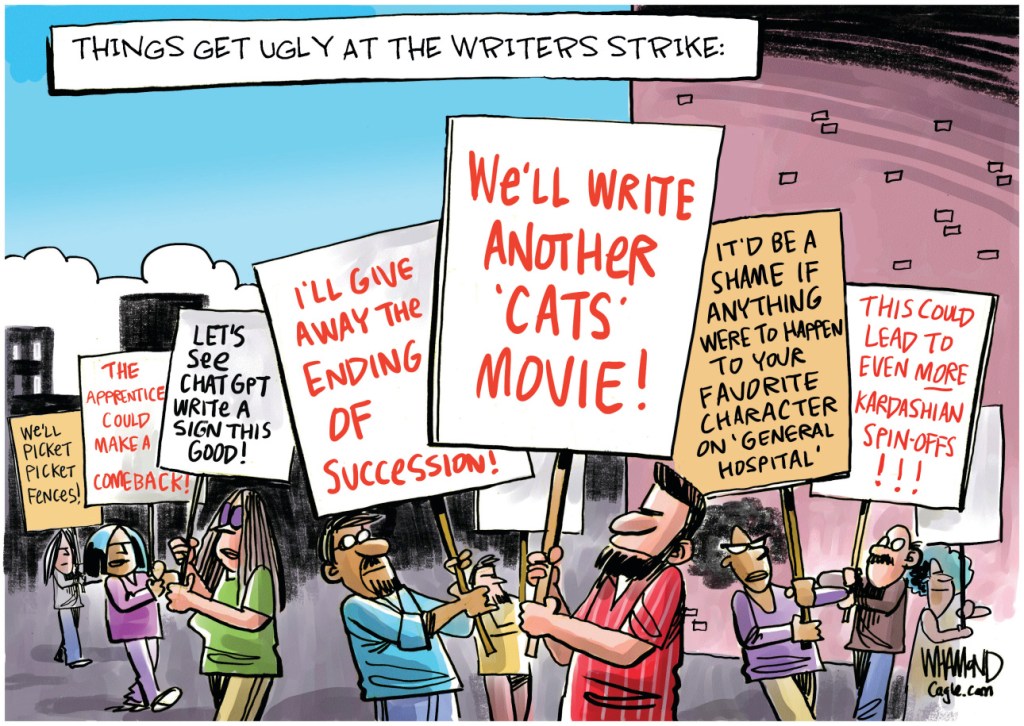
Image: Dave Whamond
Filed under News
Around 1990 I met a woman who once worked for the now-defunct Braniff Airlines. She was the aunt of a close friend, and somehow we got to discussing business practices and how things function in the corporate world. I was already working for a major bank in Dallas. She noted how the former president of Braniff refused to accept the reality of bad news. Anyone who dared to step into his office and present him with less-than-stellar information about the company’s dire finances was promptly terminated. On the day in 1982 the company filed for bankruptcy, she mentioned that employees didn’t get paid and, in some clerical settings, they literally went ballistic and destroyed many pieces of equipment and office furnishings as retribution. I was shocked, but said I didn’t blame them.
In the summer of 2011 I landed a contract technical writing position with an IT firm in Dallas. One of the senior technical writers had worked for Braniff as a flight attendant until they went bankrupt. She confirmed what that other woman had told me two decades earlier. Braniff employees didn’t receive their last paycheck and lost their patience.
You don’t have to be a business owner to understand that bad news is an inevitable burr in daily operations. It comes with territory, but some people handle it better than others. The same goes for comedy. Cultural shifts can make individuals more or even less sensitive to certain aspects of their surrounding environments.
The U.S. currently has a president, however, who has no problem calling people names and making fun of them, but suddenly draws the line at people mocking him. “You’re a horrible person” is how he often prefaces a response to someone who asks him a question he finds intolerable. But, as I wrote in a previous essay, it appears the demonic world of American politics has become riddled with the emotionally fragile.
Last week conservative activist Charlie Kirk was shot and killed by a young man while holding an outdoor question-and-answer session at Utah Valley University. The 31-year-old Kirk left behind a wife and two young children. Right-wingers immediately jumped into the chaos and started pointing fingers at liberals and the entire Democratic Party.
“Democrats own what happened today,” South Carolina Republican Nancy Mace groused to reporters the day after Kirk’s death. “I am devastated. My kids have called, panicking. All the kids of conservatives are panicking.”
President Trump ordered flags flown at half-mast in honor of Kirk; something he didn’t do in the bloody aftermath of the January 6, 2021 riots on Capitol Hill.
It’s ironic, though, because Kirk once said that gun-related deaths were merely a price to pay for Americans’ right to own firearms. “It’s worth it to have a cost of, unfortunately, some gun deaths every single year so that we can have the Second Amendment,” he stated matter-of-factly in 2023. Now he’s being lionized as a martyr to conservative ideology.
Kirk also believed firmly in free speech, declaring that saying even “contrarian things” is acceptable. I have to agree with that statement. But, as the adage goes, be careful what you wish for…
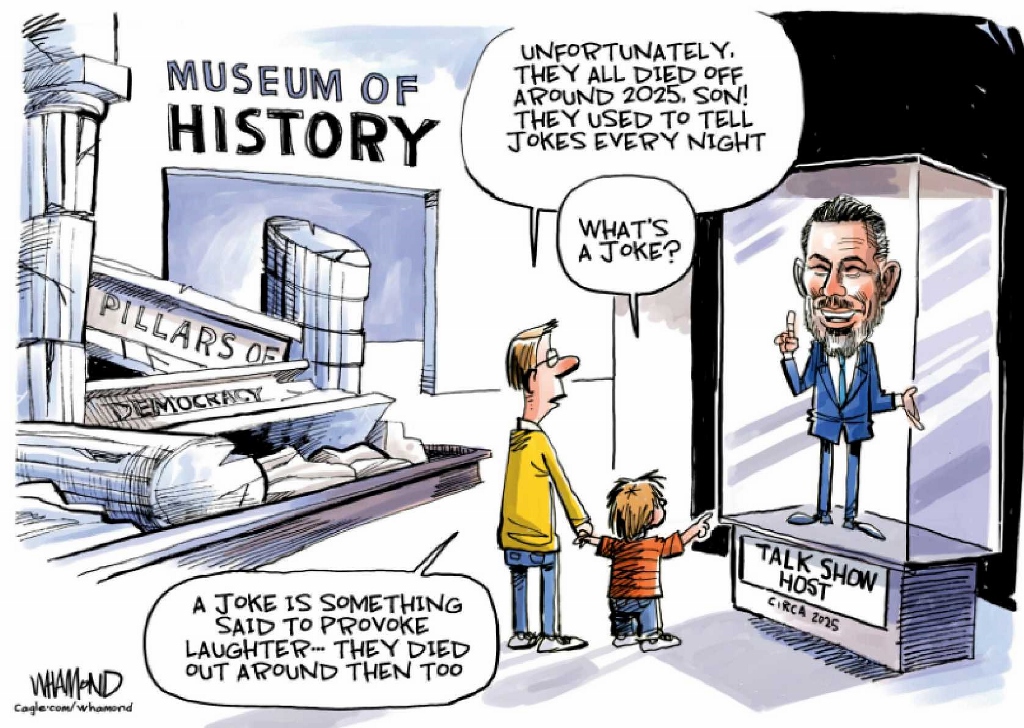
The general concept of free speech is now under attack, as it always has been with Trump and his MAGA mafia. Recently the Federal Communications Commission ordered the ABC network to cancel or at least suspend Jimmy Kimmel’s nightly talk show, after he commented on Kirk’s murder. Kimmel didn’t gloat over the assassination; he simply pointed out that Trump supporters are using it to enhance their own anger.
For some folks, free speech only seems to have consequences or responsibilities when someone says something they don’t like. How free should someone be with their own words? You can’t threaten to kill someone or you can’t call them a rapist without tangible proof. Slander and threats of violence aren’t covered by the First Amendment to the U.S. Constitution.
Banned Books Week 2025 is coming up soon, and I recollect a news piece I saw back around 1986 – the centennial anniversary of the Statue of Liberty. Several foreign-born and newly-minted American citizens discussed the oppression they escaped. One woman, a Russian, noted that she was a reading a book at an outdoor café, when said she suddenly got the feeling someone was watching her. But she remembered she was now in the United States – and she could read just about anything she wanted, even in public, without fear that someone would report her to authorities for being a traitor or disruptive; merely because of what she was reading.
Is that where we’re headed? People need to watch what they read, as well as what they say? Or is the First Amendment now subject to political interpretation?
Do any of us want someone else to determine what we say and read? I’m not willing to give up that type of freedom. No one should.
Image: Dave Whamond
Filed under Essays

In case you hadn’t realized it, Dear Readers, Santa Claus and Halloween clowns aren’t the only holiday figures that can boast unnerving images. Easter bunnies hold a considerable share of macabre visages. After all, what mammal besides a platypus do you know lays eggs? Of course, the platypus is trying to procreate. The Easter bunny seems to have more nefarious intentions – they hide their eggs and convince innocent little kids to look for them. Who does that?!
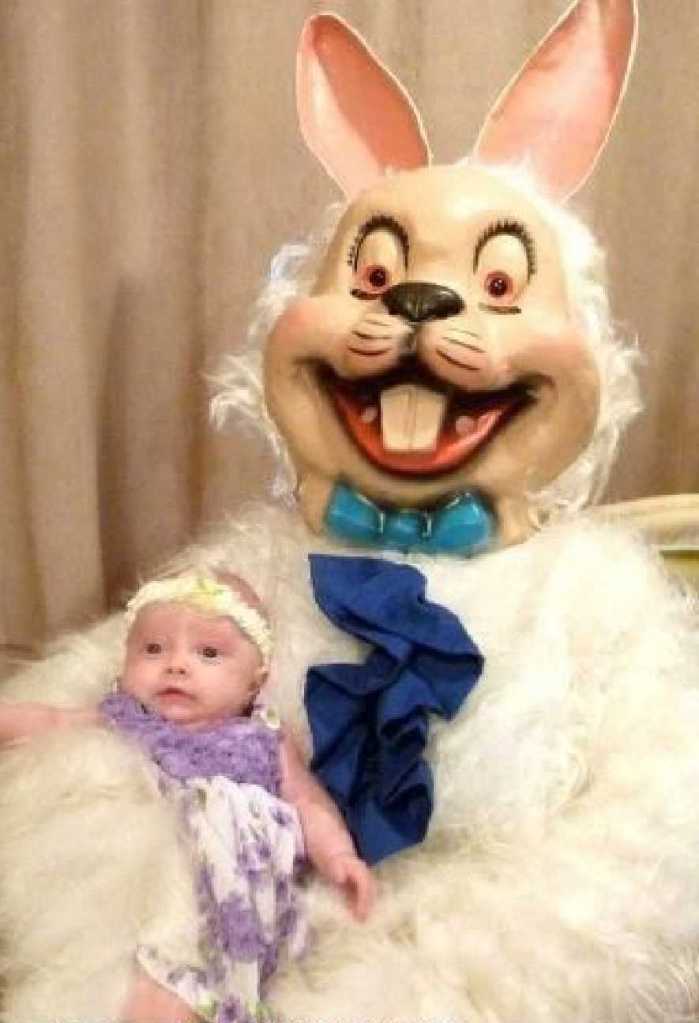
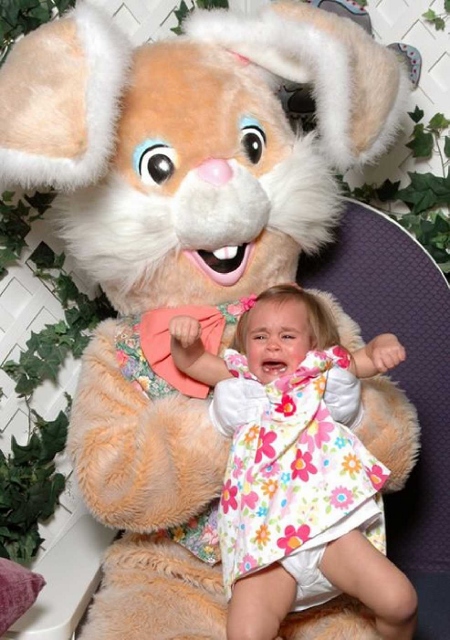


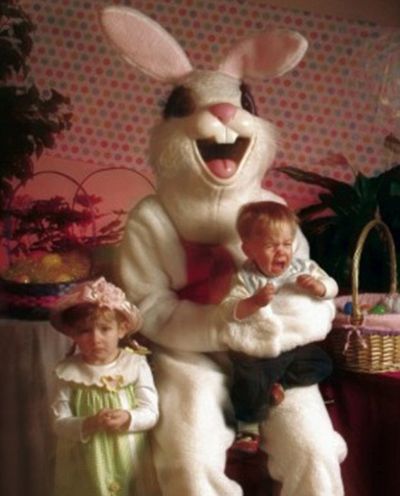
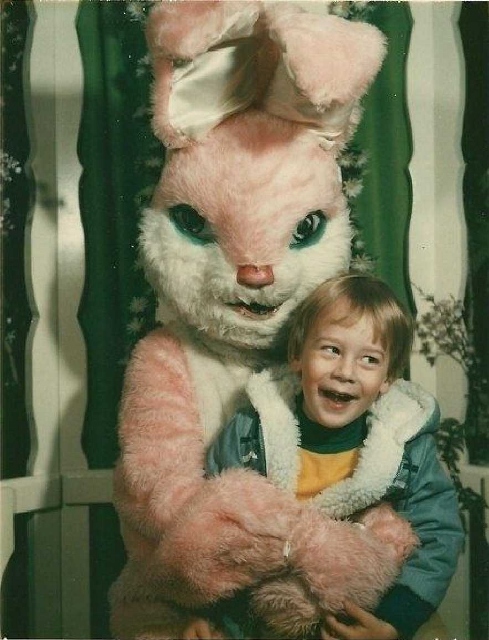
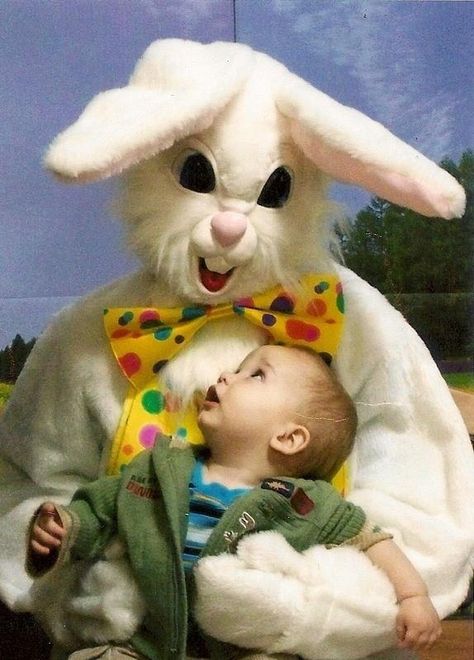


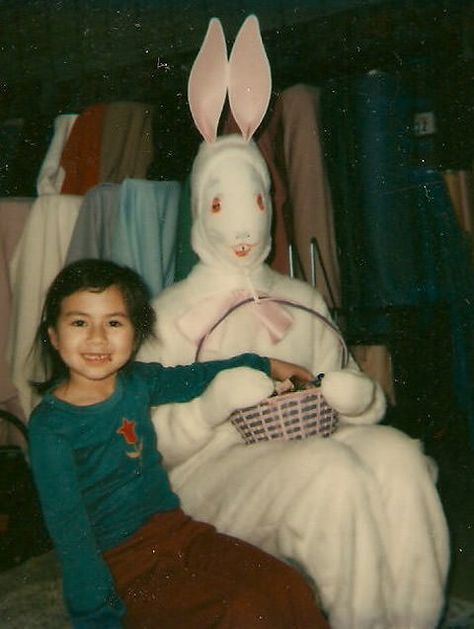

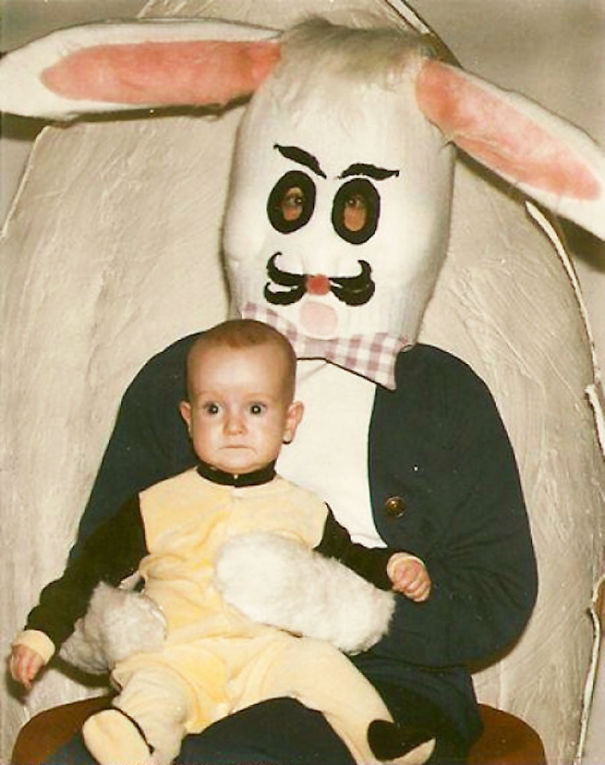
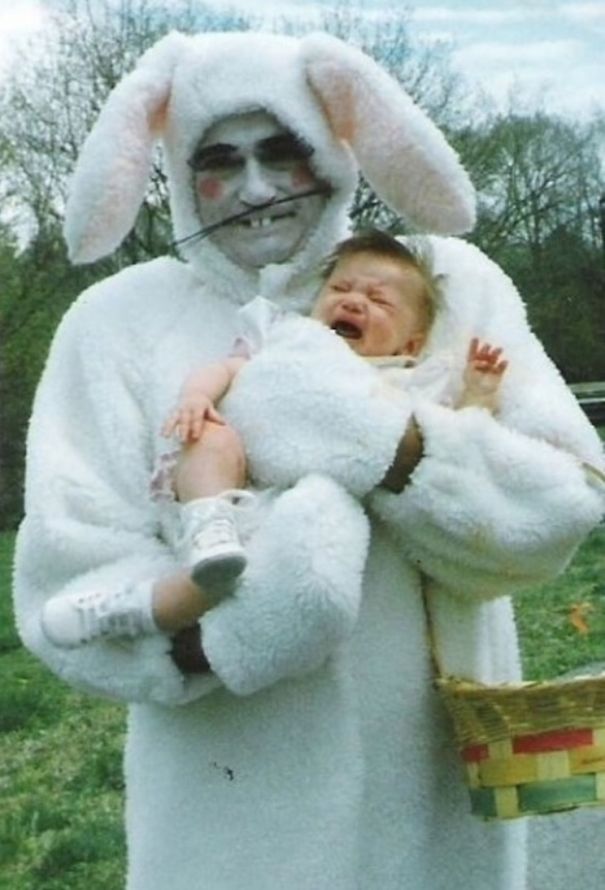

And, if you aren’t sufficiently alarmed by these photos, here’s Liam Neeson adding to the trauma:
Top image: Dave Whamond
Filed under Curiosities
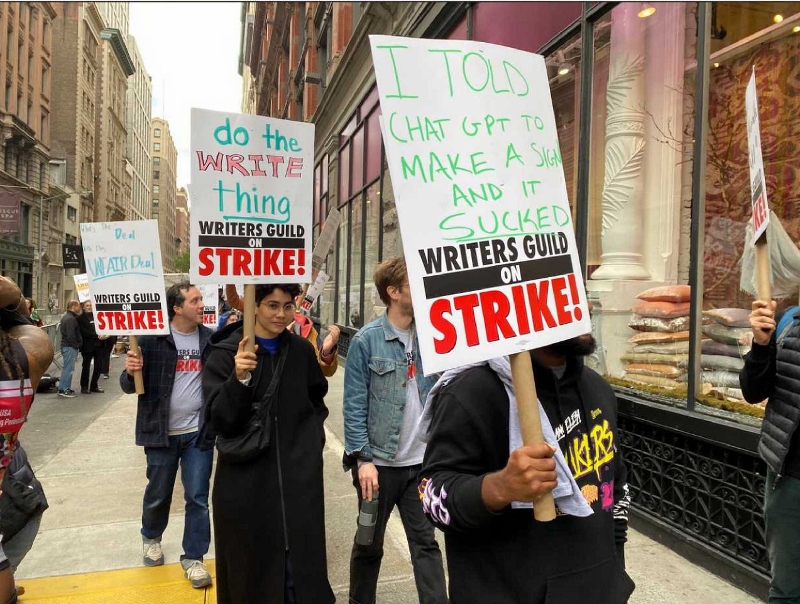
Protesters outside Netflix’s headquarters on May 3 demand better pay and no AI in the writers’ room. Photo: Maya Pontone/Hyperallergic)
On Monday, May 1, the Writers Guild of America went on strike. It’s the first time professional television and film writers have revolted against the entertainment industry since 2007. That particular walkout last more than three months and alone cost the state of California $2.1 billion. Back then the dispute centered on the growing internet market and material being downloaded for very little, if not for free. The entertainment world’s corporate elites had, of course, remained profitable.
The WGA is still fighting for the usual claims: higher wages, better healthcare benefits and pensions, and – as in 2007 – more compensation when their work shows up on streaming platforms, such as Amazon and Netflix. According to an industry bulletin, writer pay has fallen, as corporate profits have risen. Production companies are also hiring fewer writers to do more work. (Sound familiar?)
But now the writers are also targeting a new entity: artificial intelligence (AI) and in particular the ChatGPT program, which has emerged as a writing tool. Launched in November 2022 by OpenAI, ChatGPT is still in its development phase, but has curious (threatening?) implications for writing, computer programming and even every day conversations. In recent years AI has been used to create realistic fake photos and videos.
Didn’t Isaac Asimov warn about things like this?
Dr. Geoffrey Hinton certainly has. Considered the ‘Godfather of AI’, Hinton has expressed concerns about AI’s rapid expansion across the globe, dubbing it an “existential risk” to true human intelligence and ingenuity. A decade ago Google brought Hinton on board to help develop its AI platform, and his endeavors ultimately led to the creation of ChatGPT. Now, perhaps channeling Victor Frankenstein, Hinton declares, “I’ve come to the conclusion that the kind of intelligence we’re developing is very different from the intelligence we have. So it’s as if you had 10,000 people and whenever one person learned something, everybody automatically knew it. And that’s how these chatbots can know so much more than any one person.”
Television and film writers still struggle for respect and profitability. Britanni Nichols, who writes for the popular ABC show “Abbott Elementary”, noted that she could live comfortably off the residuals she’d receive from the network between seasons, since she’d get half her original writing fee. But now, when those episodes are sold to streaming services, she earns a paltry 5.5% of that fee.
“You’re getting checks for $3, $7, $10,” she explains. “It’s not enough to put together any sort of consistent lifestyle. It can really be a real shock. … sometimes you get a stack of checks for $0.07.”
Music artists experienced similar woes with the Spotify streaming service several years ago. Singers and songwriters found they were earning, on average, less than one cent per day, as the site’s patronage downloaded a vast array of songs. The animosity grew so intense that singer Taylor Swift pulled her entire song catalog in 2014. Other artists followed suit, thus setting the stage for a major overhaul of the music streaming concept and business model. It was dramatic and controversial, but it had to be done.
Other creatives found themselves expressing similar anxieties. In 2021 artist Jens Haaning caused a stir when the Kunsten Museum of Modern Art in Aalborg, Denmark paid him the equivalent of USD 84,000 to create a modern art piece. He responded with two blank canvases collectively titled “Take the Money and Run”. It was his homage to (and protest of) the poor wages painters often receive for commissioned works. “The work is that I have taken their money,” he said. Like writing, painting and sculpting aren’t so easy to do.
Author Amy Joy once stated, “Anyone who says writing is easy isn’t doing it right.” And I often recollect an old story involving the late actress Anne Bancroft and her husband, writer and filmmaker Mel Brooks. After landing a movie role, Bancroft allegedly held up the script and lamented the amount of dialogue she had to memorize!” – whereupon Brooks replied by a holding up a blank sheet of paper and asked her to imagine putting all that dialogue down on it.
Several years ago, when LinkedIn was still somewhat relevant, I belonged to various writing and art groups. In one the issue of financial compensation arose, and a handful of misguided souls had the audacity to question why writers – or any artists, for that matter – felt they had the right to be paid for their work. “No one asked you to be a writer,” declared one visitor. I pointed out that no one is asked to enter into any kind of profession, not including family and close friends. (My parents wanted me to go into computer science, which I did when I started college, and quickly discovered how inept I was at it.) The public doesn’t ask anyone to go into the creative arts – not directly. But the average accountant, lawyer, architect, cashier or FedEx driver wants to be entertained in one way or another; try as they may, though, they don’t have the talent or discipline to create their own stories or compose their own songs. Thus, in a subtle manner, they do ask for someone somewhere to do these things for them. People like to read stories, listen to music and look at beautiful paintings. Somebody is always ready to respond and create those pleasures. Thus, they should be respected and be compensated for their endeavors.
All I can say to the WGA folks is to keep writing and keep fighting! It’s worth the battle. You and your work are worth the battle!
Filed under Essays
 Chief Writing Wolf