Tag Archives: mental illness

That Child

Everybody has that one (maybe two or more) quirky relative who defies explanation.  In my family’s case, that’s actually more of a rule.  But when my little sister, Mandy, would say she’d see people, we honestly didn’t know what to say.  No one likes to admit there’s mental illness in the family, right?  I mean…as a kid, everyone has imaginary friends.  But Mandy said she didn’t just have imaginary friends; she saw people.  It was cute – until she was a teenager.

Then it got scary.  ‘What’s wrong with Mandy?’ was a common question at family gatherings.  We couldn’t say; no one seemed to know…what was wrong with Mandy.

“We’re cursed,” Mandy told me; she was about twelve.  “Our family is cursed.”

“Yeah, we are,” I remember telling her that first time; thinking about the family events where someone got shit-faced drunk and started fighting.

“I’m serious!”

I tried to be understanding.  But when someone says your family is cursed – especially if it’s a relative who has a reputation for saying shit like that – how do you respond?

I’m the oldest of the brood, and Mandy is the youngest; four boys and two girls.  She was my baby; tiny even for my 12-year-old arms, when she was born.  I helped to raise her, along with my brothers.  Our parents were primary commanders, but I was second in charge.  My brothers were tough to raise – as you would expect with boys.  But Mandy turned out to be even more of a handful!

I don’t know what it was about her, but she could be so difficult.  My mother always said it was because we girls tend to cause drama.  Daddy would just sigh, as if saying, ‘Tell me about it,’ yet not wanting to be too honest.

I really can’t remember the first time Mandy said she saw someone who wasn’t there…in her bedroom.  She pointed to her dolls.  “Over there,” she told me.

But it was after our maternal grandmother, Martina, died.  “Mamatina” – the witch of West Texas.  Damn, that bitch was mean!  And nasty.  The droplets of blood from the garage into her kitchen said enough.

“You need to get out of here when you graduate,” my Aunt Nicoletta told me.  I was 18 and had just attended my senior prom with a boy who said he felt nauseous every time he stepped into our house.

“That part of the family is too strange,” Nicoletta muttered.  She was an in-law to my mother’s side.  “Everybody knows that.  They just won’t say it.”

I started saying it to myself before I graduated high school.  Only a few other people would say it out loud.

Especially after meeting Mandy.  “Our family is cursed!” she kept saying.  I don’t know how many times I heard that from her.

My father would just quietly bob his head up and down.  Marrying into my mother’s family was probably like an initiation into a biker gang.  He had to endure a lot of misery and, once in, couldn’t escape.  If anything, though, he injected a semblance of normalcy into the chaos.  I’m certain he was glad when Mamatina died.  Without making a sound, he let out a massive breath.  I could hear it through the moaning at Mamatina’s funeral.  Even the priest looked relieved.  In this instance, Mexican mysticism didn’t blend well with Roman Catholic purity.

What would Jesus do?!  Hell, what would Mother Mary do?!

I was certain Mamatina’s death would solve a lot of problems.  And it did – for the most part.  I had just earned my bachelor’s, and I noticed the air in the house had lightened.

Then, as I approached 30 and still not married, Mandy shocked me.  “I’m pregnant.”

This had to be a joke, I told myself.  But I uttered the eternal question: “What?”

“Yes.”

Raymond was a boy she knew from high school.  He wasn’t weird…just plain and ordinary.

“He’s the perfect one,” Mandy said, “the perfect father.”

I then said the next best thing, “Um…okay.”  I never knew what perfect was supposed to mean.

Raymond was present for the birth and even named the baby – Rose.  It seemed ideal – and appropriate: a sweet-smelling blossom with thorns and a blood red pallor.

Mandy’s fingers looked white the moment she gripped the rails of the crib.  Rose was about two months old.  “We’re cursed,” I heard her mumble.

I sighed – not too heavy – my head bobbing slightly.  “Okay.”

But it wasn’t…okay.

Mandy kept saying it – more than she ever had.  “We’re cursed.”  Our family was cursed.

Ordinary Raymond just ignored her, as he swaddled Rose in his skinny arms.  Rose never cried, just sort of grunted.  When she seemed distressed, Raymond was the only person who could calm her down.  He’d pull off his shirt and press her tiny head against his chest; the left side – where she could hear his heartbeat.

Then came that one Saturday afternoon.  I took some groceries over to the house for Mandy and Rose.  Raymond was at work, and no one else was there.

Mandy looked disheveled, but was notably calm.  I guess she’d been up all night.

That word – ‘cursed’ – kept running through my mind.

What does that mean?

“You know,” said Mandy.

Well…I did.  In some ways, I understood what she meant.

Cursed…that one word hung over me like a chronic itch in the middle of my back, while wearing a heavy winter coat and driving.

That baby…Rose.

Mandy’s child.

Daddy’s head bobbed up and down as he thumbed through the TV channels.

Finally…I looked at Mandy.  “What curse?”  After all these years, I had never thought to ask her.

Her eyes flinched.

Rose fell silent.

“You know,” Mandy whimpered.

The air grew heavy.  I mean…REALLY HEAVY.

Cursed.

Please!  I entered Rose’s room and approached the crib.  She looked…well, red.

Heavy air.

I turned back to the doorway and stepped into the hall.

Cursed?

What?!

Heavy air.

Really.

Heavy.

Air.

I turned around…looked at the crib.

Rose was quiet…still.

And – I saw someone.

Something sharp and cold plowed up into my spine.  That itch.

I felt dizzy.

There…standing beside the crib…someone.

Some…thing.

Cursed.

A curse.

Someone…some…thing…a curse.

Something.

Smiled…it smiled…grinned…at me.

Mine.

What?

Mine.

I looked at Rose.

Mine…she’s mine.

Her?

Rose remained still.

It grinned…the someone…something…standing beside the crib.

It grinned again.

Her…this child…mine.

“I told you,” Mandy said, standing at the doorway.

That…something…blood red skin.

Heavy air…really…heavy.

I could hear Raymond’s heart beating.

And Daddy nodded.

The something grinned…mine.  Its bony fingers gripped the crib railing.  Blood-red skin.  Mine.

Rose was completely motionless.

This child…the something said.  Mine.
Leave a comment

Filed under Wolf Tales

Empty

Recently the U.S. Department of Health and Human Services released a report on a surprising, yet intriguing subject: loneliness.  According to various studies and surveys, isolation and a lack of social connectivity has become epidemic.  The COVID-19 pandemic may have exacerbated what was already problematic for millions of Americans.

“Our epidemic of loneliness and isolation has been an underappreciated public health crisis that has harmed individual and societal health,” declared U.S. Surgeon General Dr. Vivek Murthy.  “Our relationships are a source of healing and well-being hiding in plain sight – one that can help us live healthier, more fulfilled, and more productive lives.  Given the significant health consequences of loneliness and isolation, we must prioritize building social connection the same way we have prioritized other critical public health issues such as tobacco, obesity, and substance use disorders.  Together, we can build a country that’s healthier, more resilient, less lonely, and more connected.”

The physical health consequences of poor or insufficient connections are dire.  They include a 29% increased risk of heart disease; a 32% increased risk of stroke; and a 50% increased risk of developing dementia for older adults.  Lack of social connections is estimated to increase the risk of premature death by more than 60%.

In addition to our physical health, loneliness and isolation contribute substantially to mental health challenges.  In adults, the risk of developing depression among people who report feeling lonely often is more than double that of people who rarely or never feel lonely.  Loneliness and social isolation in childhood increase the risk of depression and anxiety both immediately and well into the future.  And with an estimated one in five adults living with a mental illness in the U.S., addressing loneliness and isolation has become critical in fully addressing the mental health crisis in America.

For better or worse, the COVID-19 pandemic exposed the loneliness dilemma.  It also seems to have amplified it.  As businesses either switched to remote work or shut down altogether, people found themselves isolated in the name of good health.  I think much of this was foretold by the obsession with social media in the preceding two decades; where people would establish cyber relationships and call each other “friends”.

As an only child and a confirmed introvert, I’ve dealt with loneliness my entire life.  Sometimes I really do get lonely; other times I’m just alone.  I’ve always been a loner – something my parents never seemed to understand – and I’ve rarely done well in groups.  I get bored easily and quickly grow tired of dealing with people’s attitudes and personality quirks.  I put up with a lot of people’s disrespectful behavior towards me most of my life, which is the primary reason I don’t consider myself a people person.

But I have to admit I do get lonely sometimes.  I’m glad my parents had each other and me (and even my dog, Wolfgang to some extent) as they aged.  One of my uncles lives alone in a dingy apartment with a cat.  (An older cat died a few months ago, which devastated him.)  He can’t drive anymore, so he either takes a bus or has someone transport him somewhere.  I’ve taken him to a variety of doctor appointments over the past few years and grocery shopping almost every weekend for months now.  His stepdaughter lives closer, but she has her own health problems.

I have an aunt who also lives alone.  Her son, like me, is an only child, but he’s married and resides several miles from his mother.  She’s fortunate, though, in that a neighbor has access to her house and keeps an eye on her.  My aunt frightened me a few years ago, when she recounted how she fell in the bathroom one night and had to drag herself into her bedroom.  It took her hours just to get there.  But she was able to call her neighbor who contacted the fire department.  I stay in touch with my uncle and aunt, as well as other relatives and friends – even if it’s just via text message.

I only know a few of my neighbors and have little contact with most relatives.  I’ve never been married and I never had children, so I don’t know how life will be for me if I grow much older.  Loneliness will be just one factor in my later life.

Some years ago a friend expressed concern that I was becoming a hermit.  “Why should I go out?” I responded.  I lived with my parents, so I certainly couldn’t bring anyone home.  Then again, I hadn’t brought anyone home who I didn’t know since before the turn of the century.

A close friend keeps urging me to get a dog, as he did a couple of years ago.  Aside from two household plants that languish nondescriptly on a kitchen counter, I’m the only living being in this house.  (That doesn’t include the occasional insect that invades my quiet abode.)  I’d love to get a dog, but I’m just not in the right situation now to get one.

Dr. Murthy has established a six-point plan to help the U.S. deal with its loneliness epidemic:

  1. Strengthen Social Infrastructure: Connections are not just influenced by individual interactions, but by the physical elements of a community (parks, libraries, playgrounds) and the programs and policies in place. To strengthen social infrastructure, communities must design environments that promote connection, establish and scale community connection programs, and invest in institutions that bring people together.
  2. Enact Pro-Connection Public Policies: National, state, local, and tribal governments play a role in establishing policies like accessible public transportation or paid family leave that can support and enable more connection among a community or a family.
  3. Mobilize the Health Sector: Because loneliness and isolation are risk factors for several major health conditions (including heart disease, dementia, depression) as well as for premature death, health care providers are well-positioned to assess patients for risk of loneliness and intervene.
  4. Reform Digital Environments: We must critically evaluate our relationship with technology and ensure that how we interact digitally does not detract from meaningful and healing connection with others.
  5. Deepen Our Knowledge: A more robust research agenda, beyond the evidence outlined in the advisory, must be established to further our understanding of the causes and consequences of social disconnection, populations at risk, and the effectiveness of efforts to boost connection.
  6. Cultivate a Culture of Connection: The informal practices of everyday life (the norms and culture of how we engage one another) significantly influence the relationships we have in our lives. We cannot be successful in the other pillars without a culture of connection.

All of this is easier said than done, and every plan looks good on paper.  But I know something has to be done, if the nation’s overall health is to improve.  I only have a small collection of friends, but that’s all I personally need.  As with most everything else, it’s quality, not quantity, that matters.  And quality of life is always important.

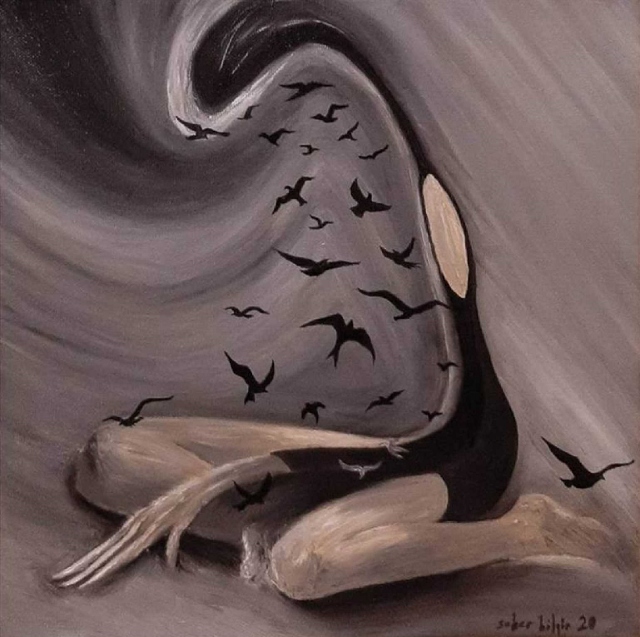
Image: Seher Bilgin

6 Comments

Filed under Essays

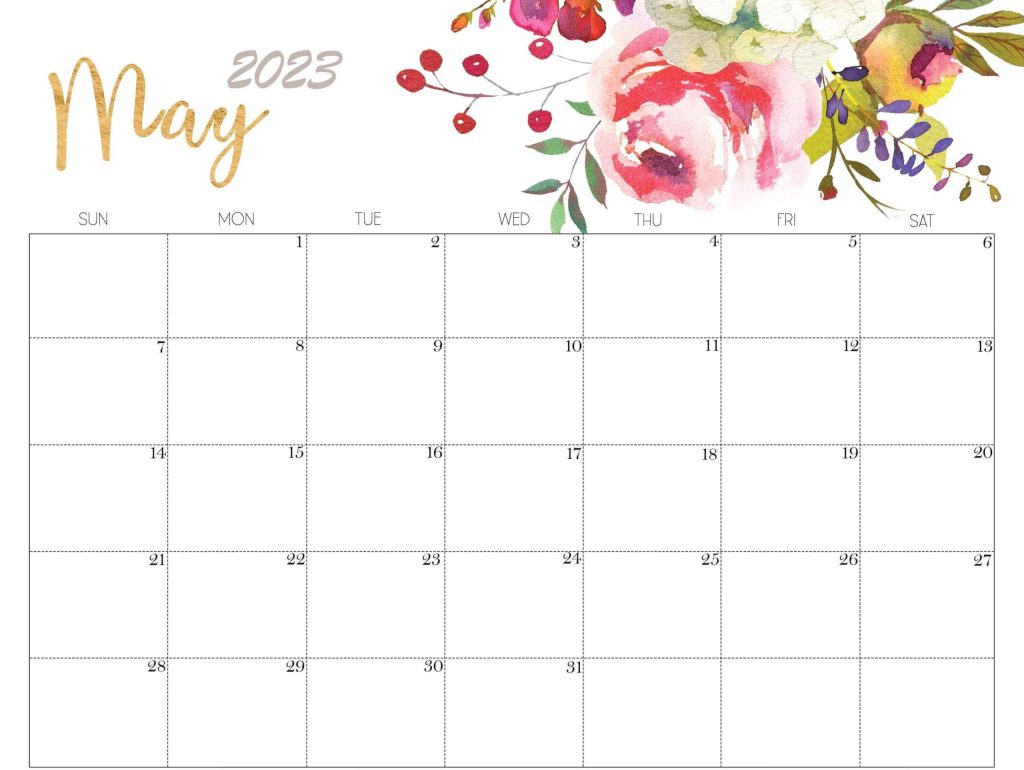
May 2023 Literary Calendar

Events in the month of May for writers and readers

Get Caught Reading Month

Short Story Month

  • May 1 – American Cheese Month; Arthritis Awareness Month; Asian American and Pacific Islander Month; Be Kind to Animals Month; Better Sleep Month; Couple Appreciation Day; Global Love Day; Indian Heritage Month; Jewish American Heritage Month; Labor History Month; May Day; Mental Health Awareness Month; Military Appreciation Month; Mother Goose Day; National Allergy and Asthma Awareness Month; National Anxiety Month; National Loyalty Day; National Meditation Month; National Pet Month; Phone In Sick Day
  • May 1-7 – Hurricane Preparedness Week
  • May 2 – International Harry Potter Day; Poem on Your Pillow Day
  • May 2-8 – Children’s Book Week
  • May 3 – World Press Freedom Day
  • May 4 – Greenery Day; National Day of Reason (U.S.)
  • May 4-10 – Red Cross Week
  • May 5 – Nellie Bly’s Birthday; Cinco de Mayo (México); Europe Day; National Cartoonists Day; National Silence the Shame (about mental illness) Day; National Space Day
  • May 6 – Sigmund Freud’s Birthday; Free Comic Book Day
  • May 6-12 – National Nurses Week
  • May 7 – Tchaikovsky’s Birthday; World Laughter Day
  • May 7-13 – National Pet Week
  • May 8 – Peter Benchley’s Birthday
  • May 9 – J.M. Barrie’s Birthday; Peter Pan Day
  • May 11 – Irving Berlin’s Birthday; Salvador Dali’s Birthday; Martha Graham’s Birthday; National Children’s Mental Health Awareness Day
  • May 12 – Limerick Day
  • May 14 – Mother’s Day (U.S.)
  • May 15-21 – Dementia Awareness Week
  • May 16 – Love a Tree Day
  • May 19 – Nora Ephron’s Birthday
  • May 20 – Eliza Doolittle Day; Flower Day
  • May 22 – Sir Arthur Conan Doyle’s Birthday; Sherlock Holmes Day
  • May 25 – Robert Ludlum’s Birthday
  • May 27 – Dashiell Hammett’s Birthday; Ian Fleming’s Birthday
  • May 29 – Memorial Day (U.S.)
  • May 30 – National Creativity Day
  • May 31 –Walt Whitman’s Birthday

Famous May Birthdays

Other May Events

3 Comments

Filed under News

Now I Understand

????????????????????????????????

In the mid-1970s, Freddie Prinze was leading an extraordinarily successful life. In December 1973, at the age of 19, he had come to the nation’s forefront after a stint on “The Tonight Show” in December 1973, which led to him landing the first half of the title role in “Chico and the Man,” an NBC television comedy. He appeared opposite Jack Albertson, a stage and film veteran. Despite their age and cultural differences, the two became good friends, with Albertson serving as a mentor to his younger co-star. I remember the series clearly. Prinze’s character was a breakthrough role. For the first time, American television boasted a Hispanic figure who spoke English perfectly.

By January of 1977, Prinze had a rollicking standup comedy career with sold-out gigs wherever he went and a top-selling comedy album; “Chico and the Man” remained a highly-rated show. He even performed at Jimmy Carter’s inaugural ball. He was married with a 10-month-old baby boy, Freddie, Jr.

And, he was miserable.

Things had begun to spiral out of control for Prinze. He’d become addicted to Quaaludes and cocaine and, in November 1976, was arrested for drunk driving. Then, on January 26, 1977, his wife, Kathy, startled him with a restraining order.  Two days later Prinze planted himself at the Beverly Hills Hotel and began making a series of “goodbye” calls to his mother, a few friends and his manager, Marvin Snyder. Snyder rushed to the hotel to try to stop his young client from harming himself. But, it was too late. Prinze put a gun to his head and pulled the trigger. He survived the initial shot, but the next day, his family authorized officials at ULCA Medical Center to remove Prinze from life support. He was 22.

The news of Prinze’s death – a suicide, no less – shocked and horrified the masses who loved him. How could someone that young with so much talent, success and money, plus a beautiful wife and baby, be so unhappy? I was 13 at the time and couldn’t understand. He was popular, right? He had lots of money, right? Why would he kill himself? It just didn’t make sense.

The recent suicide death of actor / comedian Robin Williams exposes, yet again, a miserable underside that lurks beneath a life of outwardly blissful happiness in the entertainment world. There’s a reason why the symbol of the theatre is comprised of dual masks: the comic Thalia, smiling, and the dramatic Melpomene, frowning. They’re high and low; top and bottom; the moon’s bright side and its dark side. Intertwined and – for the most part – interchangeable. All emblems of life. One can’t exist without the other.

Both Prinze and Williams had a great deal of money and a great deal of fame. It seemed everybody loved them. If someone has those two things – money and fame – then everything else is inconsequential. They should be completely and totally satisfied with their lives. Isn’t that the way it’s supposed to be?

Money may make life easier, but it really doesn’t make it completely satisfying. As cliché as it sounds, money truly does not buy happiness. No amount of money will make you like a job you hate. I love writing, for example, even though I haven’t made much money from it; a few freelance and contract technical writing gigs over the past few years. When I lost my job with an engineering firm in 2010, I was earning more money than I ever had before. Yet, in that last year, I hated the place. For some reason, tension had been building since the end of 2009, and I ultimately felt management was targeting me specifically. It was almost a relief to get laid off.

It’s difficult for people outside of artistic communities to understand. But, comics, actors, singers and other artists are people, too. We’re weird, yes, but we’re human beings first. We have the same emotional fluctuations and experience the same anxieties in life that everyone else does. We’re just a bit more expressive about it. Yet, because professional artists exist in the public realm, their lives fall under greater scrutiny. They’re magnified a thousand times for all to see. And, when someone makes a career out of telling jokes and doing impersonations, people assume they’re always happy. But, it’s difficult for most to imagine the pressure an artist must feel to perform and be “on” all the time. People expect a comedian to make them laugh – all the time. Entertain me, my little clown. I want nothing less from you.

And so, the entertainer does what they’re supposed to do – entertain. That’s why they’re paid – very well, sometimes – and thus, despite whatever agonies they’re facing, they pull the spirit of that entertainer deep from within the depths of their souls and put on a show. The writer, the singer, the dancer – all of them do what they’ve trained themselves to do; what they’ve wanted to do perhaps since childhood.

It appears artists, in particular, are prone to severe mood swings that often lead them to substance abuse and untimely deaths. Actors, writers, painters and the like experience the best and worst that humanity has to offer. That’s why the word “troubled” often accompanies the moniker of artist.

Jackson Pollock was one of the most innovative abstract painters of the 20th century, but he battled alcoholism his entire adult life. Ernest Hemingway was a literary giant, a larger-than-life persona who was the epitome of masculinity and steadfast courage; yet injuries he incurred during his raucous life apparently took a toll on his mental and physical health, and he committed suicide in 1961.

But, it’s not that every artist is troubled; we’re not all mentally unbalanced and destined for an early grave. We merely troubled; we’re not all mentally unbalanced and destined for an early grave. We just observe life through a more acute lens; we balance things out differently. We don’t see the world strictly in terms of black and white. We watch it move in all its colorful glory; the laughter and the pain mixed up together. That’s how and why we create the art that we do. If we didn’t experience the full gamut of human emotions, then we wouldn’t be so creative. We’d be … well, just like everyone else.

Fellow blogger Gus Sanchez touched on this very subject a few weeks before Williams’ death. “On Mood Disorders and the Writing Process” jumps directly into the fire of the artist-mental illness connection. As someone who’s gone through the manic highs and lows of creativity and dry spells where I feel the entire world is out to get me, I fully comprehend the realities of depression and anxiety.

It’s a blessing to be imbued with such creative elements. We can make other people happy, or make them think. It’s a curse in that we see the ugliest sides of the world glaring back at us and challenging us to do something about it. We often take up that challenge. Many times it works out for the best; sometimes, it hurts.

The Melpomene mask doesn’t conform to our vision of life in the limelight. Everyone wants to be around Thalia; we always demand Thalia be there to make us feel good about things. But, Thalia just can’t be a part of our world unless Melpomene is also present. They’re undeniably symbiotic; conjoined twins held together by the same heart. They can’t live separately. Without cold, there can be no hot. Wherever there’s a smile, there must also be a frown.

Towards the end of my tenure at the engineering company, I had a private meeting with my immediate supervisor. I told her that everyone was on edge and just didn’t feel good about things. She shot back, accusing me and the others of “creating all this drama.”

“There’s no drama,” I quietly responded. This wasn’t a soap opera. It was the real thing. I guess she couldn’t understand it the way I did. She was looking at the situation through a narrow, gray tunnel. I saw all of the sign posts, in blazing red and yellow, warning of danger ahead.

When Freddie Prinze passed away, my young mind couldn’t fathom such horror. But, as information about Williams’ emotional problems begin to surface, his tragic death seems only slightly more comprehensible. I keep thinking Freddie Prinze and other artists who died at their own hands reached out from the netherworld, grabbed Williams’ soul as it departed his beleaguered body and said, ‘Come with us. We understand. You’re safe now.’

So, I look at all the happiness and all the tragedy that make up this wonderfully unique thing called human existence, and I understand, too.


National Suicide Prevention Lifeline.

2 Comments

Filed under Essays