Category Archives: Essays

Now I Understand

????????????????????????????????

In the mid-1970s, Freddie Prinze was leading an extraordinarily successful life. In December 1973, at the age of 19, he had come to the nation’s forefront after a stint on “The Tonight Show” in December 1973, which led to him landing the first half of the title role in “Chico and the Man,” an NBC television comedy. He appeared opposite Jack Albertson, a stage and film veteran. Despite their age and cultural differences, the two became good friends, with Albertson serving as a mentor to his younger co-star. I remember the series clearly. Prinze’s character was a breakthrough role. For the first time, American television boasted a Hispanic figure who spoke English perfectly.

By January of 1977, Prinze had a rollicking standup comedy career with sold-out gigs wherever he went and a top-selling comedy album; “Chico and the Man” remained a highly-rated show. He even performed at Jimmy Carter’s inaugural ball. He was married with a 10-month-old baby boy, Freddie, Jr.

And, he was miserable.

Things had begun to spiral out of control for Prinze. He’d become addicted to Quaaludes and cocaine and, in November 1976, was arrested for drunk driving. Then, on January 26, 1977, his wife, Kathy, startled him with a restraining order.  Two days later Prinze planted himself at the Beverly Hills Hotel and began making a series of “goodbye” calls to his mother, a few friends and his manager, Marvin Snyder. Snyder rushed to the hotel to try to stop his young client from harming himself. But, it was too late. Prinze put a gun to his head and pulled the trigger. He survived the initial shot, but the next day, his family authorized officials at ULCA Medical Center to remove Prinze from life support. He was 22.

The news of Prinze’s death – a suicide, no less – shocked and horrified the masses who loved him. How could someone that young with so much talent, success and money, plus a beautiful wife and baby, be so unhappy? I was 13 at the time and couldn’t understand. He was popular, right? He had lots of money, right? Why would he kill himself? It just didn’t make sense.

The recent suicide death of actor / comedian Robin Williams exposes, yet again, a miserable underside that lurks beneath a life of outwardly blissful happiness in the entertainment world. There’s a reason why the symbol of the theatre is comprised of dual masks: the comic Thalia, smiling, and the dramatic Melpomene, frowning. They’re high and low; top and bottom; the moon’s bright side and its dark side. Intertwined and – for the most part – interchangeable. All emblems of life. One can’t exist without the other.

Both Prinze and Williams had a great deal of money and a great deal of fame. It seemed everybody loved them. If someone has those two things – money and fame – then everything else is inconsequential. They should be completely and totally satisfied with their lives. Isn’t that the way it’s supposed to be?

Money may make life easier, but it really doesn’t make it completely satisfying. As cliché as it sounds, money truly does not buy happiness. No amount of money will make you like a job you hate. I love writing, for example, even though I haven’t made much money from it; a few freelance and contract technical writing gigs over the past few years. When I lost my job with an engineering firm in 2010, I was earning more money than I ever had before. Yet, in that last year, I hated the place. For some reason, tension had been building since the end of 2009, and I ultimately felt management was targeting me specifically. It was almost a relief to get laid off.

It’s difficult for people outside of artistic communities to understand. But, comics, actors, singers and other artists are people, too. We’re weird, yes, but we’re human beings first. We have the same emotional fluctuations and experience the same anxieties in life that everyone else does. We’re just a bit more expressive about it. Yet, because professional artists exist in the public realm, their lives fall under greater scrutiny. They’re magnified a thousand times for all to see. And, when someone makes a career out of telling jokes and doing impersonations, people assume they’re always happy. But, it’s difficult for most to imagine the pressure an artist must feel to perform and be “on” all the time. People expect a comedian to make them laugh – all the time. Entertain me, my little clown. I want nothing less from you.

And so, the entertainer does what they’re supposed to do – entertain. That’s why they’re paid – very well, sometimes – and thus, despite whatever agonies they’re facing, they pull the spirit of that entertainer deep from within the depths of their souls and put on a show. The writer, the singer, the dancer – all of them do what they’ve trained themselves to do; what they’ve wanted to do perhaps since childhood.

It appears artists, in particular, are prone to severe mood swings that often lead them to substance abuse and untimely deaths. Actors, writers, painters and the like experience the best and worst that humanity has to offer. That’s why the word “troubled” often accompanies the moniker of artist.

Jackson Pollock was one of the most innovative abstract painters of the 20th century, but he battled alcoholism his entire adult life. Ernest Hemingway was a literary giant, a larger-than-life persona who was the epitome of masculinity and steadfast courage; yet injuries he incurred during his raucous life apparently took a toll on his mental and physical health, and he committed suicide in 1961.

But, it’s not that every artist is troubled; we’re not all mentally unbalanced and destined for an early grave. We merely troubled; we’re not all mentally unbalanced and destined for an early grave. We just observe life through a more acute lens; we balance things out differently. We don’t see the world strictly in terms of black and white. We watch it move in all its colorful glory; the laughter and the pain mixed up together. That’s how and why we create the art that we do. If we didn’t experience the full gamut of human emotions, then we wouldn’t be so creative. We’d be … well, just like everyone else.

Fellow blogger Gus Sanchez touched on this very subject a few weeks before Williams’ death. “On Mood Disorders and the Writing Process” jumps directly into the fire of the artist-mental illness connection. As someone who’s gone through the manic highs and lows of creativity and dry spells where I feel the entire world is out to get me, I fully comprehend the realities of depression and anxiety.

It’s a blessing to be imbued with such creative elements. We can make other people happy, or make them think. It’s a curse in that we see the ugliest sides of the world glaring back at us and challenging us to do something about it. We often take up that challenge. Many times it works out for the best; sometimes, it hurts.

The Melpomene mask doesn’t conform to our vision of life in the limelight. Everyone wants to be around Thalia; we always demand Thalia be there to make us feel good about things. But, Thalia just can’t be a part of our world unless Melpomene is also present. They’re undeniably symbiotic; conjoined twins held together by the same heart. They can’t live separately. Without cold, there can be no hot. Wherever there’s a smile, there must also be a frown.

Towards the end of my tenure at the engineering company, I had a private meeting with my immediate supervisor. I told her that everyone was on edge and just didn’t feel good about things. She shot back, accusing me and the others of “creating all this drama.”

“There’s no drama,” I quietly responded. This wasn’t a soap opera. It was the real thing. I guess she couldn’t understand it the way I did. She was looking at the situation through a narrow, gray tunnel. I saw all of the sign posts, in blazing red and yellow, warning of danger ahead.

When Freddie Prinze passed away, my young mind couldn’t fathom such horror. But, as information about Williams’ emotional problems begin to surface, his tragic death seems only slightly more comprehensible. I keep thinking Freddie Prinze and other artists who died at their own hands reached out from the netherworld, grabbed Williams’ soul as it departed his beleaguered body and said, ‘Come with us. We understand. You’re safe now.’

So, I look at all the happiness and all the tragedy that make up this wonderfully unique thing called human existence, and I understand, too.


National Suicide Prevention Lifeline.

2 Comments

Filed under Essays

Frat Crap

skull-shaped-beer-pitcher

Thirty years ago this month I made one of the worst decisions of my entire life: I joined a fraternity. In August of 1984, I was a shy, naïve 20-year-old; the kind of person college social groups eat up and spit out. When I started classes at what was then North Texas State University (now, the University of North Texas), I hoped to complete my education within two years and begin a career in computers – anything to do with computers – like my parents had planned for me. I also hoped to break out of my shell of insecurity, make plenty of friends and find my future wife – after losing my virginity first. I ended up suspended from school for the fall 1985 semester, addicted to alcohol, maniacally depressed – and still a virgin.

Then, as now, I blame that fucking fraternity. I know the status of “Victim” has been a coveted one in America since the 1980s. But, hear me out on this mess.

I’ll say flat out that social Greek-letter organizations serve absolutely no purpose. They have only one function: party, which means getting drunk and having sex. Yes, they toss in the occasional charity function bullshit just to look good. For example, in November 1984, the frat I joined teamed up with the county to drive people to voting stations. In another self-righteous instance, we participated in a campus blood drive; where the director (a pre-med professor) walked around in a stupid vampire outfit. (Get it? Blood drive? Vampire?) Anne Rice probably would have killed him on the spot. Other than those two saccharine-laced, cringe-worthy exceptions, we just got drunk (they called it “enjoying alcohol – immensely”); tried to seduce as many unwary females as possible; engaged in quasi-macho antics; and partied at an aging two-story house on the edge of campus.

On my first day in the dorm, I saw a flyer advertising a party for the frat, which I’ll call Alpha Omega Dipshit (AOD). After I settled in – living away from home for the first time in my life, along with a flamboyantly gay roommate – I looked again at that ad for AOD and thought it must be great way to make new friends. I was desperate to meet new people. This wasn’t high school, which I hated. Life at a community college the preceding two academic years had been nice. But, I didn’t spend a lot of time with people. My social life during the my first two years out of high school revolved around whatever plans my parents had and my German shepherd. My dating life revolved around my hands and a bottle of baby oil. Things would be better now, I assured myself. North Texas was different. I wasn’t dealing with kids anymore. I was dealing men and women. I thought.

On a whim, I followed a guy I’d met and quickly befriended in the dorm to the AOD party, where beer flowed like the testosterone through my body. There were lots of beautiful people, and I tried making friends with every one of them. I really wanted people to like me. Being shy hurt and I had to break free of it.

In 1984, President Ronald Reagan signed a federal law requiring states to raise their minimum legal alcohol consumption age to 21; otherwise, they’d lose highway funding. The law was a response to the growing anti-drunk driving movement. Before the 1980s, drunk driving was viewed with an almost humorously dismissive attitude. Despite fatal accidents involving alcohol, intoxicated driving still wasn’t considered nearly as egregious as interracial marriage or homosexuality. That all changed after the young daughter of Candy Lightner, a California woman, was struck and killed by a habitual drunk driver. She made it a national issue. Hence, the 1984 federal law.

But, then-Texas Governor Mark White essentially told Reagan to go to hell when he mandated the legal alcohol consumption rate wouldn’t be raised to 21 in the Lone Star State until 1985. Texas had enough money to fund its own highways without some former B-movie actor telling us what to do. (That anti-Washington sentiment has always sort of been part of the Texas identity. White, I might add, was a Democrat.) It really didn’t matter to me, though. I didn’t drink that much alcohol anyway at the time.

Three years earlier, 18-year-old seniors at my high school were upset because Texas planned to raise the minimum alcohol-drinking age to 19.

“They can give you a right,” one girl told me at the start of an English class, “but they can’t take it away.”

How profound. I didn’t care. I just wanted to get the fuck out of that high school.

But, when I stepped into the back yard of the AOD house, I followed the crowd to the beer kegs and started partaking of Coors Light. Even now, the mere smell of Coors Light incurs bitter images of college boys behaving stupidly. I had one plastic cup of beer. And then, another. And then, another. And then, another. And then, another. And then, another. And then, another. And then, another.

And, that’s where it began.

I wanted so much to Belong. My lifelong shyness had stunted my personal growth. Aside from my dog, I felt no one liked me. But, in pursuing that friendship goal – paying money along the way – I became a punching bag for most of those guys. More importantly, my entire academic regimen collapsed, and the university placed me on academic probation for the spring 1985 semester. That prevented me from becoming a full, active member of AOD. I still had to pay monthly dues, of course. But, I remained in the netherworld of pledgeship. That’s something like a glorified time out. Can you feel the hopelessness?

Things got worst that year. We had to put our dog to sleep in April, and then, the university suspended me for the rest of 1985. My parents were outraged, and I became suicidal. I felt I’d lost everything. My dog was dead; I didn’t have any new friends; and my future looked bleak. And, I was still a virgin.

My life reached a new low that October when I got arrested for drunk driving. I showed up to my waiter job at a country club already intoxicated one weekday evening. Carl*, my openly-gay supervisor, wouldn’t let me work, even though the gaggle of mostly-Jewish members wouldn’t have given me a second look anyway. Instead, Carl made me sit in the back office where I ate a meal he had one of the cooks prepare for me and admitted he had the hots for me. Great, I thought. After all my efforts at chic one-liners and coy humor, the only person interested in me was a middle-aged man with a beer gut. After I sobered up a little, he told me to go home. But, I didn’t. I felt I had nothing to live for at the time. So, I got into my little Ford Escort and went bar-hopping. Coming off Dallas’ Greenville Avenue, I stumbled into a police trap and then into a police car. I had never felt as much humiliation as the moment I called my parents from Lew Sterrett Jail in downtown Dallas. They bailed me out early the next morning. Fortunately, my blood-alcohol level tested below what was then the legal limit of .10.

I returned to North Texas for the spring 1986 semester and then again for the ensuing academic year. I left for good a year later; vowing to return and complete my education. I never went back. But, I finally did earn a college degree – 20 years later.

I made only two really good friends during my tenure at North Texas. One, Dean*, I had met through AOD. He was a tall, skinny guy with tousled brown hair and a penchant for short girls. We became close – like brothers. Not frat brothers. Real brothers. As an only child, that meant everything in the world to me. He became the kind of friend I’d always wanted. He was upset that I didn’t become a full member of the frat, yet he didn’t let that bother him.

But, AOD did get in the way of our friendship. In September 1986, after I’d settled in once more at North Texas, I ran into Dean in a parking lot, while headed to class. We hadn’t seen each other in over a year. We traded phone numbers, and later, he invited me to drop by an AOD rush party. Against my better judgment, I took him up on his offer. I went with a guy named James* who’d just graduated from high school and who I’d met at my new job a few months earlier. There, I ran into many of the people I’d known before. It felt so strange – being in that house – with those familiar faces – and the smell of Coors Light. But, nothing could have prepared me for what happened next.

At some point, I got into a heated discussion with a guy named Kyle*. He’d been part of the same pledge class as me and Dean and now, two years later, was AOD’s president. Kyle was already kind of a strange character; someone who did a great Keith Richards impersonation, but was probably the same type to walk into his workplace with a shotgun. I didn’t realize he could be such an asshole, though. I don’t know what prompted the argument, but a short while later, Dean asked me to leave. Actually, he had been told to ask me to leave. He was the frat’s “Sergeant-at-Arms” – a glorified Boy Scout-type role – and apparently, since we’d been such good friends, he’d been given the task to let me know I was no longer welcome. Fine. I didn’t need them. So, I calmly departed with James in tow; acting is if nothing was wrong.

Deep down inside, however, I felt completely dejected. I had wanted so badly to be a part of that group. The next night I scampered about the campus, ripping down flyers advertising AOD. I guess I showed them! Regardless, Dean and I stayed in touch throughout the remainder of the academic year. We just didn’t talk about the frat.

The other friend, Robert*, had actually attended the same grade school as me. We knew each other only sparingly back then. But, on my first day in the dorm in August 1984, Robert stepped into my open doorway and introduced himself; he was in the room just across the hall. He startled me at first, but I was glad people were so friendly. Or, at least he was. After another moment, though, I thought I remembered him. It’s one thing to reconnect with people from high school. But, grade school?!

Ironically, he joined AOD – at my urging – and did well with it. He wasn’t there the night Dean asked me to leave. But, Robert has remained one of my best friends ever since. He’s tolerated my moodiness over the years. For example, I had an alcohol blackout one night in the early 1990s and unwittingly called him to tell him “this was it.” I was determined to kill myself. (I seriously don’t remember the incident, but I trust he’s telling me the truth.) Being the good real estate salesman he is, Robert stayed calm and managed to talk me into exhaustion.

When he revealed that to me a few years ago, I apologized to him for making such a scene and taking up so much of his time. It’s not his fault I couldn’t get my stuff together and heal myself from depression and alcoholism. Which I eventually did. Several years later.

Over the past two decades, I’ve been dumbfounded – angered, actually – to learn of incidents involving social Greek-letter outfits on college campuses. They almost always feature severe alcohol abuse, hazing and, quite often, sexual assault. How is it, I ask, that colleges allow these groups to exist? I guess the frat culture is embedded that strongly in the realm of America’s higher education. What a waste.

In the summer of 2003, my employer hired three young female temporaries to assist with an ongoing project. One had just graduated from high school and planned to attend a major Texas university that fall. Shortly before she resigned her position, I warned her to stay away from social fraternities – and sororities. “They’re just no good,” I told her.

I last saw Dean on South Padre Island during spring break 1987. I’ve retained my friendship with Robert, but I still often think of Dean. Not long after he had ordered me to leave the AOD house in 1986, Robert told me Dean had gone on a drinking binge. He felt he’d turned on a friend, Robert said, and couldn’t handle it. I never knew that. I can only hope Dean didn’t descend into a decades-long battle with alcohol like I did. I wouldn’t wish that on anybody.

It wouldn’t be fair, if I said that Dean and Robert were the only decent guys in that fraternity. In fact, most of them were great guys. It was the handful of assholes who ruined it for everybody else. Isn’t that the way it often works?

Yet, I wonder – where is Dean now? Is he okay? Did he succeed in life? I felt, if anyone deserved it, he did. I’m not so arrogant to wonder if he thinks of me, though. But, we had the kind of friendship that should have lasted a lifetime. If that damn fraternity just hadn’t thrown so much crap all over us.

*Name changed.

Image.

7 Comments

Filed under Essays

Bad Boys, Dumb Broads

Joke All You Can 051414

‘Nice guys finish last,’ goes the old maxim. Apparently, they also go home alone. At least the straight ones do. Recently, a photograph has been circulating on the Internet of a young man named Jeremy Meeks. This isn’t just a simple cell phone snapshot, or a Facebook post. It’s a mug shot. Meeks’ picture went viral in June, after his arrest on weapons charges; earning him the affectionate moniker of “handsome mug shot guy.” The 30-year-old Californian isn’t exactly husband material, though, and the dark spot on the outer edge of his left eye isn’t a birthmark. Meeks has a lengthy criminal rap sheet dating back to 2002; the tear drop mark is a gang tattoo.

That didn’t stop thousands of people from visiting his Facebook page and “liking” it, as people are wont to do in this digital age. It didn’t even prevent talent agent Gina Rodriguez from accepting Meeks as a prospective client. Rodriguez, whose gallery of talent includes such media gems as Nadya “Octomom” Suleman and Farrah “Teen Mom” Abraham, hoped to get Meeks a modeling contract as voluptuous as his lips. Knowing star potential when they see one, officials with a porn studio have also approached Meeks; offering him a $100,000 contract. Meeks has been held in the San Joaquin County Jail on a whopping $1,050,000 bail.

“Handsome mug shot guy” is married with a young son and, according to family members, has been trying to live a quiet life after spending time in prison and being involved with the “Northside Gangster Crips,” an offshoot of the Los Angeles-based “Crips,” one of the oldest and most violent street gangs in the U.S. He was arrested June 18 after driving away from a suspected drug house in Stockton, California that was due to be searched. Two others were with him in the vehicle, which also contained a loaded and unregistered semi-automatic handgun and two extended magazines in the trunk. Police also found marijuana in the car.

Insisting her son is an innocent “working man,” Meeks’ mother, Katherine Angier, seized upon his newfound celebrity to plead for help. She established a profile on the “Go Fund Me” web site to raise money for his legal defense, adding that her precious offspring has been stereotyped because of his past behavior. “He’s my son, and he is so sweet,” Angier opines.

Well, who could argue with her?! Unfortunately, more than just Meeks’ mother has come to love his face. Plenty of desperately lonely females have swooned over those cornflower blue eyes and chiseled cheek bones.

Just the right look.

Just the right look.

A second cousin of mine who’s an active-duty solider in the U.S. Army recently went on a Facebook rant about the lascivious response Meeks is getting; ending it with a deprecatingly bitter piece of advice: “Keep it classy, girls!”

I can empathize. This is the kind of crap that drives men crazy. While women often complain that men lust after the ubiquitous supermodel chicks, the reality is that most men usually don’t become infatuated with female criminals. At least most supermodels aren’t of a criminal bent – excluding Naomi Campbell. Indeed, two of America’s worst serial killers, Ted Bundy and Richard Ramirez, developed legions of female fans during their respective criminal trials. It didn’t seem to matter that these monsters deliberately sought out and slaughtered untold numbers of innocent people. Some felt there was an angel inside each man and they had the ability to bring it out.

I wish I had purple eyes and stood six feet tall. But, I don’t. I just wasn’t born with those attributes. I wish I’d joined the U.S. Navy some 30 years ago; my life might have gotten into better shape a long time ago. But, I just never did. I’m not alone. People often want who and / or what they can’t normally have. Poets and psychologists have debated this issue for millennia; knowing it’s part of the human psyche to crave the unattainable. Modern science has deduced that dopamine, a chemical precursor to adrenaline, is the primary culprit. It’s a complex substance the brain develops naturally; one that generates feelings of pleasure and desire – but, not necessarily satisfaction. It may be a key factor in substance abuse, such as alcoholism. Researchers still don’t understand why some people respond more acutely to one set of stimuli than others. The brain may be the most powerful sex organ in the human body, but it remains a mysterious one.

Females who prefer the stereotypical “bodice-ripper” (think Rhett Butler carrying a shrieking Scarlett O’Hara up the staircase in “Gone with the Wind”) might want to confer with occupants of a domestic violence shelter; women who either fell for or stayed with a man they thought could change with a good meal and the right perfume. It’s amazing how stupid some women can be in genuinely believing their feminine charms are powerful enough to alter the core personalities of the worst men; a sort of hormonal alchemy that would be the “Holy Grail” for marriage counselors, psychologists and talk show hosts. But, with a few exceptional cases, it rarely occurs.

Such blind self-adulation can be fatal. There are countless stories of women dying at the hands of men who really didn’t have a Prince Charming hidden beneath those balled up fists and bloodshot eyes. But, when I contemplate such odd pairings, I recall the tragic tale of a cousin who took her own life in January 1983. Already a somewhat fragile soul, she had married a man with a drug problem a couple of years earlier; believing she could somehow cure him of his ailment. Her mother strongly opposed the union, as did most everyone else in the family. But, no one could stop it. After all, she was an adult. And, apparently no one – not even my cousin – could stop her husband’s drug addiction. So, she left him. That would seem a happy enough ending, but her marriage’s sudden dissolution plunged my cousin into a state of extraordinary despair. I guess she blamed herself for the guy’s inability to shake free from his wicked habit; shattering her vision of a bright and loving future for the two of them. So, she sat down in a closet one night after work and stuck a pistol in her mouth. He had been a very bad boy, and she was a very good girl. Yet, she’s the one who ended up dead. He had failed miserably, but she felt like a miserable failure. Where’s the justice, I asked quietly at the funeral. Where, in a decent world, is there room for something so twisted as that?

Wearing a San Joaquin County jumpsuit – in what I called “arresting amber” – Meeks made a court appearance on July 8 and received mixed news: he’s no longer facing multiple weapons charges. But, the state turned his case over to the federal government, and now, Meeks is looking at a single federal weapons possession indictment. As a federal case, it’s obviously much more serious, and if convicted, he could face up to 10 years in prison and a $250,000 fine.

And, knowing how desperate some women are for a man, there’ll be more than a few nitwits holding vigil for his sorry ass in the comfort of their delusional minds. Meanwhile, the truly nice men will still be at home alone.

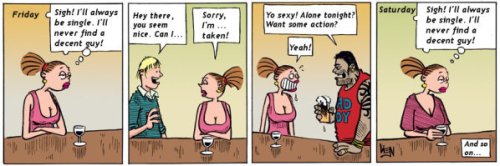
Cartoon courtesy of Joke All You Can.

1 Comment

Filed under Essays

The Worst Legacy

broken_promise_by_don_paolo

This past April marked twenty years since the death of President Richard M. Nixon, which came nearly two decades after he became the first Chief Executive in U.S. history to resign from office. That ignominious fortieth anniversary is coming up next month. It’s not something to be celebrated. The Watergate affair that brought him down has left an indelible stain on both American politics and the soul of the American people. Those of us in the 50 and under crowd have pretty much grown up in a world suspicious and even hostile towards all levels of government. The over 50 crowd helped build and fuel that distrust after a brutal sense of betrayal for a nation that set itself up more than two centuries ago as a beacon of democracy and freedom.

I’ve always said Watergate burned whatever bridges of faith and trust the American public had in their elected officials. But, the wicked uncertainty actually began the moment President John F. Kennedy had his head blown apart by an assassin’s bullets and Jacqueline Kennedy clambered onto the trunk of the presidential limousine in Dallas on November 22, 1963. The ensuing Warren Commission Report hoped to quell doubts that the murder was anything but the act of one deranged ex-Marine with delusions of grandeur. Yet, people saw it for what it really was: a rush to judgment. Americans weren’t so gullible anymore. The quagmire in Vietnam; the various energy crises of the 1970s; and the absolute failures of the Gerald Ford and Jimmy Carter Administrations (the latter burdened by the ineptness of the Iran hostage ordeal) only sealed the fate of Americans’ general distrust of their government.

Ronald Reagan fed off that fear like a lion gorging on a sick zebra and metamorphosed it into two successful political campaigns. One of his most popular statements, “The nine most terrifying words in the English language are, ‘I’m from the government, and I’m here to help’,” resonated strongly with the frustrated masses. Indeed, he had a point. But, Reagan’s own professional disconnect and ineffectiveness – Iran-contra, covert U.S. involvement in Central American conflicts, ignoring the AIDS epidemic, a pathetic war on pornography – placed him in the same pantheon of “Them.”

Almost from the moment Bill Clinton announced his candidacy for president, Republicans took retribution against their Democratic counterparts over Watergate by targeting Clinton every chance they could. They dissected the Whitewater deal and found – nothing. So, they turned to First Lady Hillary Clinton and manufactured something called “Travelgate.” When that didn’t work, they pounced on the events surrounding the suicide of Vince Foster; dragging the memory of a man who may have had severe emotional problems into their cesspool of arrogance and striving fruitlessly to twist it into an evil political plot. Alas, in 1998, they zeroed in on something totally unrelated to politics: the Monica Lewinsky affair and tried to impeach Clinton over a tawdry sexual indiscretion. The final report by special prosecutor Kenneth Starr read like a soft-core porn novel. I remember looking at that mess and thinking, “They want to impeach a U.S. president over that?! A blowjob?!”

We see that stubbornness now with the likes of House Speaker John Boehner and Texas Senator Ted Cruz. They complain that President Obama has no viable plans to help the U.S. economy, for example, but stand in their buckets of ideological cement and won’t budge. Thus, Obama (slowly growing some semblance of a backbone) has been forced to invoke executive privileges to get the work done. Now, Boehner is threatening to sue him because of it! I remember Boehner repeatedly asking, “Where are the jobs?” But, when Obama wanted the Bush tax cuts for the wealthiest 1% of Americans to expire at the end of 2010, Republicans balked and threatened to block extension of unemployment benefits, which were also set to expire at the end of that year; thus holding struggling Americans hostage. Obama relented, and the wealthiest citizens continued to see their after-tax incomes grow, while average Americans continued to lose their jobs and their homes.

The administration of George W. Bush solidified, in my mind, the corruptness and intransigence of the U.S. government. The 09/11 horror compelled many Americans to question what our government officials know and what they’re doing about it. That the Bush Administration then tied the 09/11 affair to Iraq’s alleged development of nuclear and / or chemical weapons convinced so many of us that our government is willing to go to extreme lengths to obfuscate and mislead just to embolden its own agenda. They tap-danced on the dead bodies of the innocent people who hurtled themselves from the World Trade Center’s burning Twin Towers and merely wiped the blood of soldiers from the millions of dollars they earned from oil revenue.

Bush was a puppet president; a doll adorned in designer business suits and propped up with ersatz ‘Mission Accomplished’ bravado. I almost feel sorry for him. Even he said, after leaving the White House, that he felt “liberated.”

Obama hasn’t done much better. At least he’s more verbally adept than Bush. But, I wish he’d make the time to rummage through his wife’s cache of designer handbags for his gonads before telling John Boehner and Mitch McConnell, “Fuck you. I’m president of the United States. I run this shit here – not you guys.”

It bothers me, for example, that we’re still entrenched in Afghanistan. I feel we should have bombed the crap out of them twelve years ago – damn their civilians, including the children and women, because they didn’t care about ours – and then leave. Maybe airdrop a few high-protein biscuits and bottled water into the mountainside, just to show we’re not complete assholes and go about our own business.

But, it bothers me even more that Obama hasn’t empowered Attorney General Eric Holder to investigate the causes of the near-total economic collapse in 2008. The worst financial downturn since the 1930s didn’t happen because someone on the Dow Jones trading floor accidentally unplugged a computer before the end of the business day because they needed to do a software upgrade. It resulted from a multitude of events; such as hefty tax cuts for that “job-creating” 1%; extreme deregulation of the housing and banking industries; and the billions of dollars on the Afghanistan and Iraq Wars. Except for a handful of notable exceptions – Bernie Madoff, Mark Dreier – no one has been held accountable for the “Great Recession.” But, if I walk into a local convenience store with a toy gun and rob the Pakistani clerk of fifty bucks, I could spend thirty years in prison. I believe there were other more diabolical machinations in play, beginning in 2001, that caused the economic downturn. Yes, economies endure cycles of bull and bear markets. But, this fiasco wasn’t just cyclical, like rainfall. Somebody did something, and it wasn’t by accident.

In February 2012, Maine Senator Olympia Snowe stunned her constituents by announcing that she wouldn’t seek reelection that year. She didn’t hesitate to explain why: the level of hostility and unwillingness to compromise in the U.S. Congress had become unbearable. To her, I guess, it wasn’t worth the trouble anymore. It was a shame. Snowe was one of the most level-headed politicians in Washington, regardless of party affiliation. She was willing to listen to and work with all of her colleagues. But, many of them just didn’t seem to share the same ethic.

I still say it all goes back to Watergate. Nixon and his band of henchmen were determined to keep the president in power, as the 1972 elections neared. Nixon had a modest tenure as Vice-President under Dwight Eisenhower, but suffered a humiliating defeat at the hands of the upstart Kennedy in 1960. When he lost the California governor’s race in 1962, he vowed to exit public life altogether, loudly proclaiming, “You won’t have Richard Nixon to kick around anymore.” But, he just couldn’t stay away. He loved the political game and desperately wanted the presidency. His dogged ambition put him in the White House six years after the California debacle – and forced him back out six years later.

Things have never been the same since. And, we still can’t bring ourselves to trust anyone in government.

1 Comment

Filed under Essays

Iraq Again! Oh, Hell No!

Zombie hand

“It’s alive! It’s alive! It’s alive! It’s alive! It’s alive!”

Colin Clive in “Frankenstein


As the United States slowly recuperates from the wars in Afghanistan and Iraq, Americans are suddenly beset with a very real horror show: the rise of militants in Iraq, as well as the collapse of the Iraqi government. Most of us keep smacking ourselves across the face; trying to wake up from what can only be deemed a nightmare. No – a night terror. This can’t be happening. There must be some kind of misunderstanding. The media has it all wrong.

No, they don’t. It is happening. And, we’re all wide awake.

I wish that the brewing fiasco is – at best – a really cruel, heartless joke. But, it’s simply not. The blatant reality is that radical Iraqi insurgents have risen from the crypt of hate and anger to launch an assault on that nation’s fragile government and hapless military. They’ve already taken over Mosul, Iraq’s second-largest city. It’s surely only a matter of time before they attack Baghdad.

President Obama, who campaigned in 2008 partly on the promise to end the war in Iraq, says another round of military intervention is not likely. But, almost in the same breath, he added, “We have enormous interests there.”

What happened to the good old days, when a president would say stupid crap, but still really believe it with all his heart? Many of us disagreed with George W. Bush, but at least we knew where he stood on an issue. Along with Dick Cheney, Donald Rumsfeld, Condoleezza Rice and Colin Powell, Bush hoodwinked much of the nation into believing Iraq had a role in the September 11, 2001 terrorist attacks and was secretly building a nuclear arsenal. In the twisted logic that only a draft-dodging right-wing lunatic could manufacture, Bush forced the U.S. to switch its attention abruptly from Afghanistan to Iraq. Most of us level-headed folks saw the ruse clearly and still didn’t mind being labeled terrorists. We knew it was a lie. But, Bush was a puppet president for corporate oil interests (in much the same way Warren G. Harding was), so I don’t blame him completely.

But, with nearly 4,500 U.S. dead in Iraq alone – not to forget those who died from their injuries or suicide once back home – we’re faced with a bizarre quandary: sending troops back into Iraq to thwart what observers have ominously deemed the “threshold of civil war.”

Trick question: what’s the difference between the threshold of civil war in Iraq and a total conflict?

Answer: nothing!

The difference is in terminology only. Hearing military and political “experts” trying to define the two concepts is like saying there’s a difference between azure and blue. I knew a guy in college who got upset when people said he was Italian. He preferred the term “Sicilian.” Oh, of course! Silly me! And, just so you’ll know, I’m not Latino. I’m Hispanic! ¿Entiendes?

The U.S. put itself into a quixotic situation with Iraq more than three decades ago when it began funding its war with Iran. That came to an abrupt end in 1988, when Saddam Hussein launched a genocidal chemical attack on Kurdistan. The U.S. also placed itself in a quagmire with Afghanistan when it supported mujahideen rebels in their valiant fight against the former Soviet Union – and then forgot about the Afghan people. One nation doesn’t make a promise of that magnitude to another nation without owning up to it.

If, by some wretched chance, we do send our military back into Iraq, here’s what I’d like to see happen:

  • Initiate a military draft. Every 18-25 able bodied person (including women, Jews, Mormons, conservative Republicans and rich kids) will have to serve in some kind of capacity. No exceptions!
  • Raise taxes on the wealthiest 5% of American citizens. Since many of them are the ones who propagated the war in Iraq and subsequently benefited from it, we need half of their income to go into Pentagon coffers.
  • Cease all foreign aid. This includes Israel. Unquestionable financial and political support for Israel by the U.S. is another reason for the 09/11 attacks.

It’s only fair all of the above should occur, as the U.S. roars back into Iraq like a repo man going after a late-model BMW for the third time. But, I also think it’s only fair I should be rich and famous without working too hard for it. After all, I’m attractive (in the right black light) and intelligent. Why should I struggle so hard?

Will the U.S. boomerang its troops back into Iraq? I can only hope not. But, you know how that goes.

6 Comments

Filed under Essays

One Year Update: The Chief Almost Kills Himself

5zqsgm

Today officially marks one year since my near-fatal accident here at the house. Some of you might remember: I slipped on a wet spot on the linoleum floor the atrium in my parents’ home while carrying a gallon glass jug of iced tea. My feet literally went out from under me. Being airborne for a split second allowed my entire body to rotate 180 degrees and land face down on the floor; two shards of glass from the shattered jug piercing my right arm. After a three-day stay at Hotel Parkland, I returned home with multiple stitches, no feeling in my right hand and an overwhelming desire to bathe for two or three hours. I was still pissed that I wasted half a jug of that herbal tea because I didn’t watch where the hell I was going. It’s amazing how a simple misstep can be so life-changing.

I had surgery last September 13 – a Friday, to be certain – and I’m just now starting to regain function and feeling in the right ring and little fingers. The hand surgeon had told me it would probably take up to a year to regain full functionality and sensation – if that happens at all. At the rate I’m going, I figure I might get up to 75% by this September. It’s a good thing I can do a lot with my left hand. I always knew being bi-manual would come in…well, handy some day.

I note that my accident was near-fatal because of the severity of the wound in my upper right arm and the amount of blood loss. If my father hadn’t wrapped a towel tightly around it, just beneath the elbow, I could have bled to death. The only other thing I had going for me was that the glass cut a vein and not an artery. If it had cut an artery – well, let’s just say I’d have to change the name of my blog to “Chief Writing Spirit.” That would give a whole new meaning to the term “ghost writing.”

I’m fortunate, though, very fortunate. I managed to survive and live to see my 50th birthday last November. I still have great parents and a great dog, plus a good collection of close friends. I consider military veterans returning from Afghanistan and Iraq and realize I don’t have much to complain about. Why does it take such catastrophic events to make people realize how good they actually have it? I don’t know. I guess we need to get shaken up like that – sometimes shaken up badly, in a bloody painful way – to understand life can be good most of the time.

So, as I mark this unwanted first anniversary of stupid accident and a difficult recovery, I continue writing and enjoying the people I love the most. But, damnit, I’m still pissed off about wasting that perfectly good herbal tea!

16 Comments

Filed under Essays

No Thanks to You!

gop

Last week I received a notice from the National Republican Party announcing a fundraiser in my city, along with a request for a donation. It was signed by the Party’s national chairman, Reince Priebus. This suburban Dallas community where I grew up is, like much of the rest of Texas, staunchly Republican. A Democrat hasn’t won a statewide race since 1994, when Garry Mauro won reelection as state treasurer; the same year Ann Richards lost her gubernatorial reelection bid to George W. Bush.

Returning home from the gym late one Saturday night a couple of years ago, I noticed a “Tea Party” sign in a neighbor’s front yard. I wanted to stop and spray-paint a swastika on their walkway, but I didn’t have any spray paint on hand. Besides, they might’ve had security cameras hidden somewhere. For years now, there’s been a billboard off Central Expressway, just north of downtown Dallas, asking: ‘Where’s the birth certificate?’ It’s a blatant reference to the ongoing idiotic questions about President Obama’s birth place. If you know how much it costs to put up one of those signs, you might also realize the same money could fund a school lunch program.

Part of the problem is that, on average, only about a third of eligible voters in Texas actually make an effort to cast a ballot. I think many of my more centrist and independent-minded fellow Texans simply feel their vote won’t make a difference and / or Republicans will win anyway, so why bother. I certainly don’t want Texas to swing to the opposite side of the political spectrum, such California, Illinois or Massachusetts; where people are regulated and taxed into oblivion and political correctness is practically a part of the state’s constitution.

I’m actually put out by our two major both political parties – Republicans AND Democrats. I feel strongly that the Republicans are bullies, and the Democrats are wimps. President Obama has capitulated too much to the bull-headed GOP and lost any credibility, from my perspective. As I see it, the U.S. is essentially leaderless right now.

Hence, my disgust when I received the mailing from Priebus. I mailed it back, but with this handwritten message:


“Mr. Priebus,

Remove my name and address from your list. I have no desire to contribute money to the GOP. Your party screwed up our economy in the first place, but you won’t take responsibility for it.”


Off to the side, I scribbled:

“Trickle down doesn’t work. And, I’m no fan of Obama either!”


I included this last bit of verbiage, so Priebus and his gang will know I’m equally disgusted. I’d hate for anyone at that level to feel so targeted.

But, you must read between the lines. Here’s what I really wanted to say:


“Take my name and address off your fucking list, you good-for-nothing, piece of shit, Neanderthal! Your party fucked up the economy big time with your stupid tax cuts, wars in Iraq and Afghanistan (wars started by a pack of fucking draft-dodgers), and total deregulation of the banking and housing industries. All of that together is what fucked up this economy – not the Affordable Care Act, which is total bat-shit, as far as I’m concerned. You fuckers have taken too much of my money in taxes already and you haven’t done a goddamned thing to help the economy, except the same stupid, fucking, trickle-down bullshit that you’ve been pushing through since that incompetent dumbass, Ronald Reagan, held office!”


But, they probably wouldn’t understand my outrage. Sorry to yell like that in front of you nice folks. Damn, though! I feel so much better!

Since the envelope is postage paid, I found a thin piece of rock in the back yard that I inserted along with the note. Might as well maximize it! I would’ve sent a flattened piece of my dog’s fecal matter, but they’re not good enough to receive even that.

1 Comment

Filed under Essays

My Time in a Locked Box

cubicles_15

Up until mid-March, I had a temporary position at a lock-box facility with a major financial institution. I won’t name the company or the staffing firm that found me the job, but I will emphasize that it was one of the worst places I’ve ever worked. I took the position as a filler job amidst my freelance writing gigs. In a way, I’m glad I did, though, because it gave me a clearer view of just how bad things are in the U.S. right now. If our elected officials could experience such drudgery, matters would change in no time.

A lock-box is an intermediary between a company and the bank that handles their accounts. You might notice a post office box listed as the mailing address on bills for telephone and water utilities. That box number simply steers the payments to a separate facility where they’re processed on behalf of the bank. It’s beneficial for the bank from a time efficiency standpoint. But, they’re also breeding grounds for fraud. The workers – many of them contract or temporary – handle countless personal checks and documents with sensitive information that can then be purloined or photocopied.

The place where I worked handles immigration applications on behalf of the U.S. Department of Homeland Security. My specific job was to analyze packets of applications and ensure they contained the proper documentation. Security procedures are tight. Every employee – even temporaries – must wear a slave tag, or what they call “badges.” The badge bears the individual’s picture; tiny image that make driver’s license photos look like glamour shots. The badges also have digital codes that would trigger doors to open. To enter the actual location where the documentation was handled, associates had to swipe their badges and then apply an index fingertip to a scanner beneath the electronic locks. For some reason, the lock always had trouble identifying my fingertip. No, I wasn’t using my middle finger – although seems more appropriate now. But, I’d often stand in front of that stupid lock pressing my finger down like a rogue political leader reaching for a nuke button.

The job was monotonous and dull. I get bored easily anyway, so it was difficult for me to stay interested. But, I noticed a number of things. Most of the associates were female and / or non-White. Yet, the bulk of the supervisors and managers were composed of the usual suspects: older White males. None of that really surprised me. Women, non-Whites, the disabled and immigrants now hold the bulk of temporary and part-time jobs in the U.S. These groups have always resided at the lower rungs of the American work force. But, the 2007 – 08 financial crisis intensified those numbers. But, gender and race only tell part of the story.

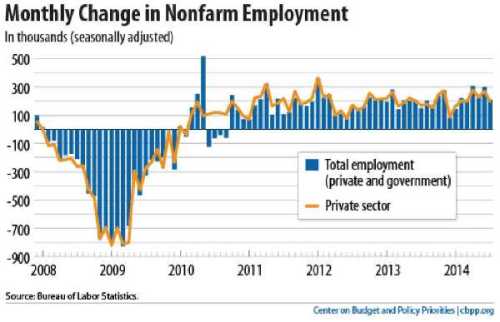
Between 2007 and 2009, the American labor force lost 8.4 million jobs, or 6.1% of all employment. Since then, most of the newly-created jobs have been temporary or contract. Last year the U.S. added 2.8 million temporary or contract employees to the national payroll. After the previous two recessions, American companies increased employment by adding temporary workers. In fact, an increase in temporary and contract work generally signifies overall economic improvement. But, this recession is something new; most of the good-paying jobs that delineated the American middle class have been replaced with low-wage positions. Temporary jobs aren’t a sign of better times ahead; they’re a sign of the new (pathetically, dismal) normal.

In early 1990, I had a temporary position at a lock-box facility in Dallas. Back then, as now, the bulk of the workforce was female and non-White, while most of the managers and supervisors were White males. My immediate supervisor, however, was a Panamanian-born woman who once made an employee remove 37 seconds from her time card because she said the latter had been late that much when returning from break. Her manager was an older White male who had a quirky Napoleonic complex, but whom I liked much better. He didn’t work well under pressure; something that made observing him the highlight of the day. But, that was almost a quarter-century ago. And, from a workforce standpoint, not much has changed.

When I told my parents the paltry pay rate I earned at this last job, they were shocked. It was the same amount my father had earned as a contract employee of a printing shop in the early 1990s. He had worked for the company for nearly 30 years before he got laid off in 1989; he was then, rehired as a contractor.

The issue of salaries and pay rates has been staring the slow economic recovery square in its ugly face. Mid-wage jobs – those averaging between $13 and $22 hourly –made up about 60% of the jobs lost during the recession. But, those same mid-wage jobs comprised about 27% of the jobs created since 2010. However, lower-paying jobs have dominated the job recovery – roughly 58%. Nearly 40%, or 1.7 million of the jobs gained during the recovery, are in three of the lowest-paying categories: food services, retail and employment services (e.g. office clerks, customer service representatives). All of this has not only decimated the American middle class, but has pushed the U.S. below Canada regarding middle class affluence.

stateofworkingamerica.org

Graph courtesy U.S. Bureau of Labor Statistics.

A few other things bothered me about the facility where I worked. Because of the number of documents that arrive on a daily basis, the amount of paper is overwhelming. Should a fire break out, I thought, it could be catastrophic – and mainly because of one simple device: cell phones. People aren’t allowed to bring cell phones into the main production area. The reason is obvious: most cell phones now have camera features, and it would be easy for someone to snap a picture of classified documents. Therefore, anyone who enters the production area has to leave their cell phone in their vehicle, in a designated locker in the same building, or with security. But, along with the odd juxtaposition of desks, I also noticed fire exits weren’t clearly marked. People would be safe in the building should a tornado descend upon the property. But, if a fire erupted, I’m certain many people would head towards their lockers to grab their cell phones. Such a scenario reminds me of the 1911 Triangle Shirtwaist Factory fire in which 146 people (mostly women and immigrants) perished.

I arrived home from work one Friday to find a voice mail message on my cell phone from the staffing agency, telling me to call them immediately. The lock-box firm had pulled the job from me. The unit manager had accused me of being consistently late. His idea of “late” apparently is one or two minutes past the hour. I pointed that out to the staffing agency; emphasizing, though, that I made up the one, two or three minutes I arrived late. Moreover, I said, I’d already attained a 100% accuracy rate on the job. None of that seemed to matter. The agency was in a bind; they couldn’t refute whatever chicken-shit opinion the manager had of me.

It’s no great personal loss. I won’t exactly be seeking therapy because of it. Some things just aren’t worth the trouble. As this May Day comes to a close, it’s important to remember that people usually work too damn hard for their money. As the wealth gap in the U.S. widens, I don’t know how much longer this, or any truly democratic society, can deem itself civilized.

Image courtesy Compare Business Products.

3 Comments

Filed under Essays

Middle Life Past

Can you at least get my surname right?!

Can you at least get my surname right?!

I knew when I turned 50 last November that I automatically qualified for membership in the AARP. But, it wasn’t until last week when I received a “Senior Information Update” mailer from some previously-unknown insurance firm that I realized I’m actually more than half past my life expectancy. The offer isn’t just for insurance. It’s for death insurance! I looked at the little rectangular piece of paper and responded the only way someone who doesn’t plan to die anytime soon would: “What the fuck?!”

As a teenager, I was a pretty good kid in that I respected my parents and other adults. But, I was a normal kid in that I often joked with my parents about their age. Then, one Christmas Eve at my grandmother’s house, I was talking with a second-cousin who was about 9 or 10. He was telling me about his new collection of video games. He then looked at me and said frankly, “Oh, I guess they didn’t have those in your day.”

No, they didn’t, I muttered quietly. And, go to hell, you little fucker!

I still thought it was funny and told both my mother and my second-cousin’s paternal grandmother (my father’s sister-in-law). My mother reacted as you might expect: “Ah-hah! Now, you know how age jokes feel!”

Okay, but kids say the strangest things. I looked at the mailer again and contemplated so many things about my life. Why did I end up an only child? Why wasn’t I born with purple eyes? Why did I develop allergies to ragweed, instead of alcohol? You know – the average, every day questions that only a Spanish / Mexican Indian / German bi-guy who likes dogs more than people and writes freaky stories about humanity’s irrelevance would ask.

But, death insurance? I haven’t even had health insurance since I got laid off from the engineering firm in October 2010! Now, I’m supposed to start planning for my death. Well, I suppose everyone should. The issue takes on slightly more significance once you reach age 40.

The father of one of my best friends died somewhat unexpectedly 10 years ago. He’d been sick for weeks, and my friend, James*, finally convinced him to make a doctor’s appointment. His father (like my father) was from that generation of macho men who didn’t go to the doctor until some body part was falling off. On the day his father was scheduled to visit the doctor, the old man decided not to go. James had taken off from work to drive him over there – and, at the last minute, his father said to hell with it. Whereupon he stepped into the front room – and collapsed. By the time paramedics got him to the hospital, he was dead. I later told James that his father probably sensed he was going to die anyway. Why waste a morning at the doctor’s office when you can drop dead in the comfort of your own home?

Neither of James’ parents had made funeral arrangements. He’d had a rough time just convincing them to compose wills. Again, they were from that generation where people just didn’t do that. But, amidst the grief of seeing their father convulsing on the floor and carried away in an ambulance, James and his family had to cobble together funeral arrangements within a matter of days. Under such circumstances, Dallas County doesn’t give families much time for planning and coordinating burials. They need that freezer space in the morgue for all the drug overdose and gunshot victims. After his father’s funeral, James managed to convince his mother to make her own funeral arrangements.

My parents took care of theirs years ago. They have their plots established at a local cemetery. But, me? I only have a will that gives everything to them, or – if they’re deceased – to be sold off with the proceeds going to the Texas SPCA. As I said, I like dogs more than people. If I could, I’d like to be buried in my white dinner jacket and entombed in my truck. But, I think I’d also like to be cremated and have my ashes embedded into a new kind of electronic device I’ll call the “I-Bod.” The “I-Bod” will be a mini-computer / Kindle-type device to be sold only to smart people who like to read and conduct actual academic-style research to help them learn and understand their world better. That means it’ll be a limited edition piece.

Here’s another thing people do more frequently when they get to that “Certain Age:” they read the obituaries. I’ve taken to glancing at them daily. A decade ago I just skipped that section, never giving it another thought. I’d only learn of someone’s death through a relative or a friend. But, that’s the way it is. For most people, our behavior changes as we age. I’ve grown more aggressive and less shy. In other words, I’ve turned into a mean old bastard! But, I still love dogs.

*Name changed.

2 Comments

Filed under Essays

West Rising

Remains of the West Fertilizer Plant are at the upper right.

Remains of the West Fertilizer Plant are at the upper right.

Last Thursday, the 17th, marked a horrific first anniversary for the tiny Texas community of West, just south of Dallas / Fort Worth. On April 17, 2013, the town experienced a cataclysmic event that almost destroyed it. A fire at a fertilizer plant late in the day exploded, killing 15 people (mostly volunteer firefighters) and injuring more than 200 others. The physical impact was unbelievable. The blast registered as a 2.1-magnitude earthquake on seismographs in the region and could be felt up to 50 miles away. It carved a 10-foot crater in the ground beneath it. Windows up to 7 miles away were blown out. It obliterated two of its three schools and its one apartment complex. Several other structures were damaged so badly they had to be torn down.

As with any disaster, the psychological and emotional repercussions are immeasurable – and often irreparable. Small towns are usually like large families; yes, everybody seems to know your name and know your business. That sense of closeness frightens some people, yet it makes the town loveable.

But, amidst the trauma of recovery, West has entered into the lexicon of environmental protectionism and has become an unnecessary pawn in the battle between federal oversight and state independence. What happened in West last year is a perfect example of extreme business deregulation. It’s the result of corporate malfeasance and an entrenched conservative mindset that only companies understand what’s best for them and their communities and therefore, should be permitted to do whatever they please.

The West Fertilizer Company had supplied fertilizer and other chemicals to area farmers since its founding in 1962. Last year, just weeks before the explosion, Adair Grain bought the facility. The plant had last been inspected in 1985, when the Occupational Safety and Health Administration (OSHA) cited the plant for improper storage of anhydrous ammonia and fined it $30. In 2006, the Texas Commission on Environmental Quality (TCEQ) – the equivalent of a guard rabbit in a wolf pack – investigated complaints of ammonia smells originating from the plant and cited the owners for not having obtained proper permits for its two storage tanks containing that ubiquitous anhydrous ammonia. That same year the U.S. Environmental Protection Agency fined West Fertilizer $2,300 for a variety of problems, including failure to file a risk management plan. Just ten months before the explosion, the Pipeline and Hazardous Materials Safety Administration, an affiliate of the U.S. Department of Transportation, fined the company $5,250 for violations regarding storage of – you guessed it – anhydrous ammonia.

Since the EPA and the DOT are government agencies, they have few friends in Texas’ business world or in the state legislature. Texas’ pro-business stance is firmly carved into its culture. The state weathered the recent economic downturn better than most others and has produced more jobs and opened more businesses within the past year alone than any other state. In the months preceding the West explosion, Governor Rick Perry – still recovering from his pathetic 2012 presidential bid – dared to storm into the state of California and promote the “Lone Star State” as a more ideal place for business.

“Building a business is tough, but I hear building a business in California is next to impossible,” Perry said in a 30-second radio ad that ran in key California markets.  “This is Texas Governor Rick Perry, and I have a message for California businesses. Come check out Texas. There are plenty of reasons Texas has been named the best state for doing business for eight years running. Visit texaswideopenforbusiness.com and see why our low taxes, sensible regulations and fair legal system are just the thing to get your business moving to Texas.”

He’s right to an extent. California, like Texas, is one of the world’s largest economies. Both states could probably secede (something Perry himself actually propositioned) and survive comfortably. But, California would have a tougher time. From a business perspective, it is the opposite of Texas: highly regulated and highly taxed. A close friend of mine tried to make California his home after leaving the U.S. Navy in the early 1990s, but had to leave, he told me, before he “ended up out on the streets.” A long-time acquaintance in Oakland once asked about the cost of living in Texas. Several years ago a cousin once told her mother (my aunt) that she wouldn’t mind moving to Texas if it wasn’t for the intense heat we experience during summer. She lived in upstate New York at the time and had tired of the heavy state income tax.

Perry’s efforts started paying off almost immediately. Texas commerce officials began receiving calls from California business owners, including some large companies, about details of relocating. California Lt. Gov. Gavin Newsom told a local radio station that Perry is “getting in our heads.” It’s certainly not just Perry’s charming accent; that lure of low taxes and limited regulations is too much to resist.

Then, came West.

An aerial view of the smoke plume on April 17, 2013.

An aerial view of the smoke plume on April 17, 2013.

Chemicals are dangerous things. There’s a reason a traditional skull-and-crossbones emblem is placed on containers holding them. After the 1995 bombing of the Oklahoma City federal building, the U.S. federal government tried to impose strict regulations on the sale and purchase of large quantities of ammonium nitrate – the key substance in the catastrophe. But, the efforts have been stymied – again by strong business interests that blame misuse and not the chemical itself. It’s similar to arguments by the National Rifle Association that further gun regulation won’t stop violent, gun-related crimes. In other words, guns don’t kill; people do. True, indeed. But, regulation addresses individuals who use said products. Again, regulation is a vile word in the business community. Among conservatives – the same ones who want to tell same-sex couples they can’t get married – regulation is tantamount to a deadly sin.

Intense deregulation has created some of the worst financial crises in U.S. history. After World War I (then called the “Great War”), a Republican-controlled U.S. Congress forced through legislation that allowed the financial industry to engage in bold new practices, such as “over-speculation.” President Woodrow Wilson seemed unable to stop it, especially after suffering a debilitating stroke in September of 1919 (a fact that remained hidden until long after his death five years later). But, while the irreverent behavior made the 1920s explosively lucrative for the nation, it ultimately led to the 1929 stock market crash and subsequently, the Great Depression.

The 1982 Garn-St. Germain Act allowed for almost complete deregulation of the savings and loans sector; they were allowed to partake in risky business practices, such as issuing credit cards and investing credit cards and investment in non-residential real estate loans. Many economic experts conclude the Act culminated in the savings and loans collapse that spilled into the early 1990s. Millions of dollars and millions of jobs were lost. At the turn of this last century, further deregulation of banking commerce, along with housing, incited the worst recessionary period since the Great Depression.

Extreme deregulation, however, can also be deadly. Beginning in the 1700s, the Industrial Revolution pushed many nations into a state of modernity they never expected. Steam engines, railroads and motorized vehicles slowly worked their way into both urban and rural areas. Such developments made life simpler for many people – and produced incredible fortunes for a handful of individuals and their families. But, it also created a cavernous divide among those at the very top who frolicked in their wealth and those who slaved (sometimes died) to create it for them. By the 1890s, the Anarchist Movement had arisen in Europe and, by 1900, had arrived in the U.S. When average workers called for better wages and safer conditions, the titans of industry literally scoffed at them.

In 1896, William McKinley and his fellow Republicans took advantage of the 1893 recession (then the worst in U.S. history) to advance their pro-business and protectionist agenda. It certainly didn’t hurt that he received financial support from wealthy industrialist Marcus Alonzo Hanna, a fellow Ohioan. McKinley’s 1897 inauguration was the first to be photographed with moving film. That same year the U.S. fully recovered from the economic downturn, so McKinley easily won a second term in 1900.

Before then, however, his Vice-President, Garret Hobart, died in November of 1899. During his 1900 campaign, McKinley selected a curious and intriguing character as his running mate: Theodore Roosevelt. A rising star in the Republican Party at the time, Roosevelt is best remembered for his passion for land and nature conservation. But, much to the chagrin of his fellow politicians, Roosevelt also supported worker rights and safety standards in the workplace. Ironically, he got his chance to push that agenda after McKinley was assassinated in 1901 by León Czolgosz, a U.S. citizen born of Polish-Russian immigrants. Czolgosz was also an anarchist and had lost his job at a wire mill; where (according to various claims) he suffered a mental breakdown due to the horrific working conditions.

Anti-trust laws had come into place by the time Roosevelt took office. But, he brought it to new levels; thus earning him a reputation as a “trust buster.” It didn’t faze him. Long before he attained the presidency, Roosevelt had criticized the affluent in America. The continued exploitation of the public could result in violent uprisings that would, in effect, destroy the economy. He also condemned the arrogance of industry heads – the Vanderbilts, the Rockefellers, etc. – who apparently believed they were above the government. Some things don’t change, do they?

But, while American workers continued to get hurt and die on the job, the public as a whole didn’t realize how bad things were until the 1911 Triangle Shirtwaist Factory fire in New York City. In less than 20 minutes, a fire engulfed three of the building’s floors and killed 146 people – mostly immigrant women and girls. The sight of dead bodies both inside the factory and on the sidewalks outside (where several had jumped as a desperate attempt to escape the flames) was too much to bear. Cries for workplace safety reforms quickly rose up, and – just as quickly – the city and the state of New York responded with strict regulations. For the first time in U.S. history, fire codes were enacted, including requirements for designated exits and forbidding locked doors during working hours. (Locked doors were one of the primary reasons so many people died in the Triangle fire.) As usual, corporate executives complained; denouncing the new regulations as anti-business and detrimental to the country’s economic welfare. They dismissed the injuries and deaths as another cost of doing business.

The struggles for workers didn’t end there. Companies continued to find creative ways to ignore safety compliance demands.  Brutal working conditions and low pay in California’s crop fields were what compelled César Chávez to lead the United Farm Workers strike in 1965; a strike that lasted five years and almost bankrupted California’s agricultural sector. The accidental deaths of two sanitation workers in a trash compactor are what led Martin Luther King, Jr., to Memphis in 1968.

Mining has always been a chief target for workplace safety regulations. In 1977, the U.S. Congress passed the Federal Mine Safety and Health Act. Admittedly, mining is an inherently dangerous profession; there are only a finite number of safety precautions that can be taken to ensure all the workers return home. But, beginning in the 1990s, mine owners pushed for relaxation of those standards; using the old conservative mantra that they stifle productivity. Under the administration of George W. Bush, they achieved much of what they demanded. Safety procedures that had been in place for years were either overturned or greatly reduced. For example, in 2001, the Bush Administration killed a proposal to test the viability of constructing conveyor belts of fire-resistant materials. Mining accidents and fatalities began to climb almost immediately, starting with the 2002 Quecreek Mine in Pennsylvania. No one died, but 9 men were trapped in the mine for 3 days.

Most recently, in 2010, 29 miners perished at the Upper Big Branch mine in West Virginia; the deadliest mining disaster in the U.S. in nearly 40 years. Some had survived the initial explosion, but suffocated to death when they became trapped. The mine’s owner, Massey Energy, had deliberately thwarted any attempts to enforce existing safety regulations, or impose new ones. In 2009, the government fined Massey $382,000 for “serious” violations of the 1977 Mine Act. Between then and the Upper Big Branch calamity, Massey received 57 additional safety infractions. None of that seemed to upset then-Massey CEO Don Blankenship. He sold his Massey stock for $21.24 million shortly afterwards and retired from Massey in December 2010. The following year he established another coal mining operation, McCoy Coal Group, in Kentucky. His arrogance and self-righteous demeanor shined brightly when he supported Mitt Romney’s 2012 presidential bid and threatened his employees that, if President Obama won another term, they’d all lose their jobs. He actually ordered them to vote for Romney, a direct violation of the 1965 Voting Rights Act.

Just two weeks after the Upper Big Branch calamity, the Deepwater Horizon oil rig in the Gulf of México exploded, killing 11 men and injuring 17 others. In the darkness, several workers were forced to hurtle themselves into the water several feet below. The rig burned for 36 hours before collapsing into the Gulf; subsequently pouring more than 200 million gallons of crude oil for nearly three months before it was capped. It was the worst oil spill in U.S. history. The sight of such a massive structure wrapped in flames was bad enough. But, flippant statements by Tony Hayward, then-CEO of BP (formerly British Petroleum), which operated the rig, once again proved the disconnected nature of corporate executives. Hayward initially deemed the spill “relatively tiny” in comparison to the “very big ocean.” Later, he bemoaned the extent of the crisis by saying he wanted “my life back.” He resigned in July of 2010, just as the spill was sealed off.

BP incurred $40 billion in fines and cleanup costs associated with the spill. But, it wasn’t the first. Just four years earlier, a BP facility had been the catalyst for a catastrophic oil spill in Alaska’s Prudhoe Bay. Some 212,000 gallons of crude oil had spilled from company pipelines on the North Slope. In May of 2011, BP paid out $25 million to settle the various claims against them.

In each case, the spills shouldn’t have come as an absolute surprise. Workers in Prudhoe Bay and on Deepwater had complained about various leaks and faulty equipment for weeks before the respective incidents. In each location, no one in authority paid much attention. But, just after some of the Deepwater employees made it to dry land, company officials started shoving papers in front of them to sign; documents that would absolve both BP and Transocean (the rig’s owner) of any liability. Fortunately, none of them fell for the trap.

In a way, I’ve seen the effects of irresponsible industrial business up close. For most of the summer of 2003, I traveled weekly to a small community in West Texas (not to be confused with the town of West) where I processed documentation for a defunct electrical firm. (Although it’s now a matter of public record, I still won’t mention any company names.) The business had built and installed electrical transformers for decades. No one ever thought much about the large trash-can-looking contraptions, until scientists realized the polychlorinated biphenyl-saturated oil used to insulate them was extremely dangerous. PCB has been linked to a host of ailments; its odorless and tasteless qualities making it virtually undetectable in the water and soil around the town where it had leaked. It was one reason why the local water bore a salty taste; a discomforting fact I learned quickly. I was even concerned about taking a shower and resorted to giving my then-year-old puppy cold bottled water I bought from a hotel vending machine. One woman with the local TCEQ office told me in confidence that her superiors in Austin had the toughest time reaching the community’s state and U.S. congressional representatives, both Republicans. “They just won’t return their calls,” she whispered.

I had to visit the site a number of times to procure documents and started to wonder if my life was in danger from just walking to and from the facility. The transformers sat untouched and rusting in a large, fenced-in area; where the sharp West Texas winds could pick up their PCB coatings and hurtle them anywhere.

A seismograph reading from Hockley, Texas, 142 miles (228 km) south-east of West, charts the temblor caused by the plant explosion.

A seismograph reading from Hockley, Texas, 142 miles (228 km) south-east of West, charts the temblor caused by the plant explosion.

Meanwhile, West continues recovering with the help of both state and federal money, as well as through the incredible outpouring of support from average citizens across the country; people who understand the frailties of human existence. Last year OSHA fined Adair Grain a paltry $118,300. The company had only $1 million in insurance and has not rebuilt. Two days after the disaster, Donald Adair, the company’s president, issued a formal statement of condolence. The town of West is now suing Adair.

But, even now, a year later, state officials are reticent to establish more regulations for the storage of dangerous chemicals. Texas is among a handful of states that doesn’t have a uniform fire safety code. It only requires counties with a population of at least 250,000 (and those bordering one) to have such codes. Still, a number of facilities across the state keep their highly volatile supplies of fertilizer and other chemicals housed within unstable structures, such as wooden barns and tool sheds. Adair didn’t have an automatic sprinkler in its fertilizer housing unit, but the company had installed security cameras to deter would-be methamphetamine dealers from stealing their product. The cause of the fire is still unknown, although officials believe a faulty golf cart may have sparked it. People will continue working in these places because many have no other means of support. They have only two choices: work in unsafe conditions, or go hungry and become homeless. What would you do?

A cell phone video captured the terror of the West explosion.

2 Comments

Filed under Essays