Category Archives: Essays

Wanda Wanders…Home

Today my friend Wanda officially retires after nearly four decades with the Dallas Independent School District.  She posted daily countdowns on her Facebook page like someone anticipating the day their kids head off to summer camp.  She got so excited one day last week she stumbled in the parking lot and bruised a toe.  I told her it was a good thing she didn’t fall headlong into a car; otherwise she could have ended up in a vegetative state at the county hospital and ultimately not enjoy retirement.  I always like to help my friends imagine the worst possible scenario and thus, be thankful it wasn’t any more serious.  If you knew the history of the DISD – with all its internal bickering, racial strife, financial irregularities, dramatic personal escapades and even threats to bring guns to monthly meetings (that actually happened once in the late 1990’s) – then you’d know why Wanda is glad to leave.  If you knew Wanda, you’d understand what a dedicated teaching professional really is.  She could educate the educators on what it means to be committed to your role as a community leader and realize it’s not a job – it’s a calling.

I met Wanda in the summer of 2001, when I joined the Toastmasters club of which she was already a member.  She was – and still is – a great personal inspiration.  Her job as a speech pathologist didn’t just allow her to succeed in Toastmasters.  She isn’t selfish like that.  Wanda viewed her profession as an extension of herself and succeeded in helping other club members become confident public speakers.  And, there are few things to instill more self-assurance in a person than speaking before a crowd.

I’ve known a number of people – relatives, friends and former colleagues – who have retired.  Many planned carefully for it; others had no other choice.  My mother retired in 2003 at the age of 70; thankful she never took my dad’s advice to just be a housewife.  My father, however, was forced into retirement at 62 nearly a decade earlier.  The printing company where he’d sacrificed so much of his life shut down without notice.  People give a lot to their work places where they often spend more time than with their own families.  They have to deal with a gallery of personalities, bully bosses, rude coworkers, impossible deadlines and pitiful raises; they go in when they’re sick or have sick children; they give up vacation time to get a task done; they fight traffic and inclement weather.  People endure quite a bit just to get that paycheck and feel whole and complete.  So, when they’re ready to clock out for the last time at 60 or 70-something, they deserve all the good things our society can offer and not just a pretty cake or a plaque saying ‘Thanks.’

After she gets used to not waking up at 5 or 6 most every morning, I don’t know what Wanda plans to do with her time.  I can only say I envy her – really, really envy her – and wish her the best.

Photo source.

1 Comment

Filed under Essays

Desert Eyes

I think the genetic faucet in my eyes got turned off a couple of years ago.  They’ve been almost consistently dry since then.  I can’t keep them moist.  Either that, or years of consuming Bacardi and Coke have finally taken their toll.  I guess my liver’s next in that case.  Seriously, though, my eyes feel like buckets of sand.  They’re no longer the sparkling pools of sumptuous chocolate they once were.  Now, they’re dried, aquatically-anemic cesspools of pollution and pollen.  That dry eye syndrome supposedly hits people as they “Age.”  In other words, when you get to be an old fucker, certain parts of your body decide, at long last, they want to lead lives of their own.  On most people, it’s usually the genitalia.  But, mine is still comfortable living with me.  We have an understanding.  I leave Frank and his 2 buddies alone when they’re in a bad mood, and they leave me alone when I need to write.  Thus, my eyes have sought independence – and sandpapering themselves every few minutes is their way of trying to break free.  I don’t think I qualify for an ocular transplant because I’m otherwise healthy and suffer from no real eye ailment.  I might be able to manufacture a glaucoma certificate from a doctor.  But, that would be – what’s the term? – wrong.

In the meantime, I flush my eyes with tap water and soak them often with Visine.  I should buy stock in that company.  I’d get rich and could write full time like I’ve always wanted.  I wonder, though, if I’d qualify for disability.  Hey, that’s an idea!  I could use my schnauzer, Wolfgang, as a seeing eye dog.  He has big beautiful dark brown eyes, and no one can resist him – not even a lesbian.  I could say I’ve had him for a while and trained him myself to be a guide dog, while my vision became encrusted with mold.  It was an emergency situation, I’d tell the tired old Black woman sitting behind the counter, so I couldn’t wait until Lighthouse for the Blind got me a golden retriever.  That’s the good thing about government agencies – they love Black people and dogs.

I drove to the gym last Saturday night and felt like I had taken a wrong turn into rain-swept Seattle.  Seated forward with both hands on the wheel, I surely looked like a schizophrenic on a crime spree – or somebody from South Florida.  I squinted at the weight machine, making certain I injected the pin into the right one.  I didn’t want to try suddenly to lift 210 pounds and render myself a quadriplegic.  Then, I’d be doubly disabled.  I’d qualify for more government aid, but I couldn’t train Wolfgang to pick up stuff for me.  He draws the line at some things.  One guy looked at me funny as I fumbled with the weight pin.  I’m just pissed off, I told him.  My parole officer is on vacation, and I couldn’t go to Galveston without letting him know first.  The guy slowly meandered to the other side of the gym.

The National Weather Service says this year so far has been the worst on record for pollen counts.  Every laboratory across the nation is stunned by the levels of dust and moth wings clogging their measuring cups.  I’ve always been sensitive to the change of seasons, especially from summer to fall.  Occasionally, the winter – spring switch knocks me for a loop.  I’d usually just take some over the counter crap, drink some orange juice, not masturbate for a couple of days and go to bed early.  And, that would do it.  I’d be fine.

This year is different.  Way different.  Ominously and aggravatingly different.  Even my dad is having allergic reactions.  And, he isn’t normally allergic to anything except a losing year for the Dallas Mavericks.  No amount of OTC stuff is helping me.  It just gives me that delirious effect I get when I drink alcohol on an empty stomach, or have 3 Red Bulls in succession.  That can be a good feeling – until you have to do something really important like drive at night, or eat.

I have reading glasses, but I might as well use Coke bottles.  They’re even more outdated than my cell phone.  I’m squinting so much my upper and lower eyelashes are getting to know each other in ways not even they imagined.  Taking a shower provides the only relief, since I can stand beneath the rushing water and let it flood my eye sockets.  It feels almost as good as having my back popped.  Walking around I feel like I’m looking through an original Thomas Edison fish eye lens with the quaint strip of gauze around the outer edges.  I walked carefully while at the store earlier today, afraid I’d bump into some truly disabled person, like a soccer mom.  Those suburban housewives can get vicious if you encroach on their space, or don’t compliment their lazy kids.

Accompanying the frosted vision is sneezing, body aches and lethargy, so I realized it’s nothing catastrophic, like glaucoma or failing to have enough bowel movements.  On top of that, I’m lethargic.  You know you’re sick when you’re not just tired, but lethargic.  The next stage of exhaustion is comatose.  I’ve approached that level several times – mainly after consuming a box of cold meds and some Bacardi in one sitting.  That’s an even better feeling than getting your back popped.  If I was in a coma, though, I’d definitely qualify for disability.  The only thing is I wouldn’t be able to work on my writings and this blog because that would be – what’s that word again? – wrong.  I don’t want that Black chick at the government office to come after me.  But then, if she did, that would count as a hate crime because I’d be on disability.  I always like to think ahead.

None of those scenarios sound pleasant.  Heavy rains fell here in the Dallas / Fort Worth area starting last night and into this afternoon; washing away a good deal of that dust and moth wings.  Then, the sun came out, and dried up everything.  So more dust formed and more moths perished.  And, here I am again – with sandpapered eyes.  Oh, well.  At least I can invest in Visine and make some serious cash.  After all, they owe me.  We’ve bonded.

Leave a comment

Filed under Essays

Broken Windows, Broken Cars, Broken Lives

A few years ago a friend and then-colleague of mine arrived at work bemoaning the sudden loss of his car – a 1980’s-era Oldsmobile Cutlass with sagging interior roof, no handles for the rear windows and skull caps atop the locks.  The city of Dallas had confiscated it from the spot in front of the townhome he shared with his fiancée, he said; blaming the local homeowners association.  He made it sound as if some unfriendly curmudgeon in the neighborhood had called the city, and the dilapidated jalopy was gone the next day.  It wasn’t that simple, though, and after much prodding, I finally got the entire story out of him.  He was returning home from work one afternoon, when – as he made a left turn just blocks from home – the steering column suddenly came loose.  Not just the steering wheel – the entire steering column!  It literally popped out and fell into his lap.  He managed to slow the vehicle and arrive safely against a curb, before pushing it all the way to the spot in front of the townhome where he normally parked it – and leaving it there.  A few days later the city placed a glaring bright orange sticker on the driver’s window warning that the car needed to be moved, or risk being towed – the kind of sticker a vehicle owner shouldn’t miss, both because of its vibrant color and its proximity to where you enter the car.  A few days after that, it vanished.  He decided not to pay a fine to pick it up from the city impound lot; instead driving way the hell out to South Dallas to retrieve the items in the car’s trunk, which he said collectively were more valuable than the vehicle itself.  But, he kept blaming the homeowners association.  Now, I agree that HOA’s are one of those most evil entities humanity has ever created, right up there with the IRS and Congress.  But, in this case – as much as it may have hurt my hard-headed good friend – I had to agree with the HOA.  That car needed to go.  The dirt and the skull-shaped lock tops were the only things holding it together.

On March 2, 2012, James Q. Wilson, a well-respected Harvard social scientist, passed away at age 80.  Wilson is best known for his “broken windows” theory about crime and the communities in which it festers.  In his seminal 1985 essay, “The Rediscovery of Character: Private Virtue and Public Policy,” Wilson proposed that broken windows in any given neighborhood – if left unrepaired – are an indicator of that area’s social ills and portend its subsequent collapse into economic despair and criminal behavior.  In other words, if no one cares that homes and buildings have broken windows, then who cares if trash clogs the streets?  Who cares if cars lie abandoned on front lawns?  Who then would be left to care if drugs are being sold on the corner?  Who would stop prostitutes roaming the streets and parks?  Who would care if someone gets robbed in broad daylight?  It’s a domino-type of ideology; seemingly simplistic with its catchy moniker – broken windows – but much more complex than most people, regardless of political or social ideology, can imagine.  And, even more difficult to solve.

James Q. Wilson

James Q. Wilson

Wilson didn’t pretend to have neatly-crafted hypotheses for all of society’s troubles.  The “broken windows” theory wasn’t a panacea for whatever quandaries plague a particular neighborhood.  But, I find it perfectly logical, since I’ve experienced it firsthand.  In the early 1990’s, I moved into a relatively small, but comfortable apartment complex in far North Dallas.  It was nice, quiet and nondescript.  People were pleasant, and not much out of the ordinary happened.  But, by the end of the decade, I’d noticed the quality of life had begun to decline.  People were getting into more arguments on the property’s grounds.  More cars were getting towed.  Empty beer bottles and other trash were being tossed into the bed of my truck.  By 2003, when I finally moved, things had gotten worst.

It actually seemed to begin late one Sunday evening in January 1999, when a man in a neighboring apartment started terrorizing two women and a young girl.  The shouting and screaming continued for hours into the following Monday morning.  The man got one of the women onto the icy ground of the parking lot just outside my bedroom window.  What I thought at first were gun shots were actually the sound of his hand hitting her face and head. I called 911. The police arrived quickly and arrested the man; something I hadn’t seen yet at the complex.  The event terrified me and other residents.  But, I didn’t know then that it was a symptom of a much bigger problem.

During Memorial Day weekend 2002, people crowded around the pool for a mass cookout; lots of people – loud and boisterous – with music, footballs, dogs, plenty of food and plenty of alcohol.  When I strolled by the area the following Tuesday evening, I was stunned by the sight of the debris.  Beer cans, wine cooler bottles and other refuse lay strewn about the grass; jutting out from the bushes and floating in the pool, which looked like a septic tank on a bad day.  On another occasion, I saw an auburn wig on the same area.  The next day it had been dragged closer to the pool.  I told people at work I’d figured out it wasn’t a long-lost set of dreadlocks; it was a rare red squid trying to find its way back to the ocean.  During one week that following August, police were on scene every single night.  I mean, EVERY SINGLE NIGHT of the week; something I definitely hadn’t seen before.  By then, I had a roommate to help me with living expenses; we resided in a 2-bedroom unit.  A young couple lived above us and, almost every morning – in the pre-dawn hours – they’d suddenly and inexplicably explode into a vociferous series of arguments.  When I heard a baby crying on one occasion, I called 911.  The operator had the audacity to ask if I’d tried to find out what was happening.

“Are you kidding me?!” I retorted.  “Never mind!  I’ll just go up there with a two-by-four and crack it over the head of the first person who answer the door.”  I hung up – and waited.  She called back a few seconds later and said she’d dispatch an officer to the scene.  When police finally did arrive, the couple was still arguing so loudly it was a while before they opened their front door.

I relayed the story months later to my supervisor, and he chastised me for calling the police over such a “trivial issue.”  He added, “You can’t call the police for that.  They don’t have time for that.”

I reminded him there was a baby in the apartment and – with the couple screaming at each other so badly – that child could have been in danger.  He conceded I was right.  Besides, I emphasized, domestic violence is a serious offense, and if someone doesn’t make an effort to get involved and stop it, then somebody could end up hurt or worst, dead.  There’s a fine line between minding your own business and not getting involved simply because you don’t want to be labeled a snitch or a troublemaker.  I lived in that complex and had come to hate it solely because of the low-class people who apparently had taken it over.

But, while I still lived there, though, I felt an obligation to keep it as orderly as possible.  I didn’t let my roommate’s puppy crap wherever he wanted and just walk away; telling myself someone else would pick it up – like the trash by the pool or that set of dreadlocks.  I cleaned up a broken mirror in the middle of the parking lot one afternoon.  I noticed blood stains outside another apartment and informed the manager.  Very early one morning a young man hurtled a curio cabinet from his third floor balcony onto the sidewalk below.  The wood scraping against the balcony surface woke me up, before the sound of it slamming into the pavement sent me and my roommate’s puppy into the ceiling of my bedroom.  I looked out my window at the mess and lay back down.  No, I thought, I can’t just do that; someone could be hurt in that apartment; there could be more trouble.  So, I dialed 911.  The police knocked on that apartment door, but got no response.  I called the management office the next morning to report it.  The assistant manager told me several people had already called her, but no one had reacted like me – contacted the police.  No one else seemed to care.  No one else wanted to get involved.  I kept thinking I’d just overreacted; that it was probably a lovers’ quarrel.  She had walked out on him, saying she’d return for her things later.  And, he decided to get back at her after a night of drinking; taking it out on inanimate objects.  He could have taken it out on her, and I guess that’s what I’d thought might have happened.  Why did I care so much?  Why didn’t I just mind my own business and not worry about it?  It wasn’t my stuff he was tossing off the balcony.

Wilson understood that a person’s innate character reveals how they will function within their given society.  “At root,” Wilson wrote in 1985 in The Public Interest, “in almost every area of important concern, we are seeking to induce persons to act virtuously, whether as schoolchildren, applicants for public assistance, would-be lawbreakers or voters and public officials.”

Wilson wasn’t a self-righteous academic elitist; judgmental and prejudicial towards entire groups of people.  He was speaking about the core of human decency – character.  And, while he formulated his “broken windows” theory during the 1970’s (the “Me Decade”), he noted that character is formed in groups.  In his 1993 masterpiece, “The Moral Sense,” he wrote, “Order exists because a system of beliefs and sentiments held by members of a society sets limits to what those members can do.”

While Washington focuses on such failed states as Somalia, we Americans only have to look at a handful of cities here at home to see how order has crumbled and given way to treacherous lifestyles.  Take DetroitEminem may love it, but many of its former residents felt the opposite and took flight.  At one point, Detroit was the 4th largest city in the United States with a peak population close to 5 million by the 1960’s.  It was the hub of the automotive industry and a vibrant economic metropolis.  But, by the end of the 20th century, it had fallen into almost complete disarray.  Buildings and homes sit empty – with broken windows and junked cars.  A Time photo essay reveals the true sadness in a way only pictures can.  City officials were so concerned about the Census Bureau’s 2010 revelation that Detroit’s population had declined to 714,000 that they brazenly questioned the authenticity of the government’s research methods.  It’s perhaps a predictable response from a city hall that’s lost control of its environs; a classic case of denial.  But, that sense of disconnect is what made many Detroit natives show their disgust by voting with their feet.  If the city council didn’t care, why should they?

New Orleans is another example of a city in a seemingly perpetual state of crisis.  Many people blame Hurricane Katrina with delivering a near-fatal death blow to the “Crescent City.”  Others, however, actually credit the massive storm with exposing the poverty, racism and political corruption that had long infected New Orleans.  This latter view is closer to reality, as one of America’s most beloved cities had been in a downward spiral long before Katrina even formed in the Atlantic.  Like Detroit, New Orleans once was a gleaming metropolitan area; a major shipping port with an ethnically diverse citizenry that enjoyed a prosperous lifestyle.  Its population had peaked at roughly 900,000 by 1960 and began to see a gradual decrease in the ensuing decades.  By the time Katrina struck in August of 2005, New Orleans was home to a little more than 400,000 residents; about three-fourths of whom lived on some type of government assistance.  Much of the petroleum industry that had made New Orleans into a thriving industrial center had shifted westward; outside of the city and sometimes, outside of Louisiana.  Thus, went the lucrative jobs that oil and petroleum corporations provide, and New Orleans began to rely more and more on its myriad tourist attractions to generate revenue.  Many of its residents subsisted on various temporary jobs that frequently paid in cash; often moving about via mass transportation, or on foot.  Thus, when Katrina arrived, a number of them just didn’t have the money to buy a plane or bus ticket or to rent a car.  They had literally become trapped in a city that had already trapped them economically.

As with any place on the verge of moral and financial collapse, the problem doesn’t just lie with a discombobulated city hall.  It includes local law enforcement.  And, the New Orleans police department had one of the worst reputations for corruption in the United States; harboring a shameful record for police brutality.  Throughout the 1990’s, the NOPD’s Internal Affairs Division received numerous complaints of officers roughing up citizens, often without sufficient cause.  Many of those complaints were never addressed, much less resolved.  The corruption was systemic.  It permeated nearly every phase of operations and encompassed officers at all levels – from rookie patrolmen to high-ranking deputy superintendents.  Between 1992 and 1995, for example, roughly 60 NOPD officers were charged in a wide variety of crimes.  Part of the problem lay with salaries: New Orleans’ police officers at that time were woefully underpaid.  In the 1990’s, starting salaries for patrolmen were only slightly above $15,000 a year at a time when the annual salary for the average American was about $35,000.  Even veteran officers were barely making above $25,000 annually.  Most New Orleans cops had to moonlight at second jobs known as “details” to keep up with living expenses.  At one point, an estimated 75 to 80 percent of the NOPD force had second jobs.  The temptation to delve into illegal and more lucrative enterprises was too good for some to pass up.  The “Big Easy” had warped into the “Big Sleazy.”

For years scientists had warned that New Orleans was in danger of serious flooding from a major hurricane.  Surrounded by water on three sides, it’s the only city in North America with the bulk of its geographical area at or below sea level.  It’s also one of the fastest sinking cities in the world, dropping about a quarter of an inch per year.  In 2004, the Federal Emergency Management Agency (FEMA) conducted a disaster simulation in which a fictional hurricane named “Pam” struck New Orleans with 120 mph winds and 20 inches of rain.  The final report questioned whether the multitude of levees around the city would hold, but estimated that up to a million residents in and around the New Orleans area could be safely evacuated.  FEMA established guidelines for moving even the most vulnerable of residents out of harm’s way and setting up shelters where people could remain for up to 4 months.  The city itself even created a plan to move out citizens using school buses.  Everything, of course, always looks good on paper.

Many blame the federal government’s lackluster response to Katrina, but local municipalities aren’t above reproach.  Then New Orleans Mayor Ray Nagin didn’t issue a mandatory evacuation until Sunday, August 28 – the day before Katrina made landfall.  City officials told residents they could seek shelter at either the Superdome or convention center, if they chose to remain close to home.  Both Texas and Arkansas stationed National Guard troops at their respective borders with Louisiana, waiting for a call from Governor Kathleen Babineaux Blanco.  But, Blanco didn’t place those calls until nearly a week after the storm.  By then, New Orleans and almost all of Southeastern Louisiana had descended into unmanageable chaos.  When stranded residents finally were evacuated, they didn’t just disappear, of course; they moved to other cities, like Baton Rouge, Houston and Dallas.  And, many brought with them the same disenfranchised attitudes they had in New Orleans.  Hurricane evacuees, for example, were still living in the Houston Astrodome 6 months after Katrina hit.

This points back to the character issue – or lack of it – that Wilson lamented in his “broken windows” theory.  There is a danger, however, that blaming the people for not caring about their community can transmute into blaming the poor for their circumstances.  It’s one thing a lot of social conservatives do; if people have no incentive to work because of public assistance, they say, those individuals become riddled with sloth and don’t contribute to society.  They expect someone else to work and pick up after them; clean up their trash, sweep up their discarded wigs, tow away their broken down cars.  Wilson didn’t condemn people for being born into and growing up in abject poverty.  But, he understood that – while you can’t speak for those conditions – you are ultimately responsible for yourself.  You can only play the victim so much before people get tired of it and develop compassion fatigue.  America grew weary of hearing about Detroit’s woes and they got sick of hearing about the devastation Katrina wrought.  Enough already!  Don’t just complain.  Do something about it.

Wilson emphasized education as one avenue to equalize the economic playing fields and thereby prevent societal decay.  “Nothing better illustrates the changes in how we think about policy than the problem of finding ways to improve educational attainment and student conduct in schools,” Wilson stated in “The Rediscovery of Character.”  The U.S. spends roughly $800 billion annually on education, or about 4% of its budget.  Even with all the money spent in the past decade on the wars in Afghanistan and Iraq, taxpayer investment in education exceeds that for national defense.  Still, the U.S. lags behind other developed nations in reading, math and science; 48th out of 133 countries, according to the World Economic Forum.

In 2009, more than half of patents awarded here went to companies outside the United States.  In American graduate schools, nearly half of the students are foreigners who often choose to return to their homelands after completing their education.  While academics push for i funding, you only have to consider former presidential candidate Rick Santorum’s “snob” comment about President Obama and the current debate in Congress on mitigating student loan debt to understand how politics can disrupts the educational process in this country.

No one may lament James Q. Wilson’s death the way they did, say Michael Jackson’s, or someone else with a more colorful personality.  Our society doesn’t seem to mind losing intellectuals, just the celebrities who entertain us and cause trouble doing it.  That’s a shame.  We need more folks like Wilson.  We need more people with character.  We need more people who care.

Leave a comment

Filed under Essays

Sunrise Again

You’ve heard those stories of people who’ve reached their limit patience and fortitude, along with the depths of despair, and – just when they think nothing good can happen – something extraordinary comes along to make everything look wonderful?  Well, that’s sort of what’s happened to me here lately; that is, over the past few weeks.  But, not necessarily that dramatic.  Being chronically unemployed, dealing with aging parents and then sick with allergies or pollen or whatever the hell is this shit that’s been assaulting my nose, has really taken a toll on my mental and physical health.  Then, I realized what’s truly worth haggling over.  And, it’s not another job in corporate America or how badly my finances are dwindling.  It’s things – people actually – that are invaluable and irreplaceable.  Only a handful of people really care about me besides me; my parents and my dog among them.  I know I won’t have my folks for too much longer, although it’s still depressing to watch two people who were once resilient to most anything look so frail and vulnerable in their golden years.  My dog will be 10 years old next month – roughly 70 in human years – and I think he’s already suffering from arthritis, so I don’t know how much longer he’ll be around either.

I keep thinking I’ll die in this house where I grew up – alone with my books, writings, rum, model cars and maybe some dogs.  And, you know what?  That’s just fine with me.  I’m single and celibate anyway.  I don’t need anyone in my life to make me feel whole and complete.  Relationships take as much work as raising kids, and I’d rather raise dogs because they don’t bitch and they don’t turn on you.  My last relationship ended over the phone, when he called me and said he couldn’t take my distant nature anymore.  I could almost hear the violins playing in the background.  If I wanted that kind of drama, I’d get involved with a woman, which I’ve done before, too.  That didn’t work either back then.  So, I told him I had more important things to do than listen to him rattle off his feelings towards me and slammed down the receiver of the old brown corded phone I had.  Slammed it down hard.  That thing weighed about 2 pounds!  It was my first phone and outlasted every cordless and cell phone I’ve had over the past 17 years.  I kept it as a back up; sort of like a survivalist mentality and picked it up when my then-man friend starting whining.  Strange, though, we’re good friends now.  But, I still like being alone too much to give up even a smidgen of my freedom to someone else.  Damn writers!

Another close friend of mine tells me to go to Catholic mass and say all sorts of prayers, including the rosary.  I forsook that crap years ago, when I became more spiritual and understood that I don’t need a religious crutch to help me through each day.  A cousin of mine surprised me a few years ago by revealing he’s atheist, which I’d expect from someone as well educated in the medical field as he is.  I’m borderline; questioning whether even the Mother Earth and Father Sky I mention occasionally actually exist.  It’s all faith though.  A blind faith.  Personal.

I normally don’t reveal this much publicly, not even to strangers, since I really don’t know all of you who follow my blog.  But, I love you nonetheless for your passion, which comes through in the posts I read each day.  We creative types are a strange, isolated bunch.  Introverted, determined, moody, difficult and sometimes deadly.  But, I look at my parents – wanting to extract the lifetime of stories they have in their souls before they leave me – and I look at my dog – with his titanic mocha brown eyes and his curious gurgling that’s akin to a cat’s purr – and I understand again what’s really important in my life.

Thanks for reading my operatic rant and may the Great Creator – whoever the hell He or She or It or Them – is or are for bringing us all together.

Stay around!  I have lots of verbiage in my cerebral orifices that needs expunging.

Leave a comment

Filed under Essays

In Defense of Hilary Rosen

The flurry of activity surrounding Hilary Rosen’s recent comment that Ann Romney “has actually never worked a day in her life” is dizzying.  Right-wing media hounds naturally jumped on Rosen, a Democratic strategist, and painted her and the entire Democratic Party as hostile to traditional family values.  Even President and Mrs. Obama weighed in on the issue, each emphasizing that motherhood is a difficult endeavor.  In typical conciliatory fashion, the Democrats have haphazardly begun trying to explain Rosen’s statement and declare their overwhelming support for the family unit.  Rosen finally back tracked on Thursday and apologized to Romney.  She should have stuck to her words.

Like millions of American women, Ann Romney chose marriage and motherhood as her career.  There was a time not too long ago, when that was really the only career choice women had.  But, it’s not so much an individual choice as it is a blessing.  Romney is fortunate to be married to a man who earns (actually, in his case, has) so much money that she doesn’t have to work.  But, any woman in the same situation doesn’t make that selection on her own; her husband is the other half of the plan.  Men have no choice but to work anyway, when they bring children into the world – unless he wants to be labeled a deadbeat dad and possibly imprisoned.  Yes, motherhood is a full-time job – so is fatherhood, in case anyone hasn’t figured that out.  But, it’s a different game being a parent and having a full-time job outside the home.  Millions of women – and men – don’t have the privilege of staying home with their kids; they have to go to work.

Historically, presidential candidates have been relatively affluent.  How else could they spend so much time campaigning?  But, Mitt Romney breaks the mold.  He’s the single richest presidential candidate we’ve ever had with an estimated net wealth between $150 million and $200 million.  No wonder his perfectly-coiffed wife doesn’t have to work!

I doubt if Ann Romney knows what it’s like to scramble out of the house at 6 or 7 on a rainy weekday morning, hoping to get her kids to day care or school on time, so she, in turn, can make it to work.  I can’t see that Romney has ever been tied to a time clock, worried that she might not get her 40 hours in for the week because someone with more seniority will temporarily take her place.  I’ve seen that happen.  Does Ann Romney know what it’s like to dread an annual review, hoping she gets at least a 5% raise?  Does she know the feeling of exhausting all her vacation days before year’s end when one of her kids suddenly gets sick?  Has she ever dragged her sick body out of bed to go to work because she fears losing her job and therefore, her benefits?  Has she ever been forced to work overtime: late nights and weekends?  Has Romney ever dealt with bully bosses and rude coworkers?

I worked with a woman whose daughter’s high school graduation was held on a Friday.  Our supervisor wouldn’t give her the day off because one other person was scheduled to be on vacation that same week.  My colleague addressed our department manager about the problem; the latter intervened and forced our supervisor to give her the day off.  But, my constituent later confided she was worried the move would cost her the job.  Around that same time, a male friend of mine experienced an identical dilemma with his son’s high school graduation.  But, his boss told him he would definitely lose his job if dared to take the day off.  So, he had to go into the office and miss out on a typical, but major milestone for his only son.

My mother went to work at age 19 and retired 51 years later.  One time, early in her career, a male supervisor reached under her skirt; in another instance, a man in her office sneaked up behind her and popped her bra strap.  In the 1980’s, she had a male boss who told younger women in the office to ignore her because she was “going through the change.”  Shortly afterwards, a female friend and coworker was promoted to supervisor – and turned on her and other women in the office, apparently relishing in her new authoritarian role.  At the age of 56, my mother quit that company to work for another in the same industry.  But, towards the end of her working years, she had another female boss who, for some reason, simply didn’t like her – and made it known with paltry salary increases and hostile comments in front of others.

My father started working at age 14 and, except for a brief stint in the Army during the Korean War (mandatory because he’s male), also labored for the better part of half a century.  At most, he got 2 weeks of vacation, dealt with a stingy boss and drug- and alcohol-addicted coworkers and stood on his feet most of his working life; his knees are now paying the price for it.  He was laid off in the early 1990’s and then brought back on as a contract worker.  When he got laid off again shortly thereafter, he didn’t qualify for unemployment insurance because he was considered a contract worker.

A close friend of mine is the sole breadwinner in his immediate family.  He and his wife made the decision, when they started a family that he would work and she would stay home.  But, it’s been rough.  A software programmer, my friend bounced from one contract job to another as the technology bubble burst at the turn of the century.  He had a brief bout with cancer, broke a small bone in his neck in a freak accident and drove a car without air conditioning.  If you’ve endured a summer in Texas, you know that’s almost a fate worse than death.  But, he persevered and continued working – he had no choice.  His wife actually knows what it’s like to labor outside the home and, more importantly, knows how blessed she is to have a considerate, hard-working husband.  Millions of other women in America aren’t so fortunate.

Can Ann Romney relate to any of these scenarios?  How about Mitt?  If they say yes, then I’ll give them more than a passing glance.  During his 1992 run for president, Bill Clinton told a woman during a debate with then-President George H.W. Bush that he “gets it,” referring to the economy.  And, he really did – as opposed to his rival who seemed oblivious to everything but his watch.  Ann Romney rebuked Hilary Rosen by claiming she’s had her own battles in life.  Well, everyone has a hard luck story somewhere in their background.  But, unless Romney’s “battles” have been catastrophic or life-threatening, she’s going to run into the brick wall of middle class reality where people can’t rely upon a trust fund, or don’t have an elevator for their cars.  People like my parents and my good friend are the ones Hilary Rosen was talking about.  They’re the ones who built this country and have kept it going.  They’re the ones who’ve been screwed by failed trickle-down economic policies that favor the largest corporations and wealthiest individuals; people like the Romneys who reside in the ivory tower of the top 1% of the top 1%.  The rest of us – with or without kids – go to work.  That’s the only choice we have.


Leave a comment

Filed under Essays

Name Calling

Whenever I’ve completed an online job application in recent years, I’ve tended to leave the “race / ethnicity” category blank, or select “Choose not to disclose.”  This modern American society isn’t supposed to care about such matters anymore, as long as the applicant has the right qualifications and – most importantly – can end up doing the job.  So, I’m just sort of helping to see that utopian vision come to fruition.  As I state on my “About” page, I’m of Spanish, Mexican Indian and German descent – and tell people exactly that.  It often throws more than a few folks for a loop, especially when they want so badly to put me in a little ethnic box.  I love pissing people off like that!  Then, they get upset and start calling me names, but I still don’t care about their feelings.  I am what I am.

Increasingly, it seems, many of my fellow Americans are following suit.  The 2010 census produced some curious results in the race category.  More than 21.7 million people described themselves outside of the standard labels; using such terms as “Arab,” “Haitian,” “Mexican” and – my personal favorite – “multiracial.”

The government has 4 racial categories:

  • White,
  • Black,
  • Asian / Pacific Islander,
  • American Indian / Alaska Native.

Here’s where it gets confusing – and sometimes ugly.  If you’re ‘White,’ that means Caucasian, which generally means you trace your ancestry to Europe.  If you’re ‘Black,’ that means Negro, which generally means you trace your ancestry to Africa.  If you’re ‘Asian / Pacific Islander,’ that means you’re Asian Mongoloid, which means you trace your ancestry to Asia, the Orient and / or one or more of the thousands of Pacific islands.  If you’re ‘American Indian / Alaska Native,’ that means you’re American mongoloid and your people didn’t come over here on the Mayflower; they met the damn boat.

In recent years, some “Blacks” have referred to themselves as “African-American,” meaning they trace their ancestry to the African continent – which, according to the Human Genome Project, we all do anyway – but they’re also Americans.  Since I’m mostly “White” (Spanish and German), I guess I could classify myself as European-American – hopefully without sounding like a David Duke protégé.  But, if I do that, then I’d be neglecting the Mexican Indian part of me.  Since Mexican Indians are indigenous to what is now México and south Texas, that would also make them “American Indian,” so I guess I’m still very much an American – and not just by birth.  So, the “European-American” label would, in a sense, be all-encompassing, but still not clear enough.

Lately, though, I’ve seen these 2 categories: “White (non-Hispanic)” and “Hispanic (non-White).”  Damn!  If I select the “White (non-Hispanic)” group, that would indicate I have no Spanish or Indian blood, which simply isn’t true.  My Spanish and Indian ancestors would rise from their graves and haunt me until I repent and correct the form.  But, if I choose “Hispanic (non-White),” then that implies I’m strictly of Spanish and Mexican Indian extraction – which also isn’t true.  My Teutonic relatives up in Michigan (and the Bavarian heartland) would disown me, if they knew me that well.  I normally don’t care how others feel about me, but this is too important.

I don’t know when the U.S. government decided people from the Iberian Peninsula (Spain and Portugal) aren’t considered “White,” or why, but it upsets the natural balance of Caucasianism.  From what I understand, Portuguese folks don’t like to be called “Hispanic” because that puts them in the same category as Mexicans, Cubans and Puerto Ricans; and Spaniards don’t like to be grouped with people from Latin America because the latter often have too much Indian and Negro in them.  But apparently, that Indian and Negro blood is what generated the “Hispanic (non-White)” box in the first place!  And, that’s another thing – what if you have Negro blood in you, like a lot of people from the Caribbean islands and many parts of Brazil?  In that case, you’ll check every damn box on that application and really throw the computers out of whack!

Back in 2000, the subject of race came up at my work, as everyone discussed the ongoing census.  One woman said to me, “But, you’re Mexican!”  My manager (a Negro) laughed at the way she just blurted that out, as if she was trying to put me in my place; that properly-designated box.  But, I wasn’t smiling.  “Do you even know what that means?” I asked her.  She looked at me – this little woman who was part “White” and part “Cherokee” – and couldn’t answer.  The 2000 census allowed Americans to classify themselves as “multiracial” for the first time.  I’d like to hope the 2020 census will be the last time the race category is listed at all, but I guess I’m still trying to achieve that elusive utopia.  I stared hard at that one little mixed-race woman and said, “I’m not Mexican.  I’m American.”

That pretty much ended that particular conversation – and more than a decade into the 21st century, others are still having it.

1 Comment

Filed under Essays

Rick Perry Slinks Back to Texas

As the battle for the Republican Party’s presidential nomination drags on like a serial horror flick – with Mitt Romney trying to convince voters he’s “severely conservative;” Rick Santorum proclaiming how badly he hates queers and birth control; Newt Gingrich hoping there are enough angry old White men out there to put him in the Oval Office; and Ron Paul just sticking around – Rick Perry has returned to the Texas governor’s mansion and melts back into his previous life.  Governor “Good Hair” had hoped his Southern – or rather, uniquely Texas charm – would sway conservative voters across the nation like it did in the Lone Star state.  Since entering public office as a Democrat in 1984, Perry had never lost a political race; not even a primary – until now.  He earned a mere 10% in Iowa’s January 3 primary and skipped campaigning in New Hampshire to focus on South Carolina where I’m sure he thought he could win easily.  But, initial polls in one of the most scarlet of Republican states showed he was not the golden favorite.  So he bowed out before South Carolinians even headed to the polls and threw his support behind Gingrich.

Now, after the shock and awe of national politics, he’s back home.  I must have blinked and missed news of his return flight to Austin.  Regardless, Perry might have wished he’d never jumped into this year’s presidential race.  Politics at any level has become a blood sport in this nation.  Ever since the Watergate debacle, when Richard Nixon’s gross ambitions compelled him to flaunt the law and abuse his authority, the American people have come to expect the worst from their elected officials – and from those who aspire to join them.  But, like his predecessor, George W. Bush, Perry hoped he could turn his successful Texas governorship into an equally successful presidency.  Success, in this case, is relative.

Either way, it didn’t work, and now Perry struggles to recoup his tattered reputation even from fellow Texans.  An Associated Press poll shortly after he left the race showed that 42% of registered Texas voters approved of the job he’s doing as governor – a 10-point drop from just a year earlier – and 45% believed his failed presidential campaign hurt Texas’ image.  This latter fact is surprising, given Texans’ sense of independence.  We’re not prone to show concern for how others view us.  Californians and New Englanders often find this out the hard way.

Now, the Texas Democratic Party – which often looks like a Navajo family living amidst Nazis – is demanding more accountability from a governor who spent 6 months on the road trying to win the GOP nomination.  The state’s security tab for Perry’s run stood close to $800,000 at the end of January, but rose as invoices for things like airfare and rental cars came due.  It now stands in excess of $1 million, with many of those expenses for overtime pay for law enforcement personnel who protected Perry and his family while on the campaign trail.  Texas Democrats want Perry to reimburse the state.

“What a waste of money,” lamented Rep. Jessica Farrar (D-Houston), leader of the Texas House Democrats.  “Why can’t his private donors pay for it?”

But, Perry’s camp balks at the prospect, repeatedly claiming that the Texas Department of Public Safety is charged with protecting the governor and his family no matter the circumstances.

“Governor Perry is governor no matter where he goes, and DPS has a policy of providing security for governors and their families everywhere they travel — as they have back several administrations — just as many other states do, and as the federal government does for the president through the Secret Service,” Perry spokeswoman Lucy Nashed told the Texas Tribune last month.

Last year New Jersey Governor Chris Christie encountered a similar problem with personal security expenses, when he took a helicopter to travel to his son’s basketball game; a tab for which he reimbursed the state.  Granted, a kid’s sporting event doesn’t command quite the scrutiny as a presidential campaign race.  But, there’s a significant principal at stake.  Most Texans didn’t ask for Perry to run for president.  Even moderate Republicans were satisfied to see him remain as governor and deal with the state’s growing home foreclosure crisis, unemployment and border issues.

There’s another figure I find interesting.  In a poll the Dallas Morning News took of its readership last month, 53% of respondents stated Perry should not seek another term in office.  He’s already the longest-serving governor in the state’s history; having served since December 2000, when the U.S. Supreme Court decided to stop the Florida recount and declared Bush the winner.  Perry won overwhelmingly in 2002 against Democratic challenger Tony Sanchez, taking 58% of the vote.  That didn’t surprise anyone.  In the aftermath of the 09/11 terrorist attacks, the surge of national pride assured any Republican from the South an election victory.  But, Perry – with the sewage mentality that’s become part of political machinations – had maligned Sanchez with “suitcase ads;” alleging the latter had ties to a Texas savings and loan collapse in the late 1980’s (which, if anyone remembers correctly, was a Republican-inspired mess) and vicariously to Mexican drug dealers who had laundered money through the institution.  That Sanchez had no direct connection to that particular S&L and absolutely none to Mexican drug dealers was irrelevant to some Texas voters.  It seemed even a fair-skinned, blue-eyed, Texas-born, millionaire businessman who speaks perfect English couldn’t beat Perry because the former is surnamed Sanchez.

The 2006 governor’s race proved a bit more challenging for Perry.  The national GOP was on the defensive, following the government’s pathetic response to Hurricane Katrina and growing anger with the Iraq War.  Perry faced 4 rivals: Democrat Chris Bell, an attorney; Libertarian James Werner; independent Carole Keeton Strayhorn, the state Comptroller who billed herself as “one tough grandma;” and independent Richard “Kinky” Friedman who wanted to become Texas’ “first Jewish – cowboy – poet.”  I voted for Friedman because I was still angry with the Democratic Party’s pansy attempt to unseat Bush 2 years earlier, despite the mud-slinging and name-calling dished out by the GOP.  When I told some friends about my decision, they looked at me like I’d said I was joining the “Ronald Reagan Glee Club.”  Perry won, but with only 39% of the vote.  Bell garnered nearly 30% and Keeton Strayhorn and Friedman each got more than 10%; tallies that made the state’s Republican and Democratic parties take notice.

The 2010 Texas governor’s race turned out less dramatic and quirky.  It was a seemingly straight Republican – Democrat ticket, with former Houston mayor Bill White being Perry’s only real adversary.  It’s only highlight came when Sen. Kay Bailey Hutchison tried to snatch the governorship from Perry.  But, Perry succeeded in painting Bailey Hutchison as a true Washington insider; a curious proclamation coming from one staunchly conservative Texas Republican against another.  Perry trounced Bailey Hutchison in the March primary and won with 55% of the vote; in part because White couldn’t seem to form a cohesive campaign, but also because of the growing influence of the “Tea Party.”  Perry seemed to be more self-assured, however, as he didn’t agree to debate White and the other 2 candidates.  Perry appeared to view his role as divinely-inspired; that he somehow had been ordained to be Texas governor – and would hold onto the job like a pope.  The day after his 2010 win, the Dallas Morning News declared that Perry was set for the “national stage,” which many of us feared.  But, Perry would have none of it and repeatedly claimed that he wouldn’t seek the presidency.  Then, he went back on his word and, in an August 13 speech to some 700 conservative activists in South Carolina, announced he would run for president.  Again, I’m sure he felt divinely-inspired – until all hell broke loose around him.  He ended up making an absolute fool of both himself and – to some extent – the entire state of Texas and can’t find anything good to salvage from it.

If there’s a ‘lessons learned’ type of scenario here, it’s rather simple – don’t get too full of yourself.  George W. Bush, for example, was accustomed to Texas Democrats in the Austin state house; people who were often just “DINO’s”: Democrats in Name Only.  The southern Democrats of yesteryear are the Republicans of today; remember, Ronald Reagan and Strom Thurmond had begun their political careers as Democrats.  But, when Bush got to Washington, he faced the Kennedy and Pelosi type of Democrats; the east and west coast liberals who didn’t take kindly to his southern-style patriotism.  Perry, in a way, experienced the same kind of sanguineous bathwater; there’s another world outside of Texas, and not everyone will love you!

Now, Perry sinks back into his duties as governor of the 2nd largest state in the union – perhaps trying to be as obscure as a public official can be – and faces a constituency that isn’t as adoring as before; a constituency that questions his motives and ambitions.  As a life-long Democrat who’s voted Republican only once (and still regrets it), I’m naturally not fond of Perry – but not just from a party affiliation standpoint.  Texans like their characters – especially in politics – and Perry certainly delivered.  But, he may have delivered too much of stereotypical Texas to the nation during his presidential jaunt.  After the dismal presidency of George W. Bush, I’m certain the American populace isn’t eager to see another Texas governor in the Oval Office – at least not for a while.  But, they definitely don’t want someone like Perry who couldn’t remember the legal voting age, the date of this year’s presidential elections and – gosh, there was something else.  Oops!  There’s an old country song with the refrain, “God bless Texas.”  After living through more than a decade of Perry’s leadership, I have to pleadingly paraphrase, “God, please bless Texas!”

Leave a comment

Filed under Essays

Bullied to Murder – Again

T.J. Lane in a photo from his Facebook page


When I was a sophomore in high school, a fellow student brought a switchblade to school one day and pulled it on an older kid.  The second guy had bullied the younger one since the start of the school year; in fact, he’d bullied a lot of other boys.  But, on this particular day, when he found himself staring at a switchblade in the hand of one of his targets – a tall, lanky kid who wore thick horn-rimmed glasses – he suddenly felt victimized.  The coward beneath the brawn and foul-mouthed exterior abruptly emerged and he reported the incident.  Guess who got in trouble?  Yes, the tall, lanky guy with glasses.  To resolve the matter, a P.E. instructor (who looked like a pint-sized bulldog) paired up the two boys in a boxing match.  “We don’t settle things with knives around here,” he supposedly told the knife-wielder.  The boxing match was an attempt to teach the lanky kid a lesson.  I wondered then – and now – what lesson the other guy had learned.  I imagine he learned it was perfectly okay to terrorize whoever he wanted.

That was over 30 years ago, and I still feel the same way about the incident.  I feel that same way whenever I recall the number of times I was bullied in school.  As a small, shy kid, I was an easy mark, too.  And, in my worst fantasies, I wished I could bring a knife, or even a gun, to school and put a stop to it.  But, I never did.  I had no access to a firearm during my school years and I just never developed the nerve to bring a knife.  But, I wondered…

On February 28, 17-year-old Thomas “T.J.” Lane brought a gun to his suburban Cleveland high school and shot 6 fellow students.  One boy died instantly; 2 others died the next day.  Lane was arrested near the school just hours after the shootings and has already been arraigned.  Because he’s 17 and killed 3 people, he’ll most likely be tried as an adult and sentenced to a maximum security prison.  But, as I watch the media coverage, two terms stick out in my mind: shy and bullied.  T.J. was shy, according to other students at the high school, and had been subjected to harassment.  That was me more than three decades ago – and it was the tall, lanky kid with thick horn-rimmed glasses.  I’m saddened by the deaths of those three young men in Ohio.  But, I empathize with T.J.

In the past 30 years, a lot has changed in the school system – for better or worst.  Schools now have metal detectors and hire their own security personnel.  Who could have imagined our children being treated like terror suspects?  But, since the 1999 Columbine massacre, that’s exactly what’s happened.  Kids with vengeance on their minds aren’t bringing switchblades to school anymore; they’re coming with AK47’s and Molotov cocktails.  But, one significant factor hasn’t changed: kids are still being bullied.  And, school officials are still reacting to the tragedy, instead of acting to stop it in the first place.

It reminds me of the nation’s response to the 09/11 terrorist attacks; only afterwards did someone think to arm airline pilots, fortify cockpit doors and pay closer attention to foreigners who overstayed their Visas.  To be fair, some schools have taken a more proactive approach with emphasis on both counseling and student outreach and not just discipline.  More importantly, the practice of bullying isn’t taken so lightly anymore.  In my youth, adults had a ‘kids-will-be-kids’ attitude; we were told to tough it out.  Now, school officials recognize that bullying can lead to poor academic performance for victims and a greater chance of criminal behavior later in life for the victimizers.

The numbers bear out their concerns.  A 2011 National Education Association (NEA) study found that:

  • 60% of middle school students say they were bullied;
  • 20% of high school students say they were bullied;
  • 20% of all children say they were bullied;
  • 20% of high school students say they have considered suicide because of being bullied;
  • roughly 160,000 students remain home every day for fear of bullying;
  • 30% of students who reported being bullied claim they had brought weapons to school;
  • a bully is 6 times more likely to be incarcerated by age 24;
  • 2/3 of students who are bullied become bullies themselves.


But, there still appears to be an alarming disconnect with school officials.  The same study found that:

  • only 16% of staff believe some students are bullied;
  • while 71% of teachers and staff say they intervened in bullying incidents, only 25% of students say teachers or staff intervened.

Even the Obama Administration has become involved; hosting a conference last year on how to recognize and stop bullying.  Thus, when a kid reports being bullied, many adults don’t just sit back and hope everything will work out for the better.  But, as with 09/11, it seems to be almost purely reactionary; we’ve seen an increase in both school shootings and threats of shootings or bombings made by angry students.  Indeed, if a kid sends a text message to a fellow student saying he or she wants to blow up the school, that second kid runs to the principal’s office.  But, how do we intervene before that text message is sent?  That is, what can be done to stop a youth from feeling so desperate?  T.J. Lane had a Facebook page where he spelled out his dark sentiments.  Did someone think to take that seriously prior to February 28?

I believe the crux of the problem lies with the family structure, which has been battered in recent decades.  Divorce rates hover near 50% in the  U.S., with more kids being raised in single-parent homes than ever before in the nation’s history.  The recent recession has placed extreme psychological and emotional burdens on families.  Poverty has always done that to people, but this time it’s more disastrous.  I come from a middle class background and had a stable home life.  I feel that’s what saved me from acting upon any revenge fantasies.  My parents were involved in my life; they didn’t come home after work and drop down in front of a computer, or head off to a racquetball court.  We had dinner together and talked about things.  When I finally told them that a neighborhood boy was leading a group of other kids from my school in bullying me, my father confronted that other boy’s father – and the bullying stopped.  But, T.J. Lane didn’t have that benefit; his father was a convicted criminal.  While it’s an extreme case of parental neglect, there are thousands of other kids who live in otherwise stable homes, surrounded by a wholesome environment – and they’re still bullying targets.  Who’s watching out for them?  Why are some parents too busy these days to take more than a casual interest in their children’s lives?  Why do they expect the schools to handle these matters?

I don’t have all the answers.  I’m not a parent and I don’t know what it takes to run a school.  But, I know how it feels to be bullied.  I know what it’s like to want revenge so badly I could taste the blood of my tormentors.  I’m glad, though, that schools aren’t dismissing such behavior as mere child’s play; the price of growing up and struggling through an awkward adolescence.  In the meantime, everyone at T.J. Lane’s school and everyone in that community will never look at the world the same way again.  But, how many more school shootings will we witness?  Who’s going to give a voice to those troubled youths?  Why can’t we stop kids from being bullied to death?

Visit the government’s “Stop Bullying” site to learn how we all can help.


3 Comments

Filed under Essays

Why We Have the Need for February 29

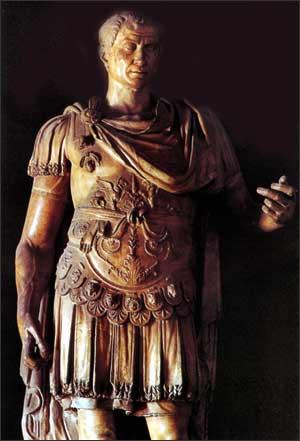
As usual, you can blame the Romans for this mess, and since they were often aggravated with the Jews, you might as well blame them, too.  If Julius Caesar hadn’t decided to reform the old Roman calendar, we might still be adding a month to it every two or three years.  Like most ancient societies, the Romans used the sun and moon to guide their daily lives; when to plant crops, get married, make human sacrifices, etc.  Thus, the Roman calendar was based on a lunar month, which averages 29.5 days.  Around 46 B.C., Caesar – like most politicians – interfered with something that had functioned perfectly for years and declared, “Ist es ridiculum!” – whereupon he relegated the calendar to a solar-based system.

But, as you might expect, Caesar didn’t get it right.  The Julian calendar is based on a year that is 365 days and 6 hours.  Therefore, Caesar added a day to the month of February every 4 years to try to even out matters.  But, the equinoxes, as marked on that calendar, arrived earlier every year; which, in turn, messed up spring planting and spring weddings.  In the Northern Hemisphere, the spring equinox would arrive around March 25.  But, by the 16th century, it was arriving around March 10.  If this had continued, Easter eventually would have occurred in the dead of winter.  And, that of course, would have disrupted Easter egg hunts and lowered church attendance.  Again, political leaders just can’t seem to leave things alone.

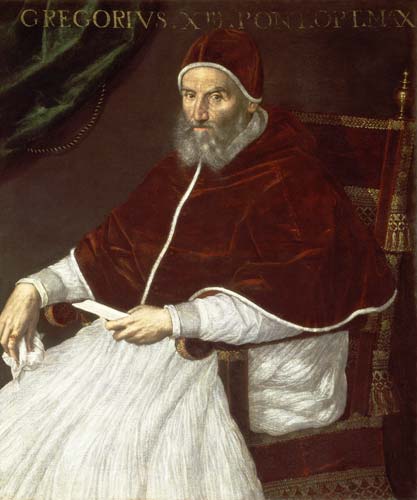
Enter Pope Gregory XIII (1502 – 1585) who stemmed the growing tide of Protestantism in Europe and established a number of colleges and seminaries, including one in Germany called simply the “German College.”  But, Gregory is best known for redesigning the Julian calendar around 1578.  He lopped off 10 days from the month of October, but kept the “Leap Year” anomaly with some strict stipulations:

  1. A Leap Year has to be divisible by 4;
  2. If a year is not evenly divisible by 100, isn’t a Leap Year – unless;
  3. The year is also divisible by 400.

This latter factor explains why the year 2000 was a Leap Year, but the years 1700, 1800 and 1900 weren’t.

Italy, Poland, Portugal and Spain were the first countries to adopt the Gregorian calendar in 1582.  Sweden and Finland didn’t adopt it until 1712.  But, because they were so far behind in doing so, they had a “Double Leap Year” in 1712; meaning they actually had a February 30.  Great Britain and the United States didn’t embrace the Gregorian calendar until 1752, when they dropped 11 days from the old calendar.  I don’t know which 11 days and from what month, or if it was just done at random, but it got them synchronized with Europe.

Japan replaced its lunar – solar calendar in January 1873, but decided to use the numbered months it had originally used instead of the European names.  China finally acquired the Gregorian calendar in January 1912.  But, different warlords had different calendars, so no one really abided by it.  The government finally ordered a mass conversion to the Gregorian system in January 1929.

Presently, international time is determined by the vibrations of atoms in atomic clocks, which have a reputation for accuracy.  This adds a new term to the confusion: the “leap second.”  I know.  Just when you thought you understood the entire mess, along comes something new!

Keepers of atomic clocks periodically add or subtract one or two seconds every year to keep the clocks in line with a 24-hour day as measured by the Earth’s rotation – which is gradually slowing.  Scientists added the first leap seconds in June and December 1972.  The next leap second is due this June.  In a meeting in Geneva last month, these timekeepers proposed abolishing the leap second altogether.  A final decision on that bright idea is due in 2015.

By then, however, the Mayan calendar will have replaced all that crap, and the sun and moon can revolve in peace.  Thus, we won’t have to worry about leaping anywhere, except into a swimming pool – with chocolate and tequila nearby!

Leave a comment

Filed under Essays

Racing Oscar

Sunday night’s Oscar ceremonies provided the usual displays of celebrity fashion and idolatry.  When Angelina Jolie arrived to present the screenwriting awards and stood at the stage’s edge with her right leg prominently jutting through a severe slit in her designer gown, I realized no one in their right mind can take this stuff seriously.  Every year at this time, the Academy of Motion Picture Arts and Sciences excretes these coveted statuettes amidst the tabloid revelry and calls it ceremonious.  But, like all other awards shows, the Oscars are nothing more than popularity contests; particularly in the acting and directing categories.  Henry Fonda once noted that it was ridiculous to nominate five actors for an award, but then select only one to receive it.  Katherine Hepburn, for example, is still considered one of America’s greatest actresses; the Academy bestowed four Best Actress Oscars upon her.  But, in my opinion, she has nothing on Meryl Streep who picked up her third Oscar Sunday night.  Hepburn never truly acted; she just sort of behaved.  She was too arrogant to let herself disappear into a character.  Streep, on the other hand, becomes almost indistinguishable whenever she takes on another persona.  Again, just my view.  If you want to see genuinely talented competition, watch a high school speech and debate contest.

This Wednesday, the 29th, will mark the 72nd anniversary of the 1940 Academy Awards where Hattie McDaniel won the Best Supporting Actress Oscar for her role as “Mammie” in Gone with the Wind.  McDaniel was the first African-American to be nominated for and to win an Oscar.  She was also the first African-American to attend an Oscar ceremony, although she had to sit at the back of the room in the Biltmore Hotel in Los Angeles.  Her win was bittersweet.  It marked a cinematic milestone for Black Americans.  But, Gone with the Wind arrived in theatres to face as many protests from the NAACP as it did accolades from fans of Margaret Mitchell’s book.  Civil rights activists denounced the film’s stereotypical portrayals of Blacks.  McDaniel even sat out the film’s premier in Atlanta, saying she had other obligations.  In reality, she wasn’t welcome.

It’s difficult to imagine such a scenario now, especially considering the leftist bent the American cinematic community seems to possess.  But, observing this year’s contenders, I noticed three new faces: Viola Davis, a Best Actress nominee for The Help; Octavia Spencer, a Best Supporting Actress nominee also for The Help; and Demián Bechir, a Best Actor nominee for A Better Life.  Spencer won in her field.  More importantly, though, I noticed the roles they played were as stereotypical as ‘Mammie,’ anomalies in 21st century American films.  Or maybe not.  The Help is a period piece about a young White woman who decides to write a controversial book from the point of view of Black maids amidst the civil rights struggles of early 1960’s Mississippi; instead of – say – one of the maids suddenly discovering her literary muse and writing her own story.  A Better Life is a contemporary tale about a Mexican immigrant father who chooses to stay in the United States to provide (as the title implies) a better life for his son, while working as a gardener in East L.A.  Regardless of their respective storylines and grandiose intentions, both films play into conventional roles often assigned to Blacks (housekeepers) and Hispanics (immigrant gardeners).  To be fair, I haven’t seen either film – and I don’t intend to see them.  I’ve watched plenty of formulaic characterizations of Blacks and Hispanics in films and on TV.

But, you’d think in the 72 years since Hattie McDaniel won her Oscar, things would have changed for both ethnic groups.  Obviously, Hollywood isn’t as liberal as the talking heads on FOX News claim it is.  Despite years of progress and social consciousness – with celebrities publicly calling for more AIDS research, support for animal rights, etc. – the American entertainment community often likes to stick with what’s popular, or at least with what it knows.  Much like corporate America, the biggest movie studios are run by old and middle-aged White men.  So, it’s easy to deduce that Hollywood’s country club elitists still can’t see Blacks and Hispanics occupying more mundane professions like accountants, doctors, architects and technical writers.  We’re still pushing mops and lawn mowers in their minds.

They may not be able to see beyond those typical characterizations, but I certainly can – because that’s pretty much all I’ve seen of Blacks and Hispanics.  We’re educated and hard-working just like…well, just like you’d expect the average American citizen to be.  One only has to watch an episode of The First 48 on A&E to see more Blacks and Hispanics wearing law enforcement uniforms than gang colors.  Blacks actually have fared pretty well in film and television in recent decades.  They’re no longer presented as the ‘happy Negro,’ content with merely singing delightful Walt Disney songs, or delivering coy punch lines.  Hispanics, it seems, have yet to arrive, despite some concerted efforts like Chico and the Man and, more recently, George Lopez.  And, Native Americans haven’t even made it to the gate.  Some years ago a friend of mine who was of Vietnamese extraction lamented the constant portrayals of Asians as “wacky scientists” or “goofy doctors.”

“At least you’re shown as doctors and scientists,” I told her.  My people are still shown as gang members and illegal aliens.”

Blacks certainly have come a long way since Hattie McDaniel floated across the silver screen in proper kerchief and apron.  Hispanics also have made considerable strides since Desi Arnaz became the first Hispanic on American television.  Native Americans haven’t migrated much from the Little Big Man days, although there was that blip called Dances with Wolves.  I guess Hollywood and Academy executives are still smarting from Marlon Brando’s stunt at the 1973 Oscars.  I don’t fault Viola Davis, Octavia Spencer and Demián Bechir for taking on their respective roles.  In a business where unemployment hovers around 100%, people have to grab what they can.  But for all the headway and enlightenment we’ve achieved, The Help and A Better Life insinuate that Blacks and Hispanics occasionally have to be reminded of our proverbial place in society and how we shouldn’t stray too far from that standard.  I sense “our people” have to placate the money-laden powers in Hollywood every once in a while, if they want to keep working.  For better or worse, though, here we are – and circumstances have improved.  Change is often slow, yet unstoppable.  As philosopher William James once said, “Human beings, by changing the inner attitude of their minds, can change the outer aspects of their lives.”


1 Comment

Filed under Essays