Category Archives: History

A Quarter Century of Webs

Tim Berners-Lee’s 1989 template for what would become the World Wide Web.  Image courtesy: World Wide Web Consortium.

Tim Berners-Lee’s 1989 template for what would become the World Wide Web. Image courtesy: World Wide Web Consortium.

On this day in 1989, the Internet, as we know it, was born – at least on paper.  Like film, radio and television before it, the Internet technically had a slew of birth parents.  But, for the most part, one man figures critically in its creation: Tim Berners-Lee.

Born in London in 1955, Berners-Lee graduated from Oxford University with a degree in physics.  Immediately after graduating, he went to work for a printing firm, but in 1980, he began working as an independent contractor for CERN, the European Organization for Nuclear Research, in Switzerland.  There, he had to consult with other scientists and researchers from across the world, which presented unique challenges with varying time zones, languages and communication methods.  To facilitate the process, Berners-Lee began working on a project based on the use of hypertext, a data-specific language developed by Ted Nelson, an American scientist, in the 1960s.

Born in New York in 1937, Nelson apparently was diagnosed with attention deficit disorder (ADD) as a child.  His frenetic thought patterns (a hallmark of ADD sufferers) probably led him to create the hypertext system.

Berners-Lee called the prototype of his program “Esquire.”  He has been smart and gracious enough, though, to give credit to all of his computing predecessors, such as Nelson.  The concept of electronic mail (email), for example, was developed at the Massachusetts Institute of Technology (MIT) as a simple file-sharing system and first demonstrated in 1961.  That evolved into a system of message transmission MIT dubbed “Mailbox.”

Another early similar program was called “SNDMSG.”  That functioned in conjunction with another system called “Advanced Research Projects Agency Network” (ARPANET), which first appeared in 1971.

Accolades must also go to Douglas Engelbart who invented the computer mouse in 1963 and first demonstrated it five years later.  Like most inventors, Engelbart envisioned his creation in the usual manner: doing something completely unrelated.  In his case, he was driving to work when he imagined “people sitting in front of cathode-ray-tube displays, ‘flying around’ in an information space where they could formulate and portray their concepts in ways that could better harness sensory, perceptual and cognitive capabilities heretofore gone untapped.  Then they would communicate and communally organize their ideas with incredible speed and flexibility.”  But, even he can’t explain why he called his device (first made of wood) a “mouse.”

Berners-Lee took all of these ideas and materials and composed “Information Management: A Proposal” that he presented to CERN on March 12, 1989.  From that, he ultimately created the “World Wide Web.”  With the help of Robert Cailliau, a Belgian computer scientist, he presented the first version in 1990 and put it online the following year.  The first web page address was http://info.cern.ch/hypertext/WWW/TheProject.html.

His initial goal was merely to help CERN be more productive.  But, while Berners-Lee visualized a grander purpose for the “Web,” even he couldn’t predict the impact his creation would have on the world.

Douglas Engelbart presents the first computer mouse on December 9, 1968.

Tim Berners-Lee interview with C-Net.
World Wide Web Consortium

1 Comment

Filed under History

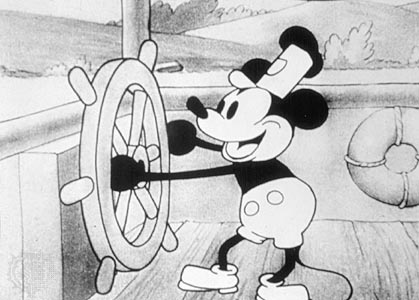
“Steamboat Willie” Goes for a Ride

Steamboat-willie

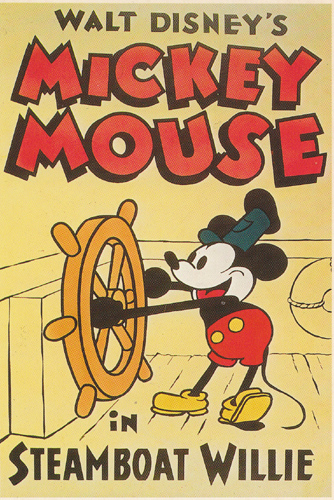
On this day in 1928, Walt Disney premiered the first cartoon with synchronized sound, “Steamboat Willie.”  Crude by today’s standards, it was innovative for its time.  Walt Disney himself performed all the voices, although the dialogue is often hard to understand.  The cartoon was a parody of the Buster Keaton film, “Steamboat Bill, Jr.,” which was a reference to a 1911 song, “Steamboat Bill,” performed by Arthur Francis Collins.  The film lasts all of 7 minutes and 23 seconds and came out as the film industry was making the inevitable and sometimes difficult transition to sound.  “Steamboat Willie” also marks the first appearance of that Disney icon, Mickey Mouse.  With an estimated budget of $4,986, there were some initial concerns about the believability of cartoon characters producing their own sound.  Thus, Disney arranged for a preview of the film even before the sound track was produced.  The audience responded positively to it and subsequent audiences liked it even better with the sound.  The film would later become the subject of controversy because of perceived animal cruelty, including one scene where Willie swings a cat around by its tale.  But, it was just a product of its time.  Regardless, it remains a landmark of early sound cinema and a true pioneer in both animation and overall filmmaking.

A poster produced for the film’s 50th anniversary.

A poster produced for the film’s 50th anniversary.

1 Comment

Filed under History

Old Wounds

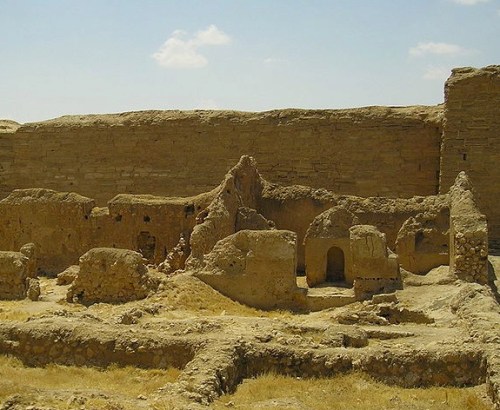
The ancient fort of Dura-Europos in Syria – possibly the site of one of the world’s first chemical attacks.

The ancient fort of Dura-Europos in Syria – possibly the site of one of the world’s first chemical attacks.

With Syria in the news lately, the specter of chemical warfare once again rears its despicable, gassy head.  If Syrian President Bashar al-Assad really did attack a select number of his own civilians with mustard gas, sarin, or another agent, it actually won’t be the first time such an event has occurred in the region.  Archaeology Magazine reports that around A.D. 256, Roman soldiers at a fort in Dura-Europos – a part of the Sasanian Empire – fell victim to a chemical attack.  There’s no written account of the battle, but recent analyses of remains unearthed in the 1920s and 1930s substantiate claims made by University of Leicester archaeologist Simon James in 2009.

Until then, scientists thought the soldiers had died when the tunnel they apparently tried to utilize to enter the fort collapsed.  Now, according to James, sulfur residue found along in a jar near several of the bodies reveals a bloodier truth.  The Sasanians had strategically placed fire pits throughout the tunnel.  As the Romans encroached, the Sasanians added sulfur crystals and bitumen to the fires.  The invaders inhaled the toxic fumes and perished alongside their armor.

Defining ancient chemical attacks is obviously difficult, if not impossible.  But, in this case, the remains of that sulfur makes it pretty clear what happened.  More importantly, it shows that while we modern folks think we’ve invented everything, history always upstages us.

1 Comment

Filed under History

“March on Washington” at 50

the-constitution

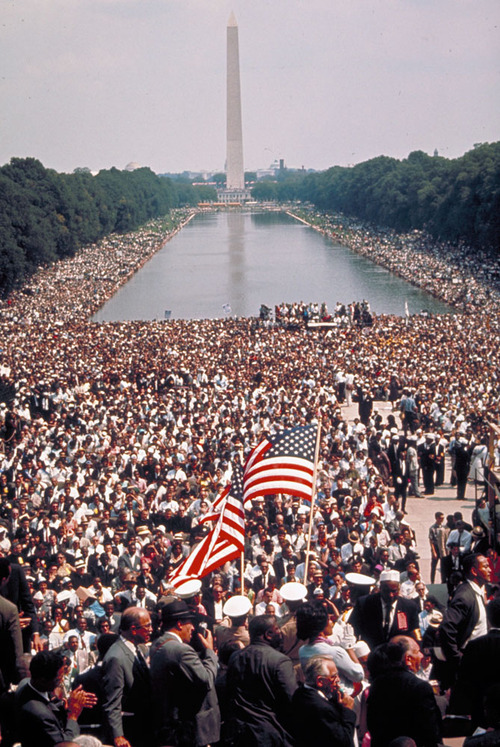
Today marks the 50th anniversary of the “March on Washington,” a seminal event in modern civil rights history – one that changed the cultural direction of this nation.  Officially titled the “March on Washington for Jobs and Freedom,” its initial impact surprised even its organizers.  In a time before cell phones and personal computers, word of the event spread quickly and attracted more than 200,000 people to the U.S. capital as a steamy summer neared its end.  Martin Luther King’s “I Have a Dream” speech was the highlight of the march and remains its signature hallmark.  But, it was more than a showcase for King; it was about a movement and a people – the American people.  It was a call for the U.S. to uphold its constitutional values that all citizens are created equal.  People will forever debate its merits.  But, there’s no doubt it became a critical force in moving this nation forward; a real catalyst for positive change and opportunity.

The fight actually continues in relentless calls for economic and social justice.  Battles like this are never won so easily.

tumblr_m9hpp2tZNU1qbz9meo1_500

Official program.

Photos from the event.

Top image courtesy of United Liberty.

2 Comments

Filed under History

Korean War Ends

????????????????????????????????????????????????????????????????????????????????????????????????????????????????????????????????????????????????????????????????????????????????????????????????????????????????????????????????

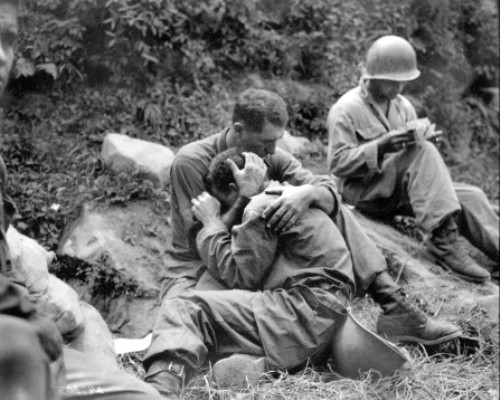
On this day in 1953, an armistice was signed in Panmunjon, Korea, ending the Korean War.  The conflict lasted all of three years and thirty-two days, but it took the lives of some 5 million people – civilians and military – and split the Korean Peninsula between the democratic Republic of Korea (South Korea) and the oppressive Democratic People’s Republic of Korea (North Korea).

Often called the “Forgotten War,” the conflagration had its beginnings with the conclusion of another bloody conflict.  As the world celebrated the end of World War II in 1945, the Korean Peninsula split along the 38th parallel; essentially becoming two nations.  In 1948, the United Nations General Assembly approved of open elections for the establishment of a provisional government.  Communist forces opposed the elections, but they were held in the southern half in May of 1948.  The elections created a national assembly, which in turn, established the Republic of Korea (ROK).  In response, residents in the north created the Democratic People’s Republic of Korea – an ironic name considering the nation’s current reputation for brutality.  The U.S. removed its last troops from Korea in 1949, and the DPRK saw an opportunity to invade its southern neighbors.

The war known for its battles amidst wretched winters actually began in summer.  On June 25, 1950, the North Korean People’s Army (NKPA) attacked the ROK with the backing of the Soviet Union.  The U.S. quickly returned to back the ROK.

It’s a shame – an extreme disservice – that the Korean War is occasionally referred to as the “Forgotten War.”  My father served in the U.S. Army during that mess and, like anyone involved, he hasn’t forgotten a single thing about it.  Certainly, there’s nothing to forget about 5 million deaths.

Korean War Project.

90678919_e27203ebd7_z

1 Comment

Filed under History

Medal of Honor

medalLarge

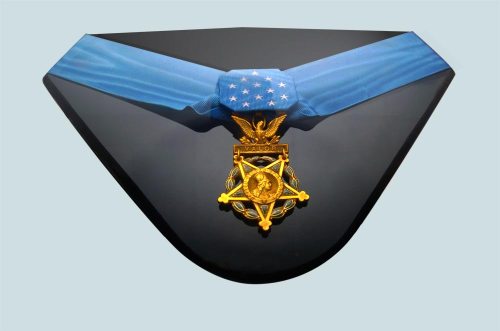
It was on this day in 1862 that President Abraham Lincoln approved legislation authorizing the preparation of 2,000 Medals of Honor to “be presented, in the name of the Congress, to such non-commissioned officers and privates as shall most distinguish themselves by their gallantry in action, and other soldier-like qualities.”  The Medal of Honor had been initiated the previous year as an award given by the U.S. Navy.  Today it is the highest award given to U.S. military personnel in the line of duty.

Since then, more than 3,400 people have received this medal.  Some have been dubious, such as the soldiers who were awarded the medals for their actions in the tragic 1890 “Wounded Knee” massacre.  But, in the recent Afghanistan and Iraq Wars, the medals have taken on new significance and enhanced value.  Recipients almost have to die to get one.  These aren’t perfect attendance awards!  In an ideal world, no such awards would be given because war wouldn’t occur.  But alas, this isn’t a utopian universe.  Regardless this is my personal salute to all MOH recipients and all military personnel.

1 Comment

Filed under History

The Corvette Turns 60

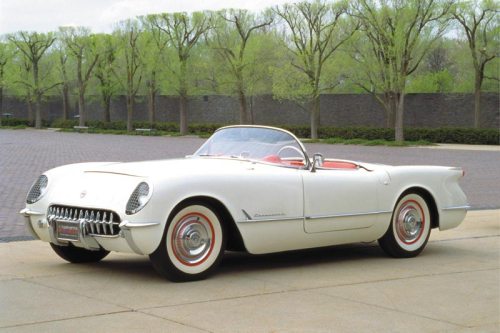
On this day in 1953, Chevrolet rolled out its newest model: the Corvette.  With its bold white body made entirely of fiberglass and a cherry red interior, the 2-seater convertible was a refreshing automotive innovation; a sharp departure from the growing gallery of massive family-oriented vehicles.  Unsure of its success, Chevrolet only manufactured 300 Corvettes; so few, in fact, that each of those models was built by hand.  Selling for $3,250 apiece, the Corvette model was the brainchild of Harley J. Earl who had gotten his start with his father’s business, Earl Automobile Works.  It became an instant hit.  An automotive enthusiast, I have several die-cast versions of Corvettes, including that first model like the one pictured below.  It’s an American original and a true contemporary legend.

Corvette Museum.

GMInnovation-A9A_a

1953_Corvette_2

Leave a comment

Filed under History

Florence Nightingale – The Original ‘Super Mom’

Florence_Nightingale_by_Kilburn_c1854

In honor of Mother’s Day, I wanted to note that it was on this day in 1820 that Florence Nightingale was born in Firenze (Florence), Italy to a prominent British family.  Her family returned to England the following year.  While still in her teens, Nightingale developed a strong affinity for helping those in times of need.  Her strong devotion led her to reject several marriage proposals; something unheard of in her day where women were expected to marry and have children.  She probably acquired her independence from her own father, William Edward Nightingale, who provided his daughter with a solid education that included mathematics.

Nightingale came to prominence during the Crimean War where she tended to wounded soldiers.  She became known as “The Lady with the Lamp,” after her habit of making her rounds at night.  In 1860, she laid the foundation for professional nursing when she almost single-handedly designed a nursing program at St. Thomas’ Hospital in London.  Now, her birthday is celebrated as International Nurses Day.

Nightingale obviously was the original “Super Mom!”  Her personal determination and professional contributions have had a long-lasting impact on modern society.

Leave a comment

Filed under History

In Remembrance – Oklahoma City

4504220012_22ce76a33e_z

April 19, 1995

The 1993 Branch Davidian siege in Waco, Texas segues tragically into the bombing of the Oklahoma City Federal Building exactly two years later.  Again, the matter has to do with religious extremism, unmitigated hate and White supremacists.  May the Great Creator bless the 168 innocent souls who died in that bombing.  No matter what happens, love always wins out over hate.

Oklahoma City National Memorial and Museum.

Leave a comment

Filed under History

In Remembrance – Mount Carmel and the Branch Davidian Siege

g-hlt-080903-empty-crib-10a-hmedium

April 19, 1993

It’s difficult to believe it’s been 20 years since that awful day when a 51-day standoff with an extremist religious group culminated in a conflagration and the deaths of 80 people, including 20 children.  I still feel sad for those babies and children, but I don’t have any remorse for the group’s perverted leader, David Koresh, and the other adults who allowed this to happen.  That one event signaled a violent rebirth of the White supremacist movement in the United States and ridiculous questions about freedom of religion and gun rights.

But, this is for those children who had no choice in the matter.

“I am a free spirit like a wind
I bend with the breeze, carefree with the bliss.
I wander here and there,
And finally found a love to share.

Together we had laughter and tears,
For he is my sweet disaster.
With one heart we embraced with love,
The little angel sent by one up above.
Yet laid unto rest shortly,
before we even accept the reality.

On this earth life and love you gave,
But science had numbered your days.
Up above the joys and fears,
You tiptoed and leave.
Mommy is in anguish of losing you our dearest.

The sun was shiny and fluffy on your final day,
Rainbows and butterflies swept our pain away.
Lonely days and tearful nights were not yet over,
Yet mom and dad clasp their fingers together.

One day we will see you again our angel baby
When our time is over you will walk with us merrily.
Someday we will gaze you up high,
Up above the blue sapphire sky.
We will be proud to tell you with a smile,
That we are more stronger because of you…having you even just for a while.”

Athena Ali, Tiptoed Moments

1 Comment

Filed under History