A Land Called México

They have experienced the glory and the pain.

They have weathered through generous pride and torrid shame.

They have felt the hate and the love.

They have lived through peace and seen blood.

They worshipped then, as now, both sun and moon.

They have guarded their temples and slept quietly in their tombs.

They have fought savage invaders and their very own.

They have been dragged through dirt and scraped their bones.

They have suffered through individual and collective emotions.

They have seen painful strife and been betrayed by unwanted notions.

These are the people who looked down from the mountains and built a nation on a lake they named Texcoco.

These are the people of a land called México.


I wrote this poem in the early 1980s and had it published in 1984 in “Our World’s Most Beloved Poems”, a compilation of poetry by the World of Poetry Press.  There’s not much information available now on WPP.  They published my poem for free, but – of course – I had to buy the gigantic book in which it appeared.  Yes, it’s amazing how naïve people can be at the age of 20.

Odd, but I never considered myself a poet.  A writer, obviously; yet poetry generally ranked somewhere between Reader’s Digest and the local classified ads, as far as I was concerned.  Still, outside of my blog, letters to a newspaper editor and a couple of anonymous romance inquiries circa 1990, it’s the only thing I’ve officially had published.


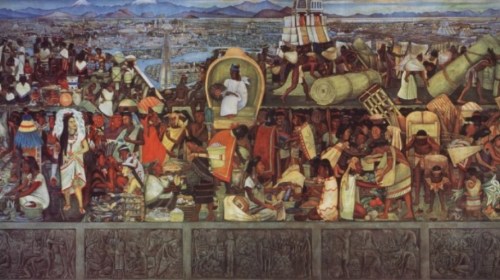
Image: “El Mercado de Tlatelolco” by Diego Rivera, c. 1935.

6 Comments

Filed under Wolf Tales

Writers

Alejandro De La Garza, 2018

2 Comments

March 9, 2018 · 12:57 AM

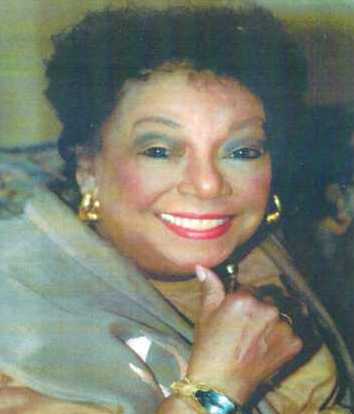
Knowing Jolyn

She looked a little out of place; this older woman attired in crimson red with a matching hat.  She seemed dressed for church, not a Toastmaster’s meeting.  Ironic, though, that the group met in a church every Friday evening around 6 p.m.  Most Toastmasters groups meet Monday through Thursday after work.  Some even meet before the work day starts, especially if it’s a company oriented-club.  But Friday evenings was the only time our group could schedule, when it was formed in 2000.  I joined it the following year and came up with a slogan: ‘A Different Kind of Happy Hour.’  People liked that, and it drew a wide variety of visitors.

It was just such a nondescript Friday evening in the spring of 2003, when Jolyn Robichaux arrived.  None of us realized it at that moment – and I’m certain not even she knew – but Jolyn would make an indelible impact on our lives.  Her personality was as bright as the outfit she wore that evening; her verbiage as graceful as the way she carried herself into the room.  Her worldly experiences proved she was one of those rare individuals who take life by the throat and wring every ounce of ecstasy from it.  With a vibrant smile and an infectious laugh, Jolyn had an incredible on anyone she ever met.  And I am honored to have been one of them.

Jolyn passed away a year ago this month.  She would have been 90 this coming May.  I’d last heard from her, via email, in early 2015.  I had always made it a point to mail her a birthday card; a simple gesture she knew was genuine, but – in this electronic age – she still found amazing.

“That you actually took the time to hand-write my address on it and mail it,” she once told me, “shows how compassionate you are!”

Jolyn appreciated such ordinary and inconspicuous acts; those “little things” people often overlooked or dismissed.  Her own life, however, was anything but ordinary or inconspicuous.  Born in Cairo, Illinois in 1928 to Margaret Love, a beautician, and Dr. Edward Chuny Howard, a dentist, Jolyn seemed to have two strikes against her from the start: she was female and Black; attributes that rendered her almost sub-human at the time.  Anyone growing up during the Great Depression learned how difficult life could be.  For people like Jolyn, it was almost unbearable.  Still, everyone did the best they could.  Jolyn’s father often bartered his dental services with neighboring farmers in exchange for food.  Many of those farmers were White and surely wondered how a Black man could have possibly become a dentist.  But he earned their trust and respect with his strong work ethic and concern for their dental health, at a time when dentistry often straddled the border between medieval cruelty and an unnecessary luxury.  There were joyous moments as well, she always emphasized, when discussing her younger years.  “You just have to look for them.”  And hard work is, most often, worth the effort; paying off “one way or another.”
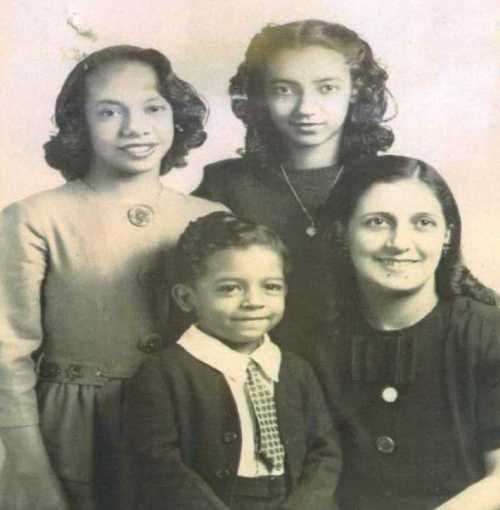
Jolyn (back left) in 1943 beside her sister, Charlotte Howard, with brother William and their mother, Margaret.

Jolyn graduated valedictorian from Sumner High School at the age of 16.  But the happiness the Howard family felt over her academic achievements was tempered when her father fell ill with a rare blood disease.  What should have been a joyous occasion was shattered when Dr. Howard died shortly thereafter at the age of 48.

Despite the tragedy, Jolyn knew she had to move forward.  One curious attribute of successful, independent people is their ability to handle death – even the deaths of loved ones.  As painful as it was to lose her father at such a young age, Jolyn knew the world wouldn’t stop because she was sad and began attending classes at Fisk University in Nashville.  Two years later, however, Jolyn decided her mother needed help, both financially and in caring for the two youngest Howard children.  Jolyn left Fisk and moved to Chicago to work full-time, while planning to take evening classes at Roosevelt University.

Classes at Roosevelt lasted only a year, as Jolyn told me, because Chicago’s “fast life” got hold of her.  That included the bevy of handsome, well-dressed and well-spoken men she encountered.  Both of her parents would have howled in anger, Jolyn said with a laugh, at the mere thought of her “getting frisky” with any man.  Remember, this was late 1940s / early 1950s America; a post-war nation where opportunities looked endless on the personal and professional fronts – even for women and non-Whites.

Now ensconced in a more liberal and open-minded environment, Jolyn found work with the Chicago Veterans Administration and the National Labor Relations Board; as an executive secretary with two other large corporations; and even as an assistant to a renowned diagnostician.  It’s difficult to imagine now, but for a Black woman to take such jobs at the time was incredibly radical; almost rebellious.  Yet, like much of what she’d do throughout both her personal and professional lives, Jolyn wouldn’t let herself be assigned a certain role or position, as then-contemporary norms prescribed.  She was already dictating her own place in this world – not by someone else and not even by society as a whole.  Radical, indeed!  But to her, it was as natural a reaction as breathing.  There was just no alternative.

Amidst the many people she encountered in Chicago, Jolyn cited one particular individual as having, perhaps, the most significant impact: Mary McLeod Bethune.  As Jolyn would do in the coming years, Bethune didn’t let her race or gender define her or keep her from attaining success on her own terms.  Born to former slaves in South Carolina in 1875, Bethune would go on to become an acclaimed educator in the African-American community and was an especially charismatic role model for women.  Although not naïve to the traumas of racism and sexism, Bethune still felt that education was a vital tool in the pursuit of equality.

Jolyn realized how important this was to her, too, and went on to earn a degree in education from Chicago Teachers College, graduating magna cum laude in 1960.  When I made the decision several years ago to return to college and earn a degree in English, Jolyn expressed as much excitement as my parents.  I lamented the fact that I’d waited so long to complete that one life-long ambition.

“The important thing is that you get it done,” Jolyn told me via email.  “If it’s important to you, then it’s important!”

In 1950, Jolyn met Joseph Julius Robichaux at a private party in Chicago.  While dancing that same evening, he startled her by asking her to get married.  Perhaps even more surprising to him is that she didn’t say yes immediately.  Again, it’s hard to understand now, but in mid-20th century America, women normally didn’t say no to marriage.  With so few opportunities for even well-educated women – especially Black women – the roles of wife and mother were pretty much the apex of their lives.  Telling him no put her, as she eloquently described it, “the naughty girl list.”  But Joseph persisted, certainly knowing what an extraordinary woman had entered his world.  Jolyn eventually said yes to Joseph, and the couple wed in 1952.  Four years later they welcomed their first child, Sheila.  In 1964, their first son, Joseph Howard, was born.  By then, Jolyn had fallen – somewhat – into that traditional wife-mother role.  But she still managed to do so on her own terms.  Aside from completing her education, she participated in various civic activities and assisted her husband in his burgeoning political career.
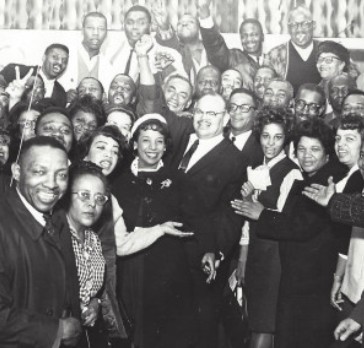
Jolyn and Joseph Robichaux (center) in 1964.

In 1967, the Robichauxs entered into a new venture, when they purchased Baldwin Ice Cream Company.  Baldwin had been founded as the Seven Links Ice Cream Co. in 1921 by Kit Baldwin and six of his Black coworkers at the Chicago Post Office.  As a Black-owned and Black-operated enterprise, Baldwin stood out in the maze of corporate America.  In 1948, Baldwin bought out his partners and renamed the company after himself.

By 1971, it seemed life couldn’t be more fulfilling or more perfect for the Robichaux family.  But tragedy once again punched a hole into Jolyn’s life, when Joseph, Sr., died of leukemia.  While dealing with such a heart-wrenching event, Jolyn realized she had three choices (albeit difficult ones): continue the family’s interest in Baldwin, find work teaching, or become a full-time mother.  She chose to stay with Baldwin.  The company was in receivership by 1971, due in part, to a staid routine that no longer yielded a profit in a rapidly-changing economy and culture.

That same year Chicago Mayor Richard Daley appointed Jolyn to replace her deceased husband on the Jury Commissioners Board of Cook County.  The position – which she held until 1979 – provided a steady income.  In 1975 she earned a certificate in ice cream technology from Pennsylvania State University (Penn State).  Jolyn then re-made Baldwin into her own.  She developed business relationships with other ice cream executives in the Chicago area and increase sales in Baldwin’s 17 chain stores.

Baldwin’s phenomenal success prompted President Ronald Reagan to name Jolyn as USA Minority Business Woman of the Year for 1985.  She received the award personally from Vice-President George W. Bush.

In 1992, Jolyn sold her ice cream business and made an unexpected move: 4,130 miles (6,646 km) to Paris, France.  Still bristling with an entrepreneurial spirit, Jolyn created a one-woman business that brought American gospel singers to Paris for performances at the American Cathedral in Paris.

Shortly thereafter, Jolyn was back in the U.S., settling in Dallas to be closer to family.  But retirement appeared to be an alien concept to her.  In 1997 she participated in the Heart Disease Research Project at the University of Texas Southwestern Medical Center.  From 1999 to 2001 she served on the Dallas Opera’s Board of Directors.  She was a docent at Southern Methodist University’s prestigious Meadows Museum of Art; served as a mentor at Dallas Life Foundation, an organization that helps homeless people get off and stay off the streets; and even worked as a substitute teacher in the Dallas Independent School District.

I knew she loved opera and not just because she had lived in Paris.  We both shared that passion.  But not until after her death did I learn she did so much for her community and many of the people who occupied it.  It doesn’t surprise me.  Jolyn wasn’t a braggart.  Unlike some sports and entertainment celebrities and more than a few politicians, Jolyn did what she liked to do and helped whenever she could.
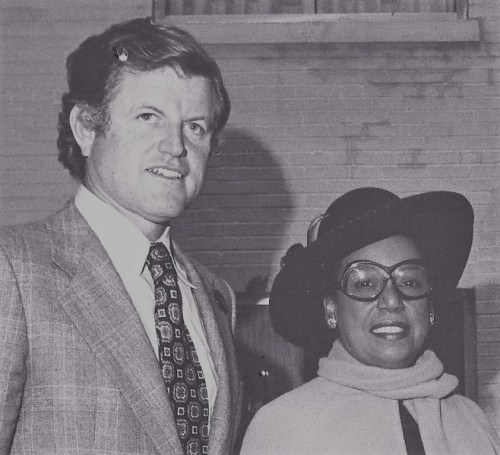
Jolyn with Sen. Edward Kennedy (D-MA) in 1974.

She was more than just a friend; she was a trustworthy mentor to me personally.  I could relate the various trials tribulations of dealing with my parents’ declining health, not really thinking that Jolyn was actually a few years older than either of them.  She was truly inspirational; choosing to celebrate other people’s accomplishments and aspirations.  After presenting one of my most passionate speeches, “A Matter of Respect,” to Toastmasters one evening, she almost jumped out of her chair to give me a hug.  “I saw the fire in your eyes and could hear it in your soul!” she proclaimed after the meeting.

She read several of my short stories and essays on this blog and predicted, “You will get published!”

If I counted my own personal achievements, they’d certainly fall short of even just half of what Jolyn did with her life.  Like me, she kept a regular journal; understanding how truly therapeutic it could be.  They were her essentially her autobiography – as are most journals – but told me via email, “They will not be published.”  That may have been a wish she asked of her family, but I honestly hope they defy her on that one.  If there’s anyone whose life story deserves (must be) told, it is that of Jolyn Robichaux.

About 5 years ago Jolyn invited me to join her at a dance class not far from where I live.  I told her I would, but a family emergency arose at the last minute.  She expressed greater concern for my welfare than for my absence at the class.  And I thought later, ‘That’s just like her; already in her mid-80s and learning something new.’

That described Jolyn perfectly – dancing to the very end.


“When I Die”

“When I die, when I finish living this life, when all my stakes and claims in this world are rendered null and void, I want to leave like the final swirl of smoke from a smoldering ember, rising as a smile into nothing.”

– Jolyn Robichaux, 2005
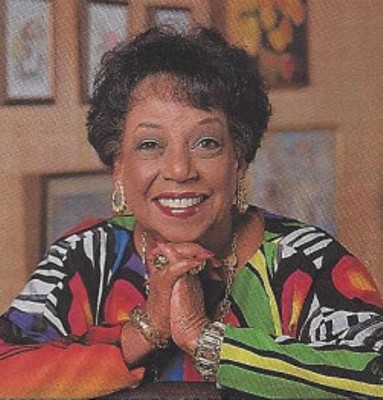
Jolyn’s family has asked that donations be made in her name to the Vivian G. Harsh Society, which maintains the largest collection of African-American history and literature in the Midwest.


Vivian G. Harsh Society

c/o Harold Washington Library

400 S. State St., 5th Floor

Chicago, IL 60605

http://harshsociety.org/donate/

3 Comments

Filed under Essays

Voodoo You

“It just isn’t going to work, and it’s very interesting that the man who invented this type of what I call a voodoo economic policy is Art Laffer, a California economist.” – George H.W. Bush, Carnegie Mellon University, April 10, 1980


I’m frightened for the United States, and it’s not just because of my disdain for our faux president, Donald Trump.  I’m genuinely concerned about what could happen over the next few years.

In the above quote, George H.W. Bush was referring to the plans of fellow Republican and 1980 presidential candidate Ronald Reagan for revitalizing a stagnant U.S. economy.  Then, when Reagan won in most of the primaries, his camp offered Bush the vice-presidential position, and the former Texas congressman shut up about economics.  In 1980, the nation was in a bad financial situation.  The costs of the Vietnam War, coupled with oil embargoes from OPEC nations, had finally taken their toll.  Unemployment stood at nearly 10%; the prime interest rate was 21%; inflation was 14%; home mortgage rates were 17%; and the top marginal tax rate was 70%.  In the second quarter of 1980, the U.S. gross domestic product (GDP) declined by 8%.  By the end of the year, the overall GDP boasted about $3 trillion (in today’s dollars).

With the help of some Democrats in both houses of the U.S. Congress, Reagan was able to generate an agreement that slashed taxes down to 50% on wages, to 48% on corporate income, and to 20% on capital gains.  These measures initially jumpstarted the economy.  Average citizens had more expendable income, which they poured back into the economy by purchasing many so-called big ticket items, like vehicle and electronics.  By 1990, the size of the U.S. economy had grown from $3 trillion to $6 trillion, with roughly 4 million new businesses and 20 million new jobs created.  Although the national debt increased from $1 trillion to $4 trillion during the same period, overall revenues doubled.

Reagan’s economic policies were in line with conservative views on taxation: if we give the “investing class” (meaning, the most affluent) generous tax breaks, they will respond by expanding their businesses or starting new ones, which in turn, will create more products and / or services and more jobs.  Along with reduced business regulations (“job killers” in conservative lingo), average citizens will have more income, which of course, they will pour back into the economy.  Such growth then will expand the tax base; the additional revenue will replace any money lost to the initial tax cuts.

Ask any frustrated project manager and they will tell you that everything always looks great on paper.  While Reagan disciples keep championing his financial moves, the reality is that “Reaganomics” didn’t work out as planned.  One thing people forget is a little thing called the Garn-St. Germain Depository Institutions Act of 1982, which rolled back financial regulations that had been established by the administration of Franklin D. Roosevelt to prevent further damage caused by the 1929 stock market crash and the ensuing Great Depression.  It’s interesting that Bush’s voodoo comment was made at Carnegie Mellon University.  Founded by Andrew Carnegie in 1900 as Carnegie Technical School, it merged with the Mellon Institute of Industrial Research in 1967 to become Carnegie Mellon.  The Mellon Institute had been established in 1913 by brothers Andrew and Richard B. Mellon who, like Carnegie, were self-made businessmen and titans of early 20th century America.  Andrew Mellon served as Secretary of the Treasury from 1921 – 1932, one of the longest tenures for this position.  He created the “trickle-down” economic theory by declaring, “Give tax breaks to large corporations, so that money can trickle down to the general public, in the form of extra jobs.”

But Andrew Mellon is also known for a notoriously rotten hands-off policy with the Great Depression.  The banks that failed had put themselves in such a precarious financial position, he believed, and thus, they were responsible for extricating themselves from it.  It didn’t seem to matter that these bank failures took people’s money with them; therefore, amplifying the effects of the 1929 crash.

Still, President Reagan – like any good fiscal conservative – held onto these beliefs and eagerly signed the Garn-St. Germain bill.  That reduced the number of regulations on financial institutions and allowed them to expand and invest more of their customers’ deposits in various ventures, particularly home mortgages.  Again, that looks-great-on-paper ideology swung back around to bite everyone when the Savings & Loans Crisis erupted.  Between 1986 and 1995, 1,043 out of the 3,234 savings and loan institutions in the U.S. failed; costing $160 billion overall, with taxpayers footing $132 billion of it.  It was the worst series of bank collapses since the Great Depression.  That led to the 1990-91 Recession, the longest and most wide-spread economic downturn since the late 1940s.  I started working for a large bank in Dallas in April of 1990 and saw the S&L crisis unfold in real time.

Nonetheless, trickle-down economics saw a rebirth with George W. Bush, as his administration further deregulated the banking industry and also deregulated housing.  Combined with the costs of wars in Afghanistan and Iraq, the U.S. economy almost completely collapsed at the end of 2008.  The 2007-08 Recession was the worst economic downturn since the Great Depression.  Unemployment reached double digits for the first time since the start of the Reagan era, as millions of citizens lost their homes and their savings.  Had it not been for such programs as the Federal Deposit Insurance Corporation (the FDIC, established by Roosevelt), we surely would have plunged into another depression.

Now, with Donald Trump in office, I fear we’re headed for the same morass.  On December 22, 2017, Trump signed the Tax Cuts and Jobs Act; the largest overhaul of the U.S. tax code in 30 years.  Financial prognosticators have already forecast the act will raise the federal deficit by hundreds of billions of U.S. dollars over the next 10 years.  The law cuts individual taxes temporarily, but cuts corporate tax rates permanently.  As suspected, the most affluent citizens will benefit greatly, as they experience a significant reduction in their taxes.  The rest of us lowly peons may see a tax increase after those temporary provisions expire in 2025.

You know that classic definition of insanity?  Doing the same thing over and over, while expecting different results.  It’s more like, well, if you keep doing stupid shit, stupid shit will keep happening!

Ignore Russia-gate for a moment and the fact Melania’s side of the First Bed is colder than a Chicago winter.  This past week Trump visited the World Economic Forum (WEF) annual meeting in Davos, Switzerland.  This is where the most elite members of the business world meet (conspire) with leaders of developed nations to create economic policies and decide what’s best for us peons.  Kind of like evangelical Christians often meet to decide what people should see and read.  They’ve set themselves up as the righteous few; the ones who supposedly understand exactly what works and what doesn’t and are divinely compelled to bestow such knowledge upon the rest of us.

Trump ran his presidential campaign on the wave of anti-Washington sentiment; appealing to average citizens about reviving a once-lost “Great America” with a variety of clever ruses: ban Muslims, build a wall along the Mexican border, etc.  So many people, of course, bought into it.  Like Ronald Reagan, Trump was able to tap into that sensitive nerve of everyday angst; spitting out a slew of quaint buzz words to appeal to average folks.  He had said he would never take part in a WEF convention.  Yet, there he was; leading a parade of those self-righteous few into another kind of revitalization: the Gilded Age.

I doubt if most Trump voters even know what Davos means and how it could impact their lives.  Understand, though, that Switzerland is a place where Hollywood celebrities often went for a retreat or a little vacation – code words for cosmetic surgery; long before Phyllis Diller made it openly acceptable.  That’s essentially what Donald Trump did this past week.  He flew to Davos to tell the world, “America first is not America alone.”

I’m frightened for the United States.


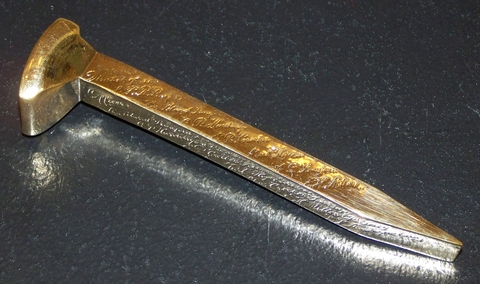
Image: Golden Spike National Historic Site, Utah.

3 Comments

Filed under Essays

In Memoriam – Ursula K. Le Guin: 1929 – 2018

“The way to make something good is to make it well.  If the ingredients are extra good (truffles, vivid prose, fascinating characters) that’s a help. But it’s what you do with them that counts. With the most ordinary ingredients (potatoes, everyday language, commonplace characters) – and care and skill in using them – you can make something extremely good.”

“If your manuscript doesn’t follow the rules of what’s currently trendy, the rules of what’s supposed to be salable, the rule some great authority laid down, you’re supposed to make it do so. Most such rules are hogwash, and even sound ones may not apply to your story. What’s the use of a great recipe for soufflé if you’re making blintzes? The important thing is to know what it is you’re making, where your story is going, so that you use only the advice that genuinely helps you get there. The hell with soufflé, stick to your blintzes.”

“Distrust anybody — fellow writer, agent, editor — who tells you that fiction must use only limited third person.  It’s trendy at the moment, sure. But the surest way to go out of vogue is to be in it.”

“All of us have to learn how to invent our lives, make them up, imagine them. We need to be taught these skills; we need guides to show us how. If we don’t, our lives get made up for us by other people.” – The Wave in the Mind, 2004.

“I think the word success confuses people. They get recognition mixed up with achievement, and celebrity mixed up with excellence. I rarely use the word – it confuses me. I didn’t want to be a success, I wanted to be a writer. I didn’t set out to write successful books. I tried to write good ones.”

“There is no reason a married woman with children can’t also be a committed artist. This seems self-evident now but wasn’t immediately clear to me.”

“You can regret a decision you made in an earlier book and correct it in a later work. This is a hard one in our unforgiving times, when your previous missteps are eternal and only a google away. But there is nothing shameful in becoming a better person, a wiser person. Done right, it’s pretty heroic.”

“Other writers are not your competition. They are your sustenance. Writing is joyous, but never as joyous as reading.”

“Speak up for the books, poems, shows, music, and paintings you love even though you sound smarter and more discerning when you can’t be pleased.”

“[I]mmortality has never worked out well for anyone. Avoid it at all costs.”

Ursula K. Le Guin

4 Comments

Filed under News

Old Christmas Photos

I first posted this essay on December 24, 2012, as I neared the first anniversary of my blog.  I had printed out a copy for my parents to read.  My father got hold of it first and became somewhat emotional.  But both he and my mother appreciated my honesty and ultimately liked it.


In the five years since, there’s seems to have been a lifetime’s worth of changes in my world.  Most notably my father is gone, and so is my dog.  My mother just turned 85, but didn’t seem to remember until she saw the birthday card and a glass vase stuffed with pinkish-red flowers on her dresser.  Always give your loved ones flowers while they’re still alive!  Laying them at a grave site is actually a waste of time and almost ghoulish.


In retrospect, it’s odd because none of us ever really got into the spirit of Christmas (whatever that’s supposed to mean), but relished it for the sake of family.  My father’s side would gather on Christmas Eve, usually at my grandmother’s home, as Hispanic clans often do.  On my mother’s side, we often convened at the home of her older sister on Christmas day, as non-Hispanics often do.  That “non-Hispanic” side is really half-German.  And, while there’d be a Teutonic-looking angel perched atop my aunt’s Christmas tree, we’d have chicken enchiladas as the main lunch course.  Yes, Christmas in America takes many forms!


I don’t know why people wait until the end of the year to reflect on events of the previous twelve months.  Is it just neater?  Or purely sentimental?  Perhaps both.  Regardless, I have to thank all of you who have stuck with me and my quirky dispositions these past five years.  In this hyper-fast, electronic-based, Twitter/Facebook/Instagram/latest I-Phone age, there’s much to be said for people who actually take time to read stuff online (as opposed to just scanning through it) or in print (as opposed to asking, ‘Can I just download a copy?’).


Thanks again, everyone, for tolerating this 50-something Wolfman!  And we’ll see what howl-worthy events 2018 brings!

Alejandro De La Garza's avatarChief Writing Wolf

christmas-tree

I don’t get too much into the Christmas thing; never really have.  But, I do wish most folks a ‘Merry Christmas.’  It’s just a tradition for most of us born and raised in Christian-based societies.  There is one tradition, though, that I think about often.  My father’s family used to gather every Christmas Eve at his mother’s house.  It’s a common Hispanic ritual.  They gather late on Christmas Eve, eat tamales and other conventional Mexican foods, and then go to midnight mass at a local Catholic church.  Most of us in the family, however, didn’t partake of midnight mass.  We’d usually eaten and drank too much by then.

My father’s family last converged on my grandmother’s house on Christmas Eve 2000; she died the following February at age 97.  And, that was it.  No one got together anymore.  Not for Thanksgiving, not for Christmas, not for Easter.  In fact, the…

View original post 1,836 more words

6 Comments

Filed under News

I Sight

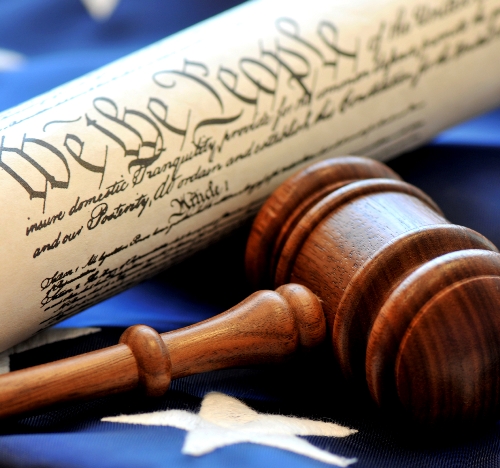
us_constitution-hammer

Over the past few months the dreaded “I” word has been floating across the nation: impeachment.  As in the impeachment of President Donald Trump – which sounds pretty good – because his words and actions have put the U.S. in a precarious global position – because he really wasn’t elected to the office – because he’s an obnoxious bastard.  Okay, that last one is more of a personal opinion.  And, of course, we all have a right to that!

But talk of impeaching the president of the United States is like warning Americans about visiting North Korea: don’t go there.  Forcibly removing the president from office was a rare topic of discussion – even among politicians – until the 1970s.  But, after the Watergate left a bitterly angry taste in the mouths of the American populace, impeachment has been tossed around as often as limes at a Mexican barbecue.

Since Watergate, only one sitting U.S. president has faced a concerted attempt at impeachment: Bill Clinton.  And that was only because he engaged in an eel-hunting adventure with a perky, overweight intern, which culminated in a blue dress wardrobe malfunction before anyone invented the term.

Yet, as much as I despise Trump and as little as I thought of George W. Bush, I would look at anyone who talks of impeachment with concern.  Do you realize how serious that is?  Do you understand exactly what it takes to oust such a person from the White House?  It’s almost like a military coup; the kind that occurs in third-world nations.  Think Cuba or the Philippines.  Yes, that kind.  It’s nowhere near as bloody and violent; we use pens and roll-call votes here, instead of guns and machetes.  But it remains a complex and arduous task.

Keep in mind that, aside from Clinton, only 2 other U.S. presidents have faced impeachment: Andrew Johnson and Richard Nixon.  The key term here is faced impeachment.  To date, no sitting president has actually been removed from office by impeachment.  The House of Representatives has the sole power of impeaching the president, while the U.S. Senate has the sole power of trying impeachments.  This all occurs under rules of law established in the Constitution; therefore, no single branch of government possesses omniscient power to remove a sitting president.

The first step, obviously, is to identify what acts performed by the president qualify as “treason, bribery, or other high crimes and misdemeanors.”  The House votes on articles of impeachment.  If there is just one article, it requires a two-thirds majority of House members.  But, if there are two or more articles of impeachment, only one of them needs to garner a majority to induce impeachment.  Nixon came very close to actually being removed from office.  But he resigned after the House voted in August of 1974.

Second, the proceedings move to the Senate where an actual trial is held.  The Chief Justice of the Supreme Court oversees the case, as they would any other legal matter.  Here, a team of lawmakers from the House serves in a prosecutorial role, while the Senate is technically the jury.  The president has his or her own lawyers.  Once all sides have presented their arguments, the matter is handed to the Senate.  If at least two-thirds of Senators vote in favor of the articles, then the president is removed from office, and the vice-president assumes the presidency.

This isn’t punishment for being tardy.  The U.S. likes to present itself as a beacon of democracy for the world; a master of political dignity and fairness.  If we are compelled to remove our own national leader from office, what does that say about our voting system?  What does it say about the concept of democracy altogether?  Is the presidential vetting process so pathetic that we can’t identify someone with a criminal mindset beforehand?

Elizabeth Holtzman is a former U.S. congresswoman from New York.  In 1974, she was on the House Judiciary Committee that voted to impeach Nixon.  In a 2006 essay entitled “The Impeachment of George W. Bush,” she not only describes the arduous process of removing a sitting president from office, but also the emotional toll it took on everyone in both houses of congress at the time.

“I can still remember the sinking feeling in the pit of my stomach during those proceedings,” she wrote, “when it became clear that the President had so systematically abused the powers of the presidency and so threatened the rule of law that he had to be removed from office.  As a Democrat who opposed many of President Nixon’s policies, I still found voting for his impeachment to be one of the most sobering and unpleasant tasks I ever had to undertake.  None of the members of the committee took pleasure in voting for impeachment; after all, Democrat or Republican, Nixon was still our President.”

Curiously, she goes on to state, “At the time, I hoped that our committee’s work would send a strong signal to future Presidents that they had to obey the rule of law.  I was wrong.”

In this regard, she was discussing the possible impeachment of George W. Bush.  I can think of no other Chief Executive in modern times who exhibited such incompetence and corruptness as our 43rd president.  That he got into office under dubious circumstances in the first place is enough to question the integrity of our electoral process.  That he managed to remain there, despite mounting evidence of war crimes, is anathema to the grander concept of democracy.  I’ve always said that, if the Democrats had at least made a concerted attempt to remove Bush from office, they wouldn’t just appear heroic in the eyes of their constituents; they also would have upheld the rule of law governing all institutions.

Remember that congressional Republicans tried to remove Bill Clinton for lying about his sexual dalliances.  It was an incredibly one-sided, vindictive assault on democracy – all because the man didn’t want the world to know he’d screwed around on his wife and because right-wing extremists didn’t like him, no matter what he happened.  You’re going to impeach him for THAT?!  Then-House leader Newt Gingrich – who was married to his third wife with whom he’d cheated on his second wife – had led the cavalcade of self-righteous Republicans.  He and his constituents paid for their hypocrisy when they lost their super-majorities in both Houses of Congress in the 1998 elections.

Watching the Trump presidency collapse around the real estate magnate-turned-reality-TV-star is almost laughable.  But it’s not that funny.  His behavioral quirks and fetish for name-calling are hallmarks of social ineptitude and, perhaps, mental instability.  As with George W. Bush, that Trump actually made it into the White House is an insult to the core of the institution of democracy.  Growing evidence shows that Russia interfered with the 2016 U.S. elections.  Exactly how they did it has yet to be discovered – or revealed.  But I honestly believe the Trump presidency is a fluke.

In his novel, “Shibumi,” author Trevanian (Rodney William Whitaker) relays the incredible tale of Nicholai Hel, a Shanghai-born spy of Russian – German heritage who is the world’s most accomplished assassin.  After surviving the carnage of the Hiroshima bombing, Hel retreats to a lavish and isolated mountain citadel with his beautiful Eurasian mistress.  But he’s coaxed back into the netherworld of international espionage by a young woman.  Hel soon learns, however, that he’s being tracked by a mysterious and omnipotent global entity known simply as the “Mother Company.”  The “Company” is a composite of corporate giants that installs leaders in key nations – even those in the developed world – manipulates the markets for such necessities as food and oil and incites wars whenever it deems appropriate.  The conflict between Hel and the “Mother Company” becomes something akin to a board game, where millions of lives are used as toys for the benefit of a few powerful elitists.

I keep thinking we’re already dealing with that type of set-up; that Bush, Jr., was placed into office, so we could go to war in Iraq and gain access to their oil reserves, and that Trump was planted in the White House for whatever machinations the Russian government has underway.

But I still want everyone to be careful with the “I” word.  It really is just a small step from undergoing the lengthy route of impeaching a president to rigging his limousine with explosives – like they do in those unstable third-world societies.  Democracy is a difficult political state to establish.  It’s even more difficult to maintain.  It doesn’t function on its own; it simply can’t.

This mess we’re in may provide great material for standup comics.  But it also presents us with an ethical dilemma.  Again, I ask, do we truly understand how serious this talk of impeachment is?

Leave a comment

Filed under Essays

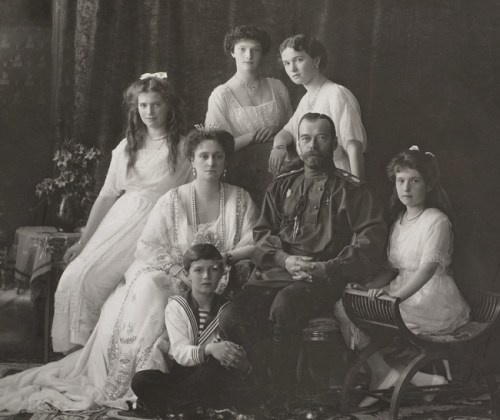
Romanov Redux

Russia’s ill-fated Romanov Family, c. 1913.

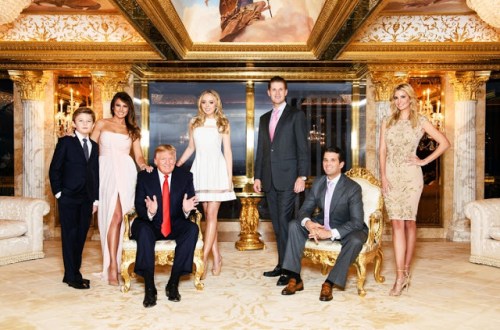
Shortly after Donald Trump was sworn into office as the 45th President of the United States, I referred to various photographs of the Trump family in their multi-million-dollar New York penthouse residence.  “The Donald” is, of course, featured prominently front and center, with his (third) glamorous, trophy wife perched nearby; along with their son, Baron, and the real estate magnate’s adult children.  Almost as prominent are the slew of plush, gilded furnishings spread throughout the abode.  I kept thinking I’d seen similar photographs before; various pictures from newspapers and magazine, as well as recollections of a TV show that truly embodied 1980s-era chic and gluttony: “Lifestyles of the Rich and Famous.”  (Trump was featured in the very first episode and made recurring appearances.)

At one point, though, I turned to my massive collection of books and spotted one that displayed an even more accurate depiction of the Trump family; another clan who lived long ago in similar plush surroundings, perched high above the lowly masses.  Lindsey Hughes’ “The Romanovs: Ruling Russia 1613 – 1917” describes the life and times of Russia’s last monarchal family.  For more than 300 years, the Romanovs directly impacted world politics with their wealth and power; creating a massive empire that – even in today’s watered-down version – stretches across two continents.  From Tsar Michael to Tsar Nicholas II, the Romanovs maintained a steady grip on the region; impressing their subjects and striking fear in their enemies.

But, by the time the dynasty marked its tercentenary in 1913, that grip had begun to weaken.  Like the rest of Europe’s royal families, the Romanovs remained encapsulated in their heavily-fortified palatial environs; far removed from the sundry plights tormenting their own people and oblivious to the real world lurking outside those jewel-encrusted walls.  Nicholas II was the first of the European monarchs to be ousted from power, as World War I intruded into Russian territory, and a growing internal revolution stalked the Romanov family.

While the assassination of Austria’s Archduke Franz Ferdinand and his wife, Sophia, essentially marked the start of World War I, the death of the Romanovs signified the end – not just to the war, but also to the long-held concept that power and wealth are best held in the hands and pockets of a blessed few and that those few are part of the same bloodline that is never to be disturbed or questioned.  It was shocking enough to international onlookers that a single gunman was able to kill Franz and Sophia with a few shots from a pistol; even as many outside of Europe initially wondered where was this place called Austria-Hungary.  But, as news of the Romanovs’ demise trickled out, the anger and frustration of an oppressed people became brutally apparent.  Nicholas and his immediate family, along with a handful of servants, were peppered with bullets in a basement far removed from their stately home; their bodies burned beyond recognition and dumped in neighboring woods.

The Trump family in their New York penthouse abode.

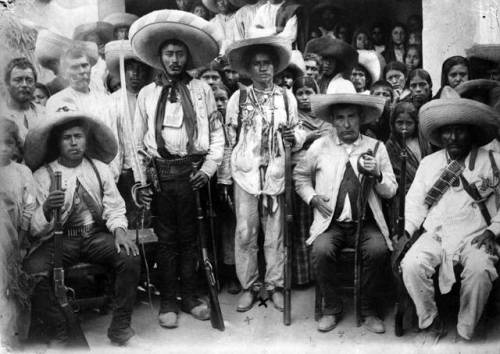
World War I was actually the culmination of the growing anarchist movement, which had its genesis in the heated anger of economic and social inequality among Europe’s working classes, before spreading westward across the Atlantic to plant itself in the U.S. and Canada.  Even México had succumbed to the wrath of the peasant masses; with outlaws Francisco “Pancho” Diaz and Emiliano Zapata joining forces to lead a revolt against a semi-monarchal dynasty of wealthy landowners and bankers.

This was the dawn of the 20th century; where ordinary people – the one who really keep a nation moving – finally stood up and collectively announced, “Enough!”  The rampages continued, as Europe began losing their colonial holdings in Africa and elsewhere, and Latin American nations saw military dictatorships crumble in the face of concerted human rights’ campaigns.  One of the 20th century’s last acts of peasant anarchy came with the collapse of the Soviet Union.  In Romania, the chaos became lethal when leader Nicolae Ceausescu and his wife, Elena, were dragged before a court trial staged by their otherwise lowly subjects, found guilty and lynched in public.  That something so horrific could happen in 1989 shocked the world.  But, for the oppressed peoples of staunchly communist Romania, it was perhaps the best Christmas present they’d ever had.

To some extent, anarchism actually sprouted roots with the American Revolution, where a mass of English immigrant descendants decided they simply did not want to be slaves to the British Crown.  Shortly afterwards, French commoners took a queue from their American counterparts and launched their own revolution; one where they didn’t just extract their regal hoodlums from gigantic estates, but relished in the sight of royal heads literally rolling across wooden platforms.  Throughout the 19th century, Spain and Portugal stood virtually helpless as their colonial holdings in the Americas wrenched themselves from the clutches of royal decree – only to stumble through the difficulties of independence and struggles with democracy; quagmires that exist to this day.

In 1900, China’s Boxer Rebellion was a desperate attempt by commoners to boot out European interlopers, which included assaults on Christian missionaries and converts.  Some 100,000 people lost their lives in the various battles that summer.  But a growing dissatisfaction towards the Qing Dynasty and the family of Emperor Puyi (sometimes spelled P’u-i) compelled the working classes to descend upon the sacred and mysterious “Forbidden City.”  Puyi was only 3 years old when he ascended to the throne in 1908; less than four years later he was forced to abdicate and lived out the rest of his life as an undistinguished commoner.  At the start of the 20th century, it seemed that China was poised to endure the same experience as the African continent: be carved up by European colonialists.  But, if the Chinese people no longer wanted single family rule, did anyone believe they’d let bands of foreigners from the other side of the globe do the same?  By the 1930s, China had evicted the Europeans.

World War II fractured Europe.  A few royal families managed to survive; most notably in Great Britain.  But they were all financially and morally exhausted.  This culminated in the U.K. losing their colonial hold on India and Pakistan in 1947.  Next came the vast continent of Africa, where European decolonialization occurred over the ensuing four decades; a massive undertaking that involved millions of people on a scale the world had never experienced before.

The 20th century’s anarchist fangs reached across the globe, toppling the Philippines’ Ferdinand Marcos and Haiti’s Jean-Claude Duvalier in the 1980s.  One of its high points was the release of South Africa’s Nelson Mandela in 1990 and the dismantling of that country’s brutal apartheid regime within a decade.  South Africa had been the last of Europe’s many colonial assets to gain independence.

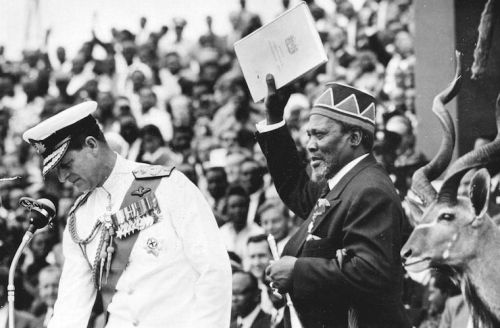
Imprisoned by the British in 1953 following the Mau Mau uprising and exiled in 1959, Jomo Kenyatta later emerged as one of the best-known African leaders. He served as Kenya’s first president from 1967 – 1978 and founded various pan-African nationalist movements.

A low point, though, was Argentina’s futile attempt to wrest control of the Falkland Islands from Great Britain in 1982; a brief conflict that resulted in more than 900 military deaths.  Why the U.K. insists on retaining control of this tiny cluster of isolated rocks 7500 miles from the homeland remains less of a mystery than a prime example of colonialist arrogance.  (Some Britons still refer to the U.S. as “the colonies.”)  While Argentina was in no political or financial position to engage in such a daring military feat at the time, they have since matured and solidified their infrastructure.  In 2012, Argentine President Cristina Fernandez de Kirchner blocked two British cruise ships that had visited the Falklands from docking on the mainland.  Argentina has vowed to enforce further similar bans in the future, which could damage the Falklands’ vital tourist industry.

In the Middle East, anarchism produced schizophrenic results.  Anti-royal sentiments led to the 1973 deposition of the Barakzai, Afghanistan’s royal family.  That may have set the stage for the Soviet Union’s bloody but futile attempt to annex that country in 1979.  However, the U.S. became unexpectedly mired in the antagonism of the Iranian populace towards their own royal family, the Pahlavis.  Shah Reza Pahlavi had crowned himself emperor in 1967 and led a brutal regime where dissidence was punished with unprecedented violence and oppression – tools common among wicked oligarchs.  Pahlavi’s 1978 ouster led to the notorious Iran Hostage Crisis, which caught both the U.S. and the world completely off-guard.  Concerned more with the Soviet threat and the oddly-christened “Cold War,” the U.S. government unwittingly experienced its first battle with Islamic extremism.

Elsewhere in the Middle East, royal families held on in Jordan and Syria.  The discovery of oil on the Arabian Peninsula in the 1930s allowed the region’s ruling families and their subjects to be pulled up from the doldrums of a tribal / fiefdom-style existence and dropped into the vats of unimaginable wealth.  No one seemed to care that women couldn’t drive cars, much less vote.

Average Mexican citizens rose up in 1910 to depose President Porfirio Diaz who ruled over them off and on for nearly four decades.

While anarchist anger dominated the 20th century, does the same hold true now?  Studying the Trump clan, I can’t help but conjure up images of the Romanovs.  Economic inequality is just as great now as it was a hundred years ago.  We’ve returned to that “Gilded Age” period where the bulk of the world’s wealth and power sit in the grubby hands of a privileged few.  The recent “Great Recession” was the worst economic downturn the U.S. had experienced since the “Great Depression.”  Both debacles were the result of greed and political incompetence; the former mess instigated by the verbally-challenged scion of another monarchal-type dynasty: the Bush family.  Aside from producing two of the worst presidencies within a generation, the Bush clan’s close ties to the Saudi royal family essentially allowed planning for and execution of the 9/11 events to go unnoticed; thus culminating in one misguided war and another illegitimate one, as the economy glided atop a housing bubble that didn’t just pop – it exploded.  If regulations and measures a liberal president had established some eight decades ago hadn’t been in place, both the U.S. economy and the U.S. populace would have sunk into chaotic and murderous oblivion.

Power and wealth usually go together; conjoined twins that sometimes have no mercy for the commoners squirming beneath them.  The leftist “Occupy Wall Street” movement didn’t gain as much traction as the right-wing “Tea Party,” which claimed passage of the Affordable Care Act (ACA) in 2010 as the seeds of their founding; when, in fact, it was the election of the nation’s first biracial president that pissed them off.  If they were so upset about undue taxation, they would have put blame for the economic downturn where it belonged: on the backs of their own Washington leaders who keep propagating the myth of “trickle-down economics.”

But the rise of a foul-mouthed, thrice-married bombastic businessman to the highest office in the land has lit another fire beneath millions of ordinary Americans frustrated with a “jobless recovery”; no one going to jail for causing the recent banking / home loan debacle; and endless conflicts in the Middle East.  The illegitimacy of Donald Trump’s placement in the White House makes a mockery of the American democratic experience.  Our 18th century predecessors carefully designed a unique concept of governing and valiantly fought against the very people who brought them here.  The United States was an outlandish experiment that could have gone seriously wrong if so many people hadn’t realized its true value and potential over the ensuing centuries.  As a nation, we didn’t want a group of self-righteous elitists – families riddled with colorblindness, hemophilia and unbridled arrogance – to rule over us and not be questioned.  Our American forbears understood that humanity must work as a unit to achieve the best possible society.  The various civil rights actions of the past 200 years – from abolitionism to gay/lesbian rights – have helped to refine this strange idea known as democracy.

Looking again at the Trump clan, I still can’t help but think of the Romanovs and realize how much they all have in common.  However, I don’t wish the same fate upon the Trumps.  As brutal as we often seem to the international community, that’s not what Americans do or who we are.

Either way, we didn’t want or need a royal family 240 years ago to impose its fickle will upon our lives – and we don’t want or need one now.


Film footage of Tsar Nicholas II’s coronation in May 1896.  It’s one of the earliest known (and one of the fewest surviving) motion pictures and the first known example of the new medium utilized to capture a major news event.

13 Comments

Filed under Essays

Telling Donald Trump Not to Tweet Is Like…

The 45th President of the United States has achieved a previously unimaginable goal: reduce the size of the federal government.  In this case, it’s the presidency, which has been downgraded to 140 characters.  He has left people disoriented and unsettled; rattled and dismayed; flummoxed and constipated.  Many of his most devout followers have embraced the lemming ideology of life and started following their magical penis-pied piper to the precipice of a faux utopia.  And we thought George W. Bush was mentally-challenged!  Well…he was.  Yet Trump has taken messianic mendacity to supersonic levels.  I keep thinking that someone on his staff should advise him to keep his pre-dawn twittering in the bathroom.  But that would be like telling Abraham Lincoln, ‘Don’t go to the theatre!  You’ll catch a cold.’  It’s virtually impossible to demand this bombastic, bull-headed businessman behave presidential.

It may be hard to imagine, but there are some logical comparisons to such a feat.  But there are plenty.  Therefore, telling Donald Trump NOT to Tweet is like…

  • …telling the Kardashian girls not to take selfies.
  • …telling Bill Clinton to honor his marriage vows.
  • …telling Matthew McConaughey to keep on his shirt.
  • …telling Ann Coulter to stop being such a bitch.
  • …telling Justin Bieber to act like an adult.
  • …telling Michael Moore to lay off the doughnuts and eclairs.
  • …telling Elton John to tone down his wardrobe.
  • …telling Kanye West to stop interrupting people.
  • …telling Paris Hilton to get a job.
  • …telling Rush Limbaugh to take a deep breath.
  • …telling Caitlyn Jenner to grow a pair.
  • …telling Willie Nelson to shave and get a trim.
  • …telling Barbara Walters to retire once and for all.
  • …telling Eminem to act White.
  • …telling Pope Francis to stop wearing those designer gowns.
  • …telling Bill Maher to shut the hell up.
  • …telling Oprah Winfrey no one misses her.
  • …telling Brittney Spears she can’t sing worth a shit.
  • …telling Snoop Dogg to learn proper English.
  • …telling Alec Baldwin to stop making fun of Trump.

Telling Donald Trump Not to Tweet is like… [Readers, please feel free to provide your own response].  The more fun we can have with this, the more likely Trump will get pissed off and Tweet and subsequently provide us all with more joke material.  And the more we can all laugh at and ridicule our mentally-unhinged elected officials will bring us closer to that highly-coveted state of national nirvana.

5 Comments

Filed under Essays

Frozen in Dust

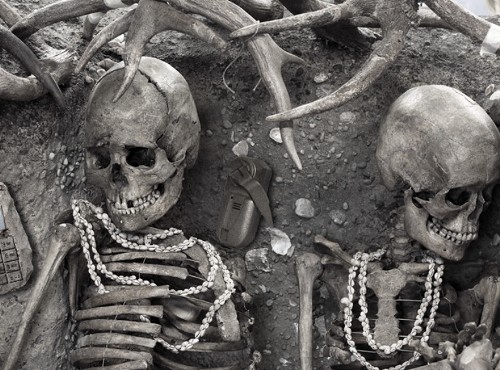
8926 C.E., Northeast Texas

They’d found another one.  It was huge.  A drone surveying the area counted 109 figures; its sensors initially identifying them as human.  Rivas and Mugabe had stood in awe upon studying the preliminary data, alongside the rest of the team.  If 109 human bodies did lay in the rubble – remnants of what they believed to be a hotel – it would be the largest collection of human remains the team had discovered in more than a decade of scouring the locale.

The region itself was gigantic; what once had been a placed called Texas.  More specifically, the northeastern stretch; where two of the most heavily-populated metropolises had once thrived.  Until seven millennia ago.  Before the 2019 event simply known now as “The Cataclysm.”

“There have to be thousands, if not millions,” Rivas had told the expeditioners just a day before the drone returned with its stunning data estimate.  “Not just here in this one building.  I mean, across the entire region.  These cities were among the grandest of their time.”

“Right now,” Mugabe interjected, “let’s just concentrate on this one building.  Or what’s left of it.”  He didn’t want the group to get too excited about anything; least of all a site containing so many bodies.

“Yes, of course,” Rivas concurred with a grin.

The crew was already stretched; pushed to the precipice of exhaustion as they continued searching through the unimaginable layers of dirt, rock and dust.  But whenever they did find the remains of someone, they’d also noticed the individual was clutching an object in their hands.  All of them – each and every corpse – held a similar object.  Every single one of them – holding tight to a single item.

The 2019 sunstorm had been massive; the worst on record.  Then and now.  Among the archived records of all the sunstorms hitting Earth before and since, none matched the 2019 event.  That’s why scientists dubbed it “The Cataclysm.”  The word is so bland, so ordinary in a way; yet it said everything.  To the untold numbers of people who studied the event – and the subsequent, wide-scale societal collapses it induced – the term “cataclysm” itself had come to signify that one unimaginable episode.

It was inevitable.  By the start of the 21st century, humanity had come to rely upon technology too much.  People across the globe identified with tangible pieces of metal and plastic more closely, perhaps, than their own families and friends.  In fact, personal interactions seemed routed through the mystical electronic clouds they’d created for their world; a world they claimed was better than any before.  To their descendants of the 90th century C.E., such flippant beliefs were almost laughable.

It remains a miracle – no minor one – that anyone should survive to the present day.  Any human, that is.  When the multitude of satellites cluttering the ionosphere fell silent in the days immediately following “The Cataclysm,” it appeared – from what records remain – a brutal chain-reaction of minor cataclysms exploded across the planet.  Power plants – able to remain operational for a while – eventually died; as did water treatment plants, telecommunication lines.  Everything attached to an actual or virtual wire just…died.

And thus, so did people.  Countless numbers of people; millions of them.  A mass exodus of souls floating from the decaying flesh of their hosts; rising past those same darkened satellites and up into the brighter stars.

Perusing photos of other recently-discovered sites made Rivas and Mugabe think of an even more ancient but equally horrific episode: the destruction of Pompeii.  Pictures from 20th century archaeologists captured the disaster in a manner never seen before.  The city-state’s residents – trapped in the environs of what they surely thought was a safe place – caught off-guard in the worst possible way.  Their bodies and terrified expressions frozen in swarms of scorching lava for future humans to see and study.  There was nothing like it.

Until now.

But this – this was on a much larger scale.  Pompeii was a single prosperous city with the unfortunate coincidence of being situated beneath a ubiquitous volcano.  What the explorers saw in the remains of some nondescript building in the midst of a place once teeming with life was a tiny fraction, a sliver of the human wasteland that stretched across the globe.  The societal collapses had driven many of their ancestors underground into vast caverns constructed for just such an event.  Or something like it.  But surely even those initial survivors couldn’t have foreseen the rolling swathes of brutality that followed the darkening of those wicked satellites; surely even they couldn’t have imagined the blessed sun betraying them in such a vile manner.

Yet, they lived; they survived.  They survived to repopulate and prosper with a greater understanding of their own humanity, their vulnerability, their fragile nature.  They survived to love that sun unlike their immediate ancestors who lived within the confines of those mystical clouds.

Rivas and Mugabe stared at those antiquitous photos of Pompeii’s victims; frozen in lava; terrified and helpless.  And then they looked at the drone photos of the bodies in this building; the 109 discovered so far.  And they realized the vast difference between the two events; a difference apparent in the faces and hands of the dead.  The people of Pompeii had died clutching their loved ones.  The victims of the 2019 event died clutching their cell phones and laptops; waiting for the Internet to come back up.

Rivas smirked.  “Bunch of dumbasses.”

© 2017

Bottom image courtesy: Freaking News.

4 Comments

Filed under Wolf Tales