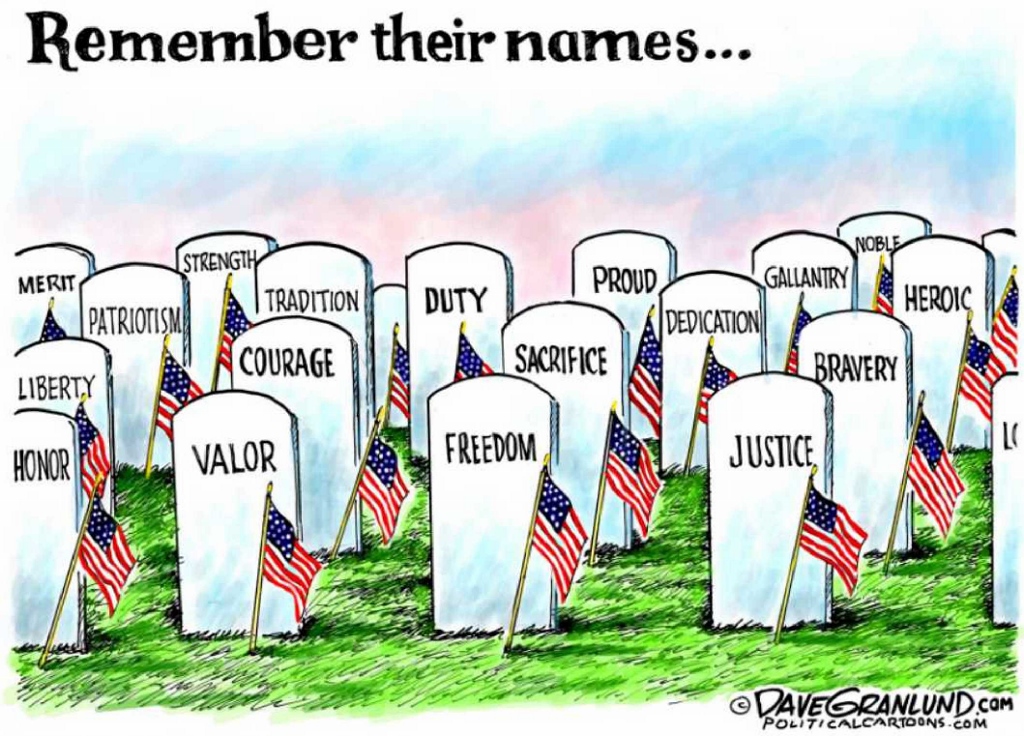
Image: Dave Granlund

“The normal cycle in the life and death of great nations has been first a powerful tyranny broken by revolt, the enjoyment of liberty, the abuse of liberty – and back to tyranny again. As I see it, in this country – a land of the most persistent idealism and the blandest cynicism – the race is on between its decadence and its vitality.”
Now that 2025 has ended, we must realize that we’re officially more than a quarter of the way into the 21st century. And, in the United States, we have a totalitarian despot as our President. I never would have thought we’d be in this position – the self-proclaimed “Beacon of Democracy” has a self-righteous moron as its leader.
Reminder: we’re in the 21st century – C.E.!
Last November marked the 50th anniversary of the death of Francisco Franco, who came to power during Spain’s Civil War and ruled for more than three decades. Western Europe’s last true dictator, Franco persecuted his political opponents, suppressed certain cultural aspects, manipulated the media, and just generally wielded absolute control over the country. His death brought democratic relief to Spain.
It’s a familiar pattern that’s occurred across the globe and throughout human history. Certain individuals promise – and initially bring – freedom to the people and then mutate into a brutal autocrat. The masses get sucked into the chasm of false promises and righteous dreams…then are horrified when the truth comes out.
Sometimes it appears humanity will never learn. I feel that way now about the United States. In 2000 we all stood on the precipice of a new century and a new millennium. The future was ours. Then, here in the U.S., we regressed and inadvertently chose a leader who turned out to be ill-equipped for the role of “Leader of the Free World”. And the first decade of the 21st century – C.E. – became lost to war and the morass of class divisions. We should have been preparing to build a colony on the moon and sending humans to Mars. Instead Americans were trying to figure out whether to pay for utilities or buy groceries.
And we’ve reached that point again.
In June of 2022, the U.S. Supreme Court overturned the right to abortion in this country. It accompanied ongoing attacks on our literary culture, as book bans rampaged across the land. Looking at all of it, I wondered how and why we were moving backwards. Societies, in general theory, are supposed to move forward – much like time. Conservatism may sound like a grand ideology, but it can be detrimental.
In November of 1979, I was a high school student and in San Antonio, Texas for a speech and drama contest, when we heard news that a band of rebels had stormed the U.S. embassy in Tehran, Iran. Some of my fellow students had no idea where Iran was, much less why it had become a target for protesters. But we’d soon learn exactly why. From then until January of 1981, a number of Americans were held hostage in Tehran as retribution for the U.S. support of their former national leader, Reza Shah Pahlavi. Pahlavi had been forced from power earlier in 1979 by a populace who had grown weary of his tortuous rule. Now Iran is in the grips of social unrest once more, and ironically, Pahlavi’s son is seeking to return to his homeland and lead his people into a new universe.
Again, the world has seen this happen before: Russia, China, France…the list is almost endless. The citizenry gets tired of how their universe is functioning and decides to take action. The result is often violent.
This year, 2026, officially marks the semiquincentennial of the United States – our 250th anniversary of existence. I was twelve years old in the summer of 1976, when we marked our bicentennial, and I felt an extraordinary sense of pride and excitement. The nation was still recovering from the brutal cultural upheaval of the 1960s, but at that moment, we all seemed to bond and become – as our founders intended – a truly united people. I’m certain I’ll never live to see our tricenntenial, but it’s a pleasant dream.
It’s even more inspirational to know our nation will move beyond the likes of our current leaders who have no real sense of a future. We’ll never be a utopia. No community can ever achieve that.
Denounce me as naïve, if you want – I’ve often called myself cynical at this point in my life. but I still hope for the best.
Filed under Essays

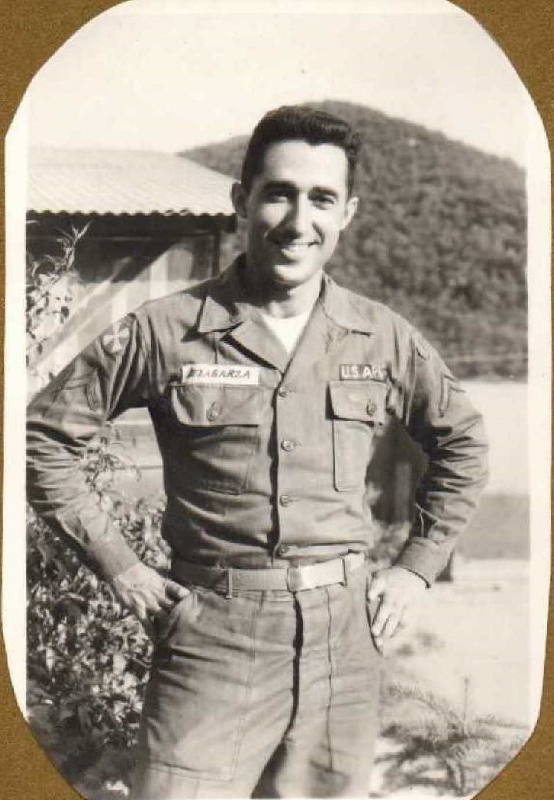
This is my father’s recollection of returning home from military service in Korea.
I had thought of joining the military when I got older. My older brother, Jesse, did. He was 17 and failing out of school when he enlisted in the U.S. Army in the summer of 1942. They shipped him out to the Pacific region. He was stationed on some remote island, when he killed his first person. He said it was at night, and Jesse and his commanding officer were hidden in some thick foliage – looking for…whatever. Then they spotted a Japanese solider approaching. Jesse’s CO ordered him to kill the guy…“or I’ll kill you first and then him.” He was still 17 and had no choice. Jesse saw other casualties – adults and children; soldiers and civilians – in the wicked and bloody chaos of World War II’s Pacific theatre. He caught malaria, before returning home.
Jesse received a slew of awards, including a Purple Heart by Gen. Douglas MacArthur himself. He got an honorable discharge and quickly came back to Dallas. One Saturday morning me and Jesse, our younger brother, and some other friends visited a local barbershop. As sat conversing in Spanish and English, the shop’s owner approached and – in his heavy Scottish brogue – ordered us to leave. “We don’t cut Mexicans’ hair.”
Here we all were – born and raised in the Dallas area, not causing any ruckus – and a foreign-born man tells us to leave. At some point over the next couple of days, a massive rock found its way through the large glass window of that shop. I swear I don’t know how that happened!
That experience kind of left me bitter about this great country and the freedom it was supposed to have. I no longer had any desire to join the military.
Then came Korea – and I had no choice.
I had just turned 21 in January 1954, when my father drove me to the Greyhound bus station in downtown Dallas – just like he’d done with Jesse more than a decade earlier. I had rarely been outside of Dallas and never outside of Texas. I arrived at Fort Bliss in El Paso, a little scared and not knowing what to think. After basic training, they put me on another bus to Los Angeles, then a train to Seattle, and finally a ship to Korea.
From what I understood later, Korea wasn’t nearly as bad as World War II, but when is there ever a pleasant war? More importantly I understood why Jesse never wanted to talk about his own experiences.
By then the U.S. armed forces had been (forcibly) integrated, so men of all shapes, sizes and colors served together. I developed close friendships with many of my Black comrades. I could envision these connections lasting a lifetime.
It was only two years, but it felt like decades. We left Korea on a ship for Seattle. Once there we had to take a train down to Los Angeles. I stood with my Black buddies on the platform, before we had to board. My friends started walking away from me.
“Hey, guys, where are you going?” I asked, still innocent – naïve actually.
“We have to go to the rear of the train,” one of them called back to me.
The rear of the train – where the Negroes had to go.
Oh yeah, I told myself. We’re back in America – the land of the free.
Filed under Wolf Tales

Good Morning
Oh God, help us
To be generous in our opinions of others,
To be considerate of all we meet,
To be patient with those with whom we work,
To be faithful to every trust,
To be courageous in the face of danger,
To be humble in all our living,
To be prayerful every hour of the day,
To be joyous in all life’s experiences,
And to be dependent upon me,
For strength in facing life’s uncertainties.
Filed under News

“Those who expect to reap the blessings of freedom, must, like me, undergo the fatigue of supporting it.”
Filed under News

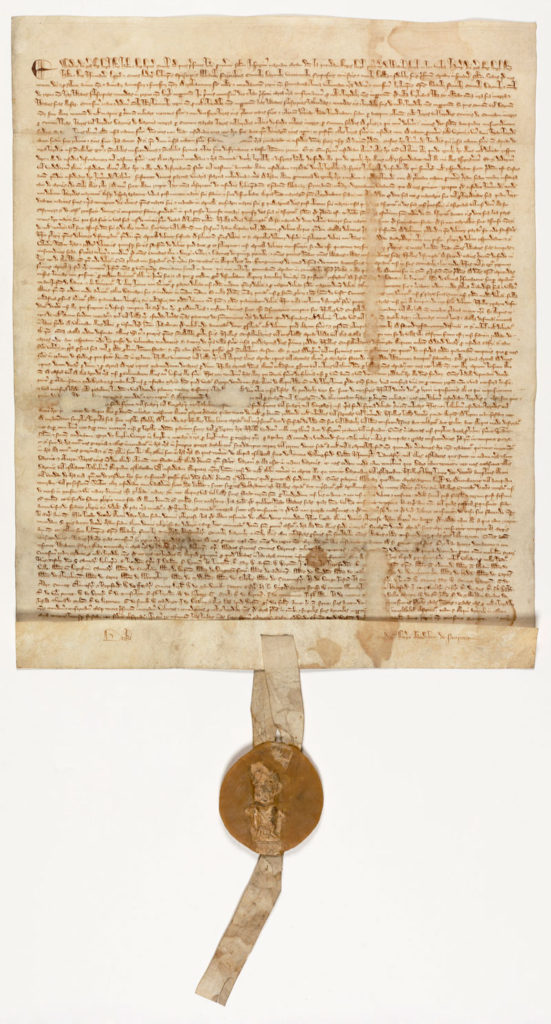
Around this time in 1215 C.E., England’s King John placed his royal seal on the “Great Charter”, more commonly known as the Magna Carta. The signing came after a revolt by English nobility against John’s rule. The document guaranteed the king would respect the rights of individuals and uphold the freedom of the Church – among other things.
The charter was a key element in the establishment of democracy in England and ultimately across Europe. It also became critical in the creation of the United States more than 500 years later. The framers of the U.S. Constitution highlighted the essence of the Magna Carta in their discussions.
The anniversary of King John’s signing is notable here in the U.S. since last weekend the indefatigable Donald Trump staged a parade in Washington, D.C., to coincide with the 250th anniversary of the establishment of the U.S. Army and his 79th birthday. The festivities were more for him and his overbearing ego than to celebrate the Army. But it was also important in that thousands of “No Kings” protests occurred across the nation – a direct response to Trump’s totalitarian attitude.
Fortunately, the Magna Carta – and the U.S. Constitution – will outlast any political ideology.
Filed under History

“Freedom is never voluntarily given by the oppressor; it must be demanded by the oppressed.”
Filed under News
Filed under News
From Munguin’s New Republic, the truth must be spoken!
Filed under News