Tag Archives: politics

Patriotism and All That

As this Independence Day weekend comes to a close, I have to say I’m still proud to have been born and raised in this country.  Admittedly it’s been difficult to feel that way in recent years.  My paternal ancestry in Texas actually extends back to the 1580s, when a branch of the De La Garza clan joined other Spaniards established homes in the southern part of the state.  My Indian ancestors, of course, were in this same region millennia ago.

I remember America’s Bicentennial very clearly.  I was 12 and became swept up in the excitement of that summer’s festivities.  I didn’t realize it at the time, but the U.S. came together as no one expected.  The Watergate crisis had left our nation with an incredible distrust in our elected leaders, and we had slinked our way out of the Vietnam conflict the previous year.  Along with oil embargoes and energy crises from a few years later and the swine flu scare, it had become tough to feel pride in this country.

But all of that seemed to melt away with the summer heat, as America basked in its own glory.  Watching vintage ships off the east coast remains an especially poignant memory.  I can never forget that summer and how it made everyone feel.

I just don’t feel that same level of exuberance now.  I know I’ve become cynical – something that seems natural with age.  But in the half century since the Bicentennial a few things look familiar.  We have a Republican president; we’ve come out of some disastrous wars; we’ve had a severe economic downturn and a pandemic that made swine flu look like a brief head cold.

I often wonder how foreigners look at Americans, although I’m not too concerned with what others think.  Again – an effect of aging, albeit a positive one.

Despite such anxiety, I’m still glad to be here and be living in this country.  I just don’t want to give up on it and for what it stands.

1 Comment

Filed under Essays

Draft Well

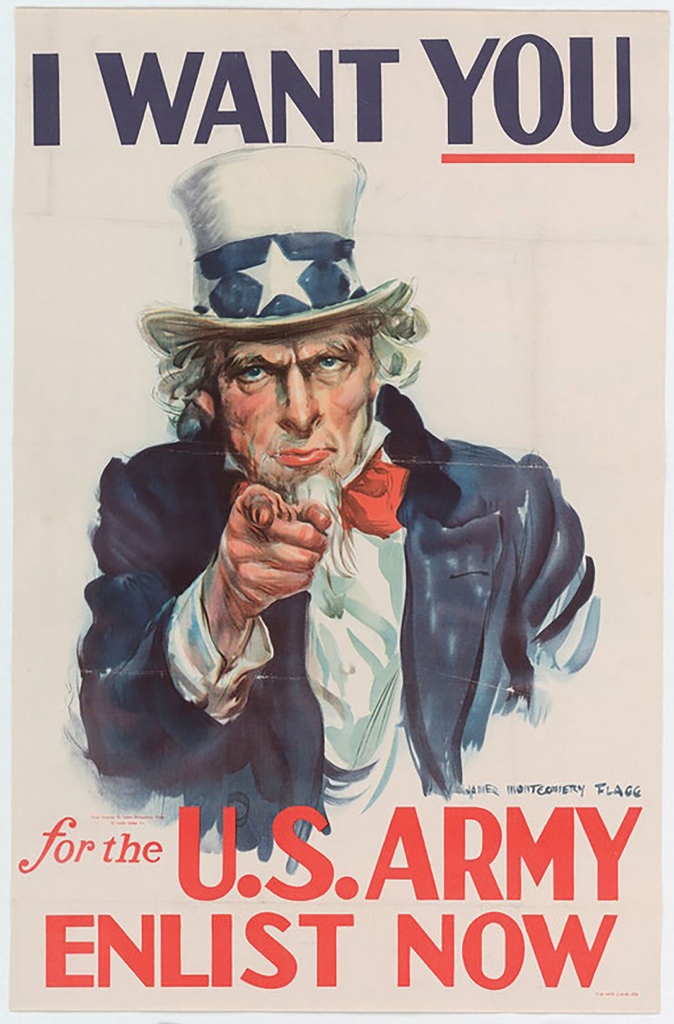
Recently President Trump signed an Executive Order that will impact military readiness in the U.S.  Beginning in December 2026 all able-bodied males in the country will be automatically registered for Selective Service (the military draft) upon turning 18.  The late former President Jimmy Carter reinstituted the Selective Service system in 1980, requiring all males born in the U.S. since 1960 to register for the draft within 30 days of their 18th birthday.  A number of lawsuits against the system in the following decades have failed to reverse the policy.

The penalties for failing to register are severe:

  • Fines up to $250,000 and/or 5 years in prison.
  • Ineligible for federal jobs and many state, local, and municipal positions.
  • Ineligible for federal student financial aid (FAFSA), including Pell Grants and federal student loans.
  • Non-citizens can be denied citizenship (naturalization).
  • Roughly 40 states and Washington, D.C., deny driver’s licenses or renewal for non-registration.
  • Ineligible for training under the federal Workforce Innovation and Opportunity Act.

Yes…a $250,000 fine and up to 5 years in prison…for failing to register to serve (unwillingly) in the military of a nation that still maintains an incredibly unequal justice system and wealth structure.  (Understand that Casey Anthony and George Zimmerman each murdered someone and got away with it.)

Again, this system only applies to men. 

Now Trump wants to make it more difficult to evade compulsory military service.  Well…he should know.  Like his Republican predecessor, George W. Bush, he did just about everything he could to avoid compulsory military service more than a half century ago.

One of my best friends, Preston*, has two 20-something sons and voted for Trump during all three of his presidential runs.  As the 2024 elections approached, he expressed concern that a Kamala Harris presidency would result in military action in Ukraine; meaning Harris would enact the military draft, and his sons could be impacted.  I was concerned about that, too, but I was more concerned that Trump would get back into office and take military action against Iran; the same way Bush invaded Iraq under the false pretense of protecting the world from an Iraqi-based nuclear war.

I was right.

Trump got into office and – under the guise of safeguarding the globe against an Iranian-inspired nuclear Armageddon, as well as defending Israel – attacked the Middle Eastern county.  Now, Preston is even more worried.

So am I.

In August of 1990, Iraq unexpectedly invaded Kuwait.  Fearful they were the next targets, the Saudi royal family fled their palaces and asked the U.S. for help.  As that year came to an end, then-President George H.W. Bush sent troops into the Saudi desert.  Ultimately Iraqi forces surrendered without much of a fight, but about 300 U.S. service personnel died in battle.  Shortly before the conflict erupted, Saudi leadership – still safely ensconced abroad – demanded that our people in uniform remove emblems of the U.S. flag from their attire.  They somehow found it offensive.  Bush bowed to the Saudi sheiks and ordered the removals.

Pull our boys out, was the first response from most U.S. citizens, including me.  It was an outrage.  If it hadn’t been for American demand for oil, the Saudis would still be living in ornate tents in the desert, picking sand fleas out of their ass.  The Bush family’s loyalty to the Saudi regime became apparent in the immediate aftermath of the September 11, 2001 terrorist attacks, when the Bush Administration allowed several Saudi nationals to leave the U.S., while other travelers remained trapped at airports and hotels.

Shortly before the Persian Gulf War began, I visited my local gym and heard one young man ask another, “Ready to go?” in reference to the conflict.

I was 27 then and thought it was a real possibility knowing our political leaders’ penchant for war.  My father – who had been drafted into the U.S. Army and sent to Korea nearly four decades earlier – was also concerned.  He became especially incensed when the Saudi royal family demanded U.S. military personnel remove the American flag emblems from their uniforms; cursing the clan in both English and Spanish.

Throughout Bill Clinton’s presidency, his right-wing adversaries condemned his lack of military experience; labeling him with that dreaded “draft-dodger” moniker.  From 1968 to 1970, he was a Rhodes Scholar at the University of Oxford where he openly protested the Vietnam War.  But a large number of American expatriates did.  When he returned to his native Arkansas, he placed his name back into the draft lottery (to maintain his “political viability”) and drew a high enough number not to be sent into the conflict.

As the 2000 presidential election arose, conservatives were eager to prop up only one man: then-Texas Governor George W. Bush.  The eldest son of the nation’s 41st President, George H.W. Bush, the younger Bush graduated from Harvard in 1968 – and found himself eligible for military conscription.  He immediately managed to secure a position in the Texas Air National Guard (at a time when such spots were sparse and difficult to obtain).  After his initial four year stint was over, he reenlisted and then somehow was able to switch to the Alabama National Guard; in part, he later said, to work on the presidential campaign of George Wallace.  That second hitch should have been completed in 1976.  But no real record exists of Bush completing his service.  And then – as things tend to occur – misfortune arrived and Bush’s military records mysteriously disintegrated in a warehouse fire.

Bush’s Vice President, Dick Cheney, also came under scrutiny for his lack of military service.  During the 2000 campaign, Cheney declared he had “other priorities” during the Vietnam fiasco; receiving a number of draft deferments – mostly educational and one because he was a new father.

The same band of right-wingers who excoriated Clinton for his lack of military service weren’t so quick to demand a full accounting from either Bush or Cheney.  Also, in 2000, then Sen. John McCain sought the GOP nomination.  Coming from a long line of U.S. Navy officers, McCain served in Vietnam and was a pilot shot down over Hanoi in 1968, captured by enemy forces and held hostage for five years.  But the Bush political machine had the audacity to question not only McCain’s military service (which was there for all to see) but also his patriotism.  The same flag and country crowd who had demonized Clinton suddenly had no qualms belittling a real American military hero.

Now we come to Trump.  Donald “bone spurs” Trump.

No one has a desire to do something unpleasant – like pay taxes or wait in line at the grocery store.  And certainly nobody wants to go to war.  War is not just ugly; it’s stupid and pointless.

One Saturday evening in the late 1970s, my parents hosted a few friends over for a casual gathering.  Among them was a longtime male friend who brought along a young woman we hadn’t met before.  She seemed pleasant enough.  At some point, during a discussion, the subject of the Vietnam War came up.  The U.S. had just fled Vietnam in an ignominious defeat a few years earlier.  All of the men in the group had served in the U.S. military.  A few of them, including my father, had been drafted.  The aforementioned young woman mentioned that a young man she had been dating about a decade earlier had failed to heed his conscription notice and – apparently feeling intensely patriotic – reported him to some authority.  She said he got drafted anyway.

I remember the brief quiet that settled over our cavernous den.

“Wow,” my father finally muttered.  “How brave of you.”

And the conversation ended.

Don’t ask someone to do something you’re not at least willing to try – which is one reason why men have no business demanding women get pregnant.

I’m genuinely worried about Preston’s sons, as well as for any other young man who may get swept up into this conflict-laden world.  But I’m concerned for the greater population.  Despite all the patriotic bravado, the 2003 Iraq War really was about gaining access to the region’s oil.

I see the same outcome with Iran.

*Name changed

3 Comments

Filed under Essays

Antarctica tells Trump what to do with his tariffs

From Munguin’s New Republic, the truth must be spoken!

Leave a comment

Filed under News

Elon Musk Can Kiss My Hairy Ass and Then Go Home

Elon Musk, the South African-born multi-billionaire who has founded several companies, including Tesla and Space X, has jumped into the 2024 presidential race with a curious stunt in support of Donald Trump.  He’s offering USD 1 million to anyone who signs his pledge to support free speech and the Second Amendment to the U.S. Constitution.  Pennsylvania State Attorney General Michelle Henry filed suit against Musk; stating the giveaway is technically a lottery not sanctioned by state officials.  But Pennsylvania State Judge Angelo Foglietta stopped the litigation by refusing to block the Musk’s antics.  Instead, he deferred the matter to a federal court and noted that Henry’s suit probably won’t be resolved before Election Day, next Tuesday.

I could care less whether this foreign-born tax cheat wants to engage in such capers.  One million dollars to any average person is attractive, including myself.  But my vote is more important than that.  So is everyone else’s.

It seems every major election in the U.S. since 2000 has gotten more and more weird.  I remain cynical, as my displeasure with government at all levels in this country grows.  Both major political parties have become increasingly dominated by extremists.  Regardless of the office they’re seeking, candidates have always played initially to their base; those unmovable die-hards who will vote for one side no matter what.  Then, once the candidate has secured the nomination, they expand their outreach to persuade as many others as possible.

Over the past decade, however, Donald Trump has preached to one group and only one group: his faithful (and fanatical) acolytes.  He mocks them, in a way, behind their collective backs; the same way false prophets ridicule their blind minions.

From a political standpoint, I consider myself left of center, but I’ve voted consistently Democrat since 1992.  Then came 2016 and I went rogue by voting for Jill Stein of the Green Party.  I didn’t care for Trump and I never liked Hillary Clinton.  Now I absolutely despise Trump and don’t care for Vice-President Kamala Harris.  Recently various European chapters of the Green Party have begged Stein to withdraw from the presidential race and support Harris.  At this point, though, it may be too late.

I’m not – and never have been – persuaded by editorial or celebrity endorsements of a particular candidate.  Musk can keep his money – and settle in comfortably at one of Trump’s estates.  I’ll vote my conscious, for whatever that’s worth in these chaotic days.  Besides, official Election Day, November 5, will be my 61st birthday.  I won’t spend it thinking about politicians.

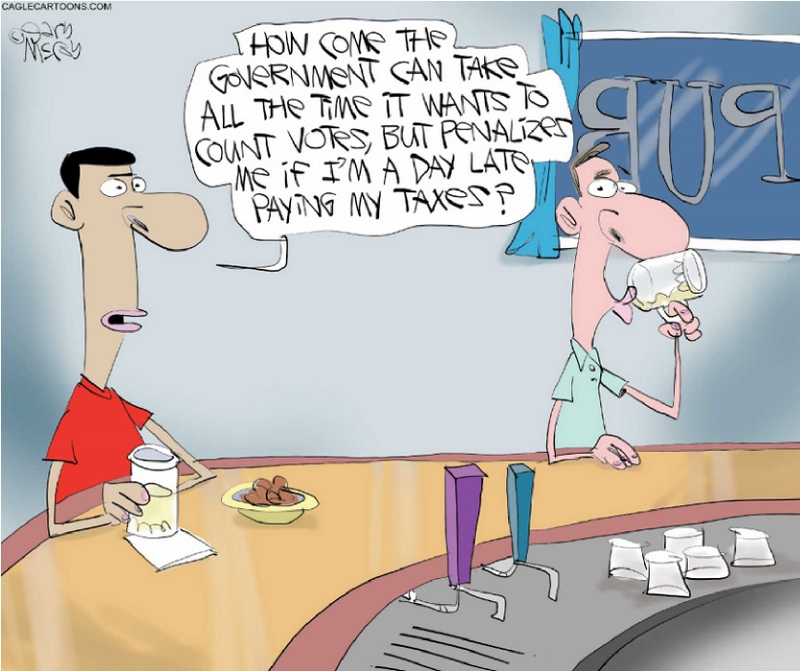
Image: Gary McCoy

Leave a comment

Filed under Essays

Glassed

Around the turn of the century, I saw news that a women’s college here in the U.S. had contemplated admitting men within a year or two.  The shock and outrage from the female student body was as palpable as it was vociferous.  Ironically the institution had a male chancellor at the time.  He tried explaining to the crowd that the college was trying to maintain its viability, but his voice was suffocated by the intense hysteria.  You would have thought the incoming male students would be selected from a sex offender registry.  I’m sure those young women had long since bought into the feminist myth that all men are naturally prone to violence, especially sexual assault.  Almost immediately, however, the college rescinded its decision, much to the delight of the students.  That same male chancellor made the announcement by unfurling a banner that bore the term “For Women Again”.  The crowd erupted into cheers of relief; some even popping open bottles of champagne.

At the bank where I worked at the time, the subject arose during a lunch conversation.  I was the only man in the small group, and my female colleagues collectively agreed that they understood the reticence of that college’s students to admit men.  But, of course, I had to opine by highlighting the obvious anger those young women expressed at the initial announcement.  “I wonder what those little girls will do when they enter the adult world and have real problems.  And there’ll be men all over the place, and there’s not a goddamn thing they can do about it.”

I suppose my constituents weren’t surprised by the statement, but to some extent, they had to concur.  There was a time when the genders were explicitly separated, and everyone seemed fine with it.  Men did this, and women did that.  And things functioned relatively well.

But I pointed out that, if women want true equality, they have to accept that men are part of that equation.  In many ways, for centuries, men have excluded women from the decision-making process; claiming there was a “place” for them.  Women have fought back and demanded a place at that proverbial decision-making table.

Oddly one of the women sitting with me in that lunch room didn’t believe women should be in positions of power, such as the U.S. presidency.  “We have too many emotional and hormonal problems!” she said, much to the shock and chagrin of the other women.  She wasn’t the first woman from whom I’d heard that.  But this was 2000, and I was certain such beliefs had been relegated to ancient times – like dial phones.

A few years before that particular conversation a similar debate arose among me and some female colleagues at the bank; another one about gender parity.  I noted that, if women wanted true equality with men, they needed to start registering for Selective Service – like the men have to do.  In the U.S., Selective Service is the most blatant form of sexism.  The current system was reinstated in 1980 by then-President Jimmy Carter.  Every male in the U.S. born since January 1, 1960 has to register for it within 30 days of their 18th birthday.  In the face of a never-ending Cold War and the sudden Iranian hostage crisis, it was a call-back to an older time in America.  There’s no penalty for late registration, but there are plenty of punishments for failure to register – including jail time and a six-figure fine; no admittance to college; and no financial aid.  The issue was a big one when I was in high school and it became a concern during the 1991 Persian Gulf War.

In the aforementioned workplace conversation, one of my female colleagues – the mother of a single college-aged son – responded, “When men get pregnant,” before storming off.  Another woman concurred with a laugh.  But I pointed out that men have to register for Selective Service; otherwise, face some serious legal repercussions.  Women, on the other hand, don’t have to have children if they don’t want.  There is no law that compels women to get pregnant.  My female cohorts couldn’t offer a logical reply.

All of that came back to me last week, when Vice-President Kamala Harris accepted the Democratic Party’s nomination as presidential candidate.  She’s only the second woman and the first non-White woman to be so honored.  This year’s presidential campaign has literally turned out to be the oddest in decades; certainly the most unusual in my lifetime.  And at the age of 60, I don’t have too many first time experiences left.

I started coming of age in the 1970s, just as the contemporary feminist movement was making more concerted inroads into a patriarchal American society.  I recall how just being male seemed to become anathemic.  Many women demanded full and complete equality with men in every aspect of civilization.  Yet, by the 1990s, I noticed some women (and men) expected a double standard.

Women can’t reasonably demand to be treated as equals to men in business and politics, yet still expect to be placed in the same category as infants and children when it comes to their health and welfare.  In other words, don’t insist on being given the chance to be the CEO of a major corporation, a governor, a Supreme Court justice, or president of the United States and still want to be the first ones in the lifeboat when the ship hits the ice berg.

If you want equality, I’ll give you equality.  But, remember the old saying: be careful what you wish for; you might just get it.  When it comes to progressive attitudes, I sometimes think of the 1967 film “Guess Who’s Coming to Dinner”.  Spencer Tracy and Katherine Hepburn portray a liberal San Francisco couple whose all-inclusive ideology is tested when their daughter (Katherine Houghton) introduces her fiancé (Sidney Poitier) to them.  While the movie is rife with stereotypes, the general message is essential: how sincerely should people value and hold onto their beliefs.  The presidency of the United States has often been deemed the ultimate “glass ceiling” for women.  As we march further into the 21st century, members of every previously-marginalized group need to consider how much shattered glass they want on the floor of progress.

Leave a comment

Filed under Essays

I Miss You, My Friend

As my 60th birthday approached last weekend, I thought of an old friend who had a birthday at the end of October.  We haven’t actually spoken in years and last communicated via Facebook.  But I don’t have any contact with him now.

Because of Donald Trump.

Max* was an interesting character.  Born into a large familiar from Eastern Europe, he lived in a number of different places because of his father’s career.  All of that afforded him not just an extraordinary education but an incredible life experience.  He became well-versed in the arts and humanities; a polyglot who could communicate with most anyone.

I admired him on many levels; even envied him.  Just listening to him made me feel smarter.  We discussed a number of issues; seeming to solve all the world’s most vexing problems.

Then Donald Trump entered the fray of politics, and I watched almost helplessly as Max descended into the madness of right-wing extremism.  I tried to remain reasonable; thinking it was something of a phase.  Max couldn’t be this delusional, I told myself; he’s too much of an intellect to be persuaded by this charlatan of a man.

But my thoughts – nearly prayer-like after a while – had no effect.  Max remained a devout Trumpist.  I realized he’d been seduced when he posted a portrait of Francisco Franco, the long-serving Spanish dictator, to his Facebook page.  I’ve often referred to Franco as Western Europe’s last totalitarian ruler; an autocrat who suppressed political dissent and an open media.  Trump reminded me of him – someone who despised his critics and launched vocal tirades against them to state his point.  His contemporaries included Brazil’s Jair Bolsarano and Hungary’s Viktor Orbán.  When Max posted that photo of Franco, I was appalled.  I guess I shouldn’t have been so upset, but it genuinely shocked me.  I quickly pointed out Franco’s dismal record on basic democratic principles and human rights, but a written response on a social media site is almost pointless.  Max had already fallen for the Trump rhetoric and seemed to concur with some of it.  When Trump referred to some African nations as “shithole countries”, for example, Max noted he’d lived in Africa briefly during his youth and could identify with Trump’s description of the region.

“Really, bro?” I replied at one point.

But again – pointless.

How do you persuade someone who’s consumed that proverbial Kool-Aid?  Long answer: education and persuasion.  Short answer: you don’t.  As smart as Max is, I honestly didn’t know what overture would be appropriate.  So…I just let it all go.

I genuinely hate that sensation – ending a friendship because of political opinions.  I’d never had that experience before.  Friends have died or simply faded into their lives, but I’ve never had one dissipate because of politics.

This past Saturday, November 4, another close friend, Preston*, treated me to lunch for my birthday.  As with Max, he and I often engaged in cerebral conversations, which I absolutely love.  I’ve known Preston much longer than I knew Max.  Our exchange migrated to politics and the 2020 election.  Preston is a Trump voter, but he doesn’t appear to be a devout loyalist.  Still, he feels fraud prevailed in the last presidential election.  I feel it prevailed in the 2016 election and highlighted that Trump didn’t win the popular vote.

“I have to respectfully disagree,” he said.

I looked at him and mentioned by former friend Max and what happened with us.  “Dude!” I said.  “I’ve already lost one friend because of political differences!  I’ll be damned if lose another!  Especially you!”

I told Preston I love and respect him too much to let politics drive a wedge between us.  So, we dropped the matter and moved on to other things.

I miss you, my friend Max.  I genuinely miss you and your views on the world and hearing you talk about your life experiences.  But you made the choice to become blinded by the rantings of a pathological madman; you caused this division between us.  I’m certain you’re not exactly upset or mortified – and quite frankly neither am I.

I just hate to see a good friend fade away in the morass of politics.

*Name changed

4 Comments

Filed under Essays

Political Cartoon of the Week – April 23, 2022

Tom Janssen

Leave a comment

Filed under News

Worst Quote of the Week – April 9, 2022

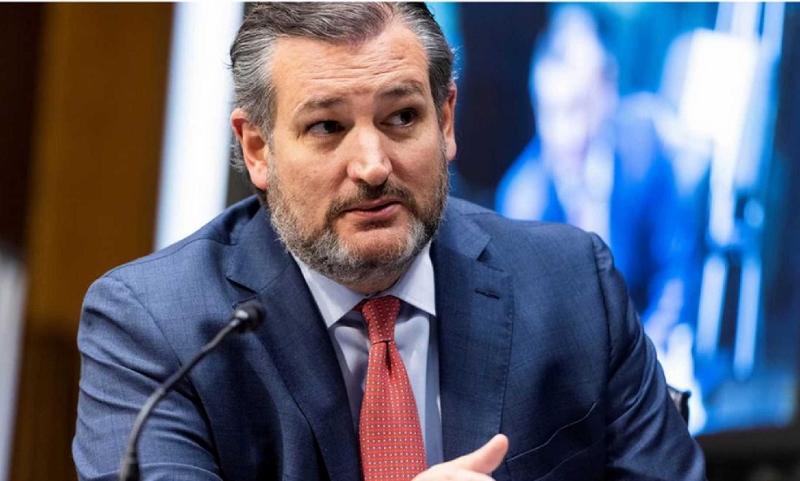
“Public defenders often have a natural inclination in the direction of the criminal.  Their heart is with criminal defendants.”

Sen. Ted Cruz, on why he opposed the nomination of Judge Ketanji Brown Jackson to the U.S. Supreme Court

Previously, Jackson had been a public defender.  Despite right-wing opposition, Jackson was confirmed to the High Court by the U.S. Senate.

Leave a comment

Filed under News

From the “Who Gives a Damn” Files – January 8, 2022

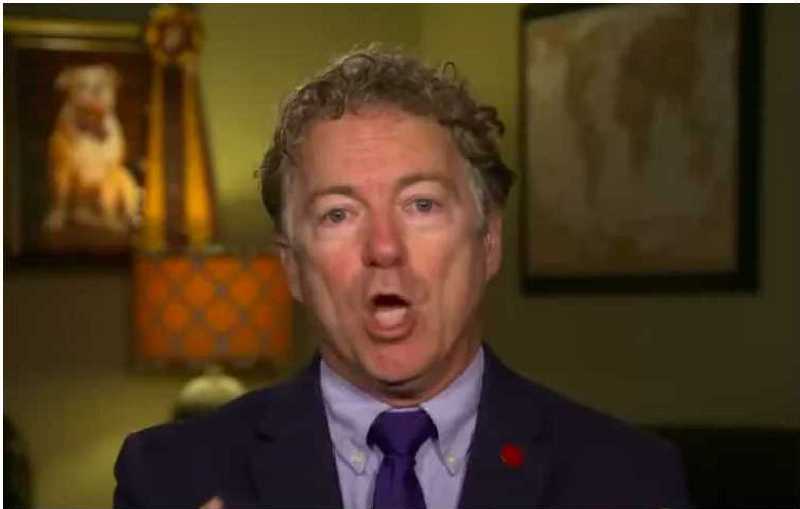
“I have come to the realization that my relationship with YouTube is dysfunctional.”

Sen. Rand Paul, announcing he will stop posting videos on the popular platform

Paul dubbed it part of his “exodus from Big Tech” and has accused YouTube of partisan censorship.

Leave a comment

Filed under News

Worst Quote of the Week – April 24, 2020

“What I said when I was with you that night is there are more important things than living.  And that’s saving this country for my children and my grandchildren and saving this country for all of us.  I don’t want to die, nobody wants to die.  But man, we’ve got to take some risks and get back in the game and get this country back up and running.”

Republican Texas Lt. Gov. Dan Patrick, on jump-starting the economy in Texas and other states to stave off a recession.

Patrick is essentially trying to walk back a comment he’d made last month that he’d rather perish from the new coronavirus than see instability in the state’s economic system.

Too late.

Leave a comment

Filed under News