Tag Archives: John McCain

Draft Well

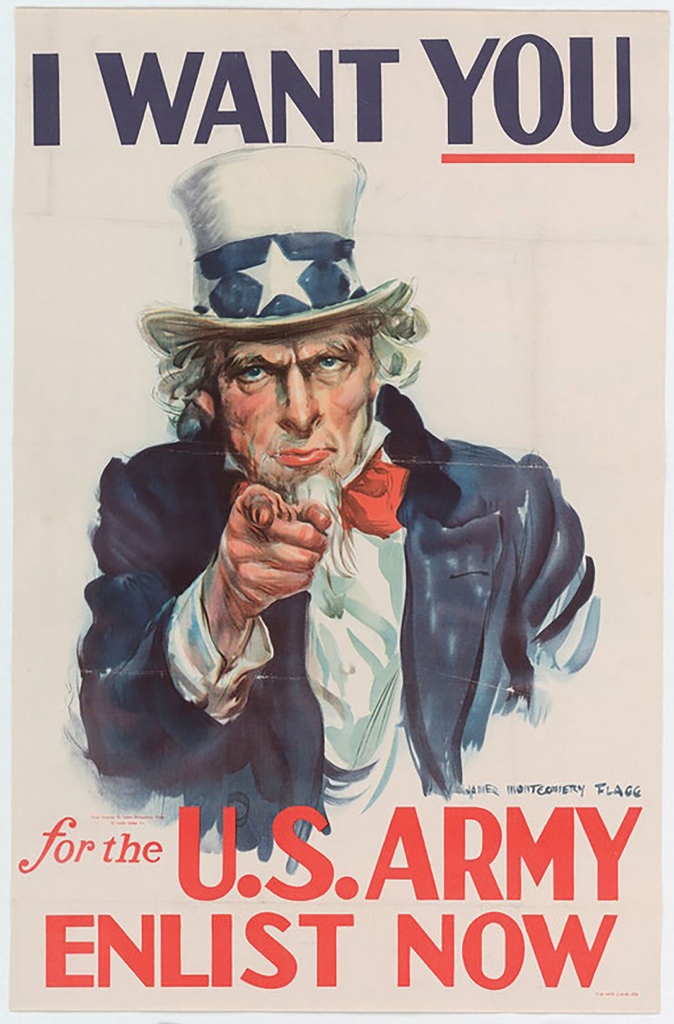
Recently President Trump signed an Executive Order that will impact military readiness in the U.S.  Beginning in December 2026 all able-bodied males in the country will be automatically registered for Selective Service (the military draft) upon turning 18.  The late former President Jimmy Carter reinstituted the Selective Service system in 1980, requiring all males born in the U.S. since 1960 to register for the draft within 30 days of their 18th birthday.  A number of lawsuits against the system in the following decades have failed to reverse the policy.

The penalties for failing to register are severe:

  • Fines up to $250,000 and/or 5 years in prison.
  • Ineligible for federal jobs and many state, local, and municipal positions.
  • Ineligible for federal student financial aid (FAFSA), including Pell Grants and federal student loans.
  • Non-citizens can be denied citizenship (naturalization).
  • Roughly 40 states and Washington, D.C., deny driver’s licenses or renewal for non-registration.
  • Ineligible for training under the federal Workforce Innovation and Opportunity Act.

Yes…a $250,000 fine and up to 5 years in prison…for failing to register to serve (unwillingly) in the military of a nation that still maintains an incredibly unequal justice system and wealth structure.  (Understand that Casey Anthony and George Zimmerman each murdered someone and got away with it.)

Again, this system only applies to men. 

Now Trump wants to make it more difficult to evade compulsory military service.  Well…he should know.  Like his Republican predecessor, George W. Bush, he did just about everything he could to avoid compulsory military service more than a half century ago.

One of my best friends, Preston*, has two 20-something sons and voted for Trump during all three of his presidential runs.  As the 2024 elections approached, he expressed concern that a Kamala Harris presidency would result in military action in Ukraine; meaning Harris would enact the military draft, and his sons could be impacted.  I was concerned about that, too, but I was more concerned that Trump would get back into office and take military action against Iran; the same way Bush invaded Iraq under the false pretense of protecting the world from an Iraqi-based nuclear war.

I was right.

Trump got into office and – under the guise of safeguarding the globe against an Iranian-inspired nuclear Armageddon, as well as defending Israel – attacked the Middle Eastern county.  Now, Preston is even more worried.

So am I.

In August of 1990, Iraq unexpectedly invaded Kuwait.  Fearful they were the next targets, the Saudi royal family fled their palaces and asked the U.S. for help.  As that year came to an end, then-President George H.W. Bush sent troops into the Saudi desert.  Ultimately Iraqi forces surrendered without much of a fight, but about 300 U.S. service personnel died in battle.  Shortly before the conflict erupted, Saudi leadership – still safely ensconced abroad – demanded that our people in uniform remove emblems of the U.S. flag from their attire.  They somehow found it offensive.  Bush bowed to the Saudi sheiks and ordered the removals.

Pull our boys out, was the first response from most U.S. citizens, including me.  It was an outrage.  If it hadn’t been for American demand for oil, the Saudis would still be living in ornate tents in the desert, picking sand fleas out of their ass.  The Bush family’s loyalty to the Saudi regime became apparent in the immediate aftermath of the September 11, 2001 terrorist attacks, when the Bush Administration allowed several Saudi nationals to leave the U.S., while other travelers remained trapped at airports and hotels.

Shortly before the Persian Gulf War began, I visited my local gym and heard one young man ask another, “Ready to go?” in reference to the conflict.

I was 27 then and thought it was a real possibility knowing our political leaders’ penchant for war.  My father – who had been drafted into the U.S. Army and sent to Korea nearly four decades earlier – was also concerned.  He became especially incensed when the Saudi royal family demanded U.S. military personnel remove the American flag emblems from their uniforms; cursing the clan in both English and Spanish.

Throughout Bill Clinton’s presidency, his right-wing adversaries condemned his lack of military experience; labeling him with that dreaded “draft-dodger” moniker.  From 1968 to 1970, he was a Rhodes Scholar at the University of Oxford where he openly protested the Vietnam War.  But a large number of American expatriates did.  When he returned to his native Arkansas, he placed his name back into the draft lottery (to maintain his “political viability”) and drew a high enough number not to be sent into the conflict.

As the 2000 presidential election arose, conservatives were eager to prop up only one man: then-Texas Governor George W. Bush.  The eldest son of the nation’s 41st President, George H.W. Bush, the younger Bush graduated from Harvard in 1968 – and found himself eligible for military conscription.  He immediately managed to secure a position in the Texas Air National Guard (at a time when such spots were sparse and difficult to obtain).  After his initial four year stint was over, he reenlisted and then somehow was able to switch to the Alabama National Guard; in part, he later said, to work on the presidential campaign of George Wallace.  That second hitch should have been completed in 1976.  But no real record exists of Bush completing his service.  And then – as things tend to occur – misfortune arrived and Bush’s military records mysteriously disintegrated in a warehouse fire.

Bush’s Vice President, Dick Cheney, also came under scrutiny for his lack of military service.  During the 2000 campaign, Cheney declared he had “other priorities” during the Vietnam fiasco; receiving a number of draft deferments – mostly educational and one because he was a new father.

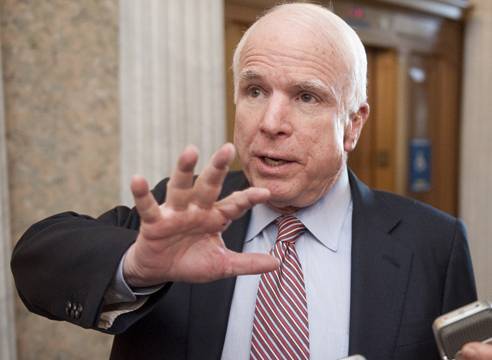
The same band of right-wingers who excoriated Clinton for his lack of military service weren’t so quick to demand a full accounting from either Bush or Cheney.  Also, in 2000, then Sen. John McCain sought the GOP nomination.  Coming from a long line of U.S. Navy officers, McCain served in Vietnam and was a pilot shot down over Hanoi in 1968, captured by enemy forces and held hostage for five years.  But the Bush political machine had the audacity to question not only McCain’s military service (which was there for all to see) but also his patriotism.  The same flag and country crowd who had demonized Clinton suddenly had no qualms belittling a real American military hero.

Now we come to Trump.  Donald “bone spurs” Trump.

No one has a desire to do something unpleasant – like pay taxes or wait in line at the grocery store.  And certainly nobody wants to go to war.  War is not just ugly; it’s stupid and pointless.

One Saturday evening in the late 1970s, my parents hosted a few friends over for a casual gathering.  Among them was a longtime male friend who brought along a young woman we hadn’t met before.  She seemed pleasant enough.  At some point, during a discussion, the subject of the Vietnam War came up.  The U.S. had just fled Vietnam in an ignominious defeat a few years earlier.  All of the men in the group had served in the U.S. military.  A few of them, including my father, had been drafted.  The aforementioned young woman mentioned that a young man she had been dating about a decade earlier had failed to heed his conscription notice and – apparently feeling intensely patriotic – reported him to some authority.  She said he got drafted anyway.

I remember the brief quiet that settled over our cavernous den.

“Wow,” my father finally muttered.  “How brave of you.”

And the conversation ended.

Don’t ask someone to do something you’re not at least willing to try – which is one reason why men have no business demanding women get pregnant.

I’m genuinely worried about Preston’s sons, as well as for any other young man who may get swept up into this conflict-laden world.  But I’m concerned for the greater population.  Despite all the patriotic bravado, the 2003 Iraq War really was about gaining access to the region’s oil.

I see the same outcome with Iran.

*Name changed

3 Comments

Filed under Essays

Sacred Burn

“You want to do what?”

I knew my father wouldn’t like the idea of me joining the military, but the look in his eyes shivered my soul.  That was easy for many people to do to me in the late 1980s, when I had little self-esteem and little self-respect.  I had hoped joining the U.S. Marine Corps could cure me of that.  Along with my alcoholic and same-sex tendencies.  Besides, life was not going well for me at the age of 24.  I had changed majors in college three years earlier and was nowhere near graduating.  Both my parents were upset that I’d decided to study filmmaking instead of computer science.  But, after 3 ½ years of pretending both to know what I was doing and enjoying it, I had cracked in the spring of 1985 and made the bold switch.  As high school-only graduates, my parents had imbued me – their only child – with grand ambitions.  Their ambitions.  Their dreams.  They thought my writing was just a hobby to pass the time.  They never realized I’d considered it seriously in my private cogitations.  But filmmaking?  I might as well have said I wanted to be a professional gambler.

Then came the military idea.  By 1988, I was truly at a loss of where I was going.   Still, my father insisted I finish college and earn a degree – any degree.  Especially one he and my mother found acceptable.  They had reluctantly come to accept my detour into film studies.

But the military?

After the debacle of Vietnam, the concept of military service fell out of favor with many young Americans.  It was fine if dad and granddad had done it.  But not the new generation.  Things had changed considerably by the 1980s.  It was not socially fashionable.  The thing to do was to get a good job – establish a career, rather – and make lots of money and live in a nice house with plenty of beautiful clothes and a new vehicle every year or two.  That’s what my parents had wanted when they began pushing me to study computer science as I neared high school graduation.  I felt I had no choice then.  And, even by 1988, I still felt I had no real choice.  I gave into my father’s wishes (demands) and decided to continue college.

Sadly, though, I dropped out and entered the corporate world in 1990 – always with the thought that I’d return to compete that higher education.  Which I did.  In 2008.

I loved my father, but I wished I’d actually rebelled against his insistence and joined the military anyway.  I feel now that my life would have gone much more smoothly overall.

All of that began coming back to me nearly 20 years ago, as the U.S. plunged itself into two new conflicts: Afghanistan and Iraq.  The scorn I once felt for the military had metamorphosed into respect and awe.

And it’s become even more apparent since the election (via Russia) of Donald Trump.  This week Trump has found himself embroiled in more controversy regarding the U.S. military.  Most of us remember that moment in 2015, when then-candidate Trump disparaged U.S. Senator John McCain by stating, “I like people who weren’t captured.”  It was a direct smack-down of McCain’s brutal tenure as a war prisoner during Vietnam.  Under normal political circumstances, that would have ended most political campaigns.  But Trump persevered and, despite that comment and the fact he garnered a medical deferment during the same period because of some mysterious bone spurs, he went on to win the Republican Party’s nomination and eventually the presidency.  Could the nation have picked a more disrespectful dumbass to be our leader?

Now come reports that Trump disparaged the U.S. war dead during a visit to France in November of 2018 to mark the end of World War I.  Allegedly, he denounced the long-dead servicemen as “losers” and “suckers”.  Of course, these are just accusations.  But, while some high-ranking officials have come forward to state they don’t recall Trump ever making those statements, others have declared our Commander-in-Chief did say those things.

And that’s the irony of this entire debate, isn’t it?  The President of the United States is the literal head of all branches of the U.S. military.  Any national leader holds that role.  Thus, for the President of the United States to denigrate war dead as “losers” and “suckers” just sort of undermines his credibility – presuming, of course, that he had any in the first place.

But Trump doesn’t.  He’s already been proven a draft dodger (something conservatives so easily lobbed at Bill Clinton nearly 30 years ago), a tax cheat, a womanizer (another conservative slam against Clinton) and a failed businessman.

It was obvious to me more than five years ago Trump wasn’t fit to be the leader of the proverbial free world.  His actions and his verbiage have proven that to many others since.  While it amazes me that so many go into orgasmic-like frenzies at the mere mention of his name, I find him beyond appalling.  He’s just downright disgusting.

Our people in uniform can’t legally criticize their Commander-in-Chief in a public setting, but I certainly have no problems with it.  Trump’s words fail to surprise me anymore.  It’s just more proof of his mental instability and blatant incompetence.  All of that is bad enough.  But blatant disrespect for the millions of Americans who have served in uniform – including my father, other relatives and friends – is one of the most despicable things anyone can do.  Whether or not they are President of the United States.

Image: Spreadsheet

Leave a comment

Filed under Essays

Counterstrike

“To batter this woman because they don’t feel they have the ability to batter President Obama is something we the women are not going to stand by and watch.  Their feckless and reckless speculation is unworthy of their offices as senators.”

Rep. Gwen Moore (D-WI), defending Susan Rice after McCain’s comments.

Leave a comment

Filed under News

Bad Irony

“She’s not qualified.  Anyone who goes on national television in defiance of the facts five days later…we’re all responsible for what we say and what we do.”

Sen. John McCain (R-AZ), criticizing United Nations Ambassador Susan Rice over her response to the September 11, 2012 attack on the U.S. embassy in Benghazi, Libya.  Rice has been named as a possible replacement for Secretary of State Hillary Clinton.  McCain and other Republicans have vowed to block Rice’s confirmation for that position.  McCain later dubbed Rice “not very bright.”

Poor John McCain!  Years of wandering in the Arizona desert while doped up on Viagra have really done a number on his brain.  McCain thinks Rice isn’t “very bright?”  Well, you know the old saying about a picture being worth a thousand words!

Leave a comment

Filed under News

Quote of the Day

“Oh come on, because we thought that Sarah Palin was the better candidate.”

– Sen. John McCain, when asked by Politico why he didn’t choose Mitt Romney as a running mate in 2008.

In a separate announcement, McCain’s office is now accepting gift ideas for his retirement party.

Leave a comment

Filed under News

Senators Seek to Extinguish Navajo and Hopi Water Rights

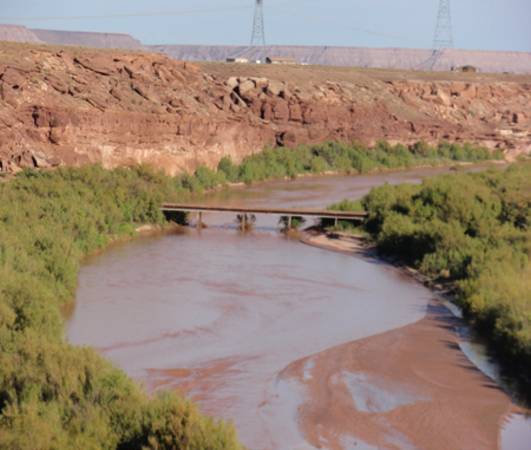
Little Colorado River

U.S. Senators Jon Kyl and John McCain, both Republicans representing Arizona, will visit Tuba City on Thursday, April 5, 2012, to persuade leaders of the Navajo and Hopi Nations to give up their aboriginal and treaty-guaranteed priority Water Rights by accepting a “Settlement Agreement” written to benefit some of the West’s most powerful mining and energy corporations.

Kyl and McCain introduced Senate Bill 2109 – the “Navajo-Hopi Little Colorado River Water Rights Settlement Act of 2012” – on February 14, 2012, the 100th anniversary of the state’s admission to the union.  The bill is on a fast track to give Arizona corporations and water interests a “100th birthday present” that will close the door forever on Navajo and Hopi food and water sovereignty, security and self-reliance.  In the House of Representatives, the bill is under H.R. 4067 and is sponsored by Rep. Ben Quayle.

S.2109 asks the Navajo and Hopi to waive their priority Water Rights to the surface waters of the Little Colorado River “from time immemorial and thereafter, forever” in return for the promise of undetermined federal appropriations to supply minimal amounts of drinking water to a handful of reservation communities.

The Bill (and the “Settlement Agreement” it ratifies) do not quantify Navajo and Hopi water rights – the foundation of all other southwestern Indian Water Rights settlements to date; thereby denying the Tribes the economic market value of their water rights, and forcing them into perpetual dependence on uncertain federal         funding for any water projects.

S.2109 could thwart any irrigated agriculture and water conservation projects to heal and restore Navajo and Hopi watersheds (keeping sediment from filling downstream reservoirs); to produce valuable livestock and crops for the Navajo and the Hopi, as well as their external markets; and to provide healthy food and active lifestyles for all future generations of Navajo and Hopi children.  This is counter to the U.S. Supreme Court’s 1908 “Winter’s Doctrine,” which explicitly reserves and safeguards the water needed for the permanent well-being and prosperity of the Navajo and Hopi.

Kyl and McCain demand that the Navajo and Hopi people relinquish all rights to the quality of surface and ground water supplies and to legal protection from any injuries incurred as a result of damage to those water supplies in the past, present and future.  In other words, if anyone in those communities gets sick from, say, lead-contaminated water, they can’t sue the State of Arizona or the federal government for damages because they gave up that right by agreeing to the bill.  Yet, the Navajo and Hopi really don’t know the full extent and nature of the rights they are being pressured to waive because the details of the “Settlement Agreement” are not being shared with the public.

Navajo and Hopi water and public health have already been damaged severely by past uranium and coal mining in and around their communities.  Kyl and McCain now want to strip any remaining and rightful legal protections against the present and real dangers of such future contaminations.

S.2109 and the “Settlement Agreement” require the Navajo and Hopi to give Peabody Coal Mining Company and the Salt River Project and other owners of the Navajo Generating Station (NGS) tens of thousands of acre-feet of Navajo and Hopi water annually, albeit without any compensation.  It also will force the extension of Peabody and NGS leases without Navajo and Hopi community input, or regard for past and continuing harmful impacts to public health, water supplies and water quality – as necessary pre-conditions to Navajo and Hopi receiving Congressional appropriations for minimal domestic water development.

Kyl and McCain are behaving like this 1912, instead of 2012 where Native Americans have civil rights as guaranteed by the U.S. Constitution.  But, considering the mantra of hate the GOP has acquired in recent years, this should come as no surprise to most of us.  Still, using the power of the U.S. Senate to engage in near-terroristic threats to any group is amoral and un-American.  It’s appalling that this crap is occurring even now.

I’ve started a petition on Change.org to have this bill removed from consideration in the U.S. Senate: http://www.change.org/petitions/u-s-senate-remove-s-2109-from-consideration.

Thanks to fellow writer and blogger K.B. Schaller for alerting me to this.


3 Comments

Filed under News