
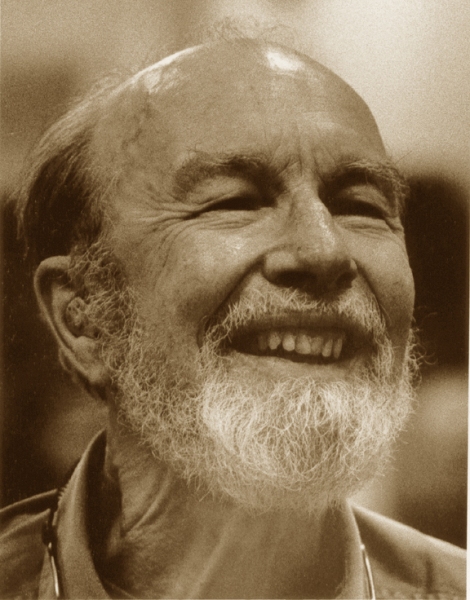
“Participation! It’s what all my work has been about!”
Guantanamera
If I Had A Hammer
Michael Row The Boat Ashore
Turn, Turn, Turn
Where Have All the Flowers Gone?
“Participation! It’s what all my work has been about!”
Guantanamera
If I Had A Hammer
Michael Row The Boat Ashore
Turn, Turn, Turn
Where Have All the Flowers Gone?

Today marks the second anniversary of this blog. I don’t get into numerology, but the number 2 is supposed to represent personal development and cooperation. I developed very early in my life as a writer and I’ve always considered myself the cooperative type. Writing has always been my primary source of inspiration and therapy and it will always be that way. I express my true self in no other way. I finally learned to cooperate with others only to an extent – in other words, stop being so damn nice! But, I learned to respect and trust myself even more. When I was a teenager, an aunt told me I’m my own best friend.
Thanks to all of you who’ve kept up with me these past couple of years. But, you’re still trapped in the depths of my mental chaos. So don’t think you’ll get out anytime soon!
Filed under News

Back in 2002, my then-roommate, Tom,* and I got into a discussion about racial and gender equality. I stated that all of the various civil rights movements of the 19th and 20th centuries, starting with the abolitionist movement, were necessary to instigate change and make America live up to its declaration as a truly free and inclusive nation. Tom merely shook his head no in a condescending fashion and said, “Nah,” later adding that eventually people would have “come around” and realize discrimination was wrong.
I looked at him like the fool he was and asked him if he sincerely believed that. He said he did. I then recounted the story of my father’s return from Korea in the mid-1950s. He had been drafted into the U.S. Army and sent to the front lines in the midst of the Korean War. Among the many friends he made were a large contingent of Black soldiers. By then, the U.S. armed forces had been forcibly integrated, so a mix of ethnic groups comprised all the various military units. My father didn’t serve his full two-year stint, as the war ended sooner than most anyone had expected. He and several of his fellow soldiers arrived in Seattle via ship and then boarded a train to head to their various home cities. My father was confused when his Black team mates started walking away from. He called out to them, asking where they were going. One told him they were headed towards the rear caboose – where Black people had to sit. As he watched his friends, his brothers-in-arms, saunter down the platform, my father said to himself, “Oh yea, we’re back in America – land of the free.”
Tom just sort of looked at me, not knowing what to say. He conceded it was wrong, even then, to force Blacks to sit at the back of a bus or a train. But, he snapped out of his brief foray into actual reasoning and reiterated that eventually White people would have realized how unfair that was. In other words, we didn’t bus strikes or protests of any kind. People should have just waited around, hoping for the better.
No one should have to wait for justice and fairness. Nobody should be straddled to the rocks of oppression and brutality – hoping, praying and begging for those in positions of power and influence to see the light. Disenfranchised groups in the U.S. had waited for centuries to be treated with dignity and respect and to be given an equal chance to succeed.
I told someone else around the same time as my conversation with Tom that the 1960s exploded with anger and rage because patience had finally run out. They’d done everything that had been asked of them: they served in the military; they worked hard; they cleaned homes and streets; they obeyed the laws (no matter how discriminatory they were); they tried as best to keep to themselves – everything. And, they still weren’t given a fair chance. Blacks still had to sit at the back of the bus; women still had to change their last names when they got married and still had to have children; Indians still had to live in squalor on reservations; gays and lesbians still had to suppress their true identities.
And so, by the 1960s, everything just sort of erupted at once. If change didn’t come through peace and hard work, then it had to be forced. America was compelled to fulfill its proclamation as a nation of freedom and opportunity. It no longer had a choice in the matter. The time had come to change – whether some folks liked it or not.
It was curious to hear Tom speak of racial and gender equality and inequality. He was a mix of German and Cherokee; from a small, nondescript community in far northeast Texas. We discussed the plight of Indigenous Americans more than once. He felt that Indians could have fought back against European encroachers because they also had men. I noted that Europeans had two primary advantages: guns and horses. Moreover, they’d adopted both gunpowder and horse-riding skills from the Chinese. Tom wasn’t moved. And, I told him he now had the distinction of falling into two unique groups: those who aren’t educated about a subject and those who don’t want to be educated. That’s actually a rarity, but one that persists even now; in this second decade of the 21st century with a biracial U.S. president and a shrinking White majority.
Attitudes really are hard to change.
*Name changed.
Filed under Essays
Filed under News
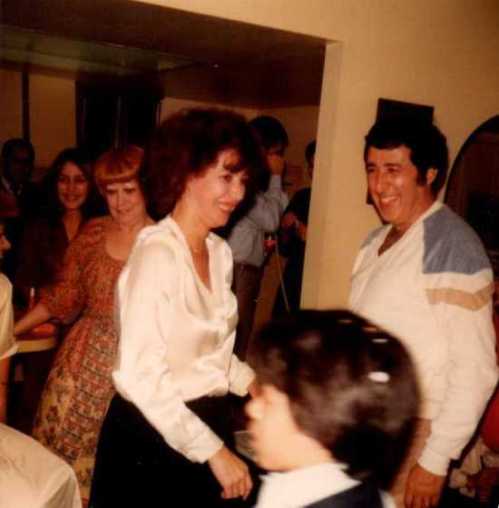
Welcoming the 1980s – from right to left, my father, my mother’s younger sister and my mother. One of my aunt’s daughters is at far left.
On December 31, 2010, I decided spontaneously to go out for New Year’s Eve. I had been laid off nearly three months earlier from an engineering company and wondered when things would improve. I visited my favorite bar just north of downtown Dallas and was glad to encounter a few friends and acquaintances. As I stood near the DJ booth, surveying the eclectic crowd, I suddenly recollected the very first New Year’s party my parents had decided to throw – 1973.
We had moved into our new house in suburban Dallas a year earlier. My parents had already made friends with several neighbors; their ebullient personalities attracting even the most staid of individuals. As the clock struck midnight, and we welcomed 1974, I pulled back the heavy drapes against the patio door to look for my then 7-month-old German shepherd, Joshua. His ears already beginning to triangulate, he glanced at me and jumped up. I went outside to pet him and wish him a happy New Year.
By the time I rang in 2011, Joshua had been dead for a quarter century, and my parents had long ceased their partying ways. Last night, I sat with some wine coolers and watched television. My parents and my dog, Wolfgang, all had retired for the night. I’m so glad to see 2013 go, happier than I was three years earlier. In fact, I haven’t been this thrilled to let go of a year since 1985 – the year we put Joshua to sleep; a year I’ve always considered the single worst of my entire life.
New Year’s is my favorite holiday. It’s not just the feverish atmosphere surrounding a fresh start. For me, it’s always been associated with the gathering of family and friends; people who occupy our lives and make it good. Besides, most everyone feels giddy on New Year’s Eve. Why not celebrate?
My parents threw a number of New Year’s parties. Ours was the fun house on the block. It was during those raucous indoor festivals when I learned how to spin records (on a turntable), mix drinks, and show people how good I could dance. I can still bump and grind with the best of them, but usually the lights have to be dim.
Two of our perennial guests were among my parents’ closest friends: a young couple who lived next door and were among the first people we befriended in the neighborhood. They were both exceptionally tall. They got me addicted to “National Geographic” by purchasing us a gift subscription in 1976. And, they offered my parents and me one of the best bits of advice anyone could hear: always hang around people who know more than you do.
At one particular late 1970s New Year’s gathering, a neighbor got so drunk we escorted him into my parents’ bedroom to lie down for a while. My dad took Polaroids of many of us – including the man’s wife – encircling him on the bed. It was a while before he returned to our house for another New Year’s party. When he did, his wife became so intoxicated she had to spend the night in my bedroom; her husband returned home (I think) alone. I slept on the living room couch.
Some other neighbors, a couple whose kids attended the same high school I did, were also frequent visitors. The man would often bring his guitar and sing along with his wife. And, they really could sing. As newlyweds in their native New México, they once entered an amateur singing contest, but lost out because the judges said they sounded too much like professionals. That didn’t matter to us so many years later, though, as they strummed out tunes from José Feliciano and even The Doors’ “Light My Fire.”
That was quite a different reaction from that of another neighbor, a housewife who lived up the street with her stony husband and three unruly children. At one New Year’s party, she imbibed in too many of the margaritas I’d whipped up and haphazardly commented that she liked to sing. Seeing a chance to humiliate a fat, drunk stay-at-home mom who sold decorative glassware on the side and considered herself a devout Christian, two other friends – a neighbor and a man my parents had known for several years – began escorting her around the house; telling certain individuals, ‘You gotta hear this!’ And, as the woman started to croon, sounding much like a Hereford cow going into labor, the two men merely stepped away. They’d return a minute later to set her upon another unsuspecting partier.
My favorite New Year’s gathering took place at my parents’ home in 1979. I was excited to bring in not just a new year, but a new decade. If you’re old enough to recall the fashions and hair styles of the 1970s, surely you can identify with my elation in sending that decade into the history books. It was a unique affair in that we invited both family and friends – and they all showed up! We didn’t think this house could hold that many people and not incite calls to the police. Even my grandmother was there – and, aside from midnight mass on Christmas Eve at her local Catholic church, she was almost never up past 9 P.M. Above the fireplace I hung a large piece of blue poster board with the term “The ‘80s” on it. I had spent days cutting up sheets of colored paper into tiny squares to make confetti. I stuffed it all into a large brown paper sack and hurtled the pieces into the air at the stroke of midnight. As we cleaned up later, my mother commented that “we’ll be picking up confetti for a year.” And, sure enough, exactly one year later – after another New Year’s blowout – I found a single piece of confetti buried beneath a couch.
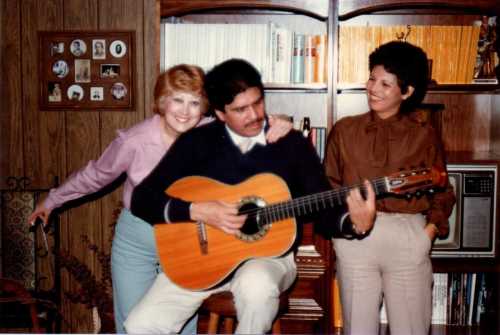
Another New Year’s party, with my mother clowning alongside the friends who often entertained us with a guitar and a song. My mother just turned 81, but the couple left us more than three years ago.
Of course, we attended New Year’s parties at the homes of other friends and neighbors. Whether at my parents’ house or somewhere else, I always made it a point to have a good time – and not just because alcohol and food were plentiful, although that adds to the fervor. I just really enjoy New Year’s celebrations. Regardless, there’s something unique about ringing in a new year with the people closest to you.
On New Year’s Eve 1988, I was at the apartment of a friend, working on a stage play. Along with some other friends, her and I were trying to launch our own theatrical group and had scheduled a handful of gigs for the spring. It was almost half past midnight before we realized it was 1989. We hugged and clinked wine cooler bottles, then got back to work. I did make it a point, though, to call my parents from there and wish them a Happy New Year. I was surprised to find out they were already in bed. “I was just thinking about all the New Year’s parties we used to throw,” my dad told me, sounding rather sad.
A year later a friend and I decided to usher in the 1990s at Dick’s Last Resort in Dallas’ West End. For a $20 cover, we could have all the food we wanted and a variety of drink specials. But, my friend was coming down with a cold and, around 10 P.M., asked me to take him back to his apartment. So much for that $20! But, I decided to join another friend at a warehouse party just south of downtown. He was both surprised and glad to see me. Standing 6’7”, he was almost a whole foot taller and considered me his adopted little brother. His older brother had died of cancer shortly before Christmas 1978. Even though a fight broke out between two guys – one who showed up high on something – I had more fun than I probably would have at the other place.
I spent New Year’s Eve 1990 with a friend, Daniel, who I wrote about recently. He was sad because he’d just learned his former long-time boyfriend had died of AIDS a month earlier. As we sat listening to a jazz version of “Auld Lang Syne” on a local radio station, his two Lhasa Apsos resting near the fireplace, we heard what we thought were firecrackers. When I looked out the patio door of his second-story apartment, I realized the popping sounds were coming from a burning car on the opposite side of the highway. “I hope they weren’t on their way to a New Year’s party,” I said.
I peruse the bevy of old photos from our various New Year’s gatherings and wonder about some of the people in them. The tall couple eventually sold their house and moved to El Paso, Texas before I graduated from high school. They promised to stay in touch, which they did – for a little while. But, we haven’t seen or heard from them in over two decades. The drunken neighbor moved away a few years ago – not long after his wife succumbed to cancer. The guitar-playing couple died within two months of each other in the summer of 2010. The would-be songstress and her husband also vacated the neighborhood long ago. Strangely, I ran into their daughter in the summer of 1985 at the country club where we both worked. My friend Daniel died in 1993, and I eventually lost touch with those other three friends.
My grandmother passed away in 2001, and most of my cousins have married and had kids of their own. We’ve all gone on to lead our own lives, but I’ve managed to stay in touch with a few. It’s still fun, though, as I recollect the good times and gaze at the scores of glossy photos that captured those moments. Yes, that’s happening with greater frequency as I get older. But, life isn’t worth the trouble if you can’t have fun with family and friends and then, remember it all.
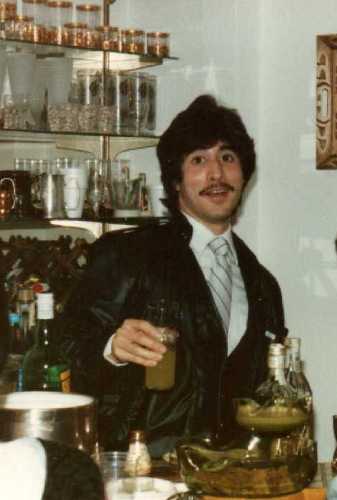
I commandeered the bar at the home of some long-time family friends on New Year’s Eve 1983. My jacket was faux leather, but the hair was real! When the hostess asked what speed she should set the blender to mix margaritas, ‘whip’ or ‘puree,’ I said, “Drunk.”
Filed under Wolf Tales

Thank you all for visiting my blog this past year! And, thanks for the many great contributions from my fellow bloggers, writers, photographers and various medley of other disturbed minds.
As the old Spanish saying goes…
“Salud, amor, dinero y el tiempo para gastarlos.”
“Health, love, money and the time to spend it all.”
Here’s to an incredible 2014!
Filed under News
On this Christmas night, I wanted to show some colorful and detailed classic artwork from Italy’s renowned Renaissance period where advances in art, architecture, math and science helped Europe climb out of the muck of the Dark Ages. Since the Roman Catholic Church was an integral part of the region’s daily life, it’s no surprise much of the art bore religious themes. Here are 10 pieces of the Nativity, one of the most prominent subjects among Italian Renaissance artisans.
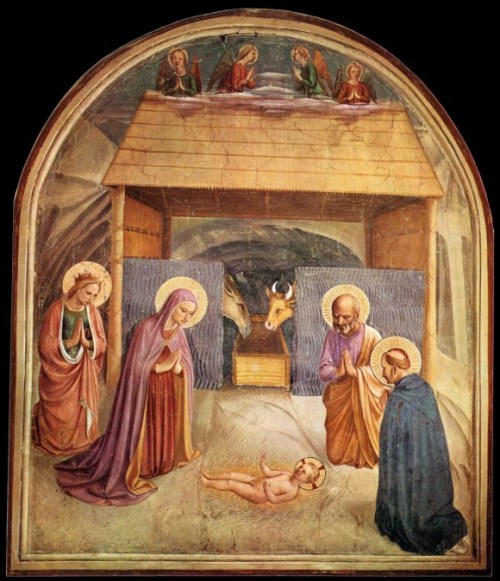
Fresco in San Marco, cell no. 5
This is one of many frescoes in the friars’ cells in the convent of San Marco, dating to the early 1440s. Historians disagree on the artist: Fra Angelico or Benozzo Gozzoli, with most believing the latter is responsible, based on the frescoes’ more decorative aspects and thicker applications of paint characteristic of Gozzoli.
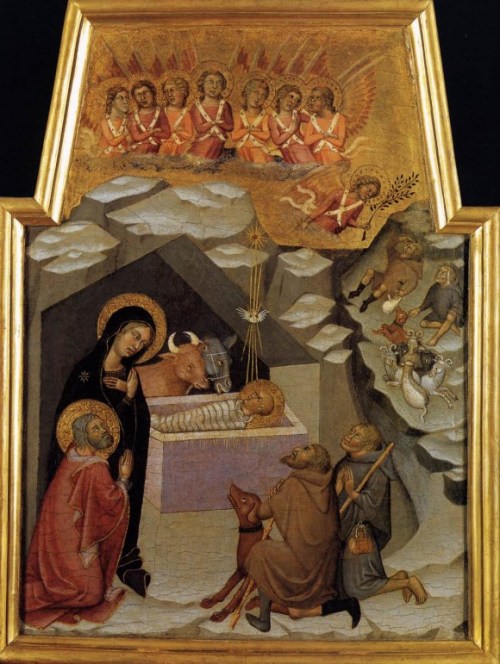
Bartolo di Fredi, “Nativity and Adoration of the Shepherds,” Vatican Museums, 1383.
Bartolo di Fredi was commissioned to paint this panel by the Company of Saint Peter in 1383, for the Chapel of the Annunciation in the Church of S. Francesco in Montalcino. The polyptych has since been broken up, and parts of it can be seen in various museums. This piece is in the Pinacoteca Vaticana.
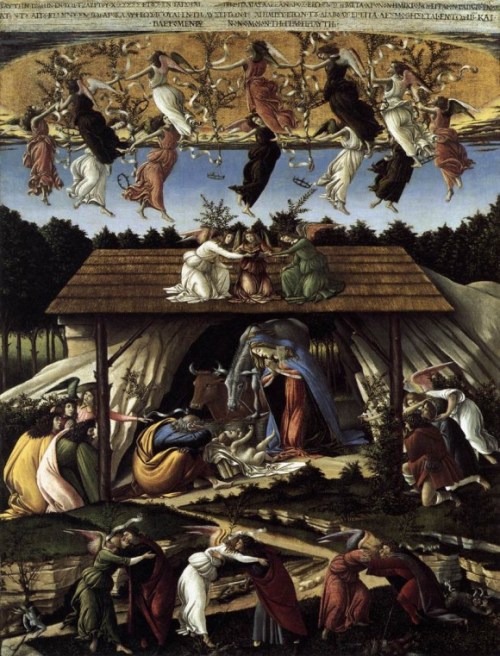
Sandro Botticelli, “The Mystical Nativity,” National Gallery of London.
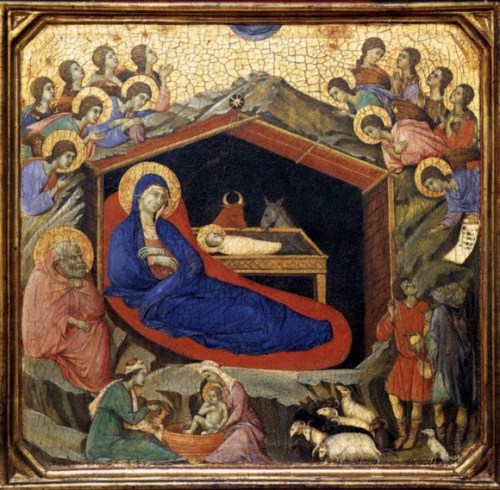
Duccio, Nativity panel, ca. 1308, National Gallery of Art – Washington, D.C.
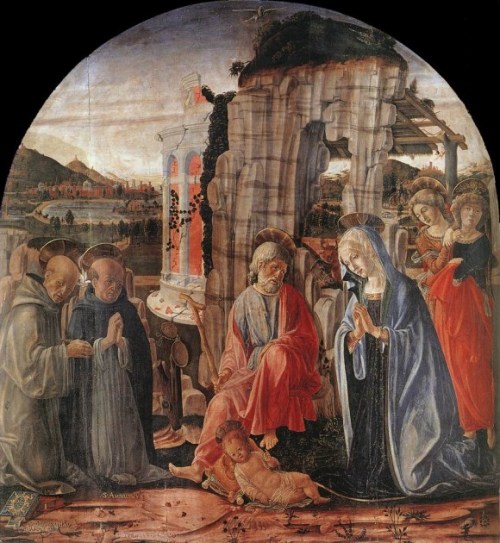
Francesco di Giorgio Martini, 1475, Pinacoteca Nazionale – Siena.
The Nativity with two angels, St. Bernard and St. Thomas of Aquino, is the only signed work of the Francesco di Giorgio Martini.
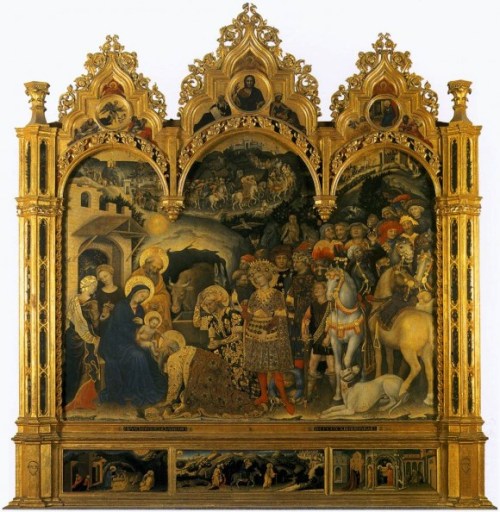
Gentile da Fabriano, “Adoration of the Magi,” 1423, Galleria degli Uffizi – Florence.
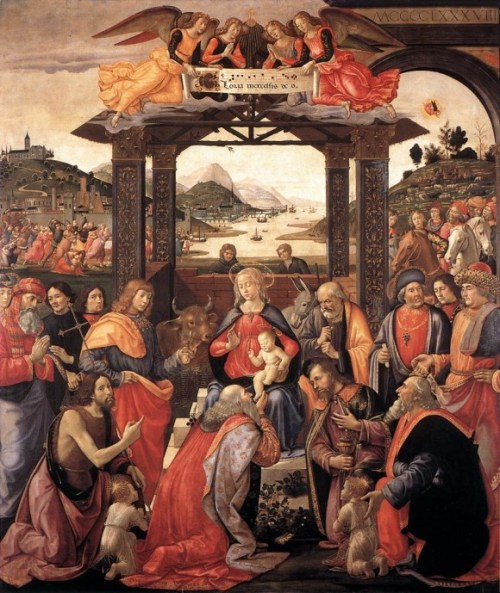
Domenico di Ghirlandaio, “Adoration of the Magi,” Ospedale degli Innocenti, 1488.
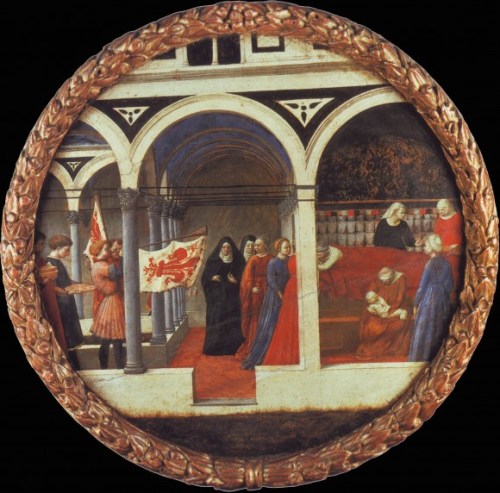
Masaccio, Birth salver depicting the nativity, with Florentine horn-blowers, ca. 1427, Staatliche Museen – Berlin.
Birth trays like this wooden one from the first quarter of the 15th century were common objects in many medieval European households. They were given to women often before or during pregnancy; their imagery was believed to encourage the healthy delivery of a baby boy. Masaccio.
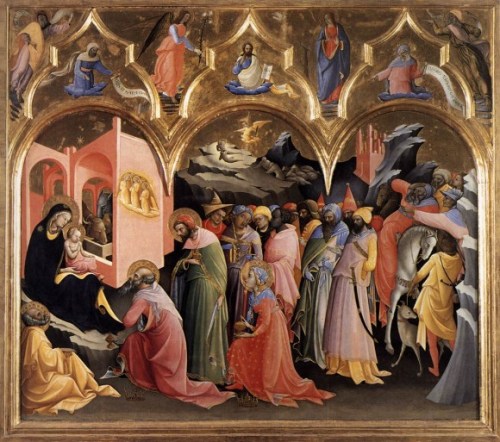
Lorenzo Monaco, “Adoration of the Magi,” 1422, Galleria degli Uffizi – Florence.
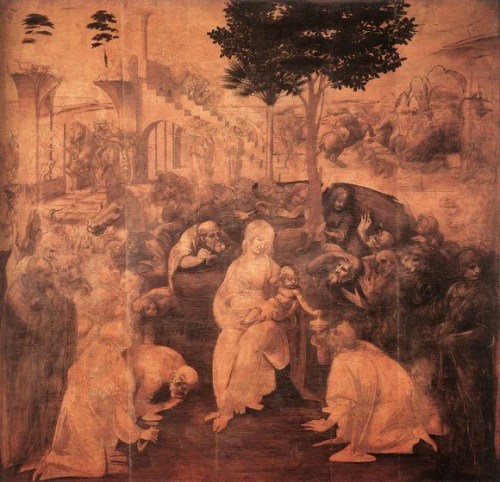
Leonardo da Vinci, (unfinished) “Adoration,” 1481, Galleria degli Uffizi – Florence.
The master of all master artisans, Leonardo da Vinci left some work unfinished, including this panel currently on display in the Uffizi. Da Vinci developed his own theories about creating dramatic contrasts between various figures (e.g. young and old, female and male), like the strong triangle created by the central figures. Although uncompleted, this panel also notes Da Vinci’s technique of working on a dark panel and building up first the shadows, then the color.
All images courtesy of Tuscany Arts.
Filed under Classics
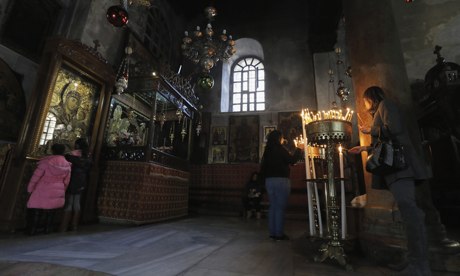
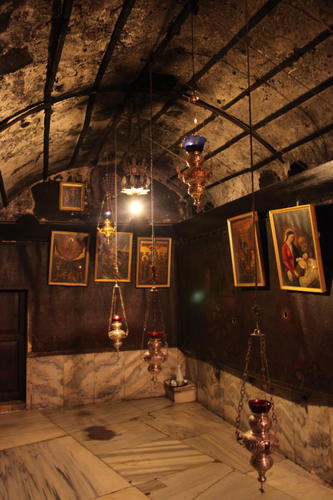
Visitors light candles in the Church of the Nativity.
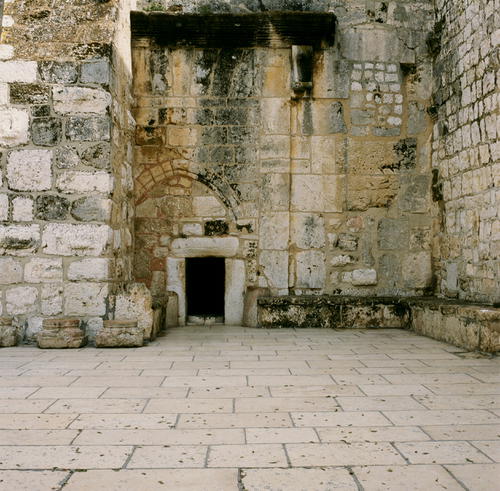
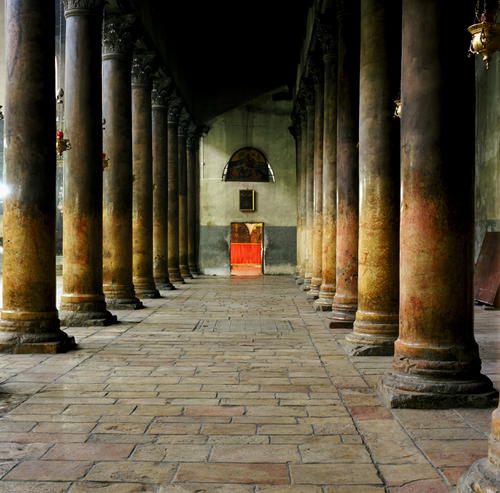
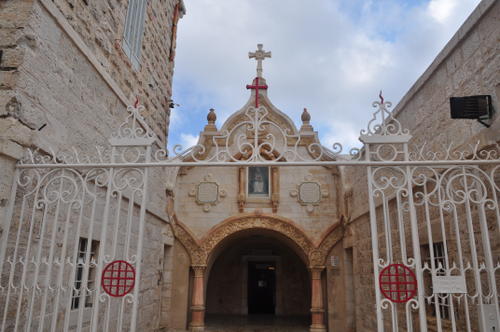
Christian lore has it that Jesus was born in a manger in the city of Bethlehem and ultimately died to bring peace and joy to the world. Looking at the centuries-old violence that has plagued the region now called the Middle East, it seems to have been in vain. But, Palestinian authorities have set aside their animosity for outsiders by allowing a handful of Italian craftsmen to begin much-needed repairs to the roof of the Church of the Nativity in Bethlehem, which dates to the 4th century A.D. Water leaks, seismic activity and general weather conditions have taken a toll on a structure classified as a UNESCO World Heritage site. The church’s pine and cedar timbers are up to 800 years old and its deteriorating roof was donated by England’s King Edward IV in 1479.
“It’s very emotional to work here,” says Marcello Piacenti, head of a family business that is rejuvenating the structure; something his clan has being doing for six generations.
Workers are applying protective gauze to gold-leaf mosaics, while technicians examine the church’s wooden trusses for hidden damage.
As one might expect, there are internal clashes over the structure’s care. Monks from Greek Orthodox, Catholic and Armenian churches have disputed who has authority to clean and repair the church. The three dominions manage the building under a tense arrangement that seems to mirror the overall Middle East conflict. You’d think they’d know better.
Finally, in 2009, Palestinian President Mahmoud Abbas, fearing the church might collapse, issued a decree to repair the church. That brought some agreement among its proprietors, and Piacenti’s company was called in to help.
Whatever religious disputes anyone has, I can only hope they drop all that friction and realize how important the church is. Christian or not, it is a piece of history and it needs to be preserved.
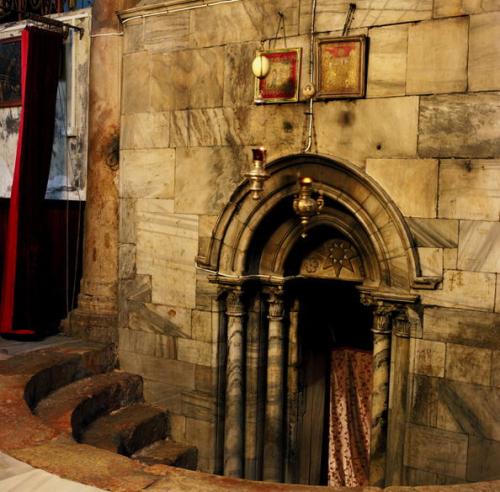
Filed under Art Working

Whether or not you celebrate this particular holiday, or if you’re more like me and just sort of let it come and go, I still wish everyone a great one today. Remember, it’s always the thought that counts, so I’m thinking the very best of all of you!
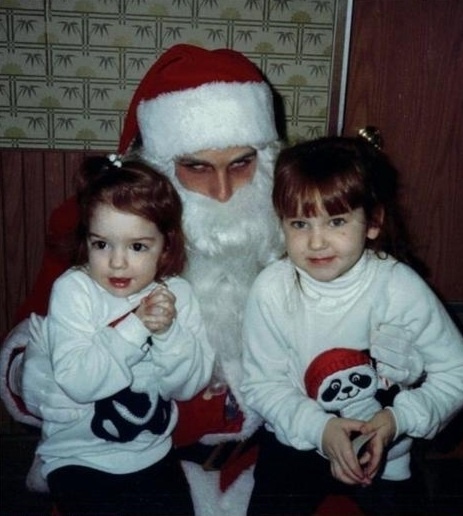
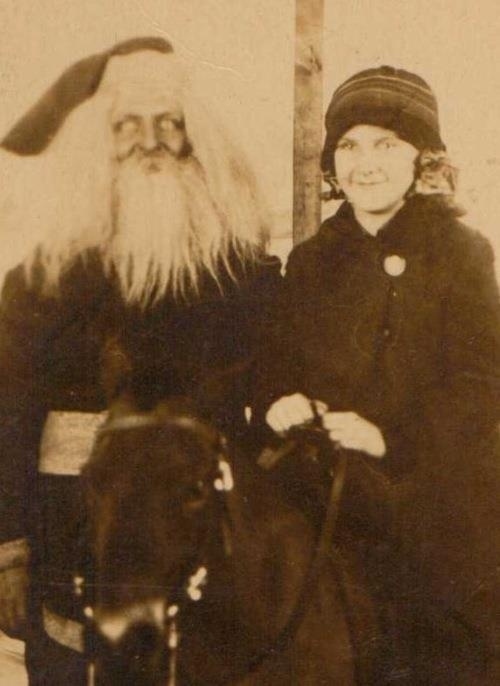
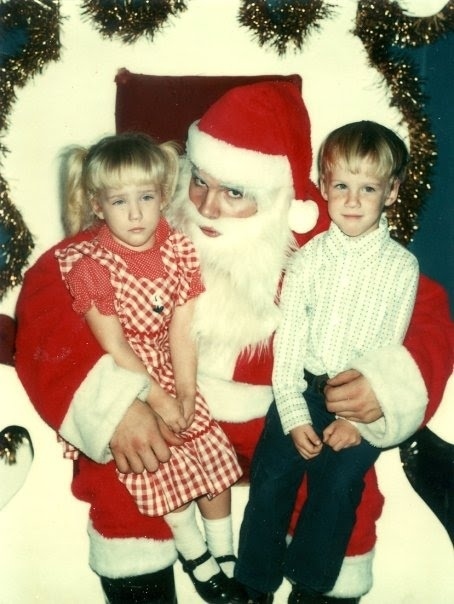
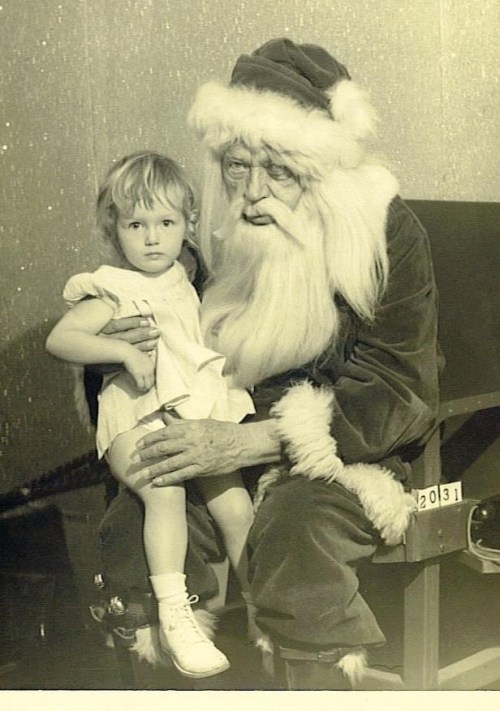
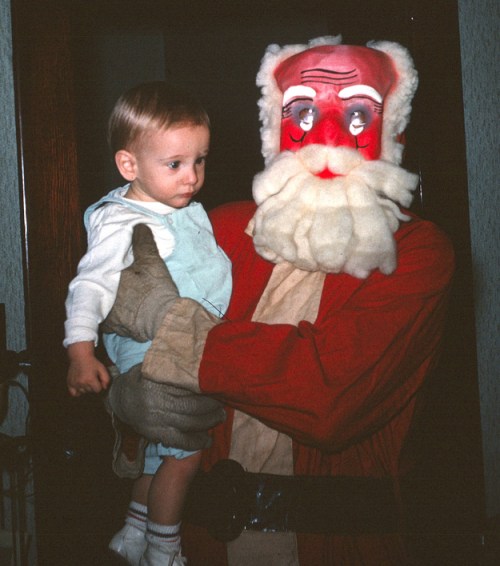
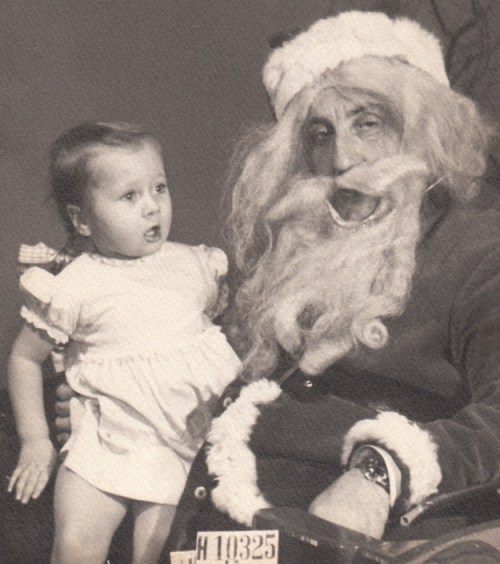
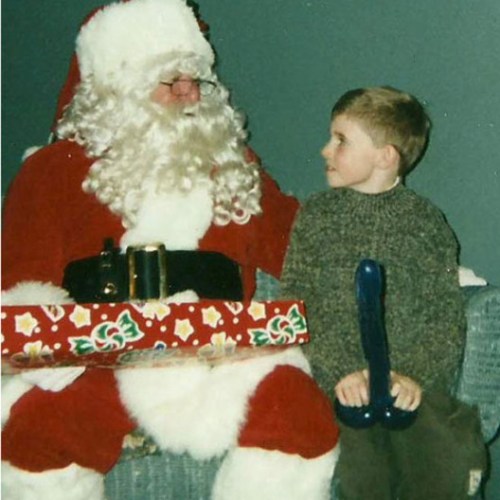
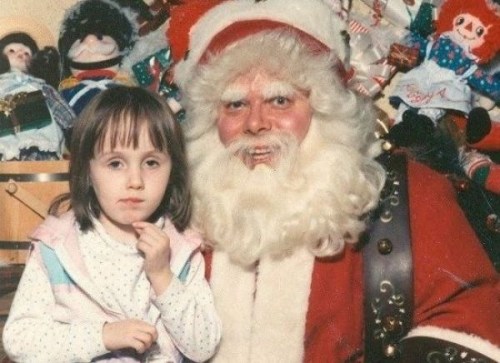
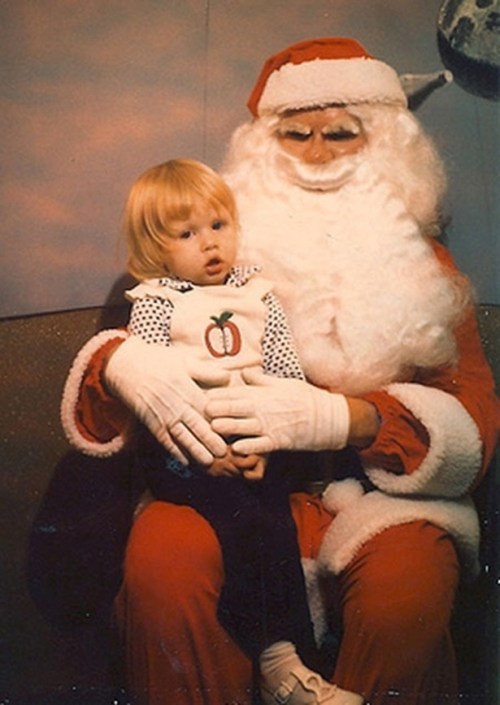
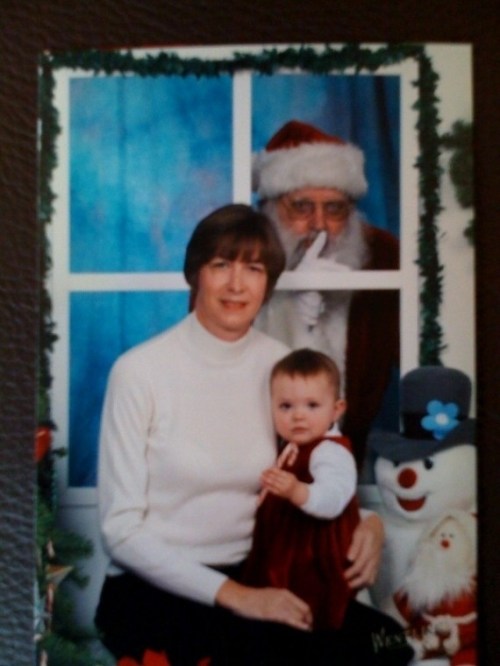
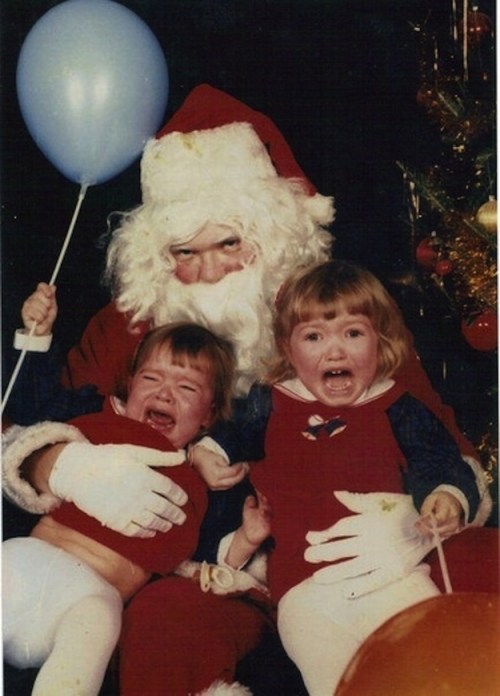
What could possibly spoil the joy of taking a photo with Santa Claus? Well…maybe if Santa looked like a serial killer or a drunken pedophile. Gaze at these gems from Christmases past and be thankful you had otherwise normal holidays. If you recognize yourself in any of them, please seek help immediately. You deserve it!

Filed under Curiosities
 Chief Writing Wolf