
In his 1979 novel, Shibumi, author Trevanian (Rodney William Whitaker) told the tale of the fictitious Nicholai Hel, a Shanghai-born spy of Russian – German heritage who is the world’s most accomplished assassin. After surviving the carnage of the Hiroshima bombing, Hel retreats to a lavish and isolated mountain citadel with his beautiful Eurasian mistress. Everything is grand and everyone is gorgeous in this story! But, Hel is coaxed back into the netherworld of international espionage by an attractive young woman. Hel soon learns, however, that he’s being tracked by a mysterious and omnipotent global entity known simply as the “Mother Company.” The “Company” is a composite of corporate giants that installs leaders in key nations – even those in the developed world – manipulates the markets for such necessities as food and oil and incites wars whenever it deems appropriate. The conflict between Hel and the “Mother Company” becomes something akin to a board game, where millions of lives are used as toys for the benefit of a few powerful elitists. I first read Shibumi about a year after its publication and still find it one of the most fascinating works of fiction I’ve ever encountered. I’m surprised – and disappointed – that it hasn’t been made into a film yet.
The recent opening of the George W. Bush Presidential Center in Dallas made me think about the novel. No, I don’t believe Bush is an American version of Nicholai Hel. Hel is a polyglot and a skilled chess player. Bush can barely pronounce such complicated words as ‘nuclear’ and looks more comfortable holding a chain saw. It’s the notion of a “Mother Company” – a massive and ruthless international organization – that captures my attention. It’s easy to criticize Bush, or any president, for his domestic and foreign policies. But, in a true democracy, that one person isn’t completely in charge of the nation’s affairs. He simply represents the totality of the country’s population, as well as the nation’s successes and failures. And in the face of that reality, I don’t feel George W. Bush really wanted to be in that position.
I honestly believe Bush would have been content to serve two, perhaps three, terms as Texas governor and be done with public life. But, after gaining control of both houses of the U.S. Congress in 1994, the Republican National Party was determined to take back the Oval Office, too. They didn’t seem to have many viable candidates, so they zeroed in on Bush and – in my analytical opinion – virtually forced him into running. He formally announced his candidacy in June of 1999, well after all of the others. But, I surmise it was Dick Cheney – who had served as Chief of Staff for Gerald R. Ford and as Secretary of Defense under George H.W. Bush – who wanted to be president, or more importantly, wanted to have the kind of power that comes with it. Yet, with a personality less fluid than a chessboard, Cheney wouldn’t have stood a chance.
The fiasco that was the 2000 presidential elections certainly caught the nation off guard. But, its roots go back a mere three years; when Cheney, Donald Rumsfeld (Secretary of Defense under Bush, Jr.), Paul Wolfowitz (Deputy Secretary of Defense, 2001 – 2005, and President of the World Bank, 2005 – 2007) and several others formed the Project for the New American Century. PNAC had a simple mission: the United States needed to reassert itself as a global superpower, especially after the collapse of the Soviet Union and the end of the Cold War.
In its “Statement of Principles,” PNAC declared:
“As the 20th century draws to a close, the United States stands as the world’s most preeminent power. Having led the West to victory in the Cold War, America faces an opportunity and a challenge: Does the United States have the vision to build upon the achievement of past decades? Does the United States have the resolve to shape a new century favorable to American principles and interests?
“[What we require is] a military that is strong and ready to meet both present and future challenges; a foreign policy that boldly and purposefully promotes American principles abroad; and national leadership that accepts the United States’ global responsibilities.”
It’s obvious PNAC wanted the world to look and behave like the United States. The U.S. is often viewed as the beacon of democracy, and its president labeled “Leader of the Free World.” But, in this case, that noble brand of leadership was twisted to conform to a narrow viewpoint. For me, proof comes in the Iraq War and the oil gleaned from the bloody aftermath.
In February 1998, Kenneth Derr, then CEO of Chevron, said, “Iraq possesses huge reserves of oil and gas-reserves I’d love Chevron to have access to.” In May of 2000, Dick Cheney abruptly resigned his position as CEO of Halliburton and moved from Dallas with his wife back to his native Wyoming. There, the couple registered to vote, and just a few months later, Bush selected Dick Cheney as his running mate. Federal law prohibits presidential and vice-presidential candidates from having residencies in the same state. In 2001, Derr became CEO of Halliburton. Halliburton was among a handful of companies that were awarded no-bid contracts to assist with rebuilding Iraq. The U.S. Army awarded the first no-bid contract to Halliburton in March of 2003 (the same month the U.S. invaded Iraq) to rebuild Iraq’s oil infrastructure. The move generated enough outrage that the Pentagon cancelled that particular contract and opened up bidding to other companies. But, Halliburton was never shoved out of the loop and eventually earned $39.5 billion from the Iraq War.
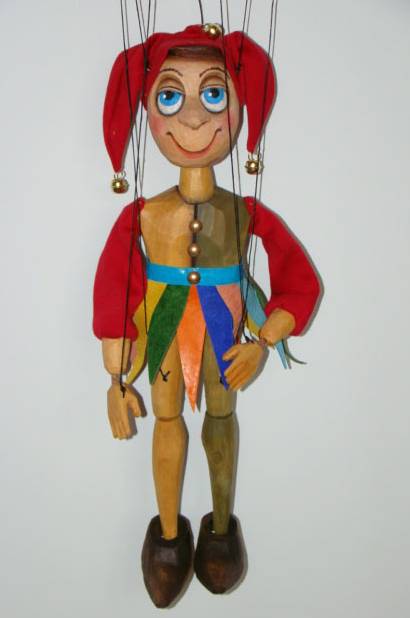
Everyone has moments of self-doubt in their chosen profession; those sad times when the pressure of doing the job right makes you question everything. But, Bush always looked like he didn’t want to be there. Some say his facial expressions bestowed his arrogance, while others claim it was merely self-confidence. I think it was just frustration and – to some extent – cluelessness. Liberals and even some moderates joked that Cheney was the real power in the Oval Office and that Bush was just a figurehead – a puppet. But, there’s nothing mirthful about it – especially when you consider misinformation about the Iraq War was fed to the media and the American public. The results are 4,488 U.S. military personnel casualties and 1.5 million Iraqi dead.
After leaving Washington in January 2009, Bush moved to Dallas and has pretty much stayed out of the limelight; an unusual reaction upon vacating the highest office in the land. In contrast, Jimmy Carter made up for his dismal tenure in the Oval Office by working with Habitat for Humanity and overseeing elections in countries striving for the same brand of democracy Americans enjoy. Bill Clinton stayed front and center of the public eye. The Clinton Foundation works to improve global welfare through education and individual health. Clinton even joined with his predecessor, George H.W. Bush, to provide aid to nations affected by the 2004 Indian Ocean tsunami. Ronald Reagan probably would have done more after his presidency, had he not become hobbled by Alzheimer’s.
But, Bush, Jr.? He’s virtually been incognito. Even after publishing his memoir, Decision Points, it’s like he slipped into the Witness Protection Program. In a May 2009 speech to students graduating from a high school in Roswell, New México, Bush said, “I no longer feel that great sense of responsibility that I had when I was in the Oval Office. And frankly, it’s a liberating feeling.”
I don’t fault him for that! There’s no job like President of the United States. As with any national leadership role, the individual is president every hour of every day during his time in office. His movements and his words are tightly controlled and meticulously documented. He doesn’t really get weekends off, and vacations aren’t real vacations where he could get away and relax without a care in the world. It’s just the nature of the job; it’s impossible for the President of the United States to rest completely while in office. It is, without a doubt, one of the most prestigious roles in the world, but also one of the most dangerous. Presidents have to be self-confident – even a little arrogant – for sure, but it comes at great personal costs. I recall Jimmy Carter saying several years ago that he wouldn’t take the presidency again if it was given to him.
I’m not a conspiracy addict. I don’t see evil machinations lurking around every street corner. I believe Lee Harvey Oswald acted alone when he shot President John F. Kennedy and I don’t think Elvis Presley is living on a remote South Pacific island next door to Jim Morrison. But, I do believe the integrity of the 2000 presidential elections was subverted and George W. Bush was placed (forced) into office at the hands of a few corrupt, but very powerful individuals and corporations.
Usually the brightest and most ambitious of individuals lead nations and form policies that impact the global population. That’s just the way it is; the way it has to be. Those things can’t be left to chance. They don’t happen by coincidence.
But, if there is a “Mother Company” running this nation – or this planet – what is it? The aforementioned World Bank? The United Nations? The International Monetary Fund? All of them? Or, something else. Former professional wrestler Jesse Ventura has speculated it’s the Bilderberg Group, a Dutch-based organization formed in 1954 to encourage collaboration between the world’s great democracies. People have debated this matter for years.
History is often written by the victors. But, the history of George W. Bush’s presidency isn’t carved into stone.



Dumbass Quote of the Week 2
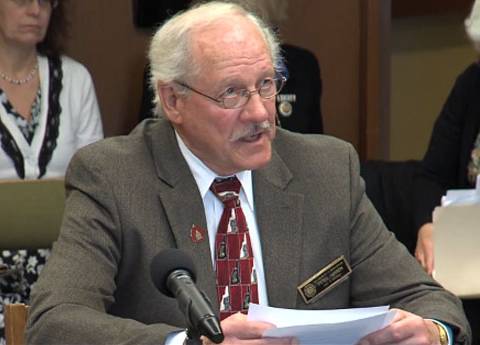
Gohmert keeping East Texas safe from Islamicized Hispanic types.
“We know Al Qaeda has camps over with the drug cartels on the other side of the Mexican border. We know that people that are now being trained to come in and act like Hispanic [sic] when they are radical Islamists. We know these things are happening. It is just insane not to protect ourselves, to make sure that people come in as most people do … They want the freedoms we have.”
– U.S. Rep. Louie Gohmert, R-Texas, warning that “radical Islamists” are being “trained to act like Hispanic[s]” and cross the U.S. – Mexico border.
Damn! I should have known that wearing diapers on your head and riding camels wasn’t the new ‘Mexican thing!’ Now, I’ll be forced to look at all other Hispanics – especially those dark-skinned ones – in a different beer sign light! Hell, some of them may be in my own family! When will the madness stop?!
1 Comment
Filed under News
Tagged as Louie Gohmert, radical Islamists, stupid comments