Picture of the Day

Ryder Okon of Dallas plays with his dog Trigger among bluebonnets beside a highway in the Mountain Creek area, southwest of Dallas.  Photo courtesy Eve Edelheit.

Leave a comment

Filed under News

Quote of the Day

“They ask me if I’m going to quit.  I thought we were just getting started.  We have a revolution to fight, a country to change.” 

– GOP presidential candidate Ron Paul to supporters in Fort Worth, TX.


Leave a comment

Filed under News

Writing Grammar

In grade school, I had an English teacher who said that poet E.E. Cummings understood the basic rules of grammar, but chose to break them later in his own writings.  In college, I had a film instructor who emphasized that students need to understand the essential elements of photography before they venture into cinematography, which is far more complex.  In other words, you need to learn to walk before you can run. 

But, Loretta Gray, co-author of Hodges Harbrace Handbook, asks how rigid grammar standards must be.  Are they like beauty – merely subjective?  Or, are they like the laws of physics – unbreakable and unyielding?  Literary scribes often take liberty with the written language.  Even Hodges Harbrace Handbook “takes a nuanced view of proper grammar.”  This probably will bother some writers who consider grammar a proverbial blind faith: it’s to be followed exactly and not questioned.  But, Hodges essentially asks, what is appropriate in a given situation? 

The issue can be tricky.  Some writers, for example, insist 2 spaces after a sentence is necessary before beginning the next sentence in the same paragraph.  Others say only 1 space is needed.  Is a semi-colon a period in disguise, or just a break between clauses?  Do you say ‘fewer books’ or ‘less books’? 

If grammar is like math, then the rules truly are inflexible.  But, languages evolve, both in written and spoken form.  A decade ago “Google” was strictly the name of a web site.  Now, it’s also a verb.  Perhaps, notes Gray, people eventually will realize they actually have a choice when they think of grammar.


Leave a comment

Filed under News

April 15, 2012 – 249 days Until Baktun 12


Survivalist Tip:  Since today is the 100th anniversary of the sinking of the Titanic, I need to emphasize that you should know how to swim.  I know that seems macabre, but we’re talking survival techniques here.  There’s a good chance, however, that you learned how to swim as a child.  If you didn’t, I don’t feel it’s too late.  Otherwise, you could pretty much resign yourself to a watery fate.  When the apocalypse hits, the Earth’s axes might shift, which could cause massive tsunamis to sweep far inland.  It also could cause dams to rupture.  Either way, you need to be prepared should you suddenly find yourself inundated by water. 

First, don’t try to outrun a tsunamic wave.  Anyone who hasn’t gotten out of its way by the time it hits the coastline, is either drunk or an idiot.  In both cases, the “New Universe” is better off without them.  Regardless, just wait until second before the wave reaches you and jump into the air.  When you come down, the water will catch you. 

Second, don’t panic.  More people drown because they panic than because they can’t swim.  One key to surviving in a post-apocalyptic world is to keep your senses about you.  This is how the ancient Mayans and their contemporaries around the globe survived in a hostile world without rescue swimmers, 911, or the Internet to tell them how to do basic stuff. 

Third, learn how to tread water and float on your back in water.  This is essential should you be adrift for a while. 

Finally, swimming can be great exercise as it’s good for your cardiovascular system.  Lounging in a hot tub with a beer doesn’t count as swimming.  Neither does water volleyball with a piña colada in one hand. 

Knowing how to swim is a basic, essential skill every survivalist must have.  The ancient Mayans often plunged into sacred freshwater cenotes and swam underwater for hours.  This is one way they connected with the deities.  Remember, water is the most critical element for all life on Earth.  You should learn how to respect and appreciate it.  If you haven’t by now, just have a piña colada and say to hell with it.  You won’t make it anyway.


Leave a comment

Filed under Mayan Calendar Countdown

Today’s Notable Birthdays

If your birthday is today, “Happy Birthday!”


Guitarist – banjo player Roy Clark (Tips of My Fingers, Through the Eyes of a Fool, Somewhere Between Love and Tomorrow) is 79.


Actress Claudia Cardinale (The Pink Panther, Once Upon a Time in the West, Jesus of Nazareth) is 74.


Actress Amy Wright (The Deer Hunter, Final Verdict, Crossing Delancey, The Accidental Tourist) is 62.

Track and field athlete Evelyn Ashford, 4-time Olympic gold medalist, is 55.

Actress – screenwriter Emma Thompson (Howard’s End, Sense and Sensibility, The Remains of the Day, In the Name of the Father) is 53.


Singer Samantha Fox (Naughty Girls [Need Love Too], Touch Me) is 46.

Leave a comment

Filed under Birthdays

On April 15…

1452 – Leonardo da Vinci was born in Vinci, Italy.


1794 – Courrier Francais became the first French daily newspaper to be published in the U.S. 

1843 – Author Henry James (The Turn of the Screw, The Wings of the Dove, The Portrait of a Lady) was born in New York City.


1865 – Abraham Lincoln, 16th President of the United States of America, died at 7:22 A.M.  He’d been shot in the back of the head the previous evening at Ford’s Theatre in Washington, D.C. by John Wilkes Booth.


1894 – Singer Bessie Smith (St. Louis Blues, My Man’s Blues, Dixie Flyer Blues, I Ain’t Got Nobody, A Good Man is Hard to Find) was born in Chattanooga, TN.


1912 – At 2:20 A.M., the R.M.S. Titanic sank in the North Atlantic, about 400 miles south of Newfoundland, killing 1,517 people.

1923 – Insulin, first discovered in 1922, became available for general use.

1955 – Ray Kroc opened the first McDonald’s in Des Plaines, IL.


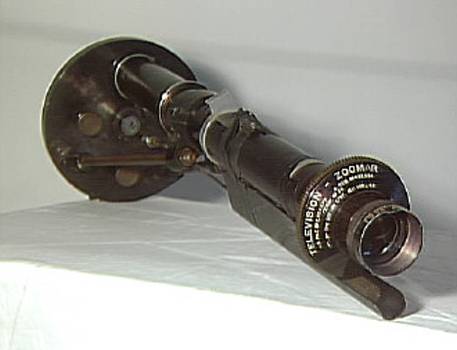
1956 – The worlds’ first all-color TV station, WNBQ-TV, was dedicated in Chicago, IL.  It’s now WMAQ-TV.

1959 – Four months after leading a successful rebellion in Cuba, Fidel Castro visited the U.S.


1971 – George C. Scott refused the Best Actor Oscar for Patton at the 43rd Annual Academy Awards ceremony.


1973 – Mickey Wright won the $25,000 first prize in the Colgate-Dinah Shore Golf Classic in Palm Springs, CA, then the richest women’s golf tournament.


Leave a comment

Filed under History

Titanic Visions

Writers have a unique propensity for conjuring up stories of fantastic voyages and incredible events.  Sometimes art imitates them; other times real life proves such things can happen.  This is the case with Morgan Robertson, an American author who, in 1898, published a book about a massive luxury ocean liner that strikes an iceberg in the North Atlantic and sinks with most everyone aboard.  Entitled Futility, or The Wreck of the Titan, the tale is remarkably foreboding.  Here are some of the similarities and slight differences: 

  • The “Titan” sailed from New York to Liverpool, England, while Titanic sailed from Southampton to New York.
  • It was the “Titan’s” third voyage, but it was Titanic’s first.
  • Both ships sailed in the month of April.
  • The “Titan” was 800 feet long and weighed 45,000 tons.  Titanic was 880 feet long and weighed 46,328 tons.
  • The “Titan” had 15 watertight compartments.  Titanic had 9.
  • The “Titan” had 40,000 horsepower.  Titanic had 45,000 horsepower.
  • The “Titan” traveled at 25 knots.  Titanic traveled at 24 knots.

Robertson had a modest career as a writer; never really enjoying any great success, even when Futility was re-published after Titanic’s sinking.  He died in New Jersey in 1915.

Leave a comment

Filed under Curiosities

10 Things that Went Wrong with the Titanic

  1. Substandard rivets in bow – Later analysis showed the quality of the rivets holding hull plating together in the bow and stern was low; they were iron, with a high content of slag, which becomes brittle at very cold temperatures.
  2. Ship steaming too fast – Although repeatedly warned in telegraph messages from other ships about ice packs and icebergs in the area, Titanic steamed toward the collision at just less than her top speed.
  3. Lack of binoculars – Due to confusion in Southampton, some lookouts didn’t have binoculars, although many experts doubt the quality of the optics of the time would have helped.
  4. Ice warnings disregarded – On the night of April 14, Titanic received six warnings from other ships, and ice had been seen earlier that day. Capt. Edward John Smith believed ice posed no serious risk to his huge ship.
  5. Strong tides lifted icebergs – An unusually close approach by the moon on January 4, 1912, may have caused very high tides, refloating icebergs grounded earlier in shallow waters near the Labrador and Newfoundland coasts, causing a glut of icebergs in the shipping lanes into which Titanic steamed.
  6. Last-minute maneuver failed – Rather than striking the iceberg head-on, which experts think would have caused less damage, First Officer William Murdoch tried to “port around” it, or swing the bow around it, then swing the stern, by changing the rudder position and reversing the two outboard engines; this failed, and the glancing blow was struck.
  7. Watertight bulkheads were not sealed at the top – Fifteen bulkheads running the width of Titanic divided its interior into 16 compartments, but although they extended well above water line, they were not sealed at the top.
  8. Lifeboats – Titanic had 20 lifeboats, which could have held up to 1,178 people, only a third of those who were onboard, although this met the maritime rules of the day.
  9. Boats not totally filled – Most of the lifeboats left the ship without being loaded to capacity; some were less than half-filled.
  10. Californian – The British steamer SS Californian is thought to have seen Titanic’s distress rocket flares from about 10 miles (16 km) away, but did not steam toward them.

Source


6 Comments

Filed under News

Rare Titanic Film Footage

This is genuine film footage of the R.M.S. Titanic leaving Belfast, Ireland for Southampton, England.  It is the only genuine extant footage of the ship.  The film continues with shots of the R.M.S. Carpathia, which plucked Titanic survivors from lifeboats, and that ship’s arrival in New York.


Leave a comment

Filed under Classics

Photographs of Titanic by Father Francis Browne

Father Francis Browne was an Irish Roman Catholic priest who traveled to Cobh, Ireland in April of 1912 to photograph the R.M.S. Titanic as it made a brief stop; its last port of call before proceeding on its voyage.  Although the ship was registered in England, Ireland holds a special fondness for Titanic: it was built in Belfast, and many of its passengers were Irish immigrants on their way to what they hoped would be a better life in the U.S.  Father Browne died in 1960, his photographs stored in a large black metal trunk in the basement of Irish Jesuit Provincial’s House.  In 1985, the same year the Titanic wreck was discovered, Father Edward O’Donnell came across Father Browne’s metal trunk, which also contained a number of other photographs and negatives.  But, his Titanic photographs captured everyone’s attention.  Father Browne’s photographs have been published and exhibited around the world and he is now recognized not only as the greatest photographer in Ireland of the first half of the 20th century but an outstanding photographer of world stature.  Here are some of his pictures of life aboard Titanic.

A boy plays aboard the deck of the Titanic

A Queenstown vendor sells Irish lace aboard the Titanic

A U.S. doctor inspects passenger’s eyes

Major Frank Brown

Members of the Titanic crew pose with lifejackets

Passengers from steerage settle on deck aboard the Titanic

The bedroom in the Browne suite aboard the Titanic

The gymnasium

Men waiting for jobs possibly transferring mail

The last photo of the Titanic taken by Father Francis Browne

Father Francis Browne


Leave a comment

Filed under Classics