Tag Archives: Brazil

When Real Monsters Attack

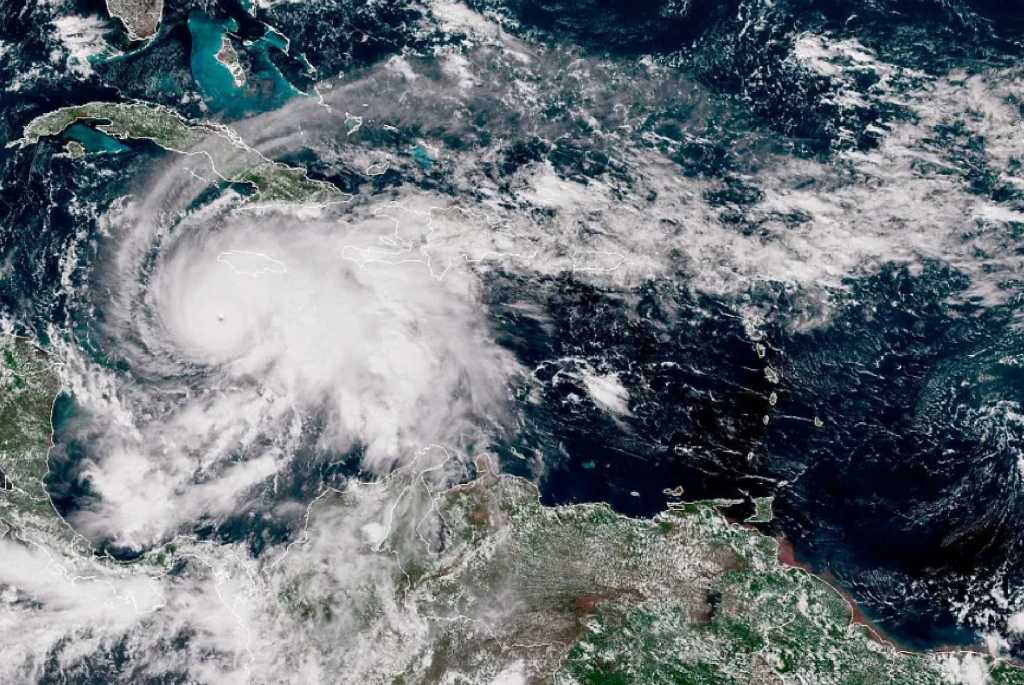
Satellite image of Melissa over Jamaica

“When I look at the cloud pattern, I will tell you as a meteorologist and professional – and a person – it is beautiful, but it is terrifying.  I know what is underneath those clouds.”

Sean Sublette, a meteorologist based in Virginia

Who needs ghosts and witches for Halloween when we have massive storm systems like Hurricane Melissa?  This past Tuesday, the 28th, Melissa plowed into Jamaica with 185-mph (298 kmh) winds.  It’s the first known Category 5 hurricane to hit Jamaica and most powerful since Gilbert in September 1988.  Gilbert held the record as the most powerful tropical storm system in recorded history, until Hurricane Patricia in the northwestern Pacific in October 2015.  Patricia produced 215-mph (346-kmh) winds and a surface pressure of 872 millibars (mb).  That pressure is the second lowest on record with Typhoon Tip producing 870 mb in October 1979.  (Tip boasted 190-mph winds.)

These storm systems – already the most powerful tempests on Earth – are getting worse.  In September 1995 Tropical Storm Opal developed in the Bay of Campeche and slammed into Florida’s west coast as a Category 4 hurricane.  It was the first time since U.S. meteorologists began naming these storms in 1953 that the Atlantic-Caribbean group reached the letter ‘O’.

That year, 1995, produced a total of 21 named systems; the greatest number since the 20 total systems (albeit unnamed) in the region in 1933.  All those records, however, shattered in 2005 when the Atlantic-Caribbean produced an unprecedented 28 tropical storm systems.  For the first time since 1953, meteorologists had to resort to the Greek alphabet for storm names.

The 2005 Atlantic-Caribbean hurricane system was most likely foretold in March 2004, when a squall nicknamed “Catarina” developed in the southwestern Atlantic and hit Brazil as what would be considered a Category 1 hurricane.  This was truly anomalous as full-fledged hurricanes rarely form in the Southern Atlantic because of cooler sea surface temperatures and strong vertical wind shear.

Tropical storm systems of any magnitude anywhere in the world are measured using the Saffir-Simpson Hurricane Wind Scale, which went into effect in 1973.  The U.S. National Hurricane Center (NHC) modified the system in 2009, but it’s still the standard-bearer for measuring the most powerful weather systems on Earth.

The development of Doppler weather radar in the 1970s proved to be a great leap forward for meteorology.  In September 1961 Hurricane Esther was the first tropical storm to be tracked by satellite.  Previously storms were generally followed by military reconnaissance aircraft.  But with Doppler scientists were able to trail various weather systems in real time and garner detailed information about a storm’s formation and movement.  By the 1980s, meteorologists began theorizing that tropical storm systems – especially hurricanes – follow certain pathways in the atmosphere; depending on the time of year and location of formation.  Late season hurricanes (after October 1) in the Atlantic-Caribbean, for example, tend to move eastward.

Eight years ago Hurricane Maria became one of the worst storms to rake across the Caribbean.  Puerto Rico suffered the worst of the chaos, as the storm killed over 3,000 people and costing roughly USD 90-95 billion.  It was the strongest storm to strike the island since the 1928 Lake Okeechobee Hurricane, which was also a Category 5 storm sporting a maximum wind speed of  160 mph (412 kmh) and a death toll in excess of 2,500 throughout the Caribbean and Florida.

Melissa’s strength is disturbing in that it is late in the Atlantic-Caribbean hurricane season.  In October 1998, meteorologists were stunned when Hurricane Mitch became the first Category 5 storm to develop in the region in the month of October.  Before the development of weather technology, it’s understandable that these storms would exact massive death tolls in the areas of impact.  The Great Hurricane of 1780 killed an estimated 22,000 to 30,000 people throughout the Caribbean.  Historians believe it may have achieved a maximum wind speed of 200 mph (322 kph).

To date, the deadliest hurricane to hit the United States (and the deadliest natural disaster) is still the 1900 Galveston Hurricane, which killed over 12,000 – at least 8,000 on Galveston alone.  No one knows where specifically it formed, but scientists believe it was a Category 4 storm.  They also believe it was the same storm that marched up into the central U.S., across the Arctic region and down in Siberia.  If that’s accurate, the storm wasn’t just deadly – it was truly anomalous.  The calamity was exacerbated by the lack of a cohesive warning system and geography.  Galveston is essentially a barrier island, which are narrow strips of sand that protect the mainland from the impact of powerful storms and ocean waves.  By nature they’re not designed to be developed for human habitation.  In 1900, the bulk of Galveston’s land mass rose barely above 15 feet (457 cm), and many of its streets ended at the shoreline.  In the ensuing decades Galveston officials have taken greater measures to develop a solid warning system and evacuation plans; a sea wall that extends across much of the island has helped, along with the planting of seagrass and palm trees.  The entire island has been literally lifted up by hauling in more sand and dirt.  Despite all those efforts, Galveston remains vulnerable, as evidenced by Hurricane Ike in 2008.

Technology and even the most comprehensive evacuation plans won’t save people from themselves.  Development along the coastlines of the U.S. has grown exponentially within the past 50 years.  In September 1999 Hurricane Floyd approached the Florida-Georgia border as a Category 4 and triggered the largest evacuation at the time – nearly 3 million people were ordered to move inland.  However, Floyd bypassed the area and migrated northward in the Carolinas.  Many people were upset at having to leave for a storm that missed them.  I recall one man on the national news complain that all the technology should have provided a more accurate prediction.  I looked at the TV screen and said, ‘Really?’  I personally believe that no one should ever be forced to flee their homes for a natural disaster.  If they feel they’re brave and strong enough to withstand nature’s wrath, just leave them alone!  But they also shouldn’t expect first responders to come racing to their aid.  After X hour, they’re on their own.

In June 1992, the United Nations staged the “Conference on Environment and Development” in Rio de Janeiro, Brazil.  Also known as the ‘Earth Summit’, political leaders, diplomats, scientists and many others convened to discuss humanity’s impact on the environment.  One subject that was part of the original agenda was birth control.  The premise was simple: unchecked population growth can have adverse effects on natural resources, such as clean water and air.  But just as the conference was set to begin, the Roman Catholic Church in Brazil intervened and demanded that any discussion on birth control either be limited or excluded altogether.  Despite some initial resistance, the conference organizers eventually conceded, and the Church got their wish.  Conversations on any kind of population control were all but eradicated.  Afterwards, though, the conference was declared a success.

In 1992 the global population was a little over 5.4 billion.  In 2024 it stood at approximately 8.1 billion.  In 1982 China reached an incredible milestone when it became the first country on Earth to attain a population of 1 billion.  (Various demographic studies declared that it actually had reached that number in 1980.)  Before then, China’s various efforts to control its population had catastrophic results.  In 1958 the “Great Leap Forward” was an attempt to streamline food production and distribution, but it led to the starvation deaths of up to 55 million people.  In 1979 the “One Child Per Family” policy was a more concerted effort to limit population growth, but it had an incredibly low acceptance rate, especially in rural areas where more children meant more hands to harvest crops and other food stuffs.  Its most negative impact, however, was on gender disparities.  As with many developing nations, China valued its male citizens more than females.  The “One Child Per Family” stunt culminated in the deaths of thousands of infant girls and has now made China the only country with a greater population of males than females.

In May 2000 India crossed the 1 billion citizenry mark.  By 2023 it had surpassed China in overall population.  Lack of education and comprehensive health care always has deleterious effects on a nation’s overall welfare.  Unmitigated population increases push more people into regions where they’ve never or at least rarely lived.  We’re seeing that here in the U.S., as city populations grow and begin overtaking forests and even farmland.

What does this have to do with Melissa and other tropical storm systems?  In terms of population and human interaction with nature, it means everything.  Coastal areas continue to be popular destinations for tourists and even residents.  Severe storms and rising seas are already wreaking havoc on U.S. coastlines.  Since the start of 2025, a large number of beachfront homes across the country have collapsed into encroaching oceans, mostly on the Eastern seaboard.

Remember Melissa is the strongest hurricane to develop this late in the season.  The first two decades of this century have seen the greatest number of Category 5 hurricanes in the Atlantic-Caribbean basin – nearly 40.  Hurricane Camille remains the most powerful storm to strike anywhere in the United States.  It basically set the standard and was considered a true meteorological anomaly.  But that standard is changing rapidly, and Category 5 storms are becoming more common.

Once again, who needs ghosts and witches when we have real monsters coming out of the sea?

Also see: Great Bhola Cyclone

Leave a comment

Filed under Essays

Self-Inflicted

“When fascism comes to America, it will be wrapped in the flag and carrying a cross.”

Sinclair Lewis, 1935

I had a certain sensation deep inside of me; the same kind of feeling when I know something dramatic – either good or bad – is about to happen.  This time it was bad, and I almost felt sick.  Donald Trump has been reelected to the U.S. presidency.  He becomes only the second president in U.S. history to win a second term that didn’t immediately follow the first.  He also has the dubious distinction of being the first indicted criminal to be elected.  Little could be stranger or sadder for the American people.  I suppose, though, that too many people drank that proverbial Kool-Aid offered by the Republican despot; a man who openly admires the likes of Vladimir Putin and Kim Jong-Un; who has advocated violence against others; who has threatened to imprison anyone who disagrees with him; who incited a riot nearly four years ago; and who has demonstrated no true respect for average, working Americans.

I am embarrassed by and disgusted with many of my fellow Americans who helped put Trump into office.  The Democratic Party, however, really has no one but themselves to blame for this chaos.  Their leadership stood by as Joe Biden and Bernie Sanders ran for president in 2020.  With all due respect to those two gentlemen, their time had come and gone.  The window to run for and win the U.S. presidency is small.  I felt Biden and Sanders would have better served the country by giving speeches and writing books about the value and importance of democracy and how people like Trump pose the worst threat to our constitutional freedoms.

For the Democrats, the 2020 presidential race began with the most diverse slate of candidates – and ended with the same tired old figures that traditionally represented both parties: old White men.  Now understand I’m a mostly White male and have no qualms about it.  But this nation boasts too varied a population to rely upon the same types of people to lead us.

And it’s not that the U.S. isn’t ready for a female president.  We’re way past ready.  It’s just that the Democrats (and the Republicans for that matter) have never chosen the right women to lead them.  I’ve always said Hillary Clinton was too divisive a figure.  While I loved Bill “Who’s Your Daddy” Clinton, I personally never cared for Hillary.  And, although Kamala Harris made history by becoming the first female vice-president in U.S. history, she didn’t do enough to separate herself from Biden.

In 1993 Canada elected its first female prime minister, Kim Campbell, and highly patriarchal and staunchly Roman Catholic México just elected its first female (and Jewish) president, Claudia Scheinbaum.  Thus far, eighteen other women either have been elected or ascended to the highest office in their respective countries in the Western Hemisphere:

Jeanine Áñez, Bolivia, 2019-20

Rosalía Arteaga, Ecuador, 1997

Michelle Bachelet, Chile, 2006-10 and 2014-18

Dina Boluarte, Peru, since 2022

Sylvanie Burton, Dominica, since 2023

Xiomara Castro, Honduras, since 2022

Violeta Chamorro, Nicaragua, 1990-97

Eugenia Charles, Dominican Republic, 1980-95

Laura Chinchilla, Costa Rica, 2010-14

Cristina Fernández de Kirchner, Argentina, 2007-15

Lidia Gueiler Tejadam, Bolivia, 1979-80

Mireya Moscoso, Panama, 1999-2004

Mia Mottley, Barbados, since 2018

Ertha Pascal-Trouillot, Haiti, 1990-91 (acting president)

Michèle Pierre-Louis, Haiti, 2008-09

Dilma Rousseff, Brazil, 2014-16

Portia Simpson-Miller, Jamaica, 2006-07 and 2012-16

Claudette Werleigh, Haiti, 1995-96

Trump does not represent me – never has and never will.  He has proclaimed total disrespect for people who aren’t exactly like him.  And I’m certainly not like him.  I’m not a wealthy, full-blooded Caucasian womanizer who cheated on his taxes and has disdain for the American military.  I feel that he’s a genuine threat to free speech and the right to vote, but – like most conservatives – has the full support of gun rights advocates.  This latter band of extremists has always placed the value of firearms above free speech and the right to vote – and certainly above the lives of human beings.

One of my concerns with Trump’s return to the White House is that he will implement the so-called Project 2025 – a federal policy agenda created by the Heritage Foundation, a far-right conservative outfit that is a borderline hate group.  Many officials in Trump’s first administration took part in the project’s creation, which demands a complete overhaul of the government based on staunchly conservative ideology.  That philosophy features opposition to the usual causes: abortion and reproductive freedom and queer rights, but also immigration and racial equity.  Moreover, Project 2025 calls for unwarranted surveillance on specific individuals; using force to quell protestors; and targeting journalists who they deem enemies of the state.  This might sound familiar to those schooled in global political history.  They’re the same kind of tactics the Nazis and the former Soviet Union used on its own civilians.  Argentina pursued the same agenda during its “Dirty War”, and North Korea is doing it now.

I don’t know what’s next for America, but I see nothing good on the horizon.  I’m certain my conservative friends and relatives will assume I’m being paranoid, even hysterical.  Yet I felt similar sensations of foreboding when George W. Bush became president in 2000.  And I was right.  The U.S. ended up both in war and a recession.

I’m almost certain it will happen again.

2 Comments

Filed under Essays

Glamor Tyranny

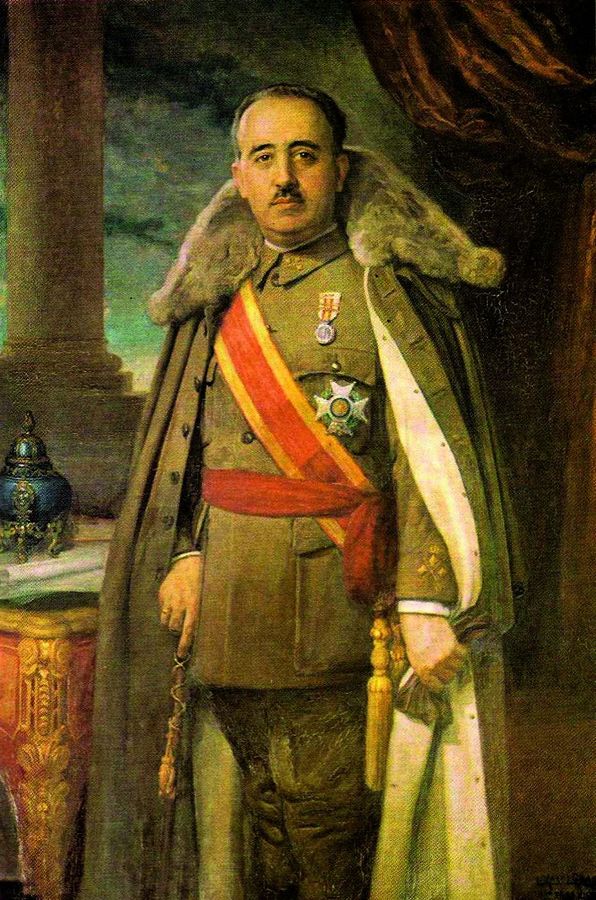
Portrait of Francisco Franco

“When I feed the poor, they call me a saint.  But when I ask why the poor are hungry, they call me a communist.”

– Brazilian Archbishop Hélder Câmara

Last month marked the 45th anniversary of the death of Francisco Franco, Western Europe’s last dictator.  Afterwards Spain finally transitioned into a democratic state; something it had tried when it elected a new government in 1931.  During the “Second Republic”, Spaniards deposed King Alfonso XIII and reduced the powers of the military, the Roman Catholic Church and property-owning elites.  But, just two years later, a center-right coalition won a majority in the elections and they brought in Franco.  Franco had gained some notoriety for fighting against an insurgency in Spanish-controlled Morocco amidst World War I.  In 1926, at the age of 33, he became the youngest general in all of Europe.  But, as the “Second Republic” proceeded, Franco grew critical of the new government and was subsequently banned to a military outpost in the Canary Islands.  By 1936 right-wing extremists had fomented plans for a military coup.  Apparently Franco was initially opposed, but joined the effort as it took shape.

The 1936-39 Spanish Civil War actually began in Morocco, as right-wing activists launched concerted efforts to regain control.  By 1939 they had won – at the cost of 1 million lives – and Franco became Spain’s eminent ruler.  Spain’s “White Terror” induced a culture of repression and execution; a persecution of democratic supporters of a truly tolerant government.  Civil wars in any country are brutal and destructive, and Spain’s conflict was no different.  During Franco’s reign, an estimated 150,000 people were executed or mysteriously vanished.  That’s a modest assessment.  Personally, as with the Nazi Holocaust or the Cambodian massacre, I believe the official estimates are politically polite.

Early last month a friend posted a photo (a formal portrait) of Franco on his Facebook page.  One of his friends replied by declaring that Franco would have never let Spain become the socialist state it is now.  I responded by noting that Franco was a dictator who opposed free speech and freedom of religion.  Franco imprisoned and executed thousands of political opponents, while thousands more disappeared.  Like Argentina, Guatemala and other Latin American nations, Spain emerged as a totalitarian state, where anyone who dared criticize the leadership was deemed a rebel and summarily prosecuted.  No one among the Spanish populace ostensibly was brave enough to stand up to such totalitarian shenanigans, until Franco died.  But it is what it is.  Calls for revolution are always easier than actually revolting.

I don’t believe either my friend or his friend responded to my comment.  I guess I should have been shocked by the aforementioned Facebook posts.  But ultimately it didn’t surprise me, since my friend is a devotee of Donald Trump.  He once posted photos of himself and Spanish dignitaries at a diplomatic function in Houston.  But seeing his post about Franco angered me.

I’ve noticed some conservatives hold a certain degree of sentimentality for dictators and autocrats.  Hence Trump’s conciliatory behavior towards the likes of Russia’s Vladimir Putin or North Korea’s Kim Jong Un.  Both Putin and Jong Un live in relative luxury, while essentially holding an iron grip on power.  North Korea is particularly egregious in this dichotomy.  They still won’t acknowledge the brutal severity of a 1990s-era famine in which up to 3.5 million people perished.

Trump is also in line with Brazil’s Jair Bolsarano who openly longed for the period of the nation’s military rule; a time when – like many other nations in Latin America – thousands disappeared, were imprisoned or turned up dead.  Bolsarano has often been dubbed as “Trump of the Tropics”.

I’m sure the analogy flattered Bolsarano, and it sounds appropriate.  Like Trump Bolsarano denounced COVID-19 as a “little flu” and downplayed it, even when he contracted the virus.  As with any European-style colonialist, Bolsarano lamented that Brazil didn’t succeed in eliminating the nation’s indigenous populations.  He doesn’t seem to realize North America’s indigenous peoples were NOT completely obliterated from the continent.  Yet, Bolsarano ultimately will go to his grave knowing his sanguineous ideals failed.  And I couldn’t be happier.

I also couldn’t be happier knowing Donald Trump will NOT be President of the United States after noon (EST) on January 20, 2021.  Fortunately, our beloved democratic process functioned as designed last month.  The United States isn’t like Franco’s Spain or Latin America of the past; where military dictatorships commanded every aspect of people’s lives, or like Putin’s Russia where one person can hold the reins of power for infinite years, or Kim Jong-Un’s North Korea where a single clan of dynastic brutes can cripple the minds and bodies of their subjects.

I feel Donald Trump came as close to an autocrat as we’ve ever had.  It was a frightening prospect, especially knowing he actually wanted to delay the November 3 elections.

But American democracy prevailed over Trump’s fascist tendencies.  That’s how all civilized societies should operate.

Leave a comment

Filed under Essays

Worst Quote of the Week – November 30, 2019

“Take photo, film, send it to an NGO (non-government organization), the NGO spreads it out, does a campaign against Brazil, gets in touch with Leonardo DiCaprio and Leonardo DiCaprio donates $500,000 to this NGO. One part went to the people who were setting the fire, right?”

– Brazilian President Jair Bolsarano, blaming environmentalists and U.S. actor Leonardo DiCaprio for the recent rash of wildfires that scorched the Amazon.

Leave a comment

Filed under News

You are on Indian Land: Acknowledging the Traditional Homelands of Indigenous People at the University of Illinois at Urbana-Champaign

For some 500 years the indigenous peoples of the Western Hemisphere have struggled to prove a simple fact: they and their ancestors were the first human occupants of this massive region. They weren’t members of the wildlife and they weren’t features of the various landscapes. They were real people who constructed real communities with the resources available. It’s taken a while, but they’re starting to gain that recognition. As someone of part Mexican Indian ancestry, it’s significant to me.

Matthew Sakiestewa Gilbert is a Professor and Head of the Department of American Indian Studies at the University of Arizona. A member of the Hopi Indian community, he is also the author of a number of books on the Native American experience in the contemporary United States; most recently Modern Encounters of the Hopi Past, in which he analyzes the ways the Hopi operated within and beyond their ancestral lands, including their participation in the U.S. military, American film industry, music ensembles, and higher education.

It’s a mission and a challenge that may not be fully realized in our lifetime. When one considers the brutal scope of the ongoing discrimination and oppression faced by Indigenous Americans, it’s not difficult to see why.
In 1998, Jair Bolsonaro, a far-right, nationalist Brazilian politician told “Correio Braziliense” newspaper, “It’s a shame that the Brazilian cavalry hasn’t been as efficient as the Americans, who exterminated the Indians.” Bolsonaro is now president of Brazil.

What he and others of that bigoted mindset don’t seem to understand is that the native peoples of the Western Hemisphere never were completely “exterminated”; neither in Brazil nor here in the U.S. The colonialists and their descendants tried, but even after half a millennia, they still haven’t won that war.

Matthew Sakiestewa Gilbert's avatarBEYOND THE MESAS, LLC

[The following land acknowledgement was part of a keynote address I gave at the Annual Celebration of Diversity Breakfast at the University of Illinois at Urbana-Champaign. The event, which had over 400 people, took place on November 9, 2018. Over the years, people have approached Indigenous land acknowledgements in various ways. This is how I did it, and I am hopeful that my approach will be of some help to others.]

You are on Indian Land

Good morning everyone. It is great to be here. I am so honored by this opportunity.

I was told earlier this week that I had about 8 minutes at the mic.

And so in true Hopi fashion, I am going to keep my remarks short and sweet.

In recent months, officials and others on campus have started their public gatherings (including this gathering) by reading an official statement that acknowledges the Indigenous people who were…

View original post 662 more words

Leave a comment

Filed under News

On Wings and Light

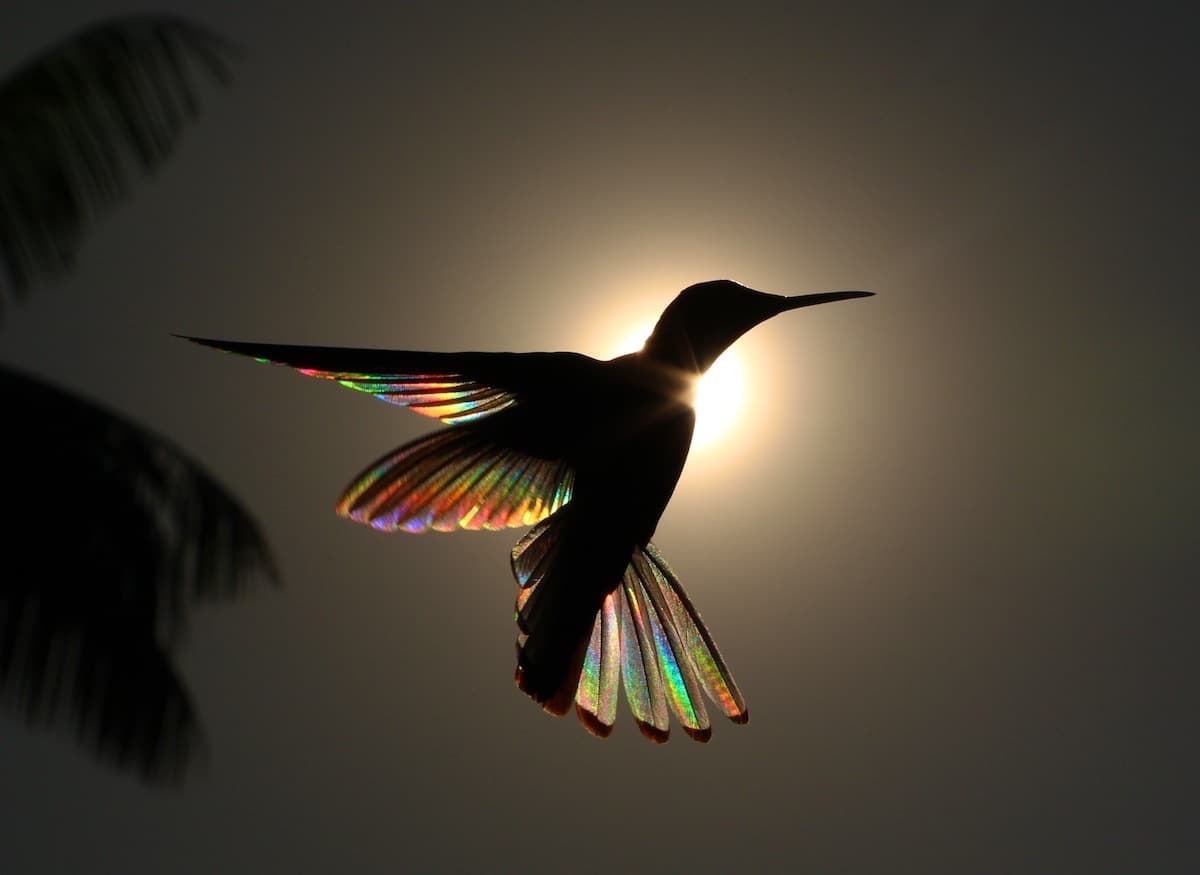
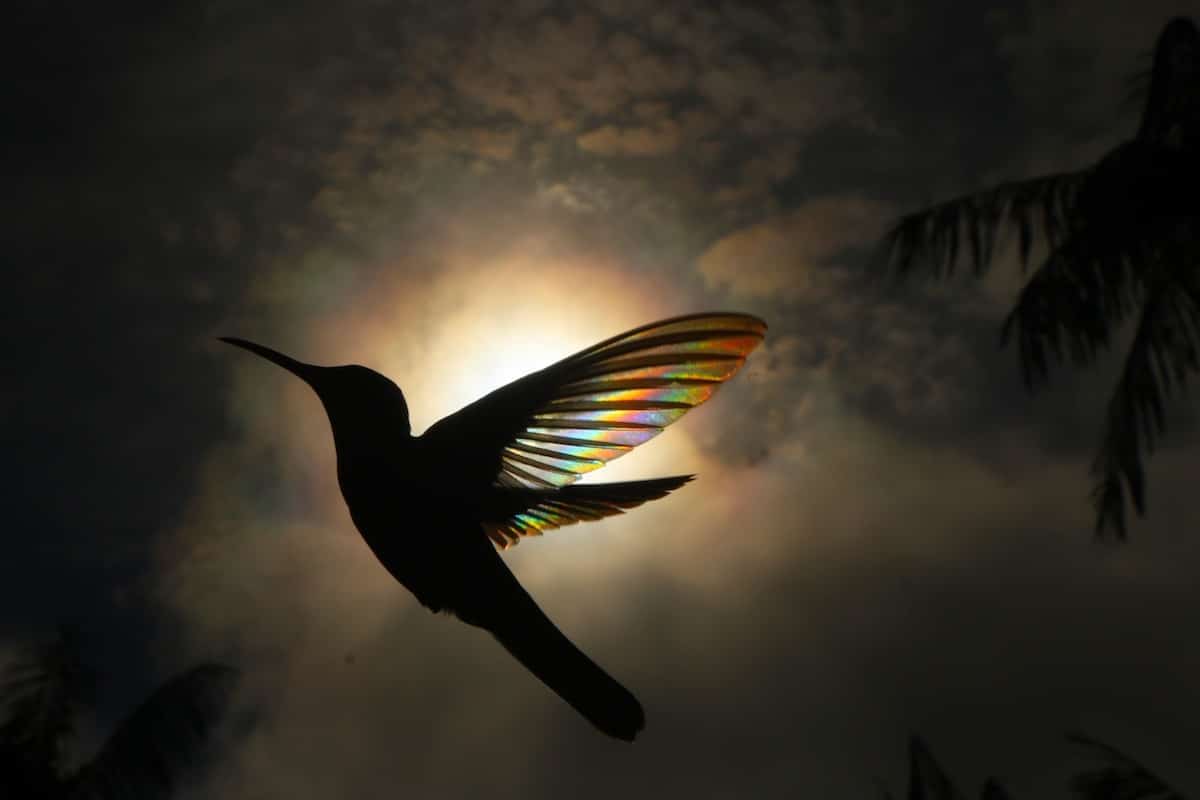
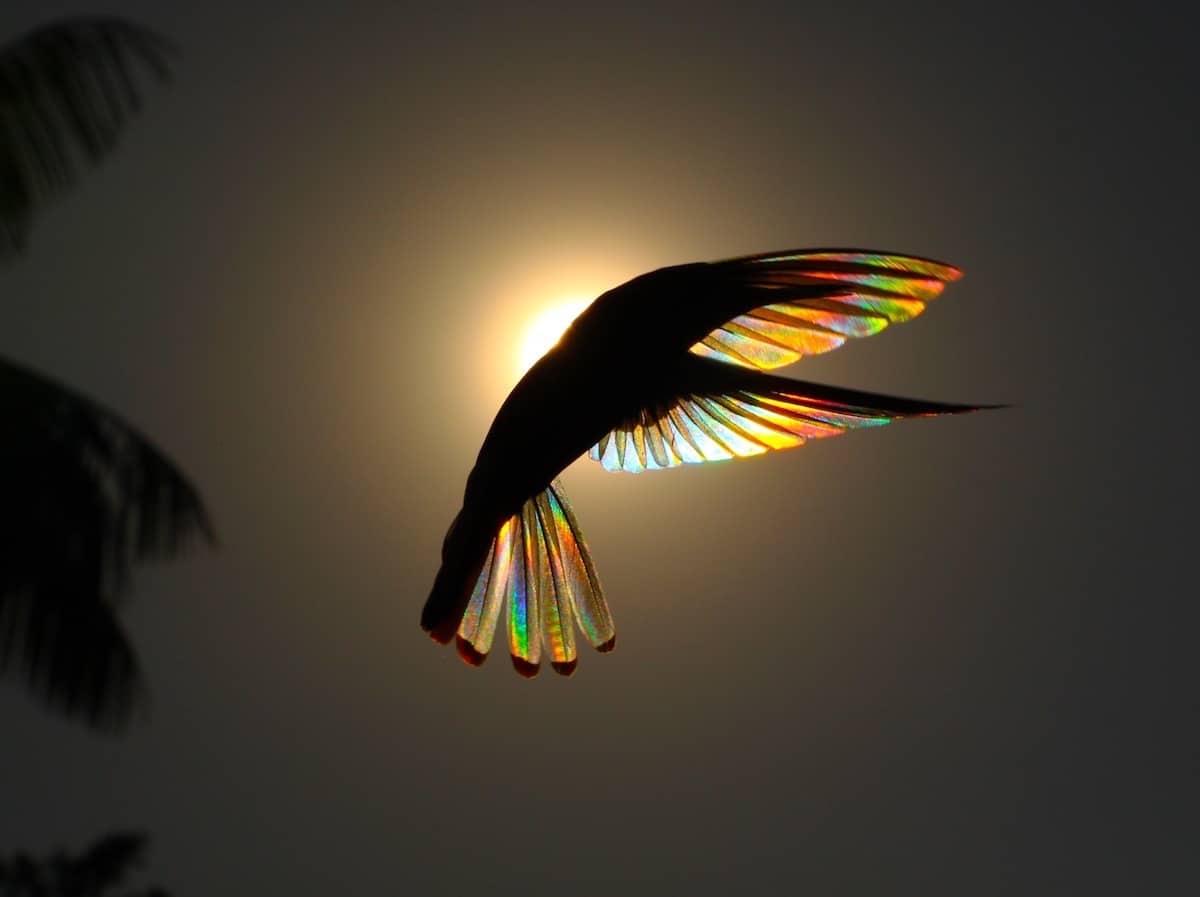
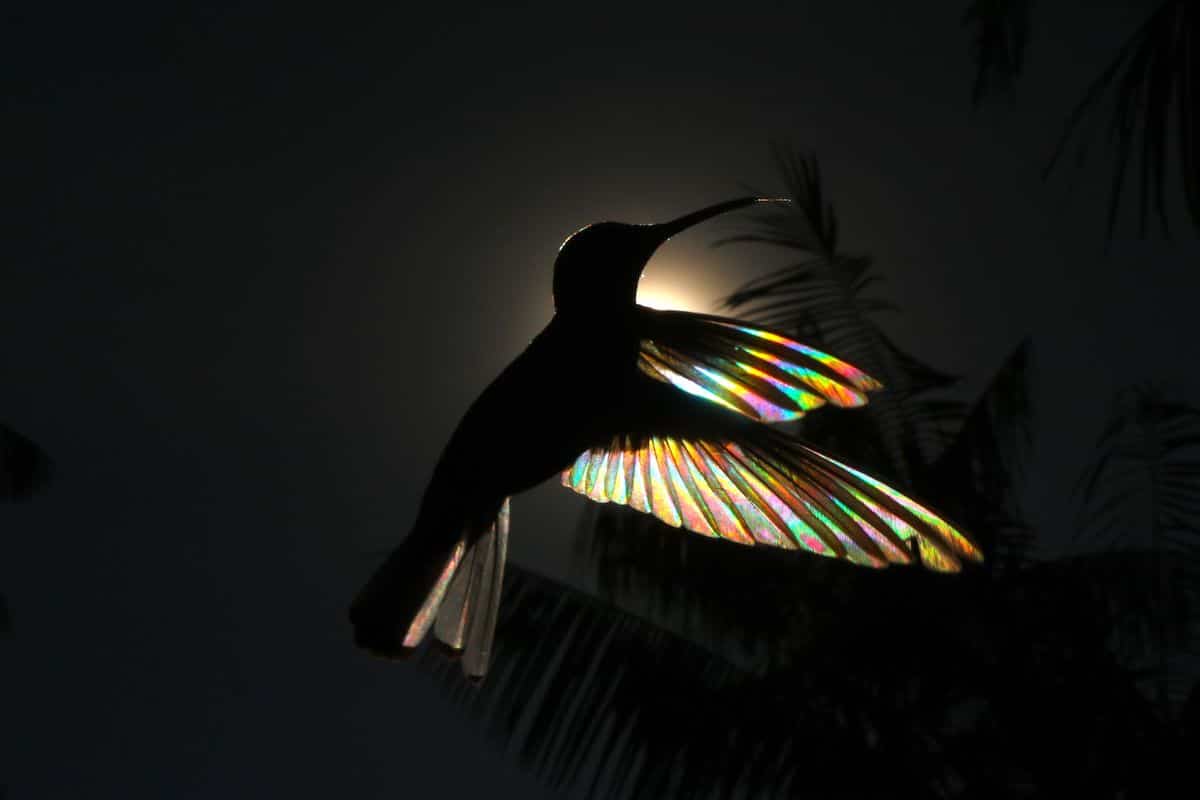
Hummingbirds occupy that rare place where tenacity, beauty, grace and mysticism collaborate to create something extraordinary.  Australian photographer Christian Spencer has used his camera to capture all of that in a new manner.  A longtime resident of Brazil’s Itatiaia National Park for nearly two decades, Spencer has photographed many of the region’s natural wonders, including hummingbirds.  Recently, he discovered a unique way to combine his love for the birds with sunlight.  In a series entitled ‘Winged Prism’, Spencer photographed light filtered through the wings and tail of a black and white Jacobi hummingbird.  In a Photo Shoppe world, this is truly unique and breathtaking.

Leave a comment

Filed under Art Working