Tag Archives: Elon Musk

Trumpettes

I’ve been looking for a club like this.  Newly-formed (c. January 2025), the group strives to promote unimaginably obscene wealth.  “Trillionaires for Trump” is following the lead of our Dear Leader in giving a golden middle finger to the peons of our world – you know, people like we bloggers, writers and other low-lifes.  We’re the ones who actually pay taxes and keep the economy functioning, but no one calls “Us” job creators.

Go ahead and check out this gang!  You might find your place in the world!

Image: Galerie

2 Comments

Filed under Curiosities

Social Living

“Social Security is the biggest Ponzi scheme of all time.”

Elon Musk, February 28, 2025

For elected officials here in the U.S., Social Security is much like a live power line: touch it and they’re done.  Social security, along with Medicare and Medicaid, is one of those sacred vessels of American life.  It’s not just beloved; it is sacrosanct.

Thus, for a foreign-born oligarch like Elon Musk to disparage it as a “scheme” has become anathemic.  As something of a pseudo-president, Musk is head of the newly created Department of Government Efficiency (DOGE), which has taken a hacksaw to a number of departments within the federal government.  The declared goal is to reduce bureaucratic weight by slashing jobs and merging together certain divisions within the system.  Nowhere in this morass of right-wing blather is a dedication to make people like Musk and their corporations to pay their share of taxes.  But that’s a different issue.

To place things in proper perspective – and put elected officials like Trump in their place – social security has too many safeguards to be considered a Ponzi scheme.  Before the Social Security Act of 1935, a large number of older Americans lived in abject poverty.  At the time it was common for families to take in older relatives.  But some people simply didn’t have that support and they were left to fend for themselves.  The concept of providing for those who simply couldn’t work or take care of themselves is nothing new.  Various societies throughout history have considered the fragilities of the human condition and sought to alleviate those difficulties.  It is simply immoral to abandon those who can’t care for themselves.  It’s also rather easy to look at those who won’t take care of their own lives and group them with the others.

The Social Security Act has been amended several times since 1935, but it differs from a Ponzi scheme in many ways.

1. Social Security is not fraudulent

A Ponzi scheme is a deliberate a fraud intent to mislead investors.

2. Social Security’s operators do not take a cut

Unlike with Ponzi schemes, Social Security is not a profit-generating gamble, and the officials who run it do not take a portion of it for themselves.

3. Social Security is operated in the open

Social Security is a transparent, government-run program with clear funding mechanisms. 

4. Social Security has built-in oversight

Unlike a Ponzi scheme, Social Security has many layers of oversight, auditing, regulation and legal and financial systems in place to ensure accuracy and transparency. 

5. Social Security offers realistic returns

The goal of Social Security is to provide basic income replacement, not to generate get-rich-quick returns.  Ponzi schemes often promise unrealistically high gains.

6. If financially stressed, Social Security can adjust funding and/or benefits

A fiscal imbalance in Social Security can be corrected, but a Ponzi scheme can’t.  Social Security beneficiaries can’t demand to be paid a balance in their account if they suspect something is wrong.  There can’t be a “bank run” on Social Security, and problems ultimately can be resolved.

It doesn’t surprise me that Trump and the Republican Party are targeting Social Security, or rather that conservative Republicans in general haven’t struck back at the president.  Social and political conservatives have always been leery about government programs designed to help people.  Before Franklin R. Roosevelt’s “New Deal” policies (designed and implemented to address the brutal impact of the Great Depression), government’s primary purpose was to enact laws and collect taxes.  The collapse of the U.S. stock market in 1929 and the subsequent financial calamities that ensued changed that mindset – at least among the more open-minded.  Social Security was just one project resulting from such forward thinking.

In 1944, Congress passed the Servicemen’s Readjustment Act (later known as the GI Bill) to assist those returning from military service during World War II.  It provided a myriad of aid and services to these individuals, such as education and housing.  Again, many conservatives denounced it as welfare.

Similar criticisms befell Lyndon Johnson’s “Great Society” some two decades later.  From this massive undertaking, we got Medicare and Medicaid.  But, as Johnson declared, the government should ensure both “liberty and abundance” for all citizens – not just those who can afford it.  And as before, critics deemed it socialized medicine.

While it’s surprising that the U.S. federal government can operate with such alleged overspending – a bloated bureaucracy – it does provide substantial safety and security to most everyone here.  The attack on Social Security is monstrous.  Trump has sworn to leave it alone, but I personally don’t trust him.

I’m fast approaching the official retirement age of 62, yet I know I won’t be able to sit back in my quiet suburban home and embark on my dream life of being a full-fledged writer.  The Social Security system is supposedly insolvent.  Raising the official retirement age (as many, including Musk, have suggested) or reducing benefits won’t repair that problem.  Funding for the Iraq War alone could have made Social Security fiscally viable for generations.  Still, the program must be handled with care.  Touching it irresponsibly is, indeed, akin to touching that live power line.

3 Comments

Filed under Essays

Elon Musk Can Kiss My Hairy Ass and Then Go Home

Elon Musk, the South African-born multi-billionaire who has founded several companies, including Tesla and Space X, has jumped into the 2024 presidential race with a curious stunt in support of Donald Trump.  He’s offering USD 1 million to anyone who signs his pledge to support free speech and the Second Amendment to the U.S. Constitution.  Pennsylvania State Attorney General Michelle Henry filed suit against Musk; stating the giveaway is technically a lottery not sanctioned by state officials.  But Pennsylvania State Judge Angelo Foglietta stopped the litigation by refusing to block the Musk’s antics.  Instead, he deferred the matter to a federal court and noted that Henry’s suit probably won’t be resolved before Election Day, next Tuesday.

I could care less whether this foreign-born tax cheat wants to engage in such capers.  One million dollars to any average person is attractive, including myself.  But my vote is more important than that.  So is everyone else’s.

It seems every major election in the U.S. since 2000 has gotten more and more weird.  I remain cynical, as my displeasure with government at all levels in this country grows.  Both major political parties have become increasingly dominated by extremists.  Regardless of the office they’re seeking, candidates have always played initially to their base; those unmovable die-hards who will vote for one side no matter what.  Then, once the candidate has secured the nomination, they expand their outreach to persuade as many others as possible.

Over the past decade, however, Donald Trump has preached to one group and only one group: his faithful (and fanatical) acolytes.  He mocks them, in a way, behind their collective backs; the same way false prophets ridicule their blind minions.

From a political standpoint, I consider myself left of center, but I’ve voted consistently Democrat since 1992.  Then came 2016 and I went rogue by voting for Jill Stein of the Green Party.  I didn’t care for Trump and I never liked Hillary Clinton.  Now I absolutely despise Trump and don’t care for Vice-President Kamala Harris.  Recently various European chapters of the Green Party have begged Stein to withdraw from the presidential race and support Harris.  At this point, though, it may be too late.

I’m not – and never have been – persuaded by editorial or celebrity endorsements of a particular candidate.  Musk can keep his money – and settle in comfortably at one of Trump’s estates.  I’ll vote my conscious, for whatever that’s worth in these chaotic days.  Besides, official Election Day, November 5, will be my 61st birthday.  I won’t spend it thinking about politicians.

Image: Gary McCoy

Leave a comment

Filed under Essays

Best Quotes of the Week – April 30, 2022

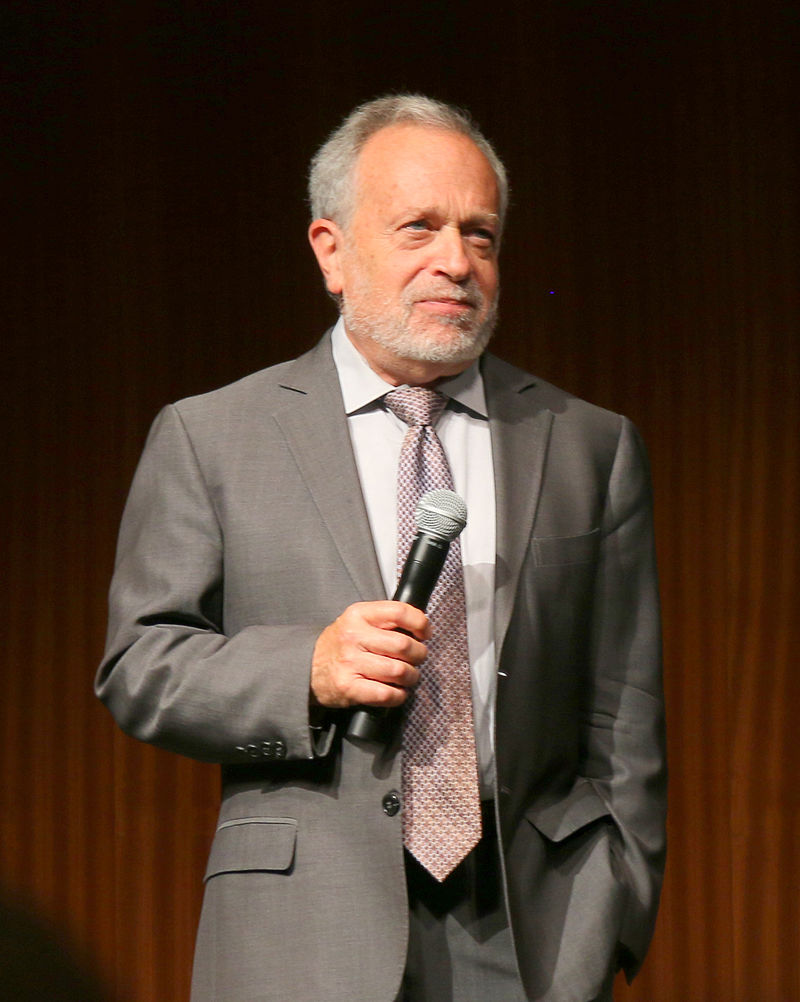
“When billionaires talk about freedom, watch your wallets.  Behind Elon Musk’s blather about free markets, free speech, and free choice is his goal to be free from accountability.”

Robert Reich, regarding Elon Musk’s recent takeover of Twitter

Reich went on to say: “The “free market” increasingly reflects the demands of big money. Unfriendly takeovers, such as Musk threatens to mount at Twitter, weren’t part of the “free market” until the late 1970s and early 1980s. Before then, laws and regulations constrained them. Then came corporate raiders like Carl Icahn and Michael Milken. Their MO was to find corporations whose assets were worth more than their stock value, borrow against them, acquire enough shares to force them to cut costs (such as laying off workers, abandoning their communities, busting unions, and taking on crushing debt), and cash in. But the raiders’ antics often imposed huge social costs. They pushed America from stakeholder capitalism (where workers and communities had a say in what corporations did) to shareholder capitalism (where the sole corporate goal is to maximize shareholder value). Inequality skyrocketed, insecurity soared, vast swaths of America were abandoned, and millions of good jobs vanished.”

“In the end, if Jimmy and Susie are curious about any of the above, they can do what everyone else does – get a room at the Motel Six and grab the Gideons.”

Chaz Stevens, a Florida resident who has asked the state to remove the Christian Bible from schools and public libraries because its content is inappropriate for children

He took issue with the many Biblical references to rape, bestiality, cannibalism and infanticide and proceeded to question whether the Bible is age-appropriate, pointing to its “casual” references to murder, adultery, sexual immorality, and fornication.  “Do we really want to teach our youth about drunken orgies?”

Leave a comment

Filed under News

10 After 20

“Nothing in life is to be feared. It is only to be understood.” – Marie Curie

Here we are!  It’s 2020 – the start of a new year and a new decade.  Forty years ago I was excited about the prospect of witnessing and understanding the birth of a new decade.  I had just turned 16 and couldn’t remember 1970.  But this was different.  A whole new decade!  As my parents and I often did, we staged a New Year’s party in 1979; inviting family, friends and neighbors.  I had taken the time to cut up strips of multi-colored paper into literally thousands of squares, which I then tossed into the air from a large brown paper bag at the stroke of midnight.

I was considerably more excited ten years later, as we welcomed the 1990s, which – even now – remains the best decade of my life.  I was a young adult by then, working for a major bank in Dallas; a small personal accomplishment that made me feel I was finally a part of society and not some frustrated observer on the outside looking into a seemingly untouchable world.  During that time I began making concerted attempts to become a published writer and even contemplated returning to college.  These latter two dreams each wouldn’t materialize for more than another decade later.

The turn of the century – and the millennium – was one of the most exciting moments I’ve ever experienced.  Like the dawn of the 1990s, it remains a high point of my life.  Twenty years ago the world looked more hopeful and inviting.  I wasn’t nearly as excited about the 2010s.  Things had grown kind of awkward for me by then.  But it’s come and gone.

So alas, we are at the threshold of the third decade of the 21st century.  Every New Year’s bears the excitement of a renewal; a chance to alter our priorities and improve our stations in life.  Yet, it’s different with the start of a new decade.  Since the early 1900s, societal changes have occurred rapidly.  For millennia, time periods were designated by century; now they’re often designated by decade.  Each ten-year interval boasts its own cultural shifts; fashion and music trends; and political dynamics.  As our life expectancy increases, so does our concept of time.

I’m approaching this decade with more caution, however.  As I tend to do, I maintain a safe distance and analyze the universe around me and wonder what more can be done to improve not just my life, but everyone’s lives.

These last two decades have seen an explosion of technological and cultural advances, both here in the United States and across the globe.  But, in many ways, things haven’t changed much.  I’ve focused my concern on how dismal our political and economic well-being have become.  The pathetic presidency of George W. Bush and the ever-increasing disorientation of the Donald Trump administration have set us back on many levels.  Unlike 20 years ago we now have the greatest wealth gap in over a century.  The first decade of the present century should have been an extraordinary time of progressive social and technological advancement.  Yes, everyone seemingly has a cell phone and a personal computer.  But so many promising visions of the future were lost to Middle East conflicts and an extreme level of corporate deregulation.  The “Great Recession” squashed hope for many people across the nation.  While many of my fellow Americans wonder if Bitcoin will make a resounding return to the financial sphere or what latest cell phone apps will be available in the coming months, I’m contemplating the grander picture.

In the 19th century, the U.S. built the world’s first transcontinental railroad system and helped create telephones and electric lighting.  At the start of the 20th century, we sent men into the air and then constructed the world’s largest highway system.  In 1962, President John F. Kennedy issued a challenge to the nation; wanting us “to go to the moon in this decade and do the other things; not because they are easy, but because they are hard.”  And, we did just that!  Just seven years later, Neil Armstrong became the first human to set foot on the lunar surface.

The 1960s and 70s saw the birth of various civil rights movements: women, non-Whites, and gays and lesbians.  That forced America to live up to its promise to be a land of equality and prosperity.  We finally began seeing the fruits of those movements in the 1990s.

Yet here stands the U.S. – still mired in Middle East conflicts and dealing with an economy that, on the surface, looks extraordinary.  But those of us struggling with medical bills and increasingly high costs of basic living aren’t exactly thrilled that the U.S. stock market is functioning wonderfully for large corporations that don’t often pay their taxes and feel they have the unquestionable right to contaminate the environment in the name of profit.

Although I’m an introvert, I remain optimistic and would like to see society achieve some grand accomplishment over the next 10 years.

Infrastructure – As of 2017, the American Society of Civil Engineers (ASCE) gave the U.S. a grade of D+ for infrastructure.  That’s an overall assessment of everything from bridges to railroads.  To say they’re falling apart is dismissively juvenile.  A grade is just a letter, but the implications are dire.  In 2007, a section of Interstate 35 through Minneapolis collapsed, killing 13 people and injuring 145.  But, nearly 13 years later, the U.S. is still spending more on military intervention in the perpetually-chaotic Middle East than making serious efforts to rebuild, or even refurbish, highways like I35.  The ASCE estimates the nation will need up to 4.5 trillion USD to repair or rebuild much of our infrastructure by 2025.  It’s one critical issue on which elected officials of all political stripes might agree.  Instead, we have a president who wants to spend even more money to build a wall along the nation’s southern border with México.  I can’t even contemplate how much that would cost.  Knowing the U.S. federal government, though, it would be much more than initial estimates.  Still, as I move around my own local area, I notice roads that have been under construction since the start of the last decade!

Subterranean Power and Telecommunication Lines – In September of 2017, Hurricane Maria rolled over Puerto Rico as a borderline category 5 storm.  With an estimated cost of 94 billion USD, it stands as one of the most expensive natural disasters in U.S. history.  And Maria didn’t even reach the American mainland.  As with most such calamities, residents in the impact zones lived without power, which includes clean water.  Like Andrew did to Florida in 1992, and Katrina to the Gulf Coast in 2005, Maria destroyed a substantial number of power and telecommunication lines across Puerto Rico.  Our government’s response?  USD 5 billion in aid and a president tossing paper towels into a raucous crowd.

Tropical storm systems aren’t our only nemesis.  Currently, the U.S. is dealing with yet another round of powerful winter weather, with strong winds flipping vehicles and blizzard conditions hampering travel.  It’s not uncommon for massive weather phenomena to impact more than 100 million people.  Last October the Dallas, Texas area experienced a rash of tornado outbreaks.  But that’s just in one city in one state.  Other areas across the country have been struck by these meteorological vortexes.  And, of course, power and telecommunication lines are among the casualties.

The same happens after floods, tornadoes, wildfires and earthquakes.  Humans can never control Earth’s natural elements.  Every time we’ve tried, those elements remind us who holds the true power.  Still, we can lessen the severity of unruly weather by burying as many of our power and telecommunication lines underground as possible.  It’s nothing new.  People have been pushing this concept for years.  And there are the usual detractors.  Although a number of power and telecommunication lines have already been interred, opponents claim they’re not always more reliable than overhead lines.  While overhead lines experience more outages, subterranean lines are generally more difficult to access and repair when problems with them do arise.  Another obstacle, of course, is funding.  There are greater costs associated with the installation of subterranean lines.  The costs would have to be passed down to consumers somehow.  But, I feel it’s all worth the financial burden.  Ultimately, it costs people more to go without power – both in actual money and lives lost.  The expenses incurred with the initial installations and ongoing maintenance will more than pay for themselves in the ensuing years.

Space – Since humans first looked up to the sky and began studying the stars, we’ve wondered what it would be like to fly and visit another celestial body.  Now, we’ve taken flight and ventured onto the moon.  The next logical step would be Mars.  Plenty of people – from Elon Musk to Mars One – are making a concerted effort to get there.  In the 1970s, the U.S. became the first nation to reach Mars with the Viking I and II voyages.  We’ve done it again recently with the Curiosity mission.  The U.S. space program was good for the country and the world, as it spurred a number of technological developments; mainly with telecommunications, but also with engineering and robotics.

Sadly, if the U.S. wants to send humans to the moon now, we couldn’t do it.  We’ve let that go.  Again, it’s the war factor – more money spent on Middle East conflicts than on things that really matter.  But I would like to see the U.S. rejuvenate its space program and begin establishing a lunar colony; thus making interplanetary travel materialize from the pages of science fiction into reality.  And, of course, we should make a concerted effort to send a craft with humans to Mars by the end of this decade.  There’s more technology in a single Smart Phone than there was in all of the Apollo 11 lunar module.  We can make this happen.

Thousands of years ago humans thought Earth was the only place in the universe that harbored any semblance of life.  We’re starting to realize that’s not true.  We exist on this third rock from the sun, but I’m certain we have never been alone.  And, even if we are (by some odd fluke of nature), what’s to say we can’t venture outward and make our world more hospitable?  If we rise above our own political and social distractions, we’ll understand we can do better than this.  We have to do better.  I can’t imagine us living in a world of such chaos and uneasiness.  Throughout this next decade, we have to move forward.  Time will.  We have to follow it.

Photo by Josh Sorenson.

Leave a comment

Filed under Essays