Tag Archives: Mayan calendar

May 14, 2012 – 220 Days Until Baktun 12

Survivalist Tip:  Broccoli is one food you should have in your cache of culinary supplies.  It’s often treated like the in-laws of the vegetable world: that you have to put up with it just to keep peace in the neighborhood.  That’s ridiculous!  You can keep peace with your shotguns.  Aside from looking like bonsai trees, broccoli is among the healthiest of foods you can consume.  It’s best known for its cholesterol-lowering benefits, especially when steamed.  But, it’s good cooked in any fashion or even raw.  Broccoli is rich in Vitamins A, D and K, all of which play various roles in vision acuity, bone growth and respiratory function.  The fiber in broccoli binds with bile acids in your digestive tract and makes it easier for the bile to be excreted.  Therefore, broccoli has a natural detoxifying effect on the body.  And, in the aftermath of the apocalypse, you don’t want your body filled with bile.  It could disrupt your thinking and energy flow as you fight off intruders and search for water and chocolate.  You’ve had enough bile with political campaigns and utility companies; you definitely don’t need to take it with you into the new Baktun.

Leave a comment

Filed under Mayan Calendar Countdown

May 13, 2012 – 221 Days Until Baktun 12

Survivalist Tip:  Since today is Mother’s Day, I want to remind everyone preparing for the apocalypse to remember your mothers or the mother figures in your lives.  Whether or not your mother is still alive, keep pictures of her close by or take at least one with you as you flee to safety.  There’s nothing like a mother to keep your ego in check and make you feel like a kid again.  Even if you don’t or didn’t have as a great a mother as I do, think of a female individual who made a positive impact on your life.  The blessings of a mother or mother figure will guide you to safety into the new Baktun.  Besides, mothers will still love you even if you have to kill an uncooperative member of your posse.

Leave a comment

Filed under Mayan Calendar Countdown

May 12, 2012 – 222 Days Until Baktun 12

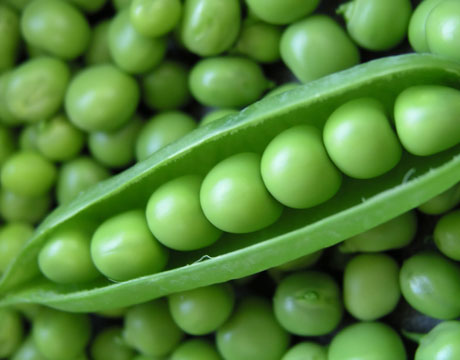
Survivalist Tip: Peas have always been treated like Chihuahuas of the vegetable world: nothing more than little runts.  But, although they don’t make as much noise, peas are among the most nutritious and versatile of all vegetables, which is why you should include them in your food supply.  Pease have high concentrations of sugar and starch, but even higher levels of antioxidants and anti-inflammatory agents.  They also feature an element called coumestral, which research has suggested can fight some cancers.  Other research has shown they fight diabetes, despite their high natural sugar content.  Green peas are also low fat and have sizeable concentrations of Vitamin E.

Peas are also good for the environment and not just because they won’t give you gas.  Agricultural research has shown that, with the help of bacteria in the soil, pea crops can take nitrogen gas from the air and convert it to more usable nitrogen in the soil without the need for added fertilizer.  Pea plants have a shallow root system, which helps prevent soil erosion and once the peas have been picked, the plant remainders tend to break down relatively easily for soil replenishment.  This may not seem like an ideal survivalist food, but in the chaotic aftermath of the apocalypse, just give peas a chance.

Leave a comment

Filed under Mayan Calendar Countdown

May 11, 2012 – 223 Days Until Baktun 12

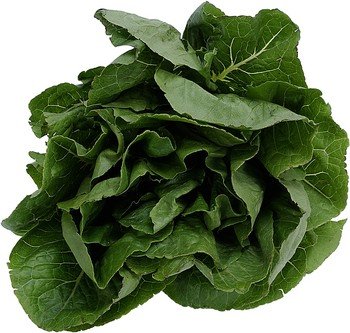
Survivalist Tip: Spinach is something you should have in your food supply.  It is one of the most popular vegetables and one of the most versatile, as it can be prepared in a number of ways.  It is also one of the most nutrient-dense of all foods; low in calories and extremely high in vitamins and minerals.  Like all leafy green vegetables, spinach is an excellent source of Vitamins A, B2, B6, C and K, as well as magnesium, potassium and calcium.  All of these elements work to combat free radicals in your body.  And, with plenty of radicals running all over the place after the apocalypse, you don’t need to worry about inside of you.  Some studies have shown that even moderate consumption of spinach slows age-related decline in brain functions.  Spinach also has anti-inflammatory properties that can ease the aggravation of arthritis, asthma, migraines and osteoporosis.  There’s no proof it helps ease the aggravation of dealing with bratty kids, but the migraine relief might be close.  As I’ve mentioned several times before, struggling to survive in the barren wasteland following the upheaval will require you to be in top mental and physical shape; thus, spinach is one food to help you stay sharp.  Otherwise, you won’t be able to enjoy all that chocolate you’ve stored.

Leave a comment

Filed under Mayan Calendar Countdown

Mayan Mural Reflects Calendar Beyond 2012


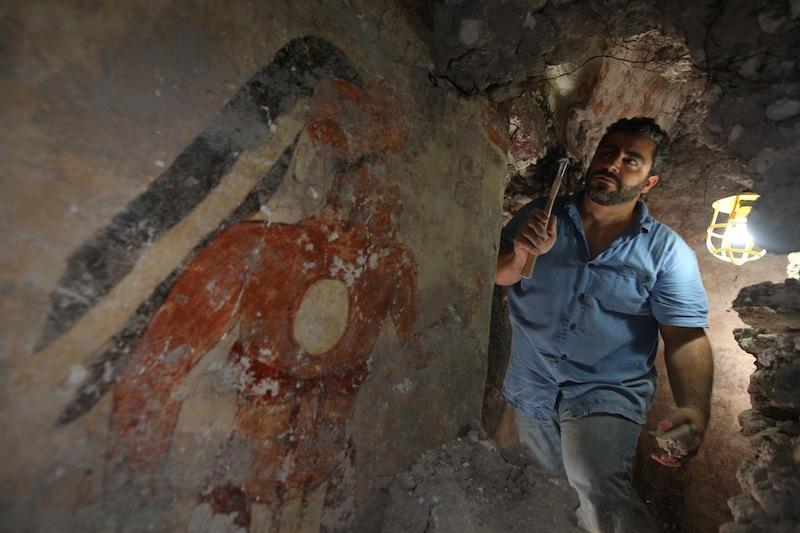
“Younger Brother Obsidian,” as labeled on the north wall of the Maya city’s house by an unknown hand, was painted in the 9th century A.D. Archaeologist William Saturno of Boston University excavates the house in the ruins of the Maya city of Xultún.

Just when we thought the ancient Mayans had everything written (or drawn) down for us lowly mortals to follow, here comes this revelation.  A vast Mayan city discovered nearly a century ago in Guatemala’s Petén region is beginning to yield its secrets and in the process, expanding our comprehension of ancient Mayan society.

Excavating for the first time in the sprawling complex of Xultún in Guatemala’s Petén region, archaeologists have uncovered a structure that contains what appears to be a work space for the town’s record keeper; its walls adorned with unique paintings – one depicting a lineup of men in black uniforms – and hundreds of scrawled numbers.  Many are calculations relating to the Maya calendar.

One wall of the structure, thought to be a house, is covered with tiny, millimeter-thick, red and black glyphs unlike any seen before at other Maya sites.  Some appear to represent the various calendrical cycles charted by the Maya – the 260-day ceremonial calendar, the 365-day solar calendar, the 584-day cycle of the planet Venus and the 780-day cycle of Mars, reports archaeologist William Saturno of Boston University, who led the exploration and excavation.

“For the first time we get to see what may be actual records kept by a scribe, whose job was to be official record keeper of a Maya community,” Saturno said.

Xultún, a 12-square-mile site where tens of thousands once lived, was first discovered about 100 years ago by a Guatemalan worker and roughly mapped in the 1920’s by Sylvanus Morley, who named the site “Xultún” – “end stone.”  Scientists from Harvard University mapped more of the site in the 1970’s.  The house discovered by Saturno’s team was numbered 54 of 56 structures counted and mapped at that time.  Thousands at Xultún remain uncounted.

The team’s excavations reveal that monumental construction at Xultún began in the first centuries B.C.  The site thrived until the end of the Classic Maya period; the site’s last carved monument dates to around 890 A.D.  Xultún stood only about five miles from San Bartolo, where in 2001 Saturno found rare, extensive murals painted on the walls of a ritual structure by the ancient Maya.

The house contains 3 intact walls, each telling its own story and each posing its own mysteries.

The north wall lies straight ahead as one enters the room.  An off-center niche in the wall features a painting of a seated king, wearing blue feathers.  A long rod made of bone mounted on the wall allowed a curtain to be pulled across the king’s portrait, hiding it and revealing a well-preserved painting of a man whose image is wrapped around the wall; he is depicted in vibrant orange and holds a pen.  Maya glyphs near his face call him “Younger Brother Obsidian,” a curious title seldom seen in Maya text.  Based on other Maya sites, Saturno theorizes he could be the son or younger brother of the king and possibly the artist-scribe who lived in the house.  “The portrait of the king implies a relationship between whoever lived in this space and the royal family,” Saturno said.

Four long numbers on the wall representing one-third of a million to 2.5 million days likely bring together all of the astronomical cycles – such as those of Mars, Venus and the lunar eclipses – the Maya thought important, dates that stretch some 7,000 years into the future.  This is the first place Maya archaeologists have found that seems to tabulate all of these cycles in this way.  Another number scratched into the plaster surface likely records the date – 813 A.D., a time when Mayan society began to collapse.

Three male figures loom on west wall, all of them seated and painted in black, wearing only white loincloths, medallions around their necks and identical single-feathered, miter-style head dresses.  One of the figures is particularly burly and is labeled “Older Brother Obsidian.”  Another figure is labeled as a youth.

The east wall is badly eroded, but another black-painted human figure and remnants of others are still discernible.  This wall is dominated by numerical figures, including columns of numbers representing counting and calendrical calculations.  Some of the numbers track the phases of the moon; others try to reconcile lunar periods with the solar calendar.  One well-preserved section contains numerical notes painted in red that appear to be corrections to more formal calculations appearing alongside them.

“The most exciting point is that we now see that the Maya were making such computations hundreds of years – and in places other than books – before they recorded them in the Codices,” said Anthony Aveni, professor of astronomy and anthropology at Colgate University, a coauthor of the Science paper.

The scientists say all of these symbols reflect a certain world view the ancient Mayans possessed.  They “predicted the world would continue, that 7,000 years from now, things would be exactly like this,” Saturno noted.  “We keep looking for endings.  The Maya were looking for a guarantee that nothing would change.  It’s an entirely different mindset.”

The discovery is reported in the June issue of National Geographic magazine and in the May 11 issue of the journal Science.

Leave a comment

Filed under News

May 10, 2012 – 224 Days Until Baktun 12

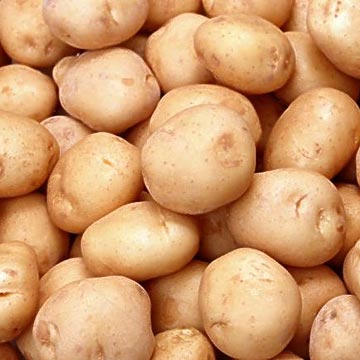
Survivalist Tip: I want to get back to relatively normal foods now by mentioning potatoes and suggest you should include them in your cache of culinary supplies.  Potatoes are indigenous to the Americas.  There are about 5,000 varieties of potato worldwide; some 3,000 found in the Andes region alone.  Europeans didn’t know what to think when they first saw them; considering the edible portion is what grows underground.  But, they found them especially attractive when they began starving.  Potatoes are the number one food crop in the world and are one of the most versatile, as they can be cooked almost any way.

They are also among the most nutritious.  One potato has about 173 grams of nutrients, such as Vitamin B6, Vitamin C and potassium.  They are high in fiber and low in calories.  Unfortunately, most people in the U.S. consume potatoes in the form of greasy fries or potato chips; even baked potatoes are usually loaded down with a variety of dairy products.  Because of their high-carbohydrate and white starch content, potatoes often are removed from the diets of weight-conscious people.  But, as you struggle to survive at the onset of the apocalypse, you’ll find more important things to think about than your weight.  Potatoes also keep for a long time, so you won’t have to worry about spoilage.  And, since they come from the dirt of Mother Earth, consuming them without many additives will show the Mayan deities you’re worth saving.

Leave a comment

Filed under Mayan Calendar Countdown

May 9, 2012 – 225 Days Until Baktun 12

Survivalist Tip: Ants are another type of insect that can be consumed as a last minute food source.  Like most insects, ants are low in fat and high in protein.  And since there are usually thousands of them at any one time, you don’t have to worry about not getting enough in a single serving.  Just toss them into a pan with some butter and your favorite seasoning and roast them.  There are 4 species of ants that are edible: carpenter, leaf-cutter, honey pot and lemon.

  • Carpenter ants are perhaps the most common of the ant species, since they’re indigenous to many parts of the world.  They are distinguishable because they are solid black and have a fetish for wood.  Many people confuse them with termites, which also have a taste for wood.  But, carpenter ants – as the name implies – don’t really eat the wood; they just hollow it out to make nests.  Nonetheless, they’re perfectly edible and since they already could be in your house, you won’t have to hunt for them.
  • Honey pot ants have abdomens swollen with a nectar-like substance that literally tastes like honey.  They are indigenous to Australia and have been a staple of that continent’s Aboriginal peoples for thousands of years.  The first Caucasians in Australia scoffed at the idea of consuming any kind of insect and considered it beneath them – until they ended up stranded in the Australian desert without any deer or sheep.
  • Leaf cutter ants are eaten mainly in South America and are said to have a taste somewhere between bacon and pistachio nuts.  Therefore, think of a BLT sandwich or a rum drink while consuming them.
  • Lemon ants are found in the Amazon jungle and supposedly have a taste that befits their name.  Indigenous Amazonians have consumed them for thousands of years; it’s pretty much what kept them alive after fleeing into the jungle when Europeans arrived.

There’s another species of ant you definitely don’t want to consume: fire ants.  These are easily identifiable because of their bright red color.  But, they’re very aggressive and can sting like a wasp.  Eating them will only give you heartburn – and that’s something you don’t need in the midst of the apocalyptic chaos.

Leave a comment

Filed under Mayan Calendar Countdown

May 8, 2012 – 226 Days Until Baktun 12

Survivalist Tip: In continuing with my entomological diet, I want to add grasshoppers to the list.  As with worms, people around the world consume grasshoppers on a regular basis.  And, like worms, these insects are a good source of protein.  They’re easy to catch and even easier to cook.  They’re normally roasted over an open fire, but you can also sauté them in mushroom sauce or with spices such as salt and garlic.  You can even dip them in chocolate.  There’s only one thing  you need to remember: make sure they’re dead first.  You never know what’s in a grasshopper’s insides, but cooking them will ensure you don’t get sick.  If you’re already getting sick, just hope you can remain at home and live off your normal food products when the apocalypse hits.

Leave a comment

Filed under Mayan Calendar Countdown

May 7, 2012 – 227 Days Until Baktun 12

Survivalist Tip: If the thought of eating worms to survive is sickening, then you’d better hope you can stay indoors when the apocalypse hits.  As strange – even repulsive as it seems – worms are a good source of protein.  Ancient peoples all over the world have used them in their diets.  The Mayans used to fry them with chili peppers and then take a chocolate enema.  Contemporary survivalist courses in the military often talk about living off of various insects, including worms.  I’ve actually only consumed a worm once in my life – after almost completely downing a bottle of tequila.  My fellow frat brothers saved the worm just for me.  I felt special and loved.

Pound for pound, though, worms have higher protein content than most animal products.  Mealworms are a great starter worm for the uninitiated.  They can be found in any bait and tackle shop, specialty sellers, or garden center.  If you choose the latter place to get them, try to buy a plant first, or they’ll call security when they see you crawling around looking for worms.  You can even raise them, if you’re so inclined.  People all over Latin America and Asia do this; they even sell them to locals and occasionally the adventurous tourist.  You can eat them raw, or – as I stated above – cook them somehow with another ingredient.  If you feel like getting your protein and caffeine at once, you could even dip them into warm chocolate.

Regardless, don’t turn up your nose at the thought of consuming insect larvae.  The Mayan deities strike down anyone who thinks they’re too good to eat something that comes from the blessed Earth.  Just remember, though, no matter where or how you’re buried, worms will work their way into your body somehow.  You might as well enjoy some while you’re still alive.

Leave a comment

Filed under Mayan Calendar Countdown

May 6, 2012 – 228 Days Until Baktun 12

Survivalist Tip: I know I’m late with this, but as before, it just proves how prepared we all must be by December 21.  And, one thing we’ll need in our stockpile is sugar.  Sugar canes are among the oldest crops.  Humans have been cultivating them for thousands of years.  Today, most sugar cane crops grow in tropical zones in the Southern Hemisphere.

Unfortunately, sugar has gained a bad reputation in recent decades, mainly because of its abuse in the processed food industry by people who were too quick to blame everything and everyone but themselves for getting fat and lazy.  Saying something negative about sugar is like giving a beef-flavored treat to a dog: they’ll swallow it without giving it much thought.  But, sugar is an essential element and is part of our biological makeup.  It’s fuel for the body and brain and is present in almost every food or beverage humans and animals consume.

Sugar comes in 6 natural forms:

  • Glucose – fruits, vegetables, honey, milk, cereals
  • Fructose – fruits, vegetables, honey
  • Galactose – dairy products
  • Sucrose – fruits, vegetables
  • Lactose – milk
  • Maltose – cereals, malt products

Be leery of processed sugars, such as packaged cookies and cereals, cheesecakes, muffins and Hollywood celebrities.  They’re very bad for your health.  Too much of these things can interfere with proper brain function, and you definitely don’t need your brain to go haywire as you struggle to survive in the aftermath of the apocalypse.

Leave a comment

Filed under Mayan Calendar Countdown