
Tag Archives: U.S. Department of Health and Human Services

Gallery of Nitwits

Well, just like the Earth didn’t self-obstruct when Barack Obama won his two elections, it hasn’t 75 7jpj56exploded now that Donald Trump has returned to the White House.  But at least there was never any (real) question that Obama actually won.  And I’m still feeling dismal.

It’s tough to remain faithful to the democratic process and the American vision of equality and happiness when someone like Trump keeps succeeding.  But this is life on planet Earth and it’s imperfect.  In fact, it’s downright screwy!

I don’t care what anyone says.  In my adult life, I’ve never seen anyone as incompetent or unqualified to claim the title of U.S. President than Donald Trump.  As I’ve stated before, I was embarrassed with George W. Bush in the White House.  But I’m incredibly disgusted with this former real estate magnate / pathetic reality TV star / tax cheat / draft dodger / womanizer in the same role.  U.S. politics has truly descended into madness.

Trump’s cabinet appointments have proven equally unfit for such prestigious and high-profile positions.   Former Congressman Matt Gaetz was the first of Trump’s appointments to come under intense scrutiny – and the first to withdraw his nomination.  Trump had wanted Gaetz to be his Attorney General, the nation’s top law enforcement official, despite not having any experience in the legal field – except as a litigant.

Trump’s second choice for the role, Pam Bondi, is Florida’s former attorney general and a corporate lobbyist.  Like the rest of Trump’s nominees, she’s a devout Trump supporter and apologist, but she actually made it through her confirmation hearing in one piece and is now overseeing the U.S. Justice Department.

For Defense Secretary, Trump picked Pete Hegseth, a former military veteran and FOX New TV host.  He also made it through his confirmation hearing – despite tales of his excessive alcohol consumption and sexual harassment allegations.  In this latter respect, he’s Trump “Light”.

Three other Trump nominees – Robert F. Kennedy, Jr., for Health and Human Services Secretary, Kash Patel for FBI Director, and Tulsi Gabbard for Director of National Intelligence – are facing tougher paths.  Kennedy, son of the late and legendary former U.S. Attorney General, ran as an independent candidate in last year’s presidential race.  But his past comments questioning the efficacy of vaccines, including COVID-19, have come back to haunt worse than one of Trump’s ex-wives.  He’d once declared that AIDS in Africa “is an entirely different disease from Western AIDS” and claimed that work done by the U.S. Centers for Disease Control and Prevention is akin to that of Nazi death camps.  He also propagated a popular conspiracy theory that vaccines cause autism in children.

Patel said recently that, if chosen as FBI Director, he’d terminate as many of the agency’s employees as possible and shut down its headquarters building, before reopening it as a museum to the “deep state”.  That “deep state” reference is common among right-wing conspiracy theorists, especially after FBI investigations into Trump’s antics during his first term in office.

Gabbard, a former Democratic congresswoman from Hawaii and a military veteran, may have the toughest road of all of them.  She has insinuated that Russia had some justification for invading Ukraine three years ago; denouncing the administration of Ukrainian president Volodymyr Zelensky as a “corrupt autocracy”.  She backed Russia’s unfounded claims that the U.S. and Ukraine have collaborated to engage in clandestine biological warfare.

One of my closest friends, Preston*, is a Trump voter who had told me last year that he was concerned – if Vice-President Kamala Harris won the presidency – she’d send U.S. troops into Ukraine.  He has two young adult sons who could face military conscription, if a military draft was enacted – which hasn’t occurred since the early 1970s.  I can identify with that sentiment.  In 1991, I feared something similar would happen with the Persian Gulf War, when I was in my mid-20s.  Preston believes wholeheartedly in Trump (which I don’t hold against him), but I’m worried now that Trump could send U.S. troops into the Middle East to help Israel fight against Iran.  Both those countries have nuclear weapons.

Another disquieting possibility is that Trump will enact the classic Republican tax cuts – that bullshit “trickle-down” economics regimen every GOP official has pushed onto the American people for over a century; the kind that has always shoved the U.S. into financial despair.  It happened with the Great Depression of the 1930s, the savings and loan crisis of the early 1990s, and the Great Recession less than two decades ago.  Trump’s round of tax cuts and deregulation measures during his first term only exacerbated the trauma of the COVID-19 pandemic.  I fear it’s going to happen again, and the U.S. will find itself in more economic distress.

But don’t blame people like me.  I didn’t vote for either Trump or Harris, but – as with Hillary Clinton in 2016 – I have to concede Harris would have been the lesser of two evils.  That’s never a pleasant position in which voters should find themselves, but it’s how I view politics in the U.S.

Now we’ll just have to see what shenanigans occur with Trump 2.0.  Fasten your seatbelts.

*Name changed
3 Comments

Filed under Essays

Empty

Recently the U.S. Department of Health and Human Services released a report on a surprising, yet intriguing subject: loneliness.  According to various studies and surveys, isolation and a lack of social connectivity has become epidemic.  The COVID-19 pandemic may have exacerbated what was already problematic for millions of Americans.

“Our epidemic of loneliness and isolation has been an underappreciated public health crisis that has harmed individual and societal health,” declared U.S. Surgeon General Dr. Vivek Murthy.  “Our relationships are a source of healing and well-being hiding in plain sight – one that can help us live healthier, more fulfilled, and more productive lives.  Given the significant health consequences of loneliness and isolation, we must prioritize building social connection the same way we have prioritized other critical public health issues such as tobacco, obesity, and substance use disorders.  Together, we can build a country that’s healthier, more resilient, less lonely, and more connected.”

The physical health consequences of poor or insufficient connections are dire.  They include a 29% increased risk of heart disease; a 32% increased risk of stroke; and a 50% increased risk of developing dementia for older adults.  Lack of social connections is estimated to increase the risk of premature death by more than 60%.

In addition to our physical health, loneliness and isolation contribute substantially to mental health challenges.  In adults, the risk of developing depression among people who report feeling lonely often is more than double that of people who rarely or never feel lonely.  Loneliness and social isolation in childhood increase the risk of depression and anxiety both immediately and well into the future.  And with an estimated one in five adults living with a mental illness in the U.S., addressing loneliness and isolation has become critical in fully addressing the mental health crisis in America.

For better or worse, the COVID-19 pandemic exposed the loneliness dilemma.  It also seems to have amplified it.  As businesses either switched to remote work or shut down altogether, people found themselves isolated in the name of good health.  I think much of this was foretold by the obsession with social media in the preceding two decades; where people would establish cyber relationships and call each other “friends”.

As an only child and a confirmed introvert, I’ve dealt with loneliness my entire life.  Sometimes I really do get lonely; other times I’m just alone.  I’ve always been a loner – something my parents never seemed to understand – and I’ve rarely done well in groups.  I get bored easily and quickly grow tired of dealing with people’s attitudes and personality quirks.  I put up with a lot of people’s disrespectful behavior towards me most of my life, which is the primary reason I don’t consider myself a people person.

But I have to admit I do get lonely sometimes.  I’m glad my parents had each other and me (and even my dog, Wolfgang to some extent) as they aged.  One of my uncles lives alone in a dingy apartment with a cat.  (An older cat died a few months ago, which devastated him.)  He can’t drive anymore, so he either takes a bus or has someone transport him somewhere.  I’ve taken him to a variety of doctor appointments over the past few years and grocery shopping almost every weekend for months now.  His stepdaughter lives closer, but she has her own health problems.

I have an aunt who also lives alone.  Her son, like me, is an only child, but he’s married and resides several miles from his mother.  She’s fortunate, though, in that a neighbor has access to her house and keeps an eye on her.  My aunt frightened me a few years ago, when she recounted how she fell in the bathroom one night and had to drag herself into her bedroom.  It took her hours just to get there.  But she was able to call her neighbor who contacted the fire department.  I stay in touch with my uncle and aunt, as well as other relatives and friends – even if it’s just via text message.

I only know a few of my neighbors and have little contact with most relatives.  I’ve never been married and I never had children, so I don’t know how life will be for me if I grow much older.  Loneliness will be just one factor in my later life.

Some years ago a friend expressed concern that I was becoming a hermit.  “Why should I go out?” I responded.  I lived with my parents, so I certainly couldn’t bring anyone home.  Then again, I hadn’t brought anyone home who I didn’t know since before the turn of the century.

A close friend keeps urging me to get a dog, as he did a couple of years ago.  Aside from two household plants that languish nondescriptly on a kitchen counter, I’m the only living being in this house.  (That doesn’t include the occasional insect that invades my quiet abode.)  I’d love to get a dog, but I’m just not in the right situation now to get one.

Dr. Murthy has established a six-point plan to help the U.S. deal with its loneliness epidemic:

  1. Strengthen Social Infrastructure: Connections are not just influenced by individual interactions, but by the physical elements of a community (parks, libraries, playgrounds) and the programs and policies in place. To strengthen social infrastructure, communities must design environments that promote connection, establish and scale community connection programs, and invest in institutions that bring people together.
  2. Enact Pro-Connection Public Policies: National, state, local, and tribal governments play a role in establishing policies like accessible public transportation or paid family leave that can support and enable more connection among a community or a family.
  3. Mobilize the Health Sector: Because loneliness and isolation are risk factors for several major health conditions (including heart disease, dementia, depression) as well as for premature death, health care providers are well-positioned to assess patients for risk of loneliness and intervene.
  4. Reform Digital Environments: We must critically evaluate our relationship with technology and ensure that how we interact digitally does not detract from meaningful and healing connection with others.
  5. Deepen Our Knowledge: A more robust research agenda, beyond the evidence outlined in the advisory, must be established to further our understanding of the causes and consequences of social disconnection, populations at risk, and the effectiveness of efforts to boost connection.
  6. Cultivate a Culture of Connection: The informal practices of everyday life (the norms and culture of how we engage one another) significantly influence the relationships we have in our lives. We cannot be successful in the other pillars without a culture of connection.

All of this is easier said than done, and every plan looks good on paper.  But I know something has to be done, if the nation’s overall health is to improve.  I only have a small collection of friends, but that’s all I personally need.  As with most everything else, it’s quality, not quantity, that matters.  And quality of life is always important.

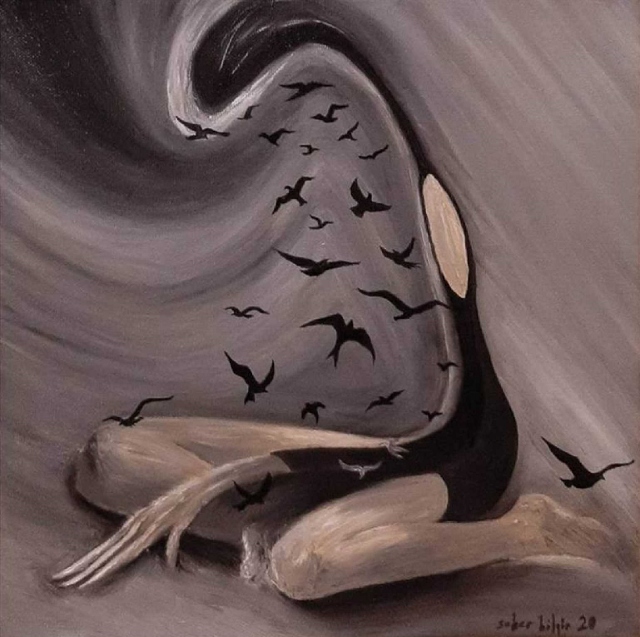
Image: Seher Bilgin

6 Comments

Filed under Essays

Tweet of the Week – April 17, 2020

Alexandra Chalupa, founder of the political consulting firm Chalupa & Associates, LLC, is referring to the appointment of Michael Caputo, a long-time Republican strategist, to the U.S. Department of Health and Human Services under the leadership of Alex Azar.  As a Ukrainian-American, Chalupa has a vested interest in anything involving Ukraine.  But she’s right to call out this type of nepotism in an administration that’s as incompetent as it is corrupt

Leave a comment

Filed under News