Category Archives: Essays

Still Here

Who’s there? Wolfgang peering into my parents’ bedroom on August 1, 2016.

Who’s there? Wolfgang peering into my parents’ bedroom on August 1, 2016.

My gaze remained fixed on my computer – as it always does, when I become engrossed in either a news article or my own writing, leading to that vicious brand of dry eye syndrome – and not paying much attention to anything around me.  But, out of the sandy corner of my right eye, I noticed Wolfgang lift up his head.  It wasn’t a gradual rise, like he’d heard the refrigerator door open and hoped someone was reaching for a snack.  Rather, it was more of a sudden jolt, as if a wayward noise had startled him.  Often, I don’t hear those same noises.  As a dog, millennia of canid sensory attributes finely-tuned and ground deep into his mind and body, he can hear a bug crawling in the next room, on carpet, with a rainstorm battering the house around us; he could see that same bug – minuscule as it may be – ambling across the carpet.

But this was different.  No refrigerator door; no bugs; just…something.  It was enough to make me stop; giving my eyes a much-needed break.  Then I saw a shadow; a nanosecond of movement.  Wolfgang whipped his head around, and so did I.

A couple of years ago I wondered, in an essay, what it would be like to be deceased.  I’m in no hurry to find out, but as both a spiritual person and a writer fascinated with the gothic (even the macabre), I’ve thought about it for most of my life.  It’s become an especially important matter to me in the three months since my father’s death.  Raised Roman Catholic, I was taught to believe in angels and saints.  But, when I heard an elderly nun once say “there’s no such things as ghosts,” I couldn’t reconcile the two.  Angels exist; ghosts don’t.  What’s the difference?  My first views of angels came from the stained glass windows of the church where I became an altar boy in the mid-1970s.  I acquired a more salacious vision from John Phillip Law’s “Pygar” in “Barbarella.”  (I actually prefer the latter.)

Having divorced myself from the Catholic Church years ago, I seek emotional fulfillment in the simplest of things: reading, writing, exercise, music, vodka, and, of course, Wolfgang.  I still believe in a Supreme Being, but I don’t subscribe to any religious ideology.  It’s too confining.  Yet the concept of an afterlife has remained a constant fixture in my mind.

Over the past three months Wolfgang’s behavior has become more curious.  His attention is being constantly diverted.  He lifts his head and stares at something – or someone – in the distance.  He’ll just hold that gaze – not for a few seconds, but several minutes.  One night, as I worked on my computer, and my mother sat in the den reading, Wolfgang perched himself just outside my parents’ bedroom…and stared straight ahead.  He didn’t move for what seemed like an hour.  Finally he stood and entered the room.  Turning to his left, in the direction of a nightstand, he sat after a few minutes.  And remained there for the longest time.  I didn’t want to disturb him, so I left him alone.  After a while, he ambled back to a spot near me and plopped down…still looking ahead into my parents’ bedroom.

“What’s that?” I asked him.  I knew the answer.

His eyes, bright pools of dark chocolate, bored into my face.  Those eyes – and his animated expressions – always conveyed more than the average person.

Of course, I’m biased – not just because he’s my dog.  More so, because I love dogs – and most animals for that matter – than I do people.  Animals don’t gossip; call you names; cut in front of you while driving; throw a self-righteous attitude in your face; or believe the world revolves around them, and science just needs to prove it.  In other words, animals don’t piss me off just for the hell of it.

I’d have no problems pulling out a gun and firing into the windshield of a car whose driver almost ran me off the road because they were engrossed in their cell phone.  But I’d think twice about putting down a dog that bit me out of its own fear.

México won’t execute drug kingpins because they don’t have the death penalty.  Yet, they retain the brutal tradition of bullfighting and conduct rodeos where horses routinely break their necks.  Tell me I’m not the only one who thinks that’s twisted.

I created a controversy on Facebook about five years ago, when I stated that I’d rather see a thousand drug addicts and / or sexually-irresponsible people died of AIDS than see one animal suffer because of human neglect and abuse.  Just about everyone missed the “drug addict” and “sexually-irresponsible” part.  How dare I think someone who fucks around like a rabbit on Viagra shouldn’t cry too loudly when they come down with something a tad bit more severe than gingivitis.  If political incorrectness was a course, I’d fail miserably.

“What’s that?” I asked again.  He just looked at me, and I gathered he was telling me exactly what was going on.  Domesticated animals comprehend a bevy of our words.  How many of their vocalizations do we humans understand?  I just had to figure out what those expressions meant.

And I finally figured it out.  He knows things; meaning, he sees and hears things that are there; others who are there.

And I know that who’s often there isn’t visible to the eyes of the contemporary human; our brains having become too cluttered with practicality and technology.  Yet, even before now, I had proof.  Nothing that can be verified independently, but proof to me nonetheless.

One weekday in the spring of 2011, as I crouched before my computer – making a concerted effort to launch my freelance writing career, while trying to ward off the dreaded office-chair butt affliction – I sensed someone move behind me.  At the same nanosecond, Wolfgang bolted into the hall from his spot near my chair; a modest growl spilling from his snout.  Both him and that ubiquitous figure unnerved me; giving my eyes that much-needed break.

But I kept my focus on Wolfgang.  He stood in the hall, looking towards the den.  His head cocked to one side slightly and – apparently satisfied no danger lurked – returned to his place near my chair.  He circled around that few square inches of carpet, before plopping down.  He sensed my confusion and tossed me a comforting gaze.  “Don’t worry,” his eyes reassured me.  “I got it settled.”

Settled what?  He sighed, exasperated.  I’m certain he was thinking what a naïve dumbass I must be.  In retrospect, I’d agree with him.  But I stepped into the hall and peered towards the den.  That figure – that someone – I thought, was an old woman.  I returned to my chair.

Wolfgang gave up trying to explain it to me and resumed napping.

Then my mother came out of her bedroom.  Hugging the doorframe, unsteady from a midday slumber, she gave me a confounded look and asked, “Where’s grandmother?”

I squinted at her.  “Who?”

“Where’s grandmother?” she repeated.

I hesitated, equally confused.  I knew who she was talking about, but I didn’t know why.  “Why are you asking me that question?”  It really startled (upset) me.

She woke up and rubbed her eyes.

I turned briefly to Wolfgang.  I was trying to tell you, his eyes said.

Aside from my mother’s three siblings and their father, I only met a handful of her relatives – all from her father’s side of the family in Michigan.  I got to know the Mexican side through antiquitous photographs and stories; ghost stories, in a way, stuck in my mother’s memory.

My maternal grandmother died in México City on Christmas Day 1940 from some miscellaneous stomach ailment.  Her own mother, a widow by then, had returned from living in Washington, D.C., where she worked as a nanny for the daughters of a U.S. Navy admiral.  Along with being a good cook and natural-born caregiver, she was self-educated, which included teaching herself English, and an opera aficionado.  She stepped in to help her son-in-law (my grandfather) raise his four children.

She had led a life mixed with hardship and religiosity (the latter supposed to hinder the former).  But then again, what woman born in 19th century México – or anywhere outside of royalty and the industrial elite – didn’t?  At the age of 14, a handsome, 21-year-old young man with steely blue eyes spotted her in the yard of school she attended, introduced himself and decided to make her his bride.  A few months later her mother dropped her into a wedding dress.  He gave her five children, two illegitimate children, a bout of syphilis and an early widowhood.  By the time my German-American grandfather, Clarence, arrived in México City with an uncle selling farm equipment in the mid-1920s, my great-grandmother’s husband was already gone.  When my grandfather met the brown-eyed beauty named Esperanza who would become his wife, he apparently was smitten.  He actually courted her, and it was a little while before they got married.  My great-grandmother didn’t want to impose her marital tribulations upon her own daughters.  Clarence and Esperanza married in 1927.

Esperanza’s mother was a curiosity, my mother recalled.  Not even five feet tall, her internal organs were switched; her heart, for example, rested on the right side of her torso and was too big for her body.  They could see the veins on the sides of her neck pulsate, a feature that made her wear high-necked clothing.  Her eyes were more golden in color; “ojos de un perro,” is how she described them – “eyes of a dog.”  But, more intriguingly, she also bore enough personal faith to build a bridge between her heart and the spiritual netherworld.

Supposedly women possess that unique ability more than men.  I believe women are just more willing to admit it.  Acknowledgement of contact with “The Other Side” is conceding, in a way, a dependence on the inanimate – the emotional.  And men aren’t permitted such comforts.  In México, in the U.S., or anywhere they want to call home and be considered valuable.  But I feel that having no spirit is akin to having no soul.

Shortly before the death of someone my great-grandmother knew – a relative, a friend – she would encounter a mysterious figure; a woman cloaked in black with a veil-like accoutrement almost completely covering her face.  She’d mutter the name of the individual – whoever was about to die – and then vanish.

My mother and her older sister, Margo, never really believed her, she told me.  Their grandmother was just an old woman with a strange little mind carved up by Roman Catholicism and too many health problems.  Until one afternoon shortly before Christmas 1940.

Esperanza had fallen ill, and no one could figure out why.  My mother and Margo accompanied their grandmother to a local open-air market; the type that were so common back then and now quaintly occupy a spot on travel shows.  A woman, clad in black, suddenly stood before them.  All Margo and my mother remember was hearing their own mother’s name – Esperanza.  It seeped through the woman’s lace veil and into their ears; a sound that abruptly instilled an overwhelming sense of dread in the two girls.  Hearing them both recount the incident some four decades later made my skin tighten.  Less than two weeks later, Esperanza was gone.

My grandfather was headed back to Michigan in the summer of 1942, when the train he rode stopped in Dallas.  A job ad in a local newspaper caught his attention.  It offered something like $20 per day as a machinist, a fortune in those days.  He applied for and got it.  He moved into a nearby boarding house and, within a year, had managed to save enough money to buy a house in the Oak Cliff section of Dallas.  In September of 1943, his four children arrived with his mother-in-law, after a three-day trek by train from México City.  He felt he had to move.  As an American in México during a global war, he didn’t just feel out of place – he was out of place.  By then my great-grandmother had secured her role as de facto matriarch.

She died in Dallas in August of 1963; less than three months before I was born.  At the funeral, my mother almost passed out, as much from the emotional loss as from the intense heat.  Standing outside in Texas during August is not a pleasant experience.  My great-grandmother had blessed my mother’s stomach just days earlier; holding a tiny wrinkled hand above my restless unborn self, her other hand clutching an aged crucifix.

My father’s older sister, Amparo, was at the same funeral.  She knew how close my mother had been to her grandmother and (knowing those damned Texas summers) had brought a large jar of cold water.  After my father helped my mother back to the car and had her drink some of that water, my mother looked up.  And, as she recalled years later, she spotted a small figure dressed in black some distance away – a woman with a black veil covering her face.  “Go away,” my mother said into the hot air, and the woman left.

That crucifix, now over a century old, hangs unimposingly above my bed – just as it did throughout my childhood and through the three apartments I lived in before returning to my parents’ home a few years ago.  And, thinking back now, on that spring afternoon in 2011, I realize Wolfgang must have seen my great-grandmother.  Her presence most certainly startled him at first; he’d never seen her before.  But she assured him she meant no harm; she’s one of us.

On another nondescript afternoon, I was trying to help my mother find a pair of small scissors.  She always kept them in her nightstand, but she couldn’t even find the scissors there.  I looked through it, too, albeit with a greater sense of frustration.  I was enmeshed in one of those “Moods.”  How did I end up like this?  Unmarried, childless, 40-something, scarcely employed with a bad back, helping my mother search for a pair of miniature scissors.

I turned to see Wolfgang.  “Really?” his eyes bemoaned with a frustrated sigh.  “This is bothering you?”  His gaze slithered around me and towards the nightstand; he then scampered away.  “You’re getting on my last nerve!” he grunted.

I almost followed him, but something made me stop.  Look again, I heard in my subconscious.  I opened the bottom drawer of the nightstand and filtered through a menagerie of items.  My fingertips grasped a small envelope, which held a black-and-white photograph…my mother’s maternal grandmother.  It was her passport photo, probably taken in 1943 in preparation for her move to the U.S.

My father had said frequently he hoped he’d go before Wolfgang.  He’d grown so attached to him that the dog’s death would be too much to handle.  I told both my parents a while back, though, I believed he’d go before them.  I also told them that we needed to prepare ourselves for his inevitable demise.  In 1985, when we had to put down our beloved German shepherd, Josh, we had never considered the impact such a death would have on us.

Now my father is gone, having passed away in this house – just as he wanted – and Wolfgang keeps tossing his gaze around.

So I look at the various photos of my father and know for certain – he’s still here.

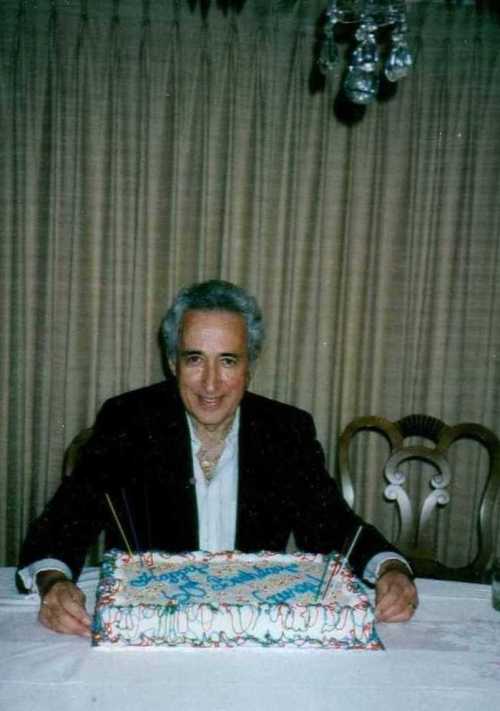
My father at his 60th birthday party in 1993.

My father at his 60th birthday party in 1993.

Leave a comment

Filed under Essays

Father Wolf Transitions

My father in 1949 at age 16.

My father in 1949 at age 16.

At one family Christmas gathering in the 1980s, someone had invited an older couple most everyone knew.  They often provided musical entertainment at such gatherings; with the man playing a guitar, while he and his wife sang.  During this particular evening, the woman brought out a set of maracas and began yodeling.  I have to concede that – up to that point – I had never heard a Mexican yodeling.  I always thought yodeling was a characteristic unique to people only of Nordic extraction.  Even though I’m one-quarter German, I don’t possess such a talent.  But, if you’ve ever heard a Mexican yodeling…well, imagine a Chihuahua having a Maalox moment from hell.

Some of my male cousins and me tried to sustain our laughter and wondered how long this would continue.  The gathering took place in the house of one my aunts, Teresa, and her husband, Chris.  A massive abode with a wide, marble-laden foyer, a living room or seating area sat off to the left upon entering, and a formal dining room to the right, which allowed entry into the kitchen.  Most everyone had gathered in the spacious den, with several others in the kitchen and another dining area.  I stood in the den, with my cousins, our backs to the covered patio, with a clear view of the foyer and the front door.

As the woman yodeled, my father suddenly catapulted from the dining room into the living, straddling a broom like it was a toy horse.  He sported a bright smile and waved to the crowd in the den.  Those of us who saw him burst into hysterical laughter, while those closer to the kitchen, against the fireplace, or against the wall parallel to the entertainment duo jumped to their feet.  They clustered en masse in the center of the den, just in time to see my dad gallop back across the foyer into the dining room.  The woman singing saw him on the return jaunt and almost lost control of her voice.

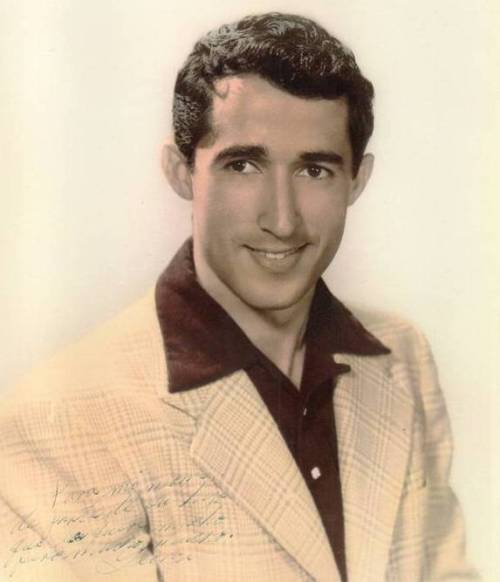
It’s those moments that kept circulating through my mind these past several days, as my father, George De La Garza, began his transition into his next life.  It began last Monday, June 6.  After enduring an array of health problems over the past few years, capped by two weeks in the hospital just last month, he’d finally had enough.  We had a brief memorial service Saturday morning, the 11th, at a local funeral home.  Both my parents were wise to make funeral arrangements five years ago.  They had initially bought cemetery plots, but decided afterwards to be cremated and sold the plots back to the funeral home.  My father didn’t want an extended funeral; no real funeral at all, in fact, with a Catholic rosary, a lengthy mass, a parade of limousines and another service at the grave site.  His philosophy was simple: “just throw me in a box, toss me into the ground, say your prayers and go on with your own lives.”

I had written of my father previously, but he didn’t like too much attention bestowed upon him.  He was a unique character who liked to make people laugh and who often made himself the butt of his own jokes.  As a teenager, he’d often play pranks on his mother, Francisca.  Once she sent him to the store with a list of items to buy.  He left the house briefly and sneaked back inside and went into his parents’ bedroom; where he called the home phone number.  In those days, if you had more than one phone in the house, you could actually call your own number from within, and the other phone would ring.  His mother picked up the phone in the kitchen.  My father pretended to be at the store and confused by what she’d written on the list.  He aggravated her, until finally he set down the bedroom phone and startled her by walking into the kitchen.

My paternal grandparents had eleven children, but four of them – two boys and two girls – died either as infants or toddlers.  That was common in those days – couples would have several kids and some may die not long after birth.  But my father often said his parents had so many kids because his mother was hard of hearing.  As they got ready for bed, my grandfather would ask, “Well, do you want to go to sleep, or what?”  And my grandmother would respond, “What?”

My mother certainly didn’t escape his humorous wraths.  He told me that she and her younger sister, Angie, were so mean and bitter because they’d grown up in México picking avocadoes.  When their father decided to move the family to the U.S. in 1943, my father said, he could only afford train fare for four people.  So he went, along with his oldest daughter, his son and his mother-in-law.  For my mother and Angie, according to my dad, my grandfather leased a donkey and told them just to ride north until you run into bunch of White people speaking only English.

Like most men, he was fiercely protective of his family.  My mother told me years ago that, if my father knew how some of the men talked to her at the insurance companies where she worked her entire life, he’d probably be in prison; meaning, he’d most certainly kill more than a few.  He always said he’d know I would be a boy.  One particular picture he took of me as an infant, he said, was the mirror image of what he’d dreamed about while my mother was still pregnant.  She almost lost me twice during what she said was a 10-month pregnancy and was in labor for several hours.  While they languished at the hospital, the staff was trying to reach the pediatrician; this being a time before pagers and cell phones.  When he finally showed up, my father asked where he’d been.

“What’s the big deal?” replied the doctor.  “You have a date tonight?”  I guess he was trying to be cute.

But my father – usually catching the humor in someone’s tone of voice – grabbed the man by the lapels of his jacket and slammed him up against a nearby wall.  “Listen, you bastard!  My wife is in pain, and I want to know what the hell you’re going to do about it!”

My dad could still find some way to turn a bad situation around.  During the extended funeral of John F. Kennedy, my parents had gathered with other friends and relatives at the home of my father’s older brother, Jesse, and his wife, Helen.  At one point, Helen asked why the “flags were halfway up the poles.”

“Because they ran out of string,” answered my father.

About fifteen or so years ago, my parents agreed to watch the pet goldfish belonging to the daughters of some neighbors; a younger couple who are about my age.  One day my mother changed the water in the fish bowl.  The next day the fish were dead.  My parents hurried to a pet store to buy two more goldfish; hoping the neighbors wouldn’t notice.  But those fish also died.  My father told me what happened, adding, “Damn!  I didn’t know I was married to a serial killer!”

I stare at pictures of my father scattered throughout the house and notice, in almost all of them, he’s smiling and / or laughing.  He was that rare type who never met a stranger.  Unlike me, he was an extrovert.  I always admired that about him.  He could never understand why it was so hard for me to make friends.

His health had begun to take a more dramatic turn for the worst at the end of 2014.  Following a partial colectomy, he was hospitalized twice for kidney failure.  He vowed he’d never allow himself to be taken to the hospital again.  “I want to die here at home.”

But, one weekday morning a month ago, he had a change of mind.  “I think I need to go the hospital.  I want to live.”

So I called 911 and had him hospitalized.  He again was suffering from kidney failure, but this time, his gall bladder had also become infected.  They got him as stable as possible, and after two weeks, I convinced the doctors to let him go.  Technically, from a medical standpoint, he wasn’t actually ready to be released.  But I made it quite clear to all the attending physicians that he needed to be home.

I had asked him only once the previous week, if he wanted to go back to the hospital.  He shook his head no.  He knew this was it.  The end for him was near.  I knew it as well, but I was still trying to get him healthy.  It’s so difficult to see a loved one in the grip of such physical agony.  It was so tough to see a man who radiated vitality – even into his 70s – gasping for air and barely able to move.  I had prayed for his suffering to end.  And we all know the old saying, ‘Be careful for what you wish for; you might just get it.’  Short of a miraculous recovery, my father’s health just wasn’t going to improve.

He wanted to die at home.  He wanted to pass away in the house he and my mother had worked so hard to buy and to keep.  And I wanted to grant him that wish.

My dog, Wolfgang, who will turn 14 this week, initially wandered throughout the house looking for my father.  Then, over the past few days, I noticed that something seemed to be catching his attention.  He’d suddenly sit up or prick up his ears.  And then relax.  I believe animals possess a stronger sensory perception than we humans.  It’s their one superior trait.

My grandmother Francisca died in February of 2001, almost three years to the day after the death of her eldest daughter, my Aunt Amparo.  The next two deaths were my Aunt Teresa and my Uncle Jesse, both in 2004.  Several months after Jesse’s death, my father had a strange dream that he couldn’t explain until after he told me about it.  He was perched on a tractor lawn mower, plowing through a large expanse of grass, when he noticed a group people perched beneath a tree.  As he got closer, he realized they were his parents and three older siblings.  He could see his father completely, but he could only see the top halves of his mother and Amparo.  Teresa was covered by a black veil, and Jesse was off to one side, shrouded in darkness.

My grandfather motioned for him to come closer and then asked him if he wished to join them.  Was he – in effect – ready to give up on this life?  My father said he turned to the field of grass and said no – he had too much work to do.  And then he woke up.

I realized the grass was a metaphor for all of the things my father still wanted to do in his life.  It was symbolic, too, because he loved gardening.  I also realized that – as my father had described them – the family’s appearances represented their time on the other side.  His father had died in 1969, so his spirit had time to metamorphose into what was a familiar figure.  His mother and Amparo had only died a few years earlier.  Teresa and Jesse and arrived on that side the year before, so their spirits hadn’t had enough time to take shape into people he’d recognize.  He only knew it was them because they each spoke to him.

I don’t believe the human soul has any definite shape, color or mass.  It’s not like what we see here.  I’m also much more spiritual, even though I started off the memorial service with the Lord’s Prayer.  I want to pray to my father to help me through the ensuing difficulties with my mother.  He’s just begun his transition into that new life, however; so I don’t want to disturb him too much.  Allow me to be greedy, though.  I miss him terribly.  My heart still aches, but I’m more at ease now than I have been in over this past week.

On Sunday night, June 5, my father kept pointing forward and uttering something.  After a minute or so, I finally understood what he was saying, “Door.”  There was a door in front of him; not the bedroom door.  That other door.  He was finally able to step through it.  And that’s what needed to happen.  At some point in time, we all step through that door.  No one really dies.  The body perishes, but the good souls remain alive.

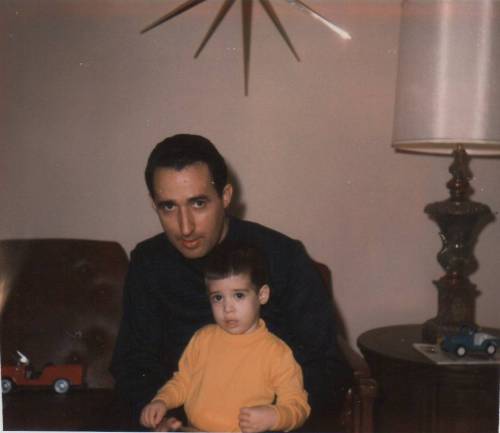
My father and me in 1966.

My father and me in 1966.

6 Comments

Filed under Essays

God Damned Texas

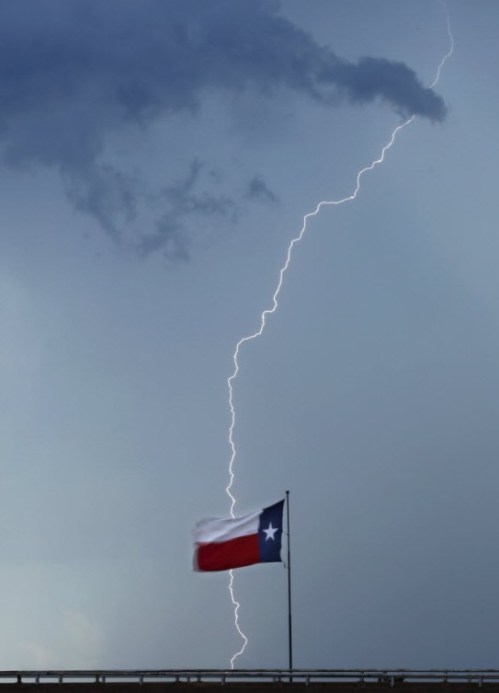
texas

Well, hell!  God must have, considering the gallery of lunatics the Lone Star State has put into public office in recent years!  I can honestly say I’ve never been more embarrassed to be a Texan (or an American, if you look at the current presidential race) than I am now.  I opined two years ago that I hope Ted Cruz runs for president and gets his ass slaughtered in the process.  So far, he’s one of only three survivors in the Republican field.  I eagerly await the political bloodbath at the GOP convention in Cleveland this summer.  I have a perverted fascination with seeing arrogance publicly butchered.  Cruz has made a number of incendiary comments, including that the United States will collapse into the fires of Satan’s lair because gay marriage is now legal – as opposed to the centuries of European-induced Indian genocide and Negro slavery where nothing so calamitous occurred.  There are too many idiocies that came from his mouth to highlight here.  I mean, I wouldn’t know where to begin!  But one recent revelation is that he tried to uphold a state law banning the sale of sex toys, which he said safeguards “public morals”; adding that “police-power interests” are a tool (pun intended) in “discouraging prurient interests in sexual gratification, combating the commercial sale of sex, and protecting minors.”  That’s right.  Cruz believes police have the power to invade your home and yank a dildo out of your ass or vagina!  All in the name of protecting children, of course.  Like so many right-wingers here in Texas, Cruz is willing to move heaven and Earth to protect children from wayward sexuality, while ignoring the fact most of those children are uninsured.  Priorities, people!  Priorities!

Canadian-born, Cuban-Italian Cruz certainly isn’t the first Texas official to spout out such twisted logic.  This state has a long history of generating some colorful characters.  During the 1990 governor’s race, Republican oilman Clayton Williams said, among other gaffes, that bad weather was like rape; it’s inevitable, so you might as well lay back and enjoy it.  As you might expect, the old bastard also insulted Blacks and Hispanics.  But here’s the sad part: he garnered nearly 40% of the votes.  Fortunately State Treasurer Ann Richards won.  Unfortunately, she lost four years later to the grandest of all Texas political goofballs: George W. Bush.  It’s around that time when Texas politics began sliding into the surreal – enough to make Salvador Dalí jealous.

But the past decade alone has seen the dramatic rise of Texas’ quirkiest politics stars.  I now present the following three jewels of cluelessness.

Ken Paxton – The state Attorney General has been in legal trouble almost from the moment he was sworn into office.  In July 2015, Paxton was indicted on felony charges for repeatedly breaking state securities laws during his tenure as a state lawmaker.  Then a new charge that he deliberately misled investors in a technology company arose.  Amid raising thousands of dollars from the investors, Paxton supposedly also received commissions – something he didn’t reveal and something that’s, you know, kind of illegal.  His attorneys tried to get all the charges dropped, but the judge handling the matter refused and ordered Paxton to be arrested in Collin County, just north of Dallas.  Paxton had to undergo the usual rigmarole of fingerprints and mug shots.  Whenever people in Collin County, Texas are arrested, officials wrap a white towel around their necks before taking the requisite glory shot.  But, because Paxton is a high-ranking state figure, he got the anticipated special treatment and was photographed sans towel.  (Trying to be discreet, Paxton had met with William Mapp, one of the energy company’s co-founders at a Dairy Queen in McKinney, which is in Collin County, in the summer of 2011.  According to most Texans, Dairy Queen is a step above Burger King.)  While Paxton is currently trying to stop a group called Exxotica from staging a sexually-oriented exposition in Dallas this summer, news reports now reveal that Paxton is still paying top aides who left the attorney general’s office more than a month ago.  The Securities and Exchange Commission (SEC) is investigating the investment deal, and Exxotica is threatening to sue the city of Dallas, if it violates their contract to proceed with the exposition.  I truly hope the SEC wins, and then, I’ll join them at the Exxotica convention.

Louie GohmertThe East Texas congressman takes outlandishness to a new level.  As with most right-wing political figures, Gohmert doesn’t want anyone telling him what to do with their guns, but he feels the urge to tell people what to do in their own bedrooms.  Aside from his staunch opposition to abortion (a given trait among conservatives), he’s compared limiting the size of ammunition magazines to bestiality and opposes gays from serving in the military because they’d spend more time giving each other massages on the front lines than fighting.  (What the hell’s wrong with massages?!)  In light of President Obama’s election wins, Gohmert has co-sponsored a “birther” bill that would require presidential candidates to submit their birth certificates as proof of eligibility to run for the White House.  Recently he opposed a bill that would have directed education funding to recruiter more women in the sciences by claiming it’s gender-biased and that even Martin Luther King would have opposed it.  Not knowing when to shut the hell up, Gohmert went on to add that such a bill would have distracted Marie Curie’s research and put “millions and millions of lives” in jeopardy.

Sid Miller – Like most politicians, the state’s Agriculture Commissioner has a penchant for travel.  And, like most politicians, he claims it’s all done in the name of state business, and therefore, he’s justified in charging taxpayers for his expenses.  But the $2,000 he spent on a 2015 trip to Mississippi to compete in a rodeo for prize money probably doesn’t fall into the business category.  He engaged in calf-roping events and won $880.  He tried to explain the trip’s importance by claiming he had set up a “work meeting” with Mississippi’s agriculture commissioner and other business people.  But wait!  It gets weirder.  Miller also may have charged Texas taxpayers the $1,000 it cost to fly to Oklahoma to visit an old friend, Michael Lonergan, a discredited Ohio doctor, for a “Jesus shot.”  Yes, Miller – who apparently suffers from chronic back pain – needed the spirit of the Lord pumped into his tired body via a concoction of unknown ingredients that’s injected into the upper arm.  Lonergan served prison time in Ohio for tax evasion and mail fraud, before relocating to Edmond, Oklahoma.  Miller is reimbursing the state of Texas for the trip “out of an abundance of caution,” according to his spokeswoman.  But the Texas Rangers, a state police agency, is still investigating.  My idea of a “Jesus shot” is a heavy duty screwdriver made with Smirnoff citron vodka and a bottle of baby oil; then shouting, “Jesus!” as I wipe my face.  I have videos in exchange for contributions to a charity of my choice – mainly my freelance writing fund.

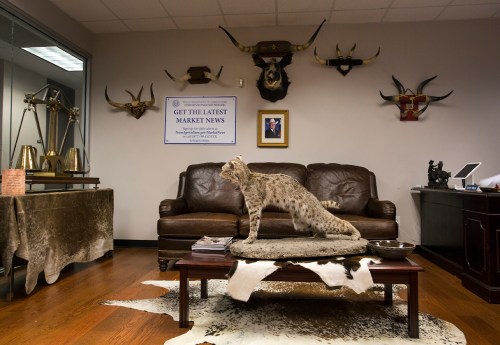
Miller spent $55,000 decorating his office.

Miller spent $55,000 decorating his office.

Mary Lou Bruner – The 69-year-old retired teacher is seeking to be the next president of the Texas State School Board, the entity that has made all of Texas the literal laughingstock of the nation.  Bruner subscribes to the usual right-wing ideology: the Earth is only about 6,000 years old; there was a man named Noah who built a massive ark and that dinosaurs were among its passengers; climate change science is leftist bullshit; and 20th century liberals rewrote the history of the Civil War only to make it look like slavery was the root cause.

But, among her myriad Facebook rants is this lovely tidbit: “Obama has a soft spot for homosexuals because of the years he spent as a male prostitute in his twenties. That is how he paid for his drugs. He has admitted he was addicted to drugs when he was young, and he is sympathetic to homosexuals; but he hasn’t come out of the closet about his own homosexual / bisexual background. He hasn’t quite evolved that much! Since he supports gay marriage, he should be proud of his background as a homosexual/bisexual. He is against everything else Christians stand for, he might as well be for infidelity.”

Facebook forcibly deleted that post, and even some of Obama’s most ardent critics here and across the country thought that went too far.  Of all the disrespectful crap lodged at our first biracial president, that’s the most slanderous.  As far as I can tell, though, she’s never apologized for it.  A spokeswoman for the Cherokee County, Texas Republican Party dismissed the response to Bruner as excessive; describing her as “a nice older lady who doesn’t understand social media and the impact that it can have.”

No one has to “understand social media” to realize calling somebody a prostitute and a drug addict is offensive and just plain stupid.  Do you need a PhD in astronomy to understand that the sun rises in the east and sets in the west?  What’s worst, however, is that – given Texas’ dismal voting record – Bruner stands a good chance of actually winning that coveted seat on the school board.

There’s also a good chance Paxton and Miller will both remain in office.  In the U.S., a true double standard exists when it comes to elected officials facing criminal charges.  People are routinely thrown in jail for possessing a pinch of marijuana or talking back to a police officer.  Sandra Bland, anyone?  But use your official power to skirt the system?  Well… that’s up for discussion.  I have no hope for the future, but will keep writing to avoid a visit from the FBI.

Although Texas gave the nation – and the world – Dick Cheney and Enron, it also produced the U.S. space program, Buddy Holly, Janis Joplin, ZZ Top, Beyoncé, Eva Longoria, frozen margaritas, Shiner Bock, Whole Foods Market, silicone breast implants and, of course, Chief Writing Wolf.  So, things aren’t that bad down here!

On a side note, I really do plan to patronize Exxotica and display my version of the “Jesus shot”: a bathtub filled with Mike’s HARD Lemonade; a liter of Red Bull; a sounding rod; heated Vaseline and a high-definition video camera.  I’ll email copies to Bruner and Cruz to show what they’re missing while campaigning.  After all, politics is bad for both body and soul.  Yee-hah!

Leave a comment

Filed under Essays

Dumb Luck

30-LUCK-articleLarge

During the first semester of my senior year in high school, I took an Advanced Placement (AP) English course.  I’d always been good in English; having learned to read and write even before I entered kindergarten.  Reading and writing were two means to deal with the intense shyness that plagued my youth.  I’d always earned A’s in English classes, even going back to grade school.  Until that AP class.  I ended up with a B+, which – to me – was depressing.  Towards the end of the course, the teacher urged me to take a regular English class for my final semester; saying something about the next AP English course dealing with poetry, which “takes it to a whole new level.”  Translation: you’re too big of a dumb ass to handle it.  Her and I hadn’t really connected anyway, which had made me feel ostracized.  In retrospect, she reminds me Hillary Clinton; you could tell she’d lead a really hard life, but still have off fake smiles to get through the day.

For that final half of my senior year, I took a “regular” English class (whatever the hell that’s supposed to mean) and ended up with an A+.  I’d had that particular teacher (another Hillary Clinton predecessor) before and didn’t have any problems with her.  But another student in that class did.  As the spring semester wound down, and all of us seniors became more eager to leave, that one student was in peril.  The teacher had openly informed him (and everyone else) that he might not pass, which meant he wouldn’t be able to graduate on time.  One day she loudly proclaimed that she was going through all of his previous coursework to see if she’d made any mistakes in grading.  I could see the mortified look on his normally gregarious face.  It was a good thing he was seated at the very back of the room.  The rest of us remained silent.  When the class ended that day, the teacher told him to stay.

I encountered him in a boys’ restroom later and asked him “if everything was okay.”  He said yes; that he’d just barely passed the course and would be able to graduate as scheduled.  I told him it was “chicken shit” that the teacher had publicly humiliated him and virtually announced to everybody that he was a potential failure.  A couple of other guys in that class happened to show up and overheard our conversation.  They agreed with me.  That one guy (I can’t remember his name) then mentioned something I thought was odd at the time.  He said he’d always had trouble with reading and writing; that letters and words sometimes looked “mixed up” to him.  Thinking about that now makes me realize he was probably dyslexic; a neurological condition that impacts people (usually males) at a young age.

I’ve known other boys and young men who had trouble reading and writing and remember the open ridicule they’d face at the hands of teachers and other students.  Calling out someone in public like that and telling them they’re about to fail is cruel and unethical.  But people do it anyway.  It happens all the time in schools – and in the workforce.  It’s a form of bullying.

In the summer of 2009, the supervisors at my job decided upon a new tactic to educate associates en masse should we encounter a work-related problem.  They would email everyone at once and try to get a resolution as quickly as possible.  The genesis was time constraints.  They didn’t want to deal with telling people one by one how to handle a troublesome issue.  The plan bombed as soon as it was implemented; thanks to yours truly.

I had a question about something, so the supervisor, Monica*, emailed everyone (copying our project manager, Dave*, and her own assistant, Diana*) about it.  She initially didn’t mention that it was me who had started the inquiry.  Monica gave us all an hour to figure it out.  When I thought I’d gotten it, I asked Diana who merely responded with a shrug.  “Oh, so you’re gonna play this chicken shit little game, too, huh?” I said.

“It’s not a game,” she muttered.

“It’s also not a game when you ridicule someone publicly.  Go back to sleep.”  I left her office, which she shared with Monica and another supervisor.

Moments later Monica sent out another group email telling everyone that I need help with this problem – to which I replied (only to Monica, Dave, Diana and the other supervisor): “I don’t know who came up with this idea, but it’s one of the stupidest things I’ve ever seen.”

Dave wasn’t on site that day, and Monica reacted with her usual dismissive demeanor when I finally confronted her.  “Well, we didn’t mean to hurt your feelings,” she said, still staring at her monitor.  The comment had prompted a barely-audible chuckled from Diana.

“Oh, no!” I replied.  “I don’t have feelings for you or anyone else in this dump.  None of you are worth that much trouble, so don’t impress yourselves too goddamned much.”

She still wouldn’t look at me and started talking to Diana.

I reached behind and slammed the office door with enough force to cause the wall to vibrate.  It startled the other supervisor.  “Do I have your attention now?” I said to Monica.

Her and I had engaged in verbal battles before.  That wasn’t the first time she’d called me out publicly.  I’d confronted her afterwards, and she said she’d say whatever she wanted whenever she wanted.  I informed my then-supervisor, Robert*, telling him Monica and I “had words.”

Monica had the habit of ridiculing people in public.  I recall another nasty situation about two years earlier than the group email stunt where she’d loudly gone off on a woman about the standard operating procedures (SOP) manual.  People on the other side of the office – with stacks of metal shelves and a slew of paper-laden boxes between us – could hear her.  Robert called Dave who was in another location.  I don’t know what exactly happened next, but a security official showed up several minutes later.  By the end of that year, Robert left the company.  Speaking with another colleague, James*, months later, I learned Robert had had it with Monica.  He had apparently been unable to reason with her on any level and – unwilling to tolerate it – found another job.

James (who remains a good friend to this day), a female colleague, Andrea*, and I then all fell under the group supervised by Monica.  For Andrea, it was a veritable death sentence.  Israelis and Palestinians get along better than those two did.  I chalked it up initially to the usual drama that erupts between people in the workplace.  But the two women literally despised one another.  The following year Andrea took a leave of absence – and never came back.

A few months after the group email mess Monica got her comeuppance.  Late one Friday afternoon she’d marched up to the office of our company’s liaison to the government agency with which we contracted (our client in other words) and unleashed a verbal tirade.  The incident started the liaison, an older woman who was bound to a motorized scooter.  That other company supervisor happened to accompany Monica; unaware, as she later told me, that Monica would “go off like that.”

A security official happened to overhear the exchange and promptly ordered Monica and the other supervisor to leave the office.  Someone then called Dave who was at a client site a few miles away.  He hurried to downtown Dallas in evening rush-hour traffic – which often moves slower than fat people walking through a cactus field – and ultimately walked Monica out of the building.  She was gone.  The rest of us didn’t find out until the following Monday morning, when Dave called us into a meeting.  “If you have any questions, get with me privately,” he added.

The only question James and I had was whether or not they had to escort Monica out in handcuffs or a straight-jacket.  It was somewhat of a relief.  The big, evil, loud-ass witch had evaporated from our lives.

I hate to see anyone to lose their job.  Most anyone.  Some people just beg for it in a way, either through their own incompetence or because of brutish behavior.

If I try to count the times someone ridiculed me during my school years, I’d have to break out a calculator.  If I try to do the same with work-related fiascos, the stories would include more than a few arguments.  Not long after landing in the corporate world, I discovered that schoolyard bullies and cranky teachers reappear in corner offices with designated titles and self-righteous dispositions.

I’m a firm believer, though, in that what goes around comes around.  The proverbial karma is a bitch theory.

In early 1990, I had a temporary job at a financial company’s lock box division.  One of the assistant supervisors was an older woman who seemed to relish pointing out the mistakes of everyone in the unit.  At weekly meetings she’d call out people’s names like a headmistress admonishing disobedient school children.  The tactic was supposed to enlighten and help educate the group, thus guarding against future costly errors.  It had the opposite effect.  Aside from generating extreme animosity against the woman, it impacted morale.  Then, salvation arrived in the most unlikely of circumstances.  That woman made an error, a really egregious error that cost the company some money.  It was a serious offense.  The unit manager, an older man with a seesaw personality, gathered everyone around to announce publicly the nature of the mistake.  In a perverse form of emotional rioting, the entire crowd – including me – reacted with unabashed joy.  The old hag got a healthy dose of her own self-righteousness.  Hurts, doesn’t it, I thought, to be shamed and humiliated in front of everybody.  A few weeks later I found a job at a bank, just as the assignment was scheduled to end.

Humiliating someone publicly just doesn’t turn out well in either school or work.  Cooperation and private consultations may sound like bleeding-heart liberal ideology, but it’s much more of a productive approach in both business and education.  Think about it.  How many times have you been part of a group where members constantly bickered, and everything still came out wonderfully?  Wonderfully, that is, without any break in the hostilities.  I never have.  Competition and debates are inevitable – and good.  Good most of the time.  People will disagree and argue.  But, unless they eventually come to some sort of understanding, nothing positive will come of it.  We only have to look at the centuries-old battle between Israelis and Palestinians to see what a lack of solid communication and mutual agreement can do to a society.

It may have taken me decades before I finally completed my college education, but I’m no idiot and I’m no fool.  If anything, I’ve been naïve in believing that people can work together all of the time.

Another thing I’ve learned – perhaps, the most critical lesson of all – is that hard work isn’t equal to luck or good fortune.  It really is difficult and generally pays off – whether in an actual workplace or in your own personal endeavors.  I haven’t achieved success yet with my fictional writing career.  But I’ll never give up on it because that’s pretty much all I’ve ever wanted to do with myself and I know I’m good at it.  And I’m good because I really enjoy the craft of reading.

Regardless, I don’t need the approval of haggard English teachers or cantankerous managers to succeed in anything.

*Name changed.


Image courtesy of Marc Phares / Epic Studios.

8 Comments

Filed under Essays

Crash Factor

A representative will be with you shortly.

A representative will be with you shortly.

On this day twenty years ago, the department at the bank where I worked in downtown Dallas experienced a catastrophic system disruption.  I was an associate in the funds transfer division’s customer service unit.  I helped our clients with whatever problems arose regarding their domestic and international financial transfers.  As a moderately large institution, the bank processed millions of dollars on a daily basis; sending money all over the country and all over the world.  With a few exceptions, things operated relatively smoothly.

The 1993 bombing of New York’s World Trade Center had made bank officials realize the stark vulnerability of its various operations.  A large New York-based financial institution housed its funds transfer division in that same tower.  But they had a back-up outfit established in a location several miles away.  Thus, when the truck bomb exploded, the company was able to switch operations to their satellite office and proceed normally – all other things considered.

Shortly thereafter, my employer rushed to create similar back-up protocols for every division.  The wire transfer department established an office in suburban Dallas and assigned certain individuals to staff the location in the event of an emergency.  I was one of those designated associates.

Then came April 2, 1996, and the most curious of incidents occurred; one for which the bank actually hadn’t planned.  There was no bombing; no monster tornado; no building power outage; no gunman; not even the vending machines ceased operating, which would have certainly caused a riot among the employees.  (I mean, if you can’t get a Coke or a Snickers after dealing with bitchy customers, how else can you get through the day?)

The event was just shy of a total system collapse.  The company had two communication lines with the Federal Reserve Bank: one for transmitting outgoing payments and the other for incoming.  Shortly after 10 a.m. local time, the outgoing line inexplicably short-circuited.  The incoming line functioned properly throughout the entire day.  Even more inexplicably is that company programmers – the people paid thousands of dollars to create and maintain these systems – couldn’t figure out what happened with that outgoing line.  As we learned later, they didn’t take the problem too seriously at first.  They apparently thought it would right itself without further delay and much intervention.  This is akin to contemporary tech support people saying, “Just reboot,” when you experience a computer problem.  It’s a step above the ‘Press any key’ command.

The programmers were wrong.  By noon that day, panic had started to settle into everyone’s minds.  Well… not us lowly non-managerial associates.  We were not apprised of the seriousness of the matter – as usual – and instructed to tell customers – as usual – the bank was working on it and had everything under control.  Those of us occupying the lower rungs of the corporate food chain (the folks who don’t own the dairy, but milk the cows) really had no idea of the situation’s gravity until late in the day.

By the time those highly-paid programmers finally rectified the crisis, it was too late.  It was after 6 p.m., and the Federal Reserve had to stop processing wire transfers.  Literally millions of dollars in customer funds – corporate and individual – had not left the bank.  It was bad enough to affect interest rates on a national level for that day.  Even the president of the United States was made aware of the crisis.

It didn’t help that the event occurred as the first anniversary of the Oklahoma City bombing approached, and people were growing more concerned about the pending Y2K disaster.  That following Friday morning the wire transfer division held its usual quarter end meeting.  My unit manager addressed the crowd by saying, “You know we can’t get through today without discussing April 2.”  Technically, the day fell at the start of the second business quarter.  But, like an all-you-can-eat buffet after a week at a diet camp, it was too good a deal to pass up.  They had to talk about it.  This is where it went from bad to whimsical; the latter courtesy of yours truly.

One woman, some forgettable high-ranking bank official who I’d never seen before, instructed everyone on how to respond to customer inquiries about “The Event.”  She tried to explain that we shouldn’t get too detailed about what happened and certainly not offer any specific compensation.  That’s what she tried to say.  But, you know, things always look so damn good on paper.  As a writer, I would have been more than happy to help her compose her frazzled thoughts into a coherent, practical speech.  But, as a lowly cow-milker, she didn’t seek my advice.  Instead, the verbiage that tumbled from her perky lips sounded like we should just pretend nothing happened on April 2.

I immediately began chuckling, which drew the attention of those around me.  Then I started laughing, which drew even more attention.  And, in that gathering of some 200 business professionals, I leapt to my feet and loudly interpreted: “Okay, everybody, we impacted interest rates across the country for a day!  The president of the United States knows what happened!  But – sh-sh – don’t tell anyone about it!”

More laughter ensued from the crowd.  The woman standing up front tried to interject, but it was futile.

“So, here’s how you handle the call,” I continued, holding a phantom phone receiver up to my ear.  “‘April 2?  What about April 2?  I have no idea what you’re talking about.  Get off the phone!’”

The room erupted.  Even the cadre of executives lined up at the front like a WestPoint brigade – including that one woman – were laughing.  They all got the message: there was no getting away from the severity of “The Event.”  All the back-up protocols they’d set in place three years earlier had failed to consider this mess.

That day is lost in the annals of financial history and pales in comparison to the catastrophe of September 11, 2001.  When the two largest buildings of the World Trade Center were attacked with – of all things – large jet liners and collapsed, survival was the immediate concern for anyone nearby.  As the dust cleared and the tears fell, scores of businesses realized that, amidst the carnage, they had also lost real estate space, phone lines and reams of data.

But, just as the nation recovered from that horror, the Northeastern corridor experienced a massive blackout on August 11, 2003.  It reached as far as west as Ohio.  Some 50 million people were directly impacted in a disaster that lasted more than a day.  It reminded many of the 1977 New York City Blackout, which was equally reminiscent of the 1965 “Great Northeast Blackout.”

How could any of these things happen to one of the largest, wealthiest and most powerful nations on Earth?  It’s not enough to wonder if you’re going to have a rough commute home from work.  A Category 5 hurricane poses a serious threat to any coastal community.  But so does a long-lasting power outage from the failure of an overworked, under-maintained facility.

At the start of this blog four years ago, one of the features was the “Mayan Calendar Countdown,” my humorous homage to the impending apocalypse of December 21, 2012.  It was all in good fun, but I included many authentic survivalist tips.  Some were obvious: guns and power generators; others were practical: canned meat and knives; a few were almost laughable: chocolate and gold bullion.  It really does make sense, however, to have your own power generator and a water treatment device.  You don’t have to be part of a right-wing extremist group to understand the vulnerabilities inherent in computer systems and crumbling interstate highways.  Donning military fatigues and playing war games in some wooded area isn’t required to be prepared for power failures that may last for weeks or even months.

Some people lose it if their Facebook page gets hacked.  I’d love to see them react to reddish-brown water pouring from their faucets – which doesn’t stop.  In developed nations, we expect such water to flow clearly and purely; air systems to pump out warm or cool breezes; microwave ovens to function on queue – all with little effort on our part.  People who are mortified by a gluten-filled sandwich would probably die if they had to catch a fish in a stream, gut it and then cook it on a rock.

In March of 1888, a powerful blizzard slammed the Northeastern U.S.; a calamity that killed more than 400 people and dumped as much as 55 inches of snow in most areas.  A blizzard is actually an arctic hurricane, which strikes with the same level of ferocity as their tropical counterparts.  Canadian and European meteorologists name them, too.  At the time of the “Great Blizzard of 1888,” roughly 1 in 4 Americans lived in the area between the state of Maine and Washington, D.C.  Temperatures across the Northeast had been in the 50s on March 10, 1888.  But, when the storm arrived the following day, wind gusts reached 85 miles per hour in some locations, and temperatures plummeted to below freezing within hours.  The largest metropolitan areas in the region – New York, Washington, Boston – came to a virtual standstill amidst the whiteout conditions.  Many residents tried to carry on as usual, but found mass transportation systems paralyzed by the heavy snow.  Venturing outside became perilous.  Wall Street had to shut down for 3 days.  Mark Twain was in New York City at the time and became stranded at a hotel.  P.T. Barnum also got stuck and – always the showman – took the opportunity to entertain fellow refugees at Madison Square Garden.

Near coastal areas, many ships and other vessels sunk in tumultuous waters the storm had generated.  Thousands of farm and wild animals froze to death.  Telecommunication lines collapsed from the heavy winds and / or weight of the snow.  Gas and power lines malfunctioned.  From this event and the catastrophic impact it had on train lines, the concept of the subway was born.

Strangely, though, people living in rural areas fared better than their urban counterparts.  City folks had already come to rely (too much) upon electric lights and trains that ran on time.  Yes, those rubes out in the sticks – living in wood frame abodes with kettle stoves – also suffered the storm’s wrath.  But they were used to such treacherous weather.  They prepared year-round for it.  They never took for granted their ability to deal with the worst nature had to offer, or expected human-made objects and structures to protect them fully and completely.  They just dealt with it as best they could.  Most of the fatalities occurred within the confines of the mighty urban menageries.  The places people deemed civilization couldn’t handle the wintry onslaught.

The “Great Blizzard of 1888” paralyzed the urban centers of the Northeastern U.S., such as New York City.

The “Great Blizzard of 1888” paralyzed the urban centers of the Northeastern U.S., such as New York City.

They often still can’t.  Witness the horrors of 2005’s Hurricane Katrina.  The city of New Orleans, in particular, wasn’t as prepared for such a calamity as officials had proclaimed for years.  It wasn’t so much due to poor infrastructure, but rather to poor social and political structures.  Entrenched corruption and poverty had made the city as vulnerable as the fact most of its geography sat below sea level.

By contrast, Japan, as a whole, has prepared itself well for every imaginable disaster, from earthquakes to volcanic eruptions.  But that degree of security and confidence was shattered on March 11, 2011, when a 9.0 earthquake rocked the northeastern part of the country.  Residents in coastal communities knew the dangers inherent with aftershocks and accompanying tsunamis.  Entire cities and towns had staged regular evacuation drills for years.  (At that bank where I worked, fire drills involved people sauntering into the hallway for a few minutes.  On more than a few occasions, some folks just didn’t make the time for it and remained at their desks.)  In northeastern Japan, many towns had constructed walls up to 30 feet (9.144 m) high along their shorelines to ward off or at least circumvent tsunami waves.  But, when the waves inundated coastal towns, reaching further inland than even the experts anticipated, authorities wondered where they’d gone wrong in the planning.  They didn’t anticipate that subsidence would cause the ground beneath the tsunami-protection walls to drop; thus, abruptly shortening their height.  The trauma continued when the Fukushima Daiichi Nuclear Plant malfunctioned, generating the worst nuclear power accident since Chernobyl.  Much of the area hasn’t been repopulated.  Sometimes, that’s actually a more practical, albeit psychologically painful, recourse; more sensible than trying to outwit nature’s more destructive elements.  After a powerful tsunami ravaged Hilo, Hawaii in May of 1960, some sectors of the city closest to the shoreline remain abandoned and were subsequently reclaimed by nature.

It would be impractical for residents of the Dallas / Fort Worth metropolitan area to move because of the constant threats of hail storms and tornadoes.  Northeast Texas lies at the southern end of “Tornado Alley;” a dreaded meteorological vortex where the weather is reliably unpredictable.  Just recently this region of some 10 million people learned of the fragility of the Lewisville Lake Dam; a massive, mostly earthen structure that sits north of Dallas.  An increasing number of rock slides in recent years have eroded the dam’s integrity.  There’s a very real threat of total collapse, which could kill thousands and inundate most areas up to 50 feet (15.24 m).  At full capacity, the dam holds up to 2.5 billion tons (2.268 metric tons) of water.  My parents and I live just a few miles south of it.  It would be almost impossible for us to escape in a vehicle should a massive breach actually occur.  The U.S. Army Corps of Engineers claims it needs millions of dollars to repair the dam, which has now become one of the nation’s most dangerous.  The U.S. government – which miraculously found billions of dollars to fund the Iraq War – can’t seem to locate any cash for the damn dam.  So far, officials are making do with what they can: placing sandbags and tarps to thwart any further erosion.  I wonder if there’s such a thing as industrial-strength duct tape.

Whenever a major disaster strikes – natural or human-made – people will get hurt and people will die.  There’s no way to avoid it.  It’s going to happen.  It’s frustrating enough if you can’t get cash out of a local atm; it’s downright terrifying if you can’t get fresh water from your kitchen tap.  More people reside in urban areas now than ever before in human history.  And thereby, fewer people know how to catch and kill their own food or purify their own water.  What happened to the bank where I worked on April 2, 1996 seemed emblematic – at the time – of the impending Y2K disaster.  We got past that crisis and survived the non-existent 2000 implosion.  It’s no laughing matter, though, when something even more cataclysmic jeopardizes tens of millions of people.


Tsunami waves inundated Sendai, Japan on March 11, 2011; reaching further inland than anyone expected.


Check out “The Survivalist Blog” for authentic tips on preparing for the worst.

5 Comments

Filed under Essays

Booked Up

stack-of-books-art

Hi, my name is Alejandro, and I’m a bibliophile. And damn proud of it, too!

Yes, of all my curious habits, book collecting is the most pronounced. A gatherer of literature; a captive of scribes; a hoarder of tomes. Don’t try an intervention on me, though! Your picture might end up on a milk carton.

My fascination with books goes back to my toddler years, when my parents bought a slew of children’s literature – mainly the classic “Little Golden Books” – and set me down in front of them. Their determination to instill a love for reading in me stemmed from their own upbringing. They come from a generation where a high school diploma was enough to get through life. But, while it took me more years than I wished to complete my own formal education, that love for the written word was embedded into my brain at that young age and has never faded. I still have all those “Little Golden Books.” They’re aged and crinkled – practically falling apart – but they’re mine. And they’re just as valuable as the rest of my vast cache of reading material.

I recently did a comprehensive inventory of my books and have counted 459. This gallery doesn’t include my equally grand collection of magazines, such as “National Geographic.” Some neighbors, a childless couple, bought my parents and I a gift subscription for Christmas 1975. I fell in love with the magazine and have maintained an annual subscription ever since. Over the years, I’ve collected a number of older “National Geographic” periodicals; some dating back to the 1920s. Other magazines include “Archaeology,” “International Artist,” “Smithsonian” and “The Sun.”

But it’s the myriad of books that harbor the essence of my cerebral interests. I don’t have enough shelves for them, so – as you can see from the photos below – I’ve merely stacked them wherever I can. Among my prized tomes are first editions of Edna Ferber’s “Giant” and Jacqueline Susann’s “Once Is Not Enough.” I have a 50th anniversary edition of Frank Herbert’s “Dune” from the Folio Society and “The Multi-Orgasmic Man.” (No, it’s not erotic fiction.) I have the complete works of both Henrik Ibsen and Anton Chekhov; Leonardo Da Vinci’s notes compiled into a 3-volume set; almost every Agatha Christie murder mystery; and Geoff Mains’ “Urban Aboriginals,” a comprehensive guide for leather fetish aficionados.

Two items from Taschen, “Circus Book: 1870 – 1950” and “Magic: 1400s – 1950s,” go beyond qualifying as coffee table books – they practically are coffee tables! They’d also qualify as deadly weapons and – in a state like Texas where education is virtually an elective – I might be committing a crime in owning them.

IMG_0638

It’s not unusual for me to be reading two or more books at once. Currently, I have three going: “The Orphan Tsunami of 1700,” Robert Ludlum’s “The Aquitaine Progression,” and Tom Bianchi’s “Fire Island Pines.” “The Orphan Tsunami of 1700” is so called because of a mysterious series of tsunamis that struck Japan’s eastern coastlines in January of 1700; an orphan in that no local seismic activity had been noted. Scientists finally made the connection between that “orphan” and a powerful earthquake that rocked what is now the U.S. Pacific Northwest.

My love for dogs matches my love for books. The two merge in Catherine Johns’ “Dogs: History, Myth, Art,” Bruce Fogle’s “New Encyclopedia of the Dog,” and “Dogs: Their Fossil Relatives & Evolutionary History.” The latter is very much like a text book, but it’s the best one on the canine species I’ve ever read.

My collection ranges from the practical – Charles Schwab’s “Guide to Independence” – to the whimsical – H. Jackson Browne’s “Life’s Little Instruction Book,” the smallest-sized item in the group.

Although I’m no longer a practicing Roman Catholic, I have Steven Runciman’s “A History of the Crusades,” which is a triptych piece: “The First Crusade,” “The Kingdom of Jerusalem” and “The Kingdom of Acre.” “Holy Blood, Holy Grail” is an in-depth analysis of the possibility Jesus Christ survived crucifixion and went on to get married and have children. Conversely “The Day Christ Died” is Jim Bishop’s intimate retelling of Jesus’ purported final days before his death. Malachi Martin’s “Hostage to the Devil” is an account of five cases of demonic possession the late Irish-born Jesuit priest attended. Martin gained notoriety several years ago when he claimed Satanism had been practiced within the Vatican. I once offered to lend Martin’s book to a close friend, but he vehemently refused. “That’d be scary to read something like that,” he told me. He’s the only person I’ve ever known to be terrified of a book.

Anyone who knows me wouldn’t be surprised that my preoccupation with the macabre and supernatural manifests itself in Ann Arensberg’s “Incubus,” as well as “Ghosts,” a collection of short stories compiled by Marvin Kaye, and Mary Higgins Clark’s “Where Are the Children?” But I also like to view the so-called supernatural from a practical lens, as is evident in Nicholas Roger’s “Halloween: From Pagan Ritual to Party Night.” Before my parents saw “The Exorcist” at the theatre, my mother read William Peter Blatty’s book of the same name. We had moved into a house in suburban Dallas more than a year earlier; an area that had once been farm land. Displaced mice and scorpions often turned up in the home. Reading “The Exorcist” one night after I’d gone to bed and my father had returned to work for a short while, my mother was startled by faint scratching sounds coming from within the walls. (If you’ve either seen the book or read the movie, you know what I’m talking about.) ‘We need to get this house blessed,’ my mother thought, as we were still devout Catholics. But an exterminator later told us the noises came from confused mice, trying to get out. Or – so he said.

IMG_0640

My fascination with Earth’s natural elements shows up in Erik Larson’s “Isaac’s Storm” and R.A. Scotti’s “Sudden Sea,” each about two of the deadliest hurricanes to strike the United States in the 20th century. The National Geographic Society’s “Realms of the Sea” is as much a study of the world’s oceans as it is a photographic collage. Simon Winchester’s “Krakatoa: The Day the World Exploded” details the 1883 eruption of the notorious Indian Ocean volcano that altered the planet’s climate, even into the 20th century, and became a synonym for all types of global cataclysms.

History has a firm place in this array: Barbara Tuchman’s “A Distant Mirror: the Calamitous 14th Century,” Edmund Morris’ “Theodore Rex” and A. Scott Berg’s “Wilson.”   I believe Jared Diamond’s “Collapse: How Societies Choose to Fail or Succeed” and “Guns, Germs and Steel: The Fates of Human Societies” should be required reading in schools. Together they explain a lot how the world has come to exist in its current condition. Neither is told from a strictly Euro-Christian viewpoint, so that would be the first obstacle to overcome in getting them into the hands of grade-school students. But it’d be worth the trouble.

I’m also not the only writer in the family. One of my first cousins, Richard De La Garza, PhD., co-authored “Cocaine and Methamphetamine Dependence: Advances in Treatment.” A guide for psychiatrists specializing in drug addiction, it’s just one factor in Richard’s ongoing efforts to mitigate the damage caused by substance abuse; mainly cocaine and methamphetamine.

IMG_0648

Aside from “Giant” and “The Day Christ Died,” one of my oldest books is Lareina Rule’s “Name Your Baby,” published the same year I was born. I’ll search through it sometimes, as I name the characters in my stories. I still have some actual reference and text books, such as Reader’s Digest’s “Family Word Finder,” which I still use religiously for my writing; the always indispensable “Chicago Manual of Style (6th ed.)”; and Steve Krug’s “Don’t Make Me Think,” a guide for the Internet age. Of my three dictionaries, “The Living Webster: Encyclopedic Dictionary of the English Language,” is the oldest, as well as the largest. It wouldn’t qualify as a coffee-table; it’s more of a small-lamp end-table type. One of my mother’s work colleagues had bought it for me as a birthday present in the 1970s. That woman knew I liked to write stories and felt it would make the perfect gift for me. She was right. My mother had said the woman’s son had been killed in Vietnam and had become so distressed by it that she’d periodically tell people at the office she needed to call her son…before realizing he was dead. Now I watch helplessly as my mother’s own memory keeps faltering. That mammoth dictionary still ranks as one of the best gifts I’ve ever received.

I’ve tried to share my love for reading with other people. In July of 1998, I was surprised to get a notice in the mail from some friends announcing the birth of their daughter. I rushed out to buy a gift certificate and a large book of children’s nursery rhymes. In 2005, my then-supervisor and his wife adopted a baby boy from Guatemala. I did the exact same thing: bought a gift certificate and a large book of children’s nursery rhymes. Get that kid into reading as soon as possible!

I’ve heard more than a few people say that reading is a waste of time. To them, I politely say, ‘You’re an asshole.’ More directly: an illiterate asshole. Many of them are the same ones who consider TV guides and beer bottle labels reading material. Others have told me the Christian Bible is the only book they’ve read front to back or are reading at that moment. In that regard, I consider Anne Rice’s “Interview with the Vampire” on equal grounds, since it’s also filled with violence and erotic imagery. (Yes, I have that one, too, and find it more plausible than the Bible.)

IMG_0644

If people spent more time reading, they’d learn more about the world around them and wouldn’t have much time left for fighting or fucking. Fewer people would get killed and / or get sick.

Literacy is such an integral part of civilization I can’t understand why someone would find it boring. Societies with high rates of literacy and education generally have lower rates of violence and are more politically and socially stable. Nations such as Australia, Israel, Japan and Norway boast some of the highest standards of living in the world, which correlates to their equally high rates of literacy – almost 100% in each case. People who can read and write spend more time contemplating the mysteries of the universe and how to make the world better for everyone. Yes, sometimes they misuse that knowledge to harm others. But, then again, there are people who view education itself as dangerous; a detriment to the structure of the society they’ve carefully designed for themselves. An educated populace is composed of people who can think for themselves. They have the audacity to question authority and wonder aloud why things have always been done a certain way. Such boldness upsets the oppressors, but it’s a measure of true spiritual freedom. For me, freedom comes in all shapes, sizes and colors of the written word.

Top image courtesy of “Must Be This Tall to Ride.”

IMG_0654

6 Comments

Filed under Essays

The Original Antonin Scalia

antoninscalia4b

U.S. Supreme Court Justice Antonin Scalia died in his room at the Cibolo Creek Ranch, a luxury resort in the Big Bend region of West Texas last weekend. The ranch is in such an isolated locale that it took hours for local officials to find a justice of the peace to make an official ruling on Scalia’s death. Finally, Presidio County Judge Cinderela Guevara arrived on the scene and made the declaration without viewing Scalia’s body and without ordering an autopsy, both of which are permissible under Texas law.

Scalia is the 35th U.S. Supreme Court justice to die while still in office, and the fourth to die during a presidential election year. An icon to social and religious conservatives here in the U.S., Scalia was one of the most colorful characters to occupy the nation’s highest judicial bench. He was as brilliant as he was combative. His quirky sense of humor and brutal honesty illuminated the halls of what had always been considered a stodgy realm.

I recall, during the debate over the 2000 presidential elections, attorney Joseph Klock – arguing on behalf of the state of Florida – embarrassed himself by confusing some of the Supreme Court justice’s names. “For the record,” Scalia told Klock, before questioning him, “I’m Justice Scalia.”

I have to respect Scalia for his knowledge of the law and his willingness to take a stand for his own principles. People who rise to that level within the judiciary maze aren’t the same ones who handle traffic tickets. They are, instead, the most genuine of intellects; the folks who interpret the law when others can’t reach a mutual understanding. They are extraordinarily cerebral and steadfast in their beliefs; incredibly insightful and charming; and – in some cases – dangerous.

Aside from his wit and biting criticisms, Scalia is known for the concept of “originalism” or “textualism” regarding his view of the U.S. Constitution. He openly scoffed at the idea it was a malleable text; instead calling it a “dead document,” as if it had been dipped in amber – like a prehistoric butterfly – and encapsulated in its own perfection. It was not subject to interpretation from its authors’ descendants; lest its structural integrity be cracked and subsequently destroyed.

But, if the U.S. Constitution is a “dead document,” is it still relevant? Purposeful? Necessary? More importantly, if it’s dead, why has it been amended 27 times? I view the Constitution as either a dictionary, in that words are periodically added to it; or as a standard operating procedures manual (SOP), in that procedures are changed in accordance with technological advances. The term “Internet,” for example, didn’t exist a half-century ago, so a Merriam-Webster dictionary published in 1966 wouldn’t feature that word. Similarly, a SOP composed in 1966 for a bank wouldn’t describe the process of scanning paper documents into digital images because such a procedure hadn’t been devised yet. Someone somewhere may have thought of it, but that person was probably a nerdy type ensconced in a basement or a garage.

Aside from painting and writing, there were no audio or visual recording devices when the Constitution was written. Although the concept of photography was devised as early as the 11th century C.E., the first practical photograph was roughly a half-century and an ocean away from being taken by the time of the U.S. Revolution. The first sound recording was almost one hundred years in the future. Therefore, it’s difficult to infer what the Constitution’s framers meant exactly with their verbiage.

As devout Roman Catholics, Scalia and his wife, Maureen, didn’t believe in birth control and had nine children. One of them, Paul, decided to “take one for the team” – in his father’s words – and join the priesthood; thus becoming a conduit to one of the most violent and oppressive institutions on Earth. Like its conspirators, Judaism and Islam, Roman Catholicism (actually, all of Christianity) declared itself the model for humanity centuries ago and set out to conquer and annihilate people it deems heathens. Thus, it commands people to procreate (pollute) the world with their bodies and their toxic ideologies. Every time I think of that “go forth and multiply” biblical shit I think of the late Mother Teresa; the Romanian nun who infiltrated the starving masses of India and announced that she would care for any bitter soul and broken body who came her way; never realizing that the best way to prevent such misery is…oh, maybe teach women to be empowered by keeping their legs crossed, or telling men every erection doesn’t need to produce a child who ultimately can’t be fed and clothed.

Scalia often tried to force his ardent religiosity onto others; his personal beliefs rearing its ugly head in one of the most cumbersome issues of our time: abortion. In eight different opinions, he noted the U.S. Constitution doesn’t mention the term “abortion” and therefore, women had no right to it under constitutional concepts.

“You want a right to abortion?” he asked. “There’s nothing in the Constitution about that. But that doesn’t mean you cannot prohibit it.” His reference was that abortion laws should be left strictly up to individual states. He dubbed the legendary Roe v. Wade case an “absurdity,” adding that the Constitution’s 14th Amendment doesn’t guarantee equal protection for women when it comes to the subject of abortion. That’s congruent with the Christian biblical commandment of “Thou shalt not covet thy neighbor’s wife,” which – if you read the entire passage – actually begins with “Thou shalt not covet thy neighbor’s house,” and everything in it; including said neighbor’s “manservant,” “ox” and “ass.” The Christian Bible, along with the Judaic Torah and the Islamic Quran, considers anyone with a vagina (and many with penises) property – akin to houses and donkeys. The U.S. Supreme Court itself was purportedly designed with Christian theology in mind.

Scalia possessed equal animosity towards homosexuality. In another landmark ruling, Lawrence v. Texas, denigrated the right to sexual relations between consenting adults of the same gender by comparing it to…flagpole-sitting.

“[S]uppose all the States had laws against flagpole sitting at one time, you know, there was a time when it was a popular thing and probably annoyed a lot of communities, and then almost all of them repealed those laws,” Scalia asked the attorney fighting the Texas law. “Does that make flagpole sitting a fundamental right?” His hate for gays and lesbians was so intense that he did something Supreme Court justices rarely do when they write their opinion: he stood and read it himself in the Lawrence case.

He also used the tired old right-wing mantra of comparing homosexuality to murder in Romer v Evans. “Of course it is our moral heritage that one should not hate any human being or class of human beings,” he wrote. “But I had thought that one could consider certain conduct reprehensible – murder, for example, or polygamy, or cruelty to animals – and could exhibit even ‘animus’ toward such conduct. Surely that is the only sort of ‘animus’ at issue here: moral disapproval of homosexual conduct[.]”

But, despite his brilliance, Scalia proved how underhanded he could be in 2004, when he handled a case involving his old college buddy, then-Vice President Dick Cheney. In 2003, Judicial Watch and the Sierra Club sued Cheney for access to information regarding his clandestine energy task force meeting in 2001. A Washington, D.C., district judge ruled that the two groups had the right to know who was present at the meeting, in accordance with the 1972 Federal Advisory Committee Act. Cheney rebuffed the demand and took it to the Supreme Court; whereupon the matter ended up on Scalia’s docket. Shortly before that, however, Scalia and Cheney went on a duck hunting trip together in Kansas, with the jurist riding in the Vice-President’s plane. Such a close relationship smacked of impropriety and bias, but that certainly bothered neither Cheney nor Scalia.

“It did not involve a lawsuit against Dick Cheney as a private individual,” Scalia said. “This was a government issue. It’s acceptable practice to socialize with executive branch officials when there are not personal claims against them. That’s all I’m going to say for now. Quack, quack.” Yes, he really did say that, “Quack, quack,” which is essentially giving the middle finger to the concept of impartiality and judicial integrity.

Scalia’s innate bigotry glowed again in his opinion regarding a recent affirmative action case, Fisher v. University of Texas-Austin. Referencing some obscure amicus brief, Scalia said that “it does not benefit African-Americans to – to get them into the University of Texas where they do not do well, as opposed to having them go to a less-advanced school, a less – a slower-track school where they do well.” He argued that “most of the black scientists in this country don’t come from schools like the University of Texas.” Talking like a psychic-medium, he declared, “They come from lesser schools where they do not feel that they’re – that they’re being pushed ahead in – in classes that are too – too fast for them.”

Translation: niggers are too stupid to go to big-time universities. He might as well have said the same about Hispanics and Native Americans. It’s amazing, though, in the 21st century that some people still possess such idiotic views. But, then again, the Word War II generation and those who did everything they could to halt the advance of civil rights haven’t all died out yet. They lost one of their own in Scalia. Good riddance.

Scalia made history as the first Italian-American on the U.S. Supreme Court. Several years ago I read an editorial about jury selection in 1950s-era Dallas County, Texas, which bore this statement from then-Assistant District Attorney Bill Alexander: “Do not take Jews, Negroes, Dagos, Mexicans or a member of any minority race on a jury, no matter how rich or how well educated. I may like these people, but they will not do on juries.” The term ‘dago’ refers to Italians.

I find it ironic that Scalia lied in state on the same day as author Harper Lee died. Lee’s “To Kill a Mockingbird” remains a classic of American literature; a book that dealt brazenly and unapologetically with the subject of racial injustice. Regardless of what one thinks of him, Antonin Scalia carved a deep impact into the consciousness of American society.

2 Comments

Filed under Essays

Wrong Right

6a00d8357f3f2969e20167662ba164970b

No sooner had the group taken control of the tiny town than various branches of law enforcement – from local police to the U.S. Marshalls – arrived fully armed and fully prepared for combat. The group expressed anger towards the federal government and decried a system of oppression and brutality. But both the federal government and the police viewed them as mere renegades whose goal was destruction, not revitalization of a battered community. The day after the siege began both entities exchanged gunfire. Seventy-one days later it ended.

The 1973 occupation of the small South Dakota hamlet of Wounded Knee by the American Indian Movement (AIM) startled most other Americans and garnered international attention. It really shouldn’t have surprised anyone, but many non-Indians believed then their Native American counterparts were content to live in isolation on land carved out just for them. Who outside the Pine Ridge Indian Reservation knew things were so bad? The history of Wounded Knee had already been written in blood. In December of 1890, a violent clash between the Oglala Sioux nation and U.S. federal troops left some 150 Indian people dead. That cataclysm was fresh in the minds of AIM members, including co-founders Russell Means and Dennis Banks, when they overwhelmed Wounded Knee on February 27, 1973. Things hadn’t changed much for the residents of Wounded Knee or all of Pine Ridge, for that matter, in the period since the 1890 event. Poverty, sickness and infant mortality were high, while employment and opportunities were low. The U.S. federal government had failed the entire community. But it didn’t fail to react to the sudden occupation by AIM. If you study that fiasco from the vantage point of AIM and residents of Pine Ridge, you should get an understanding of their angst and the long brutal relationship Native American communities have had with the federal government. If you look at it from the U.S. Marshalls’ view, it was a military success – albeit one that lasted too long for their liking.

WOUNDEDKNEE-1-articleLarge

AIM members literally readied themselves for battle when they overran Wounded Knee in 1973, exacerbating the fears of many White conservatives: Indians with guns.

I thought about the 1973 Wounded Knee quagmire, when a group of anti-government activists seized a federal building at the Malheur National Wildlife Refuge in southeastern Oregon two weeks ago. They’re protesting the treatment of two local men, Dwight Hammond and his son, Steve, by the federal government. The Hammonds had been charged with starting two fires – in 2001 and 2006 – on their farmland that ultimately encroached upon federal territory. The Hammond property has been in their family for generations, but it interlocks with publicly-owned territory managed by the Bureau of Land Management (BLM). The government allows Hammond-owned livestock to graze on the federal land. The Hammonds claimed they set both fires on their land strictly as a clearing method and had informed the government in advance. But U.S. officials deny receiving any such notification and claim the family was trying to cover up evidence of illegal deer hunting. The 2001 fire burned 139 acres of BLM land, while the 2006 blaze burned only an acre. Dwight and Steve Hammond were arrested and charged with destruction of federal property and sentenced to three months and 366 days, respectively, in prison in 2013. A series of appeals resulted in early releases for both men. But the government recently backtracked and ordered the men to serve more prison time. By the time they peacefully turned themselves in to authorities, the occupation of Malheur had begun.

The rebellious group’s leaders are the sons of another land owner, Nevada’s Cliven Bundy, who was the crux of a federal dispute two years ago that resulted in another standoff. Bundy, a wealthy cattle rancher, had been using federal land in Nevada to feed his livestock. The government allows people to do that, but the farmers must pay fees. Bundy hadn’t paid his share of fees since 1993, and in 1998, a judge ordered him to remove his cattle from federal land. He refused and in March of 2014, federal officials tried to seize some of his livestock. In no time, a large contingent of supporters descended upon the Nevada ranch, armed and ready to fight. The government backed off and returned the cattle to Bundy without further incident. Bundy apparently still hasn’t paid his fees. Shortly after that incident concluded, Bundy showed his true colors (pun intended) when – recalling his experience driving past a Las Vegas housing project – he said, “I want to tell you one more thing I know about the Negro. [A]nd in front of that gov­ern­ment house the door was usu­ally open and the older people and the kids — and there is al­ways at least a half a dozen people sit­ting on the porch — they didn’t have noth­ing to do. They didn’t have noth­ing for their kids to do. They didn’t have noth­ing for their young girls to do. And be­cause they were ba­sic­ally on gov­ern­ment sub­sidy, so now what do they do? They abort their young chil­dren, they put their young men in jail, be­cause they nev­er learned how to pick cot­ton. And I’ve of­ten wondered, are they bet­ter off as slaves, pick­ing cot­ton and hav­ing a fam­ily life and do­ing things, or are they bet­ter off un­der gov­ern­ment sub­sidy? They didn’t get no more free­dom. They got less free­dom.”

Looking at the 2014 Bundy Ranch standoff and the current Oregon mess, two facts are obvious: the protestors in both situations are White and that the federal government hasn’t fired a shot. At least they haven’t done so yet in Oregon, and I doubt they will. Unlike the 1973 Wounded Knee standoff, the government has been patient.

Oregon protestor, Jon Ritzheimer, displays a family picture on his phone and a copy of the Constitution to the media at the Malheur National Wildlife Refuge headquarters.  He needs bottled water and Ramen noodles, too.

Oregon protestor, Jon Ritzheimer, displays a family picture on his phone and a copy of the Constitution to the media at the Malheur National Wildlife Refuge headquarters. He needs bottled water and Ramen noodles, too.

What would happen if a group of Indians took over the Malheur site and demanded the U.S. federal government stay away for good because it had been Indian land for thousands of years and should remain that way? How would the government react if a group of Mexican-Americans descended upon the Alamo in San Antonio, Texas and ordered the state and federal governments to cease making it a tourist attraction? What if a group of African-American Chicago residents, tired of rampant poverty and police abuses, overwhelmed city hall and demanded the mayor and police chief resign? Can anyone honestly see the U.S. federal government reacting with patience and diplomacy if any of these scenarios actually occurred? If you do, I have a box of gold bullion I’d like to sell you for USD 100.00 a bar; just give me the money (cash only) and I’ll ship it to you postage paid.

The people at Malheur are just a few members of a larger anti-government contingent here in the U.S. While the state of Oregon overall has a reputation as a bastion of liberal ideology, its eastern sectors are much more rural and conservative. The same holds true for its northern neighbor, Washington. For its southern neighbor, California, the northern half is the rural, conservative portion with strong anti-government sentiments. (On more than one occasion some northern California residents have launched concerted efforts to secede from the rest of the state; most recently in 2014.)

There have always been anti-government insurgents in the United States. From 19th century abolitionists to 1960s-era Black Panthers, various groups have organized and protested against what they view as an oppressive regime. The modern-day militia movement spawned from anxiety over tumultuous civil rights protests. Blacks, Hispanics, Indians, women and gays and lesbians form the bulk of their frustration (fear?), as they call for a rebirth of core American values. The militia movement is comprised mostly of devout Christians of European extraction. Publicly they trumpet their concerns about a federal government out of control, but many of their actions shout White supremacy. Any would-be social cataclysms are the stuff of pure hysteria. In other words, these clowns are conjuring up shit that hasn’t even happened.

The U.S. federal government, however, isn’t so left-wing. Cliven Bundy’s oldest son, Ammon Bundy, leads the Oregon militia and has promised his fellow Americans that “we are not terrorists.” The crop of loudmouths seeking the U.S. presidential nomination in the Republican Party have denounced President Obama for not using such terms as “Islamic terrorists” or “Muslim militants.” But they haven’t applied similar monikers to Bundy’s gang in Oregon or to the young White man who shot and killed 9 Black people after a Bible study session in a Charleston, South Carolina church last year. They were quick to slap the terrorist label onto a Muslim couple who ambushed a Christmas party in San Bernardino, California last month, killing 14 and injuring 22. But they offered their usual “thoughts and prayers” after a mentally deranged man opened fire in a Lafayette, Louisiana move theatre last summer, killing 2 and injuring several others, before taking his own life. The Lafayette killer allegedly praised the Charleston killer in a written screed that displays the “angry White male” syndrome in all its raging effervescence. More importantly, both men had purchased their guns illegally.

In 1968, thousands of law enforcement personnel swarmed into Chicago in advance of the Democratic National Convention. Emotions were still raw for many after the recent assassinations of Martin Luther King, Jr., and Robert F. Kennedy. Police swiftly targeted unarmed protestors; part of their paranoia over rumors that leftists planned to spike the city’s water supply with LSD. Mayor Richard J. Daley had the Illinois National Guard in place, as convention participants arrived. The sight of police beating the crap out of unarmed protestors, while business proceeded as usual in the convention center horrified most Americans.

In November of 1969, 89 AIM activists sneaked onto Alcatraz Island in San Francisco Bay and demanded the federal government turn it over to them, so they could convert it into a Native American cultural center. The island had sat mostly untouched, since the government closed the Alcatraz federal prison six years earlier. The AIM occupiers claimed they had rights to the rocky island under the terms of an 1868 government treaty allowing Native Americans to appropriate any unused federal land. And, of course, we all know how great a job the U.S. government has done in honoring those treaties. Officials tried in vain to get the occupants to give up peacefully. Increasingly squalid living conditions and some infighting, however, led to AIM’s complete desertion of Alcatraz by April 1971. Perhaps it was AIM’s reluctance to give up immediately that led to the government’s more virulent response to the Wounded Knee occupation.

The federal government had kept a close watch on Martin Luther King, almost from the moment he became known for his peaceful resistance against American apartheid. The government did the same with the Black Panthers, but they went further and tried infiltrating the group. In 1967 then-California governor Ronald Reagan signed the Mulford Act, which barred citizens from publicly displaying firearms. It was the closest thing to gun control the future conservative icon ever did, but it was a direct response to Black Panther activities; they had begun patrolling many all-Black neighborhoods to fight crime and stand against police brutality.

The government also kept track of civil rights activist César Chávez who led a series of farm worker strikes in California, beginning in 1962. Documents in the archives of the Federal Bureau of Investigation (FBI) prove they had him and his followers under surveillance. He, too, was a target of Reagan who bore a dislike of organized labor. Reagan appealed to White conservatives in his first run for the presidency by promising to do as much as he could to return America to its pre-1960s period; before all the non-Whites had the audacity to demand equality, voting rights and other such anarchist claims.

The whole world was watching the 1968 Democratic National Convention in Chicago:

Fights even broke out inside the convention hall, proving how nasty politics and media can be.


In contrast, the government reacted slowly to the rebirth of the Ku Klux Klan in the 1950s, which naturally corresponded with the rise of Black civil rights. Despite frequent lynchings, church bombings and other violent acts, the FBI didn’t even consider infiltrating the Klan until after the disappearance of three civil rights workers in Mississippi in 1964.

Although conservative voices slam government overreach with such things as the Affordable Care Act, the feds have treated mostly-White anti-government groups with care. Two 1990s-era events – Ruby Ridge and Waco, Texas – are often cited by conservatives as hallmarks of government gone awry, but actually show just the opposite. In August of 1992, a standoff erupted between government agents and a family of White separatists, headed by Randy Weaver, in Ruby Ridge; a mountainous region of northern Idaho where many fellow White separatists had established themselves. The siege resulted in the deaths of one federal agent and Weaver’s wife, Vicky, and son, Sammy. The FBI had the Weavers and family friend Kevin Harrison under surveillance for months; in their native Iowa, they had ties to White supremacist groups that the government suspected were responsible for a series of bank robberies throughout the mid-West, beginning in the 1980s. Authorities didn’t believe the Weavers were tied directly to the robberies, but that they served as a conduit for firearms trafficking. Randy Weaver had been charged with selling two sawed-off shotguns and was scheduled to appear in court. When he didn’t, the family and Harrison came under greater scrutiny.  While still in Iowa, the Weavers allegedly sent their kids to school wearing Nazi armbands.

Conservatives equally slammed the government over its response to the Branch Davidian siege in Waco in the spring of 1993. As with the Weavers, the feds believed the group was stockpiling weapons and ammunition, which ultimately proved true. Moreover, Branch Davidian leader David Koresh was suspected of child molestation. When agents approached the Davidian compound, they were met with a hail of gunfire. A lengthy standoff ensued whereupon the government tore into the compound with military-style precision; killing 76 people, including 23 children.

However, social conservatives haven’t been so quick to condemn the actions of law enforcement during the 1985 MOVE bombing in Philadelphia. Established in 1972, MOVE (much like their White counterparts) is an anti-government group whose members all adopted the surname “Africa,” in symbolic protest of the Atlantic slave trade that stripped millions of Africans of their identities. The group came under federal surveillance from the moment of their inception. In the pre-dawn hours of Sunday, May 13, 1985 (Mother’s Day), police literally dropped a bomb of C4 explosives on one portion of a section of row houses in West Philadelphia. The resulting conflagration killed 6 adults and 5 children, injured several others and destroyed 61 residences. Like the Weavers and Branch Davidians, MOVE members were no angels. They had more people living in one house than city rules allowed; windows were covered with plywood; and they blasted the neighborhood with loud music and vociferous protests. Police also suspected – rightfully – that the group possessed a large cache of weapons and ammunition.

Aftermath of the 1985 MOVE disaster.

Aftermath of the 1985 MOVE disaster.

Still, in a recent editorial, Jesse Walker questioned the legitimacy of denouncing the Oregon protestors as “terrorists.”

“The occupiers do have guns, and they have said they’re willing to use them if the cops come storming in,” Walker opines. “Yet they have no hostages, they haven’t fired at anyone, and if they do fire, they will almost certainly not aim at a civilian but at someone professionally charged with removing them from the premises. You can call that a lot of things, but it’s absurd to call it terrorism.”

In typical right-wing fashion, Walker goes on to point to the Ruby Ridge and Waco affairs as reasons the government is taking a cautious approach with the Oregon group. Anyone who views Randy Weaver and David Koresh as heroic figures isn’t just misguided; they’re assholes. One of them was Timothy McVeigh, mastermind of the 1995 Oklahoma City bombing, which he said was revenge for Waco. McVeigh was videotaped near the Branch Davidian compound during the standoff holding a sign asking observers if they felt their religion met government approval.

White supremacists and serial pedophiles are essentially terrorists. What else should they be called? People with “emotional issues”? While many White conservatives still refer to Ruby Ridge and Waco with anxiety, many Blacks view the MOVE bombing more as a blatant example of the usual police brutality. But I haven’t heard any African-Americans refer to MOVE members as heroes.

image002

My tweet to Jesse Walker after reading his editorial last week.

More recently, the Occupy Wall Street movement was practically halted before it gained any real traction. The group of racially diverse upstarts launched reasonable protests against the same government as others; theirs, however, were directed towards the affluent bankers and hedge fund managers who almost destroyed the U.S. economy and plunged the nation into the worst recessionary period since the Great Depression. The protestors were mainly peaceful and non-violent, yet police from New York to San Francisco plowed into them with mace and batons. Scouring the news about Tea Party rallies – where racist diatribes and threats of violent insurrection are common – I can’t find one incident where police even tried to stop them.

I don’t know what will happen next with the Oregon standoff. Malheur is primarily a bird sanctuary, so I hope no avians are harmed. The interlopers have put out a call for much-needed supplies, such as bottled water and toiletries. In a strange sort of way, I support their frustration in that I have no faith in the U.S. government to do anything right. The years since 2001 have pretty much proven that. Along with bottled water and deodorant, I’d provide a copy of the U.S. Declaration of Independence, which the group surely has. But, my copies would highlight this essential passage:

“We hold these truths to be self-evident, that all men are created equal, that they are endowed by their Creator with certain unalienable Rights, that among these are Life, Liberty and the pursuit of Happiness.”

Even though the term “men” can now be easily translated to “people,” I want them and their supporters to understand they are no more deserving of this thing called the “American Dream” than anyone else. We all possess that inalienable right to “life” and “liberty” – whether we drink bottled water or not.

1 Comment

Filed under Essays

Family Valued

My parents and me during a celebration of their 25th wedding anniversary in June 1984.

My parents and me during a celebration of their 25th wedding anniversary in June 1984.

“Goddamn Obama!” My father never minces words when it comes to elected officials, celebrities, professional athletes, religious leaders and other miscreants. After reviewing the monthly social security payments for him and my mother, he estimated they would be short up to $600 in 2016. Unlike his predecessor, President Obama hasn’t ensured social security recipients would see annual increases. No fan of George W. Bush, my father continued his anti-Obama rant. “He’s more concerned with those goddamn Syrian refugees than with old people who’ve worked all their lives!”

He continued, pointing out that, combined, he and my mother had put a century’s worth of their lives into the work force. For years my father dealt with a stingy boss at a printing company where he stood on concrete floors for hours; his feet and knees now paying the price. My mother labored in the insurance industry, beginning at a time when pregnancy was considered a terminal offense and women had to put up with sexual harassment the same way they put up with a runny nose.

I reassured my father that, no matter what, I’ll be there for him and my mother. It’s become especially critical as their health falters – something to be expected in the ninth decade of life. A few years ago I had joined some friends at a dinner party, when the subject of aging parents arose. I mentioned my mother’s declining memory.

“Have you thought of putting her in a home?” one young woman asked.

“She has a home,” I replied. “It’s the one she’s in now.”

She then proceeded to lecture me on the benefits of assisted care facilities, as if I was an ignorant farm boy and she was an omniscient philosopher who’d come down from her golden thrown atop the Himalayas.

I quickly shut her up. “That’s so bleeding-heart liberal of you,” I said. “We don’t do that in my family.”

The idea of putting my mother in a “home” is akin to abandoning my aging dog in a Wal-Mart parking lot should he get sick. If I won’t dump my beloved canine into a strange environment where he’d surely perish, do you think I’d do the same to the woman who almost died giving birth to me?

The other day I spent time with a long-time friend, Pete*. His birthday was recent, and I’d promised to treat him to one of our favorite Mexican restaurants, Ojeda’s. He had also sent me a free pass to his gym; a tiny joint in East Dallas, near where he lives. So we agreed to visit the gym first and then head to the restaurant for an early dinner. He just happened to have the day off from his job as a customer service agent for a major insurance outfit. But he’s never idle. Both his widowed mother and one of her sisters live with him in a huge house he bought through an auction a few years ago. His younger sister – who lives with her husband and toddler daughter in the house where she and Pete grew up – drops by daily to help, as does an old family friend who cleans the place. Between his mother and his aunt, Pete often finds himself running on fumes. His aunt, who’s in her 90s, has dementia and spends her time in bed watching the Catholic channel on TV.

“She’s gone,” he told me the other day, as we stood in the front room of the house. He said it with the same degree of ordinariness as if he’d told me rain had fallen that morning. “She’s completely gone.” I’d met and spoken with her before, but Pete assured me she probably wouldn’t recognize me.

I caught a glimpse of her, quietly peeking in through the open door of her bedroom. She faced the large-screen TV; surrounded by a gallery of religious relics.

Pete’s mother ambles around on crunchy knees with a walker. An orthopedic surgeon had told them both years ago that knee-replacement surgery wouldn’t be viable at her age. His mother took it in stride, but Pete became irate with the doctor; bringing up such new-age remedies as shark cartilage.

Our visits to the gym and the restaurant provided a much-needed respite from our respective daily grinds. The gym is an old-fashioned place where solid-iron weights outnumber the handful of machine weights; the paint is peeling; the water fountain trembles with every usage; and men can walk around shirtless without offending suburban soccer moms. The restaurant, Ojeda’s, is practically a Dallas landmark. Family-owned, it looks like one of those quaint hole-in-the-wall eateries you won’t see listed in travel brochures. I like it because they serve gigantic swirls and monster homemade pralines. Pete likes it because they use real cheese – his one true test of a Mexican restaurant’s authenticity. As usual, I ate too much. But virtually floating out of the restaurant, instead of walking, I still felt good. Right now that’s one of life’s simple pleasures.

Neither Pete nor I get out of the house much. “You’re my only real friend,” he told me at the restaurant. Almost everyone else he called a friend had pretty much disappeared.

I thought about my own collection of friends. I never was an outgoing type of person. I’m too much of a loner; the kind people wonder about when they learn of mass shootings. It’s not intentional on my part. Ironically, Pete had once expressed concern that I was becoming too much of a “recluse.”

“I’m a writer,” I reminded him. “We’re loners and reclusive by nature.”

Pete and I have something else in common: our fathers grew up together in East Dallas. They’d attended the same grade school and the same high school. When Pete’s paternal grandmother had become too frail to care for herself, she’d moved in with one of her other children. As my paternal grandmother aged, two of my aunts periodically hired independent caretakers; young Mexican women fluent in Spanish. But my father and his siblings often spent time with their mother. They didn’t just hand her off to those young women, before going about their own lives. Growing up, my father told me, almost every family on their street had an elderly relative living with them.

The aforementioned little gal who talked of “homes” couldn’t understand such dedication to family. She recounted stories of digging water wells in Africa for the Peace Corps.

“Ten million years after humans began walking upright, and African still can’t dig its own water wells?” I queried.

That really pissed her off! I didn’t care. For folks like Pete and I, there is no other “home” for our loved ones, outside the places where they already live. When we returned to his home after the gym, he told me it was alright to park in the neighbor’s driveway. A few years ago, when Pete staged a Memorial Day cookout, I’d met the neighbor; a quiet elderly gentleman who lived alone in a house as big as Pete’s. But, Pete told me, the man’s children had recently placed him in one of those “homes;” their answer to his frequent falls and other health concerns.

“How could they do that to him?” Pete lamented.

I didn’t have an answer. Even after returning home that evening, I struggled to comprehend how some people could hold such disregard for their relatives. What goes wrong in a family to create that kind of animosity? Well…I suppose a number of things. My dog, Wolfgang, was the only one who expressed unmitigated excitement at my return the other night. After I’d left, my father told me, my mother had developed yet another excruciating headache, and he had become sick to his stomach. They were fine by the time I arrived.

It seems, though, every time I leave the house for an extended period – just to get away and relax – something goes wrong. On the day after Thanksgiving I joined some friends for a post-holiday lunch. It’s something of a tradition among them. Someone offers to host the gathering, and everyone else brings food, beverages and / or money to pay for it. This time the location was clear on the south end of Dallas, in the Oak Cliff area. Cold rain was falling. But I made it and had a great time. When I arrived home, my father lay in bed, shivering uncontrollably. All the happiness from that day evaporated, as I settled in; tired and wanting to lay down for a short while. But I didn’t because a sense of guilt overcame me. I couldn’t just relax, while my father trembled in a near-catatonic state. I’m not that heartless. The trembling – whatever its cause – finally subsided.

Two days before Christmas another close friend invited me to lunch; just to hang out and commiserate about life’s antics. The day was bright and cool, and I had a great time. A simple, good meal and a mixed drink can do wonders for the soul! But, when I returned home, both my parents were sick. My father was actually angry. They’d lay down for a nap, whereupon my mother experienced another severe headache – a life-long scourge for her. That somehow induced an argument between them. As before, the happiness I felt from a pleasant afternoon got wiped out in a second.

Goddamnit, I yelled deep inside. Why the fuck can’t I leave the house for a little while and NOT come home to a medical drama?! As always, Wolfgang was the only one who seemed genuinely excited to see me. I looked at him, as I do every time something like this occurs, and whisper a secret wish into his dark eyes: “I want to grab you, jump in the truck and go. Just go somewhere. Anywhere! Just get away from here.” But I always sigh and realize I can’t do that. Not me. Someone else very well could.

For decades archaeologists have argued over what drove the Mayan Empire to collapse: drought or internal warfare. Perhaps both. What caused the Roman Empire to collapse? It grew too big, some theorize. Perhaps it did. But have scientists ever considered another more personal dilemma: the collapse of the family unit? Whether a community is a titanic empire, or a small band of hunter-gatherers, one thing has always been certain throughout human history – the family. Without a solid family structure, no society can function properly. Here in the U.S. social and religious conservatives have wildly pointed to abortion and gay marriage as the biggest threats to the family unit. And, in their narrow minds, I’m sure they believe that. But the greatest threats to any family usually come from within: alcoholism, drug addiction, violence, infidelity. If threats come from outside, they’re often society itself: unemployment, underemployment, lack of medical care, poor schools, wage inequality. These latter elements are what could bring down the modern American state, if those noble elected officials aren’t careful.

I recently perused through some family photo albums; not looking for anything in particular. I’ve finally reached that point in life where the concept of family takes on an entirely different meaning. I really can’t explain it. But, when you reach that time, you just know it. It felt good to look at those old pictures. Yes, it was nostalgic. Like with the pains of old age, that’s to be expected.

Later the other night, as my parents readied for bed, my mother ambled out of their bedroom and asked who all lives here. “Is it just the three of us?”

“The four of us,” I corrected, gesturing to Wolfgang.

“Oh, yeah!” she exclaimed, adding that she didn’t understand why she kept forgetting that simple fact. She reached down to scratch Wolfgang’s downy ears and bade him goodnight.

After she returned to her bedroom, I merely looked at Wolfgang. He cocked his head in the same way I shrug my shoulders. What can we do? This is it. This is our world. Our family. That’s what we value. Little else matters.


*Name changed.

7 Comments

Filed under Essays

Worthy Words

Writer-at-work

Last month writer Wil Wheaton received a request from the Huffington Post to publish an essay, “Seven Things I Did to Reboot My Life,” that he’d just published on his own blog. Until his follow-up essay, I wasn’t aware contributors to HP aren’t paid for their work – except in that most traditional of literary reimbursements: exposure. I believe most every freelance writer has encountered the ubiquitous “we-can’t-pay-you-but-you’ll-get-tremendous-exposure” line. It’s supposed to make us feel comfortable, hopeful maybe, that – in lieu of much-needed financial resources – an untold number of readers will see our work and that someone in that vast crowd will be awestruck enough to offer us a paid job that, in turn, will lead to our long-held dream of being a successful (affluent) scribe. But I’m surprised at this revelation, considering HP founder Arianna Huffington is a proud progressive who champions free speech and worker rights.

Wheaton didn’t fall for HP’s offer and declined it faster than a Hollywood celebrity dropping a gluten-filled sandwich. Meaning he politely told them to stick their “exposure” ruse up their ass. I couldn’t stop laughing out loud when I read that. My dog surely thought I’d finally gone over the edge, as he grabbed his rawhide bone and scurried into the den.

Good for you, Wil!

Myths about writers persist. It’s not a profession; it’s more of a hobby. We like to suffer for our art. We’re so desperate for notoriety we’ll give it away whenever we can – like drug addicts needing a fix. As with any tall tale, there’s some measure of truth to it. But most of us writers take our work seriously. It’s more of a calling than a profession; a passion for the written word and a desire to spread our thoughts and ideas in the best way we know how. Yet we also like to get paid for our time and effort.

Writing isn’t like a sneeze; building up quickly, before exploding forth. It takes time and energy. Ideas may pop into our heads during the most unlikely of literary activities – eating, showering, having sex, stalking the last publisher who called your writing crappy – but turning those sparks into full-fledged and long-lasting flames is cumbersome. Some scribes can pound out a story in a matter of weeks, while others take years to write an award-winning tome. Whatever the length of time, it’s not an easy task.

But what is it that makes some people think writers don’t mind working for free? What is it that compels some publishers to believe “exposure” is a sufficient replacement for monetary compensation? But, then again, how much is a single word worth? If a rap singer can spit out a foul-mouthed, yet otherwise incomprehensible “song” and earn millions, why should a freelance writer have to produce 500 words for fifty bucks? I can see the insanity in such questions, but I know too many others just don’t get it.

In 1988 the Writers Guild of America – composed of West and East branches – drove home the importance of writer compensation with a strike that practically brought the U.S. entertainment industry to a halt and almost bankrupted the state of California. The WGA started as the Authors League of America in 1912; an entity devoted to protecting the financial and creative rights of writers. Its first president was Winston Churchill – not the famed British prime minister – but a former member of the New Hampshire State Legislature and a novelist and playwright. President Theodore Roosevelt, who signed the Copyright Act of 1909 on his last day in office, served as the Guild’s first vice-president.

The ALA’s mission was simple and straightforward: “to protect the rights of all authors, whether engaged in literary, dramatic, artistic, or musical competition, and to advise and assist all such authors.” In 1921, it metamorphosed into the Authors Guild, when playwrights, composers, and lyricists left to form the Dramatists Guild of America. In 1933 the Screenwriters Guild formed in Hollywood.

The 1988 strike wasn’t the WGA’s first, but tellingly, each protest arose in response to cultural and technological changes in the entertainment industry. In 1960 the WGA launched a 21-week strike against film studios seeking compensation for movies shown on television. In 1973 they struck in favor of increased wages and health benefits. The 1981 strike was for cable and home video revenue. And, just three years before the 1988 event, the WGA protested over royalties from videocassette sales. The 1988 strike actually began late the previous year, when movie and TV producers demanded that writers accept sliding-scale payments on residuals from works that are re-broadcast after their original air dates. The producers claimed that syndication prices drop, so writers shouldn’t expect compensation identical to their original payments. The writers didn’t dispute the concept of syndication; the matter concerned the amount. Negotiations commenced, but stalled. And the result was the longest-lasting writers’ strike in U.S. history; costing the entertainment conglomerate roughly $500 million.

The 2007 WGA strike was, as before, a response to emerging technology. This time, it was a digital issue, and, as before, producers tried to utilize the new gadgetry to get around paying writers a decent share. The increased presence of the Internet and other devices, such as I-phones, allowed for greater dissemination of content. Recalling the 1988 mess, movie and TV producers listened two decades later and worked quickly to end the drought.

The angst of writers resounds clearly with other artists. In 1999 two teenagers, Shawn Fanning and Sean Parker, launched an online company called Napster, where people could download and share songs – for free. Using a then-innovative technology called file-sharing, users simply had to log onto their computers and – for lack of a better term, but calling it what it is – pirate their favorite tunes for personal usage. From a technological perspective, it was ingenious. From an artistic viewpoint, it was flat-out theft. The music industry quickly took notice, and – after much legal wrangling – Napster was forced to shut down in 2002.

The same issue arose again with musical streaming. It exploded into controversy last year when singer Taylor Swift pulled her entire music catalog from Spotify, one of the largest musical streaming companies in the U.S. Spotify and others offer users a desktop application for a nominal fee through which they can download whatever songs they want. The companies earn a hefty profit through ads and other sources. And the artists earn…a few dollars. Literally. Singer and songwriter Rosanne Cash dubbed musical streaming “dressed-up piracy.”

My paternal grandfather was a carpenter. One day, in the 1930s, a local woman called him to help get a window in her house unstuck. He examined the window briefly, before taking a hammer and lightly tapping on either side of the frame, thus dislodging it. When he charged her $10, she balked; asking why she should pay him for “tapping a little bit here and a little bit there.” He promptly told her the fee wasn’t for “tapping a little bit here and a little bit there,” but for knowing to “tap a little bit here and a little bit there.” Knowledge is worth something. So are words.

How much someone’s talents are worth will always be a matter of debate and is often subjective. On an episode of “The People’s Court” a while back, a performance artist sued a student videographer she’d hired to capture one of her stage shows; she wasn’t satisfied with the quality of the final product. Apparently she could only afford one camera, so the young man could only focus on a limited area of the stage; instead of videotaping the entire panorama. He could have brought in an assistant to work another camera, but the artist said her budget wouldn’t allow it. When Judge Marilyn Milian asked why she was so upset, she pointed out she was frustrated with the limited scope of the videotape. There were several people on stage, but the videographer only managed to catch one or two at a time. Milian reminded the plaintiff she’d hired a student videographer, not a professional, and queried why the woman just didn’t pay to have a second camera. Her budget wouldn’t permit it, she reiterated – whereupon she answered her own question. Case dismissed.

Anyone who thinks writers must accept the “exposure” concept at face value should consider this scenario. Imagine you’ve spent the bulk of your professional life in the food service industry. You’ve worked for a variety of outfits – restaurants, hotels, country clubs – before you finally decide you’re tired of slaving over other people’s hot ovens and decide to open your own catering business. You encounter a couple who wants to hire you to cater their daughter’s wedding reception. They want a certain amount and variety of food for a large number of people on a particular day and at a particular time. They then tell you it’s not in their budget to pay you up front for all the food and your time and energy in preparing it and setting it up, but emphasize that with so many people expected to attend the reception, you’ll get great culinary exposure; which means that someone will surely find it so delicious they’ll want to hire you for something else at a later date. Do you think a caterer would go for that? Why should a writer?

Last year I finally decided I needed to hire a professional editor to review my novel manuscript. I selected Leslie Silton, a Los Angeles-based editor who has worked with a variety of writers. After going through my novel, she found a number of minor things that I’d missed; elements that ultimately would have made me look unprofessional. It really does pay to get an outsider to review your work. At no time, however, did I expect Leslie to work for free. I never dreamed of telling her, “Look, I can’t pay you, but I have about 200 followers on my blog, 300 Facebook friends, and 250 Linked In contacts. I intend to publicize my novel on all those sites, and when they see what a great job I did, they’ll also see your name.” I would have gotten a dial tone the second I finished that sentence. As a Bostonian, though, I’m certain Leslie would have provided some colorful verbiage to go with it. If you produce work for one site, just for the “exposure,” what makes you think someone who sees it and – given that they like it – won’t expect you to be satisfied with the same type of “payment”?

In one of my Linked In groups a while back, this very subject came up. A freelance writer mentioned that she was frightened when a client expressed dissatisfaction with her work; therefore, she lowered her fees to avoid any impending damage to her professional reputation. I told her that she shouldn’t have felt bad enough to lower her fees, just because one particular client didn’t like her final output. “Your work is worth something,” I emphasized.

Wheaton offered a logical response to the Huffington Post “exposure” offer: they earn a considerable amount in advertising revenue. More importantly, HP itself is valued at something around $50 million. Too many writers fall for that “exposure” bit – and suffer the blatant disrespect that surreptitiously goes with it.

As writers we’re worth something. And exposure doesn’t quite cover it.

Image: Cullen Communications.

11 Comments

Filed under Essays