Category Archives: Essays

Face Butt

738.LetterF

This past Wednesday, May 1, Facebook scolded me.  They issued a dire warning that – I guess – was supposed to frighten me and make me reconsider my entire purpose in life and how I fit into this complicated universe.  Apparently, some gentle soul was offended by a post I’d made the day before.  I used the ‘f’ word in response to the story of Jason Collins, the Washington Wizards player who came out and admitted he’s gay.  Here’s part of what I originally wrote:

‘God forbid some pro athlete should come out of the closet and admit he’s queer!  I mean, it’s okay to have wife beaters (or baby mama beaters) and drug addicts in the locker room, but fags just won’t be permitted.’

When I logged onto Facebook Thursday morning, I received a message telling me the post had been removed because of the “offensive language.”  It also referred me to their “Terms of Service,” which warned about “hate speech” and other admonitions.   Keep in mind this is the same web site with groups called ‘Fucktards Need Not Apply’ and ‘Shit That Makes Me Laugh.’  In fact, I’ve seen the words ‘fucktard’ and ‘shit’ in comments all over the site, along with other equally colorful terms.

I don’t know who got upset enough to report me to Mark Zuckerberg.  They were allowed to remain hidden behind their computer, while Facebook’s treacherous Word Police invaded my profile overnight and hurriedly stripped away the horrid verbiage.  Finally, with the hateful terminology safely obliterated, the pack of Silicon Valley 20-somethings dispatched their carefully-worded ‘Don’t You Dare’ message.  For that one terrifying moment, it took my breath away.  Then, I realized I just had gas.

This whole fiasco reminds me of the time in February 2008 when I posted a message on AOL in response to a comment someone had made.  They had a story about how Christopher Columbus tricked the indigenous Taino people of Jamaica in 1504 by telling them that, if they didn’t provide him and his crew with food, he’d make the sun disappear on February 29.  He knew that a lunar eclipse was imminent on that day.  The Taino didn’t believe him – until the eclipse occurred.  Then, they were terrified and bowed to his commands.  If Columbus had been somewhere on the mainland, say in the Aztec capital of Tenochtitlan, or the Inca capital of Machu Picchu, they’d probably laugh and skewer his Italian ass.  Remember, the Aztecs and the Incas charted the stars with amazing accuracy, as did many other Native Americans societies.  Columbus simply lucked out that he was in the midst of people who were slightly less educated.  As I perused the comments in response to the brief editorial, I noticed some idiot had posted something like, ‘No one has suffered like the Jewish people.’  First of all, Jews had nothing to do with the story.  Second, it always pisses me off whenever some Jews think they’ve suffered more than the indigenous peoples of the Americas.  So I replied, saying something like, ‘Pardon my extreme political incorrectness, but Jews haven’t suffered one bit anywhere in the Western Hemisphere in comparison to the Indians and the Negroes.’  I went on to use the word – brace yourself – ‘bullshit.’  I think I even threw ‘fuck’ into the mix just because it was the kosher thing to do.  Then, at some point, someone got their feelings hurt and complained to AOL who then wreaked revenge by removing my capacity to make comments for a week.  Oh, God!  I was devastated!  I had to drink half a bottle of wine and masturbate for an hour to get over the trauma.  And, of course, the offended person remained hidden; a troubled spirit in the digital night – never to be seen or heard from again.

Now, this shit with Facebook.

Somewhere along the keyboard, my intentions got lost.  I don’t hate homosexuals.  In fact, some of my best friends are homosexualites.  Hell, I’ve had my own sexual encounters with other men – including myself!  But, my comments centered on the irony – hypocrisy – over the hype surrounding Collins’ announcement.  It’s pathetic to see professional athletes reacting with such vitriol at the thought of a homosexual in their midst.  Consider that pro sports is rife with wife-beaters (or baby mama beaters); infidelity; drug addicts; drunk drivers, etc.  How many times have you heard of professional male athletes going out to bars or strip clubs and getting into fights?  How many of these guys have been tagged for steroid abuse in recent years?  I guess it’s okay for a pro athlete to beat the crap out of his wife or girlfriend, but they obviously draw the line at queers in the shower.  I mean, they have standards, right?

Considering that today is World Press Freedom Day and I’m a strong free speech advocate, I won’t apologize if anyone was offended by a briefly-worded post on Facebook.  I made no threats and didn’t slander anyone.

But, I’m glad to know I pissed off someone.  I learned years ago that trying to please everyone will lead to complete insanity, so annoying somebody enough to feel that have to contact an authority figure gives me the utmost pleasure.  Some folks are so sensitive you’d think they’d just had 3 orgasms in a row!  Believe me – I know from experience.  Either way, life isn’t worth living if you don’t piss off a few people here and there.  At least they know you who you are!  And, that you’re not afraid to speak.

11 Comments

Filed under Essays

Marionette Presidency

Jester-vk028

In his 1979 novel, Shibumi, author Trevanian (Rodney William Whitaker) told the tale of the fictitious Nicholai Hel, a Shanghai-born spy of Russian – German heritage who is the world’s most accomplished assassin.  After surviving the carnage of the Hiroshima bombing, Hel retreats to a lavish and isolated mountain citadel with his beautiful Eurasian mistress.  Everything is grand and everyone is gorgeous in this story!  But, Hel is coaxed back into the netherworld of international espionage by an attractive young woman.  Hel soon learns, however, that he’s being tracked by a mysterious and omnipotent global entity known simply as the “Mother Company.”  The “Company” is a composite of corporate giants that installs leaders in key nations – even those in the developed world – manipulates the markets for such necessities as food and oil and incites wars whenever it deems appropriate.  The conflict between Hel and the “Mother Company” becomes something akin to a board game, where millions of lives are used as toys for the benefit of a few powerful elitists.  I first read Shibumi about a year after its publication and still find it one of the most fascinating works of fiction I’ve ever encountered.  I’m surprised – and disappointed – that it hasn’t been made into a film yet.

The recent opening of the George W. Bush Presidential Center in Dallas made me think about the novel.  No, I don’t believe Bush is an American version of Nicholai Hel.  Hel is a polyglot and a skilled chess player.  Bush can barely pronounce such complicated words as ‘nuclear’ and looks more comfortable holding a chain saw.  It’s the notion of a “Mother Company” – a massive and ruthless international organization – that captures my attention.  It’s easy to criticize Bush, or any president, for his domestic and foreign policies.  But, in a true democracy, that one person isn’t completely in charge of the nation’s affairs.  He simply represents the totality of the country’s population, as well as the nation’s successes and failures.  And in the face of that reality, I don’t feel George W. Bush really wanted to be in that position.

I honestly believe Bush would have been content to serve two, perhaps three, terms as Texas governor and be done with public life.  But, after gaining control of both houses of the U.S. Congress in 1994, the Republican National Party was determined to take back the Oval Office, too.  They didn’t seem to have many viable candidates, so they zeroed in on Bush and – in my analytical opinion – virtually forced him into running.  He formally announced his candidacy in June of 1999, well after all of the others.  But, I surmise it was Dick Cheney – who had served as Chief of Staff for Gerald R. Ford and as Secretary of Defense under George H.W. Bush – who wanted to be president, or more importantly, wanted to have the kind of power that comes with it.  Yet, with a personality less fluid than a chessboard, Cheney wouldn’t have stood a chance.

The fiasco that was the 2000 presidential elections certainly caught the nation off guard.  But, its roots go back a mere three years; when Cheney, Donald Rumsfeld (Secretary of Defense under Bush, Jr.), Paul Wolfowitz (Deputy Secretary of Defense, 2001 – 2005, and President of the World Bank, 2005 – 2007) and several others formed the Project for the New American Century.  PNAC had a simple mission: the United States needed to reassert itself as a global superpower, especially after the collapse of the Soviet Union and the end of the Cold War.

In its “Statement of Principles,” PNAC declared:

“As the 20th century draws to a close, the United States stands as the world’s most preeminent power.  Having led the West to victory in the Cold War, America faces an opportunity and a challenge: Does the United States have the vision to build upon the achievement of past decades?  Does the United States have the resolve to shape a new century favorable to American principles and interests?

“[What we require is] a military that is strong and ready to meet both present and future challenges; a foreign policy that boldly and purposefully promotes American principles abroad; and national leadership that accepts the United States’ global responsibilities.”

It’s obvious PNAC wanted the world to look and behave like the United States.  The U.S. is often viewed as the beacon of democracy, and its president labeled “Leader of the Free World.”  But, in this case, that noble brand of leadership was twisted to conform to a narrow viewpoint.  For me, proof comes in the Iraq War and the oil gleaned from the bloody aftermath.

In February 1998, Kenneth Derr, then CEO of Chevron, said, “Iraq possesses huge reserves of oil and gas-reserves I’d love Chevron to have access to.”  In May of 2000, Dick Cheney abruptly resigned his position as CEO of Halliburton and moved from Dallas with his wife back to his native Wyoming.  There, the couple registered to vote, and just a few months later, Bush selected Dick Cheney as his running mate.  Federal law prohibits presidential and vice-presidential candidates from having residencies in the same state.  In 2001, Derr became CEO of Halliburton.  Halliburton was among a handful of companies that were awarded no-bid contracts to assist with rebuilding Iraq.  The U.S. Army awarded the first no-bid contract to Halliburton in March of 2003 (the same month the U.S. invaded Iraq) to rebuild Iraq’s oil infrastructure.  The move generated enough outrage that the Pentagon cancelled that particular contract and opened up bidding to other companies.  But, Halliburton was never shoved out of the loop and eventually earned $39.5 billion from the Iraq War.

Everyone has moments of self-doubt in their chosen profession; those sad times when the pressure of doing the job right makes you question everything.  But, Bush always looked like he didn’t want to be there.  Some say his facial expressions bestowed his arrogance, while others claim it was merely self-confidence.  I think it was just frustration and – to some extent – cluelessness.  Liberals and even some moderates joked that Cheney was the real power in the Oval Office and that Bush was just a figurehead – a puppet.  But, there’s nothing mirthful about it – especially when you consider misinformation about the Iraq War was fed to the media and the American public.  The results are 4,488 U.S. military personnel casualties and 1.5 million Iraqi dead.

After leaving Washington in January 2009, Bush moved to Dallas and has pretty much stayed out of the limelight; an unusual reaction upon vacating the highest office in the land.  In contrast, Jimmy Carter made up for his dismal tenure in the Oval Office by working with Habitat for Humanity and overseeing elections in countries striving for the same brand of democracy Americans enjoy.  Bill Clinton stayed front and center of the public eye.  The Clinton Foundation works to improve global welfare through education and individual health.  Clinton even joined with his predecessor, George H.W. Bush, to provide aid to nations affected by the 2004 Indian Ocean tsunamiRonald Reagan probably would have done more after his presidency, had he not become hobbled by Alzheimer’s.

But, Bush, Jr.?  He’s virtually been incognito.  Even after publishing his memoir, Decision Points, it’s like he slipped into the Witness Protection Program.  In a May 2009 speech to students graduating from a high school in Roswell, New México, Bush said, “I no longer feel that great sense of responsibility that I had when I was in the Oval Office.  And frankly, it’s a liberating feeling.”

I don’t fault him for that!  There’s no job like President of the United States.  As with any national leadership role, the individual is president every hour of every day during his time in office.  His movements and his words are tightly controlled and meticulously documented.  He doesn’t really get weekends off, and vacations aren’t real vacations where he could get away and relax without a care in the world.  It’s just the nature of the job; it’s impossible for the President of the United States to rest completely while in office.  It is, without a doubt, one of the most prestigious roles in the world, but also one of the most dangerous.  Presidents have to be self-confident – even a little arrogant – for sure, but it comes at great personal costs.  I recall Jimmy Carter saying several years ago that he wouldn’t take the presidency again if it was given to him.

I’m not a conspiracy addict.  I don’t see evil machinations lurking around every street corner.  I believe Lee Harvey Oswald acted alone when he shot President John F. Kennedy and I don’t think Elvis Presley is living on a remote South Pacific island next door to Jim Morrison.  But, I do believe the integrity of the 2000 presidential elections was subverted and George W. Bush was placed (forced) into office at the hands of a few corrupt, but very powerful individuals and corporations.

Usually the brightest and most ambitious of individuals lead nations and form policies that impact the global population.  That’s just the way it is; the way it has to be.  Those things can’t be left to chance.  They don’t happen by coincidence.

But, if there is a “Mother Company” running this nation – or this planet – what is it?  The aforementioned World Bank?  The United Nations?  The International Monetary Fund?  All of them?  Or, something else.  Former professional wrestler Jesse Ventura has speculated it’s the Bilderberg Group, a Dutch-based organization formed in 1954 to encourage collaboration between the world’s great democracies.  People have debated this matter for years.

History is often written by the victors.  But, the history of George W. Bush’s presidency isn’t carved into stone.

Leave a comment

Filed under Essays

Bad Drug, Bad Drug!

whip-t18831

Yes, drugs are bad – most drugs, that is, like crack cocaine and methamphetamine.  But, it seems as if many prescription drugs are equally detrimental to one’s health – to the point where they’re probably not even worth taking.  If you’ve seen TV commercials advertising stuff like Nasonex or Viagra, it seems the adverse side effects outweigh any potential benefits.  There’s actually a legitimate reason why this information is provided.  For years pharmaceutical companies could not advertise their products on television without also listing the potential side effects.

I remember seeing a commercial for an allergy drug in the late 1990s that showed a person windsurfing through a meadow.  I can’t recall the exact verbiage accompanying the ad, but I got the hint that it was to help alleviate allergies.  And, what better way than to show someone gleefully hurtling through a pollen-laden field on a surfboard!  Hint, hint, the commercial quaintly implied; if you suffer from allergies, you too could do this.  I wondered what people with less vivacious imaginations than mine tried to make of it.  I mean, I would have come up with something more direct, like rubbing your face in the furry but of a German shepherd.  Or, getting drunk on beer at some rural East Texas bar and passing out in a field of bluebonnets.  I once had a German shepherd and I’m from Texas, so I write what I know.  For the record, I never stuck my face in that dog’s ass.  I’m just trying to make a point!

Many of these drugs have the same ill side effects: headaches; diarrhea; nausea; cramping; loosened sphincters; abdominal pain; numbness; swelling of the throat; developing a fascination with Kim Kardashian; shortness of breath; loss of coordination; the urge to write a profane-laced letter to your congressman, etc.  The drug Chantix, for example, has been linked to hellacious hallucinations and violent tendencies.  Ambien has been associated with sleepwalking and even sleep-driving.  I guess from the way people in Dallas drive, every third person in this city is on Ambien.

Now, let’s be honest.  Wouldn’t you just rather just suffer from an ailment, or even die from it, than fall in love with Kim Kardashian?  If I want to see hyper-tanned chicks with big butts who think they’re better than anyone else, I’ll attend a fucking drag show.

But, if you listen closely to these commercials, the dangerous side effects of certain drugs aren’t just dangerous, they’re too damn plentiful!  The voice-over narration rattles them off like spit coming out of Barbara Walter’s mouth when she tries to pronounce supercalifragilisticexpialidocious.  Why bother?

The real problem is that Americans are too drug-dependent.  We’ve become a narco-state; reaching for a pill with every ache and every cough.  We want to suppress what often comes naturally – such as reacting to pollen in the air with a sneeze, or to someone who says ‘Axe’ instead of ‘Ask’ with a crow bar – by grabbing a little plastic bottle.

So, what do you folks think?  I’d love to know how my readers feel about this morass.  In the meantime, I need a screwdriver.

2 Comments

Filed under Essays

Accidental Dumbass

Paisley is the dark-eyed White guy on the right.

Paisley is the dark-eyed White guy on the right.

The pop music world here in the U.S. has been abuzz (somewhat) about a new duet by country and western singer Brad Paisley and rapper LL Cool J (real name: James Todd Smith, because you know most rap singers can’t use their birth names).  The song, “Accidental Racist,” is Paisley’s allegedly bold confrontation of the South’s deep-seated and lingering racism.  If you listen to the media rhetoric, you’d think Andrea Bocelli and Leontyne Price had gotten together for a world tour.  Now, I’d drag myself off a death bed to see that!

I’ll be up front and admit I’m not a big country and western music fan – despite being born and raised in Texas – and I don’t care much for rap or hip-hop.  Paisley and J make a cute couple, but that’s about as much as either has going for them.  I haven’t heard many songs from either man.  But, if J’s singing is like his acting, I know Bocelli and Price have nothing to fear.

Paisley has come under the proverbial fire for his previous displays of the Confederate flag; an emblem of the “Old South” where Negroes and Indians were sub-human critters.  Looking at Paisley, I have to wonder if some Negro or Indian didn’t sneak into the main house of his family many years ago.  I mean, seriously, if you look at White people from the “Old Country” (e.g. Europe), they are nowhere near that dark-haired or dark-eyed.  Not even Southern Europe!  They just aren’t.  But, I’m nitpicking.

Many White Southerners are still trying to redefine the Confederate flag as a symbol of some ancient noble cause; what they call state’s rights; what the rest of us normal people call stupid.  The southeastern quadrant of the United States didn’t try to secede from the Union 150 years ago because of excessive taxation, or the charming “state’s rights” mantra.  They wanted the freedom to keep Negro people in shackles, right next to the cows and mules.  But, damn!  Some of those old White Southerners won’t let go of that myth.  They’ve been fighting the Civil War for all this time and still haven’t won!

Paisley apparently hopes to make us all realize that his inherently racist actions and statements aren’t deliberate; they are – as the song implies – purely accidental.  In other words, that silly White boy didn’t know what the fuck he was doing!  Hence, the innocuous placement of the Confederate flag on his tee shirt; a shirt that was probably sewn by a Chinese 5-year-old.

If I think about it, much can be said of the term “redskin.”  Who would guess the name “Washington Redskins,” for example, would make Indian people see…well, red?  It’s just a name, right?  Wrong!

It’s really amazing how stupid people can be.  Several years ago, while working as a customer service representative of a bank’s wire transfer division, a man asked me my name.  When I told him, he replied, “Oh, well, let me speak to someone who speaks better English.”  When I told him no one in the department spoke better English than me, he angrily said, “So, what do you have there?  A bunch of dumbass Mexicans?!”  I told him to close his account and hung up on him.  Back in 2006, a young White police officer who stopped me for running a yellow light asked if I’d ever been to prison “with a name like that.”  I got his badge number and filed a complaint with the Dallas police.  But, nothing ever came of it.  President Obama once said he knows what it’s like to be standing outside a restaurant, waiting for a valet to bring him his car, when a White person thinks he’s the valet and asks him to retrieve their own vehicle.

Accidental?  No, none of it is.  People really do know what they’re saying or doing in these situations.  They just haven’t thought much about it and what it means.  That’s no accident.  It’s ignorant.

Oops!  I forgot that was still there!

Oops! I forgot that was still there!

3 Comments

Filed under Essays

Psycho Crap

The-Secret-World-review-thumb-large

The death last week of legendary comedian and actor Jonathan Winters invoked a plethora of admirable responses.  Many contemporary comic figures, such as Robin Williams and Jim Carrey, spoke fondly of a man who inspired them in their own careers.  But, amidst the accolades came another type of acknowledgement: that Winters suffered from depression and alcoholism.  I never knew that – and I really didn’t care to hear about it.  It’s become inevitable though in recent decades, especially here in the U.S.; that when someone dies, or announces their run for public office, the media tries to learn what bad stuff lurks in their backgrounds.

It seems to be a uniquely American trend; one I still insist began with Watergate.  When the American populace first heard some of the secret tapes Richard Nixon recorded, most were shocked at the level of foul verbiage that spewed from the mouth of the president.  It may be naïve in retrospect, but at the time, I suppose most people assumed someone at that level of power would speak more maturely and professionally.

But, I remember my mother saying how surprised she was to learn, years earlier, that actress Carolyn Jones wasn’t the angelic figure she often personified herself to be.  That’s the thing with people in the entertainment community, though; they create a universe for themselves and expect the public to believe it’s true.  Pretty much the same can be said about politics.  There’s a certain sense of egotism one must possess to succeed in either venture.  Yet, is really necessary to point out the bad things people have done?

Almost as soon as the local ABC news channel announced Winters’ death, they just as quickly pointed out that he’d battled depression and alcohol.  In fact, that took up half of their brief piece on him.  Here was one of the most talented and ingenious comedians the U.S. has ever produced, and the goddamn news has to highlight the fact he was a recovering alcoholic!

I know what it’s like to suffer from depression and alcoholism.  The two are almost symbiotic; conjoined twins of human psychosis.  Growing up shy and an only child – as I’ve mentioned here before – plunged me into severe states of depression while enduring the tough times of childhood and my teen years.  When I discovered alcohol, it only numbed the pain, but it didn’t make it any better.  It never does.

I’m not proud of those struggles – except to say I got through them – but I certainly don’t want to be remembered for it.  However my epitaph reads, I’d hate to think whatever demons lumbered around in my mind take up much of the dialogue.  We Americans love a good success story, but it seems we also love to see people humiliated in public.  We like to see that proverbial dirty laundry flapping in the winds of fame and fortune.  Or, some do.

I don’t know what it is that compels this society to do that to people.  Are we so enamored with our own potential that we have to snuff out our competition at any costs?  Or, are we just that psychology twisted?  Regardless, it’s immature at best; cruel and destructive at worst.

We all want to have people think the very best of us.  So, as I contemplate Jonathan Winters, here’s what comes to my mind: hysterically funny, innovate, creative, impressive; a man with no equal; a damn good comedian; someone who made me laugh every time.

Image.

2 Comments

Filed under Essays

Good Night, Margaret Thatcher

Margaret_Thatcher_cropped2

The death of Margaret Thatcher – England’s first female Prime Minister and the first female chief executive of any European nation – has invoked a gallery of responses about both her political career and her personal attributes.  That’s to be expected from the passing of any world leader.  History will judge her time in office; contemporary observers and future historians will always have a personal opinion about her.

Thatcher came to power in 1979 as a member of Britain’s Conservative Party.  At the time, the United Kingdom – and England, in particular – was mired in social and economic crises.  Both unemployment and inflation hovered around 20%.  Worker strikes, mainly among coal miners, had stretched the nation’s emotional and fiscal resources.  Oil embargoes that had such a negative impact on the U.S. economy also inflicted heavy damage on England.  Amidst the economic carnage, the Irish Republican Army had grown more militant in the 1970s; demanding with even greater ferocity that the U.K. relinquish control of Northern Ireland.  Just like union worker strikes had increasingly turned into riots, IRA protests had metamorphosed more and more into bombings.

England had been in a seemingly perpetual downward spiral since the end of World War II.  The British had successfully fought off the Nazis, but they paid a heavy financial and psychological toll.  England reluctantly accepted rescue from the United States in the form of the Marshall Plan; an ambitious and mostly triumphant effort to help all of Western Europe recover from the global conflict.  But, amidst the reconstruction, England became a nearly-total socialist welfare state.  It didn’t help that the English empire was slowly being dismantled, another after-effect of the war.  Its weakened state allowed for many of its imperial colonies to break free from the British Crown.  First, India gained independence in 1947; followed by the U.K.’s various outposts in Africa.

By the 1970s taxes were high; labor unions had gained extraordinary amounts of power and most industries were government-owned, and the English government appeared utterly paralyzed and helpless.  Fellow Europeans denounced England as “the dead man of Europe,” a label that angered its proud citizenry, but one that was rather appropriate given the conditions.

Into this mess stepped Margaret Thatcher.

It’s ironic that even Thatcher would rise to become Britain’s Prime Minster.  In a 1973 television interview, she stated, “I don’t think there will be a woman prime minister in my lifetime.”  More importantly, though, Thatcher was born into a humble family; the second of two daughters of a grocer who had his own political ambitions.  Despite England’s current position as one of the staunchest bearers of democracy, it once existed pretty much under a caste system; a society where an elite few held the reins of government.  It was rare – almost impossible – for someone outside of the bourgeois class to attain any position of power.  Most of England’s national leaders had essentially been aristocrats.  It’s a legacy of British royalty’s vice grip on English society.  Even though the Magna Carta technically removed power from the British royal family, it wasn’t until enactment of the Reform Bill of 1832 that a formal Parliament (the House of Commons) was established.  That elevated the voting powers of the Parliament above the king and traditional ruling families.  But, not until the start of the 20th century did Parliament gain almost complete power.  Regardless, it remained a tough climb from Britain’s working classes to a seat in the nation’s Parliament.  And, when Thatcher won her first term, it shocked the staid patriarchal “boys’ club,” while pleasing the masses.

Thatcher introduced a tougher, more stringent agenda; tackling the heavy taxes and obstinate union bosses.  I suppose – given the circumstances – she had no choice.  She had to be loud and blunt; otherwise, the men in the Parliament chamber wouldn’t take her seriously.

Thatcher’s stubbornness and determination compelled her to privatize many of the nation’s industries, such as oil and electricity.  She believed a capitalist free market was best for any society; the only true means to economic prosperity.  She lowered taxes and almost completely extinguished the country’s long-entrenched welfare system, along with tackling workers’ unions, mainly the coal miners.

She also had no qualms about confronting the IRA.  Even after she narrowly survived the 1984 “Brighton Bombing” that killed 5 people and injured 31 others, Thatcher remained undeterred.  “That is the scale of the outrage in which we have all shared,” she announced the day after the assassination attempt, “and the fact that we are gathered here now – shocked, but composed and determined – is a sign not only that this attack has failed, but that all attempts to destroy democracy by terrorism will fail.”

One of the worst crises of Thatcher’s first term in office came in 1982, when Argentina invaded the Falkland Islands; a long-held British territory Argentina called Las Malvinas.  The 74-day conflict resulted in more than 1,200 casualties; the vast majority of whom were Argentine military personnel.  Even when Argentina realized it was no match for the U.K., Thatcher authorized the bombing of the ARA General Belgrano, an Argentine light cruiser, even though it was actually sailing away from the Falklands.

The term “Iron Lady” has become synonymous with Thatcher, but it’s one that was bestowed upon her even before she announced her candidacy for Prime Minister.  In a 1976 speech, Thatcher declared that “the Russians are bent on world dominance,” prompting the “Iron Lady” comment from Soviet leadership.  It was a moniker she actually adored.  Others had more colorful names for her.

Thatcher developed a close political and personal relationship with Ronald Reagan, her ideological soul mate.  Like Thatcher, Reagan originated from a working class background, but – just like Thatcher – seemed to loathe working people.  He, too, believed fervently in a free market society and thought labor unions were a pox on economic stability.  With Thatcher it was coal miners; with Reagan it was air traffic controllers.  When they went on strike in 1981, Reagan fired 11,000 of those who refused his executive order to return to work.  Reagan sided with Thatcher during the Falklands War, but refused to get involved.  He also joined her in repeatedly and loudly announcing the death throes of the Soviet Union.

Reagan had run his campaigns on the typical conservative mantra of limited taxation and smaller government.  But, whereas Thatcher actually lowered English taxes, Reagan ultimately increased them in the U.S.  In analyzing their respective leaderships, I can only note Thatcher didn’t just delegate responsibilities to her cabinet members and then take naps; plus, she always seemed to remember what she had said and done.  Thatcher had spent a lifetime in politics, while Reagan entered the game as his acting career fizzled.  Personally, I have only slightly more respect for Thatcher than Reagan, but I didn’t like either of them.

I supposed Thatcher was simply a product of her time.  The circumstances were dire when she first walked into 10 Downing Street.  Her presence was a welcome respite from the dismal state in which England found itself.  Sadly, more people fell into poverty during her three terms in office; a direct result of her anti-union stance and intense deregulation of industries.  That’s something else she has in common with Reagan.

Like most hardcore fiscal conservatives, however, Thatcher never seemed to understand that workers’ rights are basically human rights.  I think she felt that, since she rose to such prominence, everyone else could do the same.  But, not everybody has the wherewithal to accomplish what she did; not everyone has the same ambitions; and not everyone is so fortunate to be at the right place at the right time to make such dramatic changes on society.  Somebody has to work a cash register; somebody has to wait on tables; somebody has to dredge the coal mines.  Not everyone can be president or prime minister, a doctor or a lawyer; it just can’t happen.  Average workers form the spine of a nation, and they should be appreciated and respected.

I don’t know exactly how Margaret Thatcher’s legacy will be inscribed.  As with any national figure, it will depend on the reviewer.

There is one other odd parallel between Thatcher and Reagan.  In 1971, while still Secretary of Education, Thatcher became known as the “Milk Snatcher,” a name not nearly as familiar as “Iron Lady,” but one that’s more befitting of her capitalist agenda.  During World War II, milk (among other staples) was subjected to extreme rationing in England, as it was just about everywhere else.  Afterwards, the 1946 Free Milk Act ensured free milk to everyone under the age of 18.  But, as the British government looked for ways to trim its budget in the tumultuous 1970s, Thatcher saw free milk subsidies as a drain on the economy and subsequently pushed through measures to stifle them.  Edward Short, then education spokesman for the Labor Party said scrapping milk was “the meanest and most unworthy thing” he had seen in his then 20 years in office.  Thatcher, of course, was unfazed.

Around the same time, Reagan – then beginning his second term as governor of California – toyed with the idea of having ketchup declared a vegetable, since it’s tomato-based.  That, he claimed, would count towards the nutritional needs of the state’s schoolchildren.  Fortunately, it never got past his desk.  But, he pulled the same stunt a decade later as the nation’s newly-elected president and demanded that the U.S. Department of Agriculture do its part to stabilize the economy by devising new ways to trim its budget.  Thankfully, nothing came of it.  Reagan never became known as the “Vegetable Snatcher,” but these incidents display the arrogance of the fiscally conservative mindset.

Milk, bombings, distant islands – for better or worse, Margaret Thatcher made an impact on English society.  Her story is still not complete.

Leave a comment

Filed under Essays

Aging Well

_57178456_57178455

“It’s hell getting old!”

I’ve heard that a lot in recent years from both my parents.  I’ve watched them closely, as they’ve aged.  My father used authentic railroad ties to make borders for flower beds; just months after we moved into this suburban Dallas home in December of 1972.  Now, he has trouble putting on his socks.  My mother could remember the birth dates and phone numbers of everyone on both sides of my family.  Now, she often forgets what she did just five minutes ago.

As I fast approach 50, unmarried and childless, I wonder more and more what will become of me in 30 years – if I’m so fortunate.  “I think I’m going to die in this house,” I told one of my closest friends a few years ago, “alone.”

“What’s wrong with that?” he replied.

“Nothing!”  But, he apparently didn’t hear the “alone” part.

I’m a loner by nature.  I always have been.  Unlike my parents, I’ve always had trouble making friends.  They couldn’t understand.  It was simply beyond their comprehension why I didn’t have friends (especially female friends) calling me all the time during my teen years.

We writers are generally solitary creatures.  It’s how our minds are able to create such vivid settings and outlandish characterizations.  Having grown up so shy and timid, I found refuge in books and my own writings.  I’m not at all shy or timid now.  Years of being bullied and disrespected for being too nice and polite beat that out of me.  But, I am definitely still a loner.  I prefer the company of my dog to that of any person.  I’m certain I’ll continue to bringing dogs into my life.  I don’t fear death.  My only concern is that a canine will become trapped here in the house with me.  I hate people who abuse animals.  Thus, it would be a tragic irony if I collapse alone in this house, and my four-legged companion suffers a miserable demise because of it.

Life expectancy in the U.S. now stands at nearly 80.  It would probably be closer to 90 if obesity wasn’t such a pandemic.  It’s obviously a good thing that people are living longer.  Yes, it’s better to die at 90 than at 19.  But, what good is it to live so long and end up struggling just to get to the bathroom?

As with anything, though, quality of life is more important than quantity.  My idea of a good life is to be well-read and emotionally stable.  I’ve finally learned not to worry what other people think of me.  Their rules no longer apply to me.  I can write well into the pre-dawn hours; play with my dog; listen to my favorite music; have a mixed drink or a glass of wine – and not feel the need to have another person beside me.  I’ve had only a handful of relationships – all of which ended unhappily.  I supposed it’s because I’m too independent.  Relationships take a lot of time and effort.  And, if one cuts into my writing time, or efforts to go to the gym, then a problem arises.  Thus, my prediction I will die alone in this house.

I will have company in that regard, albeit vicariously.  The Administration on Aging, a division of the U.S. Department of Health and Human Services, found that, as of 2010, there were about 40 million people age 65 and over living alone.  That number could increase to 55 million by the end of this decade.  In 1950, only about 10% of Americans age 65 or older lived alone.  Of course, life expectancy at the time stood at just about 65.  But, the rates of solitary seniors have also been increasing sharply since the 1990s because of the large number of “Baby Boomers” entering their golden years.

People look at you strangely when you begin talking about aging and death.  But, I’ve always been the type to think as far ahead as possible.  Often, I haven’t planned too well in advance, but it’s always the thought that counts.  My parents feel they are fortunate to have me around; even though it’s stressful trying to care for them, while working to get my freelance writing career out of the airport hangar.  (It’s inching closer to the tarmac every day, but it’s not quite there yet.)  And, I’m back on that same quandary: who’s going to take care of me when I’m old?  A dog makes a great companion.  But, while they may warn you that a stranger is approaching the house, they can’t run to the grocery store – not in the real world.  My father is 80 and still drives, even with one eye and a prosthetic knee.  I dread the day I have to confiscate the car keys.  That would be a proverbial death knell for him.  But, at least I’m here for him.

I’ll just deal with that when it comes time.  I’m trying to stay as healthy as possible and genuinely hope to live a long time.  But, on the day I drop dead, I wish for 2 things: I’m freshly showered and there are no dogs left to wander about the house, moaning in agony.  Yes, it’s hell getting old.  But, it’s hell not to live a full life.  I’ll take the old part, along with the full life.

4 Comments

Filed under Essays

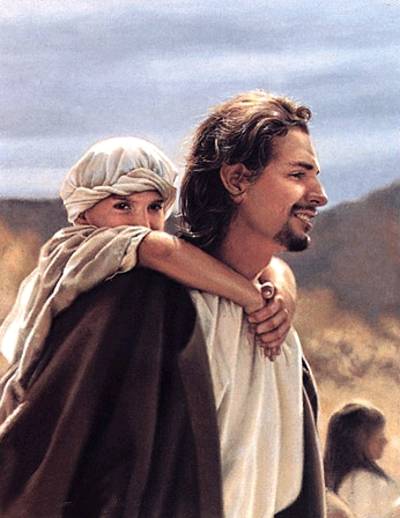
Why I Believe in Jesus – But Not Christianity

easter

Anyone who knows me personally, or through my writings, is often surprised when I say I revere Jesus Christ as my Lord and Savior.  They’re surprised because I usually keep that quiet.  My faith in Jesus is a private matter – as I think all such convictions should be.  The glaring opulence of the Roman Catholic Church, for example, sours me almost as bad as their overt disrespect for women.  The overt arrogance and verbosity of people like Pat Robertson, Robert Schuller and their ilk literally makes me nauseous.

I know I sound like a Tim Tebow acolyte.  But, I have about as much reverence for sports and entertainment figures as I do politicians and televangelists.  In fact, devoutly religious people usually chew up most of my nerves.  They have the tendency to shove their ideology in my face and think they know what’s best for me.  For as long as I can remember, the faithful have asked me to accompany them to (their) church.  Yes, I appreciate their concern for my well-being, but I don’t need it that badly.  Baptists and Pentecostals are among the most aggressive, but Catholics are not that much better.

In February of 1998, my father’s oldest sister, Amparo, died after an extended illness.  She’d been hospitalized for a month, before her frail body finally gave out.  Her death hit our family hard.  She was one of the strongest people any of us had ever known.  She helped care for me when I was a boy.  In fact, Amparo cared for most everyone else in our family; taking her older brother to cancer treatments in the mid-1980s, for example, because no one else – not even his own wife and adult children – could find the time.  Her burial instructions were straightforward: just throw her in a box, toss it into the ground, say a prayer or two and go on with our lives.  And, that’s just what we did.  There was no long, drawn-out rosary preceding an equally long, drawn-out funeral.  We had a brief service at the mausoleum, a quick internment, and then, we were gone.

When I told one of my closest friends, he was surprised to learn there had been no rosary, as Hispanic Catholics are prone to do.  “Oh, oh,” he moaned ominously.  “I hate to tell you this, but your aunt’s chances of getting into Heaven are slim.”

I became instantly enraged.  “How do you know?!” I screamed at him.  Amparo’s commitment to her family far outweighed the pious proclamations of my friend; someone who actually practiced voodoo for a short time in the 1980s, before reverting back to Catholicism.  That one statement almost ended our long friendship.

But, it’s that sort of self-righteousness – the sense of ‘I-know-what-God-wants-better-than-you’ – that sends me into epileptic fits.  I once worked with a woman who often wore a gold ‘Jesus Loves Me’ pin – while strutting about the office talking behind people’s backs and speaking in a condescending tone to others.  I’m just not one to proselytize.  Thus, it’s a stretch for me to express my personal beliefs about Jesus even in this forum.

There’s really no concrete proof that Jesus was little more than an influential philosopher from what is now Israel.  But, I feel that He was a real person; someone who lived a short life, yet has had a grand impact on the world.  I also believe Jesus has manifested Himself in other forms and in other faiths to a variety of people.  But, they’re just that – beliefs.  I never profess to know for certain who Jesus was or what He plans to do.

Some folks have this vision of Jesus arriving on a gilded chariot, amidst a cacophony of trumpets, and sweeping them up into His arms for eternal safekeeping.  They’re certain they know what Jesus will do – and that they’ll be right there with Him.  These are the same people who’ll be horrified when science discovers the center of the universe – and they’re not it!

Here’s something else I believe: the “Second Coming” means Christ will return to Earth, look around at the mess created by many of His devoted followers, and say, “You know, I had a really good idea about love and harmony 2,000 years ago, and you people just fucked it all up.  BAM!”  And, that’s how the world as we know it will end.

If Jesus should return to Earth anytime soon, I’m certain He won’t make his way to visit Pope Francis.  We won’t see Him having dinner with Mitt Romney or tea with Queen Elizabeth.  No, I’m almost positive – if we do catch a glimpse of Him – he’d be on the streets of places like South Dallas, trying to convince prostitutes life has more to offer than streetwalking.  We’d see Him in the slums of Rio de Janeiro, telling kids not to sniff glue; or in the deserts of the Middle East, ordering angry young men to put down their rocket launchers.  He might even show up at an atheists’ convention – if they have such things.  Wherever He’ll be, He won’t be cavorting with the faithful – the so-called “Chosen Ones.”  No, He’d be with the lost souls; the “Forgotten Ones”; the folks the rest of allegedly civilized society declares unworthy and unsaved.

On this Easter Sunday, I only wish for a few simple things – like a few more years with my parents and my dog; to get my novel published; to live as long and healthy of a life as I can.  Yes, I wish for peace on Earth and for the blind to see.  But, those are such grand aspirations.  I can’t save the world alone.  Neither can any one person.  Yes, it may seem strange to many, but I don’t care.  I have little respect for a religion called Christianity, or most other religions for that matter.  But, I still have faith in someone named Jesus.

Jesus_098

1 Comment

Filed under Essays

Hello! Earth to Mars!

Mars-Rising-Documentary-film

I’ve signed up to be a candidate for a Martian colony.  Okay, I’m actually just on an email list, but I’m seriously considering this.  Mars One is a non-profit organization with a goal to establish a human settlement on the “Big Red Planet” by 2023.  So far, they have a goal and a web site – and not much else.  But hey, why not dream big?!  That’s what prompted our ancestors to move north out of Africa and sail across the vast oceans of this planet.  This falls in line with an essay I wrote last year, where I included the prospect of sending people to Mars.  With the current budget deficits and political wrangling here in the U.S., that won’t happen anytime soon.

Thus enters Mars One, a Dutch-based entity that has joined with the for-profit Interplanetary Media Group to raise money for the mission.  They don’t just want to launch a spacecraft to Mars for a brief visit; they actually establish a permanent settlement.  As of January, Mars One has secured funding from Trifork BV, another Dutch company that “is a leading full service supplier of high-quality custom-built applications for organizations primarily in” education, research and government non-profit.  That’s amazing.  A country known for its tulips and marijuana cafes actually has the temerity to create companies with such grand visions.

But, the first stage for Mars One is conceptual design.  They have to convene a gallery of talented engineers and architects to visualize what Martian structures would look like and how they would function.  They have to consider air, heating, cooling and insomnia.  Next is an astronaut selection program.  That will be the most challenging aspect of the project; finding people willing to give up so much of their lives for something so incredibly unknown.  They hope to start taking applications from prospective astronauts soon.  As with anything so extraordinary, hope is the first and most significant investment.  Yet, Mars One seems undeterred.

Their literature indicates that residency on the colony will be permanent.  I don’t know how that will work out for some people.  Personally, I’m a creature of habit and enjoy certain comforts here on Earth.  I believe, though, that Mars One will have to reconsider that aspect of the project, since plenty of people may get homesick; while others will be so incorrigible they need to be sent back to Earth.  Unless they can meet an untimely death and their bodies be used for fertilizer.

I still have to give this a lot of thought.  I’ll be 59 in a decade, but I already take better care of myself than most people.  Hell, I take better care of my dog than most people do themselves!  I figure the colony will need a technical / fiction writer anyway.  I could regale the group with frightening tales of being a Democrat in a state gone wildly Republican.  That surely would keep them on Mars!

But, I have plenty of questions.

  • Will I be able to have a dog or two with me?  I can’t imagine living the rest of my life without a canine at my side.  I don’t need another person in my life.  Most people are assholes, and dogs seem to understand me better anyway.
  • Will I be able to bring my gigantic collection of books and National Geographics?  Or, will every piece of literature have to be digital?  As a writer, I’m a natural bibliophile, so books are as much a part of my life as dogs and rum.
  • Speaking of rum, will I be able to imbibe in such spirits while on this colony?  Things may not be as stressful on Mars as here on Earth, which is probably the whole point of establishing a settlement.  But, knowing how quirky most people are – especially engineers and scientists – I’d need to have a drink or two after a day of installing air filters.
  • Will I be able to masturbate in seclusion?  I’m an introvert by nature, so teaming up with others in such a remote environment will be a real challenge.  Ultimately, though, I seek out others for basic human interaction.  But, I’d still need some hand time.
  • Will I be able to have steak and meat tacos?  Or, will everything be freeze-dried and MRE style foods?  I’ve lived off peanut butter sandwiches, canned meat and blueberry muffins before.  I’ve even had a full-fledged MRE.  They’re different now than from the spam-based crap my father ate when he served in the Korean War.  But, unless there’s a chance they improve dramatically in the next ten years, I can’t see living off them for a lifetime.  I mean, I already suffer from dry mouth syndrome.

A great deal of thought and planning has to go into establishing a colony on another celestial body.  Just the logistics of getting material to the place to build will be difficult enough, unless structures can be put together here on Earth and then shipped.  I don’t think FedEx goes that far.  There’s insufficient oxygen on Mars, so no one can take a walk around the terrain without dressing up like a beekeeper.  There probably won’t be much room to move around, which means the colonizers will have to live in close proximity to one another.  That alone could take a psychological and emotional toll.  The intrepid astronauts will have to get along with each other and learn to cooperate even under the most jaded of circumstances.  That would be difficult, considering you just wouldn’t be able to get in your car and go home.  I got pissed off at some people during a play party once many years ago, so I just packed up the wine coolers and sex toys.  They tried to stop me, but I wouldn’t relent.  On Mars, I wouldn’t be able to just grab the remaining MRE’s and canisters of air and head back to Dallas on a moment’s notice.  Knowing how easily people annoy me, I really have to think about this whole Martian colony enterprise.

Still, I feel it’s a worthwhile endeavor.  Humans are naturally curious.  Think about getting into a boat and sailing into an ocean without knowing how far away the next island or land mass is.  Imagine just getting up from a grassy plain and starting to walk – to anywhere.  That’s what our ancestors did.  Americans made it to the moon, as part of the “Cold Warspace race.  I’m certain we, as a global society, can make it to Mars within a generation.  In the meantime, I’ll imbibe in a Bacardi and Coke and begin stockpiling stories for those lonely Martian nights.

1 Comment

Filed under Essays

In Memoriam – The Iraq War

g-cvr-090217-dover-coffins-3a.grid-6x2

Today marks the 10th anniversary of the U.S. invasion of Iraq.  It’s tough to believe an entire decade has actually passed.  Any war is a sad, catastrophic affair.  But, this conflict is made even worst when we realize it was not only completely unnecessary; it was based on a pack of lies.

The nexus of the invasion was that former Iraqi dictator Saddam Hussein had “weapons of mass destruction,” or yellow-cake uranium from Nigeria, or something that could wreak havoc on our world.  I knew almost from the moment that President George W. Bush stood before the United Nations in September 2002 that he was lying about Hussein’s nuclear weapons capabilities.

It’s equally sad that the U.S. media followed suit with the Bush Administration’s lies, and – to make matters worse – so did much of the American public.

The Iraq War did have one clear winner: the American oil conglomerate.  Before the invasion, Iraqi oil reserves were closed to Western oil companies.  Now, it is largely privatized and almost completely dominated by foreign entities.

“Of course it’s about oil; we can’t really deny that,” said Gen. John Abizaid, former head of U.S. Central Command and Military Operations in Iraq, in 2007.

Then Senator and now Defense Secretary Chuck Hagel pretty much agreed, when he said also in 2007, “People say we’re not fighting for oil.  Of course we are.”

The Iraq War was a long time in the making.  You only have to look back to 1998, when Kenneth Derr, then CEO of Chevron said, “Iraq possesses huge reserves of oil and gas-reserves I’d love Chevron to have access to.”  Derr later became CEO of Halliburton – the same company Vice-President Dick Cheney lead until May of 2000, when he abruptly resigned and moved from Texas back to his native Wyoming.

In 2000, Chevron, Exxon, BP and Shell dumped millions into the Bush presidential campaign; more than any other presidential race.  Their efforts seem to have paid off.  Less than two weeks after Bush took office, Cheney chaired the newly-formed National Energy Policy Development Group whose entire purpose was to lay out the course for America’s energy future.  In March 2001, the group outlined Iraq’s oil production capacity and produced a final report two months later.

In 2004, Bush’s first Treasury secretary, Paul O’Neill, said, “Already by February (2001), the talk was mostly about logistics.  Not the why (to invade Iraq), but the how and how quickly.”

They found a way: the September 11, 2011 attacks on New York and Washington.  Dancing on the graves of the nearly 3,000 people killed in those attacks, the Bush Administration shifted attention to Iraq; accusing it of complicity in the calamity.  But, even before our troops landed in Baghdad, Cheney’s group was already making plans for Iraq’s postwar oil and energy industries.  Now, Chevron, Halliburton and several others have full access to Iraqi oil.  They must be happy – and proud.

It’s easy for draft dodgers like Bush and Cheney to wrap themselves in the American flag and cry freedom, before sending others into battle.  Like most wars, this one was commandeered by old men lounging safely ensconced in their leather chairs and fought by young people who often had no other opportunities in life, except to join the military.

Here’s what we have to show for the Iraq War:

Social conservatives always seem to find money for war – but never enough for education or health care.  Aside from the tangible costs, there are the emotional and psychological effects endured by military personnel and their families.  Nothing can replace the loss of a loved one – even if that person willingly joined the military, knowing they may never return alive.  The level of arrogance in the Bush Administration extended to the display of flag-draped coffins returning to the U.S.  In an effort to hide the true impact of war, photos of these coffins were banned from publication by the White House; a move you’d expect from the military dictatorships of Myanmar or Uganda.

Making matters worse, President Bush’s own mother, Barbara Bush, appeared on “Good Morning America” just a day before the Iraq invasion and said, “But why should we hear about body bags and deaths, and how many, what day it’s gonna happen, and how many this or that or what do you suppose?  Or, I mean, it’s not relevant.  So, why should I waste my beautiful mind on something like that, and watch him (her husband, former president George H. W. Bush) suffer?”

God forbid if Barbara Bush’s quaint little tea parties should be disrupted by the sight of body bags on television!  I mean, that would be wrong, wouldn’t it?  I remember Bush, Jr., saying that he still listened to his mother.  Now, we know why he’s such an arrogant bastard.

A few years ago my local ABC News affiliate showed a young man returning to his home in a small East Texas town on Mother’s Day weekend and surprising his mother who worked at a Dairy Queen.  Only his father knew he was coming back, but kept it a secret, so the kid could surprise his mother.  I thought, ‘That’s who’s fighting this war: kids from small towns whose mothers work at Dairy Queen.’  Not Ivy League lawyers and Harvard graduates; not the sons and daughters of hedge fund CEOs – kids with few options in life.  Many of them are dead now; their promising futures squashed so cowards like George W. Bush and Dick Cheney can look good in the eyes of their blind supporters and large oil companies can earn extraordinary profits.

I know that the Great Creator will damn the likes of Bush, Cheney, Donald Rumsfeld and Condoleezza Rice for fabricating this mess and trying to sugar-coat it with layers of patriotic fervor.  Until then, I pray for the welfare of those who actually did the dirty work of fighting this war.

A family tries to leave the besieged Iraqi city of Basra March 31, 2003 in the back of a truck near a British manned bridge that had become a demarcation line. Photo by Spencer Platt/Getty Images.

A family tries to leave the besieged Iraqi city of Basra March 31, 2003 in the back of a truck near a British manned bridge that had become a demarcation line. Photo by Spencer Platt/Getty Images.

3 Comments

Filed under Essays