Category Archives: Essays

Our People

In the spring of 1983, while I was a first-year student at a community college in suburban Dallas, I took a historical geology course as a science requisite.  About midway through the semester, the instructor brought in a guest speaker; a man who described himself as a “water rights activist.”  It was a term I’d never heard before; in fact, no one else in the class I knew had heard of it.  Water rights, of course, are part of the overall environmental movement, and people are giving it much more scrutiny now as climate change becomes critical.  The man (I can’t recall his name) explained how large populations in any given location can stress out the area’s natural resources.  And, water is the most basic of all natural resources.  But, amidst his light-hearted dialogue, he suddenly mentioned illegal Mexican immigrants.  He was concerned that more people taking up residence in Texas and the rest of the southwestern U.S. were unnecessarily straining the region’s valuable resources – mainly water.  It was – and still is – a compelling argument.   And, I would have agreed with him, if he hadn’t blatantly classified all Hispanics under one group: illegal immigrants, Mexicans, “Chicanos.”

“Or, whatever those people call themselves,” he said, inciting a few chuckles from the crowd.

‘Those people?’ I repeated to myself.  He might as well have stared at the handful of Hispanics in the room and said ‘you people.’  I’ve had that thrown at me a few times.

During his speech, he pointed to a large map of the state of Texas he’d brought with him; one that displayed population centers in comparison to water resources.  “Now imagine this minus a few Chicanos,” he said, before proceeding to explain further what it was all about.

I forgot what he said because I’d lost interest in him.  He was no longer jovial and quaint; he was arrogant and bigoted.  Every fact he uttered after he presented his map was lost.  I had grown angry.  I already knew by then that my father’s paternal ancestors had been in Texas since the 1580’s.  My father’s later genealogical research proved just how much influence our family had on Texas some 200 years before it joined the United States.  But, in 1983, I was a rather naïve 19-year-old who was just becoming aware of his surroundings.  I’d already faced some prejudice in high school.  But, here I was in college; higher academia; in a science class.  And, a 50-something Anglo man essentially referred to me as a “Chicano” and an “illegal immigrant.”

He then did something totally bizarre; he extracted a guitar and belted out a homemade tune about some long-standing Texas politician.  Again, I forgot the name because I was too annoyed with the “water rights activist” by now.  When he finished squawking, the classroom erupted into delighted applause.  I remained mute, my hands on my lap.

After the next class, I approached the instructor and asked if she could make time for a meeting in her office.  I wanted to talk to her about that guest speaker.  I wanted to be a diplomatic.  She said yes, and I met her later in the day.  I explained how offended I was by his verbiage, adding that me and most other Hispanics were born and raised in the U.S.  She was surprised by my reaction.  She literally had no idea and fumbled an apology.

That was in 1983, and now, nearly two decades later, with the clown show known as the 2012 presidential campaign season in full swing, I’m almost contemptuous of politicians’ attempts to placate the Hispanic vote.  Moreover, I’m still annoyed to find that the issue of immigration – specifically illegal immigration – seems to be the only concern of the Hispanic American community.  I know many Hispanics give that impression with their own focus on immigration.  But, like most people in the U.S., my biggest grievance is the economy, along with unemployment.

Hispanics have a longer history in this country than any other ethnic group, save Indigenous Americans, with whom we share a common heritage.  Spaniards established the first permanent European colony in what is now North America.  But, in modern times, we still had to work hard to attain our fair share of the American dream, combating blatant racism and the old guard status quo that dictated where we could live and work.  Now, we’re mixed up in this awful immigration fight with no easy solutions; a fiasco that has people on all sides paranoid and angry.

I don’t support illegal immigration – from Latin America or anywhere in the world.  The laws are very clear: you cannot enter the United States without proper documentation.  Hispanics have fought long and hard for equal rights in employment, housing, education and all other aspects of American life.  Sneaking across the border under the cover of darkness is not one of them.  It never was and it never will be.  That viewpoint has made me a traitor in the eyes of many other Hispanics; both American-born and immigrant.  But, I structure my opinions around other people’s sentiments.  I consider myself an American first; a proud mix of Spanish, Mexican Indian and German extraction.  Some of my own ancestors fought for Texas against Mexico – including one with my exact name!  The much-heralded Davy Crockett and Jim Bowie, along with most of the others, were outsiders; that is, non-Texans.

Many Americans are upset with the mass influx of illegal immigrants who have disregarded our laws.  If only the latter group would show some respect for our country and emigrate legally, there wouldn’t be much of a problem.  But, their actions have generated an unprecedented level of fear among some folks – especially the narrow-minded – and allowed all Latinos to be branded with the unsavory title of “illegal alien.”

While my paternal ancestry in Texas extends back to the late 16th century, I am also the son of an immigrant.  My mother was born just outside México City.  But, she was already a U.S. citizen at birth, since her father was born in Michigan.  After my maternal grandmother died in 1940, my grandfather moved his four kids to Dallas where he’d found a job in the midst of World War II.  His mother-in-law, who already spoke fluent English, came with them.  My grandfather got his children social security numbers immediately and insisted that they speak only English in that household.  Some Hispanics laugh at me when I tell them my mother was born in México.  They get even uglier when I tell them my grandfather was German-American.  You don’t make friends with people by mocking their families.  It’s ironic though; in high school, it was the Anglo and Irish kids who hurled racist statements at me.  Now, it’s other Hispanics.

Several years ago, during the Independence Day weekend, a friend and I went nightclubbing.  We started at a Tejano bar just north of downtown Dallas.  I donned my American flag vest; something I usually wear during the Memorial and Independence Day periods.  But, on that one night, my friend suggested I remove it before we enter that Tejano bar; noting that, if anything, I should be wearing a Mexican flag vest, lest I offend the crowd.

“Excuse me?!” I replied.  “This is the United States; not México!  If someone doesn’t like that I’m wearing this American flag vest, they’re more than welcome to tell it to my face – in Spanish or English.  And then, stand back and watch while I rip their head off and dump shit down their throat.”

He didn’t pursue the matter, and I didn’t remove the vest.  No one complained about it – at least not to me.

Some people accuse me of being confused or conflicted.  I’m neither.  One girl dubbed me a “coconut” – brown on the outside and white on the inside.  “Well,” I told her, “I am White – White as in Spaniard and German.”  It seemed I had to remind her – as I do many people – that Spaniards are “White,” too; as in European, as in Caucasian.  Read my essay, “Name Calling,” and you’ll get a sense how ridiculous that racial stuff can get.

The U.S. is at a crossroads; an uncomfortable fork of its own making.  Some large companies and farms began employing illegal immigrants – mostly Mexicans – so they could avoid paying decent wages and health care costs and skirt OSHA safety laws.  As many states and individual cities target illegal immigrants, some of those farms and meat-packing plants find themselves idle; there’s no one to do that kind of work.  That kind of work is hard and dirty.  The often-spoiled American middle and upper classes can’t imagine themselves in such positions.  If it doesn’t involve Microsoft and a laptop, it seems they want nothing to do with it.  When former Mexican president Vicente Fox stated several years ago that Mexican immigrants do the work in the U.S. that our nation’s Black population won’t, he got branded a racist and a bigot by the usual voices on the far left: Jesse Jackson, Al Sharpton, etc.  But, I can relay from first-hand experience that, in the aftermath of Hurricane Katrina, large numbers of Hispanic immigrants poured into New Orleans to help clean up and rebuild the city.  While the mostly Black population was airlifted to other cities where they took up residence in hotels and sports stadiums, Mexicans, Guatemalans and the like were making their way into the decimated “Crescent City” to make it habitable again.  I don’t believe the far left complained about that part of the racial divide.

President Obama and his supporters can laud the “Dream Act” all they want.  But, it’s not my issue.  Even though I’ve been unemployed for some time, I’m not likely to run to the nearest chicken slaughter house or peach orchard to look for work.  Mitt Romney, meanwhile, is still trying to figure out how he and his trophy wife can appeal to Hispanic voters without offending the Republican base that has come to loathe Latinos.  Immigration isn’t a Hispanic issue; it’s an American issue.  I want political operatives to stop placing Latinos beneath that single umbrella – immigrants, illegal immigrants, Chicanos.  ‘You people.’  Our people.  We’re American people.  We don’t all look alike and we certainly don’t all think alike.

1 Comment

Filed under Essays

Curses!

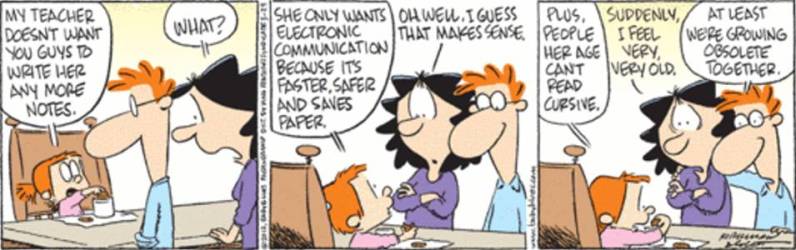
Last week, for Father’s Day, I presented my father with a card and a strawberry-topped cheesecake.  Inside the card I hand-printed a brief note thanking him for being a great father; like most of us men, my father doesn’t need flowery prose to get the message.  I signed it simply “Your Son” in cursive.  That’s where I encountered trouble.  The “Y” came out looking like a microbe one would see under a microscope.  The “S” appeared like an obese “G.”  I had the same problem with my Mother’s Day card last month and, a couple of weeks before then, a birthday card I sent to a friend.  But, when I struggled through writing those two simple words – “Your Son” – on the Father’s Day card, I realized how much the cursive script had become an anomaly.  It’s practically a dead art form.

With email, instant message, Twitter and text messaging, who writes in cursive anymore?  Then again, what fool besides me actually sends birthday cards through snail mail?  An older friend of mine was surprised last year to receive a birthday greeting in the mail from me; adding that she would have been satisfied just to receive an email message.  She almost couldn’t believe that I had taken the time to pick out the card at a store, hand-write a greeting inside of it, address the envelope, put a stamp on it and driven to the post office to send it out.  She’s 80-something and has a computer.  We communicate frequently via email, but even she understands how everything from banking to wedding announcements has gone digital.

There are some holdouts.  A handful of grade school instructors still insist on teaching cursive.  I’m almost 50 and not far removed from the days when cursive writing was a class taught in grade school.  Now, even kindergarteners are being taught to use computers.  I don’t bemoan that.  Like it or not, personal and business computers have become integral factors of our lives.  It’s just the way things are, which is good.  That means, though, that cursive writing is going the way of album art.  I’m sure some of you remember that!  Music studios used to employ people to design the covers of its singers’ albums.  But, with the popularity of CD’s and now DVD’s, album art is another relic of the past; a dying art style.

Regardless, no matter how much trouble I had signing that Father’s Day card, I’ll continue sending out birthday, condolence and other types of cards for those special occasions.  I guess I just now need to practice signing my name in cursive a few times before actually committing it to paper.  That already sounds kind of odd.  I’m just glad I don’t have to practice working a rotary dial phone anymore.

Leave a comment

Filed under Essays

Topless in Texas

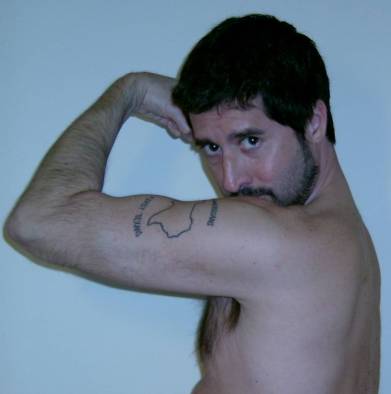
I’m somewhat of a narcissist, if not an exhibitionist.  No, I don’t parade around the house naked at night with the drapes wide open!  Well…not anymore.  The shrubs surrounding the house are too high anyway.  But, I do like running around shirtless.  I’m a man, so I guess I’m allowed that privilege.  It wouldn’t bother me if women paraded around topless either.  The naked form – male or female – doesn’t bother me.  Violence does.  As we officially enter summer (which started in March in Texas) and come off the longest day of the year in the Northern Hemisphere, I’m here to proclaim my shirtless adventures.

I didn’t always feel this way.  As a kid, I was afraid to go shirtless – anywhere.  I was too shy and too small.  I didn’t reach my present height of 5’8” until after I’d graduated from high school.  But, I always felt leery of what other people would think of me anyway.  I tip-toed around everyone else’s sentiments at the sacrifice of my own.  Please don’t break out the violins!  It gets better.  When, in high school, we had to play shirts vs. skins, I always prayed I’d be on the shirts team.  I envied the guys who’d run around during P.E. shirtless.  I just couldn’t bring myself to do it.

By the time I entered college, however, that began to change.  My shyness started fading like acne.  I don’t know what came over me.  I think it started not long after I had my first mixed drink, a Bacardi and Coke.  My dad made it for me.  No, he wasn’t trying to get me drunk!  He didn’t believe in that.  He always believed in moderation.  Besides, I discovered intoxication on my own, thank you.  I remembered the first time, at age 18, when I showered in the men’s locker room at a community college in suburban Dallas.  I had never done that before.  I’m not kidding!  But, by then also, I’d become self-conscious of my hygiene and physical appearance.  That’s when I began lifting weights, which increased my self-confidence, but made me even more concerned about my looks.

Now, I really don’t care too much what other people think about my appearance.  I’m not handsome by any means and I’m certainly not bodybuilder material.  Playgirl magazine and the International Federation of Bodybuilding would have a good time laughing if I submitted photos to them.  But, I don’t want to give them the pleasure of a good time at my expense.  Still, I look at this as part of my overall health and I’m rather satisfied most of the time when I look in the mirror.

In the fall of 1984, during my first semester at the University of North Texas, I took a men’s gymnastics class.  I didn’t need the credit hours.  I just love gymnastics.  In my dreams, I’m a retired Olympic gymnastics champion.  But, my dad had wanted me to play the same sports he’d played in his youth: baseball and basketball.  So, he and my mom never pushed me into gymnastics, even though I’d made it pretty clear at an early age that that’s what I wanted to do.  Instead of enrolling me in a local gymnastics program as a kid, they forced me to go with neighborhood kids to a local swimming pool during summers because they felt I needed to make friends.  And, what better way to get your kids to make friends than forcing them to associate with kids they don’t like at an Olympic-sized swimming pool where drowning is a viable option?  I didn’t really get into gymnastics until high school and continued in college where I reached the intermediate level.  After a couple of classes that first semester at UNT, I stepped into the gymnasium shirtless, wearing only a pair of gray shorts.  In the locker room after class, another guy asked me if our instructor – who looked like a pint-sized boxer – said anything to me about being shirtless.

“No, of course not,” I replied.  “Why would he?”

They guy just shrugged.  Yea, why would he?  Why would anybody?  But, I started a trend.  Within a few days, all the guys in that class were shirtless.  If you look at video of male gymnasts practicing, they’re almost always shirtless.  The sport just sort of lends itself to that.

While still at UNT in 1987, a friend and I drove down to South Padre Island for spring break.  It was pretty much a drunken blur, as collegiate spring breaks tend to be.  I also consumed too much alcohol at one point and – after a long day of heavy sun exposure – got sick.  I ended up in the back of my car curled up in a fetal position, near comatose, while my friend drove around trying to pick up girls.  But, I spent the better part of that week half naked; that is, shirtless.  My friend was subconscious about his chubby pale-skinned physique and remote clothed in a tee shirt and shorts most of the time.  He only lost his inhibitions once, when we stopped at a fast food restaurant, and his intoxicated form tumbled out the passenger side door to urinate in the bushes – in broad daylight – with some super model-type females in a car nearby – and a cop car just around the corner of the restaurant.  The girls started laughing when they saw him, and I cringed enough at the sight of it to put on a shredded tee shirt and block their view with my sun burnt self.  Other than that, I was shirtless pretty much the entire week – even driving down there and back.

I’m so hot-natured, though, it’s not funny.  Some people who don’t know me ask if I’m from up north somewhere.  They can’t believe someone born and raised in Texas could be so heat-sensitive.  Don’t you get used to it?  No, like the Republican Party, I know it’s here and I just sort of deal with it.  No one ever gets used to weather extremes.  A cousin of mine lived in Syracuse, New York for several years.  She never got used to the extreme cold.  Every morning, when she’d head out to work in winter, she’d just donned a heavy jacket and boots, before getting into the car.  The good thing is that cold weather requires you to dress heavily.  Warm weather brings out the stripper in you.  You can only take off so many clothes before you get arrested for indecent exposure or receive a phone call from a porn studio producer.  I’d prefer the latter, but no one’s called yet.  I understand they like people from Texas.  You know, everything’s bigger out here.  Okay, if you want any more info, you need to start contributing to my Charles Schwab account.

It’s odd, however, because I actually like to go out jogging in super hot weather.  If I’m trying to stay cool, I become agitated.  I grow borderline epileptic; squirming, groaning and sometimes cursing as badly as a drunk sailor who can’t get laid.  But, when I have free time, I often don a pair of jogging shorts, running shoes and maybe a cap or kerchief and hit the pavement.  People look at and honk sometimes.  ‘Are you crazy?!  It’s a hundred degrees out here!  What’s wrong with you?!’  Oh, just been out in the sun too much I guess.  I return home dripping like a Coke bottle without the rum.  There’s a small park across the street from the apartment complex where I used to live in North Dallas.  It had a basketball court, soccer goal posts and a baseball diamond.  I literally would run around that park for hours late on Saturday or Sunday afternoons.  Once a man stopped as I headed back to my apartment and said I should join him during his regular jogs.

“When do you go?” I asked him.

“Around 7 or 8 in the morning.”

“Are you crazy?!  I don’t get up before noon on weekends and holidays, unless my dog needs to go out or the building’s on fire.”

A close friend of mine who’s done some marathons likes to go jogging – at 7 or 8 in the morning.  He’d joined me a few times for a jaunt around that park.  But, that was after 10 A.M.  Sorry, I told him.  I don’t do crack-of-dawn running.  Now, that’s crazy, as far as I’m concerned.

Yea, I know.  The air is clearer and cooler and 7 or 8 in the mornings.  But, I never joined any running clubs for that express purpose.  They go running and jogging when I’m still slobbering and dreaming.

Upon returning from one spring around that park in August of 2005, a Dallas police officer happened to cruise by and literally yelled at me for being so “foolish” to run in such hot weather.  “Don’t you have anything better to do than harass me on a Saturday afternoon?!”  Someone could be getting robbed right then, and this chick is getting onto me about running in 100+ degree weather.  “I know what I’m doing!” I retorted as I sauntered across the street back towards my apartment.

Occasionally, while out running, someone – usually a female – would honk and / or wave at me.  One young woman almost popped a curb and slammed into a light post while taking a gander at me.  I wouldn’t have known what to tell the police officer if she’d succeeded in taking out that light.  I mean, could I have been fined for causing such a wreck?  Don’t hate me because I’m beautiful!  Because I’m really not.

But, I’ve had more than a few nasty confrontations.  One Saturday, I returned from a jog and decided to check the mail.  As I approached the mail box units towards the front of the complex, I noticed a group of kids gathered beneath a tree a few years away.  One girl noticed me and pointed at me with a smirk.  Another girl, about 9 or 10, suddenly leapt up and shouted, “Yo, man, you need to put on a shirt!”

“Yo man!” I screamed back.  “You need to shut your mouth and mind your own stupid business!”  The horrified looks on their little punk ass faces was priceless.  Bless their stupid little hearts.  They were so used to mouthing off at their teachers and parents they were shocked that someone had to audacity to yell back at them.  “Yea!” I continued.  “That means you, you little punk!  You don’t shout at me!  Shut your ass!”  When I retrieved my mail and exited the building, I found they still hadn’t learned their lesson and continued to smart off at me.  I drop the mail on the ground at started across the parking lot towards them.  “Come on,” I said.  “Come over here and start something.”  They all leapt to their feet and, trembling in their overpriced Sketchers, hurried away.

Another time I was loading up my truck, preparing to head over to my parents’ house, when a deep male voice hurtled down towards me: “Yo man!  You need to put on a shirt!”

I couldn’t see who yelled at me.  There were a lot of punks standing up on that third level landing, plus there was a large oak tree blocking my view.  “Hey, yo man, why don’t you come down here and make me!” I screamed back.  I stepped into the clear, in front of the oak tree.  “And what the fuck are you gonna do if I don’t put on a shirt?!”  I continued to challenge the loudmouth – whoever he was – to come down to the parking lot and do something about the way I looked.  But, he didn’t.  He was a punk, a coward, a loud mouth.

Another time I came home from work, got undressed and put on a pair of running shorts and flip flops to take my dog out for his evening walk.  After a few minutes, we encountered three girls – probably about 17 or 18 – when one of them mouth off at me, “Yo man, you need to put on a shirt.”

That ‘yo man’ shit again!  God, that pisses me off!  “Yo man,” I snapped back, “you need to shut your mouth and mind your own fucking business.  Yo man, you don’t tell me what to do.  Yo, yo, yo, man, I suggest you stop talking and keep walking.”  My dog began to growl.

That one little punk bitch got – shall we say, upset.  “Yo man, I guess your mama didn’t teach you how to talk to a lady!”

I almost leap over the fence and pounded her into the pavement.  “Yo man, I guess my mama doesn’t have a goddamn thing to do with this conversation!  Yo man, I know she doesn’t!  Yo man, you need to shut your punk bitch ass the fuck up, or I’ll shut it up for you!”

That only incensed her further.  As a young female, she obviously had grown up in this society that says females must be respected at all times.

Unfortunately, for her, I’m not good at following other people’s rules.  “I know how to talk to a lady!” I continued.  “I’m not talking to one right now!  I’m talking to you!  Your mama didn’t teach you how to keep your mouth shut and mind your own fucking business!”

Ooh, she was really mad now!  But then, she committed an even greater transgression: she threatened my dog.  I dropped Wolfgang’s leash and started around the fence.  I literally was going to do some cranial damage to her and thereby, perform a much-needed public service.  Her two comrades, however, were struck by divine wisdom and grabbed their antagonistic little friend and pulled her further down the sidewalk.

Yea, I know.  You’re supposed to let assholes like that just go and ignore them.  But, I figure if someone wants to start a fight because they don’t like how I look, then they’ll get their wish.  Kids and teenagers are especially horrified when I have the audacity to snap back at them.  Disrespectful kids – which seems to be in vogue these days – is an entirely different subject.  But, if I stand back at look at myself in such settings, even I find it amazing.  The kid who, just 30 years earlier, cowered at the thought of taking off his shirt in a high school gymnasium; the shy introvert who always let people disrespect him for fear of hurting their feelings, is now almost getting into fights with dumb asses.

At my gym, shirts and shoes are required – as always.  The former command, of course, is directed towards males, but in the interest of equality, they don’t say that.  But, I and some other men often wear tattered, sleeveless tee shirts that might make some ask how much of a shirt we’re supposed to wear.  I just cut up old white Hanes tee shirts to use strictly as gym shirts.  There’s plenty of arm room for hoisting the weights.  I like to visit the gym late on Saturday nights, after 9 P.M.  It’s ideal; there’s hardly anyone around.  No loud talking; no couples trying to show everyone how cute they can be (something I really hate); only the die-hard gym rats show up at that time of night – on a Saturday no less.  On a few occasions, towards the end of a lengthy workout, I’ve stripped off my tattered tee-shirt.  And again, no one says anything.  I don’t think anyone cares.  At that time of night, people don’t visit a gym to be sociable, much less fashion conscious.

There are entire web sites devoted to shirtless men, or the shirtless lifestyle for men.  But, there also seems to be a growing level of antagonism in American society towards the male physique.  It appears only well-buffed male celebrities are permitted shirtless escapades.  The rest of us lowly mortal males had best cover up, even in the hottest weather.  I’ve noticed, for example, young men attired in jeans and long-sleeve shirts in 90 – 100 degree days.  People laugh at a man or a young boy being struck in the groin, but think it’s obscene if a man appears shirtless in public, even in a park, or on his own property.  As usual, Americans have their sensibilities skewered.  It’s even more outrageous when I see fat chicks wearing spandex.

But, if someone is concerned about how other people look and what they’re wearing, either their life is whole and complete therefore, have nothing else to worry about, or they’re just an intrusive little fuck who has too much time on their hands and need to get pounded into the ground.  Okay, deep breath now.  Relax.  Regardless of how people feel about my physical appearance, I’ll always be topless in Texas!

4 Comments

Filed under Essays

Daddy Men

When I was 3 months old, in February of 1964, a major ice storm hit Dallas.  My parents and I lived in a tiny two-bedroom apartment above a garage behind a home belonging to my father’s oldest sister and her husband.  Shortly after the area became coated in ice and snow, my mother realized they were out of baby formula.  My father simply walked a couple of blocks down the street to a small grocery store and bought some formula.  It was an otherwise arduous trek – although the store stood nearby – because of the ice and the frigid temperatures.  But, I needed that formula.  My father didn’t think twice about it.  He just took off, despite my mother’s initial protests.

Some thirty-six years later, I worked as an executive administrative assistant at a large bank in downtown Dallas.  I had just finished lunch one day with some colleagues when the subject of parenting came up.  A couple of the women complained about kids running rampant, undisciplined and disrespectful.  I mentioned that part of the problem was the lack of an adult male presence in their lives.  “That’s where fathers come into play,” I said.

“Nah,” retorted another woman, Sandra*, a 20-something leftist feminist who rarely had anything good say about those of us with penises.  “I’ve seen fathers who just don’t seem to care.”

Another woman, a 50-something Hispanic divorcee who rarely had anything good to say about Latinos with penises stood next to her, nodding her head in my direction.

My reaction to Sandra was nothing short of vitriolic.  Her drawn-out ‘nah’ is what set me off.  In the sanctity of that little break room, all of us attired in proper business wear, I practically screamed at Sandra.  “You have such a cunty feminist attitude towards men!”

I was only one of two men in the room at the moment, and everyone turned towards me; shocked and horrified at my sudden outburst.

“Excuse me,” replied Sandra.  “What did you just say to me?”

I stood up and repeated exactly what I’d just said, adding that – despite her previous comments – men actually serve a purpose in the raising of children.  We’d had similar conversations before, and I’d tolerated Sandra’s misandric rants.  You might have trouble finding that word – misandric, or even misandry – in a standard dictionary, which doesn’t surprise me.  But, on that day in early 2000, my political correctness flew out the break room door.  Sandra and I usually got along – and agreed on many issues – until she tumbled into that uber-feminist mode.  Then, she metamorphosed into an almost completely different person, like the little girl in The Exorcist – screaming, cussing and reaching for the nearest set of testicles to crush.

“What purpose do fathers serve?” she asked.  “Men have never raised children.”  She could have been speaking from personal experience; considering her own father abandoned her and her siblings to take up residence with a much younger woman their mother.  They almost never saw him, she’d explained previously.

“The real question,” I said, “is what purpose your disrespectful feminist attitude serves.”

Here we were – at the threshold of a new century and a new millennium – and Sandra espoused the contemporary feminist belief that fathers were relics of an ancient past; like the Mayan pyramids.  That still seems to be the popular opinion, as the family unit undergoes dynamic restructuring in contemporary America.  Dismissing the value of men in the lives of children – even their own children – has become standard theology among those who reside in the universe left of Barbara Tuchman.

Some women say it’s retribution for centuries of male domination in patriarchal societies.  But, whose fault is that?  Certainly not mine, or my father’s, or any other man who just tries to do the best for his kids and get through life in one piece.  We didn’t create that world a thousand years ago and can’t be held responsible for it.

I recall, in the mid-1990’s, when singer Melissa Etheridge and her then partner, Julie Cypher, announced that “they were having a baby.”  Etheridge was on tour at the time; what she called a “baby shower our” where concertgoers tossed baby items onto the stage.  Etheridge had sonogram pictures of “their” baby positioned prominently on either side of the stage and beamed like a proud father in a sickening display of egotistical bluster.

“I didn’t know she’d grown a penis and testicles,” I told some people at work.  I was in the wire transfer division of the bank at the time.  Or, maybe Etheridge was actually a hermaphrodite, I added, alternating between genders with the ebb and flow of the tides.  Regardless, seeing Etheridge behave as if she had impregnated Cypher was as ludicrous as it was outrageous.  In 1996, the couple appeared on the cover of Newsweek magazine with the headline: “We’re having a baby.”  I looked at that word – ‘We’re.’  Just as Bill Clinton tried to re-define the verb “is,” Etheridge and Cypher were trying to re-define parenthood.  In both cases, they failed.

When Etheridge and Cypher revealed the father of their child was David Crosby, the situation became even more absurd.  And, what woman wouldn’t want an aging hippy / drug addict / ex-con to father her children?  David Crosby and a Dixie cup?  Perish the thought!

In May of 2006, a friend showed me a copy of the Dallas Voice, a weekly publication aimed at the city’s gay/lesbian community.  That particular issue was the periodical’s “Mother’s Day” edition, which was filled with ideas on where people could take their mothers to eat or shop; where they could buy mom some flowers; etc.  Three of the paper’s regular editorial contributors wrote glowing pieces about their respective mothers and the special bond they shared.  In the preceding months, the paper had also asked its readers to send in memories of their mothers; my friend was one of them, and the paper had published his story.

I was curious, though, to see how the Dallas Voice treated Father’s Day.  Surely, I thought, a community that called for equality and respect for everyone would bestow similar accolades on its male parents.  So, a month later – on the Friday before Father’s Day – I retrieved a copy of the paper…and was sadly (angrily) disappointed.  For their “Father’s Day edition,” the paper had decided to focus on the challenges of gay/lesbian parenting overall – especially in a state as hostile to homosexuals as Texas.  They highlighted 2 couples: a female duo with children and a male couple who discussed the legal difficulties of international adoptions.  The women made no mention of their kids’ father, and the two men didn’t even have children yet; they were still trying to work through a bureaucratic morass.  I then noticed that the same 3 editorial contributors who’d composed extraordinary pieces about their mothers had absolutely nothing to say about their fathers.

One penned a nauseatingly saccharine bit about the 25th anniversary of the discovery of AIDS.  Some background: it was on June 5, 1981 that the Centers for Disease Control and Prevention first published a report about 5 young gay men in Los Angeles who were mysteriously afflicted with Pneumocystis carinii pneumonia (PCP), a rare type of pneumonia usually caused by a suppressed immune system.  That eventually led to the “discovery” of AIDS, which most certainly was around long before 1981.  Even now, more than three decades after AIDS had been identified, the AIDS death toll in the United States still hasn’t surpassed the 700,000 mark.  In that same period, I asked myself, how many people had died of cancer?  Of leukemia?  Of cardiovascular disease?  From gun violence?  From drunk driving?  How many of them were fathers who’d been trying to support their children?  Many gay men treat AIDS in the same manner that some Jews treat the Nazi Holocaust – they’re the only ones on planet Earth who have ever suffered such trauma and the entire world should stop spinning to consider their plight and only their plight.  The vast majority of gay men aren’t even HIV positive, much less suffering from full-blown AIDS.  And, there are plenty of gay fathers who do what millions of other men do every day – love and support their kids.

Meanwhile, another columnist talked about some obscure “Canadian power dyke” in that same paper.  Don’t even ask me to explain what the hell that was all about because I have absolutely no idea, or interest, in it.  Finally, the third columnist bemoaned his technological disconnect; writing as if he had been best friends with Jesus and now found himself in a brave new world with such scary things as cell phones.  And, that was it; that was the paper’s “Father’s Day” edition.  No ideas where to take dad for a Father’s Day lunch, or buy him gifts; no readers’ stories about their fathers.

Three months later another friend invited me to an informal meeting of the Stonewall Democrats, a local group dedicated to reversing Texas’ slide into Republican-controlled dementia.  Good luck.  Among the speakers was an assistant Dallas Voice editor.  I questioned him about the logic behind the paper’s “Father’s Day” edition.  “Why,” I specifically asked, “did you not have at least one column by someone talking about his or her father?”

He looked as if I’d asked him to explain Keynesian economics and how it pertains to cotton farms in Idaho.  “Well,” he finally sputtered, “none of them had anything to say about their fathers.”

“Well then, ask for some!  Why didn’t you just ask your readers to send in stories about their fathers the way you did with Mother’s Day?”

He still had that Keynesian economics look.

Then, some gal jumped in and spouted off the usual feminist crap about fathers not serving a purpose and added that “most fathers would probably kill their gay children.”

I guess she thought I would back down, cowering like a puppy, as her finger jutted out towards me.  “First of all, get your fucking finger out of my face,” I retorted.  “Second, that’s one of the stupidest things I’ve ever heard.”  I looked at her in the same way I had stared at Sandra six years earlier.  “Fathers serve a purpose.  Broads like you don’t.”  I suddenly felt like David Duke at an NAACP rally.  How dare I question a female – any female – about parenting!  How dare I consider fathers more important than AIDS!  I’d pissed off a room full of elitist liberals.  But, as I scoured the increasingly hostile crowd, I didn’t care.  Political correctness isn’t my strongest attribute.  It has the tendency to trample over the facts.

Political correctness isn’t a belief many of my own friends hold close to their hearts.  One is openly gay with an adult son; a young man he loves more than anyone else.  He gave everything he possibly could to his child – just like any dad, just like my dad.  Another close friend is an older lesbian woman who speaks fondly of her father; a man who accepted her when she came out of the closest just before he died several years ago.  She still gets emotional when she talks about him.  Fatherhood is not a sexuality issue; it’s a human rights concern.

Political correctness is what John Stossel said would be turned “on its ear” during a 20/20 program a few years ago, which focused on gender roles in America.  I suspected it wouldn’t be too male-friendly – and I was right.  Some highlights: a clip from MTV’s Jackass – which makes Survivor and Dancing with the Stars look artistic – and a claim it’s a perfect example of typical male behavior and testosterone; a man stating, in a clearly effeminate voice, that fathers don’t serve any greater purpose beyond a “sperm bank;” a glowing bit with correspondent Elizabeth Vargas discussing motherhood and mentioning that some women have orgasms while breastfeeding.  Excuse me?  I can only imagine the reaction to men supposedly having orgasms while roughhousing with their kids.  Yes, the program was politically correct alright – it bashed men and made women look flawless.  Just when I thought 20/20 would improve with Barbara Walters’ departure, they come up with that mess.  I haven’t watched much of 20/20 since.

Only in recent decades has debate raged over the role of fathers; a debate that’s been manufactured by none other than the feminist left and their token male eunuch comrades.  Modern feminism is riddled with blatant hypocrisy and two-faced antics.  Every self-righteous feminist talking head from Gloria Allred to Gloria Steinem slams the role of fathers, but turns around to scream and yell like drunken hookers on a rainy Monday night about the handful of men who abandon their children.  So, men don’t have any function in raising children, but when financial support is needed, where’s the father?  Suddenly, those children become their kids, and the term “deadbeat dad” is tossed around like shot puts at an Olympic track and field event.

Then, there’s that ubiquitous sperm bank line: “Women don’t need men because we have sperm banks.”  That’s like saying we don’t need farms because we have grocery stores.  And, while you don’t have to visit a farm to buy your food, society still can’t survive without penises.  Some have tried; they just can’t.  Bumping vaginas doesn’t cause an egg cell to start cleaving; it just causes sore hip bones.  Parthenogenesis doesn’t occur in humans, no matter how hard the likes of Gloria Allred and Melissa Etheridge dream otherwise.  But, by saying they don’t need men because they have sperm banks, these gals express a vitriolic hate and disrespect for the male of the species.  They hate men so bad they will remove as much semblance of us from their world as they can and state ‘we’re having a baby;’ and claim one “inseminated” the other, when in fact, she just injected her partner with the sperm cells.  Yes, I’ve actually heard lesbian couples say that!  But, no matter how much they twist the terminology around, they still can’t escape the fact that they need men to procreate.

I have no respect for people who patronize sperm banks – whether they’re making a deposit or a withdrawal.  They’re all a bunch of arrogant jerks who feel they – and only they – can save the human race.  The men obviously believe their sperm cells are as valuable as gold bullion and must be preserved like the crop seeds stored in Norway’s “Doomsday Vault;” otherwise humanity will perish.  They’re not special; they’re irresponsible.  Placing themselves in an ivory tower above the rest of us lowly mortals, they want the satisfaction of knowing they’ve passed their genes into the world; they just don’t want to deal with dirty diapers.

On the other side are the women who clearly view themselves as deistic; omniscient and omnipotent.  They proclaim self-righteously that they don’t need a man in their lives without realizing that no man needs them.  What man would want to deal with that much bitchiness?

None of these think about the children they produce.  They don’t realize their progeny will want to know something about their family history; where they come from and who they are.  No, these people – wrapped in the narcissism of new-age technology think only of themselves.

Men have been raising children since the beginning of time; long before some idiot invented sperm banks; long before lesbian couples started pairing up and calling each other “family;” long before single motherhood became Hollywood fashionable.

My father worked in the printing business his entire life.  He and my mother came from an environment where people entered a particular profession and stuck with it.  No one hopped from job to job in their day; not really.  My father labored for more than 30 years in one place on the edge of downtown Dallas; standing on his feet in soft-sole shoes on concrete for hours a day.  His feet and knees are paying the price for it now.

One of my best friends, Preston*, and his wife have three children.  Preston has endured some tough times in recent years.  When the tech bubble burst in 2001, he found his software programming skills were not as in demand as they’d been just a year earlier.  Struggling with limited choices, he – certified in every certification Microsoft has to offer, holder of a Masters degree in computer science – went to work for a home improvement outlet.  He didn’t balk at the thought of it; he had a daughter to support at the time.  Now, he and his wife also have two boys.  Preston broke a small bone in his neck in a freak tree-trimming incident and had a brief bout with cancer.  He had no lucrative trust fund or wealthy benefactor on which to rely; he just had himself.  He did what my father and millions of other men do every single day and night of their lives: they find a way to support their children.  They don’t stand up on a hilltop to trumpet their actions.  They just do it because it needs to be done.

It’s been that way for millennia.  All the political correctness and gleaming scientific technology won’t – can’t – change that.  I envy my father and friends like Preston.  I always wanted to get married and have children of my own, but that never happened.  Women, it seems, aren’t attracted to ugly shy men who like cars and true crime novels.  Oh, well.  While I don’t have kids – although I often call myself a single dad of a dog – I still know what it takes to be a father.

Sandra had told me fathers don’t nurture children in the same way as mothers.  For once, she was right.

“No,” I told her, “they don’t.”  Men nurture children in a different way; in their own special way; in the way that only a dad understands – dads and their children.  It’s not superior to the way women do it, but it’s definitely not inferior.  But, there’s a reason for that.  People of both genders were meant to raise children together.  Humanity couldn’t have survived without it.  We just can’t do without our fathers.

*Names have been changed.

1 Comment

Filed under Essays

Why Have the Democrats Abandoned Texas?

Immediately after he signed the Voting Rights Act into law on August 6, 1965, President Lyndon Johnson turned to his staff and said, “I’m afraid we’ve just handed the South over to the Republican Party.”  He didn’t realize how prescient a statement that was.  Many White southerners and their elected officials were appalled.  How dare Johnson, a fellow southerner, wreak such havoc on a system that – in their minds – had worked just fine for nearly 200 years.  After the tumultuous 1964 election season, in which people were beaten and sometimes killed for helping people register to vote or marching in favor of comprehensive voting rights, the 1965 Voting Rights Act ensured that every eligible U.S. citizen could cast a ballot, as promised by the U.S. Constitution.  It struck down two key stumbling blocks: the poll tax and the so-called “grandfather clause.”  It’s tough to imagine now, but until 1965, people actually had to pay a special tax to vote.  In the Southeast, the “grandfather clause” was designed by Whites primarily to keep non-Whites from voting; if a person’s grandfather could vote, it declared, then that person could vote as well.  But, since many people – mostly Blacks, Hispanics and Indians – were forbidden to vote in years past, their grandchildren couldn’t vote.  It was a deliberately vicious cycle that prevented the most oppressed members of society from having an impact on elections.

Southern Democrats weren’t quite like their New England and West coast counterparts.  The southerners referred to themselves as “Dixiecrats,” once the name of an actual political party.  They associated the Republican Party with those pesky northerners who had destroyed southern society and trampled on their precious “state’s rights.”  But, as the Democratic Party became more progressive in the 1960’s and 1970’s, many southerners found it distasteful.  It mostly centered on race; some older Whites simply didn’t consider Blacks and other non-Whites as equals and couldn’t stand the thought of an integrated society.  It went against their cultural values and how they viewed America.  The Democratic Party had lost its way, as far as they were concerned.  And, the Voting Rights Act pushed many over the edge and into the Republican camp.

Slowly but surely, however, southern Democrats began abandoning the Democratic Party.  Some of the most famous Republican leaders actually had started out as Democrats: Strom Thurmond, Jesse Helms and even Ronald Reagan.  Current Texas Governor Rick Perry first ran for public office in 1984 as a Democrat, but switched to the Republican Party in the 1990’s.  The great southern Democratic exodus actually didn’t begin, however, until after Reagan won the 1980 presidential election.  Reagan had surprised the nation when he won the 1966 California governor’s race.  California already had become a bastion of liberalism and progressive ideology, so it was shocking that a conservative Republican – even if he was a former actor – could actually take the mantle of the state’s highest office.  Reagan won reelection four years later and sought the Republican Party’s presidential nomination in 1976.  But, incumbent President Gerald Ford wouldn’t relinquish the helm of the GOP to Reagan.  The Republican Party fractured over that trite battle and lost the presidency to Jimmy Carter, a Democrat.  Besides, after the disastrous Watergate affair, political pundits declared the GOP practically dead; claiming it wouldn’t recover any time soon.  When Richard Nixon departed the White House in 1974, he didn’t just leave his career in tatters; he left the entire GOP in the same state.  Or, so it seemed.

The Carter administration proved disappointing.  Even with Democrats controlling both houses of Congress, Carter couldn’t seem to get a grasp on national issues.  The various energy predicaments, coupled with the Iranian hostage crisis that erupted in 1979, only solidified Carter’s ineptness in the minds of many Americans.  In fact, the entire decade of the 1970’s seemed like an utter and dismal failure; a massive stain on our nation’s history.

But, Ronald Reagan almost single-handedly changed the national mood.  He brought a sense of renewed optimism and an infectious degree of patriotism.  Using his charm and personal wit, he made Americans feel proud; a sentiment that had been absent for years.  But, Reagan also reinvigorated faith in the Republican Party – a faith that spread like the evangelical fervor to which it was often linked.  Reagan often told southern Democrats they were really Republicans at heart; “they just hadn’t figured it out yet.”  Thus, commenced that mass pilgrimage into Republican arms, especially in the Southeast.  And, just as Lyndon Johnson had insinuated, much of it was due to race.

In January of 1999, when George W. Bush was sworn in to his second term as Texas governor, Senator Kay Bailey Hutchison said that the state was becoming “increasingly conservative.”  I looked at my TV screen and asked, ‘When was it ever liberal?’  But, as I muse over Texas politics, I have to ask an even more important question: why has the Democratic Party abandoned us?

When he first ran for president in 2000, George W. Bush took 59% of the Texas vote; not surprising since he was then governor and had a somewhat stable management record in the state.  Four years later, he took 61.1% of the Texas vote; again not necessarily surprising.  Bush was so certain he’d take Texas, he didn’t even campaign here in 2004.  By then, the Texas political landscape had turned crimson red.  Yes, pockets of blue stubbornly persist, mainly in the far southern and far western regions.  But, without a doubt, the Republican Party dominates.

Yet, while Johnson felt that signing the 1965 Voting Rights Act practically handed the South over to the Republican Party, it looks now like the Democrats have done much the same thing with Texas.  It seems they’ve practically ceded the state to the GOP.  People like me who’ve voted mostly Democrat our entire lives feel equally forsaken.  Recent events, though, might explain why.

When he sought the Texas governorship two years ago, Bill White, the former mayor of Houston, not only failed to invite President Obama to campaign for him here, he refused to accept an offer from the White House for the President to visit the state on his behalf.  White didn’t even want Joe Biden to drop by – which, in some ways, I can actually understand.  But then, White criticized Governor Rick Perry for referring to President Obama as only “Barack Obama” in a campaign ad, noting that the term “President of the United States” was a special designation and commanded the proper respect.  So, while White openly respected the Office of the President of the United States, he still didn’t want President Obama down here.  Therefore, Obama stayed away.  White lost with 42% to Perry’s 55%.  Not that Obama’s presence would have helped White.  But, it’s always the thought that counts.

Texas has always played a pivotal role in presidential elections.  For every election from 1872 to 1924, and from 1928 to 1948, Texas voted mostly for the Democratic candidate.  Dwight D. Eisenhower won Texas during his two presidential runs, but that may have been, in part, because he was a native son and a World War II hero.  Texas returned to its Democratic obsession throughout the 1960’s.  But, in 1976, Carter became the last Democrat to win Texas in a presidential race.

When he became chairman of the Democratic National Party in 2005, Howard Dean, the former governor of Vermont, launched his “50 State Strategy” to get more Democrats elected to office, starting with the 2006 mid-term elections.  Critics dismissed Dean – whose 2004 presidential run was known for a primal scream amidst a speech following the Iowa caucuses – and denounced his plan as crazy.  But, it worked; the Democrats gained control of both houses of Congress in 2006 and, of course, the White House two years later.  But, the premise of the “50 State Strategy” was to broaden the DNC’s reach across the nation, instead of concentrating its resources and energy on the East and West coasts.  It was a noble and ambitious effort to rebuild the party that had let itself be defined by the more radical voices of their Republican counterparts.  The DNC had gone too far to the left; even shutting out moderates and alienating independents.  Now, just the opposite is happening with the Republicans; they’ve moved so far to the right that the “Party of Lincoln” has made compromise a proverbial four-letter word.

But, as I – a technical writer, not a political scientist – analyze both the Democratic and Republican parties, I understand that ideology is the principal factor.  Galvanized by George W. Bush’s defeat of Ann Richards in the 1994 governor’s race, Republicans in Texas launched concerted efforts to inject more of their ilk into the state legislature.  With a reconfiguration of district lines in 2001, they succeeded; the 2002 elections allowed Republicans to take command of the state legislature for the first time in 130 years.  Texas Republicans now like to proclaim they booted out the Democrats after decades of quasi-authoritarian rule.  They make it sound as if Texas had been in the vice grip of extremist liberals; a barren wasteland where feminists, homosexuals, abortion doctors and other miscreants ruled fearlessly and ruthlessly, until a handful of brave Reagan disciples dared to stand up to them.  But, when I look at those ancient “Dixiecrats,” I realize the Republicans of today are the Democrats of yesterday.  There’s no real difference.  The name has changed, but the conservative dogma remains.  And, remember: it all goes back to race, or more importantly, the Democrats’ philosophy that race or ethnicity shouldn’t matter in a person’s success in this country.  It’s really as simple as that; race is the central element of that change.  And, from that, extends other issues, such as gender and religion.

Amidst the chaos, I ask again: why has the Democratic Party abandoned Texas?  Several years ago, a cousin of mine noted that many Hispanics had forsaken their Roman Catholic roots and turned to Protestant denominations for spiritual guidance.  Some had even switched to Baptist or Pentecostal churches, which – if you knew Roman Catholics, especially Hispanics – you’d understand how heretical that is.  But, my cousin pointed out that the Roman Catholic Church apparently hadn’t addressed the needs of the Hispanic community, particularly its immigrant members.  She claimed the Church just wanted their money and unmitigated loyalty.  That, of course, is true of most any religious outfit.  But, in reflecting how passionate people can feel about politics, the same scenario applies to Democrats and their glaring willingness to accept that Texas is a Republican stronghold.  The late former House Speaker Thomas “Tip” O’Neill, a Democrat, once said that “all politics is local.”  That’s certainly true.  But, when your national leaders don’t pay attention to the locals, they shouldn’t get upset when those votes end up holding hands with the opposition.

1 Comment

Filed under Essays

Mexican Romneys and Birther Hypocrisies

George Romney in 1969.

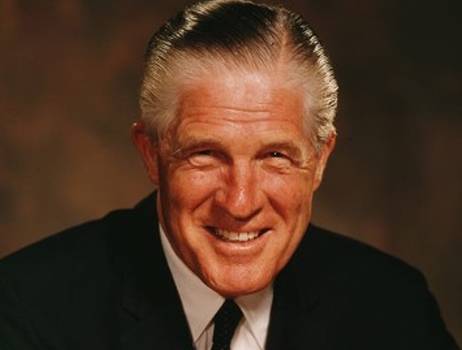
Mitt Romney probably won’t admit it, but his father – the late George Romney, a successful business executive and two-term Michigan governor – was a Mexican.  Not an ethnic Mexican – as someone of at least partial Mexican Indian extraction, such as myself – but a Mexican by birth.  George Romney was born in Galeana, Chihuahua, México in 1907.  His father, Gaskell Romney, and grandfather, Miles Park Romney, had moved to the region with their families 22 years earlier, after leaving their homes in Utah.  But, the mere thought of calling his own father a Mexican apparently makes Mitt Romney squirm.  This past January, when he appeared at Miami Dade College for an interview with Univision, the large Spanish-language network, host Jorge Ramos asked whether the “severely conservative” former Massachusetts governor felt he was Mexican-American.  It certainly put Romney in a tough spot.  If he said yes, he could alienate himself from the conservative and mostly non-Hispanic White voting base.  But, if he said no, he could lose one of the largest demographics in the United States.  Instead, like a true politician, he deflected the possibility by answering, “I would love to be able to convince people of that, particularly in a Florida primary.  But I think that might be disingenuous on my part.”  Where’s the birther crowd when you need them?

Mitt Romney likes to claim that his family fled Utah to avoid government-induced religious persecution; wandering like some lost tribe of Israel until they found a place they could call home: the heart of the Mexican desert.  There, they could finally live in peace and take care of their own; being completely self-sufficient, while intermingling with their Indian neighbors who were friendly and otherwise oblivious to the plight of the tortured Romneys.  Supposedly, if the Romneys hadn’t run for their lives, according to Mitt’s mythology, they would have been forced to sacrifice their dignity and practice a more mainstream Christian faith.  On one level, Romney insinuates his family’s flight to México is comparable to that of Jews fleeing Nazi Europe; lest they be annihilated because of their faith.  But, on another, he implies that his family’s ordeals mirror those of Native Americans; people whom European interlopers denounced as vermin who could only survive if they adopted Christianity.    What drama!  What poetry!  What a lie!

In reality, the Romneys moved to México to continue their polygamous lifestyles.  Many other Mormon families relocated to México in the late 1800’s, while others moved to Canada.  The United States had passed its first piece of legislation banning polygamy in 1862, when President Abraham Lincoln signed the Morrill Anti-Bigamy Act into law.  But, it didn’t do much to enforce it, since the nation was overwhelmed by the Civil War.  However, in the 1870’s, the U.S. began cracking down on polygamy.  Mormon men – not wanting to relinquish their harems – simply reacted by moving outside the U.S.  Both Gaskell Romney and Miles Park Romney had a gallery of wives.  Fortunately, though, George Romney only had one.  In 1911, Miles Park Romney returned to Utah with his family, as México descended into political and social chaos.  That time they really were running for their lives.  But, it’s an insult to real victims of religious and ethnic genocide for Mitt Romney to intimate that his ancestors suffered similar indignities.

George Romney met his future wife, Lenore LaFount, in high school.  Lenore had aspired to be an actress; she even had a contract offered to her by Metro-Goldwyn-Mayer.  But, as women were apt to do in those days – regardless of religion – she relinquished that ambition to marry George in 1931.  By then, George had gone to work for Alcoa, an aluminum manufacturing company, and eventually rose to executive status.  His job took the Romneys to Michigan where George switched over to American Motors, becoming its first CEO.  In 1962, he ran successfully for Michigan governor, earning a second 2-year term in 1964 and then, a 4-year term in 1966.  Two years later, he launched an unsuccessful bid for the Republican presidential nomination; losing to Richard Nixon in the primaries.  His support for civil rights and opposition to the Vietnam War surely cost him votes from the party faithful.  Still, Nixon appointed Romney as Secretary of Housing and Urban Development.  After leaving that post in 1973, Romney began a life of public service.  He died in 1995.  Lenore Romney passed away 4 years later.

But, since George Romney was born in México, would he have qualified to run for president?  The U.S. Constitution requires that the president be a natural born citizen.  The 14th Amendment defines citizenship somewhat specifically:  “All persons born or naturalized in the United States, and subject to the jurisdiction thereof, are citizens of the United States and of the State wherein they reside.”  Yet, Title 8 of the U.S. Code clarifies citizenship even further:

  • Anyone born inside the United States.*
  • Any Indian or Eskimo born in the United States, provided being a citizen of the U.S. does not impair the person’s status as a citizen of the tribe.
  • Anyone born outside the United States, both of whose parents are citizens of the U.S., as long as one parent has lived in the U.S.
  • Anyone born outside the United States, if one parent is a citizen and lived in the U.S. for at least one year and the other parent is a U.S. national.
  • Anyone born in a U.S. possession, if one parent is a citizen and lived in the U.S. for at least one year.
  • Anyone found in the U.S. under the age of five, whose parentage cannot be determined, as long as proof of non-citizenship is not provided by age 21.
  • Anyone born outside the United States, if one parent is an alien and as long as the other parent is a citizen of the U.S. who lived in the U.S. for at least five years (with military and diplomatic service included in this time).
  • A final, historical condition: a person born before 5/24/1934 of an alien father and a U.S. citizen mother who has lived in the U.S.

* There is an exception in the law – the person must be “subject to the jurisdiction” of the United States.  This would exempt the child of a diplomat, for example, from this provision.

Anyone falling into these categories is considered natural-born, and therefore, is eligible to run for President or Vice President.  These provisions allow the children of military families to be considered natural-born, for example.  Thus, because his parents were born in the United States, George Romney was automatically a U.S. citizen.

And, so is Barack Obama, since his mother was born here.  The birther crowd, however, still hasn’t figured that out, or – more accurately – won’t accept it.  Sometimes, the truth just hurts too much.  But, where are they to demand Mitt Romney’s long-form birth certificate?  How do we know he was really born in Michigan?  Don’t those conservative extremists who comprise the birther clan hate México as much as they do Kenya?

Oh, yes, of course.  Kenya – Africa – Negro.  That’s where the difference lies.  George Romney was a full-blooded Caucasian.  How silly of me to forget the Republican definition of an American.  Either way, it’s interesting to note that, should Mitt Romney clinch the GOP nomination at the party’s convention in Tampa, I believe this will be the first time in U.S. history that the two primary candidates for the presidency both had fathers born in other countries.

Surprisingly – or perhaps not – many Romneys still reside in México; Anglo-American ranchers, farmers and business people who speak English and Spanish and consider Colonia Juarez home.  It’s a slice of Americana in a land first occupied by the Tarahumara thousands of years ago.  Some support their American cousin’s presidential ambitions, while others don’t; still others seem to have no opinion on the matter.

I have to admit I would relish the thought of a leftist version of the birthers demanding to see Mitt Romney’s birth certificate.  The issue of his Mexican relatives has come up only sparsely in the popular media.  But, while extremist liberals have some measure of lunacy in their ranks – denouncing the U.S. military as murderers, while supporting any defensive action taken by Israel, for example – I don’t think even they feel this would play well.

I don’t know what’s become of the birther gang in recent months.  Either the media stopped giving them the attention they never really deserved, or the group finally discovered real issues to confront like – you know – the economy.  I suppose they slinked away quietly once President Obama produced his long form birth certificate last year.  Their self-anointed leader, Russian-born California attorney / dentist Orly Taitz, however, still rears her peroxide-coated head, squawking here and there.  It’s an extreme insult that Taitz – a foreigner – has the audacity to say Barack Obama isn’t qualified to be the President of the United States because he allegedly was born in another country.  I’d like to see that chick’s immigration papers.

México’s citizenship requirements mirror those of the United States rather closely, so Mitt Romney and his siblings therefore, would qualify as Mexican citizens.  My father and I technically would fall into the same category since our respective mothers were born in México.  But, while my paternal grandmother made a concerted effort to attain U.S. citizenship in the 1940’s, my mother was already an American citizen at birth because her father was born – in Michigan.  This citizenship stuff can be as fun as it is complicated.

A few weeks ago, on his CNN show “AC360,” host Anderson Cooper spoke with Montana Governor Brian Schweitzer about a statement Schweitzer had made claiming Mitt Romney’s Mormon faith would be an “electoral liability” with female and Hispanic voters.

“I was saying that Mitt Romney currently has a problem with Latino voters,” Schweitzer said later in defense of his remarks.  “And it is ironic that his father had come from México.  You could think he could embrace his Latino roots.  I wasn’t talking about anybody’s religion.  In fact, in my comments I simply said that Mitt Romney is not a polygamist, doesn’t support polygamy and neither does the Mormon Church.”  Schweitzer said that he was trying to explain Romney’s problem connecting with Latino voters and women when he told The Daily Beast that Romney’s “family came from a polygamy commune in México.”

I guess Mitt Romney will have trouble living down that polygamy thing, which – unlike the birther gang charges against Obama – is actually based in fact.  But even now, I can see rumors in the press: Mitt Romney is keeping a cluster of other wives locked up in the White House with Ann Romney, as the figure head First Lady and “Chief Sister Wife.”  Secret Service agents running themselves ragged trying to keep up with so many women who aren’t prostitutes and so many kids who can’t storm through the Rose Garden.  A clandestine tunnel from Colonia Juarez to the White House wine cellar.  So many possibilities with so many untruths!  A Mexican telenovela couldn’t do it any better.


1 Comment

Filed under Essays

Wanda Wanders…Home

Today my friend Wanda officially retires after nearly four decades with the Dallas Independent School District.  She posted daily countdowns on her Facebook page like someone anticipating the day their kids head off to summer camp.  She got so excited one day last week she stumbled in the parking lot and bruised a toe.  I told her it was a good thing she didn’t fall headlong into a car; otherwise she could have ended up in a vegetative state at the county hospital and ultimately not enjoy retirement.  I always like to help my friends imagine the worst possible scenario and thus, be thankful it wasn’t any more serious.  If you knew the history of the DISD – with all its internal bickering, racial strife, financial irregularities, dramatic personal escapades and even threats to bring guns to monthly meetings (that actually happened once in the late 1990’s) – then you’d know why Wanda is glad to leave.  If you knew Wanda, you’d understand what a dedicated teaching professional really is.  She could educate the educators on what it means to be committed to your role as a community leader and realize it’s not a job – it’s a calling.

I met Wanda in the summer of 2001, when I joined the Toastmasters club of which she was already a member.  She was – and still is – a great personal inspiration.  Her job as a speech pathologist didn’t just allow her to succeed in Toastmasters.  She isn’t selfish like that.  Wanda viewed her profession as an extension of herself and succeeded in helping other club members become confident public speakers.  And, there are few things to instill more self-assurance in a person than speaking before a crowd.

I’ve known a number of people – relatives, friends and former colleagues – who have retired.  Many planned carefully for it; others had no other choice.  My mother retired in 2003 at the age of 70; thankful she never took my dad’s advice to just be a housewife.  My father, however, was forced into retirement at 62 nearly a decade earlier.  The printing company where he’d sacrificed so much of his life shut down without notice.  People give a lot to their work places where they often spend more time than with their own families.  They have to deal with a gallery of personalities, bully bosses, rude coworkers, impossible deadlines and pitiful raises; they go in when they’re sick or have sick children; they give up vacation time to get a task done; they fight traffic and inclement weather.  People endure quite a bit just to get that paycheck and feel whole and complete.  So, when they’re ready to clock out for the last time at 60 or 70-something, they deserve all the good things our society can offer and not just a pretty cake or a plaque saying ‘Thanks.’

After she gets used to not waking up at 5 or 6 most every morning, I don’t know what Wanda plans to do with her time.  I can only say I envy her – really, really envy her – and wish her the best.

Photo source.

1 Comment

Filed under Essays

Desert Eyes

I think the genetic faucet in my eyes got turned off a couple of years ago.  They’ve been almost consistently dry since then.  I can’t keep them moist.  Either that, or years of consuming Bacardi and Coke have finally taken their toll.  I guess my liver’s next in that case.  Seriously, though, my eyes feel like buckets of sand.  They’re no longer the sparkling pools of sumptuous chocolate they once were.  Now, they’re dried, aquatically-anemic cesspools of pollution and pollen.  That dry eye syndrome supposedly hits people as they “Age.”  In other words, when you get to be an old fucker, certain parts of your body decide, at long last, they want to lead lives of their own.  On most people, it’s usually the genitalia.  But, mine is still comfortable living with me.  We have an understanding.  I leave Frank and his 2 buddies alone when they’re in a bad mood, and they leave me alone when I need to write.  Thus, my eyes have sought independence – and sandpapering themselves every few minutes is their way of trying to break free.  I don’t think I qualify for an ocular transplant because I’m otherwise healthy and suffer from no real eye ailment.  I might be able to manufacture a glaucoma certificate from a doctor.  But, that would be – what’s the term? – wrong.

In the meantime, I flush my eyes with tap water and soak them often with Visine.  I should buy stock in that company.  I’d get rich and could write full time like I’ve always wanted.  I wonder, though, if I’d qualify for disability.  Hey, that’s an idea!  I could use my schnauzer, Wolfgang, as a seeing eye dog.  He has big beautiful dark brown eyes, and no one can resist him – not even a lesbian.  I could say I’ve had him for a while and trained him myself to be a guide dog, while my vision became encrusted with mold.  It was an emergency situation, I’d tell the tired old Black woman sitting behind the counter, so I couldn’t wait until Lighthouse for the Blind got me a golden retriever.  That’s the good thing about government agencies – they love Black people and dogs.

I drove to the gym last Saturday night and felt like I had taken a wrong turn into rain-swept Seattle.  Seated forward with both hands on the wheel, I surely looked like a schizophrenic on a crime spree – or somebody from South Florida.  I squinted at the weight machine, making certain I injected the pin into the right one.  I didn’t want to try suddenly to lift 210 pounds and render myself a quadriplegic.  Then, I’d be doubly disabled.  I’d qualify for more government aid, but I couldn’t train Wolfgang to pick up stuff for me.  He draws the line at some things.  One guy looked at me funny as I fumbled with the weight pin.  I’m just pissed off, I told him.  My parole officer is on vacation, and I couldn’t go to Galveston without letting him know first.  The guy slowly meandered to the other side of the gym.

The National Weather Service says this year so far has been the worst on record for pollen counts.  Every laboratory across the nation is stunned by the levels of dust and moth wings clogging their measuring cups.  I’ve always been sensitive to the change of seasons, especially from summer to fall.  Occasionally, the winter – spring switch knocks me for a loop.  I’d usually just take some over the counter crap, drink some orange juice, not masturbate for a couple of days and go to bed early.  And, that would do it.  I’d be fine.

This year is different.  Way different.  Ominously and aggravatingly different.  Even my dad is having allergic reactions.  And, he isn’t normally allergic to anything except a losing year for the Dallas Mavericks.  No amount of OTC stuff is helping me.  It just gives me that delirious effect I get when I drink alcohol on an empty stomach, or have 3 Red Bulls in succession.  That can be a good feeling – until you have to do something really important like drive at night, or eat.

I have reading glasses, but I might as well use Coke bottles.  They’re even more outdated than my cell phone.  I’m squinting so much my upper and lower eyelashes are getting to know each other in ways not even they imagined.  Taking a shower provides the only relief, since I can stand beneath the rushing water and let it flood my eye sockets.  It feels almost as good as having my back popped.  Walking around I feel like I’m looking through an original Thomas Edison fish eye lens with the quaint strip of gauze around the outer edges.  I walked carefully while at the store earlier today, afraid I’d bump into some truly disabled person, like a soccer mom.  Those suburban housewives can get vicious if you encroach on their space, or don’t compliment their lazy kids.

Accompanying the frosted vision is sneezing, body aches and lethargy, so I realized it’s nothing catastrophic, like glaucoma or failing to have enough bowel movements.  On top of that, I’m lethargic.  You know you’re sick when you’re not just tired, but lethargic.  The next stage of exhaustion is comatose.  I’ve approached that level several times – mainly after consuming a box of cold meds and some Bacardi in one sitting.  That’s an even better feeling than getting your back popped.  If I was in a coma, though, I’d definitely qualify for disability.  The only thing is I wouldn’t be able to work on my writings and this blog because that would be – what’s that word again? – wrong.  I don’t want that Black chick at the government office to come after me.  But then, if she did, that would count as a hate crime because I’d be on disability.  I always like to think ahead.

None of those scenarios sound pleasant.  Heavy rains fell here in the Dallas / Fort Worth area starting last night and into this afternoon; washing away a good deal of that dust and moth wings.  Then, the sun came out, and dried up everything.  So more dust formed and more moths perished.  And, here I am again – with sandpapered eyes.  Oh, well.  At least I can invest in Visine and make some serious cash.  After all, they owe me.  We’ve bonded.

Leave a comment

Filed under Essays

Broken Windows, Broken Cars, Broken Lives

A few years ago a friend and then-colleague of mine arrived at work bemoaning the sudden loss of his car – a 1980’s-era Oldsmobile Cutlass with sagging interior roof, no handles for the rear windows and skull caps atop the locks.  The city of Dallas had confiscated it from the spot in front of the townhome he shared with his fiancée, he said; blaming the local homeowners association.  He made it sound as if some unfriendly curmudgeon in the neighborhood had called the city, and the dilapidated jalopy was gone the next day.  It wasn’t that simple, though, and after much prodding, I finally got the entire story out of him.  He was returning home from work one afternoon, when – as he made a left turn just blocks from home – the steering column suddenly came loose.  Not just the steering wheel – the entire steering column!  It literally popped out and fell into his lap.  He managed to slow the vehicle and arrive safely against a curb, before pushing it all the way to the spot in front of the townhome where he normally parked it – and leaving it there.  A few days later the city placed a glaring bright orange sticker on the driver’s window warning that the car needed to be moved, or risk being towed – the kind of sticker a vehicle owner shouldn’t miss, both because of its vibrant color and its proximity to where you enter the car.  A few days after that, it vanished.  He decided not to pay a fine to pick it up from the city impound lot; instead driving way the hell out to South Dallas to retrieve the items in the car’s trunk, which he said collectively were more valuable than the vehicle itself.  But, he kept blaming the homeowners association.  Now, I agree that HOA’s are one of those most evil entities humanity has ever created, right up there with the IRS and Congress.  But, in this case – as much as it may have hurt my hard-headed good friend – I had to agree with the HOA.  That car needed to go.  The dirt and the skull-shaped lock tops were the only things holding it together.

On March 2, 2012, James Q. Wilson, a well-respected Harvard social scientist, passed away at age 80.  Wilson is best known for his “broken windows” theory about crime and the communities in which it festers.  In his seminal 1985 essay, “The Rediscovery of Character: Private Virtue and Public Policy,” Wilson proposed that broken windows in any given neighborhood – if left unrepaired – are an indicator of that area’s social ills and portend its subsequent collapse into economic despair and criminal behavior.  In other words, if no one cares that homes and buildings have broken windows, then who cares if trash clogs the streets?  Who cares if cars lie abandoned on front lawns?  Who then would be left to care if drugs are being sold on the corner?  Who would stop prostitutes roaming the streets and parks?  Who would care if someone gets robbed in broad daylight?  It’s a domino-type of ideology; seemingly simplistic with its catchy moniker – broken windows – but much more complex than most people, regardless of political or social ideology, can imagine.  And, even more difficult to solve.

James Q. Wilson

James Q. Wilson

Wilson didn’t pretend to have neatly-crafted hypotheses for all of society’s troubles.  The “broken windows” theory wasn’t a panacea for whatever quandaries plague a particular neighborhood.  But, I find it perfectly logical, since I’ve experienced it firsthand.  In the early 1990’s, I moved into a relatively small, but comfortable apartment complex in far North Dallas.  It was nice, quiet and nondescript.  People were pleasant, and not much out of the ordinary happened.  But, by the end of the decade, I’d noticed the quality of life had begun to decline.  People were getting into more arguments on the property’s grounds.  More cars were getting towed.  Empty beer bottles and other trash were being tossed into the bed of my truck.  By 2003, when I finally moved, things had gotten worst.

It actually seemed to begin late one Sunday evening in January 1999, when a man in a neighboring apartment started terrorizing two women and a young girl.  The shouting and screaming continued for hours into the following Monday morning.  The man got one of the women onto the icy ground of the parking lot just outside my bedroom window.  What I thought at first were gun shots were actually the sound of his hand hitting her face and head. I called 911. The police arrived quickly and arrested the man; something I hadn’t seen yet at the complex.  The event terrified me and other residents.  But, I didn’t know then that it was a symptom of a much bigger problem.

During Memorial Day weekend 2002, people crowded around the pool for a mass cookout; lots of people – loud and boisterous – with music, footballs, dogs, plenty of food and plenty of alcohol.  When I strolled by the area the following Tuesday evening, I was stunned by the sight of the debris.  Beer cans, wine cooler bottles and other refuse lay strewn about the grass; jutting out from the bushes and floating in the pool, which looked like a septic tank on a bad day.  On another occasion, I saw an auburn wig on the same area.  The next day it had been dragged closer to the pool.  I told people at work I’d figured out it wasn’t a long-lost set of dreadlocks; it was a rare red squid trying to find its way back to the ocean.  During one week that following August, police were on scene every single night.  I mean, EVERY SINGLE NIGHT of the week; something I definitely hadn’t seen before.  By then, I had a roommate to help me with living expenses; we resided in a 2-bedroom unit.  A young couple lived above us and, almost every morning – in the pre-dawn hours – they’d suddenly and inexplicably explode into a vociferous series of arguments.  When I heard a baby crying on one occasion, I called 911.  The operator had the audacity to ask if I’d tried to find out what was happening.

“Are you kidding me?!” I retorted.  “Never mind!  I’ll just go up there with a two-by-four and crack it over the head of the first person who answer the door.”  I hung up – and waited.  She called back a few seconds later and said she’d dispatch an officer to the scene.  When police finally did arrive, the couple was still arguing so loudly it was a while before they opened their front door.

I relayed the story months later to my supervisor, and he chastised me for calling the police over such a “trivial issue.”  He added, “You can’t call the police for that.  They don’t have time for that.”

I reminded him there was a baby in the apartment and – with the couple screaming at each other so badly – that child could have been in danger.  He conceded I was right.  Besides, I emphasized, domestic violence is a serious offense, and if someone doesn’t make an effort to get involved and stop it, then somebody could end up hurt or worst, dead.  There’s a fine line between minding your own business and not getting involved simply because you don’t want to be labeled a snitch or a troublemaker.  I lived in that complex and had come to hate it solely because of the low-class people who apparently had taken it over.

But, while I still lived there, though, I felt an obligation to keep it as orderly as possible.  I didn’t let my roommate’s puppy crap wherever he wanted and just walk away; telling myself someone else would pick it up – like the trash by the pool or that set of dreadlocks.  I cleaned up a broken mirror in the middle of the parking lot one afternoon.  I noticed blood stains outside another apartment and informed the manager.  Very early one morning a young man hurtled a curio cabinet from his third floor balcony onto the sidewalk below.  The wood scraping against the balcony surface woke me up, before the sound of it slamming into the pavement sent me and my roommate’s puppy into the ceiling of my bedroom.  I looked out my window at the mess and lay back down.  No, I thought, I can’t just do that; someone could be hurt in that apartment; there could be more trouble.  So, I dialed 911.  The police knocked on that apartment door, but got no response.  I called the management office the next morning to report it.  The assistant manager told me several people had already called her, but no one had reacted like me – contacted the police.  No one else seemed to care.  No one else wanted to get involved.  I kept thinking I’d just overreacted; that it was probably a lovers’ quarrel.  She had walked out on him, saying she’d return for her things later.  And, he decided to get back at her after a night of drinking; taking it out on inanimate objects.  He could have taken it out on her, and I guess that’s what I’d thought might have happened.  Why did I care so much?  Why didn’t I just mind my own business and not worry about it?  It wasn’t my stuff he was tossing off the balcony.

Wilson understood that a person’s innate character reveals how they will function within their given society.  “At root,” Wilson wrote in 1985 in The Public Interest, “in almost every area of important concern, we are seeking to induce persons to act virtuously, whether as schoolchildren, applicants for public assistance, would-be lawbreakers or voters and public officials.”

Wilson wasn’t a self-righteous academic elitist; judgmental and prejudicial towards entire groups of people.  He was speaking about the core of human decency – character.  And, while he formulated his “broken windows” theory during the 1970’s (the “Me Decade”), he noted that character is formed in groups.  In his 1993 masterpiece, “The Moral Sense,” he wrote, “Order exists because a system of beliefs and sentiments held by members of a society sets limits to what those members can do.”

While Washington focuses on such failed states as Somalia, we Americans only have to look at a handful of cities here at home to see how order has crumbled and given way to treacherous lifestyles.  Take DetroitEminem may love it, but many of its former residents felt the opposite and took flight.  At one point, Detroit was the 4th largest city in the United States with a peak population close to 5 million by the 1960’s.  It was the hub of the automotive industry and a vibrant economic metropolis.  But, by the end of the 20th century, it had fallen into almost complete disarray.  Buildings and homes sit empty – with broken windows and junked cars.  A Time photo essay reveals the true sadness in a way only pictures can.  City officials were so concerned about the Census Bureau’s 2010 revelation that Detroit’s population had declined to 714,000 that they brazenly questioned the authenticity of the government’s research methods.  It’s perhaps a predictable response from a city hall that’s lost control of its environs; a classic case of denial.  But, that sense of disconnect is what made many Detroit natives show their disgust by voting with their feet.  If the city council didn’t care, why should they?

New Orleans is another example of a city in a seemingly perpetual state of crisis.  Many people blame Hurricane Katrina with delivering a near-fatal death blow to the “Crescent City.”  Others, however, actually credit the massive storm with exposing the poverty, racism and political corruption that had long infected New Orleans.  This latter view is closer to reality, as one of America’s most beloved cities had been in a downward spiral long before Katrina even formed in the Atlantic.  Like Detroit, New Orleans once was a gleaming metropolitan area; a major shipping port with an ethnically diverse citizenry that enjoyed a prosperous lifestyle.  Its population had peaked at roughly 900,000 by 1960 and began to see a gradual decrease in the ensuing decades.  By the time Katrina struck in August of 2005, New Orleans was home to a little more than 400,000 residents; about three-fourths of whom lived on some type of government assistance.  Much of the petroleum industry that had made New Orleans into a thriving industrial center had shifted westward; outside of the city and sometimes, outside of Louisiana.  Thus, went the lucrative jobs that oil and petroleum corporations provide, and New Orleans began to rely more and more on its myriad tourist attractions to generate revenue.  Many of its residents subsisted on various temporary jobs that frequently paid in cash; often moving about via mass transportation, or on foot.  Thus, when Katrina arrived, a number of them just didn’t have the money to buy a plane or bus ticket or to rent a car.  They had literally become trapped in a city that had already trapped them economically.

As with any place on the verge of moral and financial collapse, the problem doesn’t just lie with a discombobulated city hall.  It includes local law enforcement.  And, the New Orleans police department had one of the worst reputations for corruption in the United States; harboring a shameful record for police brutality.  Throughout the 1990’s, the NOPD’s Internal Affairs Division received numerous complaints of officers roughing up citizens, often without sufficient cause.  Many of those complaints were never addressed, much less resolved.  The corruption was systemic.  It permeated nearly every phase of operations and encompassed officers at all levels – from rookie patrolmen to high-ranking deputy superintendents.  Between 1992 and 1995, for example, roughly 60 NOPD officers were charged in a wide variety of crimes.  Part of the problem lay with salaries: New Orleans’ police officers at that time were woefully underpaid.  In the 1990’s, starting salaries for patrolmen were only slightly above $15,000 a year at a time when the annual salary for the average American was about $35,000.  Even veteran officers were barely making above $25,000 annually.  Most New Orleans cops had to moonlight at second jobs known as “details” to keep up with living expenses.  At one point, an estimated 75 to 80 percent of the NOPD force had second jobs.  The temptation to delve into illegal and more lucrative enterprises was too good for some to pass up.  The “Big Easy” had warped into the “Big Sleazy.”

For years scientists had warned that New Orleans was in danger of serious flooding from a major hurricane.  Surrounded by water on three sides, it’s the only city in North America with the bulk of its geographical area at or below sea level.  It’s also one of the fastest sinking cities in the world, dropping about a quarter of an inch per year.  In 2004, the Federal Emergency Management Agency (FEMA) conducted a disaster simulation in which a fictional hurricane named “Pam” struck New Orleans with 120 mph winds and 20 inches of rain.  The final report questioned whether the multitude of levees around the city would hold, but estimated that up to a million residents in and around the New Orleans area could be safely evacuated.  FEMA established guidelines for moving even the most vulnerable of residents out of harm’s way and setting up shelters where people could remain for up to 4 months.  The city itself even created a plan to move out citizens using school buses.  Everything, of course, always looks good on paper.

Many blame the federal government’s lackluster response to Katrina, but local municipalities aren’t above reproach.  Then New Orleans Mayor Ray Nagin didn’t issue a mandatory evacuation until Sunday, August 28 – the day before Katrina made landfall.  City officials told residents they could seek shelter at either the Superdome or convention center, if they chose to remain close to home.  Both Texas and Arkansas stationed National Guard troops at their respective borders with Louisiana, waiting for a call from Governor Kathleen Babineaux Blanco.  But, Blanco didn’t place those calls until nearly a week after the storm.  By then, New Orleans and almost all of Southeastern Louisiana had descended into unmanageable chaos.  When stranded residents finally were evacuated, they didn’t just disappear, of course; they moved to other cities, like Baton Rouge, Houston and Dallas.  And, many brought with them the same disenfranchised attitudes they had in New Orleans.  Hurricane evacuees, for example, were still living in the Houston Astrodome 6 months after Katrina hit.

This points back to the character issue – or lack of it – that Wilson lamented in his “broken windows” theory.  There is a danger, however, that blaming the people for not caring about their community can transmute into blaming the poor for their circumstances.  It’s one thing a lot of social conservatives do; if people have no incentive to work because of public assistance, they say, those individuals become riddled with sloth and don’t contribute to society.  They expect someone else to work and pick up after them; clean up their trash, sweep up their discarded wigs, tow away their broken down cars.  Wilson didn’t condemn people for being born into and growing up in abject poverty.  But, he understood that – while you can’t speak for those conditions – you are ultimately responsible for yourself.  You can only play the victim so much before people get tired of it and develop compassion fatigue.  America grew weary of hearing about Detroit’s woes and they got sick of hearing about the devastation Katrina wrought.  Enough already!  Don’t just complain.  Do something about it.

Wilson emphasized education as one avenue to equalize the economic playing fields and thereby prevent societal decay.  “Nothing better illustrates the changes in how we think about policy than the problem of finding ways to improve educational attainment and student conduct in schools,” Wilson stated in “The Rediscovery of Character.”  The U.S. spends roughly $800 billion annually on education, or about 4% of its budget.  Even with all the money spent in the past decade on the wars in Afghanistan and Iraq, taxpayer investment in education exceeds that for national defense.  Still, the U.S. lags behind other developed nations in reading, math and science; 48th out of 133 countries, according to the World Economic Forum.

In 2009, more than half of patents awarded here went to companies outside the United States.  In American graduate schools, nearly half of the students are foreigners who often choose to return to their homelands after completing their education.  While academics push for i funding, you only have to consider former presidential candidate Rick Santorum’s “snob” comment about President Obama and the current debate in Congress on mitigating student loan debt to understand how politics can disrupts the educational process in this country.

No one may lament James Q. Wilson’s death the way they did, say Michael Jackson’s, or someone else with a more colorful personality.  Our society doesn’t seem to mind losing intellectuals, just the celebrities who entertain us and cause trouble doing it.  That’s a shame.  We need more folks like Wilson.  We need more people with character.  We need more people who care.

Leave a comment

Filed under Essays

Sunrise Again

You’ve heard those stories of people who’ve reached their limit patience and fortitude, along with the depths of despair, and – just when they think nothing good can happen – something extraordinary comes along to make everything look wonderful?  Well, that’s sort of what’s happened to me here lately; that is, over the past few weeks.  But, not necessarily that dramatic.  Being chronically unemployed, dealing with aging parents and then sick with allergies or pollen or whatever the hell is this shit that’s been assaulting my nose, has really taken a toll on my mental and physical health.  Then, I realized what’s truly worth haggling over.  And, it’s not another job in corporate America or how badly my finances are dwindling.  It’s things – people actually – that are invaluable and irreplaceable.  Only a handful of people really care about me besides me; my parents and my dog among them.  I know I won’t have my folks for too much longer, although it’s still depressing to watch two people who were once resilient to most anything look so frail and vulnerable in their golden years.  My dog will be 10 years old next month – roughly 70 in human years – and I think he’s already suffering from arthritis, so I don’t know how much longer he’ll be around either.

I keep thinking I’ll die in this house where I grew up – alone with my books, writings, rum, model cars and maybe some dogs.  And, you know what?  That’s just fine with me.  I’m single and celibate anyway.  I don’t need anyone in my life to make me feel whole and complete.  Relationships take as much work as raising kids, and I’d rather raise dogs because they don’t bitch and they don’t turn on you.  My last relationship ended over the phone, when he called me and said he couldn’t take my distant nature anymore.  I could almost hear the violins playing in the background.  If I wanted that kind of drama, I’d get involved with a woman, which I’ve done before, too.  That didn’t work either back then.  So, I told him I had more important things to do than listen to him rattle off his feelings towards me and slammed down the receiver of the old brown corded phone I had.  Slammed it down hard.  That thing weighed about 2 pounds!  It was my first phone and outlasted every cordless and cell phone I’ve had over the past 17 years.  I kept it as a back up; sort of like a survivalist mentality and picked it up when my then-man friend starting whining.  Strange, though, we’re good friends now.  But, I still like being alone too much to give up even a smidgen of my freedom to someone else.  Damn writers!

Another close friend of mine tells me to go to Catholic mass and say all sorts of prayers, including the rosary.  I forsook that crap years ago, when I became more spiritual and understood that I don’t need a religious crutch to help me through each day.  A cousin of mine surprised me a few years ago by revealing he’s atheist, which I’d expect from someone as well educated in the medical field as he is.  I’m borderline; questioning whether even the Mother Earth and Father Sky I mention occasionally actually exist.  It’s all faith though.  A blind faith.  Personal.

I normally don’t reveal this much publicly, not even to strangers, since I really don’t know all of you who follow my blog.  But, I love you nonetheless for your passion, which comes through in the posts I read each day.  We creative types are a strange, isolated bunch.  Introverted, determined, moody, difficult and sometimes deadly.  But, I look at my parents – wanting to extract the lifetime of stories they have in their souls before they leave me – and I look at my dog – with his titanic mocha brown eyes and his curious gurgling that’s akin to a cat’s purr – and I understand again what’s really important in my life.

Thanks for reading my operatic rant and may the Great Creator – whoever the hell He or She or It or Them – is or are for bringing us all together.

Stay around!  I have lots of verbiage in my cerebral orifices that needs expunging.

Leave a comment

Filed under Essays