Category Archives: Essays

X Matters

The U.S. Supreme Court commenced its latest term October 2, and after the previous two years of drama and shocking decisions, the American populace is wondering what’s next.  Among the upcoming decisions:

Lindke v. Freed – A case in which the Court will decide whether a public official’s social media activity can constitute state action only if the official used the account to perform a governmental duty or under the authority of his or her office.

Murray v. UBS Securities LLC – A case in which the Court will decide whether, under the Sarbanes-Oxley Act of 2002, a whistleblower must prove his employer acted with a “retaliatory intent” as part of his case in chief to succeed on a retaliation claim.

Rudisill v. McDonough – A case in which the Court will decide whether a veteran who has served two separate and distinct periods of qualifying service is entitled to receive all of the education benefits at once from programs associated with both periods of service.

United States v. Rahimi – A case in which the Court will decide whether 18 U.S.C. § 922(g)(8), which prohibits the possession of firearms by persons subject to domestic-violence restraining orders, violates the Second Amendment.  (Both domestic violence experts and gun rights supporters are closely watching this particular case.)

Vidal v. Elster – A case in which the Court will decide whether the refusal to register a trademark under 15 U.S.C. § 1052(c) violates the Free Speech Clause of the First Amendment when the mark contains criticism of a government official or public figure.

The 2022 Dobbs decision upended the long-standing belief the High Court always moves the nation forward.  It wasn’t akin to the 1954 Brown decision, which reversed the 1896 Plessy ruling.  It was such a regressive move that even legal scholars remain stunned.  Afterwards, Justice Clarence Thomas – the longest-serving member of the Court and a conservative darling – declared the Dobbs decision opened the possibility for reversals of other cases, such as Obergefell v. Hodges that legalized same-sex marriage.  Curiously he said nothing of the 1967 Loving v. Virginia case that legalized interracial marriage.  (Thomas is currently married to a White chick.)

As upsetting as the Dobbs decision was, I know the case that will galvanize Americans; that is, the decision that – if reversed – will incite a revolution.  It is the one case that will drive Americans into the voting booth more than abortion, education, guns, queers or voting itself – Miller v. California, the 1972 decision that technically legalized pornography.  (Also see United States v. Reidel.) Yes, among all the sentient issues plaguing our modern society, denying people the right to view sexual activity will culminate in a revolution that could rival the collapse of the Roman Empire.  In the mid-1980s, President Ronald Reagan – perhaps still angry about the Miller decision – launched a war on pornography.  His then-Attorney General, Edwin Meese, commissioned associates to investigate the adult film industry under the guise of protecting children, which is indeed a noble effort.  But in reality, Reagan’s self-righteous demeanor drove his efforts to limit free speech; to stifle those who dared to disagree with him.  We saw much of the same two decades ago as critics of President George W. Bush were assailed.  Both extremist conservatives and liberals just don’t like when people have something negative to say about their lifestyles.  The same groups don’t have any problem, though, dictating what’s appropriate for others.  Conservatives, in particular, don’t like anything sexual.  It sends them into epileptic fits.

Regardless I can assure everyone that any U.S. Supreme Court assault on pornography will be taken seriously.  It has a lot to do with finances.  As of 2022, the adult film industry in the U.S. profited about $97 billion.  And that kind of money buys a certain amount of power.

The Reagan Administration failed to shut down pornography in the U.S.  Despite the AIDS epidemic, the adult film industry forged ahead in the 1980s and continued growing.  And I can assure even the most ardent of conservatives can’t stop it.  Then again, many of those same conservatives often view pornographic material – they just won’t admit it.  They really can’t because it would undermine their own limited credibility.

No matter what happens with the High Court, I doubt few other matters will resonate with voters as the X factor.  There are few things more obscene to me than war and unfettered censorship.

Leave a comment

Filed under Essays

Oh, Hell No!

“It’s way beyond ironic that a place called the Holy Land is the location of the fiercest, most deeply felt hatred in the world.”

George Carlin

The Middle East – once again – is in turmoil.  Then again, the sky is blue, so tell me something I DON’T know.  Early on October 7, Hamas terrorists unexpectedly decided to attack a music festival in southern Israel.  The calamity resulted in the deaths of thousands of people, in what Israeli officials dub “Israel’s 9/11”.  It was the latest salvo in the millennia old conflict between Arabs and Jews in the region.  And the perpetually high tensions are only intensifying.

Israel severed utility services to the Gaza Strip where over two million Palestinians are crammed into a tiny area in apartheid-like conditions.  Meanwhile, Hamas is holding several Jewish hostages.  It’s a nasty stalemate with no viable end.

As usual, though, the United States has gotten involved by showing unmitigated support for Israel.  But President Joe Biden has gone even further and ordered two Navy aircraft carrier groups into the eastern Mediterranean to assist Israel with intelligence and reconnaissance.  Now comes word that Biden may actually send U.S. ground troops into the region to provide further backing in the form of advice and medical assistance.  That’s how our involvement in Vietnam got started more than six decades ago.  And to that I say hell no!

U.S. military involvement in the Israeli – Hamas imbroglio will only result in more animosity towards the U.S. from the Arab world.  In case anyone forgot, our most recent entanglement in the Middle East resulted in the deaths of millions of people.  Coming out of the tragedy of 9/11, we had a cowboy president who was aching to run out and bomb places.  That conflict – the Iraq War – was launched purely to gain access to the country’s valuable natural resources.  It was blood for oil.

If the U.S. sends ground troops into Israel, it will just be lots of blood.  And it won’t stop the relentless animosity that plagues the region.  Something else will erupt between the warring sides in the future.  That particular part of the globe has been a super-volcano of human interaction and for one primary reason – religion.  The Middle East is the birth place of the world’s three largest theologies – Judaism, Christianity and Islam.  In other words, it’s a crime scene.

Hamas is definitely a terrorist group – and a cowardly one at that.  They hide among the innocent civilians of the Palestinian populace; people they swear to support but who are also captives.  But Israel isn’t exactly innocent.  Like the United States, Israel was established primarily by White Europeans seeking religious freedom who displaced many of the indigenous residents.

Ironically, though, because that area is the cradle of Judaism and Islam, people of both faiths can genuinely claim it as their homeland.  Supposedly Israel has proposed a two-state solution for decades, which Palestinians have allegedly rejected.

I have to highlight that Israel is the only true democracy in the Middle East.  They maintain the highest standard of living and the lowest infant mortality in the region.  I mean, Israeli women can drive and vote and don’t have to dress up like beekeepers when they leave home!

Regardless, I don’t know why level heads won’t prevail amidst the anxiety and honestly I really don’t care.  The hate between both groups is like space – it’s infinite and never-ending.  I truly wish, though, they would stop fighting and start talking.  But because the bitterness has simmered for centuries and because religion is at the crux of it all, I just don’t see that happening within our lifetime.

Either way I just don’t want the U.S. to get militarily involved.  That will solve nothing!  It never has.

7 Comments

Filed under Essays

This Old Thing

The Yorx electronic clock/radio in the photo above is one my parents bought for me just before I started high school – in 1978.  It has been functioning ever since.  Except for a few instances in which I transported it from one location to another, that clock has been plugged in and operating almost continuously.  The radio doesn’t get much reception anymore, but the buzzer is still loud and perfectly operational.  To put all that into perspective, I’ve been through four desktop computers since 2000 and five cell phones since 2001.

And yes, that’s a landline phone in the background of the above photo.  My parents and I moved into this house in December of 1972, but didn’t get a phone until the following month – and only because my mother wrote a stern letter to the local telephone conglomerate.  In those days, we’d otherwise have to find a payphone.  Remember those?  This area was newly-developed (former farmland), so there weren’t many of those devices around yet.

I have a backup refrigerator from the early 1990s that still functions.  My parents remodeled the kitchen in 2006 and decided to get a new refrigerator; yet kept the old one.  That 2006 model apparently gave up on life last year, and the cost of repairing it wouldn’t be worth the expense.  But, like my Yorx clock, the older fridge has been working almost continuously for several years.  I wrote last year about the house where I’m living; the place where I grew up and how it turned 50.  My truck is 17 years old and – although showing its age – hasn’t even reached 100,000 miles.

Here are at least two other old things: London’s Big Ben clock, which has been fully operational since 1859, and a light bulb in a San Francisco firehouse, which was turned on in 1901 and has been on ever since.  How many light bulbs have you been through in your lifetime?!

And here’s yet another – me!  I’ll be 60 this November and I’m happy to say I’m evolving and learning.  I just started a full-time job with a government-contracting firm, which I can only hope will last until I can retire – or an asteroid destroys the Earth, and I won’t have to worry about credit card bills.

Okay, I’m not a “thing”.  But I am happy to say I’ve been around a while and I’m now reflecting upon my past years.  I’ve often been one of those people to hold grudges; to recount previous conversations and events and achingly wish I could have done better.  It’s been rough for me to understand I can never change the past.  Whatever happened way back when brought me to where I am now – bruised and battered and imperfect, indeed.  But I’m here – and so much better for it all.

More importantly I decided long ago I’ll never get “old” – whatever the hell that’s supposed to mean.  I’ll age, of course, but not get old.  I don’t care what people say now or in the future.  I’m glad to be here in my present state.

Now, this “old” bastard will engage in another aged activity – reading a physical book.  Some things just never get…well, old.

4 Comments

Filed under Essays

Swinging

As Labor Day fast approaches here in the U.S., I’m happy to point out that I recently started a new job; a full-time position with a firm that does a great deal of government contract work.  And, if you know anything about the U.S. federal government, there’s a lot of work to be done!  It’s similar to the kind of work I did with an engineering company more than a decade ago.

Yes, that’s me in the scary unretouched photo above – slaving away over a hot keyboard and fighting spreadsheet eyes.  Although my company has a local office, they switched to remote work at the start of the COVID-19 pandemic three years ago and have found that it seems to be the best functional model for everyone.  So I get to sit at a desk in my home bare-chested and in gym shorts shuffling through a myriad of digital documents.  As a devout introvert, it’s a utopian environment for me.

It’s especially ironic in that I’ll be 60 in some two months – and finding a job at this point in life is challenging for anyone.  I’d been doing contract and freelance work since 2010, so it’s quite a change.  But welcome nonetheless.  Yes, it’d be great if my debut novel (or any future novel) could be sold to a motion picture company for X amount – preferably in the seven figure range – that would be extraordinary.  But I know how unlikely that is.  I’m not naïve.

I listen carefully to close friends and fellow bloggers as they vent about their own struggles to get from one point to another in the working world.  One friend lives in the Los Angeles area and works for a major television network.  He studied filmmaking and screenwriting at New York University in the 1990s and is witnessing – and feeling – the impact of the ongoing writers’ and actors’ strikes firsthand.  I commented a while back about his education.  “A lot of good that did me!” he replied.  I often felt the same, as I struggled over the past decade to find work.  I kept relying upon that degree in English I finally earned.  What good has it done? I asked myself more than a few times.  But I’m still proud of it.

My father was essentially forced to retire shortly after turning 62 in 1995.  When he called the local Social Security office to apply for his benefits, the clerk stated (almost sarcastically), “I guess you want your money now.”  My father answered, “You’re damn right I do!”  In the middle of one day several years ago he decided on a whim to have a glass of wine.  One of my uncles lives alone in a neighboring suburb with a cat and once told me, “I’m happy to sit around on my fat ass and watch TV all day!”  Aside from a brief stint in the U.S. Army in the 1960s, he worked in warehouses most of his life.  Like my father, he did hard labor – donkey-type work; the kind that wears out people quickly.

Other people, like my mother, did white-collar work – the kind that wears on the mind.  I don’t know what’s worse – mental or physical exhaustion.  I suppose they’re equally stressful.

Regardless I’m back in the swing of things with the labor force.  I actually enjoy what I’m doing – mainly because I’m doing it from home and can sit around bare-chested while listening to music such as this.  It helps fight those spreadsheet eyes.

3 Comments

Filed under Essays

Lacks Justice

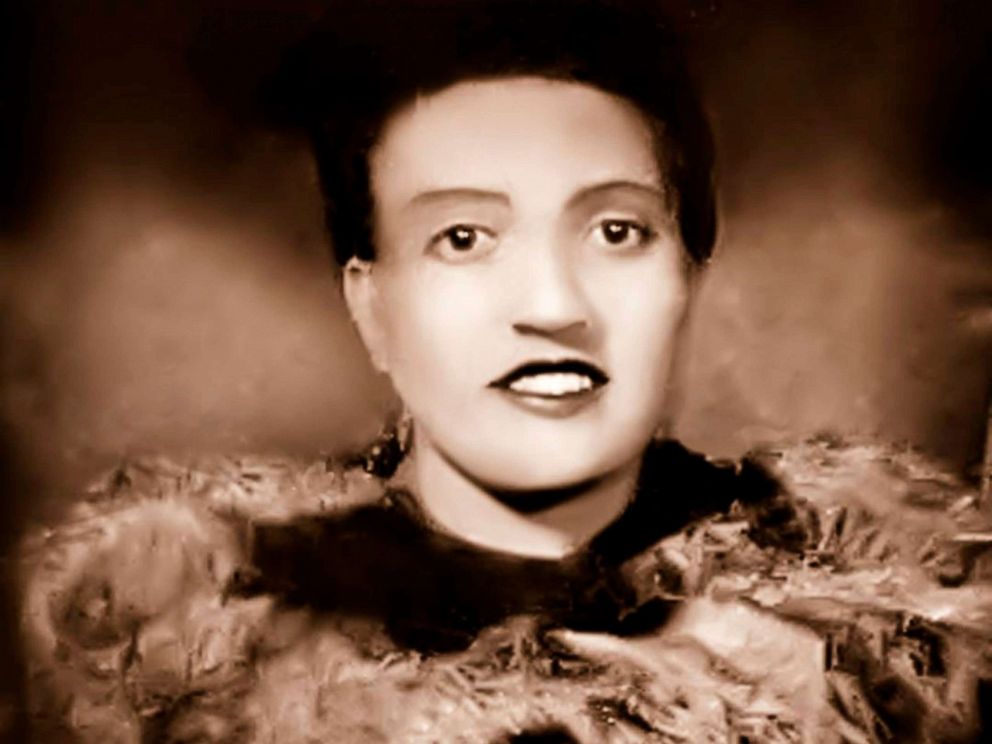
The story of Henrietta Lacks is one of the most compelling I’ve ever encountered.  It’s also one of the most tragic and upsetting.  Lacks was an African-American resident of Baltimore when she developed cervical cancer in the early 1950s.  While seeking treatment in the racially segregated ward at Baltimore’s Johns Hopkins Hospital, doctors removed a sample of her cancer cells without her knowledge or permission and sent them to Dr. George Gey, prominent cancer and virus researcher at the time.  In 1951, it was still perfectly legal to extract cancer cells and engage in other medical procedures without the patient’s consent or knowledge.  In those early days of oncology research, Gey had been looking for cancer cells that would survive for any extended period.  None had – until he obtained those belonging to Lacks.  Whereas other cells would die as soon as he obtained them, Lacks’ cells doubled every 20 to 24 hours.  This replication would eventually lead to a myriad of solutions and treatments in various medical fields.

Nicknamed “HeLa” (from the first two letters of Henrietta’s first and last names), the cells have been used to study the effects of toxins, drugs, hormones and viruses on cancer cells without actually experimenting on humans.  “HeLa” cells were even critical to the development of the polio and COVID-19 vaccines, as well as continuing oncological research.  Meanwhile, Lacks passed away quietly on October 1, 1951 at the age of 31, leaving behind her husband and children and was buried in an unmarked grave.

Johns Hopkins never sold or benefited financially from the usage of the “HeLa” cell line, but it did offer them freely for scientific research.  The Lacks family certainly never benefited financially from this research – and Henrietta didn’t receive any recognition for her “contribution”.

Until recently.

Rebecca Skloot’s 2010 book “The Immortal Life of Henrietta Lacks” brought much-needed attention to the case.  Henrietta’s daughter, Deborah, wondered aloud if the doctors at Johns Hopkins had killed her mother to harvest those valuable cells.  Had they even gone so far to clone her in some fashion?  Considering that Henrietta was an impoverished Black woman in 1950s America, such hypotheses aren’t beyond the realm of possibility.

In 2013 the Lacks family reached a settlement with the National Institutes of Health that provided some control over how the DNA from the HeLa cells is used in future research.  It also includes acknowledgement in any future scientific papers discussing those cells.

Last year Johns Hopkins University officials announced plans for an on-campus building project named for Henrietta. “The architectural design of the building to be named for Henrietta Lacks reflects Johns Hopkins’ commitment to proudly honor and celebrate Mrs. Lacks’ extraordinary legacy on our campus,” said Ronald Daniels, president of Johns Hopkins.

Last week Lacks’ descendants reached a settlement in its lawsuit against Thermo Fisher Scientific, a biotech company that apparently profited the most from usage of the HeLa cells.  However, Lacks’ family points out that their situation highlights the legacy of racism in American medicine and its persistence even now.  We have evidence that European colonialists gave smallpox-infected blankets to Native Americans.  The Tuskegee Syphilis Experiment remains one of the most egregious examples of medical research in American history.

“Indeed, a great portion of early American medical research is founded upon nonconsensual experimentation upon systemically oppressed people,” Lacks family attorneys declared in their initial suit.

I have to note that Thermo Fisher had demanded the lawsuit be dismissed because the statute of limitations had expired.  But Lacks family attorneys asserted that Thermo Fisher continues to benefit.

Here’s another curiosity.  Ronald Lacks, one of Henrietta’s grandsons, self-published a book in 2020 about his grandmother’s case; hoping to bring further attention and possibly generate some revenue for his family.  That same year Thermo Fisher CEO Marc Casper received a compensation package over $26 million.

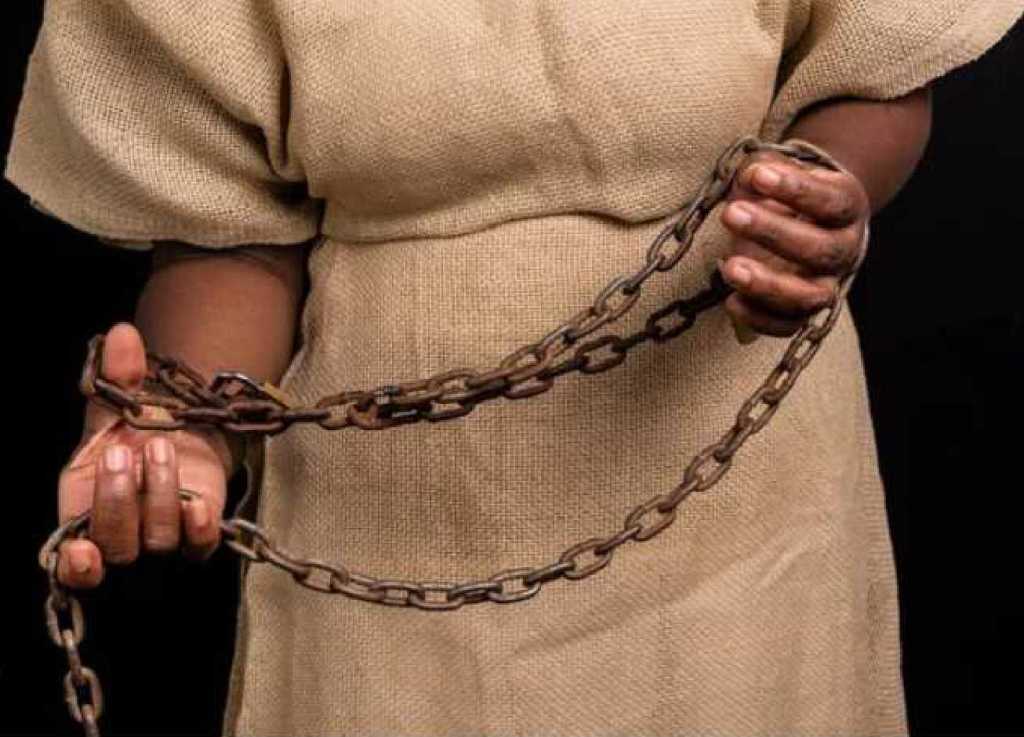
No amount of money can ever compensate for the mistreatment of vulnerable populations.  Denying that such wrongdoing occurred in the first place certainly doesn’t alleviate matters.  This is what we’ve seen here in the U.S. with the relentless conservative denial of the brutal realities of European colonialism and Black slavery and the vicious legacies they spawned.

As a society, however, we can make some amends by acknowledging what happened and how bad it was.  I feel Henrietta Lacks has ultimately been vindicated with her story now being told and a medical building that will bear her name.

And that kind of recognition means just about everything.

2 Comments

Filed under Essays

History Wash

“History, despite its wrenching pain, cannot be unlived, but if faced with courage, need not be lived again.”

Maya Angelou

Last November, when he won reelection by a large margin, Florida Governor Ron DeSantis declared that “Florida is where woke comes to die.”  I still don’t know who created the term “woke”, much less why or when.  But it’s become the latest toy in the diaspora of political angst.  If “woke” means historically accurate or aware, then those of us with at least half a brain are more than fully “woke”.  I can’t say the same for the conservative mindset.

In the latest salvo against historical accuracy, the state of Florida’s education board approved a spate of standards in teach African-American history.  The new measures require lessons on race to be taught in an “objective” manner that doesn’t “indoctrinate or persuade students to a particular point of view”.  Excuse me?  Objective?  Indoctrinate?  Only social conservatives in the Deep South would view solid history studies as indoctrination.

Not to be outdone on the ignorance scale, an Oklahoma education official, Ryan Walters, has declared that the notorious 1921 Tulsa race massacre – which resulted in the bloody deaths of some 300 African-Americans – wasn’t actually about race and that teachers should not “say that the skin color determined it”.  The 1921 Tulsa event remains one of the most sanguineous racial events in U.S. history.  It’s similar to a 1923 slaughter in Rosewood, Florida.  But, in the eyes of social (and mostly White) conservatives, they apparently were just really bad days.

Not surprisingly, these changes in teaching regimens have generated controversy – and anger.  In response to Walters’ claim, Alicia Andrews, chair of the Oklahoma Democratic Party, stated, “How are you going to talk about a race massacre as if race isn’t part of the very cause of the incident?”

In response to the recent Florida measures, the Florida Education Association, a statewide teachers union, denounced the new policy as a “big step backward.”  Andrew Spar, president of the association, issued a press release asking, “How can our students ever be equipped for the future if they don’t have a full, honest picture of where we’ve come from? Florida’s students deserve a world-class education that equips them to be successful adults who can help heal our nation’s divisions rather than deepen them.”

This is why we progressives view conservatism with disdain.  To us, conservative ideology is often regressive; holding onto false narratives of life’s events and who people are.  It’s also an improper revision of what happened way back when.  In 2015, controversy erupted when one of the biggest publishers of school textbooks, McGraw-Hill presented a tome that deemed African slaves as “immigrant workers”.  The caption accompanied a map of the United States in a section about immigration and read: “The Atlantic Slave Trade between the 1500s and 1800s brought millions of workers from Africa to the southern United States to work on agricultural plantations.”

The verbiage had gone unnoticed until the mother of a 15-year-old high school student raised hell over it.  McGraw-Hill promptly recalled the book and issued a public apology.

And that is what people have to do now when they encounter something so outrageous.  Ignorance is not education.  Just as the truth always comes to light, so does history.  Revising it to fit a particular narrative won’t change the facts.

Leave a comment

Filed under Essays

Shifted

The U.S. Supreme Court ended its first term of 2023 last month with some stunning decisions – stunning, but not surprising.  A year ago the Court finished with its shocking reversal of the 1973 landmark Roe v. Wade, which had legalized abortion in the United States.  Ending abortion in this country had been a long-standing goal of social and religious conservatives and they finally accomplished that mission.  But this time the Court went further in their swing to the far right by ending affirmative action in college admissions and allowing religion to be used to discriminate.

In Students for Fair Admissions, Inc. v. President and Fellows of Harvard College, the Court ruled that the admissions programs used by the University of North Carolina and Harvard College violate the Constitution’s equal protection clause (the 14th Amendment), which bars racial discrimination by government entities.  The 14th Amendment has been utilized to undermine entrenched discrimination for decades.  It has manifested its power in such SCOTUS decisions as Brown v. Board of Education of Topeka and Miranda v. Arizona.  Ironically, the Students for Fair Admissions ruling reversed a 20-year-old case, Grutter v. Bollinger, which declared race as a plausible factor in college admissions policies.  Have things really changed for the better in two decades?  All of this also reminds me of the Regents of the University of California v. Bakke, in which a White man, Allan Bakke, sued the University of California Medical School at Davis for refusing to admit him; the school had reserved 16 places in each entering class for qualified ethnic minorities.  Bakke had applied twice to the school and been denied twice, despite having a high GPA and test scores.  SCOTUS ruled that, while race was a qualifying factor in college admissions, the University of California policy at the time, indeed, violated the Constitution’s 14th Amendment.

I have to admit I support their affirmative action decision.  As noble a philosophy as it was, I feel affirmative action has run its course, and – as we march further into the 21st century – it’s time we truly become a color blind society.  Actually it’s way past time.  But, as with campaign promises and many business plans, things look great on paper.  Personally I don’t feel affirmative action has helped me.  It hasn’t hurt me, but it certainly hasn’t helped me.  I never asked for special rights or considerations.  But, like I told a friend years ago, while legislation may have forced the playing field to become level, are all the players on the field playing on the level?

It’s the Creative 303 decision, however, that concerns me the most.  Last year the Supreme Court made perhaps its most controversial decision in decades with the Dobbs ruling that effectively ended the constitutional right to an abortion.  But, in the 2022 Carson v. Makin ruling, the Court chipped even further away at that cherished separation between government and religion, when it declared the state of Maine had violated the constitution when it refused to make public funding available to students attending religious schools.  In general religious institutions don’t pay taxes; therefore, they’ve traditionally been unable to access tax money at either the state or federal level.  The reasoning was practical: anyone who receives government funding should follow certain rules and regulations.  People taking unemployment insurance, for example, have to conduct a minimum number of job searches weekly; otherwise, they can’t receive that money.

In the Creative 303 case, Colorado web site designer Lorie Smith had allegedly refused to design a site for someone planning a same-sex wedding; declaring that it was an affront to her religious beliefs and therefore, violated her First Amendment rights.  It’s similar to another case from Colorado, Masterpiece Cake Shop v. Colorado Civil Rights Commission, in which Jack C. Phillips, the owner of Masterpiece, refused to bake a wedding cake for a male couple on the grounds that it violated his religious beliefs; he simply didn’t believe in same-gender unions.  The couple, Charlie Craig and David Mullins, filed suit, claiming Phillips was in violation of Colorado’s Anti-Discrimination Act.  The Supreme Court ultimately ruled in Philips’ favor, decreeing that the Colorado statute violated “the State’s duty under the First Amendment not to use hostility toward religion or a religious viewpoint as a basis for laws or regulations.”

But no sooner had the Creative 303 ruling been made than news arose that Smith may have fabricated her initial claim.  The man who supposedly asked her to design a web site for a same-gender wedding states he never worked with her.  Smith, however, cited the man – identified only as “Stewart” – in 2017 court documents and included his phone number and email address.  But “Stewart” says he didn’t even know his name had been invoked in the original lawsuit until a report with “The New Republic” contacted him.

“I was incredibly surprised given the fact that I’ve been happily married to a woman for the last 15 years,” said Stewart, who declined to give his last name for fear of harassment and threats.  He noted that he’s a designer himself and could have created his own web site if necessary.

One of Smith’s lawyers, Kristen Waggoner, insisted Stewart’s name and other information had been submitted to her client’s web site and denied the entire claim had been fabricated.  But she suggested an internet troll had made the request to Smith; adding that’s it occurred with other clients.  Ironically, the aforementioned Jack C. Phillips was also Waggoner’s client.

Regardless, I have to wonder if this revelation doesn’t render the Creative 303 ruling invalid.  Even if an internet troll had made the initial application, Smith’s attorneys should have verified every detail of the case.  That’s what lawyers are supposed to do.

Getting a matter before the U.S. Supreme Court is no small feat; they don’t take on minor traffic infractions.  That’s why so many of their decisions are monumental and can reshape society.  And thus, it’s why people are rightfully concerned about the implications of the Creative 303 edict.  If religious ideology can be the basis for discrimination, who’s to say a business owner can’t refuse to service a prospective client under such a pretense?  Technically businesses have the right to refuse service to anyone, but that’s generally happened only under the most egregious of circumstances.  A bar or nightclub, for example, can refuse to admit someone who’s visibly intoxicated.  I’ve seen signs on doors declaring “no shirt, no shoes, no service”.

Years ago another friend told me I discriminate whenever I choose one food item over another.  “That’s not discrimination,” I told him, “that’s selection.”  But he was a conservative, so I guess I understood why he couldn’t make that distinction.

Still, I certainly hope many Black, Hispanic and queer conservatives are happy with their votes for George W. Bush and Donald Trump.  Despite not winning the popular vote in their respective elections, they were able to place five justices on the U.S. Supreme Court.  That has never happened before in the history of U.S. legal jurisprudence.  All five of those individuals have now set back decades of civil rights advancements.  A truly democratic society is supposed to protect all of its citizens from bigotry and oppression.  I fear we’re doing the opposite in the United States.

2 Comments

Filed under Essays

I Carry This

The crucifix pictured above is something I carry with me whenever I leave the house.  Although I was raised Roman Catholic, I am not devoutly religious and don’t subscribe to any religion.  I’m more spiritual, if anything.  But the crucifix is something that connects me to my father who died seven years ago.  He used to carry it around in his car.  After he passed, I started toting it around with me.  Everywhere!  Whenever I leave the house – no matter where I go – it’s in my pocket.

Once, a couple of years ago, I had the sudden urge for a late-night cheeseburger, so I hopped into my truck and scampered to a nearby burger joint.  (I normally don’t eat fast food, but this was a weak moment for me.)  After I returned home, I began emptying my pockets – and was startled to realize I didn’t have the crucifix with me.  I hurried back out to the truck and feverishly searched as much of it as I could; working up a minor sweat and panicking.  I was genuinely upset and almost horrified.  How could I lose something so important to me?  And, more importantly, where could it be?

I rushed back into the house, breathing heavily and completely frantic.  I didn’t know where to look next.  But then I returned to my bedroom and pulled open the dresser drawer where I keep my keys and other such items – including the crucifix.  And there it was – sitting quietly atop a handkerchief.  I hadn’t taken it with me when I left to get the food.  The sense of relief was immense – and almost laughable.

I got that upset over an old crucifix?  Well…yes!

I don’t know where my father got it or when.  I don’t even know at what point he placed it into the side panel of his 2002 Chevy Malibu.  But it’s obviously old.  My parents gathered a large collection of crucifixes over the years, which I still have.

As I declared, it’s simply something that connects me to my father.  On this Father’s Day weekend, it’s even more important.

I’m curious to know if any of you have similar items; something that bears such personal significance to you – and only you – that it’s become an integral part of your life.  Please share.

3 Comments

Filed under Essays

Empty

Recently the U.S. Department of Health and Human Services released a report on a surprising, yet intriguing subject: loneliness.  According to various studies and surveys, isolation and a lack of social connectivity has become epidemic.  The COVID-19 pandemic may have exacerbated what was already problematic for millions of Americans.

“Our epidemic of loneliness and isolation has been an underappreciated public health crisis that has harmed individual and societal health,” declared U.S. Surgeon General Dr. Vivek Murthy.  “Our relationships are a source of healing and well-being hiding in plain sight – one that can help us live healthier, more fulfilled, and more productive lives.  Given the significant health consequences of loneliness and isolation, we must prioritize building social connection the same way we have prioritized other critical public health issues such as tobacco, obesity, and substance use disorders.  Together, we can build a country that’s healthier, more resilient, less lonely, and more connected.”

The physical health consequences of poor or insufficient connections are dire.  They include a 29% increased risk of heart disease; a 32% increased risk of stroke; and a 50% increased risk of developing dementia for older adults.  Lack of social connections is estimated to increase the risk of premature death by more than 60%.

In addition to our physical health, loneliness and isolation contribute substantially to mental health challenges.  In adults, the risk of developing depression among people who report feeling lonely often is more than double that of people who rarely or never feel lonely.  Loneliness and social isolation in childhood increase the risk of depression and anxiety both immediately and well into the future.  And with an estimated one in five adults living with a mental illness in the U.S., addressing loneliness and isolation has become critical in fully addressing the mental health crisis in America.

For better or worse, the COVID-19 pandemic exposed the loneliness dilemma.  It also seems to have amplified it.  As businesses either switched to remote work or shut down altogether, people found themselves isolated in the name of good health.  I think much of this was foretold by the obsession with social media in the preceding two decades; where people would establish cyber relationships and call each other “friends”.

As an only child and a confirmed introvert, I’ve dealt with loneliness my entire life.  Sometimes I really do get lonely; other times I’m just alone.  I’ve always been a loner – something my parents never seemed to understand – and I’ve rarely done well in groups.  I get bored easily and quickly grow tired of dealing with people’s attitudes and personality quirks.  I put up with a lot of people’s disrespectful behavior towards me most of my life, which is the primary reason I don’t consider myself a people person.

But I have to admit I do get lonely sometimes.  I’m glad my parents had each other and me (and even my dog, Wolfgang to some extent) as they aged.  One of my uncles lives alone in a dingy apartment with a cat.  (An older cat died a few months ago, which devastated him.)  He can’t drive anymore, so he either takes a bus or has someone transport him somewhere.  I’ve taken him to a variety of doctor appointments over the past few years and grocery shopping almost every weekend for months now.  His stepdaughter lives closer, but she has her own health problems.

I have an aunt who also lives alone.  Her son, like me, is an only child, but he’s married and resides several miles from his mother.  She’s fortunate, though, in that a neighbor has access to her house and keeps an eye on her.  My aunt frightened me a few years ago, when she recounted how she fell in the bathroom one night and had to drag herself into her bedroom.  It took her hours just to get there.  But she was able to call her neighbor who contacted the fire department.  I stay in touch with my uncle and aunt, as well as other relatives and friends – even if it’s just via text message.

I only know a few of my neighbors and have little contact with most relatives.  I’ve never been married and I never had children, so I don’t know how life will be for me if I grow much older.  Loneliness will be just one factor in my later life.

Some years ago a friend expressed concern that I was becoming a hermit.  “Why should I go out?” I responded.  I lived with my parents, so I certainly couldn’t bring anyone home.  Then again, I hadn’t brought anyone home who I didn’t know since before the turn of the century.

A close friend keeps urging me to get a dog, as he did a couple of years ago.  Aside from two household plants that languish nondescriptly on a kitchen counter, I’m the only living being in this house.  (That doesn’t include the occasional insect that invades my quiet abode.)  I’d love to get a dog, but I’m just not in the right situation now to get one.

Dr. Murthy has established a six-point plan to help the U.S. deal with its loneliness epidemic:

  1. Strengthen Social Infrastructure: Connections are not just influenced by individual interactions, but by the physical elements of a community (parks, libraries, playgrounds) and the programs and policies in place. To strengthen social infrastructure, communities must design environments that promote connection, establish and scale community connection programs, and invest in institutions that bring people together.
  2. Enact Pro-Connection Public Policies: National, state, local, and tribal governments play a role in establishing policies like accessible public transportation or paid family leave that can support and enable more connection among a community or a family.
  3. Mobilize the Health Sector: Because loneliness and isolation are risk factors for several major health conditions (including heart disease, dementia, depression) as well as for premature death, health care providers are well-positioned to assess patients for risk of loneliness and intervene.
  4. Reform Digital Environments: We must critically evaluate our relationship with technology and ensure that how we interact digitally does not detract from meaningful and healing connection with others.
  5. Deepen Our Knowledge: A more robust research agenda, beyond the evidence outlined in the advisory, must be established to further our understanding of the causes and consequences of social disconnection, populations at risk, and the effectiveness of efforts to boost connection.
  6. Cultivate a Culture of Connection: The informal practices of everyday life (the norms and culture of how we engage one another) significantly influence the relationships we have in our lives. We cannot be successful in the other pillars without a culture of connection.

All of this is easier said than done, and every plan looks good on paper.  But I know something has to be done, if the nation’s overall health is to improve.  I only have a small collection of friends, but that’s all I personally need.  As with most everything else, it’s quality, not quantity, that matters.  And quality of life is always important.

Image: Seher Bilgin

6 Comments

Filed under Essays

Josh at 50

Me at age 9 with my new puppy in the summer of 1973

Today, May 31, marks the 50th anniversary of the birth of my first dog, Joshua or Josh.  When my parents bought this house in suburban Dallas in 1971, they promised to get me a dog.  From the time I was very young, I realized I liked dogs and I wanted one of my own.  My folks decided on a German shepherd.  My mother had to swallow her phobia of big dogs.  Around the age of 6, she and her older sister saw a man in their México City neighborhood be attacked by a Doberman.  It was a sight neither of them could ever forget.

In June of 1973, after we got settled into our new house, my mother called a local group that dealt with German shepherds.  (I can’t remember the name.)  They put her in contact with a nearby breeder.  About a month later my father and I visited the home of the family who had German shepherd puppies for sale.  They were a relatively young couple who had children about my age.  They had five puppies for sale.  As we surveyed the litter, one stepped forward towards me.

“This one,” I told my father.  And that was it.  I had my puppy – or I would in a few weeks, after he’d been fully weaned.  He cost $100, and my father gave the man an extra $50 for the kids.

Naming the puppy was a different task.  Both my parents were trying to determine what would be the best name for the dog.  We had a book entitled “Name Your Baby”, first published in 1963 by Lareina Rule, and after scouring through it, I finally came upon Joshua – an ancient Hebrew name meaning “God of salvation.”  And, just as I’d selected the puppy, I had selected his name.

Josh grew quickly.  By the end of 1973, he had reached his full adult size.  Topping out at roughly 100 pounds, we often didn’t realize how big he was until we brought him inside the house; especially during the hot summer months.

I have too many stories about Josh to recount here, but as with most pets, he became a treasured member of our family.  My father would eventually describe him as majestic.  Josh developed the perfect markings of a German shepherd: solid black fur with an auburn glaze on his back; triangular ears that seemed to move of their own accord when he heard something; and a bark that could echo through the air.  A neighbor said she knew something was different in the area when she heard Josh barking.  And he would only bark if something was awry in the neighborhood.  Ironically Josh was practically scared of my mother, as she only had to roll up the TV guide for him to drop to the floor.  “If he only knew that all he had to do was bark at me, and I’d faint,” she often joked.

In his later years, the hairs around Josh’s face began to gray, and we could tell arthritis was settling into his frame.  He was moving slower, and we often brought him inside during cold weather.  In March of 1985, Josh’s health began to worsen.  His hind legs would periodically collapse, and by April he was pretty much dragging those legs.

On Saturday, April 6, we took him to his local veterinarian.  We had doped him up on tranquilizers, and my father and I had to carry him into the office.  As we slowly ambled across the parking lot, I noticed a man standing several feet away with a young girl who held a leash attached to a small white dog.  I will never forget the look of absolute horror on that girl’s face; her eyes widened, as they locked onto my father and I carrying Josh into the building.

The news wasn’t good.  Spurs had developed beneath the latter half of his spine, which the doctor could dissolve with medication.  But Josh’s hips had deteriorated too badly to be saved.  We had to put him to sleep.

I stared at him lying on the floor in an exam room, drowsy and sad-looking; a strap around his jaw.  Even tranquilized Josh was still able to snap at the staff.  One of them, a young woman, escorted out through a side door with moistened eyes.  The veterinarian looked as if he was using all his strength to prevent himself from bursting into tears.

Josh in the fall of 1983

That year, 1985, was already turning out badly.  Almost from the start, everything went wrong in my life.  Josh’s death was just one part of it all, but it was the worst part.

My father was a gardening enthusiast.  Buying this house with so much space for flower beds and lawns created a slice of heaven on Earth for him.  He almost always wore gloves while digging around in the dirt – and Josh seemed to have a disdain for them.  When my father wasn’t looking or wasn’t around, he’d snatch them away and bury them somewhere in the back yard.  One Saturday about a year after Josh’s death, my father was busy in the back yard when he suddenly uncovered one of his gloves entrenched in the dirt.  He stopped for a moment, he said, and had to compose himself.

Recently I began rummaging through some old documents my father had compiled and came upon batches of photographs we had taken of Josh, starting from the time he was a puppy.  I had been through those documents before, so I was surprised I just now found those photos.  In the process of scanning them, I’ve had to stop and gather my thoughts.  Looking at old pictures always awakens a variety of emotions in people.

That dog meant so much to my parents and me, and losing him was incredibly painful.  That’s why, when my last dog, Wolfgang, turned 10 in 2012, I began preparing myself for his inevitable demise.  Thus, when he did pass four years later, I was able to handle it better.

Another difference in the deaths of both dogs is that I was able to get Wolfgang’s cremated remains in a small wooden box.  In 1985 people just had to leave their deceased pets in the care of the vet who would incinerate and then dispose of them.  Either that or you buried the animal in the back yard somewhere, which some people actually did.  I kept Josh’s collar and tags, which I still have.  And I have these old photos.  One of them sits on the fireplace hearth, on the far left, looking towards my parents’ urns – still guarding them in a way.

Happy 50th Birthday, Josh!

Several months after Josh died, my father bought this status of St. Francis of Assisi to place in our back yard.  St. Francis of Assisi is the patron saint of animals in the Roman Catholic faith.

Leave a comment

Filed under Essays