

“If the society today allows wrongs to go unchallenged, the impression is created that those wrongs have the approval of the majority.”
“If the society today allows wrongs to go unchallenged, the impression is created that those wrongs have the approval of the majority.”
Filed under History

“If the you of five years ago doesn’t consider the you of today a heretic, you are not growing spiritually.”
Filed under History

“To tell the truth is to become beautiful, to begin to love yourself. And that’s political, in its most profound way.”
Filed under History

“Far away there in the sunshine are my highest aspirations. I may not reach them but I can look up and see their beauty believe in them and try to follow where they lead.”
Filed under History

“My life is based on pain, passion, and purpose.”
– Elijah E.Cummings, U.S. Congressman from Maryland who died unexpectedly on October 17
Filed under History

“Everyone who wants to do good to the human race always ends in universal bullying.”
Filed under History
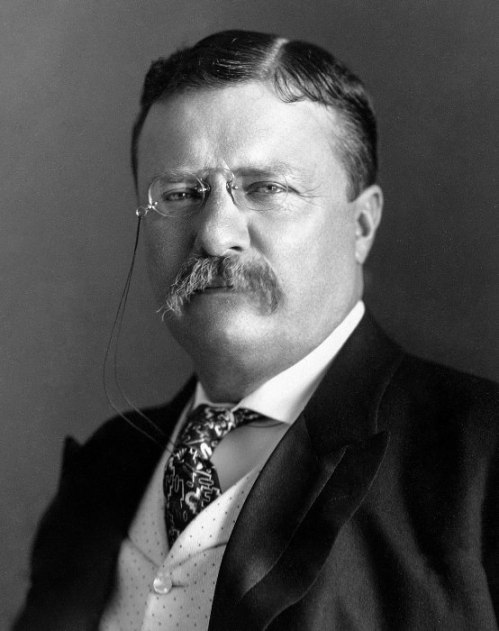
“Patriotism means to stand by the country. It does not mean to stand by the President or any other public official save exactly to the degree in which he himself stands by the country. It is patriotic to support him in so far as he efficiently serves the country. It is unpatriotic not to oppose him to the exact extent that by inefficiency or otherwise he fails in his duty to stand by the country. In either event it is unpatriotic not to tell the truth – whether about the President or about anyone else – save in the rare cases where this would make known to the enemy information of military value which would otherwise be unknown to him.”
– Theodore Roosevelt, “The Great Adventure”, November 1918
Filed under History

“We do not know or seek what our fate will be. We ask only this, that if die we must, that we die as men would die, without complaining, without pleading and safe in the feeling that we have done our best for what we believed was right.”
– Lt. Col. Robert L. Wolverton, Commander of the 3rd Battalion of the 506th Paratroop Infantry Regiment, 101st Airborne Division.

“War does not determine who is right – only who is left.”
Filed under History

The usual victims: a worker tries to save a bird after the Exxon Valdez disaster.
On this day in 1989, the Exxon Valdez oil tanker ran aground at Bligh Reef in Prince William Sound, Alaska and spilled 10.8 million gallons of crude oil. The oil spread along 1,300 miles of otherwise pristine coastline. It remains one of the worst peacetime oil spills in world history, second only to the 1979 Ixtoc I disaster, and its effects linger to this day. One of those effects is that Exxon never fully accepted responsibility, and the people whose lives were impacted the most never received the financial compensation they were due. We can expect that from a multinational conglomerate with trillion-dollar reserves.
In an age before the Internet and Twitter, news of the calamity still spread fast. At first, many thought it was just a technical issue. The crew of a gigantic oil tanker, traveling at night, misjudged the topography of the area and slammed into some rocks. It wasn’t that simple. Valdez captain Joseph Hazelwood had left the navigation bridge around 11 P.M. local time the night before the accident and returned to his stateroom. He left two subordinates in charge of commandeering the vessel. When the accident occurred, U.S. Coast Guard officials immediately took Hazelwood into custody and began questioning him. They also detected the odor of alcohol on his breath and compelled him to undergo a Breathalyzer exam. His blood alcohol level registered .061, and Hazelwood later admitted to consuming “two to three vodkas” in the hours before the ship slammed into the shoreline. In 1990, however, a jury in Anchorage found Hazelwood not guilty of public intoxication and two other charges, but convicted him of “misdemeanor oil discharge;” whatever the hell that’s supposed to mean. Hazelwood did lose his job, and the Coast Guard stripped him of his maritime master’s license.
But, the reaction from Exxon’s then-CEO, Lawrence G. Rawls, only intensified the anger and showed the disconnect corporate executives often have from their own company’s daily operations. Rawls remained aloof for nearly a week after the disaster and then spoke publicly only out of seeming reluctance. He refused to visit the site of the accident and even meet with then-Alaska Governor Steve Cowper who had just taken office four months earlier.
In some ways, Exxon paid the price for its almost-flippant response. Cleanup efforts alone cost the company $2.5 billion, and it paid out an additional $1.1 billion in various settlements. But, when asked how Exxon intended to pay for the mess, one executive merely said it would raise gas prices.
Aside from the livelihoods of coastal residents who depended on fishing to survive, Alaskan wildlife suffered the greatest impact. Responders estimated that as many as 3,000 otters perished within the first year after the spill and have only now seen their numbers replenished to pre-Valdez times. The population of herring also suffered, but their numbers haven’t recovered. Another species that hasn’t recovered is the pigeon guillemot. Their numbers were already in decline before the spill, but the disaster pushed them even further to the brink of extinction. The sight of a large brown bear stumbling along the rocky shoreline, trying to lick its paws clean of the sticky oil, is one particular image that remains with me. Oil-saturated birds struggling for air is another.
Exxon’s reputation suffered as well, but not nearly as much. In 1999, the company merged with Mobil; an $81 billion deal that made it one of the large oil monopolies in the world. In 1994, complicated litigation to make Exxon pay financially for the spill was settled in four phases for a total of $2.5 billion. But, the company, of course, prolonged its appeals, and in 2008, the U.S. Supreme Court reduced the punitive damage award to $500 million. In the interim, Exxon (now Exxon Mobil) has reaped extraordinary profits. It hasn’t really suffered. Big corporations never really do. The effects still linger.

A Northwest DC-4 plane, like Flight 2501.
As military and airline officials from ten countries search for Malaysian Airlines Flight 370, many people wonder how such a large aircraft with 239 people aboard could literally vanish. If the MH777 was over open water, the answer is easily. Water covers roughly 71% of the Earth’s surface. Countless planes have disappeared over oceans and seas in aviation’s 100-plus-year history. We know more about the surface of the moon than we do the depths of our planet’s oceans.
But, the disappearance of the Malaysian airliner recalls another mysterious disappearance nearly 64 years ago. On June 23, 1950, a Northwest Airlines DC-4 plane vanished over Lake Michigan – and has never been found. En route from New York City to Seattle, Northwest Flight 2501, carrying 55 passengers and 3 crew members, had a scheduled stop in Minneapolis. As the plane reached Benton Harbor, Michigan, it encountered a line of thunderstorms. Captain Robert Lind asked for permission to reduce altitude from 3,500 feet to 2,500 feet. The Civil Aviation Authority (now the Federal Aviation Administration) couldn’t grant permission because of flight congestion in the area. That’s the last anyone heard from Flight 2501.
With a total area of 22,394 square miles (58,000 km²) and a total volume of 1,180 cubic miles (4,918 km³), Lake Michigan is one of the largest freshwater lakes in the Western Hemisphere. Like the other four Great Lakes, it’s actually more of an inland sea. That can make it treacherous, especially in stormy weather.
A number of people later reported hearing a plane sputtering overhead, near where Northwest Flight 2501 disappeared. A few actually saw a bright flash just after midnight, just shortly after Captain Lind radioed to CAA. When officials realized the plane had never made it to Seattle, they launched an intense search across Lake Michigan. Oil streaks and debris found along the surface initially gave hope, but searchers later determined the material did not belong to Flight 2501.
After an extensive investigation, however, the CAA could only list the cause of the disappearance as “Unknown.” The debacle was the worst civil aviation disaster of its time. And, despite its weight of 71,000 pounds and a wing span of 117 feet, no remnant of the craft has ever been found.
In 2006, author and shipwreck hunter Clive Cussler joined the search. Cussler had located more than 80 shipwrecks across the globe and financed an extensive search of Lake Michigan. But, after reaching up to 200 feet beneath the surface, even he couldn’t find anything.
Considering the number of vessels that have met a tragic fate in its expansive waters, Lake Michigan is not prone to revealing its secrets too easily.

A “Detroit Free Press” cover story from June 25, 1950 gave false hopes about the missing plane.
Filed under History
 Chief Writing Wolf